Since the first Policy History Conference in St. Louis, Missouri, the primary goal behind the conference has been to provide an interdisciplinary forum for scholars of policy history, American political development, and comparative historical analysis. Conferences bring together scholars from the disciplines of History, Political Science, Law, Sociology and other social sciences. Past conferences have included sessions on international and domestic policy issues from the eighteenth through the twenty-first centuries covering topics as widely variable as social policy, education, economics, trade, foreign affairs, immigration, gender, civil rights, and environmental policy.
The Journal of Policy History and the Institute for Political History are holding the seventh biennial Conference on Policy History at the Marriott-Downtown in Richmond, Virginia from June 6 to June 9, 2012.
Call for Papers and Panelists: Deadline December 2, 2011
Paper Submissions Form | Panel Submissions Form
Thursday, November 17, 2011
CFP: Policy History Conference
The Policy History Conference is a great conference for legal historians. It is smallish, with top scholars in a number of fields participating, and it is very substantive. A great place for both junior and senior scholars, and especially good for those thinking across methodologies. The conference is held every two years, with the next one coming up in June 2012. Here are the details:


Today & Tomorrow in NYC: Intellectual History Conference
If you're in New York, I hope to run into you at the 4th annual U.S. Intellectual History Conference. The program and details are here. Legal history-related panels include:
Thursday
Configuring the Cold War: Constructive Courtroom Narratives in Dennis et al v. United States, 1949 (Roundtable)
Chair: Ellen Schrecker, Yeshiva University
Lisa Davis, Independent Scholar
Barbara Falk, Canadian Forces College / RMC
Fred Jerome, Independent Scholar
American Slavery: Reinforcements and Reactions
Peter Wirzbicki, New York University, “Transcendentalism and the Fugitive Slave Act”
Vanessa Varin, Louisiana State University, “Myth and Power: The Relationship Between Fiction and Capital Justice in the Early South”
Gregory Matthew Adkins, Columbus State Community College, “Neoclassical Philosophy and Antislavery”
Friday
New Narratives of the Second World War (Roundtable)
Chair: Beth Bailey, Temple University
Citizen and State: James Sparrow, University of Chicago
Time and Place: Brooke L. Blower, Boston University
Race and Nation: Nico Slate, Carnegie Mellon University
The Founding Era as Subject and Object of Narrative
Jonathan Wilfred Wilson, Syracuse University, “The Pictorial Scholarship of Benson Lossing: Visualizing the Public in Antebellum Historical Writing”
Alin Fumurescu, Tulane University, “Narratives of Representation and Compromise During the American Founding”
Jeffrey Malanson, Indiana University-Purdue University Fort Wayne, “‘If I had it in his Hand-Writing I would burn it’: The Authorship Controversy over George Washington’s Farewell Address”
Chair/Commentator: Christopher McKnight Nichols, University of Pennsylvania
Keynote Address
Pauline Maier, Massachusetts Institute of Technology, “Ratification: Bringing Ideas Down to Earth”
Daniel Rodgers’s Age of Fracture (Roundtable)
Chair: Benjamin L. Alpers, University of Oklahoma
Mary Dudziak, University of Southern California
Andrew Hartman, Illinois State University
James Livingston, Rutgers University
Lisa Szefel, University of the Pacific
Respondent: Daniel Rodgers, Princeton University
Thursday
Configuring the Cold War: Constructive Courtroom Narratives in Dennis et al v. United States, 1949 (Roundtable)
Chair: Ellen Schrecker, Yeshiva University
Lisa Davis, Independent Scholar
Barbara Falk, Canadian Forces College / RMC
Fred Jerome, Independent Scholar
American Slavery: Reinforcements and Reactions
Peter Wirzbicki, New York University, “Transcendentalism and the Fugitive Slave Act”
Vanessa Varin, Louisiana State University, “Myth and Power: The Relationship Between Fiction and Capital Justice in the Early South”
Gregory Matthew Adkins, Columbus State Community College, “Neoclassical Philosophy and Antislavery”
Friday
New Narratives of the Second World War (Roundtable)
Chair: Beth Bailey, Temple University
Citizen and State: James Sparrow, University of Chicago
Time and Place: Brooke L. Blower, Boston University
Race and Nation: Nico Slate, Carnegie Mellon University
The Founding Era as Subject and Object of Narrative
Jonathan Wilfred Wilson, Syracuse University, “The Pictorial Scholarship of Benson Lossing: Visualizing the Public in Antebellum Historical Writing”
Alin Fumurescu, Tulane University, “Narratives of Representation and Compromise During the American Founding”
Jeffrey Malanson, Indiana University-Purdue University Fort Wayne, “‘If I had it in his Hand-Writing I would burn it’: The Authorship Controversy over George Washington’s Farewell Address”
Chair/Commentator: Christopher McKnight Nichols, University of Pennsylvania
Pauline Maier, Massachusetts Institute of Technology, “Ratification: Bringing Ideas Down to Earth”
Daniel Rodgers’s Age of Fracture (Roundtable)
Chair: Benjamin L. Alpers, University of Oklahoma
Mary Dudziak, University of Southern California
Andrew Hartman, Illinois State University
James Livingston, Rutgers University
Lisa Szefel, University of the Pacific
Respondent: Daniel Rodgers, Princeton University
Nicoletti Wins Cromwell Dissertation Prize
Last week's meeting of the American Society for Legal History included the announcement that the William Nelson Cromwell Foundation has awarded Dissertation Prize to Cynthia Nicoletti, a professor at the Mississippi College of Law, for The Great Question of the War: The Legal Status of Secession in the Aftermath of the American Civil War, 1865-1869, which she wrote in the History Department at the University of Virginia, where her dissertation advisor was Gary Gallagher. She had won the ASLH's Kathryn T. Preyer Scholars Award for her paper as a junior scholar in 2008.
Cromwell's trustees acted on the recommendation of a committee of the American Society for Legal History, which stated:
Cromwell's trustees acted on the recommendation of a committee of the American Society for Legal History, which stated:
This deeply researched and well-argued dissertation challenges the assumption that the North’s victory in the Civil War led inexorably to the demise of the states’ argument that secession was a constitutional right. Although historians often argue that Confederate defeat resolved the question of secession’s constitutionality, Nicoletti recreates the vigorous post-war debate about the validity of permitting the outcome of the war to substitute for a legal judgment on the constitutionality of secession. She reveals how the federal government’s decision not to try Confederate President Jefferson Davis for treason forced Americans to confront the unsettling realization that they had allowed a violent conflict to provide the ultimate determination of their society’s most divisive legal issue. The Supreme Court’s technical decision in Texas v. White notwithstanding, many Americans concluded that “Trial by Battle” rather than rational argument in a court of law had determined secession’s legitimacy. While skillfully recreating the lives of the lawyers, politicians and jurists who grappled with these issues, Nicoletti also demonstrates how the theoretical justifications for military Reconstruction complicated efforts to reach a judicial determination of the legality of secession. We were impressed with Nicoletti’s achievement. She engaged one of the most frequently debated questions in American history (the legality of secession) and found innovative ways to provide new and important insights.
Cynthia Nicoletti (image credit)

Wednesday, November 16, 2011
Vignarajah Wins Cromwell Article Prize
Last week's meeting of the American Society for Legal History included the announcement that the William Nelson Cromwell Foundation had awarded the William Nelson Cromwell Article Prize to Krishanti Vignarajah, for The Political Roots of Judicial Legitimacy: Explaining the Enduring Validity of the Insular Cases, University of Chicago Law Review 77 (2010): 781. The Cromwell trustees acted with the advice of a committee of the American Society for Legal History, which stated:
This article shows how the political branches sought to handle the politically explosive issues of what constitutional constraints might apply to America's governance of its newly acquired empire, by reframing those issues as legal ones suitable for decision by the U.S. Supreme Court. The Insular Cases, she shows, were a paradigmatic instance of political branches deliberately handing off sensitive and contentious issues to the judiciary for resolution. The article is expertly researched and argued with precision and analytic panache.One of the eminent trustees of the Cromwell Foundation advised its board, "I can say with confidence that the article is a significant contribution to the new body of work on the Insular Cases that has been stimulated by efforts of the three branches of our government to apply US law to extraterritorial US activities in Iraq, Afghanistan and Guantanamo."
Law & History Review Special Issue: Free Access for Limited Time

As I earlier indicated, the November, 2011 issue of Law & History Review is a special issue on "Law, Slavery, and Justice." Cambridge University Press, the journal's publisher, now announces that it is making the full contents of the special issue freely available online for a limited time--through January, 2012. Here is a link to the issue's contents. The introduction, by journal editor, David Tanenhaus, is reposted below, along with the table of contents.
The special issue transports our broad readership into the unsettling history and shifting historiography of the laws of slavery on land and at sea in the turbulent Atlantic World. Special thanks to Rebecca J. Scott for proposing this venture and enticing others to join, including Walter Johnson, whose incisive commentary concludes this issue. The journey begins with Scott's crisp introduction that first previews the four articles before providing an overview and explication of our authors' methods. Bon voyage!
Table of Contents
Articles"Slavery and the Law in Atlantic Perspective: Jurisdiction, Jurisprudence, and Justice," by Rebecca J. Scott (Michigan)
"Judges, Masters, Diviners: Slaves’ Experience of Criminal Justice in Colonial Suriname," by Natalie Zemon Davis (Toronto)
"Prosecuting Torture: The Strategic Ethics of Slavery in Pre-Revolutionary Saint-Domingue (Haiti)," by Malick W. Ghachem (Maine)
"Time, Space, and Jurisdiction in Atlantic World Slavery: The Volunbrun Household in Gradual Emancipation New York," by Martha S. Jones (Michigan)
"Paper Thin: Freedom and Re-enslavement in the Diaspora of the Haitian Revolution," by Rebecca J. Scott (Michigan)
"Prosecuting Torture: The Strategic Ethics of Slavery in Pre-Revolutionary Saint-Domingue (Haiti)," by Malick W. Ghachem (Maine)
"Time, Space, and Jurisdiction in Atlantic World Slavery: The Volunbrun Household in Gradual Emancipation New York," by Martha S. Jones (Michigan)
"Paper Thin: Freedom and Re-enslavement in the Diaspora of the Haitian Revolution," by Rebecca J. Scott (Michigan)
Comment"Resetting the Legal History of Slavery: Divination, Torture, Poisoning, Murder, Revolution, Emancipation, and Re-enslavement," by Walter Johnson (Harvard)
New ASLH President-elect, Board and NomComm Members
2011 election results were announced at the American Society for Legal History Conference. Michael Grossberg, Department of History, Indiana University is the new president-elect. Bruce H. Mann, Harvard University, becomes the organization's new President.
Elected to the Board of Directors are: R. B. Bernstein of New York Law School, Christian G. Fritz of the University of New Mexico, Dan Hamilton of the University of Illinois, Linda K. Kerber of the University of Iowa, and Amalia Kessler of Stanford University.
Lucy E. Salyer, University of New Hampshire, was elected to the Nominating Committee.
Continuing officers are here. Congratulations to all!
Elected to the Board of Directors are: R. B. Bernstein of New York Law School, Christian G. Fritz of the University of New Mexico, Dan Hamilton of the University of Illinois, Linda K. Kerber of the University of Iowa, and Amalia Kessler of Stanford University.
Lucy E. Salyer, University of New Hampshire, was elected to the Nominating Committee.
Continuing officers are here. Congratulations to all!
Tuesday, November 15, 2011
Sutherland prize to Jones, "Wills, Trusts and Trusting"
 |
| N. G. Jones (image credit) |
The Sutherland prize committee, chaired by Richard Helmholz (University of Chicago), also wished to recognize a runner-up: Matthew Stevens (University of London), for "Failed Arbitrations before the Court of Common Pleas: Cases relating to London and Londoners, 1400-1468," also published in Volume 31 of the Journal of Legal History.
Brilliant Wins Cromwell Book Prize
 |
| Mark Brilliant; image credit |
In The Color of America Has Changed, Mark Brilliant opens up a new vista on what Nathan Glazer once called the “great enterprise” of determining what “the ‘equal protection of the laws’ should concretely mean in a multi-racial and multi-ethnic society.” Without slighting “the exceptionally invidious history of antiblack racism” in the American South and urban North, Brilliant directs us to civil rights in California, the country’s “racial frontier,” from the 1940s through the 1970s. At first, race liberals assumed that the same “binary logic” that governed struggles between blacks and whites would also prove serviceable when the category of non-whites was expanded to include persons of Chinese, Japanese, and Mexican descent. Yet as they attempted to build coalitions, bring lawsuits, and pass laws to address discrimination in property law, education, housing, labor, public accommodations, and family law, they discovered that the groups experienced bias in different ways and preferred different and sometimes conflicting means of redress. Brilliant brings this complexity to life with impressive research in the manuscripts of civil rights organizations, personal papers, court files, and other public records. He sustains his argument and the readers unflagging interest with a disciplined and artfully constructed narrative. The result is a new past with which to comprehend America’s “increasingly complex, nonbinary, multiracial civil rights law, policy, and politics.”

Surrency prize to McKinley, "Fractional Freedoms"
 |
| Michelle McKinley (image credit) |
Here's the official citation, courtesy of H-Law:
Michelle McKinley's "Fractional Freedoms: Slavery, Legal Activism, and Ecclesiastical Courts in Colonial Lima, 1593-1689" insightfully advances our understanding of how the role of the Catholic Church in the law and legal institutions of colonial Latin America affected the experience of slavery there in ways that made it differ significantly from North American slavery. Drawing from ecclesiastical court records demonstrating the ability of slaves in Spanish Peru to sue for marriage and divorce, protect their families' integrity, enforce promises of manumission, and compel transfers of ownership to less abusive masters, McKinley gives us indelible examples of enslaved women acting as autonomous agents shaping, within the confines of their bondage, their lives and destinies. Engaging long-standing debates between scholars with a variety of perspectives on the role of law and legal agency in the institution of slavery, McKinley forcefully asserts that law matters, that legal traditions and religious institutions can ameliorate social relations grounded in unbridled power and material interests.Congratulations to Professor McKinley! And thanks to the Surrency Prize Committee, chaired by Stephen Siegel (DePaul University), for their service.
"Fractional Freedoms" is also thoroughly sourced in archival records from Peru and in secondary literature, in multiple languages, from three continents. The Surrency Committee was impressed by McKinley's mastery of this transnational array of material covering many legal subjects, as well as the eloquence with which she drew from it to reconstruct daily life, intimate relations, and societal norms in seventeenth-century Peru. "Fractional Freedoms" is commended as a work of social, cultural, and legal history that is sure to inform the way scholars think and write about slavery in the Americas.
John Phillip Reid book prize to Tomlins, Freedom Bound
 |
| Chris Tomlins (image credit) |
Christopher Tomlins’s Freedom Bound is an ambitious effort to place law at the heart of American history generally, by demonstrating its centrality to the creation of the particular regimes of freedom and subordination that governed the colonies and states until the Civil War. Tomlins rejects the surprisingly durable notion that law has been an impartial releaser of energy (as if it did not have a lot to say about whose energy would get more or less favorable treatment). And he equally rejects the idea that law has been mere window dressing for developments really driven by the logic of capitalism. Rather, Tomlins argues that law makes society, makes labor, and makes civic identity as much as it is made by those things. And it never does this work impartially but, instead, by setting out the terms of “colonization.” In Tomlins’s hands, the colonizing process that launches American history is both a creation of law and a durable metaphor for what law is and does, not just in the so-called colonial period but all the way to the Civil War and beyond. Thus the long sweep of American history from the earliest migrations to the Civil War becomes a history of colonization. The land is colonized, the indigenous peoples are colonized, and human beings who are needed for the labor of colonization are themselves colonized--all by means of law and its capacity to shape and limit the imagination, to legitimate and naturalize that which inescapably rests on power and violence. But, as the law obscures its own violence and its determination to subordinate some to enhance the freedom of others, that history of law as colonization never becomes a reductive story of one fixed class oppressing another. Rather, law is always plural, contingent, contested—much more so in the uncertain atmosphere of the early colonies than in the ever more rigidly slave-based society of the next two centuries (so much for the unfolding of freedom and the beneficent release of energy)—but still law as power, law as colonization, is always a matter of human contest over the highest stakes: more freedom for some and more unfreedom for others. Tomlins’s big book and big arguments are often deeply persuasive, but the most important testament to his work will come when we are still debating his many claims, big and small, another generation down the road.The Committee on the John Phillip Reid Book Award, chaired by Gerald Leonard (Boston University), awarded an honorable mention to Paul Halliday for Habeas Corpus: From England to Empire (Belknap Press of Harvard University Press, 2010).
John Phillip Reid, for whom the prize is named, could not attend the meeting, unfortunately. He was sorely missed by his many fans.
Sampsell-Jones on the Myth of Ashby v. White
Ted Sampsell-Jones, William Mitchell College of Law, has posted The Myth of Ashby v. White, which also appears in University of St. Thomas Law Journal 8 (2011). Here is the abstract:
Ashby v. White is widely believed to have established the principle that “for every right, there must be a remedy,” sometimes known as the “ubi jus” principle. The ubi jus principle has played an important role in American law - it is frequently cited by both courts and scholars. Perhaps most famously, it was a central part of the rationale of Chief Justice Marshall’s opinion in Marbury v. Madison, establishing the foundations of judicial review. As the supposed progenitor of the ubi jus principle, Ashby has been praised as one of the most important cases is Anglo-American legal history.
In this article, I demonstrate that the accepted account of Ashby's holding is wrong. By relying on previously ignored historical sources and case reports, I demonstrate that if anything, Ashby actually rejected the ubi jus principle. Even more fundamentally, a close reading of Ashby demonstrates how conceptually hollow the ubi jus principle is.
Monday, November 14, 2011
Preyer prizes to Fleming, Schoeppner, Arlyck
 |
| Kathryn "Kitty" Preyer (image credit) |
Here's a description of the award, from the ASLH website:
Named after the late Kathryn T. Preyer, a distinguished historian of the law of early America known for her generosity to young legal historians, the program of Kathryn T. Preyer Scholars is designed to help legal historians at the beginning of their careers. At the annual meeting of the Society two younger legal historians designated Kathryn T. Preyer Scholars will present what would normally be their first papers to the Society.Here are the formal citations (courtesy of H-Law):
Anne Fleming -- “The Borrower's Tale: A History of Poor Debtors in Lochner Era New York City”I had the pleasure of attending the panel at which these scholars presented their work. Chair Mary Sarah Bilder (Boston College) made a point of noting something about each paper that would have caught Kitty Preyer's eye. Commentator Chuck McCurdy (University of Virginia) agreed that "Kitty would have loved these papers," and gave four reasons: (1) They ask good questions, (2) they display an admirable "patience" with the archives, (3) they engage deeply with legal actors, thereby providing a social history of law, and (4) they report things that other scholars had not noticed or discovered. The second commentator, Bill Wiecek (Syracuse University), echoed Professor McCurdy's praise. He underlined the depth of the panelists' archival research and the new light they each shed on familiar but important subjects.
This paper considers the credit industry that catered to the poor and working class populations of NY at the beginning of the 20th century. It manages to capture both the borrowers’ social worlds and the perspective of reformers, who sought to ameliorate loan sharking by exposing it to healthy competition rather than regulating it out of existence.
Michael Schoeppner -- “Atlantic Emancipations and Originalism: An Atlantic Genealogy of Dred Scott”
This essay explores the roots of Justice Taney’s reasoning in Dred Scott, tracing it to an earlier conceptualization of citizenship/subjecthood as frozen in time and essentialized in racial terms. The history contributes a disturbing and thought-provoking episode of originalism as instrumentally deployed.
Kevin Arlyck -- “Plaintiffs v. Privateers: Litigation and Foreign Affairs in the Federal Courts, 1816-1825”
This paper considers the “consular litigation” brought in U.S. courts by Spanish and Portuguese consuls against American privateers who were working for revolutionary South American governments. Those claims became the most effective way that the consuls could press for a change in American foreign policy on neutrality; they also shaped judicial power along the way.
The Preyer Memorial Committee, chaired by Christine Desan (Harvard University), selected the winners from a reportedly terrific pool of applicants.
Law & History Review: Special Issue on Law, Slavery, and Justice
The November, 2011 issue of Law & History Review is a special issue on the theme "Law, Slavery, and Justice." The introduction to the issue, by editor David Tanenhaus, follows:
The issue includes commentary by Rebecca Scott, Natalie Zemon Davis, Martha S. Jones, Walter Johnson, and Malick W. Ghachem. See the table of contents here (subscription required for access to full contents).
The special issue transports our broad readership into the unsettling history and shifting historiography of the laws of slavery on land and at sea in the turbulent Atlantic World. Special thanks to Rebecca J. Scott for proposing this venture and enticing others to join, including Walter Johnson, whose incisive commentary concludes this issue. The journey begins with Scott's crisp introduction that first previews the four articles before providing an overview and explication of our authors' methods. Bon voyage!
The issue includes commentary by Rebecca Scott, Natalie Zemon Davis, Martha S. Jones, Walter Johnson, and Malick W. Ghachem. See the table of contents here (subscription required for access to full contents).
Dressel on Thailand's Recent Constitutional History
Thailand’S Elusive Quest for a Workable Constitution, 1997–2007, is a recent article by Bjoern Dressel, Australian National University (ANU) - Crawford School of Economics and Government. It appeared in Contemporary Southeast Asia, Vol. 31, No. 2, pp. 296-325, 2009. Here's the abstract:
The “People’s Constitution” drafted in 1997 was seen as a watershed event in Thai constitutional history due to the breadth and depth of its reforms. Yet just ten years later, in August 2007, a new Constitution was promulgated, the 18th since Thailand became a constitutional monarchy in 1932.
The latest version followed the ouster in September 2006 of Prime Minister Thaksin Shinawatra in a military coup. This article examines the main differences between the 1997 and 2007 versions of the Constitution and how these changes relate to the current unrest in Thailand. The analysis suggests that Thailand’s current instability is best understood in terms of how social struggles over access to power played out in constitutional choices. Though Thailand’s urban elites and middle class had driven the drafting of the earlier Constitution, when the populist leadership it produced threatened their interests they were quick to support the traditional military and royal networks in ousting the elected government and replace the People’s Constitution with one that is deliberately less democratic. Yet, because the drafting process failed to generate support beyond narrow elite circles, and the new institutional arrangements no longer provide the inclusive governance Thai people have come to expect, the new Constitution has generated tensions that suggest Thailand is unlikely to experience stability any time soon.
Braun Prize for Western Legal History
Via H-Law, we have the following announcement:
The Ninth Judicial Circuit Historical Society announces the 2011 Jerome I. Braun Prize for the best unpublished manuscript in the field of western legal history. This prize will be awarded for the best article-length manuscript on the legal history of the trans-Mississippi North American West. The Braun Prize carries a cash award of $1,000 for the winning essay and $500 for the first runner-up. The winning essays will be published in the NJCHS journal Western Legal History. Authors are encouraged to explore topics that illuminate the contributions of the law, lawyers, judges, and law-related organizations to the social, political, economic, and cultural history of the North American West. To qualify for the 2011 competition, submissions must be 25-50 pages in length (double-spaced) plus endnotes. Please submit entries by electronic portable document file (pdf) along with a brief biographical statement, by December 1, 2011. Entries and inquiries should be sent to njchs@hotmail.com. Please write "Braun Prize" in the subject line.The full announcement is here. Read more about the Ninth Judicial Circuit Historical Society and Western Legal History here.
Sunday, November 13, 2011
"Essentially Oblivious": This Week in the Book Pages

[E]ven as he produces evidence of early recognition of gun rights, Winkler also uncovers substantial historical support for gun control restricting those rights. "The right to bear arms in the colonial era was not a libertarian license to do whatever a person wanted with a gun," Winkler writes. "When public safety demanded that gun owners do something, the government was recognized to have the authority to make them do it." Thus, gun owners were barred from selling guns to Native Americans and blacks — and to those who refused to swear allegiance to the Crown.
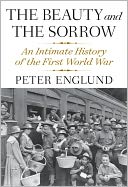
“The Beauty and the Sorrow” threads together the wartime experiences of 20 more or less unremarkable men and women, on both sides of the war, from schoolgirls and botanists to mountain climbers, doctors, ambulance drivers and clerks. A few of these people will become heroes. A few will become prisoners of war, or lose limbs, go mad or die. Their lives flicker here like votive candles lighted in a church; new ones are added to the mix while some wink out.Also in the NYT: Henry Kissinger's long review of George F. Kennan: An American Life (Penguin Press), by John Lewis Gaddis. Kissinger opens with an informal survey, in which he finds young men and women to be "essentially oblivious" of Kennan and his contributions to American foreign policy. He praises the author for "bringing Kennan back to us, thoughtful, human, self-centered, contradictory, inspirational — a permanent spur as consciences are wont to be."
That's all for this week. The ASLH meeting is still on, and we're busy gathering lots of news to report back to you! For more book review coverage, check out Ralph Luker's regular round-up at Cliopatria.
Thursday, November 10, 2011
Call for Contributors: Sensing the Law
This looks so interesting: Sensing the Law
The Canadian Initiative in Law, Culture, and Humanities (CILCH) is calling for contributions to an interdisciplinary edited collection on law and the senses. The book will emerge from a collaborative process that includes a workshop meeting of all authors in February 2013.
Sensing the Law addresses the numerous interfaces between law and the senses. While law is often presented as disembodied and abstract, the senses refer to the embodied, messy, and fleeting qualities of human life. The collection asks not only how law makes sense of the senses, but also how law is made sense of through vocabularies of sensory perception. The senses are mobilized in relationship to legal institutions in a variety of ways: as metaphors, embodied realities, sources of evidence and institutional rationalities. Yet, the senses seem to exceed and confound law in a number of ways.
The book is animated by four broad questions: Does law have senses? How does law make sense of human senses? How do we speak of law through a vocabulary of senses? And what are the assumptions about the senses that underpin law as well as critiques of norms?
First, we want to examine the ways in which law – including formal and informal norms, legal institutions, legal actors, legal practices, and legal knowledges – can have sensory perception. Justice is commonly visualized as a blindfolded woman (with sword and scales, no less). But can or should law and legal institutions hear, see, feel, taste, or smell? If so, which senses are privileged in the legal sensorium? What, then, is the scope of law’s perception? What remains unheard, unseen, or unfelt? Which senses do legal institutions use to perceive class, race, gender and sexuality, and how do they respond to injunctions to be “blind” towards any specific characteristic?
Second, law draws on, questions, validates and otherwise deals with human sensory perception. For example, which functioning of the senses becomes ‘normal’ and prescriptive? Which registers of perception can be relied upon to produce evidence? Which conduct, registered by which senses, can count as ‘offensive’? Existing scholarship suggests that legal institutions prefer visual evidence over, for example, auditory and olfactory evidence. What are the hierarchies of credibility of human senses? Whose senses count? How is reliability of sensory evidence negotiated?
Third, accounts and critiques of law are often couched in a vocabulary of sensory perception. Law can be hard or soft, it can feel abstract and cold, and judgments can be fresh or stale. What does it mean to talk about law in the register of senses? Which lines of critique become possible (or are foreclosed) once we consider the way the law looks, sounds, feels, smells, or tastes?
Finally, which assumptions about the senses, their ‘normal’ functioning, and their ability to produce knowledge is assumed in legal and critical discourses? Rather than criticizing that law doesn’t capture the senses, shouldn’t we also be concerned with the representations and limits of the senses? What work does the common division of the sensorium into five distinct senses do? How does a framework that is based on measuring perception and concerned with reliability deal with experiences of the uncanny, of haunting, or of the impossibility of distinguishing between touch, sound, and sight? How do discourses on the senses set standards about how and how much one ought to feel, see or hear in order to have ‘normal’ sensory perception?
The collection will present original interdisciplinary scholarship that traverses the intersections between law, culture, and the humanities. The chapters will push the boundaries of established fields, methods, and lines of inquiry in the study of law and the senses. The editors are Sheryl Hamilton, Diana Majury, Neil Sargent, and Christiane Wilke.
The Canadian Initiative in Law, Culture and Humanities has organized interdisciplinary, thought-provoking and interactive workshops and conferences since 2004. In this spirit of collaboration and exploration, this book project will include a workshop in February 2013. Authors and editors will share and discuss their work in progress with one another. Attendance is mandatory for all authors, and we will apply for funding to cover the costs of the workshop.
The deadline for chapter proposals is March 1st, 2012. The workshop will be held in Ottawa in late February 2013.
Please submit a chapter proposal (up to 1000 words, situating the proposed chapter within your own work and within the field), a short biographical statement and contact information to: CILCH@carleton.ca.
A Seminar on the Inns of Courts at the Folger
[We have the following from Folger Institute, via H-Law.]
The Folger Institute is now accepting applications from scholars wishing to participate in a faculty weekend seminar on "The Legal and Cultural Worlds of the Inns of Court."
Christopher Brooks, Professor of History at Durham University, will direct this Faculty Weekend Seminar at the Folger Institute, Folger Shakespeare Library, in Washington, DC on 27 and 28 April 2012.
This two-day seminar in the Folger series on English pedagogical institutions focuses on the so-called "third
university of England," the inns of court and inns of chancery in London. Unincorporated voluntary societies that housed practicing lawyers alongside young men training for the profession, the inns also contained "amateur" members drawn largely from the landed gentry. Some have argued that the literary vitality and rich culture of performing arts associated with the inns was only loosely connected with the (meager) pedagogic framework they provided. Yet, the inns remained the intellectual nerve-center of English law. There are, therefore, intriguing questions about the place of the inns as distinctive legal and educational societies within the wider cultural life of London. A dialogic consideration of legal education, such as this seminar invites, challenges us to re-think the relationship between institutions and the acquisition and transmission of knowledge and expertise across a range
of media and intellectual communities. Applicants with fully developed research projects are welcome to frame their own inquiries in their applications. Others are invited to consider a contribution in connection with the themes discussed above and those found here.
Director: Christopher Brooks is Professor of History at Durham University and is currently the holder of a Leverhulme Major Research Fellowship, which he is using to write the volume covering the years 1625-1689 for the Oxford History of the Laws of England. His most recent major publication is Law, Politics and Society in Early Modern England (2008).
Schedule: All day Friday and Saturday, 27 and 28 April 2012.
Apply: 6 January 2012 for admission (and grants-in-aid to support travel and lodging for faculty from the Folger Institute consortium
Questions? Please contact institute@folger.edu.
More.
The Folger Institute is now accepting applications from scholars wishing to participate in a faculty weekend seminar on "The Legal and Cultural Worlds of the Inns of Court."
Christopher Brooks, Professor of History at Durham University, will direct this Faculty Weekend Seminar at the Folger Institute, Folger Shakespeare Library, in Washington, DC on 27 and 28 April 2012.
This two-day seminar in the Folger series on English pedagogical institutions focuses on the so-called "third
university of England," the inns of court and inns of chancery in London. Unincorporated voluntary societies that housed practicing lawyers alongside young men training for the profession, the inns also contained "amateur" members drawn largely from the landed gentry. Some have argued that the literary vitality and rich culture of performing arts associated with the inns was only loosely connected with the (meager) pedagogic framework they provided. Yet, the inns remained the intellectual nerve-center of English law. There are, therefore, intriguing questions about the place of the inns as distinctive legal and educational societies within the wider cultural life of London. A dialogic consideration of legal education, such as this seminar invites, challenges us to re-think the relationship between institutions and the acquisition and transmission of knowledge and expertise across a range
of media and intellectual communities. Applicants with fully developed research projects are welcome to frame their own inquiries in their applications. Others are invited to consider a contribution in connection with the themes discussed above and those found here.
Director: Christopher Brooks is Professor of History at Durham University and is currently the holder of a Leverhulme Major Research Fellowship, which he is using to write the volume covering the years 1625-1689 for the Oxford History of the Laws of England. His most recent major publication is Law, Politics and Society in Early Modern England (2008).
Schedule: All day Friday and Saturday, 27 and 28 April 2012.
Apply: 6 January 2012 for admission (and grants-in-aid to support travel and lodging for faculty from the Folger Institute consortium
Questions? Please contact institute@folger.edu.
More.
Wednesday, November 9, 2011
Call for ASLH bloggers!
To all readers heading to Atlanta tomorrow for the annual meeting of the American Society for Legal History: we hope to maximize our coverage of the program by inviting guest posts on panels. If you would like to "claim" a panel to blog about, please do so by leaving a comment.
Excellent posts from previous years are here, here, here, here, here, here, and here.
If you're thinking about contributing, here are a few additional details:
Excellent posts from previous years are here, here, here, here, here, here, and here.
If you're thinking about contributing, here are a few additional details:
- No tech abilities needed: you send us the post, and we put it up for you.
- Ideal length: under 1000 words. But if you have more to say, we can accommodate longer posts.
- Although posts on panels are most common, ASLH posts on other topics are also welcome (e.g., a post from a first-timer about what the meeting is like).
- Timing: Please send your post as soon as you can, and certainly within a week.
Legal History and the Junior Faculty Forum
An upcoming Junior Faculty Forum, workshopping papers by "young scholars" will be held at Harvard Law School in June 2012. Note the topics of interest: they include legal history and law and the humanities, and the conveners include legal historian Adriaan Lanni. So this is for you! ("Young" is not defined by chronological age but by years in the profession.) Here's the call for submissions:
Junior Faculty Forum
Request for Submissions
_______________________________________________
Stanford, Yale, and Harvard Law Schools announce the Junior Faculty Forum (the successor to the Stanford/Yale Junior Faculty Forum that has convened for the past twelve years) to be held at Harvard Law School on June 1-2, 2012, and seek submissions for this meeting.
The Forum's objective is to encourage the work of young scholars by providing experience in the pursuit of scholarship and the nature of the scholarly exchange. Meetings are held each spring, alternating between Yale, Stanford, and Harvard.
Approximately twelve junior scholars (with one to seven years of teaching and who are not yet tenured) will be chosen on a blind basis from among those submitting papers to present. One or more senior scholars, not necessarily from one of the host institutions, will comment on each paper. The audience will include the invited young scholars, faculty from the host institutions, and invited guests. The goal is discourse on both the merits of particular papers and on appropriate methodologies for doing work in that genre. We hope that comment and discussion will communicate what counts as good work among successful senior scholars and will also challenge and improve the standards that now obtain. The Forum also hopes to increase the sense of community among legal scholars generally, particularly among new and veteran professors.
Each year the Forum invites submissions on selected topics in public and private law, legal philosophy, and law and humanities -- alternating loosely between public law and humanities subjects in one year, and private and dispute resolution law in the next. The focus of this year’s session will be public law and the humanities. The topics to be addressed are:
Administrative Law
Constitutional Law
Criminal Law
Employment Law, Social Welfare Policy, and Anti-Discrimination Law
Environmental Law
Family Law
Jurisprudence and Philosophy
Law and Humanities (including Law and Literature, Critical Legal Studies, and Gender Studies)
Legal History
Public International Law
There is no publication commitment associated with the Forum, nor is published work eligible. The host institution will pay presenters' travel expenses and provide accommodation; presenters will be required to attend the entire Forum schedule. Paper submissions for the Forum should be sent to Ms. Kaitlin Burroughs at Harvard Law School (1525 Massachusetts Avenue, Cambridge, MA 02138). Electronic submissions should be sent to kburroughs@law.harvard.edu. The deadline for submission is February 15, 2012. Please note on the cover letter which topic your paper falls under.
Inquiries concerning the Forum should be sent to Adriaan Lanni (adlanni@law.harvard.edu) or Gabriella Blum (gblum@law.harvard.edu) at Harvard Law School, Joseph Bankman at Stanford Law School (jbankman@stanford.edu), or Ian Ayres at Yale Law School (ian.ayres@yale.edu). We very much hope that young scholars will submit work. If the strong commitment of the host schools can make it so, participation at the Forum will benefit presenters and the profession.
Brophy on "The Republic of Liberty and Letters"
Alfred Brophy (Law--UNC) has published "The Republic of Liberty and Letters: Progress, Union and Constitutionalism in Graduation Addresses at the Antebellum University of North Carolina" in 89 N.C. Law Review 1879 (2011). The abstract follows and the full article is available here. Brophy delivered a shorter version of the paper as the Hutchins Lecture at the University of North Carolina's Center for the Study of the American South.
In the thirty years leading into Civil War, orators delivered hundreds of addresses to college literary societies throughout the United States. Those addresses, which were frequently given by lawyers, legally-trained politicians, and judges, condensed the orators’ ideas about law, history, economy, technology, and education together into a short compass. They provide an important and overlooked set of data for understanding how antebellum intellectuals saw law in relation to moral, technological, and economic progress.
“The Republics of Liberty and Letters” focuses on thirty‑four addresses given at the University of North Carolina from 1827 to 1860 to see how the orators dealt with ideas of Union, law, and constitutionalism, along with the ubiquitous but vague trope of “progress.” The addresses reveal strong support for the Union, often framed in terms of support for the Constitution, and emphasize the positive role that speech has in shaping politics. They are more moderate in approach towards the era’s conflict over slavery and Union than addresses at neighboring schools. However, Whig and Democratic orators divided over their visions of the place of the educated, the importance of the rule of law, and the dangers posed by increasing democracy. The addresses, thus, reveal important points of convergence as well as division.
“The Republics of Liberty and Letters” is primarily about the content of political and legal ideas at the University of North Carolina from the 1830s through the 1850s. It focuses attention on the important ideas in circulation on this campus. Yet, it has implications for cataloging constitutional ideas and then tracing how they relate to constitutional culture. It invites further work on ideas in literary addresses at other schools, along with work on addresses given by lawyers, politicians, and judges in other venues—like legislatures and courts. Those popular constitutional ideas can then be put together with “formal” constitutional law (law in the courts) and with legislative action, and in that way enrich our understanding of the sources and contours of constitutional history.
Tuesday, November 8, 2011
Important Announcement from H-Law
This morning we received the following announcement from H-Law:
The editorial board of H-LAW has the sad duty of informing H-LAW’s membership that Professor Christopher Waldrep of San Francisco State University, H-LAW’s founding editor, head moderator, and chief book review editor, has suffered a stroke. At present we neither can nor will speculate on his condition, his recovery, or his return to H-LAW. We wish him and his family well, and we are keeping all of them in our thoughts and prayers.We at the Legal History Blog are saddened by this news and wish Professor Waldrep a speedy recovery.
For the present, Professor Charles L. Zelden of Nova Southeastern University will serve as acting head moderator of H-LAW. H-LAW’s assistant book review editors, Michael Bryant and Ethan Zadoff, are working with Professor Zelden and with the former assistant book review editor, Professor Michael Pfeifer of John Jay College of Criminal Justice, to oversee the book review operation – including receipt of commissioned reviews and their processing through the H-NET Reviews system.
On a practical level, anyone who has posted to H-LAW since Friday, 4 November 2011, is encouraged to repost his or her message to H-LAW. Any reviewer who has recently submitted a review to Chris Waldrep but has heard nothing should re-send the review either to Michael Bryant at mbryant@bryant.edu or to Ethan Zadoff at ezadoff@gc.cuny.edu.
As we look forward to Chris’s recovery and return to service, the H-LAW editorial board pledges, in the interim, its best efforts to maintain the high standards of collegial and open discussion that Chris’s leadership has so long embodied.
New Book on Yale's "A Lancastrian Mirror for Princes"
Professor Rosemarie McGerr (Indiana--Director of the Medieval Studies Institute) has published a study of a medieval manuscripts, the Nova Statuta Angliae (ca. 1450s-1470s), held by the Yale Law Library. The publisher's description of the book, A Lancastrian Mirror for Princes: The Yale Law School New Statutes of England (Bloomington: Indiana University Press, 2011), follows.
 This seminal study addresses one of the most beautifully decorated 15th-century copies of the New Statutes of England, uncovering how the manuscript’s unique interweaving of legal, religious, and literary discourses frames the reader’s perception of the work. Taking internal and external evidence into account, Rosemarie McGerr suggests that the manuscript was made for Prince Edward of Lancaster, transforming a legal reference work into a book of instruction in kingship, as well as a means of celebrating the Lancastrians’ rightful claim to the English throne during the Wars of the Roses. A Lancastrian Mirror for Princes also explores the role played by the manuscript as a commentary on royal justice and grace for its later owners and offers modern readers a fascinating example of the long-lasting influence of medieval manuscripts on subsequent readers.

Exemplary Legal Writing: The Green Bag's Historical Nominees
During November and early December, “the luminaries and sages” of the editorial board of The Green Bag select from a list of nominees those works that should appear in the 2012 Almanac & Reader as exemplars of good legal writing from the year just passed.
Historical entries in the book category include:
• Tomiko Brown-Nagin, Courage to Dissent: Atlanta and the Long History of the Civil Rights Movement (Oxford University Press 2011)
• Clare Cushman, Courtwatchers: Eyewitness Accounts in Supreme Court History (Rowman & Littlefield 2011)
• John A. Farrell, Clarence Darrow: Attorney for the Damned (Doubleday 2011)
• Noah Feldman, Scorpions: The Battles and Triumphs of FDR’s Great Supreme Court Justices (Twelve 2010)
Historical entries in the category of “long articles” include:
• Josh Blackman, Outfoxed: Pierson v. Post and the Natural Law, 51 American Journal of Legal History 417 (2011)
• Christine Desan, Beyond Commodification: Contract and the Credit-Based World of Modern Capitalism, in 2 Transformations in American Legal History (Harvard University Press 2011) (Daniel W. Hamilton and Alfred L. Brophy, eds.)
• Alfred S. Konefsky, Simon Greenleaf, Boston Elites, and the Social Meaning and Construction of the Charles River Bridge Case, in 2 Transformations in American Legal History (Harvard University Press 2011) (Daniel W. Hamilton and Alfred L. Brophy, eds.)
• James E. Pfander and Daniel D. Birk, Article III and the Scottish Judiciary, 124 Harvard Law Review 1613 (2011)
• G. Edward White, The Origins of Modern American Legal History, in 2 Transformations in American Legal History (Harvard University Press 2011) (Daniel W. Hamilton and Alfred L. Brophy, eds.)
Historical entries in the book category include:
• Tomiko Brown-Nagin, Courage to Dissent: Atlanta and the Long History of the Civil Rights Movement (Oxford University Press 2011)
• Clare Cushman, Courtwatchers: Eyewitness Accounts in Supreme Court History (Rowman & Littlefield 2011)
• John A. Farrell, Clarence Darrow: Attorney for the Damned (Doubleday 2011)
• Noah Feldman, Scorpions: The Battles and Triumphs of FDR’s Great Supreme Court Justices (Twelve 2010)
Historical entries in the category of “long articles” include:
• Josh Blackman, Outfoxed: Pierson v. Post and the Natural Law, 51 American Journal of Legal History 417 (2011)
• Christine Desan, Beyond Commodification: Contract and the Credit-Based World of Modern Capitalism, in 2 Transformations in American Legal History (Harvard University Press 2011) (Daniel W. Hamilton and Alfred L. Brophy, eds.)
• Alfred S. Konefsky, Simon Greenleaf, Boston Elites, and the Social Meaning and Construction of the Charles River Bridge Case, in 2 Transformations in American Legal History (Harvard University Press 2011) (Daniel W. Hamilton and Alfred L. Brophy, eds.)
• James E. Pfander and Daniel D. Birk, Article III and the Scottish Judiciary, 124 Harvard Law Review 1613 (2011)
• G. Edward White, The Origins of Modern American Legal History, in 2 Transformations in American Legal History (Harvard University Press 2011) (Daniel W. Hamilton and Alfred L. Brophy, eds.)
Law and the French Atlantic

The French Atlantic has not yet received the sustained attention given to the British and Spanish Atlantic, particularly where the topic of law is concerned. This conference will explore the legal dimension (broadly conceived) of the French Atlantic empire in the early modern period. The variegated and rapidly evolving juridical order of ancien régime France was deeply implicated in the expansion of overseas commerce, the founding of colonies, and the creation of imperial administrations. Participants may explore topics such as: legal discourse and imperial ideologies; the establishment of colonial jurisdictions in Canada, Louisiana, and the French West Indies; the regulation of slavery; indigenous peoples and the law; the emergence of colonial land tenures; and the legal framework for trade and business enterprise. The organizers wish particularly to encourage comparative approaches that consider more than one French colony and that examine contrasts and convergences with the British, Spanish and Portuguese empires. In according due attention to the distinctive features of French law and the French New World empire, we hope to enrich understandings of Atlantic history generally.
Subscribe to:
Posts (Atom)