The Corpus Juris Civilis is indispensable for Roman law research. It is a vital pillar of modern law in many European nations, and influential in other countries. Scholars and lawyers still refer to it today. This valuable publication, however, may seem impenetrable at first, and references to it can be hard to decipher or detect. This guide provides a history of the Corpus Juris Civilis and the forms it has taken, states why it is still an important resource today, and offers some tips and tools for research using it.Update: The final version of the article is available from the LRSQ's website.
Thursday, December 15, 2016
Dingledy on the Corpus Juris Civilis
Frederick W. Dingledy, College of William & Mary Law Library, has posted The Corpus Juris Civilis: A Guide to Its History and Use, which is forthcoming in the Legal Reference Services Quarterly 35 (2016): 231-255:


Blaufarb's "Great Demarcation"
Rafe Blaufarb, the Ben Weider Eminent Scholar Chair and Director of the Institute on Napoleon and the French Revolution at the Florida State University, has published The Great Demarcation:The French Revolution and the Invention of Modern Property (Oxford University Press):
What does it mean to own something? What sorts of things can be owned, and what cannot? How does one relinquish ownership? What are the boundaries between private and public property? Over the course of a decade, the French Revolution grappled with these questions. Punctuated by false starts, contingencies, and unexpected results, this process laid the foundations of the Napoleonic Code and modern notions of property.
As Rafe Blaufarb demonstrates in this ambitious work, the French Revolution remade the system of property-holding that had existed in France before 1789. The revolutionary changes aimed at two fundamental goals: the removal of formal public power from the sphere of property and the excision of property from the realm of sovereignty. The revolutionaries accomplished these two aims by abolishing privately-owned forms of power, such as jurisdictional lordship and venal public office, and by dismantling the Crown domain, thus making the state purely sovereign. This brought about a Great Demarcation: a radical distinction between property and power from which flowed the critical distinctions between the political and the social, state and society, sovereignty and ownership, the public and private. It destroyed the conceptual basis of the Old Regime, laid the foundation of France's new constitutional order, and crystallized modern ways of thinking about polities and societies.
By tracing how the French Revolution created a new legal and institutional reality, The Great Demarcation shows how the revolutionary transformation of Old Regime property helped inaugurate political modernity
Wednesday, December 14, 2016
Fishman, "Third Circuit Court Reports (1789-1879)"
The most recent issue of the Law Library Journal includes an article that may be of interest: "Third Circuit Court Reports (1789-1879)," by Joel Fishman (independent scholar, former Associate Director for Lawyer Services, Duquesne University Center for Legal Information/Allegheny County Law Library). Here's the abstract:
The history of court reporting of the federal lower judiciary dates from the early days of the Republic. Mr. Fishman helps to document that history by reviewing the publication of the reports for the Third Circuit (circuit and district courts) covering the nominative reports from the late-eighteenth to the late-nineteenth century, before their republication in Federal Cases by West Publishing Company. A bibliography is appended.
Stein on Citizenship & the Jewish Diaspora
Sarah
Abrevaya Stein (UCLA) has
published Extraterritorial Dreams: European Citizenship, Sephardi Jews, and the Ottoman Twentieth Century with the University of Chicago Press. From
the publisher:
We tend to think of citizenship as something that is either offered or denied by a state. Modern history teaches otherwise. Reimagining citizenship as a legal spectrum along which individuals can travel, Extraterritorial Dreams explores the history of Ottoman Jews who sought, acquired, were denied or stripped of citizenship in Europe in the late nineteenth and early twentieth centuries—as the Ottoman Empire retracted and new states were born—in order to ask larger questions about the nature of citizenship itself.
Sarah Abrevaya Stein traces the experiences of Mediterranean Jewish women, men, and families who lived through a tumultuous series of wars, border changes, genocides, and mass migrations, all in the shadow of the collapse of the Ottoman Empire and the ascendance of the modern passport regime. Moving across vast stretches of Europe, the Middle East, Asia, and the Americas, she tells the intimate stories of people struggling to find a legal place in a world ever more divided by political boundaries and competing nationalist sentiments. From a poor youth who reached France as a stowaway only to be hunted by the Parisian police as a spy to a wealthy Baghdadi-born man in Shanghai who willed his fortune to his Eurasian Buddhist wife, Stein tells stories that illuminate the intertwined nature of minority histories and global politics through the turbulence of the modern era.
Praise for the book:
“A scintillating study of the various
moments and places in which numerous empires met, overlapped, and competed, as
well as the individuals who moved between these empires, both physically and
through the papers they carried and lost, Extraterritorial Dreamsis
incredibly rich, evocative, and persuasive in its exposition of the broad and
diverse landscapes in which the author’s story unfolds.” –Julia Philips Cohen
“From the stunningly diverse histories
of Ottoman Jews who held (or lost) the protection of European powers during the
collapse of the Ottoman Empire, Stein weaves a powerful and compelling tale of
the shifting parameters of citizenship that evinces the human dramas not always
evident in passports and legal documents. She brilliantly charts the ways in
which ‘protection’ could be the stuff of both dreams and nightmares, offering
new freedoms as well as imposing new dangers. In this deeply moving history,
the human costs of being a legal misfit or anomaly are made visceral, along
with the messiness of modern citizenship itself. This story of the complex
range of citizenships held (and imagined) by Ottoman Jews prompts a larger
rethinking of histories of belonging and exclusion that is urgently relevant
to—and revelatory for—our contemporary world.” –Jordanna Bailkin
“From Salonika to Alexandria, from
London to Baghdad to Shanghai and many places in between, Stein takes her
readers on an unforgettable journey through the complex legal landscape
traversed in the twentieth century by ‘protected persons’ as war, unrest, and
changing imperial or national agendas transformed the legal and geopolitical
stakes of a centuries-old rights regime. Stein’s vivid storytelling and
incisive analysis leave no doubt that the study of ‘protection’ has much to
tell us about the power and limits of modern citizenship.” –Mary Dewhurst Lewis
CFP: The Intimate State: Gender, Sexuality, and Governance in Modern U.S. History
We have the following Call for Proposals:
The Intimate State: Gender, Sexuality, and Governance in Modern U.S. History
Call for Proposals: Due April 10, 2017
Editors: Margot Canaday, Nancy Cott, & Robert Self
We are soliciting original history essays—archive-based research on specific topics,
as well as conceptual essays addressing more abstract questions—regarding gender, sexuality and the state for a new edited volume. We seek to bring twenty-five ears of scholarship on gender, sexuality, and the family to bear on the history of modern state authority in the United States (1865 to the present). While the volume will reach back to the Reconstruction era and value this history as such, we also hope to point toward a usable past in an uncertain present.
The historical study of state power (its accumulation at various scales, its structures, and its modes of operation) is a longstanding field while that of gender, sex, and sexuality is relatively young though very vibrant. For the most part, these two fields have produced their profoundest insights and advancements without substantial dialogue with one another. Yet contemporary developments and recent scholarship have made it plain that government action at the local, state and federal levels is entwined with incentives, obligations and punishments related to gender and sexuality, and that decisions imagined as personal and intimate choices are almost always already structured by state rules.
These collected essays will aim to demonstrate that the involvements of government authority in intimate life warrant greater historical analysis and theorization than they have generated to date. We envision a volume that encourages scholars whose primary intellectual commitment is to the history of gender and sexuality to leverage that scholarship in the service of new understandings of modern state power (whether at local, state, regional, national, or transnational scales) and that scholars of state authority will also be persuaded to attend more to the insights of gender and sexuality studies in their scholarship. How might the history of American state development—its periodization, its overall theorization—look different at every governmental level from the local to the federal when questions of gender and sexuality move to the center of the analytical frame? The volume invites intersectional approaches to that question, foregrounding the relationship of gender, sexuality, and state power to race, class, and other categories of analysis and experience, and also welcomes contributions that are transnational or comparative in their approach.
Possible topics might include gender/sexuality and:
--borders of the nation/immigration
--racism, racial violence
--political economy
--penal power and incarceration
--electoral/party politics
--citizenship
--militarization and war
--empire
--indigeneity
--national security
As well as state power/regulation and:
--forms of marriage, nonmarriage, marital dissolution
--commercialized sex/sex work
--sexual violence
--sexual science, eugenics
--pornography
--obscenity
--reproduction, contraception, abortion
--heterosexuality
--LGBT rights
--HIV/AIDS
--transgender lives and experiences
Please send an abstract of no more than 750 words, including references to major
sources for the research if archive-based, to Margot Canaday (mcanaday@princeton.edu), Nancy Cott (ncott@fas.harvard.edu), and Robert Self
(robert_self@brown.edu) by April 10, 2017, along with a one-page CV. Authors will
be notified by June 1, 2017, of their selection to participate in a conference to be held at Brown University in January of 2018. Essays (of no more than 10,000 words) to be circulated for the conference will be due December 15, 2017.
Tuesday, December 13, 2016
Gillespie's "Causes of War II"
Alexander Gillespie, Pro Vice-Chancellor for Research and Professor of Law at the University of Waikato, New Zealand, has published The Causes of War: Volume II: 1000 CE to 1400 CE, with Hart Publishing:
This is the second volume of a projected five-volume series charting the causes of war from 3000 BCE to the present day, written by a leading international lawyer, and using as its principal materials the documentary history of international law, largely in the form of treaties and the negotiations which led up to them. These volumes seek to show why millions of people, over thousands of years, slew each other. In departing from the various theories put forward by historians, anthropologists and psychologists, Gillespie offers a different taxonomy of the causes of war, focusing on the broader settings of politics, religion, migrations and empire-building. These four contexts were dominant and often overlapping justifications during the first four thousand years of human civilisation, for which written records exist.

CFP: Constitutionalism in Oligarchic Democracies
[We have the following Call for Papers.]
Constitutional Responses to the Crisis of Representation and Oligarchic Democracy
The deadline for applications is 1200 noon Central European Time 4 January 2017.
This Call for Papers is issued by the Constitution Building Programme of the International Institute for Democracy and Electoral Assistance (International IDEA), as part of a research project on Constitutional Responses to the Crisis of Representation and Oligarchic Democracy. The project seeks to examine the problem of ‘oligarchic democracy’ and to consider whether, and how, constitutional design may provide a useful corrective to the oligarchic tendencies in liberal-democracies.
The expectation is that the papers will inspire a focused debate around the issue of oligarchic democracy and anti-oligarchic constitution-making. Selected papers will be synthesized into one report that will be addressed to a mixed audience of academics and reflective practitioners in various fields of constitutional practice, whether as constitutional lawyers, politicians, international advisors, or civil society activists working in constitutional reform, public policy or poverty-reduction fields. It is also intended that the best papers will be selected for inclusion in an edited volume or special edition of an academic journal.
Spring 2017 in the Washington History Seminar
The Washington History Seminar Spring 2017 Schedule is out. The seminar meets at the Woodrow Wilson International Center for Scholars, Ronald Reagan Building and International Trade Center, One Woodrow Wilson Plaza, Washington, D.C., and is jointly sponsored by the Wilson Center and the National History Center.
January 23: Thomas Blanton (National Security Archive) and Svetlana Savranskaya (National Security Archive), The Last Superpower Summit
January 30: Marcia Chatelain (Georgetown University) on “Fast Food, Civil Rights: McDonald’s and Black America in the Post-King Years”
February 6: Marc Levinson (independent scholar) on An Extraordinary Time: The end of the Postwar Boom and the Return of the Ordinary Economy
February 13: Edward Balleisen (Duke University) on Fraud: From Barnum to Madoff
February 20: President's Day: No Seminar
February 27: Timothy Breen (Northwestern University) on An Appeal to Heaven
March 6: Walter A. McDougall (The University of Pennsylvania) on The Tragedy of U.S. Foreign Policy
March 13: Julia Young (The Catholic University of America) on Mexican Exodus: Emigrants, Exiles, and Refugees of the Cristero War
March 20: Luis Campos (University of New Mexico) on Radium and the Secret of Life
March 27: Jenna Weissman Joselit (Georgetown University) on Set in Stone: America's Embrace of the Ten Commandments
April 3: Michael Kazin (Georgetown University) on War against War: The Rise, Defeat, and Legacy of the Peace Movement in America, 1914-1918
April 10: Passover: No Seminar
April 17: Courtney Fullilove (Wesleyan University) on The Profit of the Earth: The Global Seeds of American Agriculture
April 24: Frank Settle (Washington and Lee University) on General George C. Marshall and the Atomic Bomb
May 1: Alice Kaplan (Yale University) on Looking for a Stranger: Albert Camus and the Life of a Literary Classic
May 8: Gregg Brazinsky (George Washington University) on Winning the Third World: Sino-American Competition during the Cold War
May 15: Jason Parker (Texas A&M) on Hearts, Minds, Voice: U.S. Cold War Diplomacy and the Formation of the Third World
Gordan on Cuban Slave Trade Cases in the SDNY
John D. Gordan, III, has published "This Practice Against Law": Cuban Slave Trade Cases in the Southern District of New York, 1839-1841, with Talbot Publishing, an imprint of The Lawbook Exchange, Ltd.:
Writes Christian G. Fritz, Emeritus Professor of Law, University of New Mexico:"This Practice Against Law" reconstructs the little-known story of the Butterfly and the Catharine, two slave ships from Havana seized by the British Navy off the African coast in 1839. These ships were tendered to the federal government for forfeiture proceedings and their captains prosecuted in the Southern District of New York and the Supreme Court of the United States. At the same time Chief Justice Roger Brooke Taney conducted proceedings against the Catharine's builders in the Circuit Court in Baltimore. Based on the original case files in the National Archives and British Parliamentary publications, this in-depth review refutes the criticism of the federal judiciary in the prior scholarly assessment of these cases and demonstrates that in fact the performance of the federal judges compares favorably with other branches of the American government.

John Gordan marvelously and meticulously reconstructs two slave ship cases, litigated in the Southern District of New York, after the 1839 British seizure of the Catharine and the Butterfly. While both ships were built in Baltimore and flew the American flag, authorities rightly suspected that the ships were intended for use in the Cuban-African slave trade conducted by foreign nationals. Gordan's insightful tracing of the proceedings regarding these two little-known vessels provides an instructive contrast to the more famous events unfolding in the near-contemporaneous journey of the Amistad through the federal courts.
This book presents an excellent overview of the international slave trade in light of the American cases. In addition, Gordan's extraordinary legal historical sleuthing provides a fuller picture of the legal machinations and complications of the American approach to the slave trade. Central to his analysis are the new legal sources Gordan draws upon, such as the unreported opinion (usefully included in the book's appendix) of U.S. District Judge Samuel Betts, who initially heard the legal issues raised by the Catharine and the Butterfly.
Gordan's first-rate documentary detective work and insightful scholarship shed new and important light on the legal and political conditions of the Cuban slave trade in the 19th century. It is the latest gem from a leading authority of the history of the federal courts.
Monday, December 12, 2016
Douma on How the First Ten Amendments Became the Bill of Rights
Michael Douma, the director of the Georgetown Institute for the Study of Markets and Ethics, has posted How the First Ten Amendments Became the Bill of Rights, which is forthcoming in the Georgetown Journal of Law & Public Policy:
The term “the Bill of Rights” used as a proper noun to refer specifically and exclusively to the first ten amendments to the U.S. Constitution was largely a result of civic education drives in the 1920s and 1930s. Many in the founding generation called for a bill rights to be attached to the Constitution, but they never called the first ten amendments “the Bill of Rights.” In the nineteenth century, these amendments had little power, and the bill of rights (usually not capitalized) was often thought to be an abstract set of principles, existing prior to and not coequal with the first ten amendments. Through a gradual linguistic evolution, driven by a need to define and apply political principles, Americans created “the Bill of Rights” and imbued it with iconic status. This occurred first in legal language in the 1890s, and spread into textbooks, before entering the vocabulary of contributors to newspapers. In the 1930s, while courts and political leaders looked to the Bill of Rights to justify the federal expansion of power, Americans discovered that this iconic document could be used to resist the same. As they debated the nature, purpose, and application of the Bill of Rights, Americans clarified the meaning of the term and empowered it.
Kastenberg on a Senator's Manipulation of War-Time Hysteria
Joshua E Kastenberg, University of New Mexico School of Law, has posted War Time Hysteria, 1917: Senator Miles Poindexter, "American-Ness," and the Strange Case of Colonel Carl Reichmann:
One hundred years ago, after the United States entered into World War I, Congress passed the Espionage Act and other significant limitations on basic freedoms. Several state governments likewise vigorously prosecuted alleged "subversives" under anti-syndicalism acts. The diminution of basic rights and the treatment of ethnic German minorities has been the subject of scholarship since. However, the treatment of German minorities in the armed forces has not been thoroughly studied, even though such a study could add to the broader field of civil-military relations. Nor has the wartime behavior of legislators in regard to the armed forces as well as their contribution to the popular prejudices of the day, and its effect on the national polity been the subject of analysis. This article, which presents a singular event, is a microcosm of civil-military relations and wartime hysteria during the period in which the United States participated in World War I. It is not my intent to focus on the accomplishments of Colonel Reichmann or argue that he was wrongly denied a promotion. Rather, it is my intent to examine how a singular senator who did not serve on a relevant committee was able to master a popular prejudice to manipulate legislative and executive processes to achieve political – albeit short lived – prominence.
Miles Poindexter (LC)

Sunday, December 11, 2016
Sunday Book Review Roundup
With slight delay but without further ado, I post this week's Sunday Book Review Roundup:
David Oshinsky's Bellevue: Three Centuries of Medicine and Mayhem at America’s Most Storied Hospital is reviewed in The Nation

In The Times Literary Supplement Ari Kelman reviews Ira Berlin's The Long Emancipation: The Demise of Slavery in the United States and Manisha Sinha's The Slave's Cause: A History of Abolition
The New York Times reviews Phillipe Girard's Toussaint Louverture: A Revolutionary Life. The paper also has a review of The Vanquished: Why the First World War Failed to End by Robert Gerwarth. Jack Weatherford's Genghis Khan and the Quest for God: How the World's Greatest Conqueror Gave Us Religious Freedom is also reviewed.
Douglas Smith's Rasputin: Faith, Power, and the Twilight of the Romanovs is reviewed the The Washington Post.
At H-Net is a review of Gary Clayton Anderson's Ethnic Cleansing and the Indian: The Crime That Should Haunt America. Also at H-Net is a review of Seeds of Empire: Cotton, Slavery, and the Transformation of the Texas Borderlands, 1800-1850 by Andrew J. Torget.
NPR has a review of The Beautiful Country and the Middle Kingdom: America and China, 1776 to the Present by John Pomfret.
The Economist lists its take on 2016's best books in history here.
 Lena Salaymeh is interviewed at the New Books Network about her Beginnings of Islamic Law Late Antique Islamicate Legal Traditions. Gretchen Buggeln speaks about her The Suburban Church Modernism and Community in Postwar America. Ruth Rogaski is interviewed about her Hygienic Modernity Meanings of Health and Disease in Treaty-Port China.
Because we all might need a little respite from our particular intellectual worlds at this time in the semester - Leo Braudy's Haunted: Witches, Vampires, Zombies, and Other Monsters of the Natural and Supernatural Worlds reviewed in the Los Angeles Review of Books. Jonathan Lamb's Scurvy: The Disease of Discovery in reviewed in Slate. And in History Today is a review of The Rays Before Satyajit: Creativity and Modernity in Colonial India by Chandak Sengoopta.
Finally, Public Books has a review of Gareth Stedman Jones' Karl Marx: Greatness and Illusion.
David Oshinsky's Bellevue: Three Centuries of Medicine and Mayhem at America’s Most Storied Hospital is reviewed in The Nation

In The Times Literary Supplement Ari Kelman reviews Ira Berlin's The Long Emancipation: The Demise of Slavery in the United States and Manisha Sinha's The Slave's Cause: A History of Abolition
The New York Times reviews Phillipe Girard's Toussaint Louverture: A Revolutionary Life. The paper also has a review of The Vanquished: Why the First World War Failed to End by Robert Gerwarth. Jack Weatherford's Genghis Khan and the Quest for God: How the World's Greatest Conqueror Gave Us Religious Freedom is also reviewed.
Douglas Smith's Rasputin: Faith, Power, and the Twilight of the Romanovs is reviewed the The Washington Post.
At H-Net is a review of Gary Clayton Anderson's Ethnic Cleansing and the Indian: The Crime That Should Haunt America. Also at H-Net is a review of Seeds of Empire: Cotton, Slavery, and the Transformation of the Texas Borderlands, 1800-1850 by Andrew J. Torget.
NPR has a review of The Beautiful Country and the Middle Kingdom: America and China, 1776 to the Present by John Pomfret.
The Economist lists its take on 2016's best books in history here.
 Lena Salaymeh is interviewed at the New Books Network about her Beginnings of Islamic Law Late Antique Islamicate Legal Traditions. Gretchen Buggeln speaks about her The Suburban Church Modernism and Community in Postwar America. Ruth Rogaski is interviewed about her Hygienic Modernity Meanings of Health and Disease in Treaty-Port China.
Because we all might need a little respite from our particular intellectual worlds at this time in the semester - Leo Braudy's Haunted: Witches, Vampires, Zombies, and Other Monsters of the Natural and Supernatural Worlds reviewed in the Los Angeles Review of Books. Jonathan Lamb's Scurvy: The Disease of Discovery in reviewed in Slate. And in History Today is a review of The Rays Before Satyajit: Creativity and Modernity in Colonial India by Chandak Sengoopta.
Saturday, December 10, 2016
Weekend Roundup
- The Institute of Advanced Legal Studies in London invites applications for visiting scholars in 2017-18. Full details here.
- The Nicholas D. Chabraja Center for Historical Studies at Northwestern University will be hosting a graduate student conference on, Punishment and its Discontents on May 19, 2017. Here's the Call. Application deadline: Feb.1, 2017.
- Don't miss the Newberry Library's short term fellowship deadline--it's just around the corner: Dec.15, 2016. Details here.
- An "Advance Access Alert" tells us that Joseph Kary’s Judgments of Peace Montreal’s Jewish Arbitration Courts, 1914-1976, has been published on-line in the American Journal of Legal History .
- ConSource and the National Archives host “a distinguished panel of federal judges who will discuss the Bill of Rights in the 21st century,” on Thursday, December 15, at 7:00 p.m. in the National Archives’ William G. McGowan Theater, 7th and Constitution Avenue, NW
- ICYMI: Cornell University's Lawrence Glickman on Donald Trump and the Anti-New Deal Tradition in the OAH's blog, Process. In this year's version of What is [the University of Chicago] Law School [Faculty] Reading, one learns that Tom Ginsburg is reading Hofstadter's Paranoid Style in American Politics. Vanderbilt Law's Sara Mayeux on returning to the South, in the Princeton Alumni Weekly.
Friday, December 9, 2016
Robinson and Robinson on the Triangle Fire and Its Aftermath
Paul H. Robinson, University of Pennsylvania Law School, and Sarah M. Robinson, have posted 1911 – Triangle Factory Fire – Building Safety Codes, which is the first chapter of their forthcoming book, Tragedy, Outrage and Reform: Crimes that Changed Our World (Rowman & Littlefield, 2018). The table of contents, included with the chapter, lists twenty-three crimes and the legislation or other public policy each prompted. The authors explain:
 |
| Credit: NYPL |
Can a crime make our world better? Crimes are the worst of humanity’s wrongs but, oddly, they sometimes do more than anything else to improve our lives. As it turns out, it is often the outrageousness itself that does the work. Ordinary crimes are accepted as the background noise of our everyday existence but some crimes make people stop and take notice – because they are so outrageous, or so curious, or so heart-wrenching. These “trigger crimes” are the cases that this book is about.
HLS Lectures on Diversity and U.S. Legal History
Harvard Today has posted a story on the lecture series, “Diversity and U.S. Legal History,” held at the Harvard Law School this semester. HT reports that “the series was sponsored by Dean Martha Minow and organized by Professor Mark Tushnet, William Nelson Cromwell Professor of Law, who also designed a reading group to complement the lectures.” The post includes links to lectures by Joseph Singer, Rachel Moran, Tomiko Brown-Nagin, Randall Kennedy, John S. W. Park, Annette Gordon-Reed, Michael Klarman, Kenneth Mack, Diana Eck, and Katherine Franke.
Thursday, December 8, 2016
Northwestern's Miller Post-Doc Fellowship

Northwestern’s Center for Legal Studies is pleased to continue a collaborative partnership with the Jack Miller Center for Teaching America’s Founding Principles and History. We seek applications for the centerpiece of the partnership: a two-year post-doctoral fellowship held in residence at Northwestern University’s Center for Legal Studies beginning September 1, 2017.
A strong preference will be given to candidates working at the intersections of constitutional innovation, politics, and law in the context of the rise of eighteenth century invention, new understandings of property, the Enlightenment, and the creation of the United States. Particularly encouraged to apply are candidates in legal history, the history of political and economic thought, and/or political theory whose work is empirically grounded in the eighteenth century but has significant contemporary implications for questions of constitutionalism, liberty, equality, and democracy.
The post-doctoral fellow will offer three courses per year on topics pertaining to early American and Atlantic Enlightenment history, political and economic thought, and/or social science. In addition to engaging in an active research and publishing agenda, the candidate is expected to provide a reasonable amount of assistance with organizing other activities associated with the Fellowship and the Legal Studies Program. The annual salary for the fellow is $50,000, plus fringe benefits and a $1,500 renewable annual research budget. The fellow is required to organize and participate in several activities associated with Jack Miller Center events at Northwestern. These activities include producing an essay on the fellow’s work; participating in the Annual Jack Miller Faculty Development Summer Institute for professors; working with Legal Studies faculty hosting a website that features the fellow’s work and other activities related to the Jack Miller Center; and planning, attending, and participating in the Law in Motion Lecture series. Generous funds are available to bring in scholars central to the fellow’s own scholarship for such events. This is a nine-month faculty appointment, and applicant must have a Ph.D. in hand by September 1, 2017.
Applicants should submit a cover letter stating qualifications and field of interest, a CV, a writing sample, a sample syllabus of a proposed course, and two letters of recommendation (may be sent under separate cover). Northwestern University is an Equal Opportunity, Affirmative Action Employer of all protected classes including veterans and individuals with disabilities. Women and minorities are encouraged to apply. Hiring is contingent upon eligibility to work in the United States. Applications should be submitted no later than February 15, 2017. Apply here.
Ely, Jr., "The Contract Clause: A Constitutional History"
New from the University Press of Kansas: The Contract Clause: A Constitutional History (Oct. 2016), by James W. Ely, Jr. (Vanderbilt University). A description from the Press:
A few blurbs:Few provisions of the American Constitution have had such a tumultuous history as the contract clause. Prompted by efforts in a number of states to interfere with debtor-creditor relationships after the Revolution, the clause—Article I, Section 10—reads that no state shall “pass any. . . Law impairing the Obligation of Contracts.” Honoring contractual commitments, in the framers’ view, would serve the public interest to encourage commerce and economic growth. How the contract clause has fared, as chronicled in this book by James W. Ely, Jr., tells us a great deal about the shifting concerns and assumptions of Americans. Its history provides a window on matters central to American constitutional history, including the protection of economic rights, the growth of judicial review, and the role of federalism.
Under the leadership of Chief Justice John Marshall, the Supreme Court construed the provision expansively, and it rapidly became the primary vehicle for federal judicial review of state legislation before the adoption of the Fourteenth Amendment. Indeed, the contract clause was one of the most litigated provisions of the Constitution throughout the nineteenth century, and its history reflects the impact of wars, economic distress, and political currents on reading the Constitution. Ely shows how, over time, the courts carved out several malleable exceptions to the constitutional protection of contracts—most notably the notion of an inalienable police power—thus weakening the contract clause and enhancing state regulatory authority. His study documents the near-fatal blow dealt to the provision by New Deal constitutionalism, when the perceived need for governmental intervention in the economy superseded the economic rights of individuals.
Though the 1970s saw a modest revival of interest in the contract clause, the criteria for invoking it remain uncertain. And yet, as state and local governments try to trim the benefits of public sector employees, the provision has once again figured prominently in litigation. In this book, James Ely gives us a timely, analytical lens for understanding these contemporary challenges, as well as the critical historical significance of the contract clause.

"Students of the modern Constitution pay little attention to the Contract Clause, yet for more than 150 years it was one of the most litigated issues before American courts. James Ely has done a masterful job in not only analyzing the development of Contract Clause jurisprudence, but does so in a way that will be understandable by lay persons as well as scholars. This will be the definitive book on this subject for many years to come."—Melvin I. Urofsky
"Professor Ely has indeed written the ‘definitive history’ of the clause that once was the Constitution’s most prolific source of litigation. It will immediately become the indispensable text, superseding Benjamin F. Wright’s classic but outdated study. With his unrivaled mastery of case law and legal scholarship, Ely has crafted a work that in telling the particular story of the contract clause is also a probing examination of constitutional law’s elusive quest to draw the line between governmental regulation and the free pursuit of economic activity."—Charles F. HobsonMore information is available here.
Wednesday, December 7, 2016
Prince, "Hosea Stout: Lawman, Legislator, Mormon Defender"
New from the University Press of Colorado: Hosea Stout: Lawman, Legislator, Mormon Defender, by Stephen L. Prince (independent scholar). A description from the Press:
Hosea Stout witnessed and influenced many of the major civil and political events over fifty years of LDS history, but until the publication of his diaries, he was a relatively obscure figure to historians. Hosea Stout: Lawman, Legislator, Mormon Defender is the first-ever biography of this devoted follower who played a significant role in Mormon and Utah history.

Stout joined the Mormons in Missouri in 1838 and followed them to Nauvoo, where he rose quickly to become a top leader in the Nauvoo Legion and chief of police, a position he also held at Winter Quarters. He became the first attorney general for the Territory of Utah, was elected to the Utah Territorial Legislature, and served as regent for the University of Deseret (which later became the University of Utah) and as judge advocate of the Nauvoo Legion in Utah. In 1862, Stout was appointed US attorney for the Territory of Utah by President Abraham Lincoln. In 1867, he became city attorney of Salt Lake City, and he was elected to the Utah House of Representatives in 1881.
But Stout’s history also had its troubled moments. Known as a violent man and aggressive enforcer, he was often at the center of controversy during his days on the police force and was accused of having a connection with deaths in Nauvoo and Utah. Ultimately, however, none of these allegations ever found traction, and the leaders of the LDS community, especially Brigham Young, saw to it that Stout was promoted to roles of increasing responsibility throughout his life. When he died in 1889, Hosea Stout left a complicated legacy of service to his state, his church, and the members of his faith community.More information is available here.
Murray and Tani on Gersen and Suk's "Sex Bureaucracy"
Melissa Murray and Karen M. Tani, University of California, Berkeley, have posted Something Old, Something New: Reflections on the Sex Bureaucracy, which appears in the California Law Review Online 7 (2016): 122-54:
This essay responds to “The Sex Bureaucracy,” in which Jacob Gersen and Jeannie Suk identify a “bureaucratic turn in sex regulation”—one that has expanded the reach of sexual regulation to include “nonviolent, non-harassing, voluntary sexual conduct” (or in their words, “ordinary sex”). In their view, the Department of Education’s campaign against sexual assault on college campuses epitomizes this bureaucratic shift. While applauding the authors’ attention to the intersection of sexuality and governance, we challenge their account of the “bureaucratic turn” as an unprecedented event. Drawing on examples from across U.S. history, we show how administrative agencies and unelected bureaucrats have persistently and robustly regulated sex and sexuality, including “ordinary sex.” Building on this more historical and nuanced portrait of America’s “sex bureaucracy,” we then identify what is truly new and striking about the slice that Gersen and Suk explore. In the Department of Education’s regulation of sex, we see clearly how consent—and specifically, affirmative consent—has replaced marriage as the boundary marker between licit and illicit sexual conduct. At a time when marriage no longer holds force as the distinguishing feature of lawful sex and sexuality, enthusiastic, unambivalent expressions of consent provide the state with documentable signals of appropriate sex and sexuality, while also, we speculate, reinforcing an ascendant neoliberal logic of citizenship and governance. In short, the “sex bureaucracy” is old, but innovative, and very much deserving of our scrutiny.
The Affinities and Disjunctures of History and Anthropology
Interdisciplinarity is an idea which has
became so ubiquitous in modern academic life that is it is often difficult to
cabin what it exactly implies. In the world of legal scholarship, the
traditional focus has been on “law and” disciplines, such as law and society or
law and economics. Outside of
the legal academy, this is equally true as the classic disciplinary distinctions
of the early to mid-20th century have become suffused with
methodological and theoretical borrowings.
No
field has felt this pressure more than social-cultural anthropology. The traditional holism of ethnographic fieldwork routinely borrowed from
existing theories including those from psychology, sociology, and law. And in recent decades the central disciplinary markers of anthropology, such
as ethnography and “culture,” have been almost universally absorbed into other
disciplines, while the geographic scope of what anthropologists study has
greatly expanded from tribal or premodern cultures.
In
this vein, today I will focus not on a “law and” but how I came to think about “anthropology
and history” while writing my first book. Prior to a historical turn late in my doctoral studies, I had long been influenced by
historical perspectives in my early academic life. My undergraduate training led to theses regarding judicial decision-making during the
Tang and Song dynasties of China
and 20th century Chinese interpretations of judicial independence. In fact,
I was very close to entering the University
of Michigan ’s unique Anthropology and History doctoral program before I decided to stay solely in anthropology.
Moreover, it is very difficult to become a contemporary anthropologist and not engage
with historical sensibilities. The field has been grappling with explaining social change over time ever since
it began to move away from its original funcationalist aspiration to “map” a
particular social space in its entirety at one point in time. This transition from
synchronic to diachronic analysis was complicated by anthropology’s engagement,
at some points enabling and others challenging, with the implicit historicism
of evolutionary theories which posited modern Western societies as the
endpoints of social development. In parallel, the relationship of anthropology to colonialism still looms large over the discipline.
Many
essays and books have been written about the development of “historical
anthropology” or “anthropological history.” Similarly, the 20th
century development of the fields of popular and cultural history were heavily
influenced by anthropological theories and sensibilities
regarding culture and agency, to an extent that they are almost taken for
granted today. Noted collaborations emerged including the seminar historian Robert
Darnton and anthropologist Clifford Geertz famously taught together for decades at Princeton . There
are now journals specifically concerned with history and anthropology, and scholars,
such as Alan Macfarlane, who devote their career to this particular interdisciplinary
engagement.
Bracha on "The Intellectual Origins of American Intellectual Property, 1790–1909"
New from Cambridge University Press: Owning Ideas: The Intellectual Origins of American Intellectual Property, 1790–1909, by Oren Bracha (University of Texas, Austin). A description from the Press:
Owning Ideas is a comprehensive account of the emergence of the concept of intellectual property in the United States during the long nineteenth century. In the modern information era, intellectual property has become a central economic and cultural phenomenon and an important lever for allocating wealth and power. This book uncovers the intellectual origins of this modern concept of private property in ideas through a close study of its emergence within the two most important areas of this field: patent and copyright. By placing the development of legal concepts within their social context, this study reconstructs the radical transformation of the idea. Our modern notion of owning ideas, it argues, came into being when the ideals of eighteenth-century possessive individualism at the heart of early patent and copyright were subjected to the forces and ideology of late-nineteenth-century corporate liberalism.Advance praise:
More information is available here."This book is a superb study of the transformation of American copyright and patent doctrine in the nineteenth century. Deeply researched, finely nuanced and lucidly presented. Owning Ideas will be read by literary scholars, cultural historians, Americanists generally and scholars in communications and media departments as well as by legal scholars. It will quickly become a classic." -- Mark Rose"Building on the foundation established by Rose and Deazley in their histories of the invention of copyright in the 18th century, Bracha’s brilliant intellectual history explains how the fundamental components of parents and copyright - authorship, object of protection and scope - were transformed over the 19th century. With amazing analytical clarity, as well as wonderful depth, Owning Ideas, is the first sophisticated account of the development of the constitutive assumptions of modern American intellectual property law." -- Lionel Bently
Tuesday, December 6, 2016
Gault at 50
My colleague Wally Mlyniec notes in an email to the Georgetown University Law Center's faculty, in part in reference to the Georgetown clinic he led for many year:
Today marks a significant day in American jurisprudence and an especially significant day for the Juvenile Justice Clinic. . . . Norman Dorsen argued the case of In re Gault before the Supreme Court. The case was first noticed by the late Amelia Lewis, a sole practitioner in the state of Arizona. Mrs. Lewis took the case after the family of the boy, Gerald Gault, had virtually exhausted its appeals. The American Civil Liberties Union and its Arizona affiliate underwrote the effort, but Mrs. Lewis paid her way to Washington and her expenses while here. She later said she had been drawn to the case because "I have raised three healthy sons, and I wanted to give something back." The Court’s decision required that lawyers be appointed for all children prosecuted in the juvenile delinquency courts throughout the nation. The Court’s decision also made the due process rights of notice, confrontation, and cross examination, and the privilege against self-incrimination part of the delinquency court process. It also became the basis for all we do in Georgetown’s Juvenile Justice Clinic -- the longest continuously operating juvenile justice clinic in American academia.The national community of juvenile justice lawyers are commemorating this year as Gault at 50. It will culminate May when we celebrate the rendering of the Court’s decision.
Symposium and Lecture Commemorates SFC Milsom
Cambridge University’s release on the symposium and lecture, by David Ibbetson, at the Centre for English Legal History, on the great legal historian S.F.C. Milsom (1923-2016) is here. The same release notes that the event “marked the launch of fundraising efforts for the Centre for English Legal History. . . . The Centre aims to preserve a large and growing collection of legal historical materials, including Professor Milsom’s own collection, and to perpetuate the scholarly tradition of which Professor Milsom was an integral part.”
Thomas on Elizabeth Cady Stanton
Let's just start with a blurb on this one: "This is not your mother's legal history," writes Al Brophy.
He is referring to Elizabeth Cady Stanton and the Feminist Foundations of Family Law (New York University Press, 2016), by Tracy A. Thomas (University of Akron School of Law). A description from the Press:
He is referring to Elizabeth Cady Stanton and the Feminist Foundations of Family Law (New York University Press, 2016), by Tracy A. Thomas (University of Akron School of Law). A description from the Press:
Much has been written about women’s rights pioneer Elizabeth Cady Stanton. Historians have written her biography, detailed her campaign for woman’s suffrage, documented her partnership with Susan B. Anthony, and compiled all of her extensive writings and papers. Stanton herself was a prolific author; her autobiography, History of Woman Suffrage, and Woman’s Bible are classics. Despite this body of work, scholars and feminists continue to find new and insightful ways to re-examine Stanton and her impact on women’s rights and history.
Law scholar Tracy A. Thomas extends this discussion of Stanton’s impact on modern-day feminism by analyzing her intellectual contributions to—and personal experiences with—family law. Stanton’s work on family issues has been overshadowed by her work (especially with Susan B. Anthony) on woman’s suffrage. But throughout her fifty-year career, Stanton emphasized reform of the private sphere of the family as central to achieving women’s equality. By weaving together law, feminist theory, and history, Thomas explores Stanton’s little-examined philosophies on and proposals for women’s equality in marriage, divorce, and family, and reveals that the campaigns for equal gender roles in the family that came to the fore in the 1960s and ’70s had nineteenth-century roots. Using feminist legal theory as a lens to interpret Stanton’s political, legal, and personal work on the family, Thomas argues that Stanton’s positions on divorce, working mothers, domestic violence, childcare, and many other topics were strikingly progressive for her time, providing significant parallels from which to gauge the social and legal policy issues confronting women in marriage and the family today.
A few blurbs, starting with a continuation of Brophy's:
". . . . Thomas knits together Stanton's values to reveal her as decades ahead of her time. In fact, I'm not sure the rest of U.S. culture has quite caught up to her views on marriage. A very good book and one that–like Stanton herself–breaks free from convention. How could there be higher praise?" —Alfred Brophy
More information is available here. Professor Thomas has been blogging about her book here."Thomas does both legal studies and feminist history a great service. Comprehensive in its approach to Stanton’s life, Thomas’ enjoyable and eminently readable text unearths new information about this most important legal mind while deftly directing our attention to the key ways our legal culture has been indelibly stamped with Stanton’s towering intellect and radical spirit." —TJ Boisseau
Monday, December 5, 2016
Law & Society Association Prizes: Don't Forget To Apply!
From the Law and Society Association we have the following announcement:
The Law and Society Association is pleased to open nominations to our annual awards for scholarship in the field of law and society. The awards will be presented at the 2017 International Meeting on Law and Society in Mexico City, Mexico. Each award is funded by individual contributions.
Nominations close on January 2, 2017 for the J. Willard Hurst Award, the Herbert Jacob Book Award, and the Ronald Pipkin Service Award. All other award nominations will close on January 15, 2017.
Click on the links below to find out more about individual prizes, requirements, and links to our submission site:
- Harry J. Kalven, Jr. Award for Outstanding Scholarship in Law and Society
- J. Willard Hurst Award for the Best Work in Sociolegal Legal History
- Herbert Jacob Book Award
- John Hope Franklin Prize
- Law and Society Association Article Award
- Law and Society Association International Award
- Stanton Wheeler Mentorship Award
- Ronald Pipkin Service Award
- Student prizes -- an undergraduate paper award, a graduate student paper award, and a dissertation award. Nominators for the student prizes must have an LSA membership.
Bronislaw Malinowski’s Concept of Law: A Conference Volume
New from Springer is Bronislaw Malinowski’s Concept of Law, edited by Mateusz Stępięń, Department of Sociology of Law, Jagiellonian University, Krakow, Poland. Professor Stępięń writes that this essay collection "began to take shape at a workshop: Malinowski’s Concept of Law from the Native’s Point of View, organized in Cracow by Jagiellonian University (on 12–13th September 2014) as an initiative to start a substantial debate on Malinowski’s forgotten legal concepts. The event commemorated the 130th anniversary of his birth." From his preface:
TOC after the jump.Bronislaw Malinowski is undoubtedly one of the titans of modern social sciences. It is impossible to underestimate his impact on a number of disciplines beyond social anthropology, including linguistics, religion, sociology or Cultural Studies, to name a few. Scientific legacy of Malinowski was mostly well-preserved and documented, as well as widely discussed—his works of magic, language, kinship, family, or religion became the subject of numerous studies. Moreover, his meta-conceptions (e.g. functionalism, cultural determinism) strongly influenced the debates on the way of practicing social science and mutual relationship between culture and biology. In broader terms, the importance of Malinowski’s ideas exceeds the scope of social anthropology and it constitutes a part of the common heritage of social sciences.
Against this background, it is astonishing how little attention was paid to Malinowski’s legal conceptions. . . .
Kadens on the Court of Requests
Emily Kadens, Northwestern University School of Law, has posted The Admiralty Jurisdiction of the Court of Requests, which appears in Texts and Contexts in Legal History: Essays in Honor of Charles Donahue, ed. John Witte, Jr., Sara McDougall, Anna di Robilant, 349-66 (Robbins Collection 2016):
During the sixteenth and early seventeenth centuries, the English Court of Requests played a substantial role within the sphere of the parallel and competing jurisdictions of the Westminster courts. It served as a jack-of-all-trades court, a court of last resort, and a quasi-appellate forum in which a certain subset of litigants could have their cases heard or reheard in what they apparently considered to be a more favorable venue. Admiralty disputes made up a small but not insignificant part of the Court’s docket from the beginning. This chapter details the types of admiralty disputes heard in Requests and the various ways litigants used the Court.
Sunday, December 4, 2016
Sunday Book Review Roundup
Good morning--err, afternoon--legal historians. I hope you enjoy these legal history book reviews.

The Guardian features a list of “notable history books of 2016,” which includes Jon Wilson’s India Conquered: Britain’s Raj and the Chaos of Empire and Philippe Sands’ East West Street: On the Origins of Genocide and Crimes Against Humanity .
In the Wall St. Journal, D.G. Hart reviews “The Tragedy of U.S. Foreign Policy” by Walter A. McDougall, which suggests that America’s civil religion—the belief in our nation’s special purpose and blessing from God—has led to folly abroad. In The World War That Never Ended, Brendan Simms reviews “The Vanquished: Why the First World War Failed to End” by Robert Gerwarth.
Stephen A. Schuker reviews “The Pursuit of Power,” Richard J. Evans’s “ambitious synthesis” of Europe in “the long 19th century” (or the period from the fall of Napoleon to the outbreak of World War I.). And finally, WSJ’s Felipe Fernández-Armesto reviews Philippe Girard’s new biography of Toussaint Louverture, which is also assessed in the New Republic.
 The Chicago Tribune takes on David Oshinksy’s “deeply engrossing” history of Bellvue. The New Yorker “briefly notes” Douglas R. Egerton’s Thunder at the Gates, a history of three black regiments in the Civil War. The London Review of Books covers The Way to the Spring: Life and Death in Palestine by Ben Ehrenreich. Booked, a monthly series of Q&As with Dissent contributing editor Timothy Shenk features a conversation with K. Sabeel Rahman about his new book, Democracy against Domination.
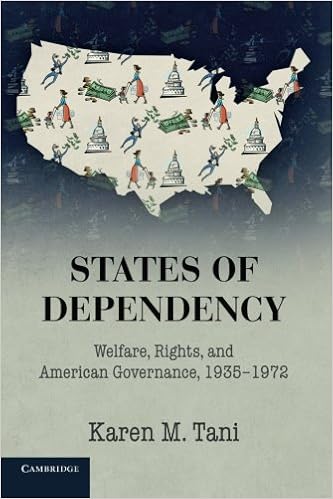
In the new books network, you can hear Lena Salaymeh discuss her Beginnings of Islamic Law: Late Antique Islamicate Legal Traditions; William H. Shaw on Utilitarianism and the Ethics of War and Karen Tani discuss her first book, States of Dependency: Welfare, Rights and American Governance, 1935-1972.
Saturday, December 3, 2016
Weekend Roundup
- Chicago-Kent notes Christopher Schmidt's receipt of the ASLH's Surrency Prize in this press release.
- Congratulations to Harvard Law's Kenneth Mack upon his election to the American Law Institute.
- The University of Minnesota Law Library has a new exhibit: Transitional Justice in Historical Perspective. H/t: H-Law
- Belatedly, we note that Newton Minow was one of the recent recipients of the Presidential Medal of Freedom. In 1961, John F. Kennedy chose Minow, age 34, to chair the Federal Communications Commission as one of a series of meritocratic appointments that included Philip Elman to the Federal Trade Commission and Manuel F. Cohen to the Securities and Exchange Commission.
- The Beijinger notes the opening earlier this year of the China Court Museum. Exhibits treat famous legal cases from around the world, including the OJ Simpson trial.
 |
| Cuthbert W. Pound (wiki) |
- Recently, the American Historical Association’s listserv circulated a query from a person seeking a home for “documents from my husband's family that include a former New York Appellate Court Judge (Cuthbert Pound), journals covering 20+ years during the mid-1800's to 1900, and numerous letters." We suggested she contact the Historical Society of the New York Courts and the Charles B. Sears Law Library of the University at Buffalo School of Law.
- The December issue of the newsletter of the Historical Society of the DC Circuit, available soon here, reports that the Society “is sponsoring the writing of a biography of Chief Judge William B. Bryant by award-winning author Tonya Bolden,” written for young adults. And on February 14, 2017, it will sponsor “The Reporter’s Privilege and National Security: The Case of In Re: Grand Jury Subpoena, Judith Miller.” "The program will explore the common-law basis for a reporter’s privilege and how best to strike the balance between the public’s right to know and the Government’s need to secure information in the national interest." Two members of the original panel, David S. Tatel and David B. Sentelle, will preside over a re-enactment of the arguments in Miller's case.
- Matthew Dallek, George Washington University, will discuss Defenseless under the Night, his history of the WW2-era Office of Civilian Defense, at the FDR Presidential Library and Museum at 7:00 PM on Pearl Harbor Day. More.
- ICYMI: The University of Chicago's Geoffrey Stone likens the Republican Senators' refusal to give Judge Merrick Garland a hearing to FDR's Court-Packing Plan. That was the last time, he writes, that "politicians tried in so blatant a manner to manipulate the makeup of the Supreme Court in violation of long-standing norms." Also, Seth Barrett Tillman notes that the Congressional Research Service has revised its guidance on the Foreign Emoluments Clause. And, over at the Faculty Lounge: North Carolina Law's Eric Muller on Locking Away Korematsu's Loaded Weapon, and Al Brophy on the report of Yale University’s Committee to Establish Principles on Renaming, chaired by YLS professor John Witt.
Friday, December 2, 2016
The Stanford-Penn 10th International Junior Faculty Forum
[The Stanford Law School and the University of Pennsylvania Law School announce their Tenth International Junior Faculty Forum with the following call for papers.]
Sponsored by Stanford Law School and the University of Pennsylvania Law School, the International Junior Faculty Forum (IJFF) was established to stimulate the exchange of ideas and research among younger legal scholars from around the world. We live today in a global community– in particular, a global legal community. The IJFF is designed to foster transnational legal scholarship that surmounts barriers of time, space, legal traditions and cultures, and to create an engaged global community of scholars. The Tenth IJFF will be held at Stanford Law School in October 2017 (the exact date has not yet been fixed).
In order to be considered for the 2017 International Junior Faculty Forum, authors must meet the
following criteria:
Citizen of a country other than the United States
Current academic institution is outside of the United States
Not currently a student in the United States
Have held a faculty position or the equivalent, including positions comparable to junior faculty positions in research institutions, for less than seven years as of 2017; and
Last degree earned less than ten years before 2017
Papers may be on any legally relevant subject and can make use of any relevant approach: they can be quantitative or qualitative, sociological, anthropological, historical, or economic. The host institutions are committed to intellectual, methodological, and regional diversity, and welcome papers from junior scholars from all parts of the world. Please note, however, that already published papers are not eligible for consideration. We particularly welcome work that is interdisciplinary.
Those who would like to participate in the IJFF must first submit an abstract of the proposed paper. Abstracts should be no more than two (2) pages long and must be in English. The abstract should provide a roadmap of your paper—it should tell us what you plan to do, lay out the major argument of the paper, say something about the methodology, and indicate the paper’s contribution to scholarship. The due date for abstracts is Monday, January 16, 2017, although earlier submissions are welcome. Please submit the abstract electronically to both ijff@law.stanford.edu and ijff@law.upenn.edu with the subject line, International Junior Faculty Forum. The abstract should contain the author’s name, home institution, and the title of the proposed paper. Please also send a current CV.
After the abstracts have been reviewed, we will invite, no later than mid-February, a number of
junior scholars to submit full papers of no more than 15,000 words, electronically, in English, by
mid-May 2017. Please include a word count for final papers. There is no fixed number of papers to be invited, but in the past years up to 50 invitations have been issued from among a much larger number of abstracts.
An international committee of legal scholars will review the papers and select approximately ten papers for full presentation at the conference, where two senior scholars will comment on each paper.
After the remarks of the commentators, all of the participants, junior and senior alike, will have a
chance to join in the discussion. One of the most valuable—and enjoyable—aspects of the Forum, in the opinion of many participants, has been the chance to meet junior and senior scholars, and to talk about your work and theirs.
Stanford and Penn will cover expenses of travel, including airfare, lodging, and food, for each
participant. Questions should be directed to ijff@law.stanford.edu.
Professor Lawrence M. Friedman, Stanford Law School
Professor Eric A. Feldman, University of Pennsylvania Law School
Charles Donahue Honored
 |
| Charles Donahue (HLS) |
Thursday, December 1, 2016
Mendenhall on Holmes
Out this month from Bucknell University Press: Oliver Wendell Holmes Jr., Pragmatism, and the Jurisprudence of Agon: Aesthetic Dissent and the Common Law, by Allen Mendenhall (Faulkner University Thomas Goode Jones School of Law). A description from the Press:
More information is available here.This book argues that Oliver Wendell Holmes Jr., helps us see the law through an Emersonian lens by the way in which he wrote his judicial dissents. Holmes’s literary style mimics and enacts two characteristics of Ralph Waldo Emerson’s thought: “superfluity” and the “poetics of transition,” concepts ascribed to Emerson and developed by literary critic Richard Poirier. Using this aesthetic style borrowed from Emerson and carried out by later pragmatists, Holmes not only made it more likely that his dissents would remain alive for future judges or justices (because how they were written was itself memorable, whatever the value of their content), but also shaped our understanding of dissents and, in this, our understanding of law. By opening constitutional precedent to potential change, Holmes’s dissents made room for future thought, moving our understanding of legal concepts in a more pragmatic direction and away from formalistic understandings of law. Included in this new understanding is the idea that the “canon” of judicial cases involves oppositional positions that must be sustained if the law is to serve pragmatic purposes. This process of precedent-making in a common-law system resembles the construction of the literary canon as it is conceived by Harold Bloom and Richard Posner.
Wednesday, November 30, 2016
The Berger-Howe Fellowship
[We have the following announcement.]
Harvard Law School invites applications for the Berger-Howe Fellowship for the academic year 2017-2018. Eligible applicants include those who have a first law degree, who have completed the required coursework for a doctorate, or who have recently been awarded a doctoral degree. A J.D. is preferred, but not required. We will also consider applicants who are beginning a teaching career in either law or history. The purpose of the fellowship is to enable the fellow to complete a major piece of writing in the field of legal history, broadly defined. There are no limitations as to geographical area or time period.
Fellows are expected to spend the majority of their time on their own research. They also help coordinate the Harvard Law School Legal History Colloquium, which meets four or five times each semester. Fellows are invited to present their own work at the colloquium. Fellows will be required to be in residence at the law school during the academic year (September through May).
Applicants for the fellowship for 2017-2018 should submit their applications and supporting materials electronically to Professor Bruce H. Mann (mann@law.harvard.edu).
Applications should outline briefly the fellow’s proposed project (no more than five typewritten pages) and include a writing sample and a curriculum vitae that gives the applicant’s educational background, publications, works in progress, and other relevant experience, accompanied by official transcripts of all academic work done in college and at the graduate level. The applicant should arrange for two academic references to be submitted electronically. The transcripts may be sent by regular mail to Professor Mann at Harvard Law School, Cambridge, Massachusetts 02138.
The deadline for applications is February 15, 2017, and announcement of the award will be made by March 15, 2017. The fellow selected will be awarded a stipend of $38,000.
Subscribe to:
Posts (Atom)