Sunday, January 27, 2019

On the Indigenous Experience in the Americas


One of the issues that habitually frustrates me is the disconnect between historians who work on the colonial period and those who specialize in the indigenous world. Theoretically, both engage with the same period and depend on similar or even (on occasions) identical sources, but their aims and their readings are often diverse, the bibliography they consult is habitually distinct, and they frequently belong to different fields and professional associations. The result is that they are seldom in conversation with one another. Having participated recently in a search for a historian of Indigenous North America made this clear to me, but so have many years working as a scholar of Spanish America.

How could one place colonial and indigenous history in dialogue? To answer this question, I authored two pieces. The first piece was concerned with Indigenous right to land, the other focused on campaigns to resettle natives in new, Spanish-style communities.[i]

Attempting to understand why some historians insisted on Spanish respect to native land rights (mostly historians of the Spanish colonial state) while others criticized Spain for the massive dispossession of natives (mainly historians interested in the native experience of empire), I observed how respect to native rights operated in the colonial period.  I argued that respect did not guarantee continuity. On the contrary, it (often) introduced change. This could happen because Spanish judges, although willing to recognize indigenous right to land, understood land rights not according to Indigenous law but according to European juridical traditions. These judges tied land rights to occupation and described occupation in ways that resonated with the European experience. The result was both the suppression of ancient rights as well as the invention of new entitlements. In other words, examination of how European norms were applied vis-à-vis natives enabled to affirm that respect to native rights and native dispossession could operate simultaneously.

With regards to native resettlement, historians of native Spanish America usually denounced resettlement campaigns as a colonial measure aimed at controlling, converting, and exploiting the native population. Yet, as a historian of Spain in both Europe and the Americas I knew that resettlement did not only target natives but also Spaniards and that it operated in both the Old and the New World. Justifying it were contemporary convictions that only people who resided in proper communities (and indigenous communities were not considered “proper”) could be tied to the polity religiously and civically. The question when resettlement was required, against whom, and for which end, thus demanded a larger and a longer vision. As happened in the case of native land rights, just looking at natives, just looking to the Americas, was insufficient.

These remarks are not meant to diminish the plight of native Americans. European colonialism turned the native world upside down. It was a human-made hurricane that touched and upset almost everything. But, regardless of how terrible it had been, if we wish to understand how it operated, we should not separate the study of the native world from the study of the colonial (and by extension European) world, with which it was closely entangled.


[i]  Tamar Herzog. “Colonial law and ‘Native Customs’: Indigenous Land Rights in Colonial Spanish America.” The Americas 63(3) (2013): 303-321 and Tamar Herzog. “Indigenous Reducciones and Spanish Resettlement: Placing Colonial and European History in Dialogue.” Ler História 72 (2018): 9-30 (an earlier version of this work was published under the title “Terres et déserts, société et sauvagerie. De la communauté en Amérique et en Castille à l’époque moderne.” Annales HSS 62 (3) (2007): 507-538)).

Saturday, January 26, 2019

Weekend Roundup

  • This is a cool one: a senior history major--Denton Ong--made it into the Washington Post's "Made by History" section, with this op-ed on President Trump's authority to declare a national emergency in order to build a border wall.
  • The Call for Proposals for the 2020 annual meeting of the Organization of American Historians closes February 1.  The theme is “(In)Equalities.”  "The 2020 Program Committee, co-chaired by Margot Canaday, Princeton University, and Craig Wilder, Massachusetts Institute of Technology, invite submissions to the 2020 OAH Annual Meeting in Washington, D.C. Sessions will be scheduled April 2-4, with half and full day workshops on Sunday, April 5."
  • Stanford Law School has published a nice piece on the work of its thriving legal history community. [Back in November, but we just noticed it.]
Weekend Roundup is a weekly feature compiled by all the Legal History bloggers.

Friday, January 25, 2019

Henry Horwitz

We are very sorry to learn of the death of the legal historian Henry Horwitz of the University of Iowa.  From Jeff Cox’s story, Celebrating the Life of Henry Horwitz, in the History Department’s newsletter. 
Henry Horwitz died on January 19, 2019, leaving to mourn him family, friends, former students, and former colleagues, especially those in the University of Iowa history department. Henry joined the department in 1963, with degrees from Haverford College (1959 summa cum laude) and Oxford University (D. Phil., 1963). At St. Antony’s College, Oxford, he developed an interest in early modern English political history, leading to the publication of Revolution Politicks: The Career of Daniel Finch, Second Earl of Nottingham 1647-1730 (Cambridge U.P., 1968); Parliament, Policy and Politics in the Reign of William III (Manchester U.P., 1977); and an edition, The Parliamentary Diary of Narcissus Luttrell 1691-1693 (Oxford U.P., Clarendon Press, 1972).
More.  H/t Thomas P. Gallanis

Center for the Study of Law and Society - Spring 2019 Speaker Lineup

The Center for the Study of Law and Society at the University of California, Berkeley, has posted the lineup for its speaker series this semester. Here are some items of likely interest to our readers:

Monday, January 28 – BINYAMIN BLUM
Associate Professor of Law, University of California Hastings College of the Law
“Going Ballistic: The Forgotten Origins of Forensic Firearm Identification”

Monday, February 11 – LUCY SALYER
Associate Professor of History, University of New Hampshire
Under the Starry Flag: How a Band of Irish Americans Joined the Fenian Revolt and Sparked a Crisis over Citizenship (Belknap Press: An Imprint of Harvard University Press, Oct. 2018).

Monday, April 22 –NORMAN SPAULDING
Nelson Bowman Sweitzer and Marie B. Sweitzer Professor of Law, Stanford Law School
“Trauma, Memory, and the Law”

Loeffler on Jewish cosmopolitans and human rights

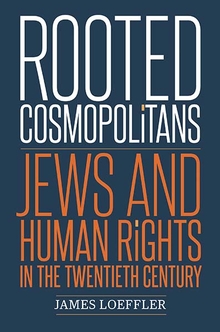
James Loeffler, University of Virginia, has published Rooted Cosmopolitans: Jews and human rights in the twentieth century with Yale University Press. From the publisher: 
The year 2018 marks the seventieth anniversary of two momentous events in twentieth-century history: the birth of the State of Israel and the creation of the Universal Declaration of Human Rights. Both remain tied together in the ongoing debates about the Israeli-Palestinian conflict, global antisemitism, and American foreign policy. Yet the surprising connections between Zionism and the origins of international human rights are completely unknown today. In this riveting account, James Loeffler explores this controversial history through the stories of five remarkable Jewish founders of international human rights, following them from the prewar shtetls of eastern Europe to the postwar United Nations, a journey that includes the Nuremberg and Eichmann trials, the founding of Amnesty International, and the UN resolution of 1975 labeling Zionism as racism. The result is a book that challenges long-held assumptions about the history of human rights and offers a startlingly new perspective on the roots of the Israeli-Palestinian conflict.
Praise for the book: 

“This absorbingly narrated and brilliantly researched masterpiece reshapes Jewish and human rights history alike.”—Samuel Moyn

“James Loeffler’s pathbreaking research reconstructs the forgotten role of Jewish leaders in creating the architecture of human rights. Loeffler offers a nuanced account of the common origin of Zionism and human rights organizations—and of their increasingly tortured relationship. His story is an intellectually arresting but intensely human drama.”—William A. Galston

"Building on a trove of archival material, this extraordinary book challenges orthodoxies both on the right and on the left.  It has the potential to transform popular understandings of this critical period of history and is a must-read for anyone involved in Jewish communal life or human rights work."—Rabbi Jill Jacobs

"Rooted Cosmopolitans is intellectual history at its most admirable. It's daring in its ambitions to rewrite our received narratives about human rights and Zionism. Loeffler presses his arguments with unfamiliar characters and tells their fascinating stories with nuance, humanity, and verve."—Franklin Foer

Further information is available here.

Thursday, January 24, 2019

Maltz on the Fifteenth Amendment

Earl Maltz, Rutgers Law School, has posted The Coming of the Fifteenth Amendment: the Republican Party and the Right to Vote in the Early Reconstruction Era:
The year 2019 marks the one hundred fiftieth anniversary of one of the most significant moments in American constitutional history. On February, 25, 1869, more than two-thirds of the members of the House of Representatives approved the proposed Fifteenth Amendment. The next day, the Senate followed suit, and the proposed amendment was sent to the state legislatures for ratification. After being ratified by the requisite number of states, the Fifteenth Amendment became the last of the three Reconstruction amendments that fundamentally transformed both the structure of the Constitution and the nature of American federalism.

The Fifteenth Amendment (LC)
The Fifteenth Amendment differed from its predecessors in a number of important ways. First, it was the only one of the Reconstruction amendments and remains the only part of the entire Constitution to focus explicitly on race. In addition, the amendment became the first provision of the Constitution to limit the power of the state governments to establish the qualifications for voters in elections for state office, providing that “[t]he right of citizens…to vote…shall not be denied or abridged…on account of race, color, or previous condition of servitude” and also vesting Congress with the authority to enforce this command by adopting “appropriate legislation.” Thus, among other things, the Fifteenth Amendment provided the most plausible source of congressional authority for the passage of the Voting Rights Act of 1965—a statute which was and continues to be, by any standard, one of the most important civil rights measures ever adopted by Congress.

Nonetheless, unlike the Thirteenth and Fourteenth Amendments, legal scholars have shown little or no interest in exploring the background of the Fifteenth Amendment. This article is the first to describe both the sequence of events that led to the passage and ratification of the Fifteenth Amendment and the forces that shaped the amendment itself.

Wednesday, January 23, 2019

European or Global? Secular or Religious? How (Some) European Jurists Re-Consider their Past


Recently, I returned from a visit to the Max Planck Institute for European Legal History in Frankfurt (https://www.rg.mpg.de/en), where several groups are working simultaneously to re-cast European legal history. Rather than thinking about Europe in isolation, rather than insisting on law as a secular affair, members of these groups interrogate the processes that led European law to expand overseas, as well as the way religion contributed to this expansion. They ask: What would happen to European law if we observed it from a global perspective? If we considered not only its accomplishments (rule of law, constitutions, democracy, etc.) but also its other legacies (empire, slavery, violence, and so forth)?[1] If we focused on the entanglements between law, religion, and morality?

With study groups centered on “Legal Transfer in the Common Law World”, “European Normative Orders in Ibero-America,” “Governance of the Universal Church after the Council of Trent,” “The Legal History of the School of Salamanca,” or “Translations and Transitions: Legal Practice in 19th Century Japan, China, and the Ottoman Empire,” this re-thinking follows several paths. 

(1)   It interrogates the spaces that scholars need to study if they are to understand the history of European law. In tune with existing affirmations that Europe was an idea rather than a continent and that its meaning and extension constantly mutated, they suggest that historians of European law should modify the scope of their analysis. The appropriate scope could cover from Rome to the Mediterranean, further west to Latin-Christendom, North to England and Scandinavia, and across Oceans to Africa, Asia, and the Americas.

(2)   It asks about the consequences of the encounter between Europeans and other legal cultures. Rather than posing a West vs. the Rest, or engaging in, dismissing, or criticizing Eurocentrism, the aim is to understand how interactions between European and non-European norms changed both. Change and endurance are important in this regard but looking at European law elsewhere also has important methodological underpinning. European response to the “other,” scholars at the Max Planck argue, can tell us a great deal about European law. It allows to perceive its rigidity on occasions, malleability on others, and helps identifying its core principles as well as their potentialities. In other words, the main question we should ask is not whether European law was indeed universal (or potentially universal) as some Europeans have argued, but which parts of it survived the transfer outside Europe, what was lost, what changed, and how.  
(3)   If enlarging the research on European law to less-than-usual suspects is important, research at the Max Planck also reminds us that as important is to ask, “what is law.” Rather than assuming that law was a secular affair, the research agenda followed in Frankfurt recognizes the centrality of religion by integrating to the study of European law canon law and moral theology and by re-evaluating the contribution of the church to the dissemination of juridical ideas. One emblematic way they do so is by insisting on the importance of pragmatic literature, that is, the non-juridical literature that inculcated normative conduct (https://www.rg.mpg.de/research/knowledge_of_the_pragmatici).[2]  Drawing our attention to less-than- conventional sources for legal history, it observes what practitioners published but also the contents of popular works, as well as works of moral theology, confessionaries, and the like. The working assumption is that these types of sources, mostly ignored, contributed greatly not only to disseminate legal ideas, not only to vulgarize them (as they are often viewed) but also to develop and enrich European legal tradition.


[1] Thomas Duve. “Global Legal History: Setting Europe in Perspective.” In Heikki Pihlajamäki, Markus D. Dubber, and Mark Godfrey (eds.). Oxford Handbook of European Legal History. Oxford: Oxford University Press, 2018, 115-140. This transformation began in 2009 after Thomas Duve was named director of the Institute. The Max Plank has this amazing system: The Society identifies individual scholars and names them directors of an institute, giving them space, funding, and administrative support to hire scholars and develop their own intellectual agenda, the only condition being that they innovate. 
[2] The results of this project will soon be published in a new Open Access book series with Brill Publishers, titled Max Planck Studies in Global Legal History of the Iberian Worlds.