Awash in exuberance here in Inaugural Washington, I am reminded of an artifact from an earlier era, Jimmy Durante's fight talk on behalf of the National Recovery Administration, "Give a Man a Job" (1933). An anonymous reviewer on Internet Archive (my source for the video) claims that "a Stooge-less Moe Howard"--that is, one of the "Three Stooges" from a bygone era of American television--appears as "the exterminator guy." Here it is, fwiw:
Tuesday, January 20, 2009
The Letterbook of a Nineteenth-Century Vermont Lawyer
 Those of us who were introduced to the world of the nineteenth-century American lawyer by volume 1 of Andrew J. King and Alfred S. Konefsky's masterful Legal Papers of Daniel Webster will especially welcome the publication of a letter book that provides another view of this terrain several decades later and from across the Connecticut River. The new work is Karen S. Beck's A Working Lawyer's Life: The Letter Book of John Henry Senter (Lawbook Exchange, 2009). Ms. Beck has discussed this source in the Law Library Journal; also, here. Here is the publisher's abstract:
Senter [1848-1916] was a lawyer who practiced in a small Vermont town. His letter book, which contains 326 letters copied between April 1879 and 1884, records his business dealings, goals and thoughts. Richly detailed and often frank, these letters take us into the world of a small-town lawyer in the late nineteenth century. They introduce us to his clients, the legal matters he addressed, the way he ran his business and his daily difficulties (such as clients who failed to pay their bills). This book has two parts. The first part is a biography of Senter and a history of his practice. The second is a transcription of the letter book. Karen Beck is Curator of Rare Books/Collection Development Librarian, Boston College Law Library.Thanks to Rob Richards for the tip!


Monday, January 19, 2009
MLK Day
The "foot soldiers" of the civil rights movement are remembered today in the Atlanta Journal's coverage of Martin Luther King Day. Time covers the history of the holiday. Meanwhile, Congressman John Lewis and other civil rights leaders reflect on the movement, and what Barack Obama's presidency means to them. The MLK Day of Service website has links to volunteer opportunities.
For researchers, historical materials on King are spread around. The Martin Luther King, Jr., Research & Education Institute, home of the King Papers Project, is at Stanford. There are many great resources in the website, including an annotated copy of King's Letter from Birmingham Jail, and a video of King's "I have a Dream" speech.
Important papers are also housed at the Dr. Martin Luther King, Jr. Archive at Boston University. The Robert W. Woodruff Library of the Atlanta University Center has just digitalized an important collection of King papers. Volumes of the published MLK papers are here, here and elsewhere.
And for that most famous speech, which was about so much more than dreams, here's a video from the 1963 March on Washington.
Update: Paul Harvey at Religion in American History, offers great links and reading ideas (and I completely agree regarding Nancy McLean's and Tom Sugrue's important books):
For researchers, historical materials on King are spread around. The Martin Luther King, Jr., Research & Education Institute, home of the King Papers Project, is at Stanford. There are many great resources in the website, including an annotated copy of King's Letter from Birmingham Jail, and a video of King's "I have a Dream" speech.
Important papers are also housed at the Dr. Martin Luther King, Jr. Archive at Boston University. The Robert W. Woodruff Library of the Atlanta University Center has just digitalized an important collection of King papers. Volumes of the published MLK papers are here, here and elsewhere.
And for that most famous speech, which was about so much more than dreams, here's a video from the 1963 March on Washington.
Update: Paul Harvey at Religion in American History, offers great links and reading ideas (and I completely agree regarding Nancy McLean's and Tom Sugrue's important books):
A little "off the beaten track" MLK day blogging from the Inverse Square Blog, featuring King's thoughts on science and religion (which sound a lot like Stephen Jay Gould's), and King's thoughts on war, peace, justice, community, civil rights, and religion, which sound not at all like a lot of those who quote him today but opposed him then (or would have if they were alive or old enough). The struggle to reclaim King's legacy from those who would distort his "content of their character" quotation, and those who fundamentally forget his drive for economic justice (rather than just "civil rights"), continues. Aside from Thomas Sugrue's Sweet Land of Liberty (the link takes you to my review), the best reading I've done on this lately is Nancy MacLean's Freedom is Not Enough, which is not about King per se, nor about "civil rights," but about the struggle for equal opportunity and pay in the workplace, which she places at the center of the struggle in the 1960s. She traces the enormously important consequences of Title VII of the Civil Rights Act of 1964 -- the passage of which was, of course, one of the motivating factors behind the 1963 March and the "Dream" speech.
Edinburgh Legal History Blog
Legal History Blog welcomes to the blogosphere the Edinburgh Legal History Blog, published by the Centre for Legal History at Edinburgh, at the University of Edinburgh School of Law. A post from January 13 explains:


The Blog is compiled by Professor John W. Cairns and Dr Paul du Plessis of the Edinburgh Centre for Legal History to raise issues of interest to legal historians, especially those interested in the history of Scots law and of the civilian tradition.
Australian Legal History
Another legal historical website I somehow missed is that of the Francis Forbes Society for Australian Legal History. It looks quite lively and includes, among other things, a link to a pdf of Ian Barker QC's paper, Sorely Tried: Democracy and Trial by Jury in New South Wales. A preface to the paper helps non-Aussies with the society's namesake, the first chief justice of New South Wales, who served between 13 October 1823 and 1 July 1837.
New South Wales was fortunate in the selection of Francis Forbes as its first Chief Justice. Not only was he a sound lawyer and a good judge, but he was also a man of strong and upright character, tempered by a conciliatory manner. Without such qualities no one could long have presided over the administration of justice in the difficult formative years through which the Colony was then passing.

Sunday, January 18, 2009
The Presidency, Obama-mania and more in the Book Reviews
The presidency, along with various forms of Obama-mania, headline the book pages this weekend. For an historic example, FDR, rather than Lincoln, is the focus, with revie ws of NOTHING TO FEAR: FDR’s Inner Circle and the Hundred Days That Created Modern America by Adam Cohen, and FDR V. THE CONSTITUTION: The Court-Packing Fight and the Triumph of Democracy by Burt Solomon, taken up by David Greenberg in the New York Times. On Cohen's book, Greenberg writes:

 ws of NOTHING TO FEAR: FDR’s Inner Circle and the Hundred Days That Created Modern America by Adam Cohen, and FDR V. THE CONSTITUTION: The Court-Packing Fight and the Triumph of Democracy by Burt Solomon, taken up by David Greenberg in the New York Times. On Cohen's book, Greenberg writes:
Publishing a book so soon after two other fine introductions to the same topic — one by the journalist Jonathan Alter, one by the historian Anthony Badger — creates an obvious challenge. But “Nothing to Fear” meets it. Cohen covers a shorter time-span than Alter, who delves into the 1932 campaign and transition, and he cedes to Badger the task of in-depth economic analysis. And if Cohen doesn’t stake out a new position in the old debate about whether Roosevelt’s agenda was radical, liberal or conservative, neither do the others. All three hail the pragmatic but heroic Roosevelt, with sensible qualifications.
Cohen breaks from the pack with his disciplined focus on the spate of legislation that Roosevelt pushed through Congress after his inauguration — 15 major laws, from banking reform and securities regulation to industrial production codes and relief for the destitute.
While seeing value  in Cohen's focused history, Greenberg notes that "a wider historical lens would also reveal that the public’s appetite for executive power had firm limits." These limits appear in Solomon's book, a
 in Cohen's focused history, Greenberg notes that "a wider historical lens would also reveal that the public’s appetite for executive power had firm limits." These limits appear in Solomon's book, a
 new account of Roosevelt’s failed 1937 gambit to expand the Supreme Court with friendly justices, the specter of Roosevelt as dictator returns. Though Solomon’s title is more shrill than his actual argument...the book nonetheless flattens some complexities of the story. It sometimes reads like a morality tale pitting a hubristic president, fresh off a landslide re-election, against a devoutly principled nemesis in Burton Wheeler, a crusading Montana progressive.
Cohen also gets a positive review from Eric Rauchway in the San Francisco Chronicle. Comparing FDR's transition with Obama's Eric Arnesan suggests in the Chicago Tribune that the first 100 days "serves as an apt reminder of the possibilities of dramatic reform in the face of crisis and the role of human actors in bringing it about." 

Campaign reading leads off with Robert S. Boynton's New York Times review of THE BREAKTHROUGH: Politics and Race in the Age of Obama by Gwen Ifill. The book takes up four prominent African American politicians: Barack Obama, Newark mayor Cory Booker, Massachusetts governor Deval Patrick, and Congressman Artur Davis of Alabama. According to Boynton, "Ifill rightly dismisses the notion that America has become a 'postracial' country, but acknowledges the insight of Obama’s adviser David Axelrod that 'the story of this race is that race didn’t play the decisive role that people thought it would.'" Ifill is also reviewed in the Washington Post.

Also with multiple reviews this weekend is KING'S DREAM by Eric J. Sundquist. Martin Luther King Jr.'s 1963 "I have a Dream," speech "and all that surrounds it — background and consequences — are brought magnificently to life," writes Anthony Lewis for the New York Times. The book is also reviewed in the Boston Globe.
Gary Hart reviews PRESIDENTIAL COMMAND: Power, Leadership, and the Making of Foreign Policy From Richard Nixon to George W. Bush by Peter W. Rodman for the New York Times.
The Chicago Tribune takes up Obama-related children's books. But my favorite in the kids category is the forthcoming book Thanks and Have Fun Running the Country: A Collection of Kids’ Letters to President Obama, Jory John, ed., which includes this excerpt, which appeared in the New York Times, Jan. 15:

Dear President Obama,
Here is a list of the first 10 things you should do as president: 1. Fly to the White House in a helicopter. 2. Walk in. 3. Wipe feet. 4. Walk to the Oval Office. 5. Sit down in a chair. 6. Put hand-sanitizer on hands. 7. Enjoy moment. 8. Get up. 9. Get in car. 10. Go to the dog pound.
— Chandler Browne, age 12, Chicago
The Los Angeles Times has a special inaugural issue on art and politics. Ishmael Reed has an essay on Obama as a reader in the San Francisco Chronicle. "Barackabilia" is taken up in a new Obama coffee table book discussed in the Washington Post. More Obama books are discussed in the Philadelphia Inquirer.
Saturday, January 17, 2009
ASLH conference open thread
The deadline for submitting proposals for the 2009 American Society for Legal History conference is coming up on February 6. For this meeting, most panelists get on the program through full panel proposals, rather than individual paper submissions (although individual papers are welcome, and sometimes are successful).
A reader asked how legal historians get in touch with each other to find others to form a panel with. Probably the most common way, other than word of mouth, is through H-Law, the legal history listserv. The sign-up page is here.
Not all legal historians are H-Law subscribers, however. To provide another venue, I thought it might be helpful to use the comment section for this post. If you are looking for co-panelists, you can post your paper description and contact information in a comment. I recommend that you do not post a phone number, and that you spell out the "@" in your e-mail address. (i.e. jane.doe "at" law.usc.edu). Comments are moderated (to avoid spam), so there may be a delay before your comment is posted, especially when I am on the road January 20-23.
I hope this is helpful. Best of luck!
Update: I have temporarily changed the blog settings so that anyone can post a comment without registering with Google or Open ID, just to make it easier to connect with co-panelists. If this results in too much spam or other difficulties, I'll need to change it back. Comments are still moderated.
One more suggestion: I suspect that those seeking co-panelists are more likely to get responses if you identify yourselves. That also gets the word out about you and your interesting work! I will allow all serious submissions in the comments, however.
A reader asked how legal historians get in touch with each other to find others to form a panel with. Probably the most common way, other than word of mouth, is through H-Law, the legal history listserv. The sign-up page is here.
Not all legal historians are H-Law subscribers, however. To provide another venue, I thought it might be helpful to use the comment section for this post. If you are looking for co-panelists, you can post your paper description and contact information in a comment. I recommend that you do not post a phone number, and that you spell out the "@" in your e-mail address. (i.e. jane.doe "at" law.usc.edu). Comments are moderated (to avoid spam), so there may be a delay before your comment is posted, especially when I am on the road January 20-23.
I hope this is helpful. Best of luck!
Update: I have temporarily changed the blog settings so that anyone can post a comment without registering with Google or Open ID, just to make it easier to connect with co-panelists. If this results in too much spam or other difficulties, I'll need to change it back. Comments are still moderated.
One more suggestion: I suspect that those seeking co-panelists are more likely to get responses if you identify yourselves. That also gets the word out about you and your interesting work! I will allow all serious submissions in the comments, however.
Mashaw on Antebellum Lessons on Government Practice and Presidential Direction
Jerry Louis Mashaw, Yale Law School, has posted a new article, Government Practice and Presidential Direction: Lessons from the Antebellum Republic. Here's the (long!) abstract:
In Association of Data Processing Service Organizations, Inc. v. Camp Mr. Justice Douglas famously remarked, "Generalizations about standing to sue are largely worthless as such." Justice Douglas went on to say, however, that one generalization was necessary, that is, that the question of standing had to be considered within the framework of Article III of the Constitution My sense is that Justice Douglas' skepticism about generalizations applies with even greater force when the question is the extent of the President's power under the U.S. Constitution to direct other officers concerning the execution or implementation of federal law. But, one generalization might be hazarded: Almost anyone who addresses the topic argues from historical practice, not merely from the text of the Constitution or from judicial pronouncements. This practice of relying on practice is understandable, perhaps unavoidable. In his famous, and often-cited, concurring opinion in Youngstown Sheet and Tube Co. v. Sawyer, Justice Jackson began by noting, "A judge, like an executive advisor, may be surprised by the poverty of really useful and unambiguous authority applicable to concrete problems of executive power as they actually present themselves." Judicial decisions concerning the President's directive power are sparse. When looking for guidance a lawyer will often come up empty, or be required to extrapolate creatively from dictum in some tangentially related context. Similarly, the Constitution is remarkably Delphic where administration is concerned. As I instruct my students at the beginning of every course in Administrative Law, there is a hole in the Constitution where administration might have been. Only two executive officers are mentioned, and the only function given to is the Vice-President is to preside over the Senate and cast a vote in case of ties. The development of the machinery of government is left to Congress in the exercise of its Article I powers. We might combine all the Constitution's textual provisions concerning the Executive - the grant of "the executive power," appointment of department heads who must report on request and the responsibility for faithful execution - to infer a default position in the absence of contrary statutory language: the President is presumed to have authority to assure that lower level officials carrying out executive functions do so in accordance with law. Indeed, I believe that that is a fair inference from the text of the constitution itself. The problem is that this default position fails to answer many of the vexing questions that present themselves once Congress has exercised its authority to create, empower and fund executive offices under its authority in Article I, Section 8, "To make all laws necessary and proper for carrying into execution the foregoing (Article 1) powers, and all other powers vested by the Constitution in the government of the United States, or in any department of office thereof." If Congress provides authority to be exercised by particular officers, can the president nevertheless direct their exercise of discretion, thereby effectively controlling the execution of the law himself? Would such action be assuring "faithful execution of the laws" or the usurping of lawful authority granted to another? Assuming that removal or threatened removal of an officer is one way - and perhaps the most powerful way - for a President to assure faithful execution of the law, does that imply that Congress may place no limits on presidential removal - notwithstanding the Constitution's silence concerning removal save by impeachment? The silence, vagueness or ambiguity of the constitutional text on most matters of operational consequence, and the paucity of judicial pronouncements, means that the issues of presidential directive power are by default addressed largely in Congress and within the executive branch. In these venues of lawmaking and implementation, grappling with issues of presidential authority and congressional power are a part of the ordinary routines of government. Justice Jackson understood this full well from his prior experience in the Justice Department and alluded to it by including "executive advisors" with judges as those who were likely to be surprised by the paucity of useful and unambiguous authority. It was not just judicial and textual authority that Justice Jackson found frustrating. He also noted, "A century and a half of partisan debate and scholarly speculation yields no net result but only supplies more or less apt quotations from respected sources on each side of any question. They largely cancel each other." And yet, like Justice Jackson and his colleagues, we often turn to practice. Surely what people have done in running the government should give us some purchase beyond the narrow decisions of courts, the speculations of scholars, and the self-interested rhetoric of partisans during congressional-presidential struggles. Yet, however sensible our turn to practice for guidance, we should pause to consider just how deeply problematic our reliance might be. The problems occur at two levels. First, what is the normative claim of practice as evidence of what the law is or should be? "Practice", within which I mean to include both repeated prior actions and particularly salient events, are just facts. What gives them the power to bind us even presumptively? Second, assuming the normative force of practice, how is it to be interpreted? If we recognize a practice as ours, and as having a claim on the legal imagination, how are we to give it meaning? By seeking the meaning these actions had for the actors? By close attention to the contexts in which they occurred? By attending to their interpretation by contemporaneous or later commentators? I do not want to dwell on the deep questions involved in what gives practice normative force. I will focus instead on the second difficulty, the difficulty of understanding exactly what the normative claim or reach of a past practice might be. For, the practice of American government has proceeded through the multiple actions and claims of executive and congressional officials in multifarious contexts and over a significant period. It is revealed both by what people did and what they said. And its understanding is illuminated by the background presumptions of the legal literature of the times as well as contemporaneous public reaction. The difficulties of interpretation thus arise not just from the fact, as Jackson noted, that claims and actions are often informed by partisan or institutional self-interest, although that is problem enough. It is also that we have considerable difficulty recapturing the context within which practices arose, were contested, and survived or perished. Each claim about the meaning of a practice must be evaluated against the backdrop of that practice's institutional, ideological, and partisan context. Giving meaning to practice is a formidable task, particularly if that task is understood as a search for general principles that have broad application to issues of presidential directive authority. In the remainder of this article, therefore, I want to illustrate the epistemic difficulties of understanding what a practice means through illustrations from three quite distinctive political periods that preceded the American Civil War: the Federalist period from the founding through John Adams' presidency, the Jeffersonian period from 1801 until Andrew Jackson's inauguration, and the so-called Jacksonian era from 1830 until Lincoln's administration. As we shall see from these examples, some well known, others obscure, deriving uncontested meaning from the practice of any period is almost impossible. In the end, however, I want to argue that recognition of the difficulty of deriving constitutional meaning from governmental practice contains its own normative implications. The very opaqueness of the normative claims of the past demands a particular form of responsibility from lawyers operating in the present. When combined with the knowledge that most issues of executive power will themselves be decided by practice, not by judicial opinions, we who struggle to discern the meaning of past practice have a special ethical duty not to overstate our positions or to ignore contrary evidence. We should recognize that our institutional arrangements have always been more experimental and various than can be captured by a single narrative.
In Association of Data Processing Service Organizations, Inc. v. Camp Mr. Justice Douglas famously remarked, "Generalizations about standing to sue are largely worthless as such." Justice Douglas went on to say, however, that one generalization was necessary, that is, that the question of standing had to be considered within the framework of Article III of the Constitution My sense is that Justice Douglas' skepticism about generalizations applies with even greater force when the question is the extent of the President's power under the U.S. Constitution to direct other officers concerning the execution or implementation of federal law. But, one generalization might be hazarded: Almost anyone who addresses the topic argues from historical practice, not merely from the text of the Constitution or from judicial pronouncements. This practice of relying on practice is understandable, perhaps unavoidable. In his famous, and often-cited, concurring opinion in Youngstown Sheet and Tube Co. v. Sawyer, Justice Jackson began by noting, "A judge, like an executive advisor, may be surprised by the poverty of really useful and unambiguous authority applicable to concrete problems of executive power as they actually present themselves." Judicial decisions concerning the President's directive power are sparse. When looking for guidance a lawyer will often come up empty, or be required to extrapolate creatively from dictum in some tangentially related context. Similarly, the Constitution is remarkably Delphic where administration is concerned. As I instruct my students at the beginning of every course in Administrative Law, there is a hole in the Constitution where administration might have been. Only two executive officers are mentioned, and the only function given to is the Vice-President is to preside over the Senate and cast a vote in case of ties. The development of the machinery of government is left to Congress in the exercise of its Article I powers. We might combine all the Constitution's textual provisions concerning the Executive - the grant of "the executive power," appointment of department heads who must report on request and the responsibility for faithful execution - to infer a default position in the absence of contrary statutory language: the President is presumed to have authority to assure that lower level officials carrying out executive functions do so in accordance with law. Indeed, I believe that that is a fair inference from the text of the constitution itself. The problem is that this default position fails to answer many of the vexing questions that present themselves once Congress has exercised its authority to create, empower and fund executive offices under its authority in Article I, Section 8, "To make all laws necessary and proper for carrying into execution the foregoing (Article 1) powers, and all other powers vested by the Constitution in the government of the United States, or in any department of office thereof." If Congress provides authority to be exercised by particular officers, can the president nevertheless direct their exercise of discretion, thereby effectively controlling the execution of the law himself? Would such action be assuring "faithful execution of the laws" or the usurping of lawful authority granted to another? Assuming that removal or threatened removal of an officer is one way - and perhaps the most powerful way - for a President to assure faithful execution of the law, does that imply that Congress may place no limits on presidential removal - notwithstanding the Constitution's silence concerning removal save by impeachment? The silence, vagueness or ambiguity of the constitutional text on most matters of operational consequence, and the paucity of judicial pronouncements, means that the issues of presidential directive power are by default addressed largely in Congress and within the executive branch. In these venues of lawmaking and implementation, grappling with issues of presidential authority and congressional power are a part of the ordinary routines of government. Justice Jackson understood this full well from his prior experience in the Justice Department and alluded to it by including "executive advisors" with judges as those who were likely to be surprised by the paucity of useful and unambiguous authority. It was not just judicial and textual authority that Justice Jackson found frustrating. He also noted, "A century and a half of partisan debate and scholarly speculation yields no net result but only supplies more or less apt quotations from respected sources on each side of any question. They largely cancel each other." And yet, like Justice Jackson and his colleagues, we often turn to practice. Surely what people have done in running the government should give us some purchase beyond the narrow decisions of courts, the speculations of scholars, and the self-interested rhetoric of partisans during congressional-presidential struggles. Yet, however sensible our turn to practice for guidance, we should pause to consider just how deeply problematic our reliance might be. The problems occur at two levels. First, what is the normative claim of practice as evidence of what the law is or should be? "Practice", within which I mean to include both repeated prior actions and particularly salient events, are just facts. What gives them the power to bind us even presumptively? Second, assuming the normative force of practice, how is it to be interpreted? If we recognize a practice as ours, and as having a claim on the legal imagination, how are we to give it meaning? By seeking the meaning these actions had for the actors? By close attention to the contexts in which they occurred? By attending to their interpretation by contemporaneous or later commentators? I do not want to dwell on the deep questions involved in what gives practice normative force. I will focus instead on the second difficulty, the difficulty of understanding exactly what the normative claim or reach of a past practice might be. For, the practice of American government has proceeded through the multiple actions and claims of executive and congressional officials in multifarious contexts and over a significant period. It is revealed both by what people did and what they said. And its understanding is illuminated by the background presumptions of the legal literature of the times as well as contemporaneous public reaction. The difficulties of interpretation thus arise not just from the fact, as Jackson noted, that claims and actions are often informed by partisan or institutional self-interest, although that is problem enough. It is also that we have considerable difficulty recapturing the context within which practices arose, were contested, and survived or perished. Each claim about the meaning of a practice must be evaluated against the backdrop of that practice's institutional, ideological, and partisan context. Giving meaning to practice is a formidable task, particularly if that task is understood as a search for general principles that have broad application to issues of presidential directive authority. In the remainder of this article, therefore, I want to illustrate the epistemic difficulties of understanding what a practice means through illustrations from three quite distinctive political periods that preceded the American Civil War: the Federalist period from the founding through John Adams' presidency, the Jeffersonian period from 1801 until Andrew Jackson's inauguration, and the so-called Jacksonian era from 1830 until Lincoln's administration. As we shall see from these examples, some well known, others obscure, deriving uncontested meaning from the practice of any period is almost impossible. In the end, however, I want to argue that recognition of the difficulty of deriving constitutional meaning from governmental practice contains its own normative implications. The very opaqueness of the normative claims of the past demands a particular form of responsibility from lawyers operating in the present. When combined with the knowledge that most issues of executive power will themselves be decided by practice, not by judicial opinions, we who struggle to discern the meaning of past practice have a special ethical duty not to overstate our positions or to ignore contrary evidence. We should recognize that our institutional arrangements have always been more experimental and various than can be captured by a single narrative.
Journal of Civil Law Studies
I missed the kick-off last year of the peer-reviewed, on-line Journal of Civil Law Studies. It is published by the Center of Civil Law Studies (CCLS) of the Louisiana State University Paul M. Hebert Law Center, and has a distinguished board of editors. According to the CCLS's announcement:
Hat tip.
Volume 1, devoted to Revisiting the Distinction Between Persons and Things, includes several works of legal history.The JCLS is circulated freely and electronically; authors hold the copyright to their contribution. The JCLS is referenced like any printed periodical, and off-prints are available for authors. The JCLS webpage also publishes additional materials, such as pre-publications of forthcoming papers and translations of JCLS articles.***
The JCLS is intended to promote a multidisciplinary and pluralistic approach, and to focus on [1] the evolution of the law in mixed jurisdictions, chiefly Louisiana; [2] the evolution of the civil law in an English speaking environment; [3] the impact of globalization on the evolution of the civil law and the common law; [4] the impact of the civil law and the common law outside the western world and their interrelation with other legal traditions; [5] bridging the divide between civil law and common law in the American hemisphere and in the European area; and [6] the combination of the civil law and common law traditions in the harmonization and unification processes, with a focus on linguistic issues.

Hat tip.
Finkelman on Dred Scott
 Paul Finkelman, Albany Law School has posted Was Dred Scott Correctly Decided? An "Expert Report" for the Defendant, which appears in Lewis & Clark Law Review 12 (2008). Here is the abstract:
 This Article offers an "expert report" for the defendant in Dred Scott, and argues that "given the history of the writing of the Constitution, the importance of slavery to the American economy, the specific protections for slavery found in the Constitution, and the politics of the era," the "decision upholding Dred Scott's status as a slave was surely inevitable." However, from "the perspective of modern scholarship . . . it is not unreasonable to ask if the case was in fact correctly decided. To ask this question is not to defend [Chief Justice] Taney's racism" or to argue "in favor of slavery." Instead, this Article suggests "how the Court might have reached the same result that Chief Jusitce Taney reached - and why perhaps the result was constitutionally correct - without relying on racism or aggressively proslavery thought."
Friday, January 16, 2009
Pascoe, What Comes Naturally: Miscegination Law and the Making of Race in America
What Comes Naturally: Miscegenation Law and the Making of Race in America by Peggy Pascoe has just been published by Oxford University Press. I have not yet seen the book, but many legal historians are fans of Pascoe's work. Hat tip to a helpful reader.
 the book, but many legal historians are fans of Pascoe's work. Hat tip to a helpful reader.
Here's the book description:
A long-awaited history that promises to dramatically change our understanding of race in America, What Comes Naturally traces the origins, spread, and demise of miscegenation laws in the United States--laws that banned interracial marriage and sex, most often between whites and members of other races. Peggy Pascoe demonstrates how these laws were enacted and applied not just in the South but throughout most of the country, in the West, the North, and the Midwest. Beginning in the Reconstruction era, when the term miscegenation first was coined, she traces the creation of a racial hierarchy that bolstered white supremacy and banned the marriage of Whites to Chinese, Japanese, Filipinos, and American Indians as well as the marriage of Whites to Blacks. She ends not simply with the landmark 1967 case of Loving v. Virginia, in which the Supreme Court finally struck down miscegenation laws throughout the country, but looks at the implications of ideas of colorblindness that replaced them. What Comes Naturally is both accessible to the general reader and informative to the specialist, a rare feat for an original work of history based on archival research.And the blurbs:
"Pascoe's study of the race-making work of marriage prohibitions will be regarded as the definitive book on the history of miscegenation law in the United States for the foreseeable future. Her unprecedented attention to Western states' bans on intermarriage of whites with multiple categories of racial 'others' make this a newly comprehensive and remarkably revelatory treatment of a subject that scholars thought they knew."--Nancy F. Cott, author of Public Vows: A History of Marriage and the Nation
"A masterwork of erudition and consequence, What Comes Naturally reveals the hegemonic power of miscegenation through its naturalizing of race, gender, sexuality, and citizenship and their claims to purity, property, morality, and legitimacy."--Gary Y. Okihiro, author of Island World: A History of Hawai'i and the United States
"What Comes Naturally is a sweeping, provocative and compelling reexamination of the three-centuries of law concerning interracial marriage in the United States. Peggy Pascoe argues that property and power rather than the desire for racial purity propelled the creation of the body of legislation that stood at the center of racial discrimination against people of color. This book challenges much of what we know, or rather, much of what we think we know about race and marriage in America."--Quintard Taylor, University of Washington
"It would be hard to overestimate Pascoe's impact on the fields of U.S. History and American Studies. In this accessible, engagingly written and deeply nuanced picture of the economic, social, and ultimately political stakes in race thinking and miscegenation law, she brings together the individual stories, the different regions of the country, and the larger questions of nation-building and nation-formation. She exposes the eager, obsessive, and completely inconsistent categorizing of people into
'races.'"--Sarah Deutsch, Duke University
"Peggy Pascoe's book offers the distinctive pleasures of a large and fully imagined and beautifully researched work of history. What Comes Naturally explores the complexities and contradictions of a largely lost world--an almost inaccessible world for most people living in the America of the early 21st century--in which the power to use marriage laws to promote and to reinforce racial subordination was legitimate throughout much of the United States, even as couples across the country continued to insist on their right to marital freedom."--Hendrik Hartog, author of Man and Wife in America, A History
TR on the U.S. Department of Justice
 In light of the Senate Judiciary Committee's hearings on the nomination of Eric Holder to be Attorney General of the United States, I was struck by a quotation that my student Michael Harper found in a speech Theodore Roosevelt delivered in Pittsburgh on the Fourth of July, 1902. (The speech survives in the Philander Knox papers at the Library of Congress.) TR declared:
The most important department of civilized government is the Department of Justice. Think of what it means. The Department of Justice! Justice, which means that each man, rich or poor, big or small, shall have his rights and shall not be allowed to do wrong to his fellows.
Law & Society panel chairs and commentators needed
The program committee is in the middle of its work for the 2009 meeting of the Law and Society Association. I am serving on the committee, and am forming panels out of individual paper submissions with keywords "legal history," "justice," and "terrorism and security." One of the challenges in forming these panels is coming up with appropriate panel chairs and commentators, in relatively little time. Some of you will be hearing about this from me soon...but I would most appreciate hearing from established scholars (including independent scholars) who would like to be on the program, and whose work relates to any of the keywords.
The meeting will be in Denver, Colorado, May 28-31. If you have an interest, please e-mail me as soon as possible.
The meeting will be in Denver, Colorado, May 28-31. If you have an interest, please e-mail me as soon as possible.
Constitutional Sources Project Fellowship at Penn
 The Constitutional Sources Project, a 501(c)(3) public charity which has created an online library of constitutional sources at ConSource.org, has funding for a research fellow working in conjunction with the University of Pennsylvania's Schoenberg Centre for Electronic Text and Image for the calendar year 2009.
A candidate for this position must be at least ABD in American History, U.S. Legal History, Constitutional Studies, Political Science, or related field. Candidates with a JD who are completing an LLM or SJD will also be considered. Preference will be given to those with experience researching and writing on constitutional topics, particularly those of the early Republic. Documentary editing experience is a plus. Work and good relationships in the archival, library, documentary editing, and historical and political science communities will be given priority. The fellow will work in tandem with the director of the University of Pennsylvania's Schoenberg Centre for Electronic Text and Image. The Executive Director of The Constitutional Sources Project will coordinate the supervision and direction of the fellow's work with the Director of SCETI. Please send cover letter, CV, 10 page writing sample, and references to dmcknigh@pobox.upenn.edu. Applications must be received by February 13, 2008. [sic: surely, 2009]
The Constitutional Sources Project Fellow will be responsible for interfacing and collaborating with The Constitutional Sources Project Academic Advisory Board (comprised of constitutional scholars from around the nation) to identify, pursue, and organize future content for collections such as the Constitutional Convention Delegates Library of 1787 at the Library Company of Philadelphia.
Compensation and Benefits: $13,500 for 900 hours (or $15/hr) to be completed between April 13 and December 31, 2009. For more information:
David McKnight
Director Rare Book and Manuscript Library and Schoenberg Center For
Electronic Text & Image (SCETI)
University of Pennsylvania Libraries
Van Pelt-Dietrich Library Center
3420 Walnut Street
Philadelphia, PA 19104-6206
T. 215 746-5829
F. 215 573-9079
e. dmcknigh@pobox.upenn.edu
Hat Tip: H-Law
Outer Temple Confirmed!
Rob Richards sends us the following summary of a recent article in the Law Quarterly Review:
Update: Professor Rose offers the following clarification: Outer Temple was an Inn of Court like the Middle and Inner Temples and Lincoln and Grays, not an Inn of Chancery. That it was an Inn of Court, although no longer in operation like the others, makes the finding much more significant than had it been another Inn of Chancery.
Image credit: Sir John FortescueIn a recent note, Sir John Baker reports confirmation of the existence of the “Outer Temple,” a tenth inn of chancery in early 15th century England. J.H. Baker, Note, The Inn of the Outer Temple, 124 L.Q. Rev. 384 (2008). In 1973, Professor A.W.B. Simpson reported a 1425 reference to the “Outer Temple,” but found insufficient evidence to determine whether this name referred to an institution or a mere address, though he favored the idea of an institution. A.W.B. Simpson, The Outer Temple as a Legal Inn, 89 L.Q. Rev. 32 (1973). Professor Baker later favored the address theory. J.H. Baker, “The Inner, Middle and Outer Temple,” in J.H. Baker, The Common Law Tradition: Lawyers, Books, and the Law 29 (2000), reprinted in J.H. Baker, An Inner Temple Miscellany 24 (2004). Professor Baker now reports that Professor Jonathan Rose has recently discovered, in the King’s Bench plea rolls, another 15th century reference to the “Outer Temple,” confirming that this name refers to a society of lawyers. Professor Baker concludes that this society was likely the tenth inn of chancery referred to by Sir John Fortescue in De Laudibus Legum Angliae.

Update: Professor Rose offers the following clarification: Outer Temple was an Inn of Court like the Middle and Inner Temples and Lincoln and Grays, not an Inn of Chancery. That it was an Inn of Court, although no longer in operation like the others, makes the finding much more significant than had it been another Inn of Chancery.
Thursday, January 15, 2009
Tsesis on constitutional history, the American Creed and Congressional authority
Alexander Tsesis, Loyola University of Chicago Law School, draws upon constitutional history in a new article, Principled Governance: The American Creed and Congressional Authority. It is forthcoming in the Connecticut Law Review (2009). Here's the abstract: The Supreme Court recently limited Congress's ability to pass civil rights statutes for the protection of fundamental rights. Decisions striking sections of the Violence Against Women Act and the Americans with Disabilities Act focused on states' sovereign immunity. These holdings inadequately analyzed how the Reconstruction Amendments altered federalism by making the federal government primarily responsible for protecting civil rights. The Supreme Court also overlooked principles of liberty and equality lying at the foundation of American governance. The Court's restrictions on legislative authority to identify fundamental rights and to safeguard them runs counter to the central credo of American governance that all three branches of government are responsible for protecting individual rights for the general welfare. This Article examines the central principles of American governance. It first analyzes the role of liberty and equality in the founding generation's legal thought. It then reflects on how abolitionists adopted these principles and argued for their universal applicability. Abolitionist theories then entered the Constitution through the Reconstruction Amendments, which granted Congress the power to secure the privileges and immunities of national citizenship against arbitrary abuses. Since the late nineteenth century, however, the Court has diminished the potential uses of these amendments. Several Rehnquist Court decisions, such as United States v. Morrison and Board of Trustees v. Garrett, are indicative of the continuing constraint on legislative civil rights authority.
Teles on the Reagan Department of Justice
Steven Teles, Johns Hopkins University, has posted Transformative Bureaucracy: Reagan's Lawyers and the Dynamics of Political Investment on the New America Foundation's website. It is forthcoming in Studies in American Political Development (April 2009). Here is the abstract:
Previous work in law and political development has emphasized the role that a "support structure" in civil society plays in translating electoral success into legal outcomes. This paper claims that legal change can also work in the other direction—political appointees in government can use their power to assist their allies in civil society. Drawing on in-depth interviews and archival materials, this paper shows how, especially under Attorney General Meese [pictured at left; he's the one holding the book], the Reagan Department of Justice invested in the ideas (through its support of originalism), organizations (especially the Federalist Society) and personnel of the conservative legal movement, and reorganized itself to give these longer-term objectives more importance in the department. These investments add up to a case of "transformative bureaucracy": the use of bureaucratic power to transform the conditions of future political conflict.

Wednesday, January 14, 2009
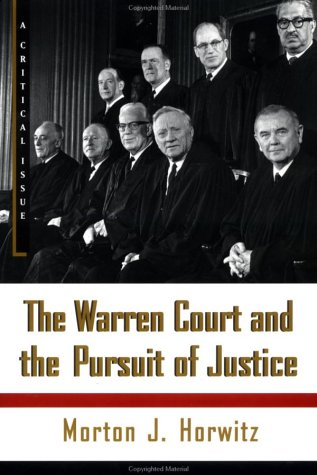
Simon on Horwitz on the Warren Court
The Warren Court, Legalism and Democracy: Sketch for a Critique in a Style Learned from Morton Horwitz is a new essay by William H. Simon, Colu mbia Law School. It is forthcoming in vol. II of TRANSFORMATIONS IN AMERICAN LEGAL HISTORY, Alfred Brophy, Daniel Hamilton, eds. (the link is to vol. I). Hat tip. Here's the abstract:
Morton Horwitz's Transformation books developed a critical approach that elaborates the underlying premises of legal doctrine and compares them to suppressed or ignored alternative perspectives. However, Horwitz's Warren Court book is largely an appreciation of the Court's doctrine that accepts at face value its underlying premises and the judges' claim to vindicate democratic values. In this essay, I speculate on what a Transformation-style critique of the Warren Court might look like and suggest that the Court is vulnerable to criticisms analogous to those the Transformation books make of earlier doctrine. I suggest that book ignores an alternative perspective on social justice that emerged clearly after the Warren Court era but was conceptually available during it.
 mbia Law School. It is forthcoming in vol. II of TRANSFORMATIONS IN AMERICAN LEGAL HISTORY, Alfred Brophy, Daniel Hamilton, eds. (the link is to vol. I). Hat tip. Here's the abstract:
Morton Horwitz's Transformation books developed a critical approach that elaborates the underlying premises of legal doctrine and compares them to suppressed or ignored alternative perspectives. However, Horwitz's Warren Court book is largely an appreciation of the Court's doctrine that accepts at face value its underlying premises and the judges' claim to vindicate democratic values. In this essay, I speculate on what a Transformation-style critique of the Warren Court might look like and suggest that the Court is vulnerable to criticisms analogous to those the Transformation books make of earlier doctrine. I suggest that book ignores an alternative perspective on social justice that emerged clearly after the Warren Court era but was conceptually available during it.
Tuesday, January 13, 2009
How to Say Good-bye
In the series of farewells in the final days of the Bush Administration, it seems a good time to reflect on perhaps the most memorable of farewells. On January 17, 1961, President Dwight D. Eisenhower, who had served as Supreme Commander of Allied Forces in Europe during World War II, left the nation with a warning about the way 20th century warfare might impact the very structure of American society, placing American democracy itself at risk. "In the councils of government, we must guard against the acquisition of unwarranted influence, whether sought or unsought, by the military-industrial complex," he urged.
The full address is here. Here's a video:The potential for the disastrous rise of misplaced power exists and will persist.
We must never let the weight of this combination endanger our liberties or democratic processes. We should take nothing for granted. Only an alert and knowledgeable citizenry can compel the proper meshing of the huge industrial and military machinery of defense with our peaceful methods and goals, so that security and liberty may prosper together.
Scott on Dr. King and the Battle for Hearts and Minds
Dr. King and the Battle for Hearts and Minds is a new article by Wendy B. Scott, North Carolina Central University, and Visiting Professor, University of Maryland School of Law. It is forthcoming in the New York University Review of Law & Social Change (2009).
Here's the abstract: 

In 1954, a unanimous Supreme Court held that laws requiring dual public school systems, separated solely on the basis of race, violated the rights afforded to African American children under the Fourteenth Amendment Equal Protection and Due Process clauses. Brown v. Board of Education marked the beginning of a judicial assault on what the Court in Loving v. Virginia called statutory schemes and state court decisions that served as "an endorsement of the doctrine of White Supremacy." Both Chief Justice Earl Warren and Dr. King recognized that the practice of White Supremacy did more than keep people separated. In Brown, Warren's opinion also validated the relevance of the psychic injury caused by what Dr. King often referred to as "the iron feet of oppression." Warren wrote that the segregation of children solely based on race "generates a feeling of inferiority as to their status in the community that may affect their hearts and minds in a way unlikely ever to be undone." While Warren's conclusion remains hotly debated, Brown introduced personal stigmatic injury into school desegregation discourse. Dr. King embraced the centrality of the heart and mind in the struggle for social justice.
Part II juxtaposes Dr. King's thoughts on the evils of segregation and the necessity of integration with the development of desegregation jurisprudence after Brown. Part III traces the short-lived efforts of the federal judiciary to integrate public schools following Dr. King's death up to Parents Involved. Part IV summarizes the Parents Involved decision and compares the plurality's legal and social visions to that of Brown and Plessy. Part V hypothesizes about Dr. King's reaction to Parents Involved and takes a closer look at the importance of the heart and mind in the Brown opinion and Dr. King's thinking. In conclusion, I attempt to answer the prophetic question posed by Dr. King near the end of his life: "Where do we go from here?" in achieving and sustaining racial diversity in public education.
U.S. Supreme Court, 1951-52: The View from the Law Clerks
John Q. Barrett, St. John's University School of Law, announces, via his "Jackson List," the publication in the St. John's Law Review of a roundtable discussion of the U.S. Supreme Court's 1951-52 Term. (The published roundtable is here.) Professor Barrett explains:
In 2007, the Robert H. Jackson Center [pictured at left] and the Supreme Court Historical Society sponsored a 55th anniversary roundtable discussion of the Court’s 1951-52 Term. The participants were Charles Hileman, former law clerk to Justice Harold H. Burton; Hon. Abner J. Mikva, former law clerk to Justice Sherman Minton; James C.N. Paul, former law clerk to Chief Justice Fred M. Vinson; Neal P. Rutledge, former law clerk to Justice Hugo L. Black; and Marshall L. Small, former law clerk to Justice William O. Douglas. The roundtable, which I moderated with Dean Ken Gormley of Duquesne Law School, also included a videotaped 2002 Steel Seizure interview with Chief Justice William H. Rehnquist, former law clerk to Justice Jackson.***
In addition to the Steel Seizure Cases, the topics discussed include the Justices of the Vinson Court; Zorach v. Clausen (Establishment of religion); Sacher v. United States (criminal contempt convictions of attorneys representing officials of the Communist Party of the United States); Adler v. Board of Education (teacher’s refusal to sign an anti-Communist oath); and Brown v. Board of Education and the other school segregation cases that were in 1951-52 coming to the Supreme Court.

Monday, January 12, 2009
Pickar on the Depression-Era Background of Bailouts
 Over at the University of Chicago Law School Faculty Blog, Randy Pickar, who is team-teaching a seminar on Bailouts with Douglas Baird and Todd Henderson, has posted some PowerPoint slides on the economics on the Great Depression and its aftermath, as well as a selection of New York Times front pages from the First Hundred Days. He explains:
I am doing a seminar on bailouts this quarter with Professors Baird and Henderson. The syllabus is evolving but is here if you are interested. I put together some introductory material on the 1930s for class last week; the newspaper headlines from the time of Roosevelt’s first inauguration are really quite striking. The powerpoint slides also include links to many of the statutes enacted during Roosevelt’s first 100 days, plus key bailout statutes such as both versions of the Frazier-Lemke Act.
Motomura on Immigration Outside the Law
Hiroshi Motomura, University of California, Los Angeles, School of Law, draws in part on history in his new essay Immigration Outside the Law. It appeared in the Columbia Law Review (2008). Here's the abstract: In current debates about undocumented or illegal immigration, three themes have emerged as central: the meaning of unlawful presence, the role of states and cities, and the integration of immigrants. This Essay's starting premise is that a reappraisal of these themes is essential to a conceptual roadmap of this difficult area of law and policy. This Essay argues that it is too narrow and too shallow to examine any of the three themes in isolation, as is typically done. Rather, each theme pairs up with another to reveal and elucidate a more fundamental question. The meaning of unlawful presence is connected to the role of states and cities; together they illuminate enforcement authority in immigration law. The role of states and cities combines with the integration of immigrants to show how communities that include immigrants are built. The meaning of unlawful presence and the integration of immigrants jointly shed light on how we think about the dimension of time in immigration law, and especially how we balance lessons from the past, present, and future. The conceptual roadmap generated by this new look at immigration outside the law is important for two reasons. First, it explains why disagreements often run deep, and it reorients debate around more productive questions. Second, it shows why finding common ground will require looking at broader questions of international and domestic economic development as well as domestic educational policy.
Ratnapala on the Legacy of Eighteenth-Century "Evolutionary" Thought
Anura Surindra Ratnapala, T.C. Beirne School of Law, University of Queensland has posted Eighteenth Century Evolutionary Thought and its Relevance in the Age of Legislation, which appeared in volume 12 of Constitutional Political Economy (2001). Here is the abstract:
Image Credit: David HumeThis essay revisits the evolutionist writings of the eighteenth century to clarify their key ideas concerning legal and social evolution and to assess their relevance in the present era of pervasive legislation. The discovery of the principle of the accumulation of design is traced to these writings and the continuity of twentieth century spontaneous order theory and new institutional economics with this tradition is noted. While highlighting the contributions of other institutional theorists to the elucidation of the role of purposive action in legal evolution the author argues that input designing does not alter the fundamental nature of legal emergence as postulated by the eighteenth century scholars. The essay supports the ideal of legal generality, free speech, property and contractual freedom as normative implications of the evolutionary viewpoint.


Sunday, January 11, 2009
Reviewed: books on Lincoln, 18th & 19th century science, and 21st century torture
The Invention of Air: A Story of Science, Faith, Revolution, and the Birth of America by S teven Johnson, a biography of 18th century scientist Joseph Priestly who discovered oxygen, is reviewed by Andrew O'Hehir for Salon. He finds it "a slender, deceptively casual book," that "aims high." Historians of early American politics will be interested in this scientist who was friends with Benjamin Franklin, Thomas Jefferson, and others.
BANQUET AT DELMONICO'S: Great Minds, the Gilded Age, and the Triumph of Evolution in America by Barry Werth is reviewed for the Washington Post. Louis Bayard calls the book a "wide-ranging account of social Darwinism's rise in America." Hat tip.
 teven Johnson, a biography of 18th century scientist Joseph Priestly who discovered oxygen, is reviewed by Andrew O'Hehir for Salon. He finds it "a slender, deceptively casual book," that "aims high." Historians of early American politics will be interested in this scientist who was friends with Benjamin Franklin, Thomas Jefferson, and others.
BANQUET AT DELMONICO'S: Great Minds, the Gilded Age, and the Triumph of Evolution in America by Barry Werth is reviewed for the Washington Post. Louis Bayard calls the book a "wide-ranging account of social Darwinism's rise in America." Hat tip.
Torture Team: Rumsfeld's Memo and the Betrayal of American Values by Philippe  Sands; The Trial of Donald Rumsfeld: A Prosecution by Book by Michael Ratner and the Center for Constitutional Rights; and Administration of Torture: A Documentary Record from Washington to Abu Ghraib and Beyond by Jameel Jaffer and Amrit Singh are discussed by David Cole in a New York Review of Books essay, What to Do About the Torturers? Setting these works in the context of other recent books on torture, Cole finds that "undoubtedly the most unusual and deeply revealing take on the subject is the work of the British lawyer and law professor Philippe Sands. As Alexis de Tocqueville showed long ago, sometimes it takes the eyes of an outsider to show us ourselves."
  The author "does not merely analyze the documentary evidence. Instead, he personally set out to interview as many of the participants in this sordid tale as would talk to him. Remarkably, nearly all of them did." Because much is known about the development of U.S. torture policy, Sand's book "is illuminating not so much for breaking new factual ground as for the human insight he brings to the events."
 Sands; The Trial of Donald Rumsfeld: A Prosecution by Book by Michael Ratner and the Center for Constitutional Rights; and Administration of Torture: A Documentary Record from Washington to Abu Ghraib and Beyond by Jameel Jaffer and Amrit Singh are discussed by David Cole in a New York Review of Books essay, What to Do About the Torturers? Setting these works in the context of other recent books on torture, Cole finds that "undoubtedly the most unusual and deeply revealing take on the subject is the work of the British lawyer and law professor Philippe Sands. As Alexis de Tocqueville showed long ago, sometimes it takes the eyes of an outsider to show us ourselves."
  The author "does not merely analyze the documentary evidence. Instead, he personally set out to interview as many of the participants in this sordid tale as would talk to him. Remarkably, nearly all of them did." Because much is known about the development of U.S. torture policy, Sand's book "is illuminating not so much for breaking new factual ground as for the human insight he brings to the events."
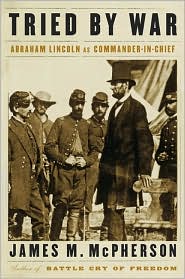
 TRIED BY WAR: ABRAHAM LINCOLN AS COMMANDER IN CHIEF by James M. McPherson is reviewed by John M. Taylor in the Washington Times, who finds it "a stroll through highlights of the war focusing on Lincoln's dealings with his generals."
Saturday, January 10, 2009
Bartrum, Of Historiography and Constitutional Principle: Jefferson's Reply to the Danbury Baptists
Of Historiography and Constitutional Principle: Jefferson's Reply to the Danbury Baptists is an article by Ian C. Bartrum, Vermont Law School and Irving S. Ribicoff Fellow, Yale Law School. It appeared in the Journal of Church and State (2008). Here's the abstract: This article examines the ways that the Supreme Court has used Thomas Jefferson's letter to the Danbury Baptists ("a wall of separation between church and state") as a rhetorical symbol. It finds the letter at the heart of the Court's debate over competing theories of religious neutrality. The article then explores the treatment the letter has received in several leading academic histories, and concludes that professional historians have largely tailored their arguments to match the Supreme Court's ideological divide. The article concludes that, because the goals of historical argument and legal argument are fundamentally different, this "incestuous" kind of relationship between historiography and constitutional principle is potentially destructive
Friday, January 9, 2009
Gilder Lehrman Gets Its Lincoln On
 Appropriately in advance of the bicentennial of Abraham Lincoln's birth, the Gilder Lehrman Institute of American History has posted four talks given last November at the symposium "Abraham Lincoln in His Time and Ours":
Manisha Sinha, “Lincoln and Black Abolitionists”
Professor Manisha Sinha provides insight into the role of both black and white abolitionists on President Lincoln’s evolving position on emancipation and black rights. Sinha shows how Lincoln’s willingness to meet with and listen to the views of African Americans influenced his decision to reject colonization and embrace emancipation—and ultimately to support the call to extend political citizenship to African Americans. Sinha is associate professor of Afro-American studies and history at the University of Massachusetts, Amherst.James Oakes, "Lincoln and Race”
Professor James Oakes clarifies Lincoln’s views on race through a careful look at the various and competing definitions of “rights.” Oakes argues that Lincoln did not believe black men and women could or should be denied their natural rights, but that his acceptance of states’ rights allowed him to avoid the question of extending political citizenship rights to African Americans. Oakes is Graduate Humanities Professor and Professor of History at the Graduate Center, City University of New York. He is the author of The Radical and the Republican: Frederick Douglass, Abraham Lincoln, and the Triumph of Antislavery Politics (2007), winner of the Lincoln Prize.Sean Wilentz, “Lincoln and Jacksonian Democracy”
Professor Sean Wilentz traces the surprising connection between Andrew Jackson and Abraham Lincoln, and reminds us that Lincoln was willing to look for political wisdom and political strategies within his own party as well as in the rival Democratic Party. Wilentz is the Sidney and Ruth Lapidus Professor in the American Revolutionary Era at Princeton University. He is the author and editor of numerous books, including The Rise of American Democracy: Jefferson to Lincoln (2005), which was awarded the Bancroft Prize.Professor Richard Carwadine, "Lincoln and Religion"
Professor Richard Carwadine examines Lincoln’s religious beliefs as America’s crisis deepened, and looks at the role that the President’s religious sentiments played in mobilizing support for the war among Union citizens. Richard Carwardine is Rhodes Professor of American history at the University of Oxford. He is the author of Lincoln: A Life of Purpose and Power (2003), which won the Lincoln Prize in 2004.
Lash, Beyond Incorporation
Beyond Incorporation is a new paper by Kurt T. Lash, Loyola Law School Los Angeles. Here's the Abstract: Incorporation as a theory of constitutional interpretation is dying. Incorporationist scholars are killing it. In this paper, I argue that they are right to do so, whether they mean to or not. The current incorporation debate bears so little resemblance to the theory of incorporation as it originally emerged at the time of the New Deal that I argue it is time to abandon the metaphor of incorporation altogether and admit that what we are after has nothing to do with incorporated texts from 1787. Our search is for the public understanding of texts added to the Constitution in 1868. Because members of the Reconstruction Congress often linked the meaning of the Fourteenth Amendment to the Bill of Rights, at first glance my proposal may seem to offer a distinction without a difference. In fact, I believe a complete break from incorporation-talk is an important step towards a more historically-contextual investigation of the original meaning of the Fourteenth Amendment. Not only does it allow for a more historically accurate account of Fourteenth Amendment-period rights, it also opens the door to a more nuanced historical account that gives due weight to federalism concerns which informed the original understanding of the Amendment.
Thursday, January 8, 2009
30 Shopping Days to the ASLH Deadline!
 I'm moving up this previously posted call for papers for the annual meeting of the American Society for Legal History as a reminder that the deadline for submissions is February 6, about a month away. A good time for potential presenters to finalize the personnel on their panels!
***********************************************
The 2009 meeting of the American Society for Legal History will be in Dallas, Texas, November 12-14, 2009. The ASLH invites proposals for complete panels and individual papers on any facet or period of legal history, anywhere in the world. Financial assistance will be available for graduate students whose papers are accepted for the program.
Panel proposals should include the following: a c.v. for every person on the panel, including complete contact information, a short description of the panel, a 300-word abstract of each paper, and a draft of each paper, if possible.
Individual paper proposals should include the following: a c.v. for the author, including complete contact information, a 300-word abstract of the paper, and a draft of the paper, if possible.
The deadline for proposals will be February 6, 2009. Proposals should be sent as email attachments to Stuart Banner, at banner@law.ucla.edu.
Those unable to send proposals as email attachments can mail hard copies to:
2009 ASLH Program Committee
c/o Stuart Banner
UCLA School of Law
405 Hilgard Ave.
Los Angeles, CA 90095
USA
Leimer on How we Lost our Moral Rights and the Door Closed on Non-Economic Values in Copyright
How we Lost our Moral Rights and the Door Closed on Non-Economic Values in Copyright is an article by Susan Liemer, Southern Illinois University at Carbondale - School of Law. It appeared in the John Marshall Review of Intellectual Property Law (2005). Here's the abstract: When Congress passed the Visual Artists Rights Act (VARA) in 1990, it introduced into our federal law concepts that had been shut out of Anglo-American intellectual property law for over 200 years. VARA gives visual artists the right of attribution, i.e., the right to have their work properly attributed to them, and the right of integrity, i.e., the right to not have their work altered or destroyed without their permission. While others have studied the history of Anglo-American copyright from the advent of the printing press, they make few references to the type of rights granted by VARA. To fill that gap, this article retraces the history of Anglo-American intellectual property law, analyzing how VARA rights fit into it. In particular, while analyzing the key Eighteenth Century English statutes and cases, this article pinpoints the moment in the evolution of Anglo-American law when the English judges effectively lopped off the branch of intellectual property law that soon after bloomed in France into the droit moral or “moral rights.” The timing of this legal development (and concurrent political developments) ensured that the intellectual property laws of the new United States would contain the English emphasis on economic protection and ignore the protection for the creative process that developed soon after in France. Understanding the twists and turns of this history may help us be more vigilant to protect moral rights development as our intellectual property law evolves to once again accommodate new technologies.
Leimer also has a new essay on an unexpected topic: Bot and Gemots: Anglo-Saxon Legal References in Harry Potter.
Leimer also has a new essay on an unexpected topic: Bot and Gemots: Anglo-Saxon Legal References in Harry Potter.
AALS legal history program: Biographies of Federal Appellate Judges
Backbone of the Federal Judiciary: The Study and Biography of Federal Appellate Judges is the topic of this year's Section on Legal History at the Association of American Law Schools annual meeting in San Diego this week. The session will be held on Friday, January 9, at 3:30 p.m. at Marina Salon E, South Tower/Level 3, San Diego Marriott Hotel & Marina. Here's the program description:
Among the lacuna in the study of the history of the legal profession one of the greatest is the failure to think seriously about the role and personalities of the judicial figures who are neither trial nor ultimate judges. Yet they are among the key figures in legal history, testing out jurisprudence before it is set down by the Court and handling the regular appellate review necessary for a functioning judicial system. The biographers on this panel have begun to fill in our knowledge. The publication of their three volumes gives us a unique opportunity to examine the history of the federal appellate courts and the federal appellate judiciary by examining the lives and work of three eminent judges, each of whom has had key roles in shaping modern American law, especially that concerning civil rights. In Anne Emanuel's manuscript work, "In Praise of Activism: Judge Elbert Parr Tuttle and the Civil Rights Revolution," Joel Friedman's forthcoming "Champion of Civil Rights: John Minor Wisdom", and Polly Price's forthcoming "Judge Richard S. Arnold: A Legacy of Justice on the Federal Bench," the legal profession has an opportunity to explore questions not fully before considered in legal history. Michael Gerhardt, author of the 1995 Cornell Law Review article, "The Art of Judicial Biography," and many other pieces on the role of the courts, will comment on the presentations by the biographers as well as numerous biographical sketches of judges for legal and constitutional encyclopedias.
Speakers: Gregory A. Mark, Rutgers School of Law, Newark, Moderator
Anne S. Emanuel, Georgia State University College of Law
Joel W. Friedman, Tulane Law School
Polly J. Price, Emory University School of Law
Michael J. Gerhardt, University of North Carolina, Commentator A business meeting will follow the program. For newbies: this is where you show interest, get to know people, and eventually get elected to lead the section.
Among the lacuna in the study of the history of the legal profession one of the greatest is the failure to think seriously about the role and personalities of the judicial figures who are neither trial nor ultimate judges. Yet they are among the key figures in legal history, testing out jurisprudence before it is set down by the Court and handling the regular appellate review necessary for a functioning judicial system. The biographers on this panel have begun to fill in our knowledge. The publication of their three volumes gives us a unique opportunity to examine the history of the federal appellate courts and the federal appellate judiciary by examining the lives and work of three eminent judges, each of whom has had key roles in shaping modern American law, especially that concerning civil rights. In Anne Emanuel's manuscript work, "In Praise of Activism: Judge Elbert Parr Tuttle and the Civil Rights Revolution," Joel Friedman's forthcoming "Champion of Civil Rights: John Minor Wisdom", and Polly Price's forthcoming "Judge Richard S. Arnold: A Legacy of Justice on the Federal Bench," the legal profession has an opportunity to explore questions not fully before considered in legal history. Michael Gerhardt, author of the 1995 Cornell Law Review article, "The Art of Judicial Biography," and many other pieces on the role of the courts, will comment on the presentations by the biographers as well as numerous biographical sketches of judges for legal and constitutional encyclopedias.
Speakers: Gregory A. Mark, Rutgers School of Law, Newark, Moderator
Anne S. Emanuel, Georgia State University College of Law
Joel W. Friedman, Tulane Law School
Polly J. Price, Emory University School of Law
Michael J. Gerhardt, University of North Carolina, Commentator A business meeting will follow the program. For newbies: this is where you show interest, get to know people, and eventually get elected to lead the section.
Wednesday, January 7, 2009
Johnson on The Intersection of Race and Class in U.S. Immigration Law and Enforcement
The Intersection of Race and Class in U.S. Immigration Law and Enforcement is a new article by Kevin R. Johnson, Dean, University of California, Davis - School o f Law. It will appear in Law & Contemporary Problems (2009). Here's the abstract:
 f Law. It will appear in Law & Contemporary Problems (2009). Here's the abstract:
This issue of Law and Contemporary Problems will no doubt make a contribution to the literature on the intersection of race and class in modern American social life. In my estimation, there is no better body of law to illustrate the close nexus between race and class than U.S. immigration law and enforcement. At bottom, the U.S. immigration laws historically have operated - and continue to operate - to prevent many poor and working people of color from migrating to, and punish those living in, the United States.
Matters of race and class in the U.S. immigration laws unquestionably are more complicated today than in the past. Namely, express racial exclusions fortunately can no longer be found in the U.S. immigration laws. A by-product of the civil rights movement, the Immigration Act of 1965 abolished the discriminatory national origins quotas system that had remained a bulwark of the U.S. immigration laws since 1924. As a consequence of the change in the law, the nation saw a dramatic shift in the racial demographics of immigration, with an especially sharp increase in migration from Asia.
Although racial exclusions are something of the past, the express - and aggressive - exclusion of the poor remains a fundamental function of the modern U.S. immigration law, the Immigration and Nationality Act of 1952 (INA). In sharp contrast, domestic laws generally cannot - constitutionally at least - discriminate de jure against the poor. The express discrimination against poor and working immigrants by U.S. law, as we shall see, has disparate national origin and racial impacts.
Part II of this article sketches how race and class interact synergistically in the U.S. immigration laws and their enforcement. Part III offers case studies from recent immigration events in the United States demonstrating race and class at work in the experiences of noncitizens.
Matters of race and class in the U.S. immigration laws unquestionably are more complicated today than in the past. Namely, express racial exclusions fortunately can no longer be found in the U.S. immigration laws. A by-product of the civil rights movement, the Immigration Act of 1965 abolished the discriminatory national origins quotas system that had remained a bulwark of the U.S. immigration laws since 1924. As a consequence of the change in the law, the nation saw a dramatic shift in the racial demographics of immigration, with an especially sharp increase in migration from Asia.
Although racial exclusions are something of the past, the express - and aggressive - exclusion of the poor remains a fundamental function of the modern U.S. immigration law, the Immigration and Nationality Act of 1952 (INA). In sharp contrast, domestic laws generally cannot - constitutionally at least - discriminate de jure against the poor. The express discrimination against poor and working immigrants by U.S. law, as we shall see, has disparate national origin and racial impacts.
Part II of this article sketches how race and class interact synergistically in the U.S. immigration laws and their enforcement. Part III offers case studies from recent immigration events in the United States demonstrating race and class at work in the experiences of noncitizens.

Tuesday, January 6, 2009
War, Time, and Law
This post is part of a project that seeks to unpack the concept of "wartime," and to illuminate the impact of assumptions about war’s temporality on our thinking about law and war. I began this thread last summer. Here are some additional thoughts about war, time, and law.

The heterogeneity of time helps us to see that, in Allen’s words, time is not "a transhistorical phenomenon, an aspect of nature or product of technology existing outside of human society," but is "an historical artifact produced by human beings acting within specific historical circumstances." Allen argues for new scholarship on the relationship between time and the nation that "attend[s] to the recursive and dynamic interactions between these two terms."
Similarly, the relationship between war and time is complex. A more satisfactory understanding of war, time, and law must bring a cultural history of time into the history of law and war. This is the aim of my new project.

"Wartime" is important to American law, but as with other ways of categorizing time, we don’t tend to inquire about it. Wartime is treated as if it were a natural feature of our world. The impact of this way of categorizing time on our thinking goes unexamined.
In scholarship on law and war, time is seen as linear and episodic. There are two different kinds of time: wartime and peacetime. Historical progression consists of moving from one kind of time to another (from wartime to peacetime to wartime, etc.). Law is thought to vary depending on what time it is. The relationship between citizen and state, the scope of rights, the extent of government power depend on whether it is wartime or peacetime.
The idea that time is linear is often thought to be a natural and inevitable feature of time. Anthropologist Carol Greenhouse suggests that scholars tend to think of non-linear time as embedde d in other cultures. Forms of time that are thought to flow from particular cultural contexts are often referred to as "social time." Social time is thought to be culturally constructed, as compared with linear time that is thought to exist in nature.
In scholarship on law and war, time is seen as linear and episodic. There are two different kinds of time: wartime and peacetime. Historical progression consists of moving from one kind of time to another (from wartime to peacetime to wartime, etc.). Law is thought to vary depending on what time it is. The relationship between citizen and state, the scope of rights, the extent of government power depend on whether it is wartime or peacetime.
The idea that time is linear is often thought to be a natural and inevitable feature of time. Anthropologist Carol Greenhouse suggests that scholars tend to think of non-linear time as embedde
 d in other cultures. Forms of time that are thought to flow from particular cultural contexts are often referred to as "social time." Social time is thought to be culturally constructed, as compared with linear time that is thought to exist in nature.
 But even the linear time we think of as "natural" time has a history, and is understood within a cultural context. Linear time is also social time, Greenhouse argues. "The idea of time that has dominated public life in the West since the thirteenth century...came to Europe with Christianity," she writes. It included two ideas that "had long roots in Jewish and...Christian tradition: first, the origin of time in creation and, second, the end of time in a day of judgment. The linearity of time derives from the geometric connection between these two end points." Modern, secular understandings of time are often hazy about the nature of origins and endpoint, but retain this linearity. Once time is thought of as a progression from one point to another, other assumptions follow. "To speak of ‘linear time’ is to refer to the image of time as an irreversible progression of moments, yielding ordinal conceptions of past, present, and future as well as duration." 

Emile Durkheim noted the difficulty in seeing the cultural nature of time. "We cannot conceive of time," he wrote, "except on condition of distinguishing its different moments." If we "try to represent what the notion of time would be without the processes by which we divide it, measure it or express it with objective signs, a time which is not a succession of years, months, weeks, days and hours! This is something nearly unthinkable." Yet, for Durkheim, Greenhouse explains, these "categories of thought are born in social, or collective, experience."
If linear time, like cyclical time, is social time, it does not follow that particular constructions of time have an absolute hold in discreet cultures. Instead, Greenhouse argues, competing conceptions of time overlap and compete for ascendancy. Initially, in the West, a linear understanding of time competed with indigenous European ideas that time was a pendulum, moving between binary oppositions (day/night, summer/winter). "If linear time dominates public life in the West, then, it is because its primary efficacy is in the construction and management of dominant social institutions, not because it is the only ‘kind’ of time that is culturally  available. The meanings of linear time are inseparable from its cultural history of use."
 available. The meanings of linear time are inseparable from its cultural history of use."
 The expansion of "clock time" and the introduction of the telegraph have been thought to introduce simultaneity. Benedict Anderson argues that once time was viewed as uniform and governed by the clock, time helped knit together a common sense of national identity. As Thomas M. Allen describes Anderson’s intervention, clock time "created a shared ‘simultaneity’ of experience that linked individuals together in an ‘imagined community’ moving together through time." The clock’s rationality drove other conceptions of time.
A newer literature on the history of time, however, comports with Greenhouse’s argument that the experience of time is heterogeneous. In new scholarship, as Allen describes it, social historians "have demonstrated empirically that changes in time consciousness cannot be explained as a s tory of progress from a more primitive to a more rational organization of time." This literature shows that
 tory of progress from a more primitive to a more rational organization of time." This literature shows that
 the homogeneity of time that supposedly results from the centrality of such instruments as clocks, watches, and calendars to modern life is only possible if technologies produce time by themselves....Once we begin to ask what people did with technologies of time, and why they wanted such technologies, the homogeneity of modern national time begins to shatter into myriad fragments of heterogeneous, local, and transient temporal cultures.Heterogeneous temporalities do not drive people apart, Allen argues, but instead "are themselves the threads out of which the fabric of national belonging has long been woven."
The heterogeneity of time helps us to see that, in Allen’s words, time is not "a transhistorical phenomenon, an aspect of nature or product of technology existing outside of human society," but is "an historical artifact produced by human beings acting within specific historical circumstances." Allen argues for new scholarship on the relationship between time and the nation that "attend[s] to the recursive and dynamic interactions between these two terms."
Similarly, the relationship between war and time is complex. A more satisfactory understanding of war, time, and law must bring a cultural history of time into the history of law and war. This is the aim of my new project.
Update: There's a discussion of this post in the comments over at Balkinization.
Subscribe to:
Posts (Atom)