Wednesday, February 15, 2023

Ablavsky and Allread on Indigenous Peoples' Debates over the US Constitution

Gregory Ablavsky, Stanford Law School, and W. Tanner Allread, Stanford University, have posted We the (Native) People?: How Indigenous Peoples Debated the U.S. Constitution, which is forthcoming in the Columbia Law Review:

The Constitution was written in the name of the “People of the United States.” And yet, many of the nation’s actual people were excluded from the document’s drafting and ratification based on race, gender, and class. But these groups were far from silent. A more inclusive constitutional history might capture marginalized communities’ roles as actors, not just subjects, in constitutional debates.

This Article uses the tools of legal and Native history to examine how one such group, Indigenous peoples, argued about and with the U.S. Constitution. It analogizes Native engagement to some of the foundational frames of the “Founding” to underscore its significance for current constitutional discourse. Like their Anglo-American neighbors, Native peoples, too, had a prerevolutionary constitutional order—what we here dub the “diplomatic constitution”—that experienced a crisis during and after the Revolution. After the Constitution’s drafting, Native peoples engaged in their own version of the ratification debates. And then, in the early republic, Native peoples both invoked and critiqued the document as they faced Removal.

This Article’s most important contribution is proof of concept, illustrating what a more inclusive constitutional history might look like. Still, some of the payoffs are doctrinal: broadening the “public” in original public meaning, for instance. But the more significant stakes are theoretical. As this Article contends, by recognizing Indigenous law and constitutional interpretations as part of “our law”—in other words, the pre- and post-constitutional legal heritage of the United States—Native peoples can claim their role as co-creators of constitutional law.
--Dan Ernst

Tuesday, February 14, 2023

David Dudley Field and the Limits of Conscience

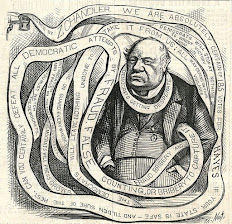
David Dudley Field (Harper's Weekly; NYPL)
[Guest Blogger Michael S. Ariens's posts on his new book, The Lawyer's Conscience, continues.  DRE]

A notice printed in the December 16, 1870 issue of the New York Times titled James Fisk's Lawyers discussed the general retainer agreement between Fisk and the law firm of Field and Shearman, headed by David Dudley Field. The Times reported and rejected the firm's claim that "it was the duty of the advocate to accept all cases offered him." Ten days later, the Times reprinted stories from two other newspapers about Field and Shearman's decision to take a general retainer from Fisk. One of the two simply reprinted the December 16 Times article, which gave the Times another opportunity to criticize the firm's claim that it was duty-bound to represent any client wishing to hire it. The second article came from the December 7, 1870 issue of Samuel Bowles' Springfield Massachusetts Republican. That article quoted a letter from a young, unnamed New York lawyer, who like Field, was raised in western Massachusetts. The letter accused Field of receiving more than $200,000 in legal fees for his work for the Erie Railway and its principal owners, Fisk and Jay Gould. Though remunerative, the writer claimed Field had "destroyed his reputation as a high-toned lawyer with the public," and "lawyers disliked him for his avarice and meanness." Finally, the correspondent claimed the late and revered New York lawyer James T. Brady had once accused Field of being "'the king of the pettifoggers,' which title has stuck to Field ever since."

Field was then 65 years old. He was well known, both for his legal talents and his antebellum work as a legal reformer. He also seemed compelled to respond to any criticism from anyone. Field sent a letter to Bowles asking that he publicly disavow the contents of the letter. Bowles refused. They, joined by Field's son Dudley Field, continued a correspondence soon published in pamphlet form.

By the end of 1870, Field had represented Fisk, Gould, and the Erie for almost three years. He had just agreed to defend the notorious Tammany Hall leader William "Boss" Tweed against criminal charges. And public criticisms of his professional behavior had just begun. When initially representing the Erie, Field had accused Judge George G. Barnard of unlawfully conspiring with America's wealthiest person, Cornelius "Commodore" Vanderbilt, to take control of the Erie. After that Erie "war" was settled, Field and his clients had a rapprochement with Barnard, first absolving him of any corrupt wrongdoing in concert with Vanderbilt (Barnard had also been accused of taking bribes, in his own court, by James Brady-Barnard neither denied it nor castigated Brady for his accusation, and Barnard had been accused of corruption by Field's partner Thomas Shearman even earlier). Now Barnard issued injunctions in favor of the Erie at the faintest whisper from its lawyers, including Field.

In the third of the four Erie "wars," Field represented the Erie in its attempted takeover of the Albany & Susquehanna (A&S) railroad. Barnard issued an arrest warrant for the officers of the A&S at the request of Field and Shearman, which included arresting A&S lawyer Henry Smith, making it impossible for him to defend the interests of A&S. Another judge, later assessing this extraordinary event, concluded the Erie's lawyers had "fraudulently procured an order for [their] arrest."   

Bowles's criticisms were soon followed in an unsigned, three-part article in The Nation, lawyer Francis C. Barlow soon revealed himself as its author. The New York Tribune criticized Field in a January 31, 1871 article, and Barlow wrote letters to its editor published on March 7-9, quickly followed by a pamphlet, Facts for Mr. Field. The North American Review published two articles criticizing Field's conduct, one by Albert Stickney and the other by Charles Francis Adams, both of whom attempted to answer Field's question, what specific professional misconduct did I engage in? Those articles caused the Boston-based American Law Review, edited by Oliver Wendell Holmes Jr. and Arthur Sedgwick, to opine that the Association of the Bar of the City of New York (ABCNY) investigate and, if necessary, disbar Field.

Field and his defenders responded to every criticism. A common response was that Field was improperly tarred with the "bad motives" of his clients. He was simply doing what every good lawyer should do: "everything for his client that he can honestly do." Though the Field fracas was in abeyance for the rest of 1871, successful anticorruption efforts in New York made reformers ascendant and Field on the defensive. The ABCNY began investigating Judge Barnard and two other judges who were believed in the Erie's pocket, Albert Cardozo (father of Benjamin) and John McCunn. Field's accuser Albert Stickney aided the state Assembly's impeachment investigation, in part by sharply cross-examining Field. Cardozo resigned from office, McCunn died three days after he was convicted, and Barnard was convicted and removed from office in August 1872. He was convicted of twenty-five articles of impeachment, including all related to the Erie wars.

The conviction of Barnard may have emboldened Stickney, who renewed his condemnation of Field's behavior, publishing them in Galaxy. At the same time, he, joined by two fellow Barnard prosecutors, proposed the ABCNY's judiciary committee make recommendations concerning the lawyers connected with Barnard, Cardozo, and McCunn, meaning David Dudley Field, Dudley Field, and Thomas Shearman.  In an extraordinary meeting in December 1872, Field demanded he be tried immediately and be either expelled or cleared. Much of Field's defense (as published the next day, for he was unable to read the entire speech at the meeting) consisted of ad hominem attacks on Stickney (who sought "the little newspaper notoriety that he has coveted, begged and earned") and other accusers. Field also defended his actions by pointing to letters of support written by twelve lawyers and judges who, at Field's behest, assessed whether he acted unprofessionally or improperly. Several relied on the absence of evidence that Field possessed "knowledge" of Barnard's corruption to justify Field's actions.
The December meeting ended with no one satisfied. Field's demand was postponed for a month; when the ABCNY next met, the judiciary committee washed its hands of the matter. No action against Field would be taken.

Field lived for another twenty years, dying in 1894. The treasurer of the ABCNY informed its executive committee of Field's death. Ordinarily, the ABCNY would commission work on Field's memorial. Instead, it decided not to mention Field or commemorate his life "in any way."

Monday, February 13, 2023

Morris L. Cohen Student Essay Competition

[We have the following announcement.  DRE]

The Legal History and Rare Books (LH&RB) Section of the American Association of Law Libraries (AALL), in cooperation with Gale, a Cengage company, announces the Thirteenth Annual Morris L. Cohen Student Essay Competition. The competition is named in honor of Morris L. Cohen, late Professor Emeritus of Law at Yale Law School.

The competition is designed to encourage scholarship and to acquaint students with the AALL and law librarianship, and is open to students currently enrolled in accredited graduate programs in library science, law, history, and related fields. Essays may be on any topic related to legal history, rare law books, or legal archives. The winner will receive a $1,000.00 prize from Gale, a Cengage company, and will be invited to present their paper to AALL members via webinar.

Winning and runner-up entries will be invited to submit their entries to UNBOUND: A Review of Legal History and Rare Books, the official journal of LH&RB. Past winning essays have gone on to be accepted by journals such as N.Y.U. Law Review, American Journal of Legal History, University of South Florida Law Review, William & Mary Journal of Women and the Law, the Yale Journal of Law & the Humanities, and French Historical Review.

The entry form and instructions are available at the LH&RB website. Entries must be submitted by 11:59 p.m., May 15, 2023 (EDT).

Please direct questions to Linda K. Tesar, Chair, Morris L. Cohen Student Essay Competition Committee (lktesar@wm.edu).

CFP: Constitutional History: Comparative Perspectives

[We have the following call for papers. DRE]

Constitutional History: Comparative Perspectives.  September 14-15, 2023; Bologna, Italy.  An international conference sponsored by University of Illinois College of Law; University of Bologna Department of Legal Studies; and the Center for Constitutional Studies and Democratic Development (Johns Hopkins University SAIS Europe–University of Bologna)

Paper proposals are invited for the Fifth Illinois-Bologna conference on Constitutional History: Comparative Perspectives. The conference will be held in Bologna at the Department of Legal Studies of the University of Bologna on September 14-15, 2023.  The conference keynote speaker will be Professor Miroslaw Granat, former Justice of the Constitutional Court of Poland.  

Accompanying the spread of constitutional government around the world has been a profound interest in the comparative aspects of constitutional law. Scholars have catalogued the differing features of national constitutions and examined how different constitutional systems resolve common legal issues. So, too, judges faced with legal questions have sought guidance in the decisions of constitutional courts of other nations. While comparative constitutional law is therefore a well-established field, less attention has been paid so far to the comparative dimensions of constitutional history. This international conference series aims to address that shortcoming by energizing the study and analysis of constitutional history from comparative perspectives. It provides a forum for presentation and discussion of current research on issues of constitutional history that cross national boundaries. It also brings together scholars who, at present, are working on constitutional histories of single jurisdictions—with the expectation that conversations among these scholars will allow for sharing of methodologies and point also to fresh areas of research that may transcend national boundaries.

For 2023, the focus of the conference is Landmark Judgments.  Landmark judgments are foundational decisions that, rather than merely resolving a concrete case, set a key precedent, introduce a major legal principle or concept, or substantially impact the trajectory of the law. Such judgments, typically issued by Supreme Courts and Constitutional Courts, are found throughout the world. Examples include Marbury v. Madison (1803) and Brown v. Board of Education (1954) in the United States; Reference re Secession of Quebec (1998) in Canada; Décision Liberté d'association (1971) in France;  the Lüth Judgment (1958) in Germany; and S v Makwanyane and Another (1995) in South Africa.

Landmark judgments in constitutional cases invite numerous questions that can benefit from comparative analysis. How do landmark judgments become landmark? What is their history? What determines their trajectory? What kinds of influence do these leading cases exert at the domestic level? When, how and to what extent do landmark judgments exert influence in other jurisdictions? Do landmark judgments gain different meaning when they travel abroad? Who decides whether a case qualifies as a landmark? Do some jurisdictions produce more landmark judgments than others? How easy is it to challenge, overturn or displace a landmark decision? Can a ruling be a landmark if it is widely perceived as erroneous?  What is the role of landmark judgments outside of the courts, in the political sphere and in society more generally?

We invite papers that consider these and related questions about landmark judgments in constitutional cases and that can serve as the basis for a discussion among scholars interested in exploring landmarks from a comparative perspective. Papers that focus on a single jurisdiction—and even a single case—are welcome as are papers that examine landmark judgments from multiple jurisdictions.  

Scholars interested in presenting a paper at the conference should first e-mail a title and summary of the proposed paper along with a CV to Professor Jason Mazzone at mazzonej[@]illinois.edu. There is no word limit for the proposals but proposals in the range of 500-1,000 words are typical. Proposals received by April 1, 2023, will receive priority. After that date, submitted proposals will be considered if space remains.

For those whose abstracts are accepted, draft papers will be required for circulation to other participants three weeks prior to the conference.

Subject to the usual requirements of peer review, papers from the conference will be published as a single volume by Brill. Authors who accept an invitation to present a paper at the conference must agree to have the paper included in the published volume. Additional information about length and formatting requirements for the final versions of the papers will be provided to authors.

Conference participants are responsible for their own travel and accommodation expenses.

Saturday, February 11, 2023

Weekend Roundup

  • "This semester, Boston College is hosting the Boston-Area Legal History Colloquium, a distinctive forum where budding legal historians can receive feedback on works-in-progress" (BC News).
  • "A federal judge seemed frustrated Wednesday over the limited amount of historical evidence and expert analysis presented to the U.S. Court of Appeals for the Fifth Circuit in a case seeking to overturn a federal law prohibiting people under indictment from buying firearms" (LAW.com).
     
  • The New-York Historical Society's Bonnie and Richard Reiss Graduate Institute for Constitutional History's spring seminar has been announced.  “The Constitutional History of Misinformation" will meet in person at the New-York Historical Society, Fridays, April 21 and 28, May 12 and 19, 2023 | 2–5 pm, with livestream participation will to admitted students who do not live in the New York Metropolitan Area or who are unable to attend a class in person. There is no tuition.  The Instructors are Jameel Jaffer, executive director of the Knight First Amendment Institute at Columbia University, and Matthew Connelly, professor of history at Columbia University.  
  • The Harvard Law Review reviews Brad Snyder's biography of Felix Frankfurter, Democratic Justice, here.
  • ICYMI: Shaun Ossei-Owusu, Penn Law, on "velvet-rope discrimination" (Penn Today). James Whitman, Yale Law, on Jim Crow and the Nazis (ABA Journal). Leslie Reagan "talks abortion history, post-Roe reality" (Daily Northwestern).  Ralph Richard banks on that AP African American studies course (SLS Legal Aggregate).
Weekend Roundup is a weekly feature compiled by all the Legal History bloggers.

Friday, February 10, 2023

CFP: Social and Historical Perspectives on Calculation in Law

 [We have the following Call for Papers.  DRE]

Just Computation? Social and Historical Perspectives on Calculation in Law, Harvard University
September 8-9, 2023


Datasets, algorithms, and statistical models are increasingly dominating legal spaces as instruments for rendering “just” decisions. Academic and popular critiques have shown that the application of such tools to delicate social problems exacerbates the very inequities they were meant to curb, whether in allocating welfare, evaluating credit, hiring, policing, and so on. Missing from this ongoing discussion, however, is a broader perspective on how computation has shaped—and been shaped by—law and governance across time and place. How have different legal orders made sense of numbers and new methods of calculation? How does the law shape the conditions under which numerical evidence is deemed legitimate? Why have political communities come to accept that fraught matters of justice might be resolved through recondite numbers, and how has that commitment evolved? At a time when the authority of quantitative tools is on the rise, what can courtroom contests tell us about the making of facts and their history?

This conference provides an opportunity to grapple with these and other pressing questions by inquiring deeper into the history and politics of numbers as evidence, legal proof, policy instruments, and even tools for representing and contesting injustice. We will bring together scholars from a host of disciplines including the humanities and social sciences, data science and legal studies interested in how the quantification of social life and decision-making raises fundamental concerns about justice and fairness across different time periods and geographies. We believe that approaching these questions from a critical perspective can help invigorate and inform the vital discussions that have formed around “AI ethics” and “Fairness, Accountability, and Transparency” in computing systems. By convening a rich, interdisciplinary conversation on the relationship between law and computation, broadly construed, we hope to attract a range of scholars interested in honing their work for a special issue on these complicated and urgent issues.

Contributors.  We seek papers from scholars from across the humanities and social sciences, as well as those coming from schools of information, policy, and law. Early career scholars in particular are encouraged to apply. While the workshop is oriented toward contemporary issues, it seeks to re-frame them by bringing different time periods and geographies to the table, so we are interested in submissions that consider these questions beyond the contemporary Global North. We will also accept co-authored papers.

Publication.  This conference will be a platform for authors to workshop papers intended for a special issue of the interdisciplinary legal studies journal such as Law & Social Inquiry, whose editors have expressed interest. Though we intend to submit abstracts as a proposal for this journal, we remain open to alternatives and will discuss options over the course of the workshop. Accepted participants will be asked to submit a draft paper (max. 8000 words) and give a short presentation on their material for feedback from the group. Further deadlines and requirements will be specified depending on the format of the journal and the intended publication schedule. Please submit your abstracts to the conference only if you are willing to eventually submit your paper for a special issue. We will aim for final papers to be submitted by the end of the year 2023.

Timeline

March 24: Deadline to submit abstracts
Mid-April: Decisions sent out for accepted abstracts
End July: Deadline to submit final papers for internal circulations
Sept 8-9: In-person workshop in Cambridge, MA
End of 2023: Submit final papers

Funding.  For presenters traveling from outside of the Boston area, we will guarantee travel stipends of $400, with the possibility of more funding and housing assistance as we secure more partnerships.

Organizers.  Michael F. McGovern (mmcgovern@princeton.edu), Program in the History of Science,  Princeton University; Pariroo Rattan (pariroorattan@g.harvard.edu), Program in Public Policy, Harvard Kennedy School, Harvard University; William Deringer (deringer@mit.edu),
Program in Science, Technology, and Society, Massachusetts Institute of Technology

Please submit your 400-word abstract (not including references) and a short bio of no more than 250 words by March 24th via this submission form. Authors whose papers are accepted will be expected to provide full paper drafts two weeks prior to the conference, which will be circulated to all conference participants. Please send your questions to justcomputation2023@gmail.com. We look forward to reading your submissions!

Thursday, February 9, 2023

Bernick on Movement Administrative Law

Evan D. Bernick, Northern Illinois University College of Law, has posted Movement Administrative Procedure, his contribution to that Notre Dame symposium.  It is forthcoming in the Notre Dame Law Review:

The Administrative Procedure Act of 1946 operates as a “sub-constitution” for the modern U.S. administrative state, both empowering and constraining federal regulatory agencies. This Article argues that the APA should be transformed. Addressing interrelated contemporary crises of economic precarity, systemic racial inequality, and environmental destruction requires moving beyond the APA we have known for nearly a century.

The conventional account of the APA holds that it was a carefully deliberated compromise with no particular ideological valence. This Article challenges that account by scrutinizing it through the lens of movement law—an approach to legal scholarship that is informed by and supportive of left social movements that seek to transform the political, economic, and social status quo. It contends that the APA was shaped by a pluralist conception of democracy as interest-group competition; fear of communism; a southern congressional veto on social and economic legislation from which people of color might have benefited; and the elite bar’s values and interests. These political-economic origins help us understand why a purportedly neutral compromise has operated to the advantage of business interests and hindered the sort of transformative change that contemporary left social movements seek.

In the service of building beyond the APA, the Article introduces guiding principles for movement administrative procedure—an approach to administrative governance that prioritizes robust contestatory democracy. Movement administrative procedure is committed to reckoning with structural inequalities that impede access to and effective participation in the regulatory process and shifting power over agency policy to race-class subjugated groups who would otherwise lack it. To acknowledge the APA's democratic deficits is not to cede ground to those who regard administrative governance as illegitimate. It is to appreciate that there are more important and pressing crises than abstract legitimacy debates, and that those crises must be met democratically if they are to be met at all. 
--Dan Ernst

Call for Submissions: California Supreme Court Historical Society 2023 Selma Moidel Smith Student Writing Competition

We have the following call for submissions: 

The California Supreme Court Historical Society (CSCHS) is pleased to announce its call for submissions to the 2023 Selma Moidel Smith Student Writing Competition in California Legal History. 

The $5,000 first-place, $2,500 second-place, and $1,000 third-place prizes will be awarded to the best papers on California or pre-California legal history, broadly considered. Acceptable topics include, but are not limited to, those addressing constitutional, judicial, social, and/or cultural aspects of California’s legal past, as well as the evolution of California law, such as water law or criminal law. A larger region than just the state would also be eligible, if there is a sufficient focus on California.

Examples of papers that have impressed past evaluation committees include a study of the history of the death penalty in California, the evolution of California law governing the transfer of juveniles to adult court, the effectiveness of constitutional amendments in western states, a study of the San Fernando Valley’s effort to secede from Los Angeles, a gender-based analysis of California tort law, and a survey of California’s vagrancy and racial exclusion laws. 

While we have no maximum length, we generally encourage papers of at least 7,500 words, counting notes and other explanatory matter.

The competition is open to all students and recent graduates in history and/or law, provided that they did not have full-time academic employment at the time the paper was written. The paper must also be unpublished, and all prize winners will be published in California Legal History, CSCHS’s journal.

Papers may be self-nominated or sent in by a professor or supervisor. To ensure anonymity, the author’s name should appear only on a separate cover page, along with the author’s mailing address, telephone number, email address, and the name of their school.

Submissions are due no later than May 1, 2023 and should be sent to director@cschs.org with the subject line “Smith Prize.” The winners will be announced on June 30, 2023.

For the Prize Committee
Christian Fritz
Sarah Barringer Gordon
Laura Kalman

More information about the competition is available here. 

-- Karen Tani

The Zealous Rufus Choate

[Guest Blogger Michael S. Ariens's posts on his new book, The Lawyer's Conscience, continues.  DRE]

Rufus Choate (NYPL)

Following the death of Boston lawyer Rufus Choate in 1859, his political nemesis Wendell Phillips remarked, "This is Choate, who made it safe to murder, and of whose health thieves inquired before they began to steal." An early and admiring biographer offered some confirmation of Phillips' statement. In a civil case in which two ship captains were accused of conspiring to scuttle one of the ships to steal its contents, Choate, representing the accused conspirator Captain Maxey, cross-examined the other captain, one Pitman. Pitman claimed the conspiracy was Maxey's idea. When Choate asked Pitman, "What did he say? Tell us how and what he spoke to you?"Pitman replied, "Why he told us there was a man in Boston named Choate and he'd get us off if they caught us with the money in our boots." (A slightly less charitable version was recorded in the diary of Richard Henry Dana, Jr., opposing counsel in the case.)

As a young lawyer Choate practiced in Essex County, north of Boston. Residents wondered how none of Choate's criminally accused clients was ever convicted. Later in his career, newspaper publisher Samuel Bowles concluded Choate's "disregard of truth and justice in the undertaking and trial of causes" was "notorious." One obituary concluded "the lightnings of [Choate's] genius were brandished with little regard to consequences," including whether he had "struck down the fair fabrics of public virtue and public integrity."

Possibly his most notorious case was his defense of accused murderer Albert J. Tirrell. Tirrell was married by living in a brothel with his mistress, Maria Bickford. A fire was detected soon after someone was heard leaving the room in which Tirrell and Bickford were staying. When the fire was snuffed, residents found Bickford dead, her throat cut ear to ear. Tirrell was eventually captured and stood trial. Choate's two inconsistent defenses were (1) Bickford slashed her own throat, for "suicide is the natural death of her class," or (2) Tirrell had killed Bickford while sleepwalking. At the conclusion of his widely publicized trial, Tirrell was acquitted of murder. The following year he was acquitted of arson.

One of Choate's many biographers linked Choate's defense of Tirrell to the charge that "Mr. Choate was somewhat unscrupulous in his defense of criminals. But there was never a greater misapprehension." Choate was simply doing what all lawyers were supposed to do: zealously represent one's clients, even and especially unpopular clients.      

Theophilus Parsons Jr., a contemporary of Choate's and a professor at the Harvard Law School, spoke to students about Choate's work. He distinguished Choate's "forensic" mind from Daniel Webster's "judicial" mind. Those possessing a forensic mind "see only what offers itself to them as their own side"; the latter answer such questions "in their own minds." The forensic mind was capable of making a bad case a winnable one, a talent lacking in a judicial mind. Choate and other like-minded persons possessed a "dangerous power." But Choate, said Parsons, was the rare person who could resist the "enormous temptation" to distort events, though he offered no examples.

Parsons then declared there existed two distinct theories of the lawyer's duty when representing clients. The first was that "an honest lawyer will remember that he should be devoted to the service of truth and of justice." The second argued "it is always the duty of a lawyer to be faithful and true to the client who places his interests, perhaps his life, in his hands." The good news was that these theories were "extremes." In between, there "lies the difficult and narrow path which the lawyer should pursue." Success lay in neither ignoring the morality of the cause nor "sav[ing] his conscience by the sacrifice of his judgment."

Parsons then offered some examples of when the lawyer successfully trod this narrow path. Assume two very credible witnesses observed the defendant commit murder, and told others what they saw. The witnesses then died before trial. It was the duty of the defendant's lawyer to object to the hearsay testimony of those who heard the deceased witnesses accuse the defendant, even when that meant the defendant went free. Zealous representation by a lawyer of the criminally accused client was essential to the rule of law. 

The difficulty with Parson's hypothetical example is not that it presents a hard case, but an easy one. It would have been more useful for Parsons to look particularly at examples taken from Choate's cases. Was Choate merely acting as a zealous advocate in claiming Maria Bickford slit her own throat?     

Benjamin Curtis, the Boston lawyer who famously resigned from the Supreme Court after it issued its decision in Dred Scott v. Sandford (1857), also defended Choate's zeal in an 1859 speech to the Massachusetts Supreme Judicial Court. He claimed Choate was no "brawler for hire." Further, he never showed "any want of loyalty to truth, or any deference to wrong." Instead, his "zealous discharge of this duty" was consistent with "the most devoted duty to truth and justice." Others echoed Curtis' sentiments. It seemed, however, that Curtis was speaking less of Choate than of a revision of the lawyer's role, one Curtis had taken. Curtis concluded that, since truth and justice were found "on both sides," it was up to the tribunal to determine which side had the better argument. Curtis used the example of Choate to relieve the lawyer of any responsibility for the moral nature of the cause. Instead, the lawyer zealously served the autonomous interests of clients, in the manner of Choate.

Wednesday, February 8, 2023

Stern on Mansfield and Burrow's Law Reports

Simon Stern, University of Toronto Faculty of Law, has posted Mansfield, Burrow, and the Reformulation of the Legal Decision, which is forthcoming in British Law and Literature in the Long Eighteenth Century, ed. Melissa Ganz (Cambridge University Press):

Lord Mansfield (NYPL)
Whereas scholarship on the role of precedents and precedential reasoning in law has tended to focus on questions concerning a commitment to stare decisis, and the nature of analogy and justification, this discussion focuses on rhetorical and formal features of legal opinions, such that they present themselves as eligible for use as precedents. A judge’s deliberate effort to create a precedent manifests a distinctive conception of the judicial role—a conception that carries with it a raft of assumptions about the law’s role in guiding behavior, the public’s access to judicial decisions, and judges’ ability to understand and anticipate the typical person’s response (such that the proposed solution can be expected to achieve its goal). Lord Mansfield, Chief Justice of the King’s Bench from 1756 to 1788, used a range of rhetorical and formal features to indicate that he was changing the law and to signal that a given decision should govern future cases. These include express rejection of earlier cases, careful articulation of the holding in a prominent place to enable its future use, and more explicit presentation of the facts than many of his precursors and contemporaries. His law reporter, James Burrow, credited as the creator of the headnote, complemented these efforts through his use of typography and page layout. Burrow’s ideas about clearer, fuller, and more focused reporting of legal decisions probably owed a considerable amount to his longstanding involvement with the Royal Society, whose published Transactions exhibit a series of generic changes in the first half of the eighteenth century, anticipating in some respects those that Burrow would adopt.
--Dan Ernst

Taylor's "Constructing the Family"

Luke Taylor, Lincoln Alexander School of Law, Toronto Metropolitan University, has published Constructing the Family: Marriage and Work in Nineteenth-Century English Law (University of Toronto Press):

In nineteenth-century England, legal conceptions of work and family changed in fundamental ways. Notably, significant legal moves came into play that changed the legal understanding of the family.

Constructing the Family
examines the evolution of the legal-discursive framework governing work and family relations. Luke Taylor considers the intersecting intellectual and institutional forces that contributed to the dissolution of the household, the establishment of separate spheres of work and family, and the emergence of modern legal and social ideas concerning work and family. He shows how specific legal-institutional moves contributed to the creation of the family's categorical status in the social and legal order and a distinct and exceptional body of rules – Family Law – for its governance.

Shedding light on the historical processes that contributed to the emergence of English family law, Constructing the Family shows how work and family became separate regulatory domains, and in so doing reveals the contingent nature of the modern legal family.

--Dan Ernst

Tuesday, February 7, 2023

Campbell on "General Citizenship Rights"

Jud Campbell, University of Richmond School of Law, has posted General Citizenship Rights, which will appear in the Yale Law Journal:

Current scholarship and case law assume that citizenship rights come in only two sets: state and national. This binary approach reflects broader contemporary attitudes about the positivist grounding of constitutional rights and the dualistic character of American sovereignty. From the Founding up until Reconstruction, however, many Americans took a different view. For those steeped in older ways of thinking, citizenship rights included not only local and national rights but also general citizenship rights. Premised on social-contractarian assumptions and a common jurisprudential heritage, general citizenship rights were fundamental rights that were putatively held by all American citizens. Moreover, these rights were secured across state lines through the conferral of general citizenship in Article IV, reflecting the interstate dimensions of federalism. Coming in three sets, not two, citizenship rights were thus based not only on the positively enacted law of particular sovereigns but also on general law, coupled with the notion that Americans belonged to a federative political family. Recovering these ideas of general citizenship rights and general citizenship enables new ways of seeing our constitutional past and can help to clarify or resolve long-running controversies about the Privileges and Immunities Clause in Article IV and the Privileges or Immunities Clause in the Fourteenth Amendment. This history also points toward a different way of framing those disputes, focused less on linguistic analysis of constitutional text and more on underlying conceptions of fundamental rights, federalism, and sovereignty.

--Dan Ernst

Honor, Conscience, and Rules

[Michael S. Ariens's posts on The Lawyer's Conscience continue.  DRE]

The lawyer’s duty to abide by standards of behavior higher than the marketplace was successively but often unsuccessfully buttressed by concepts of honor, conscience, and rules. When lawyers were relatively few in number, the duty to behave honorably could be invoked by fellow lawyers. The standard of honor was exterior: others decided whether the lawyer was honorable. In theory, lawyers protected themselves (and indirectly, the people) by policing fellow lawyers under this standard. In a few instances, a lawyer initiated a disbarment proceeding. In 1823 in the District of Columbia, lawyer Francis Scott Key, composer of The Star-Spangled Banner, accused lawyer Levi S. Burr of “practices unbecoming a practitioner at the bar,” including having a “general reputation as to your ill-conduct in your profession.” Burr was disbarred. A decade later, he was a prisoner in New York’s Sing-Sing prison, serving his sentence after a perjury conviction. Such policing, however, was inconstant at best, and nonexistent at worst.

In 1836, Baltimore lawyer David Hoffman published the second edition of A Course of Legal Study, a student guide to the study of law, and nearly nine hundred pages long. This edition included fifty Resolutions in Regard to Professional Deportment, standards of ethical conduct. Hoffman believed lawyers should seek honor, in large part by practicing law virtuously. Hoffman’s emphasis on honor led him to conclude a lawyer should never take advantage of one’s clients, to represent the poor, including by taking a case on a contingent fee, and defend the weak against the powerful. He also believed no lawyer should represent a party with a “bad cause,” including making any claim or defense that was “knowingly in the wrong.” Thus, no lawyer should plead the statute of limitations or the defense of infancy. 

The first edition of A Course of Legal Study (1817) had been published to a number of enthusiastic reviews, including one by Supreme Court Justice Joseph Story. The second edition was largely ignored, including Hoffman’s fifty Resolutions. Though Hoffman later blamed his publisher for the lack of attention given the 1836 edition, the book was unpopular because it did not meet the interests (or needs) of those in the market for such works. Lawyers (and law students) sought practical publications; A Course of Legal Study was anything but. Lawyers had also rejected Hoffman’s pursuit of honor, or at least the particular actions Hoffman deemed honorable. Lawyers regularly invoked the defenses of the statute of limitations and infancy. There seemed little appetite to serve the poor when the Panic of 1837 devastated the economy. A decade later, Hoffman published a book collecting all his works concerning standards of lawyer behavior, Hints on the Professional Deportment of Lawyers. It was not reviewed at all, but simply disappeared. 

The standard of honor was being displaced by the standard of conscience. Conscience was an internal standard. Outwardly, the lawyer was to behave as a professional. A professional acted according to his legal knowledge and his public role, in the light of his conscience. A professional lawyer also acted with integrity and dignity, distinguishing oneself from the pettifogger (and soon, the “shyster”). In an 1839 address to law graduates, Timothy Walker framed the lawyer’s professional duty in light of conscience: “When a client has a bad cause, shall we prosecute it for him?” Yes, for “a lawyer is not accountable for the moral character of the cause he prosecutes, but only for the manner in which he conducts it.” Because only the lawyer who took the cause knew its strengths and weaknesses, other lawyers should refrain from criticizing the lawyer’s decision. If the lawyer could satisfy his conscience, even if it was a “bad cause,” that decision was immune from criticism. 

American lawyers would on occasion recur to the standard of honor, but the standard of conscience predominated through the end of the nineteenth century. As the numbers of lawyers climbed, particularly in the last third of the nineteenth century, references to internal conscience became less appealing to some lawyers, and appeared less effective. The work of many corporate lawyers became bureaucratized. Elite lawyers claimed too many railroad lawyers had become “servants” of their clients rather than “counsellors.” Such clients too often hired lawyers “not to give advice but to obey; not to counsel, guide, inform, protect, but to carry out plans … to make legal that which is devious, to devise means for ends which are doubtful.” Another elite lawyer bemoaned the loss of independence of “corporate” lawyers. They had become “little more than a paid employee, bound hand and foot to the service of his employer,” “virtually owned and controlled by the client he serves.” 

This loss of independence, or the fear of its loss, led Alabama lawyer Thomas Goode Jones to propose to the newly-formed Alabama State Bar Association that it adopt rules of professional behavior. Six years later, it adopted Jones’ Code of Ethics (1887). His Code followed much of George Sharswood’s antebellum An Essay on Professional Ethics. In general, the fifty-seven rules remained centered on the lawyer’s conscience as central to understanding one’s duties. Some rules provided particular standards, but these were relatively few in number.

Two voluntary state bar associations quickly adopted Jones’ Code, but it took nearly a decade before other state bars followed. Jumping in front of a forming crowd, the American Bar Association (ABA) in 1905 began considering adopting an oath and canons of ethics, which it approved in 1908. It is unclear why the adoption of a code of ethics by other state bars (thirty of which were formed by 1887, and nearly all by 1899) was so halting in the early 1890s and so popular beginning in the late 1890s.

A likely reason appears to be a crisis of identity among elite lawyers. President Theodore Roosevelt criticized (and also praised) elite lawyers for serving the interests of the wealthy at the expense of the public in a 1905 speech. The ABA responded by creating a committee to investigate whether to adopt a code of legal ethics; its President suggested the ABA demonstrate it had kept its “high standard which its position of influence in the country demands.”

The 1908 Code remained the guide to lawyer behavior in most states for over six decades. It served largely to exhort lawyers to be and do good and not bad.  One critic complained the ABA Code failed because it focused on what a lawyer may not do. What lawyers needed instead, he concluded, was an expression of some worthy ideals in the practice of law, for “ideals of some kind, lawyers, like other men, necessarily must have.”

Monday, February 6, 2023

Kexel Chabot on the President's Approval Power and the Unitary Executive

Earlier today we noted the upcoming symposium on the Unitary Executive at Fordham Law
Christine Kexel Chabot, Loyola University Chicago School of Law, has posted her contribution to it, The President's Approval Power, which is forthcoming in the Fordham Law Review:

This Article introduces the President’s approval power as it was originally understood in the United States. Leading proponents of a unitary executive President have asserted that her absolute power to control subordinate officers includes power to veto or approve subordinates’ discretionary actions before they take effect. This Article reconsiders approval’s purportedly unitary function and presents previously overlooked evidence of the originalist foundations of a presidential approval power. My comprehensive analysis of every public act passed by the First Federal Congress shows that the Founding generation never understood Article II to grant the President general authority to approve subordinates’ decisions. Approval was instead a permissive power that the First Congress withheld in a vast majority of statutes and granted in only a handful of laws. Even when statutes granted the President or superior officers an approval power, moreover, they did not gain unitary control. Approval afforded only ex post review without power to force non-removable subordinates to initiate regulatory action implementing superiors’ preferred policies.

This Article also draws on historical practice to situate approval power within the broader unitary executive debate. At the Founding, approval offered a partial measure of accountability that Congress could incorporate when allocating decisionmaking power within the executive branch. Approval sometimes checked spending and contracting decisions that would be difficult to undo by removing an officer. In other instances approval governed executive adjudications conducted by officials who operated outside formal levers of control established by appointments and removal. The latter category of approval powers provides originalist evidence of an important alternative to formal requirements of plenary removal power. Unitary scholars following Justice Scalia’s Morrison dissent may likewise agree that it is proper for Congress to require approval as an alternative form of supervision for tenure-protected inferior officers and officials farther down the chain of command. 
--Dan Ernst

Malz on Rodriguez and Contingency in Constitutional Law

Earl M. Maltz, Rutgers Law School, has posted The Road to Rodriguez: Presidential Politics, Judicial Appointments, and the Contingent Nature of Constitutional Law, which is also to appear on Virginia Law Review Online:

San Antonio Independent School District v. Rodriguez was by any standard one of the most consequential decisions of the early Burger era. Not surprisingly, the doctrinal arguments that underlay the Court’s analysis in Rodriguez have been dissected in detail by many academic commentators. By contrast, this essay, which was prepared for a symposium commemorating the fiftieth anniversary of the decision, focuses on the institutional context in which the decision was rendered. The essay argues that the outcome of the case was in fact prefigured by a series of events that took place almost five years before the decision was handed down and led to the creation of a Court where a majority of the justices were hostile to the claims of the plaintiffs. Thus, Rodriguez provides a classic illustration of what might aptly be described as the contingent nature of constitutional law.

--Dan Ernst

Unitary Executive: History and Practice

[We have word of the following symposium.  DRE]

Unitary Executive: History and Practice, Friday, February 17, 2023, Fordham Law School, Costantino Room, 150 West 62nd Street, Second Floor, New York, NY

Live Broadcast via Zoom Webinar.  Register here.
The symposium will feature panels discussing one of “the oldest and most venerable debates” in administrative and constitutional law: whether the President of the United States is a “unitary executive” with unrestricted power to remove and control the actions of executive officers who run administrative agencies, and with insulation of executive power from the oversight or conditions set by Congress and the judiciary.
10:00 - 10:30 a.m. | Check-In and Breakfast

10:30 - 10:40 a.m. | Welcome and Introduction

10:40 a.m. - 12:10 p.m. | Panel 1: The Founding Era (1.5 CLE credits)
Michael McConnell, Stanford School of Law
Jim Pfander, Northwestern Pritzker School of Law
Christine Chabot, Loyola Chicago School of Law
Gary Lawson, Boston University School of Law
Saul Cornell, Fordham University School of Law
Jane Manners, Temple University Beasley School of Law
Andrew Kent, Fordham University School of Law

12:10 - 1:00 p.m. | Lunch

1:00 - 2:30 p.m. | Panel 2: Article II & Executive Practice (1.5 CLE credits)
Anya Bernstein, University at Buffalo School of Law
Cristina Rodriguez, Yale Law School
Peter Shane, Ohio State University School of Law
Barry Sullivan, Loyola-Chicago School of Law
Andrea Katz, Washington University School of Law
Nicole Hemmer, Vanderbilt University
Ethan Leib, Fordham University School of Law

2:30 - 2:45 p.m. | Break

2:45 - 4:15 p.m. | Panel 3: Article III and Adjudication (1.5 CLE credits)
Harold Krent, Chicago-Kent College of Law
Bijal Shah, Boston College School of Law
John Golden, University of Texas at Austin School of Law
Tom Lee, Fordham University School of Law
Abner Greene, Fordham University School of Law
Jennifer Mascott, Antonin Scalia Law School
Noah Rosenblum, New York University School of Law

4:15 - 4:30 p.m. | Concluding Remarks

4:30 - 6:00 p.m. | Reception

Saturday, February 4, 2023

Weekend Roundup

  • In honor of Black History Month, "[t]he Citing Slavery Project will be highlighting one case a day that is still used as good legal precedent today, despite the fact that the original case upheld slavery." More.
  • Via Rorotoko: Alison Peck (West Virginia University College of Law) on her book The Accidental History of the U.S. Immigration Courts: War, Fear, and the Roots of Dysfunction.
  • Constitutional Crisis Hotline, a podcast hosted by Jed Shugerman and Julie Suk (Fordham Law), has released an episode on "The 50th Anniversary of Roe v. Wade." Linda Greenhouse and Reva Siegel (Yale Law School) join as guests.
  • The Law and Society Association at Stanford Law School (LSAS) will hold its Seventh
    Conference for Junior Researchers, on the theme "the role of courts, litigation, and other legal institutions in an age of social conflict." The CFP is here. Deadline Feb. 12.
  • On February 21, at 4 pm Hong Kong Time, Martti Koskenniemi will deliver the lecture The Legal History of International Power: Sovereignty & Property, at the Centre for Chinese and Comparative Law, City University of Hong Kong, in partnership with Wuhan University School of Law and Fudan University School of Law.   The discussant will be Ignacio de la Rasilla.  Register here.
  • Update: Critical Legal Theory has posted podcast interviews of David Trubek and Duncan Kennedy on the Critical Legal Studies movement. 

Weekend Roundup is a weekly feature compiled by all the Legal History bloggers.

Friday, February 3, 2023

Henry J. Abraham Early Career Research Grant

[We have the following announcement.  DRE]

The Supreme Court Historical Society announces the Henry J. Abraham Early Career Research Grant for research on the history of the United States Supreme Court.  The award is named for the distinguished scholar whose numerous works on constitutional law and the judicial process have had an enduring impact on the field of Supreme Court history.

Awarded on a competitive basis in June of each year, the $1,000 grant supports the research of those who are pursuing academic careers in legal history, including graduate students, law students, and those who are no more than five years from completion of either the Ph.D. or J.D.  The award will be given on the basis of the applicant's potential for producing publishable work in the field of Supreme Court history, and the grant recipient will be expected to produce an article for submission to the Journal of Supreme Court History.

A completed application consists of a c.v., the name and contact information of a faculty reference, and a 750-1,000-word proposal, which should include a general description of the project and a plan for research.  Applicants should submit all materials to Clare Cushman, Executive Editor of the Journal of Supreme Court History (ccushman@supremecourthistory.org) by May 1, 2023.  The award winner will be notified by June 1, 2023.

The Divided Lawyer

[Here is Guest Blogger Michael S. Ariens's first post.  DRE]

“In America THE LAW IS KING,” wrote Thomas Paine in Common Sense (1776). Paine’s epigram announced that the people were sovereign and they ruled through the law. The problem with Paine’s formulation is that the law acts only through its agents, the lawyers and judges who shape and make it. Former Harvard Law School Dean Roscoe Pound noted in a 1937 essay, “there is no law without lawyers.” A half-century later, legal ethicist David Luban took Pound’s statement a large step further: “Lawyers are the law.” If American lawyers were the law, they possessed extraordinary power. As power tends to corrupt, the people have long feared the possibility that lawyers would exercise power to benefit the clients who paid them to represent their interests at the expense of the interests of the public. American lawyers implicitly understood the elevated social position this power gave them, and they worked to justify to the people their exercise of it.

The 1701 Massachusetts attorney oath of office ended with injunction that the lawyer pledge “all good fidelity as well to the courts as to your clients.” This was echoed by Judge George Sharswood, whose writings on legal ethics were largely adopted in the second half of the nineteenth century. In his 1854 lectures on legal ethics to law students at the University of Pennsylvania, Sharswood agreed with the Massachusetts oath. A lawyer was “not merely the agent of the party,” but also “an officer of the Court.” Former President and future Chief Justice William Howard Taft declared in a 1914 lecture that lawyers owed “a double allegiance, a duty toward one’s client and a duty toward the court.” American Bar Association President David Maxwell praised lawyers in his 1957 farewell address for their “dedication to the public interest.” But how were lawyers to serve faithfully and in equal measure court and client? In a 1791 law lecture, Supreme Court Associate Justice James Wilson perceived little if any conflict: These “obligations are, by no means, incompatible: both will be discharged by uniform candour [sic], and by a decent firmness properly blended with a dignified respect.” A second approach minimized any conflict by arguing the lawyer’s legal knowledge made the client dependent on the lawyer, and the lawyer relatively independent of the client. A third approach was to ostracize as “unprofessional” those lawyers who served their clients at the expense of their duty to serve as officers of the court.

Finally, lawyers claimed they obeyed standards higher than the morals of the marketplace. They were in the marketplace, but not of the marketplace. Lawyers served clients and received fees for their exertions. They were paid agents of their principals. But they distinguished themselves from ordinary agents in asserting a duty to meet standards of behavior inapplicable to ordinary agents. These standards required lawyers to serve their clients in a detached, independent manner, which made more likely fulfillment of their duty to the court and any corresponding duty to serve the public. The responsibility to meet both obligations made lawyers a part of a profession rather than an ordinary business. This emphasis on non-market-based standards of behavior led Roscoe Pound and others to downplay the fact that lawyers made a living from the fees paid by their clients. “Historically,” wrote Pound in 1944, “there are three ideas involved in a profession: organization, learning, and a spirit of public service. These are essential. The remaining idea, that of gaining a livelihood, is incidental.” But the vast majority of American lawyers have practiced law to earn a living. The need for paying clients gave lawyers some incentive to represent them faithfully. (Even so, plenty of contrary examples exist and are discussed in The Lawyer’s Conscience.) In contrast to the present needs of one’s current clients, the duty a lawyer owed the court, the legal system, or the interests of the public, was diffuse and abstract. As between these two duties, the lawyer primarily focused on the duty to serve one’s clients. 

There was, of course, tension in the duty one owed to one’s clients and the interest of the lawyer in success, financially and reputationally. In Sharswood’s opinion, a lawyer “should never take a case “with a view to one single end, success.” A lawyer who sought only success might be willing to ignore all constraints on one’s behavior, to act as an ordinary agent. But Sharswood did not offer a practical substitute, and the adversary system and the market for clients heightened the lawyer’s devotion to success.     

The Lawyer’s Conscience: A History of American Lawyer Ethics is a history of American lawyers and their efforts to justify the power accorded them by the people.

Muñoz, "Religious Liberty and the American Founding"

The University of Chicago Press has published Religious Liberty and the American Founding: Natural Rights and the Original Meanings of the First Amendment Religion Clauses (2022), by Vincent Phillip Muñoz (University of Notre Dame). A description from the Press:

The Founders understood religious liberty to be an inalienable natural right. Vincent Phillip Muñoz explains what this means for church-state constitutional law, uncovering what we can and cannot determine about the original meanings of the First Amendment’s Religion Clauses and constructing a natural rights jurisprudence of religious liberty.  

Drawing on early state constitutions, declarations of religious freedom, Founding-era debates, and the First Amendment’s drafting record, Muñoz demonstrates that adherence to the Founders’ political philosophy would lead neither to consistently conservative nor consistently liberal results. Rather, adopting the Founders’ understanding would lead to a minimalist church-state jurisprudence that, in most cases, would return authority from the judiciary to the American people. Thorough and convincing, Religious Liberty and the American Founding is key reading for those seeking to understand the Founders’ political philosophy of religious freedom and the First Amendment Religion Clauses. 
A sample of advance praise:

"This book is the culmination of a decade of Muñoz’s scholarship on the religion clauses of the First Amendment. Those who imagine there is nothing new and valuable to say on this much-analyzed topic should think again. Muñoz has written the best account in one place of the way in which the political theory of the founders regarding religious liberty connects with the delphic legal text of those clauses." ― Michael W. McConnell

More information is available here. (H/t New Books Network)

-- Karen Tani 

Thursday, February 2, 2023

Halpern & Ben Dor, "Boycotts: A First Amendment History"

 Josh Halpern (Harvard Law School) and Lavi Ben Dor (University of Pennsylvania) have posted "Boycotts: A First Amendment History." Here's the abstract:

Over the past decade, more than half of U.S. states have enacted laws that prohibit recipients of public contracts and state investment from boycotting the State of Israel. These so-called “anti-BDS laws” have triggered a debate over whether the First Amendment’s Free Speech Clause includes a “right to boycott.” This Essay is the first to take up that question thoroughly from a historical standpoint. Examining the boycott’s constitutional status from before the Founding to the present era, we find that state actors have consistently treated the boycott as economic conduct subject to governmental control, and not as expression presumptively immune from state interference. Before the Founding, the colonists mandated a strict boycott of Britain, which local governmental bodies enforced through trial proceedings and economic punishments. At common law, courts used the doctrine of conspiracy to enjoin “unjustified” boycotts and hold liable their perpetrators. And in the modern era, state and federal officials have consistently compelled participation in the boycotts they approved (like those of apartheid-era South Africa and modern-day Russia), while prohibiting participation in the ones they opposed (like that of Israel).

The Essay concludes that modern anti-boycott laws not only fit within, but improve upon, this constitutional tradition. As the Supreme Court’s 1982 decision in NAACP v. Claiborne Hardware illustrates, the common law approach risks violating the First Amendment if the doctrine is applied to restrict not only the act of boycotting or refusing to deal, but also the expressive activities that accompany such politically-motivated refusals. Modern anti-boycott laws avoid that problem by surgically targeting the act of boycotting, while leaving regulated entities free to say whatever they please. From the standpoint of history, these laws reflect First Amendment progress, not decay. 

The full draft is available here, at SSRN.

-- Karen Tani

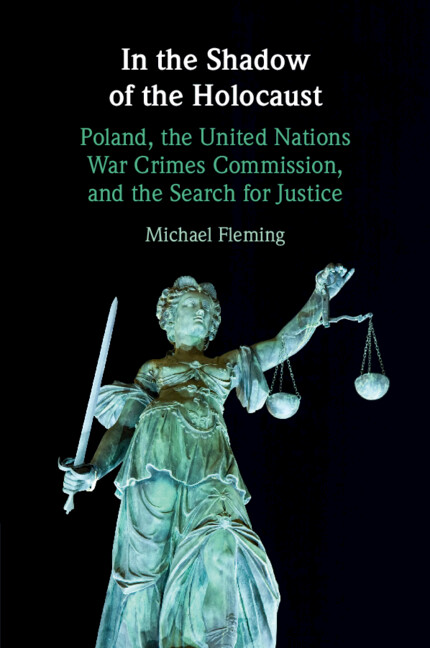
Fleming on "Poland, the United Nations War Crimes Commission, and the Search for Justice"

Cambridge University Press has published In the Shadow of the Holocaust: Poland, the United Nations War Crimes Commission, and the Search for Justice (2022), by Michael Fleming (Polish University Abroad, London). A description from the Press:

In the midst of the Second World War, the Allies acknowledged Germany's ongoing programme of extermination. In the Shadow of the Holocaust examines the struggle to attain post-war justice and prosecution. Focusing on Poland's engagement with the United Nations War Crimes Commission, it analyses the different ways that the Polish Government in Exile (based in London from 1940) agitated for an Allied response to German atrocities. Michael Fleming shows that jurists associated with the Government in Exile made significant contributions to legal debates on war crimes and, along with others, paid attention to German crimes against Jews. By exploring the relationship between the UNWCC and the Polish War Crimes Office under the authority of the Polish Government in Exile and later, from the summer of 1945, the Polish Government in Warsaw, Fleming provides a new lens through which to examine the early stages of the Cold War.
A sample of advance praise:

"This pathbreaking book sheds important new light on post-war attempts to prosecute Nazi war criminals and collaborators through an analysis of the participation in the United Nations’ War Crimes Commission of representatives of the Polish government, first that established in the west after the Polish defeat and then by the pro-communist government established by the Soviets. It is essential reading for all those interested in the problem of how to prosecute genocide and crimes against humanity." -- Antony Polonsky

 More information is available here. (h/t New Books Network)

-- Karen Tani

Wednesday, February 1, 2023

Moyn and Stern on Thayer's Judicial Self-Restraint

Samuel Moyn, Yale Law School, and Rephael Stern, Samuel I. Golieb Fellow in Legal History, NYU School of Law, and Ph.D. candidate, Department of History, Harvard University, have posted To Save Democracy from Juristocracy: J.B. Thayer and the Tragic Origins of Constitutional Theory:

James B. Thayer (LC)
As many Americans once again worry that their democracy is hostage to judicial power, this Article recovers how the country’s first constitutional law professor set out on a mission to stave off the syndrome before it stuck. The first archival reconstruction of how James Bradley Thayer (1831-1902) arrived at his epochmaking theory of judicial deference — which remains the most influential piece of scholarship on American constitutional law in the country’s history — this Article demonstrates that Thayer was determined to preserve the democratic revolutions of the Civil War and Reconstruction and to transform America in the direction of British legislative supremacy. Scandalized by growing ventures to weaponize the federal judiciary so as to preempt the new American democracy, Thayer bet on something new in global history: mass democracy understood as an experiment in collective learning. The Article thereby provides a new periodization and transatlantic contextualization of the struggles over judicial fiat routinely associated with the early twentieth century: far from simply foreseeing the Supreme Court’s defense of laissez-faire to come, Thayer mobilized in the first instance in response to forgotten manifestations of an American juristocracy after the Civil War. His inspiration, moreover, came from witnessing England’s rapidly-expanding representative democracy in which Parliament — and not the courts — reigned supreme. And yet, as this Article emphasizes, Thayer failed in the long run. His democratizing fix, judicial self-restraint under the “clear error standard” — which this Article shows had the same English roots as his democratic faith — has tragically misled reform. An archival genealogy of rational basis review in constitutional law, this Article explains why Thayer called for it but also why his mission, in spite of its partial implementation after his death, now has to be rescued in its own right. Judicial self-restraint has not prevented the continuation and even the intensification of the very juristocratic syndrome Thayer rightly found so troubling. If Americans still remain with him at the dawn of our commitment to democracy, they will have to save it from judges in a new way all their own.
--Dan Ernst

Welcome: Michael Ariens!

Our Guest Blogger this month is Michael Ariens, Aloysius A. Leopold Professor of Law, St. Mary’s University School of Law, on his recently published book, The Lawyer's Conscience: A History of American Lawyer Ethics (University Press of Kansas):

In 1776, Thomas Paine declared the end of royal rule in the United States. Instead, “law is king,” for the people rule themselves. Paine’s declaration is the dominant American understanding of how political power is exercised. In making law king, American lawyers became integral to the exercise of political power, so integral to law that legal ethics philosopher David Luban concluded, “lawyers are the law.”

American lawyers have defended the exercise of this power from the Revolution to the present by arguing their work is channeled by the profession’s standards of ethical behavior. Those standards demand that lawyers serve the public interest and the interests of their paying clients before themselves. The duties owed both to the public and to clients meant lawyers were in the marketplace selling their services, but not of the marketplace.

This is the story of power and the limits of ethical constraints to ensure such power is properly wielded. The Lawyer’s Conscience is the first book examining the history of American lawyer ethics, ranging from the mid-eighteenth century to the “professionalism” crisis facing lawyers today.
Here is an endorsement:
“Michael Ariens has written an exceptionally well-researched and thought-out book on the history of US legal ethics. The Lawyer’s Conscience is a brilliant exposition of the events and concerns that produced the ethical rules by which American lawyers live today. In its depth of research and in its critical judgment, it is unparalleled in the literature about legal ethics. Every lawyer should buy a copy and study it with great care.”—M. H. Hoeflich, John H. & John M. Kane Distinguished Professor of Law, University of Kansas School of Law

--Dan Ernst.  TOC after the jump.

Tuesday, January 31, 2023

CFP: Celebrating Women in Legal History

 [We have the following CFP.  DRE]

Selden's Sister invites abstracts for the Symposium, “Celebrating Women in Legal History: The Lives and Legacies of Early Women Legal Historians,” The University of Liverpool School of Law and Social Justice, 1st September 2023.

This one-day hybrid symposium aims to celebrate the contributions of women to early legal historical scholarship, to commemorate the achievements of under-appreciated figures in legal history, and to assess their contributions in light of present understandings of the discipline. We particularly encourage papers that engage with the work of nineteenth and twentieth-century researchers.

Papers might consider (but are not restricted to): 

  • The work of particular women, or groups of women, whose research significantly impacted legal, constitutional, or administrative history.
  • Current research projects that make extensive use of the work of one or multiple early women legal historians.
  • Biographical accounts of women who undertook legal historical research in the nineteenth and twentieth centuries.
  • Historiographical accounts of areas of legal history that have been significantly developed by women scholars.
  • Accounts of other contributions made by women to early legal historical scholarship, for example as patrons, librarians, editors, or typists.  
  • Fictional or artistic accounts of women in legal history

Abstracts are welcomed from scholars of all genders, disciplines, and career stages. Delegates will be able to present their papers in-person or online. There is a limited amount of funding for travel within the UK and accommodation expenses, priority for which will be given to postgraduate and early-career scholars.

Please submit any queries and abstracts of no more than 300 words to seldenssister@gmail.com by Friday 21st April 2023.

Selden's Sister are a collaborative body of legal historians across multiple UKHE institutions. We seek to champion the work of contemporary female legal historians, and highlight past contributions of women to legal history.

Silber's "Outside In: The Oral History of Guido Calabresi"

Norman I. Silber, Maurice A. Deane School of Law, Hofstra University, has just published Outside In: The Oral History of Guido Calabresi (Oxford University Press).  A notice on the Yale Law School website describes the work as “part oral history and part biography.”

Guido Calabresi is an extraordinary person. His family, of Jewish heritage, occupied a secure and centuries-old position near the top of Italian society-- until the rise of fascism. Guido's parents fled to America on the eve of the war in Europe, with their children, to avoid political and religious persecution. They arrived without money or social standing. Guido's talents and good fortune helped him to thrive at several elite American institutions and to become a leading legal scholar, teacher, law school dean, and judge. He would receive prizes and awards for his contributions; to legal theory, especially for opening up the area of 'law and economics'; for contributions to the modern transformation of American law schools, as the Dean of Yale Law School; and for advancing the development of law including through progressive decisions as a member of the United States Court of Appeals for the Second Circuit.

Outside In is a unique sort of account spread across two volumes and written in Guido's remarkable voice based on recordings that which took place over a decade. It is a unique amalgam of oral history and biography, with supplementary commentaries to explain, elaborate, validate, and interpret and situate the personal narrative within its larger historical context.
–Dan Ernst

Monday, January 30, 2023

U Minnesota's Legal History Workshop

The schedule for the Legal History Workshop of the University of Minnesota’s Program in Law and History is now out.  Abstracts and more information are here.

FEBRUARY 2
Emily Prifogle, Assistant Professor of Law and Assistant Professor of History, University of Michigan
“The Country Lawyer” (Chapter 4 of the forthcoming book, The Heartland's Legal Landscapes & the Remaking of Modern Rural America, 1920-2020)

FEBRUARY 9
Brittany Farr, Assistant Professor of Law, NYU Law School
Finding Black Litigants

FEBRUARY 16
Julilly Kohler-Hausmann, Associate Professor, Department of History, Cornell University“Voter Fraud,” Registration Wars, and the Persistence of Conditional Citizenship since the 1965 Voting Rights Act

FEBRUARY 23
Cornelia Dayton, Professor, Department of History, University of Connecticut
Litigating and Lawyering while Black in Late 18th-Century Massachusetts

MARCH 2
Lauren Benton, Barton M. Biggs Professor of History and Professor of Law, Yale University
Law and Imperial Plunder: Households and Small Wars in European Empires

MARCH 16
Kate Masur, Professor of History, Board of Visitors Professor, Department of History, Northwestern University
“Different Measures of Oppression: Local Legal Cultures and the Campaign against the Black Laws in Antebellum Illinois”

MARCH 27
Felicia Kornbluh, Professor, Department of History, University of Vermont
Book talk: A Woman’s Life Is a Human Life My Mother, Our Neighbor, and the Journey from Reproductive Rights to Reproductive Justice.

APRIL 6
Serena Mayeri, Professor of Law and History, Penn Carey Law, University of Pennsylvania
The Status of Marriage: Marital Supremacy Challenged and Remade, 1960-2000

APRIL 13
Garrett Felber, Visiting Fellow, American Studies Department, Yale University
My Spirit Unbroken: Martin Sostre and the Struggle for Bodily Sovereignty and Collective Liberation

APRIL 20
Catherine Evans, Assistant Professor, Centre for Criminology & Sociolegal Studies, University of Toronto
“Burning Down Wooden Towns: Investigating Incendiarism in Nineteenth-Century England and Canada”

--Dan Ernst

Cushman on Court-Packing in Context

Barry Cushman, Notre Dame Law School, has posted Court-Packing in Context which is forthcoming in the Journal of Supreme Court History:

Burton Wheeler, March 1937 (LC)
There is a curious lacuna in the literature on the Court-packing crisis of 1937. The proposal for reform of the federal judiciary that received the most attention and consideration in that year was of course President Franklin D. Roosevelt’s proposal to enlarge the membership of the Supreme Court from nine to fifteen justices. Yet both before and throughout the battle over the President’s “Court-packing plan,” members of Congress introduced a wide variety of alternative measures for addressing their dissatisfaction with recent decisions of the Supreme Court invalidating various state and federal laws designed to relieve economic distress and stimulate economic recovery. Some of these proposals would have taken statutory form, while many others would have amended the Constitution in various respects. In the end, none of these measures was reported out of Committee. Nevertheless, they were the subject of serious discussion in multiple contemporary venues.

Scholarly treatments of the Court-packing episode typically are focused on two related questions: first, what were the Court-packing plan’s prospects for ultimate congressional enactment, and second, to what extent, if any, did the pendency of the Court-packing plan affect the outcomes in the Court’s major constitutional decisions in the spring of 1937? Perhaps as a consequence of this focus, proposed alternatives to Court-packing tend to be treated as something of a sideshow. Discussion of such proposals typically concentrates on the strategic reasons for which Roosevelt rejected them in favor of his own Court-packing plan. Largely overlooked is the rich contemporary legal, newspaper, and periodical literature in which these alternative measures received sustained legal and policy consideration. Similarly, the Senate Judiciary Committee hearings on Roosevelt’s bill, at which such proposals also were the subjects of extensive deliberation, routinely receive rather limited exploration. In some cases, discussion is largely confined to the manner in which the bill’s opponents used the hearings to delay its ultimate consideration. Other treatments offer more fulsome accounts of the arguments made for and against the President’s bill, but pay little if any attention to the substantive arguments witnesses raised concerning alternative proposals.

At a time when proposals for Court reform have resurfaced in public conversation, it may prove illuminating to reconstruct the robust discussion of the topic that took place in the 1930s. That, in any event, is the aim of this article. First, I briefly canvass the arguments concerning Court enlargement offered at the Senate Judiciary Committee hearings on the President’s bill. I then survey the various alternatives to Court expansion introduced by members of Congress, and review the wide array of policy and constitutional arguments made with respect to these proposals. I next examine the debate over the Administration’s claim that a statutory solution to the “Court problem” was necessary because the process of amending the Constitution was too slow and difficult. In the Conclusion I offer some thoughts on the motivations of the Senators and Representatives who introduced such alternative proposals, and the reasons for their ultimate failure of enactment.
--Dan Ernst