Showing posts with label consumer protection. Show all posts

Saturday, May 23, 2026

Weekend Roundup

  • Alison LaCroix on using history to advise the University of Chicago's graduating class (Chicago Maroon).
  •  A notice of "Law and the Paranormal: A Critical Perspective on Legal Rationality," a doctoral thesis submitted to Gonville and Caius College at Cambridge by Andrew Michael Sagar, in 2023, "traces how English law transformed its treatment of witchcraft, astrology, spiritual mediumship, and fortune-telling from crimes of supernatural harm into issues of fraud, commerce, and consumer regulation" (USAHerald). 
  • An appreciation of Tay-sheng Wang's Introduction to Taiwan’s Legal History by Shih-An Wang, Project Associate Professor at the Graduate School of Law, Kobe University (Taiwan Insight).
  • The webinar "Making the Founding Documents Relevant in the 21st Century" will take place on Tuesday, June 2, 2026, commencing 1:30 PM (ET).  The panelists will be Paul Carrese, Arizona State University (moderator); Roosevelt Montás, Bard College; Jeremy Bailey, University of Florida; and Jocelyn Evans, University of West Florida.  Register here (PSNow). 
  • SHEAR's "Civics Exchange" "connects you with members of the Society for Historians of the Early Republic (SHEAR) who can speak to your organization, club, or institution about the history that has shaped our civic institutions and civic culture, and the relationship of the past to our present-day civic institutions and civic life."
  • An event of interest, on June 6: historian and archivist Daniel F. Gosling (UK National Archives) is offering an online intro to early modern legal records. (more)  
  • ICYMI: The history of Supreme Court leaks (SCOTUSblog).  What Jefferson and Madison would have thought about "rededicating" the US to God (The Conversation).  Hunting, Poaching, and the American Revolution (New York Almanack).

 Weekend Roundup is a weekly feature compiled by all the Legal History bloggers. 

Tuesday, June 24, 2025

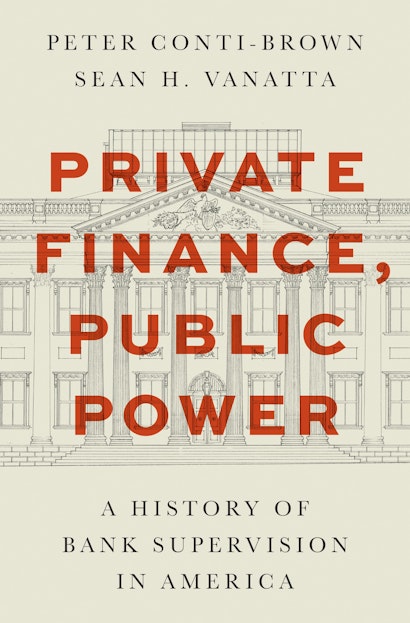
Brown & Vanatta, "Private Finance, Public Power: A History of Bank Supervision in America"

New from Princeton University Press: Private Finance, Public Power: A History of Bank Supervision in America (2025), by Peter Conti-Brown (Wharton School at the University of Pennsylvania) and Sean H. Vanatta (University of Glasgow). A description from the Press: 


Banks in America are private institutions with private shareholders, boards of directors, profit motives, customers, and competitors. And yet the public plays a key role in deciding what risks are taken as well as how, when, and to what end. Public-private negotiations over financial governance has evolved into an essential ecosystem of banking risk management. In Private Finance, Public Power, Peter Conti-Brown and Sean Vanatta offer a new history of finance and public policy in the United States by examining the idiosyncratic way the nation manages financial risk across the public-private divide. Covering two centuries, from the founding of the Republic to the early 1980s, Conti-Brown and Vanatta describe the often-contested, sometimes chaotic, engagement of bankers, politicians, bureaucrats, and others in the overlapping spaces of the public-private system of bank supervision.

Conti-Brown and Vanatta trace the different supervisory frameworks that evolved over time, from the imposition of private liability on bank shareholders to the development of the central bank to the creation of federal deposit insurance. Negotiations took place at federal and state levels, but, over time, the federal government assumed most of the responsibility for managing financial risk. Moreover, federal supervisory officials began to undertake more varied tasks, including monitoring racial discrimination and managing financial concentration. Conti-Brown and Vanatta introduce a diverse cast of characters—bankers, politicians, bureaucrats, and others—and show how they navigated two hundred years of financial panics, scandals, and crises to build the system that structures modern America’s banking system.

A sampling of advance praise:
“Conti-Brown and Vanatta have written a brilliant history of the murky realm of banking supervision. Recovering over two centuries of intense conflict and negotiations over risk within America’s banking system, the authors explain how the federal government readily absorbed the vital responsibility of managing financial risk. This sweeping history is a must-read for anyone interested in understanding the origins of our modern financial system.”—Julian Zelizer
 
“Supervision is the backbone of bank oversight in the United States and around the world. In their landmark book, Private Finance, Public Power, Conti-Brown and Vanatta pull away the curtain of opacity that has long shielded bank supervision from public view. They reveal supervision to be a constantly evolving set of relationships and practices that shape private risk-taking and public administration. In the process, they provide important new insights into a host of contemporary debates on matters ranging from how best to promote the health of the financial system to the dangers and benefits of regulatory discretion. It is required reading for everyone who wants to understand how best to promote financial stability, state capacity and the way public and private actors have cocreated today’s financial system.”—Kathryn Judge 
On June 10, the Brookings Institution in Washington, D.C., hosted a book launch conference, "The History of Bank Supervision in America and the Road Ahead," featuring legal historians Naomi Lamoreaux and Ed Balleisen, as well as legal academics, financial industry lawyers, journalists, and former supervisors. A video recording of the conference is available here.
 
-- Karen Tani

Friday, January 19, 2024

Transformation of Consumer Law and Policy in Europe

The Transformation of Consumer Law and Policy in Europe, ed. Hans-W Micklitz and , Christian Twigg-Flesner (Hart/Bloomsbury) has been published:

This book analyses the transformation of consumer law and policy in Europe from 4 perspectives: first, the temporal transformation, i.e., changes that can be tracked from the turn of the millennium; secondly, the substantive dimension, i.e., changes in the scope of the rights and remedies provided by consumer law, as well as the underpinning values; thirdly, the institutional dimension, i.e., changes in the role of national courts, national Parliaments, consumer agencies, and consumer organisations; and fourth, the procedural element, i.e., the shift from individual enforcement via courts to enforcement by public regulators, consumer associations, alternative dispute resolution, and the development of collective enforcement exercised by consumer agencies and/or consumer organisations.

With contributions by leading consumer law scholars from across Europe, this book is a fascinating account of how consumer law has often been shaped by national as much as European interests.

--Dan Ernst.  TOC after the jump 

Friday, January 13, 2023

Lahav's "Revisionist History of Products Liability"

Alexandra D. Lahav, Cornell Law School, has posted A Revisionist History of Products Liability:

Increasingly courts, including the Supreme Court, rely on ossified versions of the common law to decide cases. This Article demonstrates the risks of this use of the common law. The main contribution of the Article is to demonstrate that the traditional narrative about early products law — that manufacturers were not liable for injuries caused by their products because the doctrine of privity granted producers immunity from suit by the ultimate consumers of their goods — is incorrect. Instead, the doctrinal rule was negligence liability for producers of injurious goods across the United States in the nineteenth century. Courts routinely ignored or rejected privity arguments and contract was not their paradigm for understanding a producer’s relationship with users of its products. This analysis has implications for how we view the development of the common law today. And it serves as a warning not to rely on potted histories from casebooks in determining what the common law was in the past.
--Dan Ernst

Wednesday, April 21, 2021

Barnes on Fleming on Law and Consumer Finance

Victoria Barnes has published Anne Fleming’s History of Law and Consumer Finance in Enterprise & Society.  The essay is available online and open access.  It commences:

This review article does not set out to retell the story of Anne Fleming’s life in a chronological fashion, but rather it engages intellectually with the themes in Anne’s scholarship. Anne’s passing means that her thoughts, guidance, and encouragement are lost to the scholarly communities of which she was a part. Over the course of her career, Anne offered sage advice, she helped others to develop their work, and she supported them wherever she could.1 Now, there will no longer be that voice in the conference room, the office, or the lecture hall. We will not know how her presence would have influenced the field in the years to come and how her engagement with other scholars would have shaped them. So I write to gather together the ideas within Anne’s work, hoping to provide a fuller set of insights than can be gleaned by reading pieces of her scholarship individually. This integrated and coordinated view is the sort of comprehensive thinking that she would have given in her interactions.
–Dan Ernst

Wednesday, December 11, 2019

Consumer Reports Archives to Duke

From Duke Today:
The David M. Rubenstein Rare Book & Manuscript Library at Duke University has acquired the archives of Consumer Reports (CR), the nonprofit consumer organization committed to creating a fair, safe and transparent marketplace for all.

The massive collection -- which spans some 2,800 linear feet and required two tractor trailers to transport to Durham from CR’s headquarters in Yonkers, New York -- includes archival materials, books, photographs, and artifacts documenting the history of the organization, from its founding during the Great Depression to its eventual prominence as a household name for safety, fairness and informed decision-making.
More.  H/t: Edward Balleisen

--Dan Ernst

Tuesday, July 23, 2019

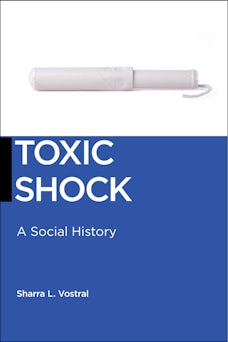
Vostral on toxic shock

Toxic Shock :A Social History by Sharra L. Vostral, Purdue University came out with NYU Press in 2018. From the publisher: 
Toxic Shock
In 1978, doctors in Denver, Colorado observed several healthy children who 
suddenly and mysteriously developed a serious, life-threatening illness with no visible source. Their condition, which doctors dubbed ‘toxic shock syndrome’ (TSS) was rare, but observed with increasing frequency over the next few years in young women, and was soon learned to be associated with a bacterium and the use of high-absorbency tampons that had only recently gone on the market. In 1980, the Centers for Disease Control identified Rely tampons, produced by Procter & Gamble, as having the greatest association with TSS over every other tampon, and the company withdrew them from the market. To this day, however, women are frequently warned about contracting TSS through tampon use, even though very few cases are diagnosed each year.  
Historian Sharra Vostral’s Toxic Shock is the first and definitive history of TSS. Vostral shows how commercial interests negatively affected women’s health outcomes; the insufficient testing of the first super-absorbency tampon; how TSS became a ‘women’s disease,’ for which women must constantly monitor their own bodies. Further, Vostral discusses the awkward, veiled and vague ways public health officials and the media discussed the risks of contracting TSS through tampon use because of social taboos around discussing menstruation, and how this has hampered regulatory actions and health communication around TSS, tampon use, and product safety.  
A study at the intersection of public health and social history, Toxic Shock brings to light the complexities behind a stigmatized and under-discussed issue in women’s reproductive health. Importantly, Vostral warns that as we move forward with more and more joint replacements, implants, and internal medical devices, we must understand the relationship of technology to bacteria and recognize that both can be active agents within the human body. In other words, unexpected consequences and risks of bacteria and technology interacting with each other remain.
Praise for the book:

"Vostral’s excellent and accessible book is the first to address Toxic Shock Syndrome. She helpfully situates it within the history of the women’s health movement, which challenged TSS through Our Bodies, Ourselves and other fora. Beautifully written, Toxic Shock melds feminist science and technology studies with careful attention to how 'health' works politically, culturally, and affectively. It is a superb addition to the women’s health and biopolitics literature."-Monica J. Casper

"This deft study of technology, disease, and consumer capitalism illuminates the centrality of shame in the history of U.S. women's health and health policy. The story of Toxic Shock Syndrome is as necessary as it is painful—a harbinger, Vostral shows, of other medical injuries to come."-Rebecca Herzig

Further information is available here.

--Mitra Sharafi