Showing posts with label death investigation. Show all posts

Monday, January 23, 2023

Breathnach on the Dublin City Coroner's Court, 1876-1902

Oxford University Press has published Ordinary Lives, Death, and Social Class: Dublin City Coroner's Court, 1876-1902, by Ciara Breathnach (University of Limerick). A description from the Press:

Ordinary Lives, Death, and Social Class focuses on the evolution of the Dublin City Coroner's Court and on Dr Louis A. Bryne's first two years in office. Wrapping itself around the 1901 census, the study uses gender, power, and blame as analytical frameworks to examine what inquests can tell us about the impact of urban living from lifecycle and class perspectives. Coroners' inquests are a combination of eyewitness testimony, expert medico-legal language, detailed minutiae of people, places, and occupational identities pinned to a moment in time. Thus they have a simultaneous capacity to reveal histories from both above and below. Rich in geographical, socio-economic, cultural, class, and medical detail, these records collated in a liminal setting about the hour of death bear incredible witness to what has often been termed 'ordinary lives'. The subjects of Dr Byrne's court were among the poorest in Ireland and, apart from common medical causes problems linked to lower socio-economic groups, this volume covers preventable cases of workplace accidents, neglect, domestic abuse, and homicide.

More information is available here. An interview with the author is available here, via New Books Network.

-- Karen Tani

Monday, December 21, 2020

Pearson on death in Siam

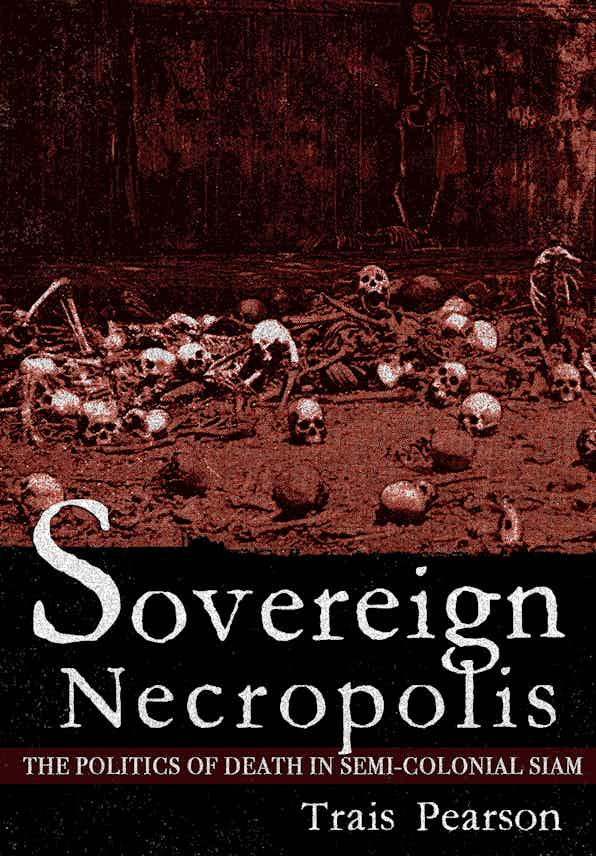
 Trais Pearson (Boston College) has published Sovereign Necropolis: The Politics of Death in Semi-
Colonial Siam
with Cornell University Press. From the publisher: 

By the 1890s, Siam (Thailand) was the last holdout against European imperialism in Southeast Asia. But the kingdom's exceptional status came with a substantial caveat: Bangkok, its bustling capital, was a port city that was subject to many of the same legal and fiscal constraints as other colonial treaty ports. Sovereign Necropolis offers new insight into turn-of-the-century Thai history by disinterring the forgotten stories of those who died "unnatural deaths" during this period and the work of the Siamese state to assert their rights in a pluralistic legal arena.

Based on a neglected cache of inquest files compiled by the Siamese Ministry of the Capital, official correspondence, and newspaper accounts, Trais Pearson documents the piecemeal introduction of new forms of legal and medical concern for the dead. He reveals that the investigation of unnatural death demanded testimony from diverse strata of society: from the unlettered masses to the king himself. These cases raised questions about how to handle the dead—were they spirits to be placated or legal subjects whose deaths demanded compensation?—as well as questions about jurisdiction, rights, and liability.

Exhuming the history of imperial politics, transnational commerce, technology, and expertise, Sovereign Necropolis demonstrates how the state's response to global flows transformed the nature of legal subjectivity and politics in lasting ways. A compelling exploration of the troubling lives of the dead in a cosmopolitan treaty port, the book is a notable contribution to the growing corpus of studies in science, law, and society in the non-Western world.

Praise for the book: 

 "In this eloquent, insightful study of wrongful and unnatural death in Treaty Port Bangkok, Pearson digs deep in the archive and discovers a new pressure point as the Siamese elite struggled to accommodate Western forensic medicine. The book gives voice to the subaltern dead." --Craig J. Reynolds

"Sovereign Necropolis is a fascinating study of socio-legal practices related to fatal injuries in Bangkok during the late nineteenth and early twentieth centuries. Pearson's book provides a new and unusual perspective on the interconnections among technological and economic developments, international political tensions, elite-subaltern relations, forensic medicine, and legal change." --David M. Engel

Further information is available here.

--Mitra Sharafi