Showing posts with label China. Show all posts

Sunday, January 31, 2021

CFP: International Society for Chinese Law and History

[ We have the following announcement.  DRE]

The International Society for Chinese Law and History (ISCLH) is pleased to announce a call for paper for its Bi-annual Conference, to be held online on June 10 to 12, 2021. Established in 2013, ISCLH is now the primary international intellectual hub for Chinese legal historians. It hosts a workshop in North America every two years, and a larger conference in East Asia in the intervening years. Previously we have held our bi-annual conference at Fudan University, Shanghai (2015), China University of Political Science and Law, Beijing (2017), and National Taipei University, Taipei (2019). The ongoing global COVID-19 pandemic might restrict our ability to travel and in-person scholarly exchanges, but we are committed to provide a forum for sharing the latest scholarship of Chinese legal history and facilitating intellectual conversations for scholars interested in Chinese law and history.

Tuesday, November 3, 2020

Ohnesorge: A Hurstian View on Chinese Econonomic Development

John K.M. Ohnesorge, University of Wisconsin Law School, has posted Development is Not a Dinner Party: A Hurstian Perspective on Law and Growth in China, which is forthcoming in the Wisconsin Law Review Forward:

Much has been written, and remains to be written, about the many roles law has played in China’s economic development since 1978. Without minimizing the value of what has been written so far, this essay seeks to broaden the discussion by applying to China’s recent history certain ideas of the great historian of 19th Century American law and economic development, James Willard Hurst. The essay proceeds by providing a brief introduction to Hurst and his work on law and economic growth in the United States, then explores how those ideas might be applied to assist our understanding of what has happened in China.

--Dan Ernst

Thursday, October 8, 2020

Zhu on China Suzerainty over Tibet and Mongolia

Yuan Yi Zhu, Stipendiary Lecturer in Politics at Pembroke College, Oxford, has published Suzerainty, Semi-Sovereignty, and International Legal Hierarchies on China's Borderlands, in the Asian Journal of International Law:

The concept of semi-sovereignty, a now obsolete category of international entities possessing limited sovereignty, remains hazily understood. However, the historical examination of how semi-sovereignty was defined and practised during the long nineteenth century can provide insights on the interplay between authority and control within the hierarchies of international relations. This paper examines one specific type of semi-sovereignty—namely, suzerainty—which is often used to describe China's traditional authority in Tibet and Mongolia. By examining the events that led to the acceptance of suzerainty as the legal framing for the China-Tibet and China-Mongolia relationships, I argue that suzerainty was a deliberately vague concept that could be used to create liminal international legal spaces to the advantage of Western states, and to mediate between competing claims of political authority. Finally, I point to the importance of semi-sovereignty as an arena of legal contestation between the Western and non-Western members of the “Family of Nations”.

Update: With the new link above, the article is ungated.

–Dan Ernst

Monday, September 28, 2020

Du on filiality and falsity in Qing China

Last year, Yue Du (Cornell University) published "Policies and Counterstrategies: State-Sponsored Filiality and False Accusation in Qing China" in the International Journal of Asian Studies 16 (2019), 79-97. Here's the abstract: 

Using court cases culled from various national and local archives in China, this article examines two strategies widely employed by Qing litigants to manipulate state-sponsored filiality to advance their perceived interests in court: “instrumental filicide to lodge a false accusation” and “false accusation of unfiliality.” While Qing subjects were willing and able to exploit the legalized inequality between parent and child for profit-seeking purposes, the Qing imperial state tolerated such maneuvering so as to co-opt local negotiations to reinforce orthodox notions of the parent–child hierarchy in its subjects’ everyday lives. Local actors, who appealed to the Qing legal promotion of parental dominance and filial obedience to empower themselves, were recruited into the Qing state's project of moral penetration and social control, with law functioning as a conduit and instrument that gave the design of “ruling the empire through the principle of filial piety” a concrete legal form in imperial governance.

Further information is available here

--Mitra Sharafi

Sunday, September 13, 2020

Ho on Administrative Law in Tang Dynasty China

 [We have the following announcement from the Chinese University of Hong Kong.  DRE]

Greater China Legal History Seminar Series: Feeding the Emperor – Administrative Law in Tang Dynasty China by Prof. Norman P. Ho (Online)

The Tang Liu Dian (hereafter, “TLD”), compiled in 738–739 A.D. during the Tang dynasty, is an important administrative law code which lists out in great detail every Tang dynasty government office, as well as various official positions and their functions and obligations. The TLD is of great historical significance—it is regarded as the earliest fully extant administrative law code from China, and it served as a model administrative law code for subsequent dynasties, including the Ming and Qing dynasties. This seminar will examine Tang dynasty administrative law, as set forth in the TLD, through the specific lens of how the emperor was fed and will analyze Tang administrative regulations on feeding the emperor. This seminar will describe the specific agencies and officials who were responsible for feeding the emperor, as well as their specific functions and structures as provided by the TLD. Relevant rules in the Tang Code ?? (i.e., the Tang dynasty penal code) will also be discussed to provide a complete picture of the regulatory apparatus behind the task of feeding the emperor. Ultimately, from this examination of Tang administrative law through the emperor’s food service agencies and offices as set forth in the TLD, this seminar will also set forth some general observations regarding Tang dynasty administrative law and will argue that one of the key roles of administrative law in the Tang was to further enhance and protect the prestige, image, and power of the emperor.

Prof. Norman P. Ho is a Professor of Law at the Peking University School of Transnational Law (STL) in Shenzhen, PRC. His research interests broadly are in legal theory and legal history, and he writes specifically in the areas of premodern Chinese legal history and legal theory, comparative jurisprudence, property theory, and Asian-American jurisprudence. He has served as a visiting professor at the National University of Singapore Faculty of Law and a visiting fellow in the Center for Chinese Law (HKU Faculty of Law). Prior to joining the STL faculty, Norman practiced in the Hong Kong offices of Morrison & Foerster and Slaughter and May, where his practice focused on capital markets and private equity transactions. He received his J.D. degree from NYU School of Law and his undergraduate and graduate degrees in Chinese history from Harvard University.

CPD credits are available upon application and subject to accreditation by the Law Society of Hong Kong (currently pending).

Register here by 5pm, 17 September 2020 to attend the seminar.

Wednesday, July 22, 2020

Taiwan Legal History: A Symposium Issue

We note the publication of a special issue of Academia Sinica Law Journal (2019:1, in Chinese) entitled Law, History and Taiwan: The Development of Taiwan Legal History.  It commences with “The Emergence of Taiwanese Legal History and Its Becoming a Discipline,” by Tay-Sheng Wang, and continues with comments by Pengsheng Chiu, Hwei-Syin Chen, and Chueh-An Yen, with a reply by Tay-Sheng Wang.  The forum is followed by a series of articles:

Exploring Changes in Property Law in Taiwan: The Current Condition and Issues of Research on History of Property Law in Taiwan, by Wan-Yu Chen

Retrospect and Prospect of Taiwan Historical Research of Criminal Justice in the Recent Thirty Years, by Cheng-Yu Lin

A Review on Taiwan Legal Profession Studies (1992-2017), by Chun-Ying Wu

Bad (Wo-)man Theory of Traditional Chinese Law: From the Vantage Points of Adultery and Abduction Cases in Tan-Hsin Archives, by Yun-Ru Chen

Revisit Law and Development Orthodox through the Lens of Taiwan and China’s Development Paths, by Weitseng Chen

Hidden Hands: A Legal-historical Study of Youth Labor in Taiwan, by Yen-Chi Liu

The Development of LGBT Rights in Democratic Taiwan: An Analysis from the Perspective of Law and Social Movements, by Hsiao-Wei Kuan

--Dan Ernst

Friday, April 24, 2020

Chen on the Chinese Tradition of Administrative Law

Albert H. Y. Chen, The University of Hong Kong Faculty of Law, has posted The Chinese Tradition of Administrative Law:
For most of the time during the last two millennia, China was a dynastic empire ruled by an emperor with the assistance of a highly developed mandarinate of imperial organs. “Administrative law” in the modern sense of a set of legal norms enacted by the legislature or developed by the judiciary that simultaneously empower and constrain state organs and officials for the purpose of protecting the rights and liberties of subjects or citizens did not exist in traditional China. But there did exist for more than two millenniums elaborate and sophisticated rules regulating the powers and functions of each component of the highly complex and extensive machinery of imperial organs and officials, and prescribing in detail the duties of officials as well as the multiple and complicated monitoring, supervisory and disciplinary mechanisms applicable to the exercise of powers and performance of duties by officials in different state organs.

By the late 19th century, Qing China’s increasing subordination to Western imperialism and semi-colonialism convinced significant numbers of Chinese political and scholarly elite that there was a desperate need for China to “save” and strengthen itself by pursuing modernization. In the legal and political domains, this generally meant extensive borrowing or transplant of Western political and legal institutions. After China's defeat by Japan in the Sino-Japanese War of 1894–1895, Japan’s experience of successful modernisation was widely admired by Chinese intellectuals, and the Japanese model was perceived as one that China should imitate in its self-strengthening efforts.

This essay will therefore begin with the introduction and reception of Japanese administrative law in China in the late Qing Dynasty. It will then survey the study of comparative law and the influence of foreign law on the development of Chinese administrative law in the Republic of China era (1911–1949) and after the establishment of the People's Republic of China (1949-). Major developments in Chinese administrative law in both the Republican era and the Communist era will also be briefly outlined as the context of administrative law scholarship. It will be seen that the story of the study of comparative and foreign administrative law in modern China is very closely intertwined with the story of the development of Chinese administrative law itself.
--Dan Ernst

Monday, March 30, 2020

Zhang on Chinese Land Law

Taisu Zhang, Yale Law School, has posted Land Law in Chinese History, which is forthcoming in the Routledge Companion to Chinese Legal History:
Although land law or “real property law” is but one of several branches of what scholars commonly call “economic law,” or laws that regulate everyday economic activity, its history has drawn, over the past several decades, an unusually large amount of attention from legal theorists, economists, and comparative scholars of all methodological orientations. This has been especially true within the field of Chinese legal history: few scholars outside the field have any clear sense of pre-modern, early modern, or even modern Chinese family law, the law of personal injury, or even criminal law, but a much larger number will likely have some impression of historical Chinese land law, and may even have an educated opinion about it. This is not because land law was any more important to everyday socioeconomic life than those other bodies of law, but rather because land law has played a much larger role in theoretical and comparative scholarship, particularly in scholarship that seeks to explain global economic divergence—specifically, the divergence between China and the West in the 18th and 19th Centuries. Although this literature has perpetrated its share of myths about Chinese property institutions, much progress has been made over the past few decades, to the point where something approaching an academic consensus on core institutional features has emerged.

This chapter outlines these core features of Chinese land law, focusing primarily on the late imperial era, and provides a short summary of how the field arrived at them. Whereas it was once thought that Chinese property rights were comparatively less secure or less alienable than Western European property rights, it now seems unlikely that major differences existed at this general level. They did exist, however, in the finer institutional details of tenancy law and collateralization instruments, and potentially in inheritance law as well. In these latter features, Chinese land law tended to produce institutional incentives that leveled and fractured the pattern of rural landholding, thereby reinforcing the economic dominance of household-level production throughout the late imperial era, and well into the 20th Century. The chapter then discusses relatively recent trends in the academic literature, reaching back to 1970s and 1980s, when the study of Chinese land law became deeply intertwined with debates over economic divergence. It concludes by briefly pondering the costs and benefits of such intertwinement, and what it means to study “the history of Chinese land law” as a consolidated subject.
--Dan Ernst

Friday, March 13, 2020

Hofmann, Kurtz & Levine, eds., "Powerful Arguments"

New from Brill: Powerful Arguments: Standards of Validity in Late Imperial China (March 2020), edited by Martin Hofmann (Heidelberg University), Joachim Kurtz (Heidelberg University), and Ari Daniel Levine (University of Georgia). A description from the Press:
The essays in Powerful Arguments reconstruct the standards of validity underlying argumentative practices in a wide array of late imperial Chinese discourses, from the Song through the Qing dynasties. The fourteen case studies analyze concrete arguments defended or contested in areas ranging from historiography, philosophy, law, and religion to natural studies, literature, and the civil examination system. By examining uses of evidence, habits of inference, and the criteria by which some arguments were judged to be more persuasive than others, the contributions recreate distinct cultures of reasoning. Together, they lay the foundations for a history of argumentative practice in one of the richest scholarly traditions outside of Europe and add a chapter to the as yet elusive global history of rationality.
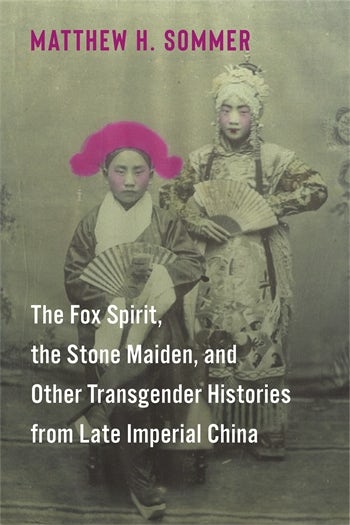
More information, including the table of contents, is available here. One chapter that might particularly interest readers is "Some Problems with Corpses: Standards of Validity in Qing Homicide Cases" by Matthew H. Sommer (Stanford University).

-- Karen Tani

Saturday, February 29, 2020

Weekend Roundup

  • The submission portal for the 2020 annual conference of the American Society for Legal History, which will be held November 11-14 at the Sheraton Grand Chicago, is now open!  The deadline to submit a paper or proposal is Friday, March 13, 2020.  Our post of the call is here.  Other information is here.
  • We somehow missed the publication last summer in the Harvard Law Review of Dr. Wu's Constitution, a note on what the author called the “conflicted approach to civil liberties” that John Jingxiong Wu, one of Holmes’s correspondents, took in drafting a constitution for the Republic of China in the 1930s.
 Weekend Roundup is a weekly feature compiled by all the Legal History bloggers.

Wednesday, January 15, 2020

Whewell's "Law across Imperial Borders"

Emily Whewell, a  Senior Researcher at the Max Planck Institute for European Legal History, has published Law across imperial borders: British consuls and colonial connections on China's western frontiers, 1880-1943 (Manchester University Press):
Law across imperial borders offers new perspectives on the complex legal connections between Britain's presence in Western China in the western frontier regions of Yunnan and Xinjiang, and the British colonies of Burma and India. Bringing together a transnational methodology with a social-legal focus, it demonstrates how inter-Asian mobility across frontiers shaped British authority in contested frontier regions of China. It examines the role of a range of actors who helped create, constitute and contest legal practice on the frontier-including consuls, indigenous elites and cultural mediators. The book will be of interest to historians of China, the British Empire in Asia and legal history.
Introduction
Part I: The Burma-China frontier
1 Treaty-making and treaty-breaking: transfrontier salt and opium, 1904-11
2 On the move: people crossing the frontier, 1911-25
3 Consuls and Frontier Meetings, 1909-35

Part II: Through the mountains and across the desert: Xinjiang
4 Isolation and connection: law between semicolonial China and the Raj
5 Administering justice and mediating local custom
6 The British end game in Xinjiang: the decline of consular rights, 1917-39

Conclusion
–Dan Ernst

Friday, December 6, 2019

Carrai's "Soveriegnty in China

Maria Adele Carrai, Katholieke Universiteit Leuven, Belgium, has recently published Sovereignty in China: A Genealogy of a Concept since 1840, with Cambridge University Press:
This book provides a comprehensive history of the emergence and the formation of the concept of sovereignty in China from the year 1840 to the present. It contributes to broadening the history of modern China by looking at the way the notion of sovereignty was gradually articulated by key Chinese intellectuals, diplomats and political figures in the unfolding of the history of international law in China, rehabilitates Chinese agency, and shows how China challenged Western Eurocentric assumptions about the progress of international law. It puts the history of international law in a global perspective, interrogating the widely-held belief of international law as universal order and exploring the ways in which its history is closely anchored to a European experience that fails to take into account how the encounter with other non-European realities has influenced its formation.
Here are some endorsements:

'The Confucian admonition that one needs to study the past to understand the present is especially apt when it comes to China and sovereignty. Fortunately, Dr Maria Adele Carrai’s new book provides a superb genealogy of Chinese approaches to sovereignty over time, from historic times to the present, that will be a key departure point on this important topic for years to come.'

William P. Alford - Jerome A. and Joan L. Cohen Professor of East Asian Legal Studies and Director of East Asian Legal Studies, Harvard University, Massachusetts

'Carrai’s innovative conceptual history of ‘sovereignty’ in China explores the changing meanings of international law and its structures of authority and legitimacy through three periods of dramatic Chinese political transition. This is a study not only of Chinese reception and adaptation. It provides a foundation for scrutiny of China’s active participation in shaping our present international legal order.'

Madeleine Zelin - Dean Lung Professor of Chinese Studies, Columbia University, New York

'This is a stimulating, learned, and readable analysis of the many uses the malleable concept of ‘sovereignty’ has served in China’s relations with the world for almost two centuries. It offers invaluable assistance for parsing the rhetoric of both Xi Jinping and Donald Trump in the current East-West contest for domination.'

Jerome A. Cohen - Faculty Director of US-Asia Law Institute, New York University

'This study provides a much-needed concise history of the genealogy of sovereignty as a central concept of modern international law and politics in the context of Chinese transformation and Sino-foreign encounters since the mid nineteenth century. Its nuanced analysis of Chinese specificity and agency in shaping international legal and political history will be of great interest to scholars of China, comparative politics, and international history.'

Li Chen - University of Toronto

'Sovereignty occupies the conceptual heart of the Chinese Communist Party’s bid to claim for China its rightful place in the world and to justify its international policies. By showing how this concept emerged and what it means today, Carrai sets out the rhetorical terrain across which those who wish to enter into conversation with official China will have to make their way.'

Timothy Brook - Republic of China Chair, Department of History, University of British Columbia

–Dan Ernst

Friday, October 18, 2019

Altehenger on "Popularizing Laws in the People’s Republic of China, 1949–1989"

We missed this one when it came out last year: Jennifer Altehenger, Legal Lessons: Popularizing Laws in the People’s Republic of China, 1949–1989 (Harvard University Press, 2018). Altehenger is Associate Professor of Chinese History at the University of Oxford. Here's a description from the Press:
The popularization of basic legal knowledge is an important and contested technique of state governance in China today. Its roots reach back to the early years of Chinese Communist Party rule. Legal Lessons tells the story of how the party-state attempted to mobilize ordinary citizens to learn laws during the early years of the Mao period (1949–1976) and in the decade after Mao’s death.

Examining case studies such as the dissemination of the 1950 Marriage Law and successive constitutions since 1954 in Beijing and Shanghai, Jennifer Altehenger traces the dissemination of legal knowledge at different levels of state and society. Archival records, internal publications, periodicals, advice manuals, memoirs, and colorful propaganda materials reveal how official attempts to determine and promote “correct” understanding of written laws intersected with people’s interpretations and practical experiences. They also show how diverse groups—including party-state leadership, legal experts, publishers, writers, artists, and local officials, along with ordinary people—helped to define the meaning of laws in China’s socialist society. Placing mass legal education and law propaganda at the center of analysis, Legal Lessons offers a new perspective on the sociocultural and political history of law in socialist China.
A few blurbs:
“A major scholarly accomplishment, Legal Lessons masterfully details how the Chinese state over forty years spread knowledge about law. By providing an extraordinarily deft portrayal of the deep internal conceptual and practical tensions that the party-state encountered in endeavoring to use law as a governing instrument, and the intricate ways in which China’s populace received and understood those messages, Altehenger shows that creating law for a new China was far more complex an undertaking than had previously been presumed.”—William Alford

Legal Lessons links the practice of legal education in the early PRC to the larger international project of socialist lawmaking, and raises new questions about the relationship between legal propaganda, legal ‘reform,’ and the quest for new kinds of legal polities in the late twentieth century and beyond. Altehenger’s masterful study provides a critical foundation for understanding the Chinese path to that contested condition we call rule of law.”—Madeleine Zelin
More information is available here.

-- Karen Tani

Thursday, October 3, 2019

Wang on copyright in China

Fei-Hsien Wang, Indiana University Bloomington has published Pirates and Publishers: A Social History of Copyright in Modern China with Princeton University Press. From the press: 

In Pirates and Publishers, Fei-Hsien Wang reveals the unknown social and cultural history of copyright in China from the 1890s through the 1950s, a time of profound sociopolitical changes. Wang draws on a vast range of previously underutilized archival sources to show how copyright was received, appropriated, and practiced in China, within and beyond the legal institutions of the state. Contrary to common belief, copyright was not a problematic doctrine simply imposed on China by foreign powers with little regard for Chinese cultural and social traditions. Shifting the focus from the state legislation of copyright to the daily, on-the-ground negotiations among Chinese authors, publishers, and state agents, Wang presents a more dynamic, nuanced picture of the encounter between Chinese and foreign ideas and customs.
Developing multiple ways for articulating their understanding of copyright, Chinese authors, booksellers, and publishers played a crucial role in its growth and eventual institutionalization in China. These individuals enforced what they viewed as copyright to justify their profit, protect their books, and crack down on piracy in a changing knowledge economy. As China transitioned from a late imperial system to a modern state, booksellers and publishers created and maintained their own economic rules and regulations when faced with the absence of an effective legal framework.
Exploring how copyright was transplanted, adopted, and practiced, Pirates and Publishers demonstrates the pivotal roles of those who produce and circulate knowledge.
Praise for the book:
 "Richly detailed, this social history reconstructs the meanings of copyright in modern China as they were understood by authors, publishers, and the state, and the strategies developed by these players to protect it. Intellectual property and copyright are hot topics, and this masterfully organized book provides insights into issues still very much in contest."—Cynthia Brokaw
"This well-researched social and cultural history looks at the emerging modern Chinese system of copyright law and practice from the late nineteenth through the mid-twentieth centuries. Shedding fresh light on an important and underexamined topic, this outstanding work makes a valuable contribution to the history of modern China, comparative study of law and copyright, and the history of the book and print culture."—Li Chen

"Pirates and Publishers may well be the most important book on intellectual property in China ever to be published in English. With deep research and sharp analysis, Wang overturns conventional wisdom about the incompatibility of copyright with Chinese culture, and shows instead how authors and publishers fought hard to protect their livelihoods. Anyone interested in the information economy in China will find this book revelatory and indispensable."—Adrian Johns

"Offering an inspired look through the archives and back rooms of the publishing worlds of Shanghai and Beijing, Pirates and Publishers is a wonderfully wise introduction to the complexities of China’s adoption of copyright. Wang not only lucidly unravels the twists and turns of this idea's fate in a country afflicted with chronic disorder, but also uses her findings to retell with considerable wit and flair much of modern China's intellectual and cultural history. A tour de force and a pleasure to read."—Joseph McDermott

Further information is available here

--Mitra Sharafi

Wednesday, February 20, 2019

Xia on justice and nationalism in wartime China

Back in 2017, Yun Xia (Valparaiso University) published Down with Traitors: Justice and Nationalism in Wartime China with the University of Washington Press. From the publisher:
Throughout the War of Resistance against Japan (1931-1945), the Chinese Nationalist government punished collaborators with harsh measures, labeling the enemies from within hanjian (literally, "traitors to the Han Chinese"). Trials of hanjian gained momentum during the postwar years, escalating the power struggle between Nationalists and Communists. Yun Xia examines the leaders of collaborationist regimes, who were perceived as threats to national security and public order, and other subgroups of hanjian-including economic, cultural, female, and Taiwanese hanjian. Built on previously unexamined code, edicts, and government correspondence, as well as accusation letters, petitions, newspapers, and popular literature, Down with Traitors reveals how the hanjian were punished in both legal and extralegal ways and how the anti-hanjian campaigns captured the national crisis, political struggle, roaring nationalism, and social tension of China's eventful decades from the 1930s through the 1950s.
Praise for the book:

 "Yun Xia's perceptive study traces the legal definition and the political usages of the profoundly emotive word hanjian (traitor). She looks at the years of the Resistance War and shows the ways in which the designation was used as China's political world was increasingly polarized." -Diana Lary

"Deeply researched and intriguing. Yun Xia details the scope of the traitor trials, which dwarfed the war crime trials of the Japanese." -Barak Kushner

"Wartime collaboration breeds treason trials-but trials in turn create collaborators by defining and punishing them. This book, the first in English, reconstructs the tangled political and legal processes in China that singled out those charged with aiding the Japan during the war, and that went on to influence mass campaigns after 1949." -Timothy Brook

Further information is available here.

Friday, October 12, 2018

Zhang on Comparative Law in Modern China

Taisu Zhang, Yale Law School, has posted The Development of Comparative Law in Modern China, which is forthcoming in the second edition of the Oxford Handbook of Comparative Law, edited by Mathias Reimann and Reinhard Zimmermann
The development of comparative law in modern China is essentially the development of law itself. In the late 19th Century, China embarked on a century-long journey to “modernize” its legal system in the image of foreign, and primarily Western, law. Nearly all major legal actions in modern Chinese history, whether Qing, Republican, or Communist, involved, therefore, either the direct transplanting of foreign legal institutions onto Chinese soil, or at least some comparison between foreign and domestic institutions, and perhaps an attempt to merge them. Contemporary Chinese lawmaking has attempted to wean itself of this systemic reliance on foreign legal sources, but the process has been uneven, to say the least. In this sense, one cannot speak intelligibly of almost any facet of Chinese legal development without touching upon comparative law in a substantive way. The modern history of Chinese law is one long exercise in legal comparison and adoption.

One can speak, of course, of “comparative law” in a much narrower sense: the development of a specific academic discipline dedicated to the systemic and objective comparison of legal systems. There is indeed a separate history of Chinese “comparative law” (bijiao fa) as a distinct academic field, going back to at least the early 20th Century, but it is, for the most part, a history of marginalization. Despite the enormously influential influx and reception of foreign law and legal theory, comparative law per se has remained outside of both the legal and the academic mainstream, mired in a state of theoretical and empirical underdevelopment.

This chapter traces these dual tracks of historical development from the late Qing dynasty to the present day, and argues that the prominence of the former paradoxically explains the marginalization of the latter. It is precisely because the reception of foreign law has occupied such a central position in modern Chinese politics that legal scholars and lawyers have had such little interest in serious comparative legal scholarship. The enormous institutional and socioeconomic significance attached to legal transplantation and reception gave the study of foreign law a political and often ideological urgency that one rarely, if ever, observes in more mature legal systems. This meant that the kind of detached and patient analytical methodology that comparative law as an academic discipline necessarily demands of its practitioners was highly unattractive to most scholars and lawyers. Instead, driven by both ideological commitment and personal career incentives, they rushed to copy and transplant foreign institutions. Comparative law as an academic discipline is, perhaps, doomed to some degree of marginalization in any country, but it is especially doomed when its primary audience—scholars and lawyers who are interested in foreign legal systems—have powerful incentives, both intellectual and material, to reject its core methodological commitments. In the Chinese case, a century of ideological self-orientalization meant that nearly all legal scholars and lawyers had some interest in foreign law, but also that this interest was shepherded into political and ideological camps that had little tolerance for truly comparative analysis.

Thursday, July 12, 2018

Ransmeier on Human Trafficking in China

Johanna Ransmeier, University of Chicago has published Sold People: Traffickers and Family Life in North China with Harvard University Press. From the publisher: 
Cover: Sold People in HARDCOVERA robust trade in human lives thrived throughout North China during the late Qing and Republican periods. Whether to acquire servants, slaves, concubines, or children—or dispose of unwanted household members—families at all levels of society addressed various domestic needs by participating in this market. Sold People brings into focus the complicit dynamic of human trafficking, including the social and legal networks that sustained it. Johanna Ransmeier reveals the extent to which the structure of the Chinese family not only influenced but encouraged the buying and selling of men, women, and children. 
For centuries, human trafficking had an ambiguous status in Chinese society. Prohibited in principle during the Qing period, it was nevertheless widely accepted as part of family life, despite the frequent involvement of criminals. In 1910, Qing reformers, hoping to usher China into the community of modern nations, officially abolished the trade. But police and other judicial officials found the new law extremely difficult to enforce. Industrialization, urbanization, and the development of modern transportation systems created a breeding ground for continued commerce in people. The Republican government that came to power after the 1911 revolution similarly struggled to root out the entrenched practice. 
Ransmeier draws from untapped archival sources to recreate the lived experience of human trafficking in turn-of-the-century North China. Not always a measure of last resort reserved for times of extreme hardship, the sale of people was a commonplace transaction that built and restructured families as often as it broke them apart.
Praise for the book:

“This brilliant exposé—no other word will do—concentrates on late Qing (or Manchu) China at the end of the 19th century, when trafficking was illegal but the laws were widely ignored or too vague. Ransmeier pursues the subject into the era of the post-1911 Republic, and on to Mao’s China, where the Communist Party’s one-child policies put a new kind of pressure on the family. As Ransmeier underlines, trafficking was not a system but a process, and it still is.” -Jonathan Mirsky

“Making innovative use of police and court archives dating from the late nineteenth and early twentieth centuries, Ransmeier shows that Chinese families often bought and sold family members… China today still suffers from widespread human trafficking. Ransmeier’s richly detailed stories of individual cases show how societies can come to accept the trade in people as a normal kind of business.” -Andrew J. Nathan

“Although several books touch on human trafficking as it relates to prostitution, gender issues, or famine, this is the first to focus specifically on trafficking and on the many different forms it took in late-Qing and Republican China. Meticulously researched and drawing on an impressive array of archival documents from a wide range of collections, Sold People is a rich, fascinating work.” -Kathryn Edgerton-Tarpley

“A remarkable work of social history. While cognizant of legal debates and elite discourse about slavery and trafficking, the book’s greatest strength is the way it delves into the nitty-gritty world of individual traffickers and their individual victims that emerge from local yamen and police records. Sold People marks Johanna Ransmeier as a leader in the new generation of social historians of China.” -Ruth Rogaski

Further information is available here.

Friday, June 15, 2018

Thai on China's war on smuggling

Philip Thai, Northeastern University, has published China's War on Smuggling: Law, Economic Life, and the Making of the Modern State, 1842-1965 with Columbia University Press. From the publisher:
China's War on SmugglingSmuggling along the Chinese coast has been a thorn in the side of many regimes. From opium and weapons concealed aboard foreign steamships in the Qing dynasty to nylon stockings and wristwatches trafficked in the People’s Republic, contests between state and smuggler have exerted a surprising but crucial influence on the political economy of modern China. Seeking to consolidate domestic authority and confront foreign challenges, states introduced tighter regulations, higher taxes, and harsher enforcement. These interventions sparked widespread defiance, triggering further coercive measures. Smuggling simultaneously threatened the state’s power while inviting repression that strengthened its authority.
Philip Thai chronicles the vicissitudes of smuggling in modern China—its practice, suppression, and significance—to demonstrate the intimate link between illicit coastal trade and the amplification of state power. China’s War on Smuggling shows that the fight against smuggling was not a simple law enforcement problem but rather an impetus to centralize authority and expand economic controls. The smuggling epidemic gave Chinese states pretext to define legal and illegal behavior, and the resulting constraints on consumption and movement remade everyday life for individuals, merchants, and communities. Drawing from varied sources such as legal cases, customs records, and popular press reports and including diverse perspectives from political leaders, frontline enforcers, organized traffickers, and petty runners, Thai uncovers how different regimes policed maritime trade and the unintended consequences their campaigns unleashed. China’s War on Smuggling traces how defiance and repression redefined state power, offering new insights into modern Chinese social, legal, and economic history.
Praise for the book:

"Philip Thai skillfully explores how smuggling remade the Chinese state by enabling it to establish better protection of its borders and its revenues and by standardizing regulations; he also examines the ways that political and economic disruptions constantly challenged this process. Thai weaves together a creative combination of social, political, economic, and legal history, ranging from a sophisticated technical discussion of tariff autonomy to a clever explication of the visual representation of smuggling in the public imagination of 1930s China. The combination of a broad theme—illicit economic activities interacting with state power—with many smaller case studies of smuggling incidents brings the story alive." -Elisabeth Köll

"Breaking chronological and geographic conventions, this important book places Nationalist-period state-building and the struggle for sovereignty in a framework of the long-term growth of infrastructural state power in China. By linking the rise of policing, legal regulation of production and consumption, and government intrusion in the economy with the operation of markets and economic life, Philip Thai accomplishes the remarkable feat of a fresh perspective on China from the bottom to top." -Brett Sheehan

Further information is available here.

Monday, March 19, 2018

Ruskola on Corporation Law in Late Imperial China

Teemu Ruskola, Emory Law, has posted Corporation Law in Late Imperial China, which is forthcoming in Research Handbook on the History of Corporate and Company Law, edited by Harwell Wells (Edward Elgar Press 2018):
According to received wisdom, there is no such thing as a Chinese tradition of corporation law. In Max Weber’s pithy conclusion, “The legal forms and societal foundations for capitalist ‘enterprise’ were absent in traditional China.” Although this claim is intuitively appealing, it is incorrect, or at least wildly exaggerated. Drawing on earlier work, I argue in this chapter that in late imperial China there existed a tradition of “corporation law,” to use a term that admittedly sounds anachronistic. Conventional wisdom to the contrary notwithstanding, and despite Confucian hostility to commerce, even before the introduction of European law at the turn of the century, the Chinese operated “clan corporations,” or relatively large commercial enterprises organized whose existence was justified by the legal fiction of kinship. Because of this fiction, these enterprises were governed by the norms of family law which in turn performed many of the key functions of corporation law.

Saturday, December 30, 2017

Resources for Chinese Law and History

This marks the end of my one month guest blogging stint here at LHB.  Thanks again to the editors for this opportunity, and thanks to the many friends and colleagues who took time to engage the ideas I threw out in my posts.

As I'm heading out the door, here are some basic resources for Chinese legal history that may be of use to a more general audience.  A few institutions maintain online bibliographies of Chinese law and history-related sources: for example, YaleHarvard, and Oxford.  More systematically, for the past decade, scholars at the Max Planck Institute for Comparative and International Private Law have compiled a yearly bibliography of all academic writing on Chinese law in Western languages, and you can find them all on Professor Knut Pissler's SSRN page.  Each list has a specific section on legal history.

If you are interested in communities of scholars who work on these issues, there are several relevant groups on Facebook that have relatively open membership policies: Sinologists, Late Imperial China, and PRC History.  The largest and most important academic society on Chinese legal history outside of Mainland China (although it does draw many members from the Mainland) is the International Society for Chinese Law and History, which now has over 150 members, despite only coming into existence in early 2014.  The Society maintains a newsletter on recent events and publications in the field, and hosts workshops and conferences annually.

And with that, I wish you all a happy and prosperous 2018!  It's been a real pleasure.