Sunday, August 14, 2011

"The American Crucible" and more: this week in the book reviews


The big one this week is Eric Foner's review, for the Nation, of The American Crucible: Slavery, Emancipation and Human Rights (Verso), by Robin Blackburn. Foner praises the book for "demonstrati[ng] that slavery must be at the center of any account of Western ascendancy." Here's a bit more:
The book is an outstanding example of a major trend in recent historical writing: looking beyond national boundaries in favor of Atlantic or transnational history. Yet Blackburn cautions that while both the growth and abolition of slavery were international processes, they took place “in national histories” and followed no single pattern or path. With its theoretical sophistication and combination of a broad international approach and careful attention to local circumstances, The American Crucible takes its place alongside David Brion Davis’s Inhuman Bondage as one of the finest one-volume histories of the rise and fall of modern slavery.
The full review, here, discusses Blackburn's contribution to an on-going conversation about the genealogy of human rights and his pessimistic view of the results of abolition.  For more on the book, including other reviews, check out the Verso site.

The LA Times takes up a subsequent piece of the story with its review of Red Summer: The Summer of 1919 and the Awakening of Black America (Henry Holt), by journalist Cameron McWhirter.  Based on the review, historians will learn nothing new, but the book may help a broader readership to reflect on the brutal racial violence that swept the country that year.

Another of this week's noteworthy reviews comes from the New Republic: Tamar Jacoby (ImmigrationWorks USA) takes up Crossing Borders: Migration and Citizenship in the Twentieth-Century United States (Harvard University Press), by Dorothee Schneider.  According to Jacoby, Schneider "has culled a wide range of sources—personal memoirs, immigration service files, social histories compiled by philanthropic institutions—in search of the immigrant narrative and immigrant outlook," and has concluded that "immigrants are far more powerful than we traditionally give them credit for being." Jacoby finds the argument "not entirely persuasive" and questions Schneider's "determination to frame the story as a conflict between heroes and villains," but she gives Schneider credit for finding "fresh material and compelling stories."

Also from TNR, a review of Machiavellian Democracy (Cambridge University Press), by John P. McCormick. Reviewer Adrian Vermeule finds in it "a freshness and sensitivity to questions of institutional design that is notably lacking in, say, much of the interminable Rawlsian literature."

Subscribers to the Wall Street Journal have a number of interesting offerings this week.  Reviews cover Enrique Krauze, Redeemers: Ideas and Power in Latin America (Harper) ("The Lost Century: The ideas that sent Latin America down the path of poverty and political instability"); Matthew Parker, The Sugar Barons: Family, Corruption, Empire, and War in the West Indies  (Walker & Co.) ("Sugar in the Raw: The English planters of the 17th century were the tech billionaires of today—though (generally) more cruel"); and Mary Ann Glendon, The Forum and the Tower: How Scholars and Politicians Have Imagined the World, from Plato to Eleanor Roosevelt (Oxford) ("Power and The Professors: There are times, a philosopher said, when the wise man should just keep quiet and offer up prayers for his country's welfare").
In the Washington Post, you'll find tales of conspiracy, captivity, and conquest. The Post covers The Mirage Man: Bruce Ivins, the Anthrax Attacks, and America's Rush to War (Bantam), by Pulitzer Prize winner David Willman (here); SKYJACK: The Hunt for D.B. Cooper (GrayCrown), by journalist Geoffrey Gray (here); The Golden Empire: Spain, Charles V, and the Creation of America (Random House), by British historian Hugh Thomas (here); and the prison memoir Then They Came for Me: A Family’s Story of Love, Captivity, and Survival (Random House), by Iranian Canadian journalist/filmmaker Maziar Bahari with Aimee Molloy (here).

For lighter fare, head to the New York Times, where you'll find a review of THE BIG SCRUM: How Teddy Roosevelt Saved Football (Harper/HarperCollins), by John J. Miller.

Saturday, August 13, 2011

Weekend Round-Up

* The Historical Society of the District of Columbia Circuit is now on Facebook.

* The Tarlton Library of the University of Texas Law School announces the launch of a new and improved version of its website Justices of Texas, 1836-1986.

The Weekend Roundup is a weekly feature compiled by all the Legal History bloggers.

Friday, August 12, 2011

Oh, Brother

Last night I read my brother's article about John Chambers of Standard and Poor's on Slate

As it turns out, Whittaker Chambers is not the only Chambers in my brother's intellectual life. As a fellow Grinnellian, class of 1990, my experience in the late 1980s was quite different from Sam's description of the Grinnell Experience in the mid 1970s. Yet I did have the same English professor, Mike Cavanagh, who taught Sam and John. While visiting Grinnell last spring with my family, Mike told us how intense my brother and his classmates were. My friends and I were different. We certainly loved literature, but gravitated to constitutional law and history. I remember listening to The Clash's I Fought the Law before taking exams. I liked the anger in the song, but it wasn't mine.

This summer has helped me to understand the 1970s much better.

Thursday, August 11, 2011

Legal History at the U.S. Intellectual History Conference

The Program has been posted for the Fourth Annual Conference of the Society for U.S. Intellectual History.  There is much of interest to legal historians, and below are just a few panels.

Society for U.S. Intellectual History
2011 Conference and Annual Meeting
The Graduate Center
CUNY
November 17 and 18, 2011

Keynote Address
Pauline Maier, Massachusetts Institute of Technology:  “Ratification: Bringing Ideas Down to Earth”

Panels

American Slavery: Reinforcements and Reactions
Peter Wirzbicki, New York University, “Transcendentalism and the Fugitive Slave Act”
Vanessa Varin, Louisiana State University, “Southern Capital Punishment”
Gregory Matthew Adkins, Columbus State Community College, “Neoclassical Philosophy and Antislavery”
Chair/Commentator: Charles Capper, Boston University

Liberals and Conservatives at Mid-Century
Anne Kornhauser, City College of New York, “Resituating Hayek: Hayek, Twentieth Century Liberalism and the Rule-of-Law Ideal in 1940s America”
Thomas Meaney, Columbia University, “Aspects of the English: Russell Kirk and the Rise of American Conservative Historiography”
Maria Fedorova, Washington State University, “Anti-Intellectual Discourse Within Historical Narratives in the 1950s”
Chair/Commentator: Niels Bjerre-Poulsen, University of Southern Denmark

New Narratives of the Second World War (Roundtable)
Chair: Beth Bailey, Temple University
Citizen and State: James Sparrow, University of Chicago
Time and Place: Brooke L. Blower, Boston University
Race and Nation: Nico Slate, Carnegie Mellon University

The Founding Era as Subject and Object of Narrative
Jonathan Wilfred Wilson, Syracuse University, “The Pictorial Scholarship of Benson Lossing: Visualizing the Public in Antebellum Historical Writing”
Alin Fumurescu, Tulane University, “Narratives of Representation and Compromise During the American Founding”
Jeffrey Malanson, Indiana University-Purdue University Fort Wayne, “‘If I had it in his Hand-Writing I would burn it’: The Authorship Controversy over George Washington’s Farewell Address”
Chair/Commentator: Christopher McKnight Nichols, University of Pennsylvania

Daniel Rodgers’s Age of Fracture (Roundtable)
Chair: Benjamin L. Alpers, University of Oklahoma
Mary Dudziak, University of Southern California
Andrew Hartman, Illinois State University
James Livingston, Rutgers University
Lisa Szefel, University of the Pacific
Respondent: Daniel Rodgers, Princeton University

The Intellectual Framework for the Religious Right: Creating Narratives of Alienation in the 1960s and 1970s
Daniel K. Williams, University of West Georgia, “The Quest for a Theology of Life: Catholic and Evangelical Intellectuals and the Abortion Issue in the 1960s and 1970s”
Robert Daniel Rubin, Keene State College, “Putting the Court in Its Crosshairs”
Emma J. Long, University of Kent, “Evangelicals, the Supreme Court, and the First Amendment: Reconsidering the ‘Wall of Separation’”
Chair/Commentator: R. Laurence Moore, Cornell University

All the details are here.

Lawrence Friedman's new book: The Human Rights Culture

Legal history luminary Lawrence M. Friedman has just published a new book:  The Human Rights Culture: A Study in History and Context.  Here's the book description and a blurb:
Lawrence M. Friedman's newest book explores the sheer phenomenon of a near-global arc favoring the idea, and sometimes even the practice, of human rights. Not the typical legal or philosophical examination of rights, this book instead asks: Why is it - as a social and historical matter - that rights discourse is so prevalent and compelling to the current world?

"Reams of books and articles have been written about human rights, but THE HUMAN RIGHTS CULTURE is unique. It is the first comprehensive, sociological study of human rights in the contemporary period. With his characteristic erudition and graceful style, Lawrence Friedman addresses all the central topics: women's rights, minority rights, privacy, social rights, cultural rights, the role of courts, whether human rights are universal, and much more. This surprisingly compact book presents a balanced discussion of each issue, filled with fascinating details and examples. Friedman's core argument is that the recent rise of human rights discourse around the globe is the product of modernity - in particular the spread of the cultural belief that people are unique individuals entitled to respect and the opportunity to flourish. This terrific book will be informative not only to human rights experts and practitioners but also to people who wish to read a clear and sophisticated introduction to the field." - Brian Z. Tamanaha, Professor of Law, Washington University

Lawrence Friedman is the Marion Rice Kirkwood Professor of Law at Stanford University. His latest book joins Quid Pro's Contemporary Society Series.
Correction to earlier post: Quid Pro Books brings out works simulaneously in muliple platforms.  For Lawrence's book, it is appearing at virtually the same time in hardback, paperback, Kindle and other e-book platforms.  So although the press appears to be very forward-looking regarding the digital future, is it also an old-fashioned paper-ink-and-binding press.  So this may be a step into the digital future, but the revolution is not yet at hand.

Quid Pro's mark in legal history is not only through new work's like Lawrence's but also in keeping older titles accessible, including G. Edward White, Patterns of American Legal Thought and Kitty Calavita,  Inside the State.

Wednesday, August 10, 2011

Justice Thomas is not Justice (Hugo) Black

In his 1963 article "Time to Reclaim: The Current Challenge of American Constitutional History," Paul Murphy turned to the pages of the American History Review to criticize Justice Black’s use of history in Engel v. Vitale (1962). As Murphy asked, “What should bother the historian is the type of history Black used in evolving a basis for an important constitutional ruling. For in tracing the historical development of church-state relations, the most recent work he cited was Thomas J. Wertenbaker’s 1947 volume, The Puritan Oligarchy, and for the most part he relied upon works which may be "historical" given the length of time in the past they were written, but which modern scholars would hesitate to suggest an undergraduate rely upon as anything but a once important, although now outdated view.”

I was thinking about the Murphy article, as I read Justice Thomas’s dissent in Brown v. California, 564 U.S. ___ (2011) [the California video games case]. Unlike Black in Engel, Thomas cites up-to-date literature on children and families in early American history. He quotes, for example, from Steven Mintz’s Huck’s Raft (2004) and cites Holly Brewer’s By Birth or Consent (2005). His citations alone could serve as the required reading list for an excellent course on the history of children, law, and society.

More significantly, Thomas uses this literature to reach his conclusion about children and the First Amendment. As he declares, “In light of this history, the Framers could not possibly have understood ‘the freedom of speech’ to include an unqualified right to speak to minors. Specifically, I am sure that the founding generation would not have understood ‘the freedom of speech’ to include a right to speak to children without going through their parents. As a consequence, I do not believe that laws limiting such speech—for example, by requiring parental consent to speak to a minor—‘abridg[e] the freedom of speech’ within the original meaning of the First Amendment.”

Yet what I find most striking about Thomas’s opinions on children and the law—e.g., Morse v. Frederick, 551 U.S. 393 (2007) and Safford Unified School District v. Redding, 557 U.S. __ (2009)—is the underlying assumption that the family was a private institution in antebellum America.

For me, the paradigmatic antebellum case is Ex Parte Crouse (1838), a Pennsylvania decision about the Philadelphia House of Refuge that introduced the concept of parens patriae into American family law. In a per curiam opinion, the court declared:
“The House of Refuge is not a prison, but a school. Where reformation, and not punishment, is the end, it may indeed be used as a prison for juvenile convicts who would else be committed to a common goal; and in respect to these, the constitutionality of the act which incorporated it, stands clear of controversy. It is only in respect of the application of its discipline to subjects admitted on the order of the court, a magistrate or the managers of the Almshouse, that a doubt is entertained. The object of the charity is reformation, by training its inmates to industry; by imbuing their minds with principles of morality and religion; by furnishing them with means to earn a living; and, above all, by separating them from the corrupting influence of improper associates. To this end may not the natural parents, when unequal to the task of education, or unworthy of it, be superseded by the parens patriae, or common guardian of the community? It is to be remembered that the public has a paramount interest in the virtue and knowledge of its members, and that of strict right, the business of education belongs to it. That parents are ordinarily entrusted with it is because it can seldom be put into better hands; but where they are incompetent or corrupt, what is there to prevent the public from withdrawing their faculties, held, as they obviously are, at is sufferance? The right of parental control is a natural, but not an unalienable one. It is not excepted by the declaration of rights out of the subjects of ordinary legislation; and it consequently remains subject to the ordinary legislation; and it consequently remains subject to the ordinary legislative power which, if wantonly or inconveniently used, would soon be constitutionally restricted, but the competency of which, as the government is constituted, cannot be doubted. As to abridgement of indefeasible rights by confinement of the person, it is no more than what is borne, to a greater or less extent, in every school; and we know of no natural right to exemption from restraints which conduce to an infant’s welfare. Nor is there a doubt of the propriety of their application in the particular instance. The infant has been snatched from a course which must have ended in confirmed depravity; and, not only is the restraint of her person lawful, but it would be an act of extreme cruelty to release her from it.”

Crouse, of course, fits with William Novak’s common law vision of a well-regulated society. It doesn’t work quite so well with Justice Thomas’s constitutional vision of children and families.

SSRN Roundup

More papers of interest posted on SSRN recently:

An Equal Rights Amendment to Make Women Human, Ann Bartow, Pace Law School

Legal Fictions Revisited, Frederick Schauer, University of Virginia School of Law

Introduction: The Crisis in International Law, Joel P. Trachtman, Tufts University - The Fletcher School

The Family Smoking Prevention and Tobacco Control Act: A ‘Look Back’ to Understand the Future, Roseann B. Termini, Widener University - School of Law

Maryland Lawyers Who Helped Shape the Constitution: Father of Freedom - Charles Hamilton Houston, José F. Anderson, University of Baltimore - School of Law

Book reviews in the Summer 2011 Journal of Social History

Last week we noted the release of the Summer 2011 issue of the Journal of Social History (TOC and abstracts available here). 

As promised, here's a glimpse of what you'll find in the book reviews section:
Michael B. Katz (University of Pennsylvania) reviews Marissa Chapell, The War on Welfare: Family, Poverty, and Politics in Modern America (Penn Press, 2010).

Kevin White (University of Portsmouth) reviews Margot Canaday, The Straight State: Sexuality and Citizenship in Twentieth Century America (Princeton, 2009).

James R. Barrett (University of Illinois at Urbana-Champaign) reviews Christina A. Ziegler-McPherson, Americanization in the States: Immigrant Social Welfare Policy, Citizenship, and National Identity in the United States, 1908-1929 (University Press of Florida, 2009).

Mitchell Snay (Denison University) reviews Leslie A. Schwalm, Emancipation's Diaspora: Race and Reconstruction in the Upper Midwest (University of North Carolina Press, 2009).

Amy Louise Wood (Illinois State University) reviews Crystal Feimster, Southern Horrors: Women and the Politics of Rape and Lynching (Harvard University Press, 2009).

Mack P. Holt (George Mason) reviews Suzanne Desan and Jeffrey Merrick, eds., Family, Gender, and Law in Early Modern France (Penn Press, 2009).

Jeffrey S. Adler (University of Florida) reviews Randolph Roth, American Homicide (Harvard University Press, 2009).

Christopher P. Magra (California State University at Northridge) reviews Alan L. Karras, Smuggling: Contraband and Corruption in World History (Rowman & Littlefield Publishers, 2010).

Eileen V. Wallis (California State Polytechnic University Pomona) reviews Kathleen A. Cairns, Hard Time at Tehachapi: California's First Women's Prison (University of New Mexico Press, 2009).

Nussbaumer on Republican Election Reform and the American Montesquieu

Republican Election Reform and the American Montesquieu is a recent paper by Kirsten Nussbaumer, Saint Louis University.  Here's the abstract:
At the time of the American founding, discourse about election regulation was shaped by a venerated -- but now long-forgotten -- “republican” (or “whig”) tradition that taught that important election rules ought to be “fixed” in constitutions, not left to mere ordinary law, in order to protect popular sovereignty and limit electoral manipulation for incumbent, factional or partisan advantage. Men speaking on all sides of the debates about the framing and ratification of the U.S. constitution repeatedly invoked Montesquieu as authority for this tradition, and used (their understanding of) his precepts in order to evaluate each election provision of the proposed constitution for its conformity to the tradition. While some elections provisions were received as sharp departures from the tradition, others were taken to be faithful accommodations of the republican tradition to a new variant of federalism. Over time, the republican electoral tradition evolved from an emphasis on entrenching election rules against change to mere entrenchment of a requirement that election reform be channeled through constitutional processes.

Tuesday, August 9, 2011

Kershaw on The Path of Fiduciary Law

The Path of Fiduciary Law is a new paper by David Kershaw, London School of Economics - Law Department.  Here's the abstract:
Contemporary accounts of corporate legal evolution view lawmakers as highly responsive to the economic interests of both pressure groups and markets. Through this lens law is understood to be the product of pressures exerted by managers, investors, institutional shareholders and the Federal Government, and the incentives of state lawmakers to accommodate the interests of these pressure groups. This lens dominates our current understanding of corporate legal evolution in the United States and is becoming highly influential in comparative accounts of corporate legal variation. This article sounds a note of objection. The article argues that the disciplinary pendulum has swung too far toward external accounts of legal evolution and too far away from internal accounts of legal change which view the path of law, at least in part, as the product of the internally generated constraints of the legal system – the relative autonomy of the law. To make this argument, the article considers the internal constraint of the conception of the corporation in 19th century US and UK corporate law and the evolution of self-dealing law in these two jurisdictions. It shows how two jurisdictions that started from the same legal proposition about self-dealing diverged rapidly as a result of the interaction of this proposition with profoundly different conceptions of the corporation. Contrary to the dominant account of the evolution of self-dealing law in the United States, the contemporary self-dealing rule is not the legally unexplained product of external market pressures but the logical and consistent product of the path of fiduciary law trodden through the corporate conception. The article shows that for contemporary corporate law a significant dose of inevitability was administered at the inception of general incorporation.

West on Ideas about Justice in Legal Thought

Robin L. West, Georgetown University Law Center, has recently posted her 2003 article Re-Imagining Justice.  It was published in the Yale Journal of Law & Feminism, Vol. 14, 2003.  Here's the abstract:
What do we mean by legal justice, as opposed to distributive, or social, or political justice; what is the justice, that is, we hope law promotes? What is the justice that lawyers and judges, peculiarly, are professionally committed to pursue? What is the virtue around which, arguably, this profession, and the individuals within it, have defined their public lives?

Justice – and more particularly legal justice – is a badly under-theorized topic in jurisprudence; perhaps surprisingly, there is little written on it. The paucity of writing of course has a history. It can be traced to the turn of the last century – formative years of legal pedagogy and legal curriculum – when legal formalists and legal realists, who disagreed on virtually everything else regarding law, oddly enough agreed on the need to sever law from moral philosophy and more generally from high culture. Formalists, so as to render law autonomous, deductively pure, "scientific," and resting on its own bottom, so to speak, and realists, so as to tie law to the prestige, aspirations, and methods of the then nascent but ascending social sciences. Both realists and formalists, albeit for different reasons, sought to disassociate law from the demands of religion, morals, or culture, generally from the Toquevillian aristocratic norms within which law had been nested in the pre-Classical era. Justice, the great formalist Christopher Langdell thought, was not a fit subject of thought for a rigorous and professional and scientific law school curriculum. Oliver Wendell Holmes, the father of legal realism, quite famously, was even harsher. "I hate justice," Holmes wrote. "I know that if a man begins to talk about that, for one reason or another he is shirking thinking in legal terms." At least in the legal academy, we have indeed taken the Holmesian admonition to heart. Fearful of appearing sentimental, childish, or, worst of all, ignorant of the law, twentieth century lawyers and legal scholars, with only a few exceptions, have forsook the work of elucidating the concept of legal justice.

Holmes and Langdellian skepticism notwithstanding, one can quite easily discern a conventional, and largely uncriticized, turn-of-the-century understanding of legal justice, inside the academy and the profession. It finds oratorical expression in law day and graduation day speeches, in the major unspoken premises of countless conventional legal arguments, and in some, although again not much, jurisprudential scholarship. That conception – call it the dominant or conventional conception-I will argue below, is seriously flawed. More specifically, I want to suggest that it is seriously flawed in a way that directly and negatively affects feminist and progressive efforts at achieving political reform. Feminists and progressives need to take up the task of criticizing our conventional understanding of legal justice. More importantly, we need to take up the task of crafting alternatives.

Monday, August 8, 2011

I start teaching when?

Teaching American Legal History

This year’s annual meeting of the American Society for Legal History in Atlanta, which feature a panel on Teaching American Legal History. John Wertheimer, Professor of History at Davidson College, is organizing the session that will take place on Thursday, November 10, 2011, from 4:00-5:30 PM. The panelists include Barry Cushman, Elizabeth Dale, Sally Hadden, Peter Karsten, and me.
I will probably discuss my experiences teaching the undergraduate survey and how participating in teacher institutes (sponsored by either the American Institute for History Education or the Center for Civic Education) now informs my classroom teaching.
Today, however, I wanted to share the first part of my syllabus for my cross-listed graduate/law colloquium on American legal history. This year I wanted to focus on whether Brown mattered.
Here’s how the course unfolds. . .

INTRODUCTION

Week 1 The Constitutional Revolution of the 1930s (August 18th)

T. Law and History
Reading: Michael E. Parrish, “The Great Depression, the New Deal, and the American Liberal Order,” Washington Law Review 59 (1984): 723-750 and John Wertheimer, “A ‘Switch in Time’ Beyond the Nine: Historical Memory and the Constitutional Revolution of the 1930s,” Studies in Law, Politics, and Society 53 (2010): 3-34.


Week 2 War and the Conditions of Freedom (August 23rd – August 25th)

T. The Zeitgeist of 1945
Reading: Mary Dudziak, “Law, War, and the History of Time,” California Law Review 98 (2010): 1669-1710 and Elizabeth Borgwardt, A New Deal for the World, 1-140.

Th. Library Session (Matthew Wright, Head of Collections and Associate
Professor of Law)
 
PART I: BROWN AND SOCIAL CHANGE

Week 3 Brown as History and as Political Science (August 30th – September 1st)

T. Pivotal Moments in American History
Reading: Patterson, Brown v. Board of Education, xiii-223.

Th. Can Courts Bring About Social Change?
Reading: Rosenberg, The Hollow Hope, xi-36.

Week 4 The Problem of Civil Rights (September 6th – September 8th)

T. Did Brown Matter?
Reading: Rosenberg, The Hollow Hope, 39-169.

Th. Cold War Civil Rights
Reading: Mary L. Dudziak, “Desegregation as a Cold War Imperative,”
Stanford Law Review 41 (November 1988): 61-120.

Week 5 The Problem of Resistance (September 13th – September 15th)

T. The Role of Southern Moderates
Reading: Walker, The Ghosts of Jim Crow, 3-162.

Th. The Problem of Civil Disobedience
Reading: Howard Zinn, “Law, Justice, and Disobedience,” Norte Dame
Journal of Law, Ethics & Public Policy 5 (1991): 899-920.

Week 6 Claiming Brown I (September 20th – September 22nd)

M. UNLV Constitution Day Public Lectureship
Professor David Konig presents “The Paradoxes of Jeffersonian Constitutionalism” at 7:30pm, Barrick Museum Auditorium.

T. Brown and Education
Reading: Minow, In Brown’s Wake, 1-189.

Th. Is Sex Like Race?
Reading: Serena Mayeri, “The Strange Career of Jane Crow,” Yale Journal of Law and the Humanities 18 (2006): 187-272.
 
Week 7 Claiming Brown II (September 27th – September 29th)

T. Brown and Originalism
Reading: Michael McConnell, “Originalism and the Desegregation
Decisions,” 81 Virginia Law Review 947 (1985): 947-1140.

Th. Brown and the Roberts Courts
Reading: Parents Involved in Community Schools v. Seattle 551 U.S. 701 (2007).


Sellars on Imperfect Justice at Nuremberg and Tokyo

Kirsten Sellars, author of The Rise and Rise of Human Rights, takes up recent work on Nuremberg in an essay Imperfect Justice at Nuremberg and Tokyo.  It appeared in the European Journal of International Law, Vol. 21, No. 4, pp. 1085-1102, 201.  Here's the abstract:
When the international criminal tribunals were convened in Nuremberg and Tokyo in the mid-1940s, the response from lawyers was mixed. Some believed that the Second World War was an exceptional event requiring special legal remedies, and commended the tribunals for advancing international law. Others condemned them for their legal shortcomings, and maintained that some of the charges were retroactive and selectively applied. Since then, successive generations of commentators have interpreted the tribunals in their own ways, shaped by the conflicts and political concerns of their own times. The past two decades have seen the establishment of new international courts, and an accompanying revival of interest in their predecessors at Nuremberg and Tokyo. Recent commentaries have analysed the founding documents, the choice of defendants, the handling of the charges, the conduct of the cases – and also the legal and political legacies of the tribunals. They demonstrate that long-standing disagreements over antecedents, aims and outcomes have still not been settled, and that the problems inherent in some of the original charges have still not been solved, despite the appearance of similar charges within the remit of the International Criminal Court today.

Stuckey on FDR, the Rhetoric of Executive Authority, and American Global Hegemony

FDR, the Rhetoric of Executive Authority, and the Development of American Global Hegemony  has just been posted by Mary Stuckey, Georgia State University.  It's her paper for this year's American Political Science Association meeting.  Here's the abstract:
photo credit
At the time of Franklin Rooosevelt’s ascension to office and throughout his administration, there were loud and contentious debates about the appropriate forms a modern democratic government could and should take. These debates concerned the best way to ensure efficiency in the midst of crisis on the one hand and democracy in the midst of a world that seemed increasingly prone to militarism, communism, and fascism on the other. In this political context, where the future of democracy as a form of government and democracy as practiced in the U.S. were very much contingent issues, FDR engaged in a complex set of arguments that worked together to defend democracy in general as a viable form of government; American democracy as the highest expression of democratic government; the primacy of the federal government as the most efficient and effective locus of democratic power; and the executive office as the culmination of the form, efficiency, and locus of that power. This set of arguments facilitated his claim that his articulation of American democracy was the appropriate model for the world order that would emerge from the crucible of Depression and War.

Klerman et al on Legal Colonialsm and Indigenous Growth

Daniel Klerman, University of Southern California Law, Paul G. Mahoney, Virginia Law,  Holger Spamann, Harvard Law, and Mark Weinstein, University of Southern California Business and Law have posted Legal Origin or Colonial History? which is forthcoming in the Journal of Legal Analysis.  Here is the abstract:
Economists have documented pervasive correlations between legal origins, modern regulation, and economic outcomes around the world. Where legal origin is exogenous, however, it is almost perfectly correlated with another set of potentially relevant background variables: the colonial policies of the European powers that spread the “origin” legal systems through the world. We attempt to disentangle these factors by exploiting the imperfect overlap of colonizer and legal origin, and looking at possible channels, such as the structure of the legal system, through which these factors might influence contemporary economic outcomes. We find strong evidence in favor of non-legal colonial explanations for economic growth. For other dependent variables, the results are mixed.

Sunday, August 7, 2011

Of Paradise "Lust" and Education Found: This Week in the Book Reviews


In this week's book reviews, the Washington Post covers the memoir Nothing Daunted: The Unexpected Education of Two Society Girls in the West (Scribner). The "two society girls" of the title are the author, Dorothy Wickenden (formerly Woodruff), and her friend Rosamond Underwood.  Their "unexpected education" followed their decision, in 1916, to abandon New York society life to be schoolteachers in a homesteading town in northwest Colorado.  The Post describes the memoir as a "brilliant little gem of Americana" and notes that "Wickenden, who is the executive editor of the New Yorker, knows what it takes to shape a good story." Additional reviews are here, from the New York Times, and here, from Slate. The Slate piece also includes audio of an interview with the author.

Also in the Washington Post, a review of Railroaded: The Transcontinentals and the Making of Modern America (W. W. Norton & Co.), by Richard White (mentioned in our June 12 roundup). "We’ve seen much of this history before," writes reviewer Scott Martelle, but White brings "a fresh and welcome agglomeration of wide-ranging historical detail . . . and an acute analysis that in failure came success and in many ways the map of the nation."

The New York Times review that caught my eye this week was of Paradise Lust: Searching for the Garden of Eden (Grove Press), by Brook Wilensky-Lanford.  According to reviewer Andrea Wulf, it is what the title suggests: a seriously researched but humorously written chronicle of the journeys of some of history's many "Eden chasers."  Wulf finds the stories "weird, and at times strangely wonderful."  She praises the "often irresistible" storytelling.  This book is also featured in the NYT Book Review Podcast, available here.  

Also covered in the NYT: A Book of Secrets: Illegitimate Daughters, Absent Fathers, by Michael Holroyd (Farrar, Straus & Giroux) (print review is here, podcast version is here); and Tiger Trap: America’s Secret Spy War With China, by David Wise (here).

 Turning to heavier material, The Book section of the New Republic features a review of The Druggist of Auschwitz: A Documentary Novel (Farrar, Straus and Giroux), by Dieter Schlesak, and Reluctant Accomplice: A Wehrmacht Soldier’s Letters From the Eastern Front (Princeton), by Konrad Jarausch, both of which "deal[ ] with the experience of 'ordinary Germans' in the Holocaust." "[N]obody looks into his heart and sees an Eichmann lurking there," writes senior editor Adam Kirsch, "And this inability to match up our self-knowledge with our historical knowledge is the most disconcerting thing of all."

Saturday, August 6, 2011

Weekend Roundup

Tera Hunter
  • "Has the United States ever defaulted on its debt? Yes. It did so in 1790 and in 1933 as well." Over at the Historical Society, Randall Stephens writes about "Life and Debt in the US."
  • In a New York Times op-ed, historian Tera Hunter (Princeton) discusses the controversial statement about slave families included in the socially conservative pledge "The Marriage Vow."
The Weekend Roundup is a weekly feature compiled by all the Legal History bloggers. 

image credit

Friday, August 5, 2011

In Memoriam: Honorable Matthew J. Perry, Civil Rights Lawyer


The New York Times published the obituary of Judge Matthew J. Perry today.  Perry, the first African American appointed to the federal bench in South Carolina, is one of the twentieth century's lesser-known, but no less heroic, civil rights lawyers. Here are a few excerpts from the Times' obituary.

Matthew J. Perry Jr., who as a young lawyer had to wait in the balcony of his segregated local courthouse before a judge would hear his case, then went on to win hundreds of civil rights legal battles and to become the first black federal judge from the Deep South, died on July 29 at his home in Columbia, S.C. ...  In the 1950s and ’60s, Judge Perry handled cases for the National Association for the Advancement of Colored People that resulted in the desegregation of schools, colleges, hospitals, parks, golf courses, restaurants and beaches. He won rulings by the United States Supreme Court that overturned the convictions of more than 7,000 people involved in sit-ins.The Harvard Law School professor Randall L. Kennedy said Judge Perry “helped create federal law that enlarged our liberty.” The judge’s cases, he said, are taught “in every law school across the United States.”Morris Rosen, who years earlier unsuccessfully defended the city of Charleston, S.C., in a lawsuit brought by Mr. Perry, put it more simply: “He beat the hell out of me.”
The judge's fascinating life is discussed in an edited collection by William Lewis Burke and Belinda Gerge, Matthew J. Perry: The Man, His Times, and His Legacy (USC, 2004). The book includes chapters on Judge Perry's background and the socio-legal environment in which he made civil rights law. Here is the publisher's description of the book.

In this volume, scholars of the civil rights era, fellow civil rights activists, jurists, attorneys, a governor, and an award-winning photojournalist join together to produce a multilayered biography of Matthew J. Perry. Collectively they bring to light the remarkable achievements of a man well known in his home state but sometimes obscured on the national stage by the shadows of Thurgood Marshall, J. Waties Waring, and Charles Hamilton Houston. This volume tells the story of Perry's life, including his humble beginnings in Columbia, his service to the nation during wartime, his remarkable career as a creator of positive social change, and, finally, his achievements as a respected member of the federal judiciary. The contributors describe Perry’s courage, skills as an orator, quick legal mind, and genteel nature. They set his story in the turbulent civil–rights–era South, revealing how broad social, historical, and legal issues affected Perry’s life and shaped the trajectory of his activist and professional life. The volume underscores how Perry enabled his home state to escape from Jim Crow's clutches with much less turmoil than many of its neighbors. Published in concert with the dedication of the Matthew J. Perry, Jr. United States Courthouse in Columbia, South Carolina, this life story portrays an esteemed juror whose grace and resiliency led South Carolina into the twentieth century.

Chander on The Asian Century

Anupam Chander, University of California, Davis - School of Law, has just posted an interesting paper, The Asian Century?  It appears in the UC Davis Law Review, Vol. 44, pp. 713-744, 2011.  Here's the abstract:
Rabindranath Tagore
Will an Asian Century, should it come to pass, mark a retreat for human rights, including women’s rights and gay rights? In this introduction to a UC Davis Law Review symposium, I contrast Henry Luce’s vision for an American Century with the internationalism of his near contemporary, the Indian Poet Laureate Rabindranath Tagore. As the United States entered World War II, Luce, publisher of Time, Life, and Fortune, asked, “What are we fighting for?” Luce’s manifesto declaring an “American Century” answered that it was the internationalization of American ideas—promulgated from Hollywood to Washington. Luce’s vision presaged American support for human rights after the war and its forceful, if inconsistent, critique of despots during the latter half of the Twentieth Century.

In the Post-War era, China and India embraced the sovereign nation-state, often proving reluctant to support intervention in the affairs of other countries, even when human rights were at stake. Tagore offered an alternative vision. Hailing from a land that long suffered at the hands of British traders and imperialists, Tagore proposed an internationalism led by neither the merchant nor the soldier. Instead, Tagore offered a world order founded on a kind of critical friendship, unflinchingly focused on human dignity for all.
Readers of this essay will also have an interest in a fabulous forthcoming book:   Colored Cosmopolitanism: The Shared Struggle for Freedom in the United States and India by Nico Slate, which explores relationships between Indian and American freedom movements, and Rabindranath Tagore plays a role in his narrative.  I'll say more about the book when it's released.

Call for Legal History Workshop Schedules

We here at Legal History Blog would be happy to post the schedules for any legal history colloquia, fora, or workshops for the upcoming academic year.  If you oversee one, please feel free to contact me.

Tahi Reviews Mazower's No Enchanted Palace

Mai Tahi (Toronto--Faculty of Law, SJD candidate) has posted a review essay of Mark Mazower, No Enchanted Palace: The End of Empire and the Ideological Origins of the United Nations. The abstract follows and the full essay, slated for the German Law Journal, Vol. 12, No. 7, 2011, is available on SSRN.
Mark Mazower’s latest book, No Enchanted Palace: The End of Empire and the Ideological Origins of the United Nations intelligently weaves in the League of Nations as the primary informant of the United Nations to deconstruct any claims of discontinuities between the two institutions. In doing so, Mazower offers an eloquent polemic against the literature's tendency to idolize the United Nations’ founding as a symbolic and material break from empire. Exploring the dark sides of its intellectual origins and early years, however, Mazower points to the decolonization movement to argue for the potential of the United Nations as a site of emancipatory struggle – his book concludes with a reinvestment in its promise of a more inclusive and just world order. The issue left to the reader, and which I hope to address in this review essay, is the legitimacy of Mazower’s claim that the United Nations has indeed escaped its imperial heritage.

Summer 2011 issue of the Journal of Social History

The Summer 2011 issue of the Journal of Social History is now available. According to the introduction, by Chris Healy (University of Melbourne) and Maria Tumarkin (independent scholar), this special issue on Social Memory and Historical Justice "brings together a series of papers that explore how different societies and groups seek to account for the legacies of violent, shameful or criminal pasts." Full content is available only to subscribers, but the TOC and article abstracts are available online at Project Muse.

Here are a handful of articles that caught my eye:

Emilio Crenzel (National Council of Scientific Research (CONICET) and University of Buenos Aires), "Between the Voices of the State and the Human Rights Movement: Never Again and the Memories of the Disappeared in Argentina."
In December 1983, Argentine President Raúl Alfonsín created the "National Commission on the Disappeared" (CONADEP). The Commission investigated the fates of those who disappeared under the political repression in the country in the 70's. In 1984, the Commission published a report, Nunca Más (Never Again), in which it established that 8,960 persons, most of them left-wing political activists, had been disappeared. More than half a million copies of this report have been sold from 1984 to 2010. It has been translated into several languages, became an influential model for other reports developed by "Truth Commissions" in Latin America about human rights violations committed by dictatorships in the continent and had strong impact in the field of transitional justice policies.
In this article, I analyze the narrative strategies of this report, paying particular attention to the categorization of historical actors that were involved in this violent past. I examine how the narrative of the report differs from other narratives offered by the State or by civil society about the period of political violence under the dictatorship and I explore how the report has had a long-lasting impact on how people in Argentina have conceptualized and remembered political violence under the dictatorship.
Jo McCormack (University of Sunderland), "Social Memories in (Post)Colonial France: Remembering the Franco-Algerian War."
This article examines social memories in France over the last 10 years. There has been a significant amount of 'memory work' during this period, concerning various aspects of French history, including the World Wars, but predominantly postcolonial issues: the Algerian War, the legacy of slavery, memories of Empire and memories of Immigration in particular. The 'devoir de mémoire' (duty to remember) and 'work of memory' (Paul Ricoeur) have taken on greater, and controversial, proportions. While President Jacques Chirac was for some the 'président du devoir de mémoire' (President who championed the duty to remember), President Nicolas Sarkozy seems intent on ending what he sees as the trend towards 'repentance'. After a discussion of the wider memory culture in France, this article focuses on collective and social memories of the Franco-Algerian War (1954-62) Through an analysis of various 'vectors of memory' (Henry Rousso) it argues that the recent upsurge in 'memory work' in France is very much anchored in the present postcolonial social context in France. That memory work is however largely symbolic and in some ways unsatisfactory. It shows that much of the recent work of memory has been only belatedly and partially undertaken by the State, and with civil society in some ways yet to follow.
Peter Scholliers (Vrije Universiteit Brussel, History) and Patricia Van den Eeckhout (Vrije Universiteit Brussel, Political Sciences), "Hearing the Consumer? The Laboratory, the Public, and the Construction of Food Safety in Brussels (1840s–1910s)."
This paper addresses the role of consumers in food safety between 1850 and 1914, taking the chemical laboratory of the city of Brussels (1856) as a case study. It questions the presence of "the public" in the discourse of the city council, as well as the consumers' actual participation in the food control system (the inhabitants of Brussels were invited to bring food samples to the laboratory). Despite very frequent and loud appeals by the city's administration from 1870 on, the public reacted with weak, and diminishing, enthusiasm: the number of food samples submitted by private persons gradually declined up to 1914. This paper suggests various reasons, but advocates that the establishment of a modern public service, which was embedded in an appropriate discourse, created trust. The paper uses police archives, contemporary brochures, and reports of municipal meetings.
Catrien Bijleveld (Netherlands Institute for the Study of Crime and Law Enforcement) and Frans van Poppel (Netherlands Interdisciplinary Demographic Institute), "The Success of the Civilization Offensive: Societal Adaptation of Reformed Boys in the Early Twentieth Century in the Netherlands."
Societal adaptation after reform school was studied for almost 200 men born around 1900 in the Netherlands. The men came mostly from disadvantaged backgrounds: parents were ill-equipped to raise them, alcoholics, criminal or extremely poor. The men held significantly higher occupations than their father, and outperformed general upward social mobility. Their marriage chances were approximately normative; divorce chances were much increased. Almost half were delinquent and one in six was either a chronic or a serious criminal. Marriage and employment patterns were associated and were associated with childhood risk factors as well. Delinquency was predicted only by having a convicted father. We conclude that the civilization offensive was partly successful in that it mainly equipped these men for better than expected employment careers.
Next up: A glimpse of the book reviews . . . .

Thursday, August 4, 2011

Building a Law and History Review Issue

Al Brophy, who served for many years and so splendidly as LHR’s associate editor for book reviews, asked me to comment on the process of manuscript selection. Because LHR is so well established and has such a large editorial board, I don’t have to spend much time soliciting manuscript submissions. Instead, I devote my time to “in-housing” reviewing, inviting outside reviewers to evaluate submissions, and helping authors to complete their final production drafts.

The creative part of the job is figuring out how to build an issue. In the past, this involved too much math. Every issue had to equal 224-pages + signatures (i.e., a signature is 16 pages). And, as Al can tell you, we often had to lop off book reviews during the production process to get the right page count. Fortunately, we now have 1,000 to 1,100 pages to work with a year, and we don’t have to worry about multiples of sixteen. Our issues no longer need to be identical twins.

There are three components to building a compelling issue. First, I need to decide whether to include a forum. There is an opportunity cost because a forum uses at least 30 journal pages (the equivalent of a short article). Yet a forum provides an opportunity to include multiple perspectives on an important legal historical issue. For example, the reviewers’ reports on a manuscript may be strongly supportive of publication, but suggest alternative ways to conceptualize or approach the historical issue. In those cases, I have invited one or more of the reviewers to contribute comments on the article (or several articles) for our readership.

Second, although many scholars read articles in isolation and online, journal editors build an issue around a theme that will interest a broad readership. Moreover, because I have to plan issues at least a year in advance (I’m working on our issues for 2012), I often think about the relationships between manuscripts as they move through the review process. Ideally, the theme should cross time and space.

Third, a good issue needs a strong lead article as an anchor. The opening article sets the tone for the issue and should entice people to read outside of their own area of history.

Finally, because LHR has such a broader readership I try to build issues that reflect the diversity of the field. And, as I mentioned in my earlier post on the mysterious inner workings of LHR, I like to include articles that push boundaries and help us attract an even wider readership.

Legal History at the Annual Meeting of the Southern Historical Association

The program is out for the 77th Annual Meeting of the Southern Historical Society, scheduled to take place on October 27-30, 2011, in Baltimore, Maryland.  Here are some panels that may be of interest to readers:

YOUNGBLOOD: YOUTH, RACE, AND THE STRUGGLE FOR CIVIL RIGHTS 
PRESIDING: Prudence Cumberbatch, Brooklyn College

The Racial and Sexual Politics of Space: Youth and Interracial Mixing in New Orleans, Lakisha Michelle Simmons, Davidson College 
More than a Hamburger and a Cup of Coffee: NAACP Youth and the Black Freedom Movement, Thomas Bynum, Middle Tennessee State University 
Blackboard Jungle: Desegregation, Delinquency, and the Cultural Politics of Brown v. Board of Education, Anders Walker, St. Louis University Law School
COMMENTS: Elsa Barkley Brown, University of Maryland; Susan K. Cahn, University of Buffalo
INTENDED AND UNINTENDED CONSEQUENCES OF BRITISH SOVEREIGNTY AND RIGHTS DISCOURSE ACROSS THE EMPIRE
PRESIDING: Nicole Hudgins, University of Baltimore  
Politics of Standardization: Sovereignty and the British Empire in the Middle East, Shohei Sato, St. Anthony’s College, Oxford University  
Revolution Triumphant: Political Discourse and the London Shrieval Election of 1682, J. Suzanne Farmer, University of Mississippi  
The Case of British Abolitionism: Seymour Drescher vs. Eric Williams, George Sochan, Bowie State University  
COMMENTS: Nancy Ellenberger, United States Naval Academy
RED, WHITE, AND BLACK: CONSTRUCTING NINETEENTH-CENTURY RACIAL IDENTITIES
PRESIDING: Amy Dru Stanley, University of Chicago 
Unintended Consequences: Restricting Notions of Whiteness in Maryland during the Early National Period, Patricia A. Reid, University of Dayton  
Traces of Blood: The Legal Construction of Whiteness in Antebellum Alabama, Stephen Middleton, Mississippi State University 
The Anatomy of Freedom: Constructing a National Archive of American Indian and African American Bodies, Nancy Bercaw, Smithsonian Institution  
COMMENTS: Tony A. Freyer, University of Alabama; Ariela J. Gross, University of Southern California
POOR WHITES, LABOR, AND LAW IN THE ANTEBELLUM AND CIVIL WAR SOUTH
PRESIDING: Jeff Forret, Lamar University  
Charleston Culture Clash: Poor Apprentices in Working- and Middle-Class Households, 1790-1860, John Murray, Rhodes College 
"He Stabbed a Valuable Colored Man": Commodification and Violence among Poor Whites and Slaves, Max Grivno, University of Southern Mississippi  
The Demoralization of Labor: Poor Whites, Slavery, and the Civil War, Keri Leigh Merritt, University of Georgia  
COMMENTS: Charles C. Bolton, University of North Carolina at Greensboro; Nancy Zey, Sam Houston State University
WHAT THESE BODIES MEAN: RACE, REPRODUCTION, AND LEGAL CHANGE
PRESIDING: Nicole Rousseau, Kent State University  
Nineteenth-Century Race and Reproduction: James Rowan Percy’s Obstetrical Case Record Book, Jennifer Kelly, University of Texas at Austin  
She Went to the Colored Doctor: Abortion Prosecutions and the Practice of Interracial Medicine, 1882-1965, Cynthia Greenlee-Donnell, Duke University  
Abortion Costs: Race and Welfare in the Political Struggle for Accessible Abortions, North Carolina, 1967-1985, Jennifer Donnally, University of North Carolina at Chapel Hill  
COMMENTS: Crystal Feimster, Yale University; Joanna Schoen, University of Iowa
SLAVERY, MANUMISSION, AND THE LAW IN THE UPPER SOUTH
PRESIDING: L. Diane Barnes, Youngstown State University  
Law, Religion, and Manumissions: Delaware and Slavery, Darlene Spitzer-Antezana, Prince George’s Community College  
Slave Manumissions and Property Rights in Antebellum Kentucky, Andrea S. Watkins, Northern Kentucky University  
Self-enslaved Property Owners in Virginia, 1856-1864, Ted Maris-Wolf, College of William and Mary  
COMMENTS: Eric Burin, University of North Dakota; Janice Sumler-Edmund, Huston-Tillotson University
INDIAN CITIZENSHIP/CITIZEN INDIANS: RACE, IDENTITY, AND TRIBAL SOVEREIGNTY AMONG POST-REMOVAL CHOCTAWS AND CHEROKEES
PRESIDING: John Ellisor, Columbus State University  
Tribal "Remnants" or State Citizens: Mississippi Choctaws in the Post-Removal South, Katherine M.B. Osburn, Tennessee Technological University  
Who Belongs? Race, Identity, and Tribal Citizenship on the Baker Roll of Eastern Cherokees, 1924-1930, Mikaëla M. Adams, University of North Carolina at Chapel Hill
"A Good Type of Healthy, Honest Indian": Race, Gender, Class, and the Cherokee Transition to Oklahoma Statehood, Rose Stremlau, University of North Carolina at Pembroke  
COMMENTS: Christopher Arris Oakley, East Carolina University; Greg O’Brien, University of North Carolina at Greensboro
SEVENTY YEARS OF FAIR EMPLOYMENT: RACIAL POLITICS, PUBLIC POLICY, AND THE CIVIL RIGHTS STRUGGLE
PRESIDING: Eric Arnesen, George Washington University 
The "Little FEPC" That Wasn’t: The NLRB and Southern Politics during World War II, Sophia Z. Lee, University of Pennsylvania 
Fair Employment and the Making of a Segregationist Movement, Jason Morgan Ward, Mississippi State University 
Devil’s Bargain: The FEPC and the Paradox of Rights in the Welfare State, James T. Sparrow, University of Chicago 
COMMENTS: Anthony S. Chen, Northwestern University; Joseph Crespino, Emory University 
The full program is here.

"Lincoln's Code": The Inaugural Duffy Lecture by John Fabian Witt

A recording of “Lincoln’s Code: The Puzzling History of the Laws of War,” John Fabian Witt’s inaugural lecture as the Allen H. Duffy Class of 1960 Professor of Law at the Yale Law School is available here (and on iTunesU). Here is a description from the school’s website:
“One hundred and fifty years ago next year, in the second year of the American Civil War,” said Witt, “Abraham Lincoln commissioned an eccentric Prussian immigrant named Francis Lieber to draft a distillation of the international laws of war for the instruction of the armies of the United States. Today, historians and lawyers view Lieber’s code as the foundation of modern humanitarian law, yet neither have been able to make sense of the document’s many puzzling features. To piece together the puzzling history of the laws of war is to revisit the United States’ engagement with the central conceptual dilemmas of the laws of war and to connect humanitarian law in wartime with the nineteenth century’s other great moral leap: emancipation and the end of slavery.”

Wednesday, August 3, 2011

The Constitution: A Cosmopolitan Examination

Our friends at the Institute for Constitutional History send word that the registration deadline has been extended until September 1 for this fall's Robert H. Smith Seminar, “The Constitution: A Cosmopolitan Examination,” to be led by Thomas Bender and David Golove. Thomas Bender is University Professor of the Humanities and Professor of History at New York University; David Golove is the Hiller Family Foundation Professor of Law at New York University School of Law.

The seminar will meet Thursday afternoons, 3:00-5:00 p.m., October 6, 13, and 27 and November 3, 10, and 17, at the New-York Historical Society, 170 Central Park West, New York City.
This seminar will examine the ways in which the Constitution and constitutional law have drawn upon international ideas, incorporated international law into our domestic legal order, and responded to international legal/political issues. These engagements and entanglements with the larger world have played a widely underappreciated role in the making and the development of constitutional law. Indeed, beginning with the Constitutional Convention, this cosmopolitan outlook has informed many important moments of constitutional invention, and it has frequently framed debates and argument about both domestic and international affairs. Class discussions will also include occasional international comparisons. The seminar will proceed by case studies, including the Revolution and the Eighteenth Century Constitution, slavery and the Constitution, the Civil War, the War of 1898 and Imperialism, and the constitutional issues raised by the League of Nations and the United Nations. Readings will include both legal texts and relevant general historical texts as well as relevant historiography.
The seminar is designed for graduate students and junior faculty in history, political science, law, and related disciplines. All participants will be expected to complete the assigned readings and participate in seminar discussions. Although the Institute cannot offer academic credit directly for the seminar, students may be able to earn graduate credit through their home departments by completing an independent research project in conjunction with the seminar. Please consult with your advisor and/or director of graduate studies about these possibilities. Space is limited, so applicants should send a copy of their c.v. and a short statement on how this seminar will be useful to them in their research, teaching, or professional development. Materials will be accepted only by email at MMarcus at nyhistory.org until September 1, 2011. Successful applicants will be notified soon thereafter. For further information, please contact Maeva Marcus at (202) 994-6562 or send an email to MMarcus at nyhistory.org.

Krebs and Braunstein on Gran Chaco Studies

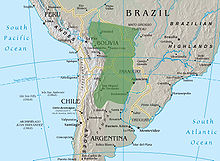
It would be hard to see from the one-sentence abstract how a new SSRN essay, The Renewal of Gran Chaco Studies, would be of interest to legal historians.  But the essay itself reveals a fascinating field of study, in which law figures in interesting ways. I'm posting a little from the essay to get you started.  It surveys new sources, and may be helpful to legal historians looking for a dissertation topic.
Image credit
The authors are Edgardo Krebs, The Smithsonian Institution, and Jose Braunstein, Republic of Argentina - Consejo Nacional de Investigaciones Científicas y Técnicas (CONICET).  The essay appeared in the History of Anthropology Newsletter, Vol. 38.1, pp. 9-19, June 2011.  Here's the brief abstract:
This is a review essay covering books published and theses written during the last ten years, dealing with the ethnography and history of the Gran Chaco. 
And here's a snippet:
Interest in the Gran Chaco among social scientist during most of the 20th century has not been high. In comparison to the Amazon, or the Andes, this enormous territory, over 500,000 square miles, has inspired a modest output of scholarly studies, its very existence as a distinct and important ecological and ethnographic area seemingly lost in the shadows of the other two neighboring giants. Its vast dry plains- "a park land with patches of hardwoods intermingled with grasslands'" - is the second largest biome in South America, after the Amazon. it is shared by four countries, Paraguay, Bolivia, Brazil and Argentina; and in all of them it represents pockets of wilderness coming under the increasing stress of demographic expansion and economic exploitation . In all of these countries the Chaco is also an ethnographic frontier , still open after centuries of contact, and still the refuge of last resort of a few elusive Indian groups....

During the last fifteen years, however, things have begun to change....

The Gran Chaco is an area where a recurrent idea of ecological unity goes hand in hand with an astonishing ethnic diversity, a kaleidoscope of fifty-odd discrete social units, speaking around twenty different languages. Since the beginning of the 20th century the study of these indigenous groups has been beset by inescapable century the study of these indigenous groups has been beset by inescapable difficulties: military defeat, incorporation in a market economy, the emergence and influence of Pentecostal Christianity, the activities of conservation NGOs whose definitions of "nature" are frequently at odds with those held by the Indians themselves and, more recently, the potential or actual effects of a number of legislative changes at the national and provincial level. These changes reflect a tension between granting increasing autonomy to indigenous groups and the resistance to any advance in that direction, and also pose serious juridical challenges of interpretation regarding entire bodies of customary law, and how they may function within the larger framework of national legal systems.

Maier Reviews Wood's "Idea of America"

Pauline Maier reviews Gordon Wood's Idea of America in the on-line Washington Independent Review of Books.  Of particular interest is Professor Maier's comparison of Wood's position on ideas as causal factors in history in his famous "Rhetoric and Reality in the American Revolution" article with the views expressed in the conclusion of this collection of essays.  She writes: "Wood has, it seems, come to a certain peace with the role of ideas in human affairs."

Tuesday, August 2, 2011

The Mysterious Inner Workings of Law and History Review

Now that the nation has avoided default (at least for the time being), I’d like to use my opportunity as a guest blogger to discuss Law and History Review (LHR). I’ve been editing the journal since 2004 and oversaw its move to Cambridge University Press and expansion to a quarterly. We publish approximately 1,100 pages per year, and our August issue is now available online and in print.

Today, I’d like to focus on the “in-house” review of manuscript submissions. As editor, it is my responsibility to read every submission to determine whether it is potentially a good fit for the journal. In a given year, this means that I evaluate approximately 70 new submissions. Like most editors, I try to compartmentalize my professional responsibilities and designate one morning or afternoon a week to evaluate new submissions.
As I read a manuscript, I focus on one overarching question: Is there a chance that this manuscript can become a publishable article in LHR? Answering this question is a challenge. On the one hand, I don’t want to waste the valuable time of four outside reviewers. The strength of LHR is the quality of our referees’ reports, which take time to prepare. On the other hand, I know how critically important the review process can be for scholars to make sense of their original research findings. Thus, I spend a great deal of time reading (and re-reading) the introduction, considering the source base, studying the footnotes, and thinking about the manuscript’s major contributions. Ultimately, I reject about 40 percent of submissions during the “in-house” stage.

What factors lead me to reject a manuscript submission? In the past, we received many multiple submissions because authors believed that LHR was a traditional law review. As a peer reviewed journal, we automatically reject all multiple submissions. We still occasionally receive law review articles as sole submissions (i.e., they include a table of contents, are 100+ pages, with more than 300 footnotes, and don’t follow the Chicago Manual of Style), which I reject because they are the wrong genre for us. I explain to these authors that there is a difference between using history to make legal arguments and the approach of our authors who use their original research findings to contribute to debates within the field of legal history. On occasion I have sent a manuscript like this out to reviewers because of its exceptional quality, but the reviewers rarely support publication. Instead, they recommend substantial revisions in order to transform a law review article into a LHR article. I now try to avoid putting reviewers in this position.

I also reject manuscripts whose major contributions lay outside of the field of legal history. In these cases, I encourage the author to submit his or her manuscript to a more appropriate journal. Yet editors can (and should) use their discretion to push the field into new territory. Accordingly, my definition of “the field of legal history” is quite broad. Next year, for example, readers will see a couple of articles in LHR that push the boundaries between past and present and history and political science.

On a final note, I should add that many authors who have once had a manuscript rejected either during the “in-house” stage or after receiving referees’ reports later published outstanding articles in LHR. Every manuscript is different, and every new submission to LHR is a fresh start for an author and for the editor.

RIP: "Non-Historic," Non-Trial Temporary Federal District Court Case Files, 1970-95

This may be old news to some LHB readers, but I've just learned of the implementation by the Administrative Office of the U.S. Courts of a policy to dispose of "non-trial temporary case files" created from 1970 to 1995.  According to the Office's website:
This is the first time in more than 30 years that NARA has been able to dispose of any federal court case records. They've begun with paper civil case files dating back to 1970. But before they dispose of any files, courts have the ability to designate "non-trial temporary case" files between 1970 and 1995 as historic. These files will be retained and stored. All cases filed at any time that proceeded to trial, and all cases filed before 1970 are automatically designated permanent and will not be destroyed. The remaining cases will be indexed and become easier to access.

What is considered historically significant? The CACM Committee [Judicial Conference Committee on Court Administration and Case Management], working with NARA, federal judges, historians, and academics, proposes that certain case records be designated permanent. Cases of historic significance would involve particular issues such as state reapportionment cases, civil rights voting cases, treason, national security, family farm and historic bankruptcy cases, and death penalty habeas corpus cases. Judges and clerks of court also are asked to designate cases that:

* Involved a lawyer, litigant, or witness of historical interest or importance;
* Involved an issue of historical interest;
* Involved a matter of national interest separate from the issues in the litigation; or
* Received substantial media attention at the time.

To date, 13 district courts and 23 bankruptcy courts have completed their identification of historic case files.
See also page 7 of the Administrative Office's Annual Report for 2010.

Lee on Judicial Restraint in America

Evan Tsen Lee, University of California, Hastings, draws upon his expertise as a federal courts scholar and takes an intriguing, biographical approach to his subject in Judicial Restraint in America: How the Ageless Wisdom of the Federal Courts was Invented.  I've long thought that we should have, in addition to the "Law Stories" series, serious and succinct historical monographs that track first-year and other high-volume law-school courses.  As much as I like teaching the American Legal History course, I sometimes think that legal historians can best contribute to legal education by cultivating in law students an appreciation of the value of a historical perspective as they learn legal doctrine and become adept in doctrinal analysis.  As our notices here over the years indicate, quite a few contributions to the Law Stories series do much more, many settle for providing factual detail not evident in a reported opinion.  That's not nothing.  It is probably the way to coax the widest range of law students (and the lawyers most will become) into conceding that History Is Important.  I'm not sure how much more I managed in my summary of recent scholarship on Pierson v. Post.  Still, a Paul Harvey, "The Rest of the Story" approach--dating myself, I know--is no guarantee that law students appreciate what Ajay Mehrotra has called "the interpretive power of historical analysis,  and what Willard Hurst termed thinking "in the dimension of time."  

This more ambitious pedagogic goal probably requires the mainstreaming of a historical perspective in a substantive law course, so that students learn to think historically as they learn to think like a lawyer.  In the best outcomes, they would not distinguish between the two. The trick is to show that considering "change over time" can help one master legal doctrine and legal skills without limiting the value of history to this narrowly instrumental goal.  But it's worth the effort, especially as our best chance to get a historical perspective into policymaking and governance is through the legal profession, whose members staff so much of American government.

A classic example of the monograph I have in mind is G. Edward White's Tort Law in America (Oxford University Press, 1980, 2003).  Stuart Banner has just published one for "my" first-year course: American Property (Harvard University Press, 2011).  The "Ageless Wisdom" of its subtitle gives me pause, but what most intrigues me about Lee's book is the possibility that it could help Federal Courts scholars mainstream "the dimension of time" into that most formidable law school course

Here is Oxford University Press’s description:
Many legal scholars believe that judges should not be "activists." But exactly what does it mean for judges to practice "restraint," and how did that set of practices evolve in America? In Judicial Restraint in America: How the Ageless Wisdom of the Federal Courts was Invented, Evan Tsen Lee traces the cultural, social, and intellectual forces that shaped the contours of judicial restraint from the time of John Marshall, through the "vested property rights" courts of the early 20th Century, through the Warren Court, and up to the present. The Supreme Court and the many lower federal courts have long used mystifying technical doctrines known as "standing" and "abstention" out of a professed fidelity to judicial restraint. Yet this book aims to demonstrate that the concept of judicial restraint cannot be meaningfully viewed outside of the varying contexts of American history. The notion of judicial restraint only makes sense in light of the waxing and waning American commitments to property rights and Protestant idealism, to scientific pragmatism, to racial equality, and even to environmental protection and the need to stem climate change. This book focuses on the personalities and lives of powerhouse Supreme Court justices - John Marshall, Oliver Wendell Holmes, Louis Brandeis, Felix Frankfurter, William Brennan, and now Antonin Scalia. Largely written in narrative form, it will appeal to those interested in how politics, society, and the power of ideas have shaped American public law.

Heller on the Nuremberg Military Tribunals

Last week, I finally caught up with the documentary on the International Military Tribunal, “Nuremberg: Its Lessons for Today,” at the Traverse City Film Festival. Now, on cue, comes word of the publication of a book on the proceedings that usually languish in that tribunal’s shadow. It is The Nuremberg Military Tribunals and the Origins of International Criminal Law, by Kevin Jon Heller, Senior Lecturer, Melbourne Law School. Here is the publisher’s description:
This book provides the first comprehensive legal analysis of the twelve war crimes trials held in the American zone of occupation between 1946 and 1949, collectively known as the Nuremberg Military Tribunals (NMTs). The judgments the NMTs produced have played a critical role in the development of international criminal law, particularly in terms of how courts currently understand war crimes, crimes against humanity, and the crime of aggression. The trials are also of tremendous historical importance, because they provide a far more comprehensive picture of Nazi atrocities than their more famous predecessor, the International Military Tribunal at Nuremberg (IMT). The IMT focused exclusively on the 'major war criminals'-the Goerings, the Hesses, the Speers. The NMTs, by contrast, prosecuted doctors, lawyers, judges, industrialists, bankers-the private citizens and lower-level functionaries whose willingness to take part in the destruction of millions of innocents manifested what Hannah Arendt famously called 'the banality of evil'.

The book is divided into five sections. The first section traces the evolution of the twelve NMT trials. The second section discusses the law, procedure, and rules of evidence applied by the tribunals, with a focu

s on the important differences between Law No. 10 and the Nuremberg Charter. The third section, the heart of the book, provides a systematic analysis of the tribunals' jurisprudence. It covers Law No. 10's core crimes-crimes against peace, war crimes, and crimes against humanity-as well as the crimes of conspiracy and membership in a criminal organization. The fourth section then examines the modes of participation and defenses that the tribunals recognized. The final section deals with sentencing, the aftermath of the trials, and their historical legacy.

Monday, August 1, 2011

Backstory and Debt

It's a real pleasure to serve as a guest blogger this month. Although I initially planned to write about either Law and History Review or the U.S. Supreme Court's recent decisions about juveniles for my first post, I wanted to share some thoughts (not mine) on debt and American history. Over the weekend, I listened to the American History Guys on BackStory. Here's the link: http://backstoryradio.org/a-history-of-our-national-debt/

Binder on The Meaning of Killing

The Meaning of Killing has just been posted by Guyora Binder, University of Buffalo School of Law.  It appears in MODERN HISTORIES OF CRIME AND PUNISHMENT, pp. 88-114, Markus D. Dubber, Lindsay Farmer, eds., 2007.  Here's the abstract:
The modern lawyer thinks of homicide as a crime of result. To convict a suspect of homicide, the prosecution must prove she committed an act causing the death of another, accompanied by a culpable mental state. The law conceived homicide very differently in seventeenth-and eighteenth-century England: a killing required an act culturally recognizable as a violent assault. By “rethinking” killing as a kind of act rather than a result, this paper explains the transformation of homicide from unexcused killing to culpable causing. It examines a cross-section of the homicide cases reported in the Proceedings of the Old Bailey between 1674 and 1834. The study’s cases suggest that the categories of murder, manslaughter, and accidental death were distinguished primarily on the basis of differences in conduct rather than mental states, and that intent to kill was almost completely peripheral in seventeenth and eighteenth century English homicide law.

Welcome to David Tanenhaus

David Tanenhaus
The Legal History Blog welcomes David Tanenhaus, Professor and Chair of the History Department at the University of Nevada, Las Vegas, and the James E. Rogers Professor of History and Law at the William S. Boyd School of Law.  David is well-known to legal historians as Editor of the Law and History Review, the journal of the American Society for Legal History.  

An expert in the history of the constitutional rights of children, David's most recent book is The Constitutional Rights of Children: In re Gault and Juvenile Justice (University Press of Kansas, 2011).  Other works include Juvenile Justice in the Making (Oxford University Press, 2004), a co-edited volume with Margaret K. Rosenheim, Franklin E. Zimring, and Bernardine Dohrn, A Century of Juvenile Justice (University of Chicago, 2002), and many articles and essays.

Welcome to David!

Nixon Grand Jury Testimony Opened

Last week, in a suit brought by Public Citizen on behalf of Stanley Kutler, the American Historical Association, the American Society for Legal History, the Organization of American Historians and the Society of American Archivists, a federal district judge ordered the release of the grand jury testimony of Richard Nixon in 1975. The press release is here; Allison Zieve, the Public Citizen lawyer who litigated the matter, discusses the case here.

Another account is here.

Public Citizen has won the release of other grand jury testimony, perhaps most notably that of Alger Hiss.  Please comment if you can think of other grand jury testimony that might possess sufficient historical significance under this line of cases.

Labor Activism and Civil Rights in the 1930s at the Kluge Center

[Here's an announcement of a lecture, "'We Must Learn to Think in Terms of Collective Action': Industrial Democracy and the Civil Rights Establishment of the 1930s," at the Kluge Center of the Library of Congress.]

On Tuesday, August 2, 2011, from 12:00 noon - 1 p.m., Library of Congress Kluge Fellow Toure F. Reed will examine the influence of labor activism on the civil rights agendas of the NAACP and National Urban League as he challenges presumptions about the ideological orientations of these two important civil rights organizations.

Mainstream civil rights activists of the 1930s and 1940s began to perceive racial discrimination as an outgrowth of class exploitation as they were pushed to the left by New Deal labor law and working-class political movements. Afro-American activists during the Depression and Second World War thus frequently identified black participation in the American union movement as a key component to the quest for racial equality.

Location: Room LJ 119, Thomas Jefferson Building, 10 First St., S.E., Washington, D.C.  Free and open to the public. scholarly@loc.gov, (202) 707-3302.