Historians, political scientists, academic lawyers, litigants, and judges have parsed nearly every article, clause, phrase, and word of the United States Constitution of 1787. Nonetheless, there remain a few “orphan” clauses: obscure provisions and clauses which have escaped significant academic and judicial commentary.
Of course, absent concrete cases and controversies, judges have no substantial opportunity to opine on such provisions. When academics engage these materials, the results are not too pretty. One standard response is to opine that these provisions had no reasonably determinate meaning in 1787 within the American polity, or, even if they once (may have) had such a determinate meaning, we now lack sufficient records to determine their meaning. Another standard trope is to assume that these clauses are redundant (with other clauses whose meaning we know) or to assume aspirational unity with other clauses (again, clauses whose meanings we know).
In this lecture, I will discuss three orphan provisions, including: (i) the Orders, Resolutions, and Votes Clause (U.S. Constitution Article I, Section 7, Clause 3); (ii) the “Propose or Concur with Amendments” language within the Origination Clause (U.S. Constitution Article I, Section 7, Clause 1); and (iii) the diverse language in the Constitution relating to Office and Officer. In regard, to each provision (or related set of provisions), I will explain how the current understanding (or, at least, my understanding) of these provisions has been destabilised (or influenced) by investigating foreign legal – in particular, foreign parliamentary – materials.
Finally, I will opine on why I believe Australian (and Canadian) legal, and especially parliamentary, sources, are likely to prove particularly useful sources in developing early American constitutional and statutory materials.
Monday, September 2, 2013
Tillman on American Originalism and Australian Law
Seth Barrett Tillman has posted a set of PowerPoint slides, Comparative Public Law, Originalism, and Foreign Parliamentary Materials: One American’s Exploration of Australian Judicial and Parliamentary Materials, which he will present in Dublin to the International Commission for the History of Representative and Parliamentary Institutions on September 4, 2013. Here is the abstract:


Maxeiner on Adams, Jefferson and "a Government of Laws"
James R. Maxeiner, University of Baltimore School of Law, has posted Building a Government of Laws: Adams and Jefferson 1776-1779, which is part of the symposium, “Legal Doctrines of the Rule of Law and of the Legal State,” to appear in Ius Gentium (2013). Here is the abstract:
Critics call for rethinking the rule of law. American laws are either too specific or are too readily ignored by judges. The American rule of law, by largely ignoring statute law and focusing on judge-made law and asserting judicial supremacy over statutes, undermines good government. This article contends that the "government of laws, not of men" of John Adams and the complete revision (Revisal) of Virginia laws made by Thomas Jefferson show these two founders thought of law in statute law terms closer to the ideas of a legal state than to the common law rule of law.
Sunday, September 1, 2013
Sunday Book Roundup
This week, the 50th anniversary of the March on Washington brought with it several book reviews on race in America.
NPR has put together a list of "books that bring the civil rights movement to life" here, including two of my favorites - Anne Moody's Coming of Age in Mississippi (Random House, 1992) and the edited volume of personal accounts, Hands on the Freedom Plow: Personal Accounts by Women in SNCC (University of Illinois Press, 2012).
 The Washington Post's Jonathan Yardley reviews William P. Jones's The March on Washington: Jobs, Freedom, and the Forgotten History of Civil Rights (Norton). Yardley writes,
 This week there are also several reviews of For Discrimination: Race, Affirmative Action, and the Law (Pantheon) by Harvard Law Professor Randall Kennedy, including a lengthy L.A. Times review, a Washington Post review, and a Wall Street Journal review for subscribers.
H-Net has a review of Emily West's Family or Freedom: People of Color in the Antebellum South (University Press of Kentucky), which makes use of enslavement petitions to examine antebellum race and status relationships in the South.
Lewie Reece has tackled two books in a H-Net review titled, "The Lincoln Theme in the Twenty-First Century." The reviewed books are Michael Burlingame's Lincoln and the Civil War (Southern Illinois University Press) and Mark E. Neely's Lincoln and the Triumph of the Nation: Constitutional Conflict in the American Civil War (University of North Carolina Press). Reece writes:

Other reviews of interest include Washington Post's review of Higher Education in America (Princeton University Press) by Derek Bok.
 HistoryToday asks "How could the first nation to cleave church from state remain so pious?"as it reviews The Creation of the American Soul: Roger Williams, Church and State, and the Birth of Liberty (Duckworth) by John Barry.
The New York Times reviews A Wild Justice: The Death and Resurrection of Capital Punishment in America (Norton) by Evan J. Mandery. (Previously mentioned in the Aug. 18 Book Roundup.)
And Salon has published an excerpt from Estelle B. Freedman's Redefining Rape: Sexual Violence in the Era of Suffrage and Segregation (Harvard University Press).
NPR has put together a list of "books that bring the civil rights movement to life" here, including two of my favorites - Anne Moody's Coming of Age in Mississippi (Random House, 1992) and the edited volume of personal accounts, Hands on the Freedom Plow: Personal Accounts by Women in SNCC (University of Illinois Press, 2012).
The Washington Post's Jonathan Yardley reviews William P. Jones's The March on Washington: Jobs, Freedom, and the Forgotten History of Civil Rights (Norton). Yardley writes,"This is the central theme of “The March on Washington”: The powerful economic impulses of the march have been lost to view as historians emphasize the eloquence of King’s speech and its effect on the political climate as the country moved to address the questions of basic civil rights and opportunities that he articulated. Initially the march’s organizers demanded “federal jobs creation, raising the minimum wage, a Fair Employment Practice law, and support for [President John F.] Kennedy’s civil rights bill,” demands that “expanded as new groups joined.”"
This week there are also several reviews of For Discrimination: Race, Affirmative Action, and the Law (Pantheon) by Harvard Law Professor Randall Kennedy, including a lengthy L.A. Times review, a Washington Post review, and a Wall Street Journal review for subscribers.H-Net has a review of Emily West's Family or Freedom: People of Color in the Antebellum South (University Press of Kentucky), which makes use of enslavement petitions to examine antebellum race and status relationships in the South.
Lewie Reece has tackled two books in a H-Net review titled, "The Lincoln Theme in the Twenty-First Century." The reviewed books are Michael Burlingame's Lincoln and the Civil War (Southern Illinois University Press) and Mark E. Neely's Lincoln and the Triumph of the Nation: Constitutional Conflict in the American Civil War (University of North Carolina Press). Reece writes:
These two books serve as a reminder that the Lincoln theme, far from being exhausted, continues to be explored in new ways by historians. Pure biography remains a subject of lively interest, but so do efforts to connect Lincoln to issues related to antislavery and the Civil War. Additionally, several works are but marginally connected to history, and instead examine the ongoing impact Lincoln had, and continues to have, on American culture. Moreover, as these two volumes suggest, academic historians continue to widen the parameters of our understanding of Lincoln.
Mark Neely and Michael Burlingame have written widely not only about Lincoln, but Civil War America as well. Their approach in these volumes is different, yet similar. Neely presents a constitutional and legal history of the Civil War which, despite the title, is only partly about Lincoln. Burlingame has written a compressed history of Lincoln’s presidency and its influence on the Civil War. Both works reveal these historians’ impressive scholarship and wide reading in manuscript sources; both provide insight into the subject. It takes courage to try and do something different and provocative, and both men are to be commended for seeking new approaches.n+1 reviews Walter Johnson's River of Dark Dreams: Slavery and Empire in the Cotton Kingdom (Harvard University Press).
Other reviews of interest include Washington Post's review of Higher Education in America (Princeton University Press) by Derek Bok.
HistoryToday asks "How could the first nation to cleave church from state remain so pious?"as it reviews The Creation of the American Soul: Roger Williams, Church and State, and the Birth of Liberty (Duckworth) by John Barry.The New York Times reviews A Wild Justice: The Death and Resurrection of Capital Punishment in America (Norton) by Evan J. Mandery. (Previously mentioned in the Aug. 18 Book Roundup.)
And Salon has published an excerpt from Estelle B. Freedman's Redefining Rape: Sexual Violence in the Era of Suffrage and Segregation (Harvard University Press).
Saturday, August 31, 2013
Weekend Roundup

- From In Custodia Legis: A beginner's guide to the Magna Carta.
- Earlier this year we noted the forthcoming release of Making Legal History: Essays in Honor of William E. Nelson. Via a recent NYU Press announcement, we now know that the book available, in both hard copy and ebook form.
- Bad news, from the Los Angeles Times: "CIA closes office that declassifies historical materials." (Hat tip: History News Network)
- From the Junto: "Pauline Maier and the History of Women in History."
- Prawfsblawg reports that Michael Lobban is moving from Queen Mary to the London School of Economics.
Friday, August 30, 2013
Lerner on the Directed Verdict before 1938
Renée Lettow Lerner, George Washington University Law School, has posted The Rise of Directed Verdict: Jury Power in Civil Cases Before the Federal Rules of 1938, which is/will be published in the George Washington Law Review 81 (2013). Here is the abstract:
Jury practice in the state and federal courts evolved dramatically in the nineteenth and early twentieth century. Around the time of the ratification of the Bill of Rights in 1791, important legal thinkers praised the civil jury as a bulwark against judicial tyranny. By the advent of the Federal Rules of Civil Procedure in 1938, many commentators regarded the civil jury as an antiquated nuisance. Diminishment of the jury and open exercise of judicial power, encouraged in the Federal Rules by procedures such as summary judgment, would not have been possible without earlier changes in jury practice. Two major changes were the rise of directed verdict procedure and the related judgment notwithstanding the verdict. These mechanisms allowed a judge to give a binding instruction to a jury, or to enter a judgment contrary to the jury’s decision.Lerner's discovery that a reform (directed verdicts) first championed by a business interest (railroads) later won the support of legal progressives (Charles E. Clark and other academic progenitors of the FRCP) has a counterpart in the public utility commission, which was first championed by legal progressives (such as Charles Evans Hughes) and later gained the support of business interests (railroads et al.) Three cheers for Robert Wiebe's Businessmen and Reform!
This Study reveals that railroads revolutionized the law of jury control. Changes in directed verdict were part of a larger program of jury reform beginning in the mid-nineteenth century in England, the states, and the federal government. Because of growing numbers of complicated personal injury suits against railroads, and because of perceived jury bias in those cases, many judges sought to control juries more efficiently. Directed verdicts began to replace new trials. Opposition arose, but the overall trend was toward greater judicial control of juries. The striking changes in jury practice described in this Article suggest difficulties in maintaining a consistent jury trial right by constitutional requirement.
Originalism Now: The View from Whittington
Recently we posted on a symposium on originalism in the Jerusalem Review of Legal Studies. Now, via Legal Theory Blog, comes news of the following SSRN post by Princeton's Keith E. Whittington of Originalism: A Critical Introduction, which is forthcoming in the Fordham Law Review:
The theory of originalism is now well into its second wave. Originalism first came to prominence in the 1970s and 1980s as conservative critics reacted to the decisions of the Warren Court and the Reagan administration embraced originalism as a check on judicial activism. A second wave of originalism has emerged since the late 1990s, responding to earlier criticisms and reconsidering earlier assumptions and conclusions. This essay assesses where originalist theory currently stands. It outlines the points of agreement and disagreement within the recent originalist literature and points to the primary points of continuing separation between originalists and their critics.
CFP: "Beyond Merchant and Missionary: Samuel Moyn and the quest for a holistic history of Human Rights, 1945-present"
Via H-Net, we have the following Call for Papers: Beyond Merchant and Missionary: Samuel Moyn and the quest for a holistic history of Human Rights, 1945-present. Here's the announcement:
With this conference we are making way for a new, comprehensive and interdisciplinary analysis of Human Rights history (1945-2013). We are bringing together different disciplines, but also renowned academics and talented young professionals. We intend to trigger those who study Human Rights to ask new questions and those who are working in a in an adjacent field to include the concept of Human Rights and the ideas of the Human Rights movement, and to face legal-philosophical complexity in their analysis.
In the last couple of years, in the United States, many books have been published on the post-War history of Human Rights. Especially Samuel Moyn’s contribution has made some challenging points. The modern concept of human rights, he says, differs radically from older claims of rights, like those that arose out of the French Revolution. According to Moyn, human rights in their current form can be traced not to the Enlightenment, nor to the humanitarian impulses of the 19th century nor to the impact of the Holocaust after World War II. Instead, he sees them as dating from the 1970s, exemplified by the efforts of the Carter presidency to make human rights a pillar of United States foreign policy and the Helsinki Accords.
New Release: The Legal Language of Scottish Burghs Standardization and Lexical Bundles (1380-1560)
New from Oxford University Press: The Legal Language of Scottish Burghs Standardization and Lexical Bundles (1380-1560) by Joanna Kopaczyk (Adam Mickiewicz University, Poland).
From the publisher:
This book offers an innovative, corpus-driven approach to historical legal discourse. It is the first monograph to examine textual standardization patterns in legal and administrative texts on the basis of lexical bundles, drawing on a comprehensive corpus of medieval and early modern legal texts. The book's focus is on legal language in Scotland, where law—with its own nomenclature and its own repertoire of discourse features—was shaped and marked by the concomitant standardizing of the vernacular language, Scots, a sister language to the English of the day.
Joanna Kopaczyk's study is based on a unique combination of two methodological frameworks: a rigorous corpus-driven data analysis and a pragmaphilological, context-sensitive qualitative interpretation of the findings. Providing the reader with a rich socio-historical background of legal discourse in medieval and early modern Scottish burghs, Kopaczyk traces the links between orality, community, and law, which are reflected in discourse features and linguistic standardization of legal and administrative texts. In this context, the book also revisits important ingredients of legal language, such as binomials or performatives. Kopaczyk's study is grounded in the functional approach to language and pays particular attention to referential, interpersonal, and textual functions of lexical bundles in the texts. It also establishes a connection between the structure and function of the recurrent patterns, and paves the way for the employment of new methodologies in historical discourse analysis.
A blurb:
"This study is impressive in its scope, ranging from a detailed description of the social organization and the practice of law in medieval Scottish burghs, to reporting the results of sophisticated corpus-driven linguistic investigations of Scottish legal documents. The study is especially innovative in its application of corpus analysis to identify lexical bundles, phraseological chunks of language that are used to structure texts, tracing textual standardization patterns in Scots legal and administrative texts based on the use of lexical bundles. As such, the book will become required reading for scholars from many subfields, including the study of legal discourse, historical discourse analysis, literacy and standardization, and the application of corpus-driven methods in historical textual analysis." --Douglas Biber, Northern Arizona University
Thursday, August 29, 2013
Rose on Becoming a Legal History Teacher
Jonathan Rose, Arizona State University College of Law, has posted Becoming a Legal History Teacher. Here is the abstract:
This essay recounts my beginning teaching of legal history. My experience is likely distinctive because at almost 60 years old and after over three decades as a law professor, I became interested English legal history. My initial activities were limited to scholarship and did not involve teaching. But I thought I should also start teaching in this field. Thus, after about five years writing articles and over three decades of teaching traditional law school courses (Contracts, Antitrust, Professional Responsibility, and Law and Economics), I decided that I should teach a course in English legal history.
Turning to English legal history was a major change in my career. I had no training in history and lacked the necessary language and paleographic skills. With the exception of Antitrust, I, like many law professors, had begun teaching new courses without substantial knowledge or experience. But I viewed my lack of knowledge with English legal history as different. Except for the few topics on which I had written, my ignorance of this vast and complicated field was profound. Moreover, it was not like learning a more traditional legal subject and it also required knowledge of English history.
Although there have been a number of beneficiaries of this English legal history course, I have been the greatest beneficiary. Teaching legal history has been a learning experience for me. It is hard for me to believe that any of the students learned as much as I have. I have always said that there are some subjects you teach to teach the students and some to teach yourself as well as the students. Such as been my experience in teaching English legal history. Moreover, it has strengthened my scholarship as well.
Women in the Life and Law of the DC Circuit Courts
 Just up on the website of the Historical Society of the DC Circuit is a video of Women in the Life and Law of the DC Circuit Courts, a program the Society sponsored in June. The website explains:
Led by the moderator, Professor Barbara Babcock, panelists Justice Ruth Bader Ginsburg, Judge Gladys Kessler, Judge Royce Lamberth, Nancy Mayer-Whittington, Michele Roberts, Judge Patricia Wald, and Helgi Walker assessed the role of women in the life and law of the Courts. In so doing, they described their professional and personal experiences while providing insights into the participation of women in the Courts of the Circuit, hurdles encountered and remaining, and the impact of women participating in increasing numbers in the judicial process.
New Release: Hockett on Law, Politics, and Supreme Court Decision Making in Brown
New from the University of Virginia Press: A Storm Over This Court: Law, Politics, and Supreme Court Decision Making in "Brown v. Board of Education," by Jeffrey D. Hockett (University of Tulsa). Here's a description from the publisher:
A blurb:On the way to offering a new analysis of the basis of the Supreme Court’s iconic decision in Brown v. Board of Education, Jeffrey Hockett critiques an array of theories that have arisen to explain it and Supreme Court decision making generally. Drawing upon justices’ books, articles, correspondence, memoranda, and draft opinions, A Storm over This Court demonstrates that the puzzle of Brown’s basis cannot be explained by any one theory.
Borrowing insights from numerous approaches to analyzing Supreme Court decision making, this study reveals the inaccuracy of the popular perception that most of the justices merely acted upon a shared, liberal preference for an egalitarian society when they held that racial segregation in public education violates the equal protection clause of the Fourteenth Amendment. A majority of the justices were motivated, instead, by institutional considerations, including a recognition of the need to present a united front in such a controversial case, a sense that the Court had a significant role to play in international affairs during the Cold War, and a belief that the Court had an important mission to counter racial injustice in American politics.
A Storm over This Court demonstrates that the infusion of justices’ personal policy preferences into the abstract language of the Constitution is not the only alternative to an originalist approach to constitutional interpretation. Ultimately, Hockett concludes that the justices' decisions in Brown resist any single, elegant explanation. To fully explain this watershed decision—and, by implication, others—it is necessary to employ a range of approaches dictated by the case in question.
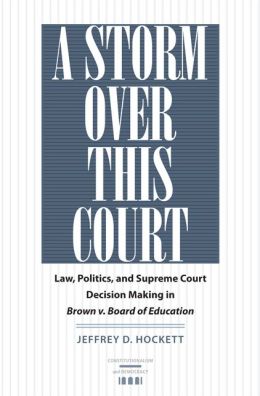
Examining oral arguments, Supreme Court memoranda, and the private papers of the justices, Hockett weaves a rich tapestry of the many threads that led the nine Supreme Court justices to unanimously hold school segregation unconstitutional in Brown v. Board of Education. Focusing on the thinking of each justice, Hockett offers a fascinating examination of judicial sausage-making in one of the Court’s most famous decisions. -- Gerald N. RosenbergIt looks like full text is available to subscribers of Project Muse.
Wednesday, August 28, 2013
Triangle Legal History Seminar
Our friends at the Triangle Legal History Seminar have sent us this academic year's line-up. Anyone interested in attending should contact Edward Balleisen (eballeis@duke.edu), Jonathan Ocko (jkohi@ncsu.edu) or Al Brophy (abrophy@email.unc.edu). All meetings from 4-6 at the National Humanities Center, unless otherwise noted.
Sept. 13: Chris Brooks, Professor of History, Durham University
"Law and Religion in Early Modern England" jointly sponsored with the Triangle Global British Studies Seminar (meeting at Franklin Humanities Institute at NOON)
Oct. 11: Martha Jones, Associate Professor of History and Afroamerican and African Studies, University of Michigan
"Overturning Dred Scott: Race, Rights, and Citizenship in Antebellum America"
Nov. 15th: Mary Mitchell, Doctoral Candidate in History and Sociology of Science, University of Pennsylvania
"Making Abortion Rights Travel: Assessing the Role of Mobile Technologies in Fomenting Social Change"
Dec. 6: John Martin, Professor of History, Duke University
"Between Rulers and Subjects: Torture and the Politics of the Body in Early Modern Venice"
Jan. 17: Julia Rudolph, Associate Professor of History, North Carolina State University
"Families, Fraud and Foreclosure: Mortgage Disputes in Early Modern England" jointly sponsored with the Triangle Global British Studies Seminar
Feb. 14: Samanthis Smalls, Doctoral Candidate in History, Duke University
"Workhouse Encounters: The Convergence of Governance and Slavery in Antebellum Charleston"
March 28: Bruce Hall, Associate Professor of History, Duke University
"The Bonds of Trade: Slavery and Commercial Law in the 19th-Century Sahara"
April 18: Susanna Blumenthal, Associate Professor of Law and History, University of Minnesota
"'A Horror of Being Duped': The Apprehension of Fraud in Nineteenth-Century American Law"
Originalism Now: The View from Jerusalem
Until the end of 2013, Oxford Journals is granting free access to the Jerusalem Review of Legal Studies. Its current issue includes a symposium on Jack Balkin's Living Originalism. Contributors include two my Georgetown colleagues, Randy E. Barnett and Lawrence B. Solum, as well as Barak Medina,
ASLH: Registration and Transportation
Via H-Law we have the following announcement:
Online registration is now open for the 2013 ASLH meeting in South Florida. Access to the online registration is available at here. A link for discounted rooms under the conference block will be emailed to members after they register for the conference. Please contact the ASLH webmaster if you do not receive the link.To help in making travel plans, the local arraignments committee provides the following information on Transportation from the airport to Hyatt Regency Miami
Tuesday, August 27, 2013
Watt to Lecture at Duke Law on Dress in Legal History
[Via H-Law we have the following announcement.]
Professor Gary Watt (University of Warwick, UK) will speak on "Dress, Law and Naked Truth" at Duke Law School on Thursday, September 12, 2013, 12:15pm (Law School 3043).
Professor Gary Watt (University of Warwick, UK) will speak on "Dress, Law and Naked Truth" at Duke Law School on Thursday, September 12, 2013, 12:15pm (Law School 3043).
Why are civil authorities in so-called liberal democracies affronted by public nudity and the Islamic full-face 'veil'? Why are law and civil order so closely associated with robes, gowns, suits, wigs and uniforms? Why is law so concerned with the 'evident' and the need for justice to be 'seen' to be done? Why do we dress and obey dress codes at all? In this, the first ever study devoted to the many deep cultural connections between dress and law, the author addresses these questions and more. His responses flow from the radical thesis that 'law is dress and dress is law'. Engaging with sources from The Epic of Gilgamesh to Shakespeare, Carlyle, Dickens and Damien Hirst, Professor Watt draws a revealing history of dress and civil order and offers challenging conclusions about the nature of truth and the potential for individuals to fit within the forms of civil life.The lecture will mark the recent publication of Gary Watt's Dress, Law and Naked Truth: A Cultural Study of Fashion and Form (London, Bloomsbury Academic, 2013). For more information, please contact Diane Shah at dda4@duke.edu or Stefanie Kandzia at stefanie.kandzia@law.duke.edu
MLK's Speechwriter: "She was angry at me and then I began to be angry at Martin King"
Clarence Jones (Stanford--MLK Institute), the lawyer and speechwriter behind Dr. Martin Luther King's famous "I Have a Dream Speech" has published a book about his adventures with King. The release is Behind the Dream: The Making of the Speech that Transformed the Nation (Palgrave). The publisher's description follows below.
The funny thing about Jones's involvement in King's history-
 making speech is that initially, he wanted nothing to do with Dr. King! Jones's wife--or more pointedly, his wife's anger at the lawyer's refusal to assist Dr. King--moved Jones to action. As Jones explained during an NPR interview about the events that led to his involvement with King: "[My wife] was angry at me and then I began to be angry at Martin King [for interrupting our domestic tranquility]." Read about Jones and listen to the interview here.
The funny thing about Jones's involvement in King's history-
“I have a dream.” When those words were spoken on the steps of the Lincoln Memorial on August 28, 1963, the crowd stood, electrified, as Martin Luther King, Jr. brought the plight of African Americans to the public consciousness and firmly established himself as one of the greatest orators of all time. Behind the Dream is a thrilling, behind-the-scenes account of the weeks leading up to the great event, as told by Clarence Jones, co-writer of the speech and close confidant to King. Jones was there, on the road, collaborating with the great minds of the time, and hammering out the ideas and the speech that would shape the civil rights movement and inspire Americans for years to come.
Join the ASLH!
 The American Society for Legal History is a nonprofit membership organization dedicated to fostering scholarship, teaching, and study concerning the law and institutions of all legal systems, both Anglo-American and international. Founded in 1956, the Society sponsors Law and History Review (published four times a year) and Studies in Legal History, a series of book-length monographs available to ASLH members at substantial publication discounts. In addition, the Society holds an annual meeting to promote scholarship and interaction among teachers, practitioners, and students interested in legal history, and maintains a website to inform its members about opportunities in the field. For further information concerning the Society and membership dues, which are quite modest, please visit the Society's website to join or renew.
Please email Patricia Minter, ASLH Membership Committee Chair, at patricia.minter@wku.edu, if you have further membership questions.
A Research Grant for GW Law's Special Collections
[We have the following announcement.]
GW Law is pleased to invite applications for the Richard & Diane Cummins Legal History Research Grant for 2014.
The Cummins Grant provides a stipend of $10,000 to support short-term historical research using Special Collections at GW’s Jacob Burns Law Library, which is noted for its continental historical legal collections, especially its French Collection. Special Collections also is distinguished by its holdings in Roman and canon law, church-state relations, international law, and its many incunabula. The grant is awarded to one doctoral, LL.M. or S.J.D. candidate; postdoctoral researcher; faculty member; or independent scholar. The successful candidate may come from a variety of disciplines, including, but not limited to, law, history, religion, philosophy, or bibliography.
The deadline for applications is October 15, 2013.
Information about the Cummins Grant is here. Information about Special Collections at the Jacob Burns Law Library is here.
Monday, August 26, 2013
Update: Osgoode Legal History Group 2013-14 Line-Up
[This post has been updated to include the rest of the 2013-14 term.]
The Osgoode Legal History Group (formerly the Toronto Legal History Group) has posted its schedule for 2013-14:
The Osgoode Legal History Group (formerly the Toronto Legal History Group) has posted its schedule for 2013-14:
First TermFor more information, including how to participate in this workshop, head to the Canadian Legal History Blog.
Wednesday September 11 - Ian Kyer, Fasken Martineau: “The Thirty Years War: The Legal Battles that Created the TTC 1891-1921"
Wednesday September 25 - Jordan Birenbaum, University of Toronto: “Elmer A. Driedger (1913-1985): A Biographical and Intellectual Sketch of the Father of Canadian Statutory Interpretation”.
Wednesday October 9 - Nick Rogers, York University: “Parricide in Mid-Eighteenth Century England: The cases of Mary Blandy and Elizabeth Jefferies.”
Wednesday October 23 - Jeremy Milloy, Simon Fraser University: “Windsor is 'A Very, Very Bad Place to Live if You Are Black': Workplace Violence, Race, and Radical Law in the Aftermath of Charlie Brooks's Murder”
Wednesday October 30 - Osgoode Society Book launch
Wednesday November 6 - Ubaka Ogbogu, University of Alberta: “Doctors versus Councillors: A Legal History of Smallpox Vaccination in Ontario, 1882 - 1920”
Wednesday November 20 - Mary Stokes, Osgoode Hall Law School: “Municipal Corporations in Court, 1850-1880.”
December 4 - Lori Chambers, Lakehead University: “TBA”
Second Term
Wednesday January 8 - Philip Girard, Osgoode Hall Law School: “A History of Canadian Law, Chapter 2: 1500-1701"
Wednesday January 22 - Eric Adams, University of Alberta: “TBA”
Wednesday February 5 - Maynard Maidman, York University: "The Practice of Law in Ancient Mesopotamia: Two Cases from ca. 1400-1350 B.C."
Wednesday February 12 - Bill Wicken, York University: “Residency on the Six Nations Reserve: Legal and Social issues, 1870-1920.”
Wednesday February 26 - Sally Hadden, Western Michigan University: “TBA”
Wednesday March 12 - Tyler Wentzell, University of Toronto: “Not for King nor Country: Canada's Foreign Enlistment Act and the Spanish Civil War”
Wednesday March 26 - Don Fyson, Laval University: “TBA”
Wednesday April 9 - Bettina Bradbury, York University: “‘In the event of my said wife remaining in the colonies … all her interest in my will is to cease’: The widow Kearney contests her husband’s final wishes in colonial Victoria, Australia.”
September at the Miller Center
Among the upcoming events at the Miller Center for Public Affairs at the University of Virginia in September are the following:
FORUM: Wednesday, September 4 11:00 a.m.
GILBERT KING, Pulitzer Prize-winning historian, on his book, The Devil in the Grove: Thurgood Marshall, the Groveland Boys, and the Dawn of a New America
FORUM: Wednesday, September 11 11:00 a.m.
WILLIAM P. JONES, history professor at the University of Wisconsin-Madison, on his new book, The March on Washington: Jobs, Freedom, and the Forgotten History of Civil Rights
HISTORICAL PRESIDENCY LECTURE SERIES:
Wednesday, September 18 5:00 p.m.
Special Location: Nau Hall, Room 101 ( U.Va. Web Map)
GARY GALLAGHER, senior faculty associate at the Miller Center, and JAMES M. MCPHERSON, professor emeritus of history at Princeton, on Abraham Lincoln and Jefferson Davis as war presidents.
More information here.
Harvard Legal History Workshop Schedule, 2013-14
I'm pleased to share the schedule for this year's Harvard Legal History Workshop. The lineup is as follows.
Sept 18: Daniel Ernst, Professor of Law, Georgetown University, “Chief Justice Hughes and Administrative Law, 1930-1941”
Comment: Mark Tushnet, William Nelson Cromwell Professor of Law, Harvard Law School

Sept 25: Karen Tani, Assistant Professor of Law, University of California, Berkeley Law, “The ‘Indian Problem’: Welfare, Rights, and Citizenship in the Wake of the New Deal”
Comment: Lucie White, Louis A. Horvitz Professor of Law, Harvard Law School
Oct. 9 Risa Goluboff, John Allan Love Professor of Law and Professor of History, University of Virginia, “People out of Place: The Sixties, the Supreme Court, and Vagrancy Law”
Comment: Lisa McGirr, Professor of History, Department of History, Harvard University
Oct 16: Serena Mayeri, Professor of Law and History, University of Pennsylvania, “Status of Marriage: Marital Supremacy Challenged and Remade, 1960-2000”
Comment: Michael Klarman, Kirkland and Ellis Professor of Law, Harvard Law School
Oct 23: Jane de Hart, Professor of History, University of California, Santa Barbara, Department of History, “Ruth Bader Ginsburg: Pursuing Equality”
Comment: Nancy Cott, Jonathan Trumbull Professor of American History, Department of History, Harvard University
Oct 30: Daniel Sharfstein, Professor of Law, Vanderbilt University, “West from Reconstruction: Struggles Over Liberty and Equality, 1865-74”
Feb 26, 2014 Sara Mayeux, HLS Berger-Howe Fellow in Legal History, “The Right to Counsel and the Political Limits of Originalism”
Mar 27, 2014 Hendrik Hartog, Class of 1921 Bicentennial Professor in the History of American Law and Liberty, Professor of History, Princeton University, “Imagining Gibbons v. Ogden without the Commerce Clause: A Sketch”
Comment: Mark Tushnet, William Nelson Cromwell Professor of Law, Harvard Law School
Sept 25: Karen Tani, Assistant Professor of Law, University of California, Berkeley Law, “The ‘Indian Problem’: Welfare, Rights, and Citizenship in the Wake of the New Deal”
Comment: Lucie White, Louis A. Horvitz Professor of Law, Harvard Law School
Oct. 9 Risa Goluboff, John Allan Love Professor of Law and Professor of History, University of Virginia, “People out of Place: The Sixties, the Supreme Court, and Vagrancy Law”
Comment: Lisa McGirr, Professor of History, Department of History, Harvard University
Oct 16: Serena Mayeri, Professor of Law and History, University of Pennsylvania, “Status of Marriage: Marital Supremacy Challenged and Remade, 1960-2000”
Comment: Michael Klarman, Kirkland and Ellis Professor of Law, Harvard Law School
Oct 23: Jane de Hart, Professor of History, University of California, Santa Barbara, Department of History, “Ruth Bader Ginsburg: Pursuing Equality”
Comment: Nancy Cott, Jonathan Trumbull Professor of American History, Department of History, Harvard University
Oct 30: Daniel Sharfstein, Professor of Law, Vanderbilt University, “West from Reconstruction: Struggles Over Liberty and Equality, 1865-74”
Feb 26, 2014 Sara Mayeux, HLS Berger-Howe Fellow in Legal History, “The Right to Counsel and the Political Limits of Originalism”
Mar 27, 2014 Hendrik Hartog, Class of 1921 Bicentennial Professor in the History of American Law and Liberty, Professor of History, Princeton University, “Imagining Gibbons v. Ogden without the Commerce Clause: A Sketch”
Yale Legal Forum, 2013-2014
Here is the lineup for the Yale Legal History Forum in 2013-2014. Sessions are 4:30-6:00 p.m. unless otherwise indicated and held in the Yale Law School Faculty Lounge (second floor). A reception starts at 4:15 p.m.
 For more information, please contact
christian.burset@yale.edu or marie-amelie.george@yale.edu.
FALL
Danielle Allen | Institute for Advanced Study (Social Science)
Thursday, September 19
Joint session with Legal Theory Workshop. Begins at 4:15 p.m.
Ned Blackhawk | Yale University (History)
Tuesday, October 1
Problems of Governance in the Indigenous West of the Civil War Era
Petra Moser | Stanford University (Economics)
Thursday, November 21
Copyright and U.S. Tastes for Russian Music
Joint session with Law, Economics & Organization Workshop. 4:10-5:40 p.m., SLB 121.
SPRING
Brian Tamanaha | Washington University School of Law
Tuesday, February 18
A Natural History of Law
Rebecca McLennan | University of California Berkeley (History)
Tuesday, March 25
Living Law in Early America: Towards a Cultural History of Jurisdiction
Randall Lesaffer | Tilburg University Law School
Tuesday, April 1
Pax Sine Iustitia: Peacemaking and the Law of Nations in Early Modern Europe
Jack Goldsmith | Harvard Law School
Thursday, April 10
Joint session with Legal Theory Workshop. Begins at 4:15 p.m.
For more information, please contactchristian.burset@yale.edu or marie-amelie.george@yale.edu.
FALL
Danielle Allen | Institute for Advanced Study (Social Science)
Thursday, September 19
Joint session with Legal Theory Workshop. Begins at 4:15 p.m.
Ned Blackhawk | Yale University (History)
Tuesday, October 1
Problems of Governance in the Indigenous West of the Civil War Era
Petra Moser | Stanford University (Economics)
Thursday, November 21
Copyright and U.S. Tastes for Russian Music
Joint session with Law, Economics & Organization Workshop. 4:10-5:40 p.m., SLB 121.
SPRING
Brian Tamanaha | Washington University School of Law
Tuesday, February 18
A Natural History of Law
Rebecca McLennan | University of California Berkeley (History)
Tuesday, March 25
Living Law in Early America: Towards a Cultural History of Jurisdiction
Randall Lesaffer | Tilburg University Law School
Tuesday, April 1
Pax Sine Iustitia: Peacemaking and the Law of Nations in Early Modern Europe
Jack Goldsmith | Harvard Law School
Thursday, April 10
Joint session with Legal Theory Workshop. Begins at 4:15 p.m.
Sunday, August 25, 2013
Entering the Field of Legal History
This is the time of year when all thoughts turn back to …. school. Legal historians generally do a LOT of
school. When others talk of “finishing,”
this crowd talks of the long haul. As
Bruce Mann once said, this kind of training is not for the faint of heart.
So what draws people – otherwise talented and accomplished
people – into legal history? I asked a
group of people who are either just about to start graduate school or at an
early stage of graduate work (a total of six: three joint degree students, two more doing a
history PhD first and then law school, and a third who has completed a JD and
is now in the second year of history graduate work). What, I queried, drew you to the field?
Most often, the answers had to do with research. Sometimes it was on the job – going to the
NAACP archives to research a case, and finding that the most exciting questions
were debated in past generations. Or
finding that research in a state archive far from home was more challenging and
rewarding than a summer internship in law, even a highly competitive public interest
internship.
The joys of research, said this group, made the prospect of
all that school less daunting. They
knew, in other words, that eventually they would be released back into the
world of archive rats, and there they could flourish.
Sunday Book Roundup
This weekend, you can find a review of Charles Moore's new biography, Margaret Thatcher: From Grantham to the Falklands (Knopf) in New Republic. Reviewer John Gray writes,
 HistoryToday reviews City Water & City Life:Water and the Infrastructure of Ideas in Urbanizing Philadelphia, Boston and Chicago (University of Chicago Press), by Carl Smith here.
H-Net has added two reviews of interest: editors Keith M. Brown and Alastair J. Mann's The History of the Scottish Parliament, Volume 3, Parliament in Context, 1235-1707 (Edinburgh University Press) here; and a second review of both John Ashworth's The Republic in Crisis, 1848-1861 (Cambridge University Press) and the edited volume A Political Nation: New Directions in Mid-Nineteenth-Century American Political History (Gary W. Gallagher, Rachel A. Shelden, eds.) (University of Virginia Press).

The Washington Post reviews Mac Griswold's The Manor, a cultural landscape history of a slave plantation here. (Another review of the book was included in a prior book roundup post here.) The reviewer describes the book:
 The Washington Post also reviews Mistrial: An Inside Look at How the Criminal Justice System Works . . . and Sometimes Doesn’t (Gotham) by Mark Geragos and Pat Harris.
Salon has published excerpts from In Spies We Trust: The Story of Western Intelligence (Oxford), by Rhodri Jeffreys-Jones.
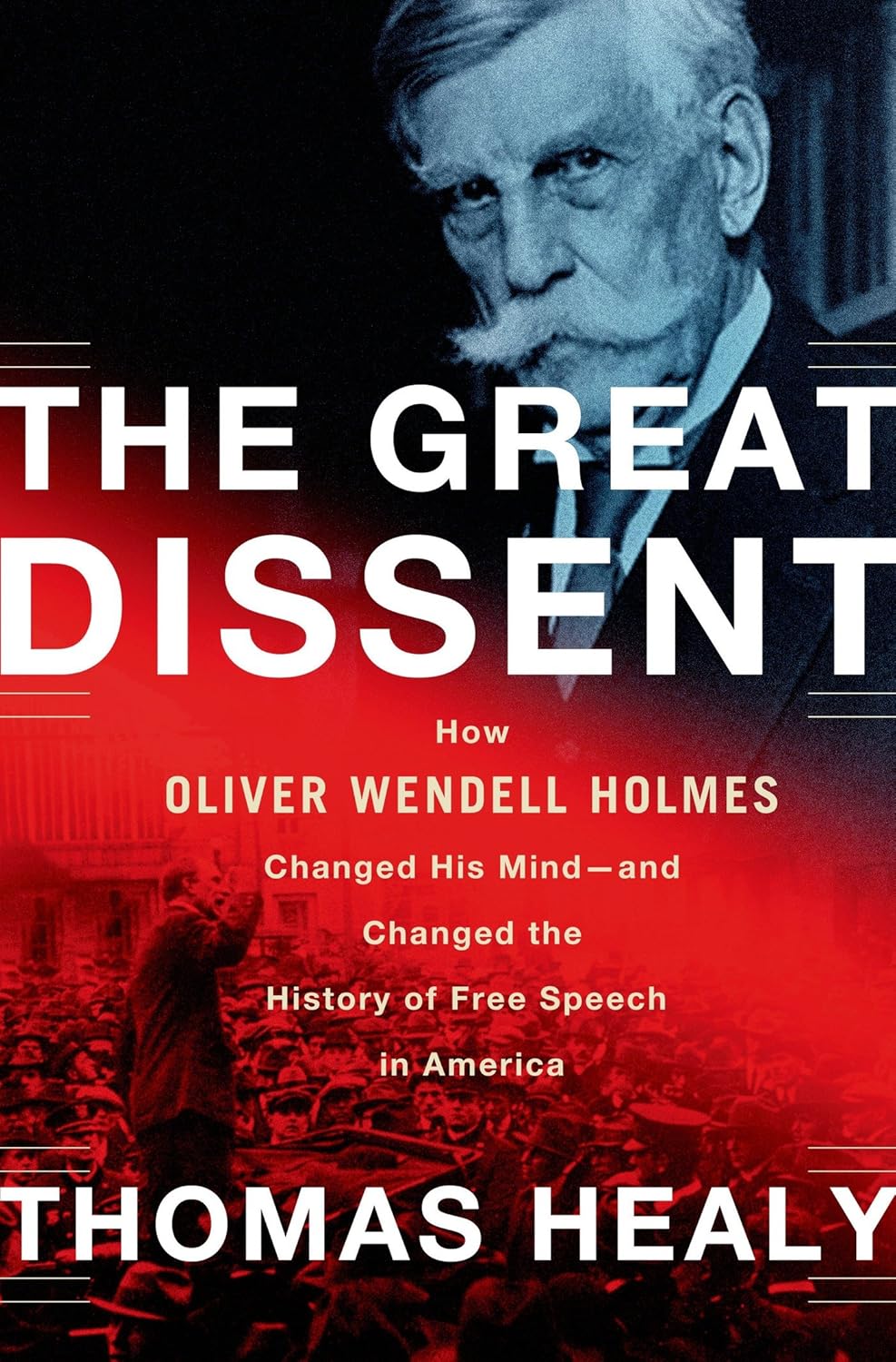
For Wall Street Journal subscribers, there is a review of Thomas Healy's The Great Dissent (Metropolitan), as well as a review of Lawrence J. Vale's Purging the Poorest: Public Housing and the Design Politics of Twice-Cleared Communities (Chicago). Of Vale's work, the reviewer writes,
Robert D. Sloane has posted a review of James Q. Whitnman, The Verdict of Battle: The Law of Victory and the Making of Modern War (Harvard University Press) on SSRN (forthcoming in American Journal of International Law).
For those heading back to the classroom this month, the New York Times reviews Why Teach? In Defense of a Real Education (Bloomsbury), by Mark Edmundson, an English professor at the University of Virginia.
And for those of you who'd like to check out a few reviews of the summer reads that our guest blogger, Sally Gordon, recommended earlier this week, try these:
"Covering the time from Thatcher's birth up to her role in the Falklands war in 1982, Margaret Thatcher: From Grantham to the Falklands is one of two projected volumes; but this is already a major study of a pivotal leader—indeed, it is already one of the greatest biographies in the English language."
HistoryToday reviews City Water & City Life:Water and the Infrastructure of Ideas in Urbanizing Philadelphia, Boston and Chicago (University of Chicago Press), by Carl Smith here.H-Net has added two reviews of interest: editors Keith M. Brown and Alastair J. Mann's The History of the Scottish Parliament, Volume 3, Parliament in Context, 1235-1707 (Edinburgh University Press) here; and a second review of both John Ashworth's The Republic in Crisis, 1848-1861 (Cambridge University Press) and the edited volume A Political Nation: New Directions in Mid-Nineteenth-Century American Political History (Gary W. Gallagher, Rachel A. Shelden, eds.) (University of Virginia Press).
The Washington Post reviews Mac Griswold's The Manor, a cultural landscape history of a slave plantation here. (Another review of the book was included in a prior book roundup post here.) The reviewer describes the book:
"“The Manor” traces the history of the house and its inhabitants, quickly leaving the garden behind to explore archaeology and research that range from West Africa to Barbados and back to Shelter Island. When Griswold stumbled upon the place, it was inhabited by Andrew and Alice Fiske, descendants of the original owners, Nathaniel and Grizzell Sylvester. Called Sylvester Manor, the house had been in the family in an unbroken line since the 1650s, providing an extraordinary lens with which to view a complex American story about (among other things) race, religion and the history of slavery in the North — largely documented."
The Washington Post also reviews Mistrial: An Inside Look at How the Criminal Justice System Works . . . and Sometimes Doesn’t (Gotham) by Mark Geragos and Pat Harris.Salon has published excerpts from In Spies We Trust: The Story of Western Intelligence (Oxford), by Rhodri Jeffreys-Jones.
For Wall Street Journal subscribers, there is a review of Thomas Healy's The Great Dissent (Metropolitan), as well as a review of Lawrence J. Vale's Purging the Poorest: Public Housing and the Design Politics of Twice-Cleared Communities (Chicago). Of Vale's work, the reviewer writes,
"The beauty of Mr. Vale's book is that as a scrupulous scholar he lays out his two case studies with all the careful detail you as a reader need to judge his conclusions. But in the end, the reformist approach exemplified by Ms. Glover is probably correct. "Poverty does not have to be a permanent condition covering multiple generations," she has said. "And we should not establish housing programs on the assumption that it is.""
Robert D. Sloane has posted a review of James Q. Whitnman, The Verdict of Battle: The Law of Victory and the Making of Modern War (Harvard University Press) on SSRN (forthcoming in American Journal of International Law).
For those heading back to the classroom this month, the New York Times reviews Why Teach? In Defense of a Real Education (Bloomsbury), by Mark Edmundson, an English professor at the University of Virginia.
And for those of you who'd like to check out a few reviews of the summer reads that our guest blogger, Sally Gordon, recommended earlier this week, try these:
- An October 2012 New York Times review, and an August 2012 Slate review by Eric Posner, of John Fabian Witt's Lincoln's Code.
- A 1998 H-Net review of James C. Scott's Seeing Like a State, as well as an April 1998 review (with a link to the first chapter) in the New York Times.
- A 2012 review of Sarah Osborn's World: The Rise of Evangelical Christianity in Early America by Catherine A. Brekus, from Books and Culture, and a second review here from Christianity Today.
- Last but not least, Beyond the Blurb reviewed Martin Walker's Bruno, Chief of Police in 2011.
Saturday, August 24, 2013
Weekend Roundup
- From the Atlantic: Geoff Shepard writes about new documents that have surfaced from the "Watergate cover-up trial" and wonders about "justice denied."
- In related news, the Nixon Library has released the final batch of White House tapes and the State Department has released "Foreign Relations, 1969-1976, Volume XXXIII, SALT II, 1972-1980." (Hat tip: History News Network)
- H-Net has begun to migrate to a new platform, H-Net Commons. Read the full announcement here.
- The National Archives has an interesting new blog: Rediscovering Black History. It spotlights documents, photographs and videos that archivists found while updating NARA's black history guide. (Hat tip: H-Net)
- New from the Folio Society: An Expression of the American Mind: Selected Writings of Thomas Jefferson, edited and introduced by R. B. Bernstein.
Friday, August 23, 2013
Madden on Law in the West after Justinian
M. Stuart Madden, formerly a former Distinguished Professor of Law at Pace University School of Law, has published "Paths of Western Law After Justinian," in the (gated) Widener Law Journal 22 (2013): 757. Here is the abstract:
This article relates the story of three principal paths of law in Western Europe from the periods preceding the gradual dissolution of the Western Roman Empire following the death of Justinian I in 565 A.D. through and including the several centuries thereafter. The period witnessed an acceleration of the absorption of Roman law into the customary law of the various Germanic groups that occupied and ruled the former Roman territories, and the recitation of such law in the form of new law codes promulgated by three of the major Gothic groupings: the Lombards, the Burgundians, and the Salian Franks.
In the main, the Germanic rulers were attentive to the need for laws that would suit not only German customary law as had been followed for many centuries, but also the Roman law to which their Roman constituencies, now under Germanic rule, had adhered. Importantly, even such Roman law as would be applied was only a bowdlerized version of Justinian’s contributions, as the Digests and other interpretative parts of the comprehensive Corpus Juris Civilis were somehow lost, only to be recovered some centuries later. Thus, for the first several centuries of Germanic rule, the only remnant of written Roman law available was the blunt-edged summarization contained in the Code of Justinian.
Germanic law was revolutionized by its new application to the governance of stable agricultural communities. The Gothic codes also advanced continental law in many ways that today can be seen as building blocks of emerging western law. Perhaps most significantly, the three law codes studied here demonstrate a preference for resolution of disputes by means of composition (compensation), and included monetary incentives therefore. By such means, the Goths were largely successful in turning their culture away from violent retributive justice towards systems of *758 composition for injury. Further to this end were the adoptions of wergeld as an appropriate compensation for a homicide, and also the widespread use of codified tables of composition to be associated with particularized lesser wrongs. These changes in Germanic law gave an increased likelihood of even-handed administration of justice, and provided also a monetized incentive for the family of a victim to forego mayhem in resolving disputes. As to the incidence of violent justice, many ancient Germanic practices, such as blood feud or trial by boiling water, were tamed or eliminated in the development of new agricultural societies. The Gothic codes also adopted remarkably modern distinctions between intentional and accidental harm, as well as negligence standards that assigned uncannily familiar significance to concepts of duty and proximate cause.
In sum, the law codes of the Lombards, the Burgundians, and the Salian Franks provided a civilizing legal bridge between the fall of the Western Empire and the more westernized law codes that would follow in the later Middle Ages.
Hovenkamp on Coase
Herbert J. Hovenkamp, Iowa Law, has published Coase, a “brief essay [that] considers the lifetime contributions of Ronald Coase and their influence. Comments are welcome.”
A Finding Guide to Papers of US Supreme Court Justices
Over at SCOTUSblog, Ronald Collins has posted a finding guide to the papers of U.S. Supreme Court justices: Accessing the papers of Supreme Court Justices: Online & other resources.
AJLH 53:3
Issue 53:3 (July 2013) of the American Journal of Legal History is out. Here are the contents:
Wilfred E. Rumble, “Austin in America: The Case of John Chipman Gray”
Robert F. Castro, “Liberty Like Thunder: Race, Article XI Enforcement, and the Odyssey of
Guadalupe Hidalgo (1848)”
Markus G. Puder, “Uncertain Land Titles in Louisiana's Formative Years: Colonial Grants,
John Marshall's Foster Opinion, and Lauterpachtian Interplays between Private Law and
International Law”
Vanessa Banni-Viñas, “Correcting a Ballerina's Story: The Truth Behind Makletzova v. Diaghileff”
Mandery, "A Wild Justice: The Death and Resurrection of Capital Punishment in America"
Our Sunday Book Review Round-up recently mentioned a new release from W.W. Norton & Co.: A Wild Justice: The Death and Resurrection of Capital Punishment in America, by Evan J. Mandery (John J. College of Criminal Justice). Here's a fuller description, from the publisher:
Drawing on never-before-published original source detail, the epic story of two of the most consequential, and largely forgotten, moments in Supreme Court history.
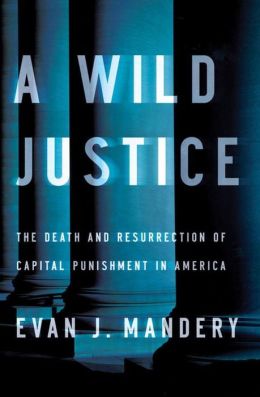
For two hundred years, the constitutionality of capital punishment had been axiomatic. But in 1962, Justice Arthur Goldberg and his clerk Alan Dershowitz dared to suggest otherwise, launching an underfunded band of civil rights attorneys on a quixotic crusade. In 1972, in a most unlikely victory, the Supreme Court struck down Georgia’s death penalty law in Furman v. Georgia. Though the decision had sharply divided the justices, nearly everyone, including the justices themselves, believed Furman would mean the end of executions in America.
Instead, states responded with a swift and decisive showing of support for capital punishment. As anxiety about crime rose and public approval of the Supreme Court declined, the stage was set in 1976 for Gregg v. Georgia, in which the Court dramatically reversed direction.
A Wild Justice is an extraordinary behind-the-scenes look at the Court, the justices, and the political complexities of one of the most racially charged and morally vexing issues of our time.A few blurbs:
“With a powerful story and an exceptional cast of characters—including Arthur Goldberg, Alan Dershowitz, and Robert Bork at their best—A Wild Justice is a rare achievement. At once entertaining and deeply instructive, it is a piece of legal history that grapples brilliantly with capital punishment, one of the fundamental issues of American justice.” — Sean Wilentz
“A Wild Justice is sensational—a revealing and illuminating behind-the-scenes look at one of the most important chapters in the history of the Supreme Court. After reading it, you may never look at the death penalty, or the justices, the same way again.” — Jeffrey Toobin
Thursday, August 22, 2013
Ramnath on the Criminal Jury in Colonial India
Kalyani Ramnath, a graduate student in the Department of History at Princeton University, has published The Colonial Difference between Law and Fact: Notes on the Criminal Jury in India, which appears in the (gated) Indian Economic & Social History Review (July 2013) 50: 341-363. Here is the abstract:
This article tracks the rise and fall of criminal jury in colonial India through official and non-official debates, discussions and interventions. The discussion on criminal juries in the Anglo-American system has typically focused on the division of legal labour between judge and jury. In colonial India, this conventional difference between ‘law’ and ‘fact’ were shaped by notions of belonging to a different race, religion and language. These were frequently articulated as the story of the ‘unreliable’ juror or the ‘religious’ native who feared eternal damnation. From the jurors who were allegedly intoxicated by the publicity over the infamous Nanavati trial to women jurors who claimed to be followed on the way home from court, to the religious Brahmin juror who would not swear an oath, the story of the criminal jury is peopled with anxieties over undesirable forms of influence, that impinge on legal impartiality. Using the criminal jury as a lens, I look at the claims of universal legal reform as particularly lending themselves to contestations over sovereignty.
August 2013 issue of Law & History Review
The August 2013 issue of the Law & History Review is out. (I've included links, but they forward to content that is only available to subscribers.)
Articles:
Articles:
Mark Golub, Remembering Massive Resistance to School Desegregation
Helen J. Knowles, Seeing the Light: Lysander Spooner's Increasingly Popular Constitutionalism
Michael Schoeppner, Peculiar Quarantines: The Seamen Acts and Regulatory Authority in the Antebellum South
Some highlights from the book reviews: R.B. Bernstein reviews Alexander Tsesis, For Liberty and Equality; Anders Walker reviews Tomiko Brown-Nagin, Courage to Dissent; Reuel Schiller reviews Joanna Grisinger, The Unwieldy American State; Steven K. Green reviews Sarah Barringer Gordon, The Spriit of the Laws . . . and much more.
Subscribers, check out the full issue here.
Radford's "Rise of the Public Authority"
Out from the University of Chicago Press is The Rise of the Public Authority: Statebuilding and Economic Development in Twentieth-Century America, by Gail Radford, University at Buffalo History.
"Gail Radford is an imaginative student of American statecraft whose probing narrative has put an otherwise prosaic set of agencies and institutions close to the center of our understanding of statebuilding. By explaining how quasi-governmental state authorities became such a pervasive part of the way virtually every level of government finances its activities, Radford unlocks a puzzle: how so many Americans can both distrust their state and also insist upon an ever-expanding set of governmental services. This is an important and provocative book."
TOC after the jump.
Among the blurbs is the following from Nelson Lichtenstein:In the late nineteenth century, public officials throughout the United States began to experiment with new methods of managing their local economies and meeting the infrastructure needs of a newly urban, industrial nation. Stymied by legal and financial barriers, they created a new class of quasi-public agencies called public authorities. Today these entities operate at all levels of government, and range from tiny operations like the Springfield Parking Authority in Massachusetts, which runs thirteen parking lots and garages, to mammoth enterprises like the Tennessee Valley Authority, with nearly twelve billion dollars in revenues each year.
In The Rise of the Public Authority, Gail Radford recounts the history of these inscrutable agencies, examining how and why they were established, the varied forms they have taken, and how these pervasive but elusive mechanisms have molded our economy and politics over the past hundred years.

"Gail Radford is an imaginative student of American statecraft whose probing narrative has put an otherwise prosaic set of agencies and institutions close to the center of our understanding of statebuilding. By explaining how quasi-governmental state authorities became such a pervasive part of the way virtually every level of government finances its activities, Radford unlocks a puzzle: how so many Americans can both distrust their state and also insist upon an ever-expanding set of governmental services. This is an important and provocative book."
TOC after the jump.
Wednesday, August 21, 2013
Summer 2013 issue of Green Bag: Hoeflich, "From Scriveners to Typewriters" and More
 |
| credit |
Hat tip: PrawfsBlawg
Schmitt on Slavery and Extraterritorial State Power
Jeffrey M. Schmitt, Florida Coastal School of Law, has posted Constitutional Limitations on Extraterritorial State Power: State Regulation, Choice of Law, and Slavery, which is forthcoming in the Mississippi Law Journal. Here is the abstract:
Modern legal scholarship has been highly critical of the Supreme Court’s precedent governing when a state may apply its law to conduct that occurs beyond its borders. Under this precedent, while a state court has broad discretion to apply forum law through its choice of law analysis, a state legislature may not pass legislation which regulates wholly extraterritorial conduct. Courts and scholars have long argued that the prohibition on extraterritorial legislation should be abandoned and that, under principles of federalism, stricter constitutional limitations should be placed on a state’s choice of law. Moreover, scholars have argued that these doctrines are inconsistent because there is no meaningful distinction between action by a state’s courts and its legislature.
This Article responds to such criticism by arguing that the Court’s doctrines are fully consistent with the treatment of extraterritorial state power under the antebellum Constitution. In the decades leading up to the Civil War, the most important legal, political, and social issue of the day — the subject of slavery — provoked one of the country’s first and most contentious disputes over the extraterritorial application of state law. When arguing for the rejection of southern law, northerners asserted that any forced application of the law of slavery would infringe on fundamental aspects of the sovereignty of the northern states. In response, southerners contended that, under implicit principles of federalism which commanded that southern law to be treated on equal terms, northern states were constitutionally required to apply southern law when ordinary choice of law rules so dictated. Facing this conflict between principles of state sovereignty and state equality, northern courts followed traditional legal doctrine by holding that state sovereignty must prevail.
An appreciation of the importance of state sovereignty to the antebellum constitution helps to make sense of the Court’s modern extraterritoriality doctrines. If state sovereignty is viewed as a fundamental tenant of federalism, any limitations on a state’s ability to apply its own law should come only from the Due Process concerns of individual litigants. A robust view of state sovereignty also fully supports the Court’s prohibition on extraterritorial legislation, despite recent judicial criticism of the doctrine. Finally, because forcing a state court to apply and enforce the law of another sovereign has very different implications for state sovereignty than a rule prohibiting a state legislature from regulating conduct in another state, state sovereignty provides a potential way to reconcile the modern Court’s differing treatment of state courts and state legislatures.
Tuesday, August 20, 2013
A Good Read....
As the dog days of August bring both the threat of
thunderstorms and the equally great threat of the start of the semester, I have
been thinking about the joys of summer reading, and what to recommend while the
pace for most of us is still slower.

The eclecticism of summer reading for me included revisiting
Pauline Maier’s older William and Mary Quarterly article
on the revolutionary origins of the American corporation. The piece is still fresh and a good read by
porch standards, a wonderful way to remember a great scholar.
Also orthogonal to my own interests generally but deeply
productive was James Scott’s Seeing Like a
State. Thanks to recommendations
from Bill Novak and Karen Tani, I have begun to think much more carefully about
the perspective of the “state” in church and state.
 For sheer pleasure, the porch and I heartily recommend
Catherine Brekus’s new book Sarah Osbone’s
World, a wonderfully engaging and intricate look at the eighteenth-century
life of a deeply religious woman.
And for the remaining moments of escape reading, I have been
amazed at how many of my legal historian friends are fans of detective fiction
(one of them is even an author of such novels -- Lawrence Friedman’s detective
is lawyer Frank May). Recently, an eminent legal historian
suggested that I read Martin Walker, whose detective, Inspector
Bruno, works in the Dordogne. (I
have the audio edition of the first book, Bruno, Chief of Police (2010),
which is terrific.) The most recent is The Devil’s Cave (2013). I have also
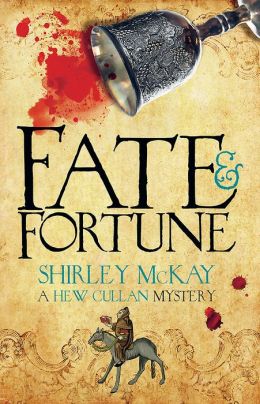
enjoyed Shirley McKay, whose lawyer detective Hew
Cullan practices (reluctantly) in St. Andrew’s, Scotland, in the sixteenth
century.
 My husband was traveling back from an ASLH meeting with me
once, and advised me to hide my detective novel, because legal historians would
never respect someone who read such trash.
Fortunately, Victoria List was nearby, and piped up, saying that she was
reading a mystery that involved not only murder and a detective but
crosswords. As I recall, she described
the book as “frothy,” in an appreciative tone. (See, e.g., A
Puzzle in a Pear Tree.) She had my back, in other words. My husband still reads Granta, and I remain convinced
that I have a much more rewarding list for the porch.
Please do let me know your legal history (or detective
fiction) recommendations for these final weeks of summer. Tempis fugit, I know, but I can still spend a
hot afternoon or two out on the porch.
Birnhack's Microhistories of IP in Mandate Palestine
Michael Birnhack, Tel Aviv University Buchmann Faculty of Law, has posted Copyright Pioneers, which is forthcoming in W.I.P.O. Journal 5 (2013). Here is the abstract:
How did ordinary authors, publishers, copyright owners, and users act and interact within a particular, copyright setting? The historical view of the everyday life of copyright law — the way the law operated in practice — has by and large gone under the radar of mainstream copyright history. Missing from this picture is the micro-level: the nuanced, fragmented, perhaps messy or mundane, local dealings with copyright. Applied to the law, microhistory queries not only the law and its direct history, or the particulars of a judicial decision. A microhistorian legal analysis asks about the context of the events surrounding a case, or about a specific person, trying to better figure out the political, social, and cultural meanings of the developments, going beyond the inevitably limited contours of the judicial opinion or legislation.
Applying the microhistorian lens to copyright law can yield yet-unobserved elements of the big picture, supplementing our understanding of the making and application of the law. The study of specific events can offer explanations for such gaps. By exposing the messiness of the law, micro-analysis supplements or challenges the macro picture. This article suggests that we pay more attention to the people who engaged with copyright in their everyday life: the less powerful authors and publishers, who were not necessarily involved in a major litigation. More specifically, the article wishes to draw attention to authors or intermediaries that changed the law in some aspect, but who acted on their own behalf, protecting or promoting their own interests, rather than under an official role or as self-designated activists. These are copyright pioneers. While they did not necessarily seek a broader change, their engagement with copyright has nevertheless brought such change. I illustrate the relevance of such a lens, by two short case studies from Mandate Palestine (1917-48).
Lederman and Purcell to Lead ICH Seminar on War Powers
[We are moving this announcement up as the deadline of September 15 is approaching.]
The Institute for Constitutional History has announced another Robert H. Smith seminar for advanced graduate students and junior faculty. This one is “Modern Constitutional War Powers.” One of the instructors is my colleague Martin S. Lederman, an Associate Professor of Law at the Georgetown University Law Center, who served as Deputy Assistant Attorney General in the Department of Justice's Office of Legal Counsel from 2009 to 2010, and an Attorney Advisor in OLC from 1994-2002. The other is Edward A. Purcell, Jr., the Joseph Solomon Distinguished Professor at New York Law School and one of the nation's foremost authorities on the history of the United States Supreme Court and the federal judicial system. He is the author of several books, including Originalism, Federalism, and the American Constitutional Enterprise: A Historical Inquiry (Yale University Press, 2007), and Brandeis and the Progressive Constitution: Erie, the Judicial Power, and the Politics of the Federal Courts in Twentieth-Century America (Yale University Press, 2000).
The ICH folks explain:
The six-week seminar concerns the evolution of the distribution of war powers from the beginning of the Twentieth Century to the present day. The Founders endeavored to create a federal system in which a separation and blending of powers would make the legislature the preeminent source of military authority and thus prevent the executive from unilaterally entangling the nation in costly belligerent adventures. Conventional wisdom has it that practical developments over the past 100 years-most significantly, the creation of a powerful standing army and intelligence establishment, the development of nuclear weapons, and the emergence of a much more robust role for the United States as a superpower responsible for the defense of Europe and other allies in a post-nuclear age-have rendered the original constitutional design obsolete, such that Congress and the courts have largely ceded war-making authority to an all-powerful, virtually unchecked President. In this interdisciplinary course, using conventional legal materials as well as recent historical and political science accounts of the distribution of war powers, we will examine whether and to what extent this conventional account is accurate, and will more broadly discuss whether the current balance of powers ensures sufficient checks on misguided adventurism and abuse of individual liberties.The seminars will take place from 3:00 to 5:00 at the New-York Historical Society, 170 Central Park West, New York City on the following Wednesday afternoons:October 16, 23, 30, November 6, 13, 20. There is no tuition or other charge for this seminar, though participants will be expected to acquire the assigned books on their own.
Recognizing Native American Tribes: A Sourcebook
 Out from the University of North Carolina Press is Recognition, Sovereignty Struggles, and Indigenous Rights in the United States: A Sourcebook, edited by Amy E. Den Ouden and Jean M. O'Brien:
This engaging collection surveys and clarifies the complex issue of federal and state recognition for Native American tribal nations in the United States. Den Ouden and O'Brien gather focused and teachable essays on key topics, debates, and case studies. Written by leading scholars in the field, including historians, anthropologists, legal scholars, and political scientists, the essays cover the history of recognition, focus on recent legal and cultural processes, and examine contemporary recognition struggles nationwide.Contributors are Joanne Barker (Lenape), Kathleen A. Brown-Perez (Brothertown), Rosemary Cambra (Muwekma Ohlone), Amy E. Den Ouden, Timothy Q. Evans (Haliwa-Saponi), Les W. Field, Angela A. Gonzales (Hopi), Rae Gould (Nipmuc), J. Kehaulani Kauanui (Kanaka Maoli), K. Alexa Koenig, Alan Leventhal, Malinda Maynor Lowery (Lumbee), Jean M. O'Brien (White Earth Ojibwe), John Robinson, Jonathan Stein, Ruth Garby Torres (Schaghticoke), and David E. Wilkins (Lumbee).
Subscribe to:
Posts (Atom)