Tuesday, July 26, 2011

Bytes of History Biting the Dust

An article published in the Washington Post last week, Daniel de Vise's, "A Bit of Time Traveling in the Internet Age: Scholars Are Trying to Create a Past for the Perpetual Now Web," (July 18, 2011, at B1) reported on a research effort by computer technologists that may be of interest to readers of this blog.  Researchers are trying to determine how much data of historical interest that is published on the internet is being archived and preserved. 


Michael Nelson, a computer science professor, heads a group of researchers at at Old Dominion University and the Los Alamos National Laboratory who have established a method of assessing the "many questions to ask about web archiving and digital preservation - why is archiving important? what should be archived? what is currently being archived? how often should pages be archived." Nelson and several coauthors conducted a study that answers some of these questions.  The researchers published their findings in a paper entitled, "How Much of the Web is Archived" (June 2011). The abstract of the paper follows.
 With more and more of our business, academic, and cultural discourse contained primarily or exclusively on the Web, the problem of archiving the Web is receiving increased attention. The focal point of much of this attention is the Internet Archive’s Wayback Machine, which began archiving the Web in 1996 and as of 2010 had over 1.5 billion unique URIs, making it the largest, longest-running and most well known publicly-available web archive. Recently, there has been a proliferation of new public web archives at universities, national libraries, and other organizations. These differ in scale, ingest models, collection development policies,
and the software employed. All of this leads to the question “How much of the Web is archived?” To address this question, we sampled URIs from four sources to estimate the percentage of archived URIs and the number and frequency of archived versions. From this, we extrapolate the percentage of the Surface Web that is archived.
The full paper is available here.  Professor Nelson's website, which describes the team's research effort in greater detail, is here. 

Apparently, much less is being preserved than scholars might assume, given all that we've read about the permanence of everything posted to the web.  It turns out that while profit-making sites (e.g., social media)  may well take care to ensure that every comment (including off-color remarks) that anyone posts lives on in cyberspace, the kinds of sites where scholarly papers, blog posts, essays, photos, videos, and other digital matter of historical significance are posted may not be so fastidious in their preservation efforts.


Monday, July 25, 2011

Blumm on the Legal History of U.S. Natural Resources

Michael C. Blumm (Lewis & Clark Law School) has posted "The Columbia River Gorge and the Development of American Natural Resources Law: A Century of Significance" at SSRN. Historians of environmental and land use law, and many others, may find it of interest. The abstract follows and the paper is available here.


The Columbia River Gorge, site of the nation’s first national scenic area and the only near sea level passage through the Cascade Mountains, possesses the longest continuously occupied site of human habitation in North America. The Gorge has served as a major transportation corridor between the Pacific and the Great Basin for hundreds of years, is home to spectacular scenery, dozens of waterfalls, many sacred sites, and abundant recreational activities, including world-class kite boarding and wind surfing. The Gorge has also been the location of over a century of legal battles that have made major contributions to American natural resources law. From judicial interpretations of 19th Indian treaties, to the development of the largest interconnected hydroelectric system in the world, to ensuing declines in what were once the world’s largest salmon runs – ultimately resulting in endangered species listings – to innovative federal statutes concerning electric power planning and conservation and land use federalism, to compensation schemes for landowners burdened with regulation, to dam removal and conflicts between sea lions and salmon, the Gorge has spawned a legal history as rich as its geography. This article surveys these developments and suggests that no area of the country has produced more varied and significant contributions to natural resources law.

David Rabban’s Law’s History


I will be in Seattle over Labor Day weekend, at the American Political Science Association’s Annual Meeting. There, I’ll be chairing a panel on David Rabban’s forthcoming book, Law’s History: American Legal Thought and the Transatlantic Turn to History (Cambridge). Joining me on the panel will be Mark Graber (Maryland), Carol Nackenoff (Swarthmore), and Keith Whittington (Princeton).

Over the last month, I’ve been absorbed in the book (in manuscript form), which is full of fascinating material, and does lots of interesting things simultaneously. One of those things is to challenge the view that the serious study of legal history in the U.S. was launched by J. Willard Hurst in the 1940s at the University of Wisconsin. Rabban’s book focuses on the legal thought of late nineteenth century American legal historians, including Henry Adams, John Norton Pomeroy, James Bradley Thayer, Melville Madison Bigelow, Oliver Wendell Holmes, Jr., James Coolidge Carter, Thomas Cooley, and Christopher Tiedeman. He discusses at length the (extensive) relationship of their work to nineteenth century German and English historical legal scholarship (by Savigny and von Jhering, e.g., and Sir Henry Maine, respectively), and details the degree to which the work of this group of American scholars was held in the highest regard in Europe as a genuinely original, and important, contribution to the study of legal history.

Many of the American thinkers got tagged – at the beginning of the twentieth century, right down to the present day -- with the labels “legal formalist” and “political conservative,” instead of "legal historian" (one who didn’t, Holmes, was tagged as having abandoned the historical approach of the early part of his career).

This gets a lot wrong, Rabban argues. His chief culprit is Roscoe Pound, who, as part of his full-court press for the adoption of “sociological jurisprudence,” misrepresented the nature of the work of his predecessors, and deprecated the depths of their scholarly accomplishments.

There is so much here that I will mention just a couple of things I found interesting. One is the “anxiety of influence” dynamic that Rabban shows shaping Roscoe Pound’s legal thought. To make room for his bold new vision, Pound seems to have believed he needed to obliterate the work of his legal historian predecessors. If that meant misrepresenting its nature and its politics (whether consciously or not), so be it. This is probably not an unusual dynamic in the history of legal thought, especially when a new school of thought seeks to displace an entrenched predecessor.

It is also pretty interesting that – if Rabban is right – the main lines of legal historians from Pound forward largely downplayed the widespread influence of organic/evolutionary/historical understandings of legal development that predominated within the group of American scholars he is profiling. This seems odd, given that it has long been understood that these types of understandings were predominant in the new social sciences of the era (see, e.g., Dorothy Ross’s The Origins of American Social Science (Cambridge, 1991). Is the fact that legal historians in the U.S. seem to have missed this close connection a consequence of the fact that (as Rabban observes at one point), in the U.S., the center of gravity of legal history is in the law schools, as opposed to history departments?

Reading this as a political scientist, I found the views of the scholars Rabban discusses concerning the relative merits of codification/legislation vs. adjudication to be very interesting. Rabban cites some excellent scholarship on this (which I didn’t know about). One of the major interests of American Political Development scholars over the years has been in the late nineteenth/early twentieth century emergence of what UCLA political scientist Karen Orren calls the “statutory state,” or what her frequent collaborator, Yale political scientist Stephen Skowronek, describes as the transition from the “state of courts and parties” to the “New American State.” There is probably very interesting APD work to be done on the relationship between the debates over codification (dating back at least to David Dudley Field), and the building of the modern American administrative state.

Many Legal History Blog readers, I'm sure, will find this book enjoyable and engaging.

Sunday, July 24, 2011

Origins of the Necessary and Proper Clause


In preparation for a roundtable discussion I’ll be doing at Boston University Law School in October with Gary Lawson, Philip Hamburger, and John Manning, I’ve been reading Lawson, Geoffrey Miller, Robert Natelson, and Guy Seidman’s The Origins of the Necessary and Proper Clause (Cambridge, 2010). The Legal History Blog has already noted the book, and posted a review.

I’m not sure yet what I will say there, but I do have some preliminary thoughts. The book is very impressive in unearthing a lot of original source language linking this language in the U.S. Constitution’s Article I, Section 8, to similar (or the same) language and concepts pervading the English law of corporations and agency, in particular, at around the time of the American Founding. The suggestion is that, in light of that, despite the fact that little was said about the Necessary and Proper Clause during the Philadelphia Convention, this background – much of it private, common law background – provides considerable guidance to those looking for original understandings of this important constitutional language.

I find myself reacting to this as a political scientist: the books seems almost hermetically legal to me. The historical evidence the authors’ adduce from private law is pretty extensive, and I think they show (circumstantially) that it likely had an influence on the adoption of this language in the U.S. Constitution. But their emphasis on the roots of this clause in the law of agency reminded me a lot of the principal-agent models currently fashionable in political science (which they don’t mention) -- are a major component of rational choice modeling. I haven’t thought it through, but I want to look into whether there are synergies between this originalist take emphasizing the law of agency and current rational choice and public choice theories. Both, of course, incline quite heavily toward restrictive understanding of governmental powers -- that is, toward libertarianism. Do these folks all share underlying assumptions regarding the concept of agency that makes this work fit together as a tag-team -- even if, unwittingly -- in the intellectual life of the contemporary right?

Also, we are talking about the powers of Congress here. It is interesting that there is nothing in the book about the very special type of agency that is at issue when we are talking about a legislature: political representation. Does it make any sense – today, or from an originalist perspective – if we talk about a legislature only in terms of the principal-agent dynamic arising out of private (business) law, and not about political theories concerning representation?

Just some initial musings ....

The Islamic World, Freud's Addiction, Money and Religion, and more in book news

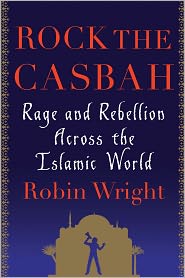
Rock the Casbah: Rage and Rebellion Across the Islamic World by Robin Wright is reviewed in the Los Angeles Times.  "Anyone seeking deeper understanding of the Arab Spring needs to read Wright's formidably well-informed book," writes Wendy Smith.  The author "provides invaluable context for what she rightly terms 'the epic convulsion across the Islamic world' by listening to voices we don't usually hear."

AN ANATOMY OF ADDICTION:  Sigmund Freud, William Halsted, and the Miracle Drug Cocaine by Howard Markel is an "absorbing and thoroughly documented account of the ways in which cocaine may or may not have influenced Freud’s transformative notions of psychology, and most certainly did shape the pathbreaking American surgeon William Halsted’s vast contributions to the development of surgery," writes Sherwin Nuland in the New York Times.  Freud appears to have overcome his addiction or abuse, and it "appears unlikely that Sigmund used cocaine after 1896, during the years when he mapped out and composed his best-known and most influential works, significantly enriched and revised the techniques of psychoanalysis and . . . attempted to 'explain some of the great riddles of human existence.'"

INSIDE SCIENTOLOGY: The Story of America’s Most Secretive Religion by Janet Reitman and RENDER UNTO ROME: The Secret Life of Money in the Catholic Church by Jason Berry, are taken up in the New York Times.  "We do not need these books to tell us that money and religion make for a poisonous combination," Gary Wills writes.  "But it is of some interest to see that ancient truth confirmed in both a church as relatively new as Scientology and one as ancient as Roman Catholicism."

Also in the NY Times, THE IDEA OF AMERICA:  Reflections on the Birth of the United States by Gordon S. Wood, a collection of Wood's essays, is also a retrospective on Wood's own career and on historiography, as David Hackett Fisher shows.  Wood's Introduction and more book details are here.

In other book news, Scott Gerber's book A Distinct Judicial Power: The Origins of an Independent Judiciary, 1606-1787 is recommended by Lawrence Solum in this week's Legal Theory Bookworm.  The book is noted here on LHB.  Gordon Wood calls it "a deeply researched study of a much neglected subject - the origins of an independent judiciary."

Other reviews in this week's papers:  Mr. Speaker!: The Life and Times of Thomas B. Reed The Man Who Broke the Filibuster by James Grant in the Washington Post; Berlin 1961: Kennedy, Khrushchev, and the Most Dangerous Place on Earth by Frederick Kempe in the Washington Post; and Born in Africa: The Quest for the Origins of Human Life by Martin Meredith in the Washington Post.

Note:  I've often linked to reviews of history books in the San Francisco Chronicle.  That paper has started putting at least some of its reviews behind a paywall, in a way that I can't even read a snippet to see whether it's worth sharing.  For that reason, when I can't access a review, I'm skipping links to Chronicle books. To check them out yourself, SF Chronicle books are here.

Saturday, July 23, 2011

Constitutionalism Web Portal: Links for Teaching

For those of you looking for a one-stop portal with a relatively concise list of (interdisciplinary) links on constitutionalism (domestic and international) and the Supreme Court, we offer one on the website of the Center I direct at Boston College, the Clough Center for the Study of Constitutional Democracy. It is here:

Clough Center Links Page

Weekend Roundup

  • Don't miss the chance to nominate your scholarship for an award or prize from the Organization of American Historians! Submission information is available here.
  • The Browser tapped Eric Foner (Columbia University) to choose five books on "how concepts of American liberalism have changed over the past 50 years." In accompanying commentary he discusses "the tension that lies at the heart of liberalism today." 
  •  Via the University of Chicago D'Angelo Law Library blog, we have word of an exciting digitization project. The John Marshall Law School Library has taken a bequest of nearly 350 volumes of unpublished Illinois Appellate Court opinions and made them available online. Read more about the project here.
The Weekend Roundup is a weekly feature compiled by all the Legal History bloggers.

Friday, July 22, 2011

Originalism Works-in-Progress Conference

The Third Originalism Works-in-Progress Conference is planned for February 3-4, 2012, at the University of San Diego Law School.  Here's the announcement:

Sponsored by the Center for the Study of Constitutional Originalism, the conference will involve the presentation of a variety of new works concerning originalism. All scholars who write about originalism are invited to attend.

Conference Organizers
About the Center for the Study of Constitutional Originalism (C–SCO)

Originalism is the view that the Constitution has a fixed and knowable meaning established at the time of its enactment. The Center for the Study of Constitutional Originalism at the University of San Diego School of Law has as its mission the study of all aspects of originalism. In particular, the Center studies arguments for and against the originalist theory of interpretation, the variety of specific originalist interpretive methods, and the original meaning of particular constitutional provisions. For more information about the Center, visit the C–SCO website.

A note on the Center:  leading legal historians have given lectures at the Center, including Jack Rakove, Philip Hamburger, and Michael Kent Curtis.  So their programs are not only for true believers, but also for critics of originalism and scholars of the founding era.   MLD

Ontiveros on Immigrant Workers and the 1972-74 Strike and Boycott at Farah Manufacturing

Building a Movement with Immigrant Workers: The 1972-74 Strike and Boycott at Farah Manufacturing is a new article by Maria Linda Ontiveros, University of San Francisco - School of Law.  It is forthcoming in the Employee Rights and Employment Policy Journal.  Here's the abstract:
Amalgamated Clothing Workers of America, New York State Archives
Between May 1972 and February 1974, thousands of Chicana workers struck Farah Manufacturing plants throughout Texas. They were joined in their efforts by the Amalgamated Clothing Workers of America who orchestrated nationwide pickets calling for a boycott of Farah slacks. The strike and boycott were supported by various civil rights groups, politicians and religious organizations. Working together, they caused a dramatic drop in sales, large operating losses and a substantial drop in the company's share price. After several victories before the National Labor Relations Board, the strikers settled with the company rehiring 3,000 strikers and recognizing the union. The company, workers and union movement were all strongly affected by the experience. This article uses newspaper stories, magazine articles, oral histories and case opinions to provide the first comprehensive retelling of the Farah story.

This article discusses the successful organizing campaign, strike and boycott of Farah Manufacturing, in the context of the conclusions and recommendations made by Julius Getman in his book, Restoring the Power of Unions. The article argues that the Farah campaign succeeded because of the linkage between the labor movement and the civil rights movement and also because of the successful use of labor law. It argues that a successful comprehensive campaign requires the Union to find a values-based message which resonates with the workers and reflects their experiences. The techniques used by the union and the organizational structure of the campaign must be democratic and serve to empower the workers. Finally unions must be poised to use the legal system to support their campaign, but the law could be improved if permanent strike replacements were prohibited, the NLRB strengthened their remedies, and the law of secondary boycotts was revised.

Thursday, July 21, 2011

Collins and Kerber, Sex and Citizenship in the Court, Again

Historian Linda Kerber, and Boston Univ. legal scholar Kristin Collins, address the Supreme Court's recent split on the question of citizenship rights for non-marital children, based on the gender of the parent, in an op-ed today in Dissent:  Sex and Citizenship at the Court, Again.  More of the history of the case, Flores-Villar v. United States, is taken up in an earlier Slate op-ed by Collins and Kerber.  The two were principal authors of a historical amicus brief filed in the case.

The DC Circuit in the McCarthy Era

[Earlier I noted an event sponsored by the Historical Society of the District of Columbia Circuit, entitled "The DC Circuit in the McCarthy Era: United States v. Lattimore."  A video of the session is now available.  Here is the Society description of the event:]

A ruling by a federal judge in the D.C. Circuit – a former governor of Minnesota – almost single-handedly in the mid-1950s began to turn the judicial tide against the “red scare” generated by Senator Joseph McCarthy and others, according to a panel presented by the Historical Society of the D.C. Circuit . District Judge Luther Youngdahl rejected government efforts to try Asia scholar Owen Lattimore for perjury in denying he had never been a sympathizer or promoter of Communism or Communist interests, saying the charge was “so nebulous and indefinite” that a jury would have to “indulge in speculation” to arrive at a verdict. The Court of Appeals ultimately sustained the dismissal in a 4-4 vote.

In a reenactment of the argument on a motion to dismiss the indictment, Arnold & Porter attorney G. Duane (Bud) Vieth represented Lattimore. Miguel Estrada of Gibson, Dunn &; Crutcher argued for the government. DLA Piper attorney Berl Bernhard, who clerked for Judge Youngdahl, portrayed the judge. George Mason University Professor Martin J. Sherwin and former Chief Judge Patricia Wald described the McCarthy era and history of the case to set the stage for the argument. Professor Daniel Ernst was the moderator..

Lattimore was raised in China where his parents taught English. He was editor of the journal Pacific Affairs and an advisor to Chinese leader Chiang Kai-Shek. After China fell to the Communists, Lattimore was among those accused of aiding the Communists. Lattimore endured 13 acrimonious days testifying before the Senate Internal Security Subcommittee and was subsequently indicted on seven counts of perjury. Lattimore was represented pro bono by former D.C. Circuit Judge Thurman Arnold, Abe Fortas, and Paul Porter, among others.

Wednesday, July 20, 2011

Philip Selznick oral history now available

A year after the passing of Law & Society great Philip Selznick, the Regional Oral History Office of the Bancroft Library at University of California, Berkeley has made available his oral history, conducted by Roger Cotterrell (Queen Mary, University of London).

For more about Selznick and his legacy, see the tributes here (by David Lieberman) and here (by Richard Schwartz).  An obituary is here.


Image credit

Tuesday, July 19, 2011

Coda on Crosskey

Some interesting additions on Crosskey from Legal History Blog readers:

Dirk Hartog emailed me the following:

Brought back my own reading of Crosskey as a grad student. I think you capture much. Three things I would add:

1. Julius Goebel's review essay "Ex Parte Clio," in the Columbia Law
Review was, I believe the actual killer. I started reading Crosskey
because I read the review, and I wondered who could be so bad (and I
kind of hated Goebel for turning people off of legal history).

2. Crosskey's other significance was in debating Fairman on
Reconstruction. Here he was a lot more right we would say today than
Fairman.

3. Although he didn't do a good enough job of it, his technique of
constructing a dictionary of contemporary uses of language, is not that
different from what a lot of more rhetorical/linguistically oriented
historians did after the linguistic turn of the late 1970s and 1980s.

And a post by Mike Rappaport (Center for the Study of Constitutional Originalism, University of San Diego School of Law), entitled "Crosskey, Modern Originalism, and the Meese Justice Department."

Rothschild, The Inner Life of Empires

Princeton University Press has released The Inner Life of Empires:
 An Eighteenth-Century History, by 
Emma Rothschild (Harvard).  It caught my eye because of Rothschild's creative use of legal records, among other sources.

The Press describes the book as follows:
They were abolitionists, speculators, slave owners, government officials, and occasional politicians. They were observers of the anxieties and dramas of empire. And they were from one family. The Inner Life of Empires tells the intimate history of the Johnstones--four sisters and seven brothers who lived in Scotland and around the globe in the fast-changing eighteenth century. Piecing together their voyages, marriages, debts, and lawsuits, and examining their ideas, sentiments, and values, renowned historian Emma Rothschild illuminates a tumultuous period that created the modern economy, the British Empire, and the philosophical Enlightenment.
One of the sisters joined a rebel army, was imprisoned in Edinburgh Castle, and escaped in disguise in 1746. Her younger brother was a close friend of Adam Smith and David Hume. Another brother was fluent in Persian and Bengali, and married to a celebrated poet. He was the owner of a slave known only as "Bell or Belinda," who journeyed from Calcutta to Virginia, was accused in Scotland of infanticide, and was the last person judged to be a slave by a court in the British isles. In Grenada, India, Jamaica, and Florida, the Johnstones embodied the connections between European, American, and Asian empires. Their family history offers insights into a time when distinctions between the public and private, home and overseas, and slavery and servitude were in constant flux.
Based on multiple archives, documents, and letters, The Inner Life of Empires looks at one family's complex story to describe the origins of the modern political, economic, and intellectual world.
Here are a few of the blurbs:
"Tracing the lives of a single Scottish family whose eleven siblings roamed the globe to seek their fortunes, Emma Rothschild has explored the great elements of the eighteenth-century world: empire, politics, slavery, warfare, and Enlightenment thought and sensibility. An extraordinary book, weaving back and forth between microhistory and the greater world, it is based on archival research on three continents, written with literary grace, and inspired by a sensitive historical imagination." --Bernard Bailyn, Adams University Professor, emeritus, Harvard University
"This is an important and original book. Based on a wealth of archival research--much of which has been neglected by previous historians--The Inner Life of Empires looks at the Johnstone family to explore issues of British imperialism. It makes a critical intervention in the history of intimacy and interiority, and poses a series of challenges to concepts of the public and private. A wonderful read." --Margot Finn, Warwick University
The Introduction and TOC are available here.


Hat tip: bookforum

Monday, July 18, 2011

Fellowship advice: How to Make Life Easier for your References

Courtesy of Florida Informational Technology Clearinghouse
As I've mentioned earlier, when applying for fellowships, you should apply for as many as possible, to maximize your chance of being awarded one.  You might worry about the burden this places on your references, but as long as you are well organized, the only difficult part of being a reference is writing that first letter.  The rest is, or should be, easy.  The more letters I write for others, the more it becomes clear how being organized at the beginning can help your references effectively help you.  Here's what works:
  • Contact your references six weeks or more ahead of your first deadline to ask whether they can write letters for you. Along with your request, paste an abstract for your project in the text of your email, and attach a draft proposal and your c.v.
  • One month before your first deadline, send them ONE email that contains:
    • your final proposal for one of your fellowships;
    • your c.v. (again -- so it's all in one place);
    • a link to your web bio and/or SSRN page, if you have one;
    • a list of all fellowships you're applying for, their deadlines, and other details (see below).
  • Do extensive research, identifying all possible fellowships and grants, so that you can do your best to include EVERYTHING in one email to your references.  
  • List fellowships IN THE ORDER OF THE DUE DATE.
  • Indicate whether the recommendation must be uploaded to a website, sent by email or sent by postal mail.  
  • If a letter must be sent in the mail, specify whether the deadline is a RECEIVE BY deadline or a POSTMARK BY deadline.
  • Include links to fellowship websites, if available.
  • Include all other information needed, including the precise address and contact person.  Include a postal address even when the letter will be uploaded.  (Some old-fashioned letter writers -- like me -- like to include the postal address in a fully formatted pdf file of the letter they're uploading.)
  • If you are applying for a travel grant to do archival research, be specific about the records you want to see, and their relevance to your project.
  • If you are a student seeking a letter from one of your teachers or advisers, include specific information about what you've done with that teacher (courses and grades, topic of papers, assignments handled as a research assistant, etc).  Attach a copy of any papers you've written, preferably with an abstract, or examples of your RA work.
What if you come across an additional fellowship after sending in your list?  This happens, and you should ask your references to write another letter.  But avoid sending many separate individual email requests for each fellowship.  That makes it hard for your busy reference to keep track of everything, and it means that a deadline could inadvertently be missed.  Instead:
  • Send an email that adds the new fellowship into your master list.  Perhaps highlight the new one by putting it in a different color.  And send ALL the information you sent previously -- your proposal, your c.v., and all the other reference deadlines.  This way everything remains in one place -- which makes it easier for your reference to keep track of all your information.  Put the new one in DATE ORDER, not at the end of the list.
When your deadlines are approaching:
image source
  • Send a (polite!) reminder email about the upcoming deadline about a week in advance.  Only send one email a week, so if you have three deadlines close together, mention them all in one deadline.  Most references appreciate reminders.  But don't hound them, and don't ask them to confirm that your letter has been sent.  An occasional reminder is helpful, but too much email is annoying and doesn't help your references.
I can always find things most easily when I have them on my computer.  But hardcopies are usually also helpful.  I will often keep a folder with material relevant to particular deadlines in an easy-to-see place in my office.  Consider putting your materials together this way:
  • Purchase a few colored file folders -- all in one color.
  • Label a folder with your name, and something like "Fellowship Applications, 2011-12."
  • Put a hardcopy of all the info mentioned above in the folder.  A top document in the folder should be a memo to your reference listing all fellowships in order by due date.  Include a project abstract, a fellowship application, your c.v., etc.
  • If additional fellowships come up, use the same folder color, and the same file name, adding something like "supplement #1" to the file name.
When I receive a well-organized packet of information, if I have time I put all the fellowship deadlines on my on-line calendar.  I also like to put a print-out of the list of deadlines on my bulletin board.  If a revised list comes in, I can toss the old one and post the new one.

The Curious Case of William Winslow Crosskey, Part III (Conclusion)

I couldn’t resist ending my previous post about the early originalist constitutional scholar William Crosskey’s intellectual (non?) influence by entertaining the counter-hypothesis: that perhaps he has been influential, although in ways that are not easy to trace. The easier case to make – perhaps to the point of being over-determined -- is that his influence on the subsequent development of originalist thought, and constitutional thought more generally, has been slight. I will conjecture a bit on why.

Theory One: He was an atrocious historian

It is all well and good to use originalist methods, and give them the hard-sell as the only legitimate way of arriving at right answers about the meaning of the Constitution. But if a legitimate method is applied incompetently, the answer you arrive at has no more claim to legitimacy than that of some less justifiable method, applied skillfully. Garbage in, garbage out.

Given Crosskey’s actual findings, I’m pretty sure that many contemporary (conservative) originalists would likely think that Crosskey’s history is bad history. When it first came out, his scholarship was praised by at least one eminent historian, Arthur Schlesinger, Sr. There may have been others. Political scientist Edward S. Corwin, though, dismissed Crosskey’s history as wrong, categorically.

When scholars took another look at Crosskey at the beginning of the Reagan era (because of the belated, posthumous publication of Volume III of Politics and the Constitution in 1980), things weren’t much better. In a review in the American Historical Review (December 1981), Lance Banning pronounced Politics and the Constitution “a tour de force of scholarship subordinated to a point of view.”
“Countervailing evidence is repeatedly ignored or explained away. In passage after passage, contemporary language that might seem clear to any specialist in the history of the Confederation years is tortured into shapes that none will recognize. For all the claims to be recovering an eighteenth century universe of discourse, the work shows little feeling for the period with which it deals. By ordinary standards of the discipline, it is outrageously bad history. By any test, it is a stunning feat of tendentious argumentation, a clever if exhausting brief for a position that Alexander Hamilton himself did not attempt to argue.”

In a review in the American Political Science Review at about the same time, Charles A. Miller described Politics and Constitution as “a work of deliberate constitutional ideology in a historical mode, like that of Louis Boudin.” He added that “Crosskey holds a remarkable view of the nature of history. In place of the complexity, uncertainty, compromise, or even luck, which normally make up political history, Crosskey had discovered a constitutional teleology, a single force that moves through American history in the years preceding the federal convention and knocks aside all other issues….” Politics and the Constitution, Miller concluded euphemistically, a highly idiosyncratic work.

Ok. This is not good for Crosskey. But historians are often not kind to the sort of goal-directed “law office history” that is practiced by many legal academy constitutional law scholars. To conclude that this is what doomed Crosskey, we need to conclude not that the quality of his history was not up to the standards of professional historians, but that it was self-evidently below that standard of the sort of history-as-legal-brief as practiced by other law professors. Maybe so. Maybe the monumental nature of the work, and the resoluteness of the historical approach, kicked the work into the field of history, where it was judged harshly.

That said, sometimes the response to historically-based arguments about the meaning of the Constitution is a raft of counter-arguments setting the history straight. Being wrong in an interesting way is hardly a barrier to subsequent influence. I’ve heard many say that Raoul Berger’s history was “outrageously bad” too. But Berger’s influence has been huge. If we focus on Crosskey’s views on incorporation, I think actually think his debates with Fairman were quite influential. But maybe the rest of Politics and the Constitution simply doesn’t rise to that level. On that, others will have to judge.

Theory Two: Crosskey was a Jerk

Charles Miller’s review, at least, seems as much put out by the claims the originalist method makes upon history as it does by the substance of Crosskey’s history. Crosskey made a lot of claims on behalf of that method. He insisted that it was the only legitimate way to interpret the Constitution. He insisted that any judge who was not an originalist was acting outside his authority: he was doing politics, not law. Crosskey charged living constitutionalists with absurdity.

This is hardly rough stuff by contemporary standards in the legal academy (and probably par for “popular constitutionalism” at pretty much any time). But maybe it offended the more genteel standards of the mid-century legal academy (and the academy more generally). Daniel Boorstin, for one, scored Crosskey for his “bludgeoning dogmatism,” and was infuriated by Crosskey’s insistence that the conclusions he reached were “obvious,” and that no rational (or honest) person could disagree with him.

Maybe this had some effect, it its original academic context.

Theory Three: The Warren Court/Hart & Sacks Whipsaw

To me, historically speaking, this theory is the most interesting. The issue is one of the confluence of timing and substance. Crosskey’s case put me in the mind of perhaps the most famous “curious case” of mis-timed legal scholarship – from precisely the same time period – that of Henry Hart and Albert Sack’s The Legal Process (1958). As William Eskridge details in his introduction to the (first!) publication of this classic book (Foundation Press, 2001), although highly influential through its use as a classroom text at Harvard Law School, and passed around in (unpublished) manuscript form, the authors simply couldn’t bring themselves to publish this book because, anchored as it was in the structural/process liberalism of the new administrative state, it had almost nothing to say about Brown v. Board of Education (1954) – about the substance of civil rights and civil liberties more generally, subjects which were coming to define the liberal constitutionalism of the Warren Era. Simply put, the liberalism of Hart and Sacks, formed chiefly in an earlier time, did not match the liberalism that was ascendant, and soon to be predominant, at the time their book was poised for publication.

From my own research on my current book, I can tell you that there were certainly lots of scattered accusations that the Founders’s understanding of the Constitution was being betrayed by the Warren Court in the late 1950s. I’m sure that there were lots of scattered accusations of the same in the 1940s (though, in that case, focused on the betrayals of the New Deal itself – with the Court not leading, but as a passive accomplice). Of course, Crosskey’s originalism was of no use to these people. He was arguing, on the contrary, that the original Constitution, in fact, gave the national government all the authority it needed to act broadly for the general welfare. He argued, e.g., that originalism, in fact, justified an exceptionally broad reading of Congress’s powers under the commerce clause. Problem is, however, that the modern, activist, national regulatory and administrative state didn’t need him for this, practically or theoretically. By 1953/1960 that battle had been won. By this point, the mainstream of the opposition party – the Republicans under Eisenhower – had accepted the constitutional legitimacy of the New Deal. Theoretically, the theory of “living constitutionalism” was at the height of its popularity. There was no need for Crosskey’s odd, originalist foundation for a practical and theoretical fait accompli.

But there is more to it than that, and this is where the Hart & Sacks whipsaw comes in. It is important to recognize that twentieth century constitutional liberalism (or progressivism) was not any one thing. The mid-century advent of the Warren Court represented a critical juncture in its development. In two of its core themes, Crosskey’s originalism was advanced in service of an old, increasingly outdated progressivism, rather than the new liberalism that was sprouting all around him. Crosskey was, in essence, a pure majoritarian. For all intents and purposes, he argued that the powers of the Congress were plenary. He was also a skeptic about judicial power and judicial review. This is progressivism circa 1912. It too is ill-matched to the emergent Warren Court liberalism.

Mary Bilder tells me that no one was more infuriated by Crosskey’s opus than the folks at Harvard Law School (Henry Hart, et al.). I’m blogging, and not doing research … I haven’t read Hart’s reviews of Politics and the Constitution. But I can see why a work like Crosskey’s would infuriate him. Hart and Sack’s legal process approach emphasized structural architecture, equipoise, institutional balance, and expertise (as updated later by their students and others who did engage with the Warren Court – Wechsler, Alexander Bickel, John Hart Ely, e.g. – it emphasized neutrality and principle). Crosskey, by contrast, edged toward pure democracy/majority rule. This must have seemed to them to amount to no constitutionalism at all, whether in the (outdated?) form of the Founders, or in a form (ostensibly) better suited the the needs of modern administrative government. It is possible that this anti-constitutionalist thrust (as seen from a Legal Process perspective) drove the Hart so far around the bend that it was all he could do to keep from taking a tire iron to Crosskey’s head. That Crosskey justified his understandings with appeals to the Founders probably seemed irrelevant to Hart et al. – and my guess is that it seemed really off-base as well. It probably seemed irrelevant to the questions posed by the modern regulatory state as well. It was wrong as history, and wrong as a constitutional theory suited to modern government.

This gets my vote as the core of the answer to Mary Bilder’s question to me concerning the curious case of William Winslow Crosskey.

Are there lots of things in Politics and the Constitution that might have been undervalued for having been born into this moment, and constitutional maelstrom? It just might be the case (I haven’t done the work. I don’t know). What is Crosskey’s relationship to the subsequent trajectory of his originalist method? Jonathan O’Neill’s Originalism in American Law and Politics: A Constitutional History (Johns Hopkins, 2005) has only one index entry on Crosskey, which reads “Crosskey, William Winslow, on incorporation, 70.” But, although purporting to be about originalism generally, O’Neill’s short book is really almost entirely about tracing contemporary conservative originalism backwards. In an era of nascent liberal originalism, and an aggressively activist conservative Supreme Court, might Crosskey’s work be of some contemporary relevance?

I will leave it at that ….

The Curious Case of William Winslow Crosskey, Part I

The Curious Case of William Winslow Crosskey, Part II