Tuesday, June 7, 2011

LHR Book Reviews: Part II

Last week I posted a glimpse of the book reviews from the most recent issue of the Law & History Review. Here's another installment:
Timothy S. Haskett (University of Victoria) reviews Dennis R. Klinck, Conscience, Equity and the Court of Chancery in Early Modern England (Ashgate Publishing, 2010). The book "reevaluates the long-assumed dichotomy between the medieval Court of Chancery as an operation of conscience, and the early modern Court as one of equity." Haskett predicts that the book "will be of great interest to historians of law, religion, theology, philosophy, and culture" because of its "fresh and thoughtful perspective."

Moving to early modern Spain, Anne J. Cruz (University of Miami) takes up Subject Stages: Marriage, Theatre, and the Law in Early Modern Spain (University of Toronto Press, 2010), by María M. Carrión. Cruz describes the book as a "lively look" at the theatricalization of marital law and the potential for resistance that women found therein.

Next up: Rob McQueen, A Social History of Company Law: Great Britain and the Australian Colonies, 1854-1920 (Ashgate Publishing, 2009).  According to reviewer George Robb (William Paterson University), the book is "well grounded in a vast array of primary sources" but also "immers[ed] in contemporary debates regarding laissez-faire, corporate responsibility, and state regulation of business."

Reviewer Christopher Buccafusco (Chicago-Kent College of Law) finds much to like about David H. Kaye's The Double Helix and the Law of Evidence (Harvard University Press, 2010), which "detail[s] debates about the admissibility of DNA evidence" from the perspective of a scholar who actively participated in those debates.  Buccafusco praises the accessibility of the book but notes areas that would have benefited from "more nuanced analysis."

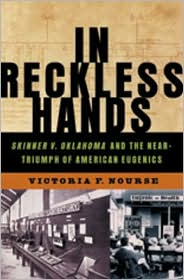
Stephen Siegel (DePaul University College of Law) offers a longer-than-average review of In Reckless Hands: Skinner v. Oklahoma and the Near Triumph of American Eugenics (W. W. Norton, 2008), by Victoria Nourse. Siegel praises the book as insightful and thorough. He concludes by offering a somewhat different interpretation of Skinner's meaning for modern constitutional law.
Stay tuned for one more installment.

In the meantime, the journal's full content is available to subscribers here.

Australia and New Zealand Law and History

Here's a Call For Papers for the 30th annual conference of the Australia and New Zealand Law and History, to be held in Brisbane, Australia, December, 12-13, 2011:

The 2011 conference theme – “Private Law, Public Lives” - examines the social dimensions of private law in history. Proposals are invited from scholars in the fields of law, history and related disciplines.  Proposals from all jurisdictions are welcome. Proposals on non-theme related topics in legal history also welcomed.

Highlights of this year’s conference include twin keynote speakers: Professor John McLaren, professor emeritus of the Law School, University of Victoria, BC, Canada, and author of the forthcoming Dewigged, Bothered and Bewildered: British Colonial Judges on Trial (University of Toronto Press, 2011), and Professor Rosalind Croucher, President of the Australian Law Reform Commission.

Also, by special arrangement with the American Society for Legal History, we will be including a panel from the ASLH, including, among others, Professor Contance Backhouse, Distinguished University of Professor, University of Ottawa President of the ASLH and Professor Chris Tomlins, Chancellor’s Professor of Law, University of California, Irvine.

Further information including expression of interest for proposals is available from the conference website.

Paper proposals, including paper title, abstract (300 words max.) and brief author bio, should be sent by email to the Conference Committee at lawhistconf@uq.edu.au by 14 July 2011.

Hat tip: H-Law

Monday, June 6, 2011

A Legal Historian's First Book, Part II: Archival Research


When I began my dissertation back around the turn of the century, archival research seemed pretty high-tech, at least when compared with the old pencil and notecard approach. I would bring my laptop to the archive and type detailed notes, often transcribing direct quotations. Occasionally, I would request a photocopy of a particularly important document, but there was a strong incentive to scrimp. Archives often limited how many copies each patron could request per year. Moreover, the price was high--25 cents per page or more.

In those days, I would spend anywhere from a week to a month in an archive, crashing on a friend's couch, house-sitting, or staying in a cheap motel or sublet. I spent quality time at wonderful libraries such as the Arthur and Elizabeth Schlesinger Library on the History of Women in America (Radcliffe Institute, Harvard University), the Library of Congress, and the Sophia Smith collection at Smith College. I discovered treasures such as the Justice Lewis F. Powell, Jr. Archives at the Washington and Lee University School of Law in beautiful Lexington, Virginia. I awoke at the crack of dawn to visit the Southwest Regional Division of the National Archives on the outskirts of Ft. Worth, Texas, which opens under cover of darkness at 6:30am.

By the time I was finishing research for my book, everything had changed, much of it for the better. No longer a graduate student, I was fortunate enough to have a job and a research budget. I also had a spouse and a baby at home, as well as teaching and other professional obligations. Luckily for me, these life changes were accompanied by a technological transformation: the rise of digital photography. Now I could do the historian's equivalent of a hit and run--a marathon day or three in an archive, armed with my camera, taking virtually unlimited pictures free of charge. Toward the end, when I knew--or thought I knew--exactly what I wanted, I could even hire a local student or freelance researcher to take the photos and upload them to Picasa. It would have been difficult to travel to the Jimmy Carter Library in Atlanta with a newborn; instead, I perused the papers of Attorney General Griffin Bell from the comfort of my home.

These advances have obvious advantages. Archival research has become cheaper and faster, requiring less time away from home and (other) work. Bringing more home means not only a broader source base, but the ability to go back and reread sources later. There is a downside, though. I miss seeing new places in a (relatively) leisurely manner and having long, in-person chats with archivists. Now I often return home with thousands of photos but only a dim idea of their content. Gathering sources has become increasingly separate from the process of reading and digesting the sources, which may mean fewer spontaneous tangents that lead to unexpected discoveries.

And managing this volume of information is tricky. I used to create the electronic equivalent of notecards, using the searchable database Filemaker Pro; now I am searching for a new system better adapted to the reality that taking copious notes on every page of archival material has become a practical impossibility. I dream of a day when my digital photos can be seamlessly converted into text-searchable documents, but haven't yet been able to find software to pull that off.

How have you negotiated the technological changes of the past decade(s)? Do you have a good note taking/source management system?

Image credit

Green reviews Kasper on Madison's Bill of Rights and the Supreme Court's Interpretation

Via H-Law, we have a review of Eric T. Kasper, To Secure the Liberty of the People: James Madison's Bill of Rights and the Supreme Court's Interpretation (Northern Illinois University Press, 2010).

Reviewer Michael Green offers the following summary:
Eric T. Kasper is a scholar, lawyer, and judge who has tried to parse what Madison said and how others have interpreted him.  The result, To Secure the Liberty of the People, is an unusual and useful book.  Kasper combines political theory--both where Madison got his thought and what he thought--with scorekeeping and analysis on how Supreme Court justices have used and abused Madison.  The combination sometimes seems askew because the book seems to try to do too much.  But it works, and it is worthwhile reading for those interested in legal history, philosophy, and the founding generation--and, indeed, getting right with Madison.
The full review is available here.

Schlag on the Faculty Workshop

Pierre Schlag, Colorado Law, has posted a wickedly funny essay on The Faculty Workshop.  Among its virtues is its capturing of a certain awkwardness that sometimes transpires when historians present to law faculties:
Then there are, of course, the historians. I’m always mildly amused by (though also empathetic towards) the historians. They have a devil of a time because no one else knows how to engage with them:
“So, do I understand you correctly to be saying that, in the period 1776-1788, some farmers in New Jersey exported grain to New York. Is that right?”
“That’s right.”
“Well, that’s wrong. They didn’t.”
“But . . . But they did!”
“Well, let me ask you this then: What would you say if I said they didn’t?”
I'm not sure that the optimism implicit in Adam Kolber's How to Ask Questions at Conferences and Colloquia, posted earlier this year over at Prawfsblawg, will survive a reading of Schlag's one-paragraph catalog of standard workshop questions.  Anyone who's still unwilling to give up on the faculty workshop ought to give Kolber a look.

Sunday, June 5, 2011

Superhighways and Sacred Trash: this week in the book reviews

This week the New York Times book section focuses on "summer reading." Our readership's standard fare didn't make the cut, but there are con law debates to be found on the best-seller list.  For example, Steve Berry's latest thriller, The Jefferson Key, turns on "a secret clause encoded in Article I, Section 8." (It also features a "swashbuckling Justice Department operative." Sold!)

Hitting closer to home is David Nirenberg's review, for The Nation, of "a precious meditation on the ways in which the discovery of long-hidden hoards of history can transform our worlds." If any of you have struggled to convey the excitement of the historian's craft, you might want to buy a few copies of Sacred Trash: The Lost and Found World of the Cairo Geniza (Schocken), by Adina Hoffman and Peter Cole.

Just in time for road-trip season, Washington Post critic Jonathan Yardley reviews The Big Roads: The Untold Story of the Engineers, Visionaries, and Trailblazers Who Created the American Superhighways (Houghton Mifflin Harcourt),  by journalist Earl Swift. Yardley notes that the book "appears to be the first thorough history of the expressway system, at least for a general readership," and praises it as "engaging" and "informative." 

Patrick Cooke, writing for the Wall Street Journal, has a different perspective.  As an alternative title to the "sprawling book" he suggests: "Construction Ahead: Expect Delays." Also in the WSJ book pages, a review of Frank McLynn's Captain Cook: Master of the Seas (Yale University Press).

The Los Angeles Times offers another take on Manning Marable's controversial biography of Malcolm X.  Reviewer Erin Aubry Kaplan describes the book as "absorbing and well-written, passionate but painstakingly evenhanded." To her, it results in a portrait "of a man not distorted but more dynamic than we realized."

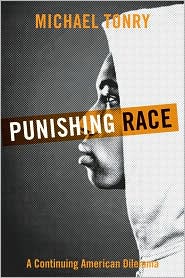
Over at The New Republic "the Book," you'll find a review of Punishing Race: A Continuing American Dilemma (Oxford University Press), by Michael Tonry. According to reviewer John McWhorter, Tonry is careful about using the word "racism" in his description of the origins and effects of contemporary drug policy, but strongly implies that the "War on Drugs" is of a piece with Jim Crow. Though sympathetic to the author's larger aims, McWhorter reminds the reader that "reciting ugly things in order is not historical analysis."

TNR's "the Book" also covers Philosemitism in History (Cambridge University Press), edited by Adam Sutcliffe and Jonathan Karp [here], and Passport to Peking: A Very British Mission to Mao’s China (Oxford University Press), by Patrick Wright [here].

At the New York Review of Books, Timothy Snyder reviews four new books on the Holocaust, Ian Johnson explores "the high price of the new Beijing," via six recent releases, and Hugh Eakin covers Chasing Aphrodite: The Hunt for Looted Antiquities at the World’s Richest Museum (Houghton Mifflin Harcourt), by Jason Felch and Ralph Frammolino.

Saturday, June 4, 2011

Weekend Round-up

  • To all those historians doing summer research in Washington D.C., the American Historical Association invites you to a summer reception on Tuesday, June 7, 2011 from 4:30-6:30 p.m. More information is here. (Hat tip: H-Law)
  • Christopher Schmidt's Jotwell review of Tomiko Brown-Nagin's Courage to Dissent is here.
  • In Custodia Legis reports that the Library of Congress has "added two small but important pieces of gay and lesbian legal history" to its Creating the United States exhibit.
  • Timothy S. Huebner, Rhodes College, has posted his list of new legal and constitutional books here. Hat tip: H-Law.
The Weekend Round-up is a weekly feature compiled by all the Legal History Bloggers.

Friday, June 3, 2011

A Legal Historian’s First Book: Part I: “Revising” the Dissertation


For a first-time author, writing a book is a proposition both daunting and opaque—at least it was for me. As this decade-long process draws to a close, I find myself reflecting on my own experience and wondering about others’.

For many legal (and other kinds of) historians, a first book grows out of a dissertation. The two genres are quite different, however, as even a casual perusal of academic publishing advice literature reveals. Dissertations often contain dense discussions of secondary literature and historiography, for example. Others are cobbled together from a series of articles or case studies.

My own dissertation was somewhat disjointed chronologically and even thematically. Early chapters traced the troubled history of analogies between race and sex discrimination, culminating in a study of 1970s feminist constitutional litigation. One of my favorite chapters, on the use of sex segregation in racial desegregation plans, didn’t quite fit and was rather awkwardly tacked on at the end (it later became a stand-alone article). My story ended rather abruptly and arbitrarily in 1979, before Ronald Reagan’s election, the final defeat of the ERA, and the appointment of Sandra Day O’Connor to the Supreme Court, among other developments. And several topics of great importance to the book’s central subject--“reasoning from race” as a feminist legal strategy—got short shrift, including pregnancy discrimination, reproductive rights, disparate impact theory, and Title VII.

As it turned out, “revision” wasn’t the right way to think about what needed to happen to my dissertation. “Major overhaul involving substantial new archival research and writing more than half the manuscript from scratch” was more like it. What have your experiences been with turning dissertations into books? Are there particular challenges we, as legal historians, face in this process?

More from the Law & History Review: book reviews, part I

As promised, here's a glimpse of what you'll find in the Book Reviews section of the most recent issue of the Law & History Review.
Reviewer Geoffrey Koziol (University of California, Berkeley) "wish[es] [he] could recommend" Francis Oakley's Empty Bottles of Gentilism: Kingship and the Divine in Late Antiquity and the Early Middle Ages (to 1050) (Yale University Press, 2010). He worries, however, that the book is "dangerous."

Mike Macnair (St. Hugh's College , Oxford University) shares other critics' high opinion of Paul Halliday's Habeas Corpus: From England to Empire (Belknap Press of Harvard University Press, 2010), but raises a question about its "framing narrative."

Oren Bracha (University of Texas School of Law) recommends to students of copyright history Isabella Alexander's Copyright Law and the Public Interest in the Nineteenth Century (Hart Publishing, 2010). He notes that it "also provides much food for thought for those interested in contemporary intellectual property debates."

Núria Silleras-Fernández (University of Colorado, Boulder) highlights Marie A. Kelleher's convincing argument for Christian women's simultaneous agency and victimhood in The Measure of Woman: Law and Female Identity in the Crown of Aragon (University of Pennsylvania Press, 2010). She welcomes the book into the historiography of gender and the law.

Reviewer William Chester Jordan (Princeton University) commends Thomas N. Bisson for "tak[ing] on a big problem" in The Crisis of the Twelfth Century: Power, Lordship, and the Origins of European Government (Princeton University Press, 2008), even if he leaves future historians with a "significant problem" of their own.
Many more books were reviewed in this issue, so stay tuned . . . .

In the meantime, subscribers may access the journal's full content here.

Thursday, June 2, 2011

The Supreme Court and the SEC

Today at noon the SEC Historical Society will webcast live, here, "The Supreme Court and the SEC," a discussion moderated by Discussion moderated by Kurt Hohenstein, Assistant Professor of History, Winona State University, with David M. Becker, Former SEC General Counsel, U.S. Securities and Exchange Commission; and Adam C. Pritchard, the Frances and George Skestos Professor of Law, University of Michigan Law School.

Update
David Becker
I tuned in and learned that the title of the session only partially described its contents.  Yes, Adam Pritchard discussed the Supreme Court and the SEC, in line with his article coauthored with my colleague Robert Thompson, Securities Law and the New Deal Justices, 95 Va. L. Rev. 841-926 (2009).  That is, he focused on the New Deal justices' relative indifference to the Court's SEC caseload (evidence by their assigning the cases to Frank Murphy!).  he also summarized his article in the Duke Law Journal on how Lewis Powell's appointment to the Court made it a force the SEC had to reckon with.  But David Becker's remarks focused on the D.C. Circuit and, in particular, the SEC's extremely poor record defending its rulemaking there (to which, he ruefully conceded, he had himself contributed as general counsel).  Becker's talk went to a more recent past than Prichard's, but it is also of interest to historians of the American administrative state.

The archived webcast is here.

Stern on the Analytical Turn in 19th-Century Legal Thought

Simon Stern, Faculty of Law, University of Toronto, has posted The Analytical Turn in Nineteenth-Century Legal Thought.  Here is the abstract:
George Sharswood
This essay seeks to account for the introduction of the analytical method into Anglo-American legal thinking in the 19th century and to identify some of the doctrinal consequences of this mode of problem-solving. I focus on a particular sense of analysis – the disaggregation into components of seemingly unified entities, not previously seen as composites. On this view, a discussion of U.S. law as involving federal law and state law does not involve analysis, but a discussion of privacy as including decisional and spatial aspects would involve analysis. The term "analysis" long predates the nineteenth century, but had previously been used by lawyers to mean "investigation" or "classification" rather than disaggregation. Drawing on research by John Pickstone, I show that the technique, though not unheard of before the 19th century, was taken up in a wide array of scientific disciplines circa 1780-1840, particularly in chemistry. This helps to explain its diffusion into other intellectual spheres, including law.

The essay focuses on two areas in which the doctrinal effects of analysis readily discernible, involving the newfound concern with the "elements" of criminal offenses and the reformulation of issue preclusion in res judicata. An implication of the argument is that legal science may be profitably studied not only by looking at the statements of lawyers such as David Hoffman, Simon Greenleaf, and George Sharswood [above right], who took pains to insist that they were being scientific, but also by looking to particular instances in which lawyers adopt scientific methods, even if they do not call attention to this practice, and even if they make no claims about legal science.

Wednesday, June 1, 2011

Legal History at the Berkshire Conference on the History of Women

Thank you, Mary, for the opportunity to visit the Legal History Blog this month, and to everyone for your patience with this first-time blogger.

Image credit
Next week, I will attend the Berkshire Conference on the History of Women for the first time. This year’s conference, “Exploring Race, Sexuality and Labor Across Time and Space,” will be held at the University of Massachusetts at Amherst, June 9-12, 2011. On the program are several explicitly legal history-themed panels, and many more of interest to legal historians. The full program is here; a sampling appears after the jump.

NYHS Acquires Lansing's Notes at the Federal Convention

[We have the following press release of the New-York Historical Society via HNN:]

John Lansing, Jr.
A page from Lansing's notebook
New York, NY, May 31, 2011—At an auction held on Friday, May 20, at Sotheby’s, the Chairman of the New-York Historical Society, Roger Hertog, purchased the Constitutional Convention notebooks of John Lansing, Jr., a New York delegate to the 1787 Philadelphia Convention. Mr. Hertog has announced that he will donate the exceptionally rare documents to the Library of the Historical Society.

The New-York Historical Society plans to digitize the Lansing papers in their original format to share with scholars everywhere. The documents will also be displayed in an exhibit when the Historical Society’s galleries re-open in November 2011.
More.

The New York Times's story--the source of the images above--is here.

Welcome to Serena Mayeri

Serena Mayeri
The Legal History Blog welcomes Serena Mayeri, who will be guest blogging for the month of June.  Serena is an Assistant Professor of Law and History at the University of Pennsylvania.  Her book Reasoning from Race: Feminism, Law, and the Civil Rights Revolution has just been released by Harvard University Press. Tomiko Brown-Nagin blogged about it here.  The book is based on Serena's dissertation, which was awarded the Lerner-Scott Prize from the Organization of American Historians and George Washington Eggleston Prize from Yale.  Serena's many other awards include the 2007 Jane Rainie Opel Young Alumna Award from the Radcliffe Institute for Advanced Study, Harvard University.  Her legal history teaching includes courses on Law and Social Movements in Twentieth-Century America; Gender and the Law in Recent American History; and Feminist Legal Advocacy in the Twentieth Century United States.

Welcome to Serena!

New issue of the Law & History Review is out


A new issue of the Law and History Review is out, and it looks fascinating.

Here are the first three articles:
"Claiming the New World: Empire, Law, and Indigenous Rights in the Mohegan Case, 1704–1743," by Craig Bryan Yirush [abstract]

"The First Liability Insurance Cartel in America, 1896–1906," by Sachin S. Pandya [abstract]

"Marriage and Mestizaje, Chinese and Mexican: Constitutional Interpretation and Resistance in Sonora, 1921–1935," by Kif Augustine-Adams [abstract]
The next section is devoted to a forum on "Racial Determination and the Law in Comparative Perspective":
Introduction, by John W. Wertheimer [abstract]

"'The law recognizes racial instinct': Tucker v. Blease and the Black–White Paradigm in the Jim Crow South," by John W. Wertheimer, Jessica Bradshaw, Allyson Cobb, Harper Addison, E. Dudley Colhoun, Samuel Diamant, Andrew Gilbert, Jeffrey Higgs and Nicholas Skipper [abstract]

"Jus Soli and Jus Sanguinis in the Colonies: The Interwar Politics of Race, Culture, and Multiracial Legal Status in British Africa," by Christopher J. Lee [abstract]

“'In the Interest of the Volk…': Nazi-German Paternity Suits and Racial Recategorization in the Munich Superior Courts, 1938–1945," by Thomas Pegelow Kaplan [abstract]

Forum: Essay
"Race, Law, and Comparative History," by Ariela J. Gross [abstract]

Forum: Comment
"When the Complexity of Lived Experience Finds Itself Before a Court of Law," by Peter C. Caldwell [abstract]
A third section of the issue consists of "Reflections on Further Research in Comparative Legal History":
"Immigration and Techniques of Governance in Mexico and the United States: Recalibrating National Narratives through Comparative Immigration Histories," by Theresa Alfaro-Velcamp and Robert H. Mclaughlin [abstract]

"Rethinking ‘the Nation’ in National Legal History: A Canadian Perspective," by Philip Girard and Jim Phillips [abstract]
Subscribers may access the full content here.

Next up: a glimpse of the book reviews.

image credit

Hall Fellows Named at Indiana Law

The Center for Law, Society, and Culture at the Indiana University-Bloomington’s Maurer School of Law has announced the Jerome Hall Postdoctoral Fellows for 2011-2012.  Leila Kawar “is interested in the relationship between legality and the politics of migration. Focusing on the role of the legal profession and juridical expertise, she studies migration and citizenship laws, at both the national and international levels, as fields of knowledge production.”  Katherine Turk “researches the mainstreaming of postwar American feminism and the challenges of defining and creating sex equality amidst fractious interest group politics, legal and bureaucratic institutions, diverse populations of workers, and seismic shifts in American political economy.”  She is the author of “Out of the Revolution, Into the Mainstream: Employment Activism in the NOW Sears Campaign and the Growing Pains of Liberal Feminism,” Journal of American History 97 (September 2010) and will be on leave from her position as Assistant Professor of History at the University of Texas at Dallas.

More