Thursday, August 25, 2022

A Symposium on Koskenniemi's "To the Uttermost Parts of the Earth"

 [We have the following announcement.  DRE]

On 6 September 2022, the Journal of the History of International Law is organising an online evening symposium (CET 20.00h-22.00) to celebrate the publication of Martti Koskenniemi's book “To the Uttermost Parts of the Earth”: Legal Imagination and International Power, 1300-1870 (Cambridge University Press, 2021). The event will take place on Zoom.

This is the program:

Chair: Dr. Inge Van Hulle (Max Planck Institute for Legal History and Legal Theory)

20.00h: Welcome by Prof. Randall Lesaffer (KU Leuven/Tilburg University)

20.05h: Presentation of book by Prof. Martti Koskenniemi (University of Helsinki)

20.30h: Comments by Prof. Koen Stapelbroek (James Cook University): 'Commerce, capitalism and the law of nations'

20.45h: Comments by Prof. Jennifer Pitts (University of Chicago): 'The struggle between statehood and civil society'

21.00h: Comments by Prof. Wim Decock (UCLouvain): 'Theology and the justification of sovereignty and property'

21.15h: Response by Prof. Martti Koskenniemi

21.30h: Open discussion and questions

Please register by sending an email to: vanhulle@lhlt.mpg.de

Wednesday, August 24, 2022

Anderson on the Merchant Ship as Proto-Corporation

Robert Anderson, Pepperdine University Rick J. Caruso School of Law, has posted  The Sea Corporation:

Over the two centuries the corporation has become the dominant form of business organization, accounting for more productive assets than all other business forms combined. Yet the corporation is relatively young for a legal institution of such economic importance. As late as the middle of the nineteenth century, most business was still conducted through partnerships, with corporations active only in a few industries. Only in the ensuing decades did restrictions ease allowing the corporation to secure its economic dominance.

Commentators widely attribute the corporation’s success to a set of features thought to be unique to the corporation, including limited liability, transferable shares, centralized management, and entity shielding. Indeed, the consensus among economic and legal historians is that these essential corporate features created a unique economic entity that rapidly displaced the obsolete partnership.

This Article argues that these economic features were not unique to the corporation, nor did
NYPL Digital

they first develop in the business corporation. Over many centuries, the maritime law developed a sophisticated system of business organization around the entity of the merchant ship, creating a framework of legal principles that operated as a proto-corporate law. Like modern corporate law, this maritime organizational law gave legal personality to the ship, limited liability, transferable shares, centralized management, and entity shielding. The resulting “sea corporations” were the closest to a modern corporation that was available continuously throughout the 17th through early 19th centuries in Europe and the United States.

The fact that maritime law developed all the most important features of corporate law offers important lessons for business organizational law itself. The parallel development of the same characteristics, with different and independent mechanisms, is strong evidence of the economic importance of the features of the modern corporation. The maritime law employed a unique device—the maritime lien—to achieve the same economic results as the nascent corporation. The key turn was the use of a property mechanism, rather than the contract mechanisms of partnership law, to implement in rem attributes. The vessel is property come to life in the eyes of the law, developing a form of legal personhood. Viewed in this broader context, the corporation is not a unique institutional solution to recurrent economic problems; it was a convenient vehicle for expanding and generalizing a set of economic solutions.

This new organizational theory of maritime law provides potentially important lessons for both maritime law and business organizations law. First, the theory provides a guiding principle for otherwise disorganized features of maritime law. It suggests that courts should explicitly interpret maritime law as a form of business entity law, keeping maritime law’s distinctive purposes, but drawing from the rich theoretical insights of law of other business associations to inform its unique institutions. At the same time, the long history of maritime law as business organization law provides hints for enduring challenges in corporate law, such as externalities of limited liability on involuntary creditors, such as tort creditors. Here, maritime law provides time-tested solutions, providing a system that provides priority for such creditors over contract creditors, solving one of corporate law’s most vexing problems.

--Dan Ernst

Tuesday, August 23, 2022

Snyder's "Democratic Justice"

At last, there is a full-scale biography of Felix Frankfurter!  My Georgetown Law colleague Brad Snyder has published Democratic Justice: Felix Frankfurter, the Supreme Court, and the Making of the Liberal Establishment (W. W. Norton):

The conventional wisdom about Felix Frankfurter—Harvard law professor and Supreme Court justice—is that he struggled to fill the seat once held by Oliver Wendell Holmes. Scholars have portrayed Frankfurter as a judicial failure, a liberal lawyer turned conservative justice, and the Warren Court’s principal villain. And yet none of these characterizations rings true.

A pro-government, pro-civil rights liberal who rejected shifting political labels, Frankfurter advocated for judicial restraint—he believed that people should seek change not from the courts but through the democratic political process. Indeed, he knew American presidents from Theodore Roosevelt to Lyndon Johnson, advised Franklin Roosevelt, and inspired his students and law clerks to enter government service.

Organized around presidential administrations and major political and world events, this definitive biography chronicles Frankfurter’s impact on American life. As a young government lawyer, he befriended Theodore Roosevelt, Louis Brandeis, and Holmes. As a Harvard law professor, he earned fame as a civil libertarian, Zionist, and New Deal power broker. As a justice, he hired the first African American law clerk and helped the Court achieve unanimity in outlawing racially segregated schools in Brown v. Board of Education.

In this sweeping narrative, Brad Snyder offers a full and fascinating portrait of the remarkable life and legacy of a long misunderstood American figure. This is the biography of an Austrian Jewish immigrant who arrived in the United States at age eleven speaking not a word of English, who by age twenty-six befriended former president Theodore Roosevelt, and who by age fifty was one of Franklin Roosevelt’s most trusted advisers. It is the story of a man devoted to democratic ideals, a natural orator and often overbearing justice, whose passion allowed him to amass highly influential friends and helped create the liberal establishment.

Some endorsements:

"Exhaustively researched, gracefully written, persuasively argued, and historically grounded, [Democratic Justice] enriches our understanding of American democracy, politics, jurisprudence, and the liberal establishment.… One comes away from a reading of this book with a profound and renewed admiration for Felix Frankfurter and the obligation to reexamine his steadfast adherence to what he believed to be the limited role of an appointed judiciary in a liberal democracy."
David Nasaw, author of The Last Million and The Patriarch

"The conventional wisdom is that Felix Frankfurter was a liberal lawyer who became—surprisingly—a conservative justice. Brad Snyder’s spellbinding biography brilliantly revises this understanding to present Frankfurter as a champion of democracy in his day—and for our own as well."
Laura Kalman, Distinguished Research Professor, University of California, Santa Barbara

"For years people interested in constitutional law and US history have missed a comprehensive biography of Felix Frankfurter, in his time the most influential figure in constitutional law and an important contributor to progressive thought and politics. Finally we have one.… This is a major achievement that deserves to be widely read."
Mark Tushnet, William Nelson Cromwell Professor of Law Emeritus, Harvard Law School

"A magnificent and indeed definitive biography of a vitally important but highly imperfect justice."
David J. Garrow, Pulitzer Prize–winning author of Bearing the Cross and Liberty and Sexuality

--Dan Ernst

Whitely on Property in Wolves

Jack Whiteley, a Fellow and Supervisory Attorney in the Environmental Law & Justice Clinic at the Georgetown University Law Center, has posted Property in Wolves, which is forthcoming in the Cornell Law Review:

"A Wintry Scene" (NYPL)
From colonial times until the mid-twentieth century, governments paid bounties to kill wolves, mountain lions, and other wild animals. Clearing the wild was a sustained legislative project. Yet interest in these statutes has remained confined to scholarship on wildlife conservation, and important insights for legal theory have gone unobserved.

Based on new research, I argue that these bounty statutes have implications for the history and theory of property. The statutes were, in their intent and effect, land use regulations. For more than three centuries, they encouraged livestock. By removing wild animals, the statutes made livestock-raising a more cost-effective use of land than it otherwise would have been for landowners. And by removing wolves and other ecologically important species, they changed the character of land in ways that diminished the value of wilder uses. The statutes chose winners among land uses, and they operated over a much longer timeframe than conventional accounts, which date land use regulation’s origin to 1916, would suggest.

The statutes also had a deeper consequence. They encouraged private property in land. Predation on livestock is the kind of “large event” that, on a famous theory developed by Robert Ellickson, makes collectively-owned land valuable. By acting to remove the threat of wild animal predation on livestock in settlement communities, governments weighted the scale toward privately-owned, fee-simple land regimes. This discovery raises questions for a popular normative justification for private property in land.

The Article finally offers thoughts as to why animal eradication was such a pronounced public policy. The phenomenon suggests the influence of cultural preferences on property regimes.
–Dan Ernst

Monday, August 22, 2022

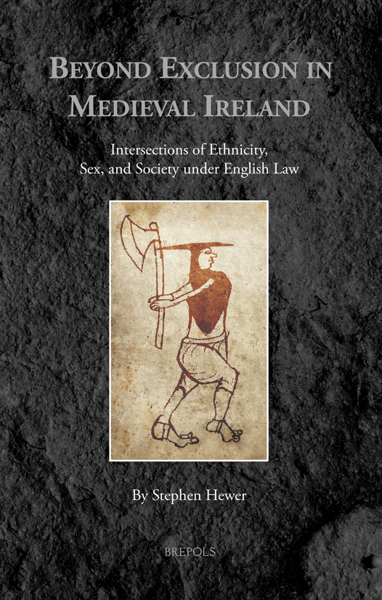
Hewer, "Beyond Exclusion in Medieval Ireland"

Brepols Publisher has released Beyond Exclusion in Medieval Ireland: Intersections of Ethnicity, Sex, and Society Under English Law (2022), by (University of Liverpool). A description from the Press:

The notion that all Gaelic peoples were immediately and ipso facto denied access to the English royal courts in Ireland, upon the advent of the English in 1167, has become so accepted in academic and popular histories of Ireland that it is no longer questioned. This book tackles this narrative of absolute ethnic discrimination in thirteenth- and early fourteenth-century English Ireland on the basis of a thorough re-examination of the Irish plea rolls. A forensic study of these records reveals a great deal of variation in how members of various ethnic groups and women who came before the royal courts in Ireland were treated. Specifically, it demonstrates the existence of a large, and hitherto scarcely noticed, population of Gaels with regular and unimpeded access to English law, identifiable as Gaelic either through explicit ethnic labelling in the records or implicitly through their naming practices.  

More information is available here. (h/t New Books Network.)

-- Karen Tani

Saturday, August 20, 2022

Weekend Roundup

  • "Although the U.S. Congressional Record has been in a digital format for some time, a version that can easily be searched is now available on an online platform—offered by the Brigham Young University J. Reuben Clark Law School"  (ABA Journal).  For all of BYU Law's legal corpora: this.
  • Andrew Delbanco, the Alexander Hamilton Professor of American Studies at Columbia University, will deliver the 2022 Jefferson Lecture in the Humanities, entitled, “The Question of Reparations: Our Past, Our Present, Our Future,” on October 19, 2022, “at President Lincoln’s Cottage historic site and museum in Washington, D.C., at 6:30 p.m. The lecture is free and open to the public and will stream online [here.] In his remarks, Delbanco will address reparations for slavery in the United States, using history, philosophy, and literature to examine a wide range of perspectives on the debate.”
  • “The New Haven Museum will commemorate Connecticut Freedom Trail Month with a virtual presentation, ‘Uncovering Their History: African, African American, and Native American Burials in Hartford’s Ancient Burying Ground, 1640-1815,’ by historian, educator, author, and recently named publisher of Connecticut Explored magazine, Dr. Katherine A. Hermes, on Wednesday, September 14, 2022, at 6 p.m. Register here" (Patch).
  • Two Trinity College students spent ten weeks this summer researching “the stories of inmates at the country’s first state prison and to investigate the roots of mass incarceration” for their project, ‘Humanizing History at Old New-Gate Prison’” (More).
  • A notice of Dame Priscilla Olabori Kuye, “the first and only woman to become the President of the Nigerian Bar Association” (The Nigerian Lawyers).
  • ICYMI: From Poison Control Statutes to Pope Pius IX: The History of Anti-Abortion Law, by Elisabeth Griffith (Literary Hub).  Seth Barrett Tillman, Maynooth University School of Law and Criminology, questions a reference to the British Conservative politician John Enoch Powell (SSRN).  DRE.  David Adler on John Marshall Harlan's imperishable Plessey dissent (NLJ).
 Weekend Roundup is a weekly feature compiled by all the Legal History bloggers.

Friday, August 19, 2022

Abraham and White on Cardozo's "Forks-in-the-Road"

Kenneth S. Abraham and G. Edward White, University of Virginia School of Law, have posted Doctrinal Forks in the Road: The Hidden Message of The Nature of the Judicial Process, which is forthcoming in the Yale Journal of Law and the Humanities:

This Essay was prepared for a Symposium at the Yale Law School, celebrating the one-hundredth anniversary of The Nature of the Judicial Process, the published version of four lectures Judge Benjamin Cardozo delivered at Yale Law School between February 14 and 18, 1921. Revisiting these lectures presents a challenge to the contemporary reader. That challenge is to imagine how the lectures could have generated the strongly affirmative reaction that they apparently did. In this Essay, we seek first to recover that reaction and to juxtapose it against our initially far less enthusiastic response. We then identify a feature of the lectures that was not remarked upon when they were first published and has not been emphasized since: Cardozo’s examination of how appellate judging is frequently about whether to extend what he called a doctrinal 'path', or not to extend that path. If the path is extended, existing doctrinal propositions are treated as governing not only the case at hand, but also as applying to an expanded set of potential future cases. But if the path is not extended, the doctrinal principles embodied in a set of previous cases are deemed inapposite to the current case, and a developing doctrinal path is truncated, thus limiting its application to future cases.

We then show how Cardozo employed the concepts of doctrinal paths and 'forks in the road' in several of his most famous torts cases. We conclude that when Cardozo’s discussion of those concepts is understood as one of the principal contributions of The Nature of the Judicial Process, the lectures can be understood to be of lasting as well as historical significance.

--Dan Ernst

Thursday, August 18, 2022

Affirmative Action: The ICS Seminar

[We are moving this up, as the deadline is approaching.  DRE]

Our friends at the Institute for Constitutional Studies have announced another seminar for advanced graduate students and junior faculty, “Affirmative Action”:

Prior to the pandemic and the economic downturn, affirmative action was one of the most divisive issues in public policy.  While it is closely tied to issues of racism (past and present), it also has strong ties to the women’s movement, Hispanic rights, and disability programs. Normally we start looking at affirmative action in the Kennedy-Johnson years, but in fact its roots go back to Reconstruction after the Civil War. There are two types of affirmative action programs, which I label “hard” and “soft,” and the distinction will be at the heart of the discussion. There is a story of an administrative agency run wild, and of course, there are court cases. One must bear in mind that this is not a simple liberal vs. conservative debate, for some of the fiercest critics have been liberals.  We will end the course with a look at the most recent case that involved Harvard and Asian-American students.
Instructor.  Melvin I. Urofsky is professor emeritus of history at Virginia Commonwealth University.  He is the longtime editor of the Journal of Supreme Court History and has written widely on American constitutional development.  His most recent books are the prize-winning Louis D. Brandeis: A Life (2009), Dissent and the Supreme Court (2015), and The Affirmative Action Puzzle (2020).

Logistics
.  Tuesday afternoons, 3:50–5:50 p.m., October 11, 18, 25, November 1, 8, 15, and 22, 2022. The seminar will meet at The George Washington University Law School, 2000 H Street NW, Washington, DC 20052.

Application Process.  The seminar is designed for graduate students and junior faculty in history, political science, law, and related disciplines. All participants will be expected to complete the assigned readings and participate in seminar discussions. Although the Institute cannot offer academic credit directly for the seminar, students may be able to earn graduate credit through their home departments by completing an independent research project in conjunction with the seminar. Please consult with your advisor and/or director of graduate studies about these possibilities. Space is limited, so applicants should send a copy of their C.V. and a short statement on how this seminar will be useful to them in their research, teaching, or professional development. Materials will be accepted only by email at icsgw@law.gwu.edu until September 15, 2022. Successful applicants will be notified soon thereafter. For further information, please contact Maeva Marcus at maevamarcus@law.gwu.edu.

There is no tuition or other charge for this seminar, though participants will be expected to acquire the assigned books on their own.

About ICS.  The Institute for Constitutional Studies (ICS) is the nation’s premier institute dedicated to ensuring that future generations of Americans understand the substance and historical development of the U.S. Constitution. Located at the George Washington University Law School, the Institute is co-sponsored by the American Historical Association, the Organization of American Historians, and the American Political Science Association. The Association of American Law Schools is a cooperating entity. ICS prepares junior scholars and college instructors to convey to their readers and students the important role the Constitution has played in shaping American society. ICS also provides a national forum for the preparation and dissemination of humanistic, interdisciplinary scholarship on American constitutional history. icsgw@law.gwu.edu

Herzfeld on How Lawyers Came to Dominate Tax Policy

It’s gated, but, as the star footnote explains, it’s an article that some of us have been awaiting for a long time: Mindy Herzfeld, Professor of Tax Practice, University of Florida Levin College of Law, has published The Role of Professional Organizations in Practice and Policy: How Lawyers Overtook Accountants and Economists in the Early 20th Century Tax Field, in Tax Lawyer 75 (Fall 2021): 79-124:

Tax policy and practice are inherently interdisciplinary, involving the close collaboration of lawyers, accountants, and economists. But the presence and strength of the legal profession in a field that was from its start dominated by accountants and economists was not preordained. To no small degree, self-conscious action by the organized profession and effective engagement by its professional associations allowed tax attorneys to establish dominance in an area in which they saw a lucrative future. The American Bar Association (ABA) Tax Committee played an important role in helping to propel lawyers from their poor starting position in the newly created field of federal income tax after the passage of the 16th Amendment to a position of strength in a lucrative practice area with the ability to shape the development of policy.

The story of how tax attorneys came to dominate the fields of tax policy and sophisticated tax practice for much of the 20th century is a success story of strong professional organizations. This Article illustrates how the organization of attorneys focusing on taxation into a specialized group within bar associations has played an important role in making lawyers the central players in tax policy and tax practice in the United States over the 20th century. It places some of the contemporary challenges facing the legal profession in the tax area and questions over its interaction with other disciplines in historical perspective by tracing the early history of the specialization of tax lawyers within professional associations. These associations laid the groundwork for the creation of a tax bar with its own self-identity and ethical guidelines.

This Article explores the role played by the bar associations, in particular the ABA, in developing and promoting the practice of tax law among attorneys and the prestige of lawyers as tax practitioners and developers of tax policy. As part of the effort to map out the expansion of the professional associations of tax attorneys, the Article first sets out the historical background of the growth of professional organizations in the United States. It then examines the development of the U.S. federal income tax law during its first decades, along with the role economists played in that development, followed by a study of the role of the accounting profession in tax practice during this time. An exploration of the role played by a number of prominent attorneys in tax policy and tax practice and of the Association of the Bar of the City of New York sets the stage for consideration of the formation and development of the ABA Tax Committee in the 1920s. The history of the organization and activities of the ABA Tax Committee demonstrates how it became so effective in propelling attorneys to a position of significant influence within the worlds of tax legislation, tax policy, and tax practice.

--Dan Ernst

Wednesday, August 17, 2022

CFP: History of Prison Reform in Colonial and Postcolonial Contexts

[Here is a legible version of a previously posted call for papers.  DRE]

History of Prison Reform in Colonial and Postcolonial Contexts: Hope and Disappointment
17-19 June 2024, Sapir Academic College, Israel

This workshop will explore the history of prison reform in the colonial context, its hopes and failures. It seeks to broaden our understanding of the distinctiveness of penal reform in colonial and postcolonial territories, and to clarify how it differs from its implementation in other, non-colonial settings. The claim of promoting penal reform was often an explicit part of the colonial 'civilizing mission' and its application an indicator of progress. Proclaimed reformist intentions, however, were often not fulfilled in practice. Historians have examined the violent and oppressive practices of colonial penal regimes. A considerable part of this scholarship criticizes the Eurocentricity of the progressive reformist narratives, often underpinned by the Foucauldian argument about a shift from corporal punishment to imprisonment, and laced with disciplinary and surveillance knowledge-power technologies. These studies reveal that within the colonial context, the European penal model underwent transformations, both deliberate and unintended ones.

Postcolonial accounts of penal regimes critically analyze the implementation of reformist, humanitarian institutions and ideas. While reformist ideology explicitly advocates for humanistic values, in practice it can nonetheless support imperial projects of control over foreign bodies. The proposed workshop will explore the implementation, rejection and manipulation of reform mechanisms of the penal system in colonial settings by the various social players that were involved in these practices. Who were the players advocating for reform and what was their agenda? When reformist practices and institutions were transplanted to colonial settings, how did they change? In what ways were the subalterns able to influence the meaning of these practices? What impact did the broader political, administrative and societal context have on these practices? In what ways are the achievements and failures of reform different in a colonial and non-colonial context? The participants in the proposed international workshop will work together towards providing answers to these fundamental questions that stand at the heart of current debates on colonial punishment and the shortcomings of penal reforms.

Submission Guidelines:  The workshop will be held at Sapir Academic College, Israel on 17-19 June 2024. All participants will be expected to submit a working paper by 10 May 2024, to be distributed to the other participants. Those interested in participating in the workshop are welcome to send a one-page proposal in English, along with a short C.V., by 18 October 2022. The proposal should briefly state the topic and outline how the paper contributes to the aims of the workshop. We hope to publish selected papers from the workshop as a book or a special journal issue. Please send the above and refer any questions to Orna Alyagon Darr (oad@mail.sapir.ac.il). Financial assistance for airfare and accommodation will be offered depending on funding.

Rabb on Punishment in Medieval Islamic Law

Intisar A. Rabb, Harvard Law School, has posted Enforcement and Punishment in Medieval Islamic Law, which is forthcoming in Cultural History of Crime and Punishment in the Medieval Age, ed. Sarah McDougall and Karl Shoemaker (Bloomsbury 2022):

The striking thing about medieval Islamic criminal law is that it featured a jurisprudence of doubt and lenity facing off against political practices of control and severity. Principles of Islamic criminal law placed interpretive authority in the group of scholar-jurists who gained expertise to read divine texts to say what the Law is (sharīʿa). Practices of Islamic criminal law authorized executive authorities—caliphs, sultans, and their agents—power over law enforcement (siyāsa). Principles informed the task of expert jurists and state-appointed judges in defining legitimate punishment derived from Islam’s foundational texts. Practices informed the wide array of severe punishment that law enforcement officials meted out regularly, with a justification that it was “in the public interest” (maṣlaḥa). Principles often justified limited punishment by means of “deterrence” (zajr) and “spiritual rehabilitation” (kaffāra). Practices often justified unrestrained punishment as a means of maintaining law and order, social control, or might as right. The principles of punishment, practices of punishment, and justifications for punishment typically operated in siloes separated by a wide plain. This chapter explores the ground where they met.

Examining both principles and practices of medieval Islamic criminal law can shed light on some of the most pressing questions of old criminal law (Islamic and otherwise): What is the extent of convergence or divergence between Islam’s principles and practices? How, from juristic or social-political accounts of criminal justice, can we explain the types of punishments we see on the books and in the world as we know it?

To answer these questions, I will explore the principles-practices divergence by first examining the legal sources. Then I will review them alongside narratives of social-political practices. For the legal principles, I draw on previous work outlining medieval Islamic criminal law and the expansive role of doubt in substantive law and in criminal procedure. To explore the practices, I canvas Maḥmūd Shaljī’s seven-volume Encyclopedia of Punishment (MMawsūʿat al-ʿadhāb), in which he collects all mentions of “punishment” from a well-known set of historical chronicles and other literary sources from the eighth century onward. I supplement his sources with the less-covered Seljuq, Mamlūk, and Ottoman-era accounts of punishment that Christian Lange (2012), Carl Petry (2008), and others have collected in their studies. By combining views of criminal law from the pens of medieval jurists together with accounts of contemporaneous acts reporting on their less verbose executive counterparts, I offer depictions of how each side tended to approach crime and punishment.
--Dan Ernst

Tuesday, August 16, 2022

Ryan on the Cy-Près Doctrine

Christopher J. Ryan, University of Louisville Louis D. Brandeis School of Law, has posted An Historical and Empirical Analysis of the Cy-Près Doctrine, which is forthcoming in the ACTEC Law Journal:

Cy près is a pivotal doctrine in estate law and indeed American jurisprudence. It places courts in the shoes of settlors of charitable trusts to discern not only their original intent but also affords the possibility of continuing the material purpose for which settlors created enduring legacies of philanthropy benefitting society. For this reason, it may well be that no other legal doctrine is as closely tied to the interests of the individual and the collective as cy près. And my first-of-its kind study puts the cy-près doctrine front and center, while providing three major contributions to the field.

First, through deliberative historical analysis, I offer an in-depth look at the types of cases American courts have heard involving the use of cy près. This historical categorization and explication is itself unique and provides significant insight into the controversies that allowed the doctrine to evolve. Second, the application of empirical methods to examine the doctrine is groundbreaking. By holistically examining the data I collected, I have been able to discern three major themes. The passage of time yields a gradual but greater adoption of the use of the cy-près doctrine. The presence of reversionary, gift-over, or private interests renders the use of the cy-près doctrine less practicable. And finally, courts are overwhelmingly more likely to apply cy près in cases involving public charitable trusts, educational purpose trusts, and medical purpose trusts, even when controlling for other independent variables and typologies of charitable trusts. Last, fifty-state surveys are commonplace; yet, none exists for the doctrine of cy près. I was able to assemble such a survey that not only assisted me in conducting this research but will undoubtedly aid other researchers for years to come, which I have addended to this Article in the Appendix.
--Dan Ernst

Monday, August 15, 2022

Walker, Silva Campo, Manners, Hébrard, & Scott, "Impunity for Acts of Peremptory Enslavement: James Madison, the U.S. Congress, and the Saint Domingue Refugees"

The July issue of the William and Mary Quarterly includes an article of likely interest to our readers: "Impunity for Acts of Peremptory Enslavement: James Madison, the U.S. Congress, and the Saint Domingue Refugees," by Andrew J. Walker (Omohundro Institute of Early American History and Culture), Ana María Silva Campo (University of North Carolina, Chapel Hill), Jane Manners (Temple Law), Jean M. Hébrard (Paris’s École des Hautes Études en Sciences Sociales), and Rebecca J. Scott (University of Michigan). The article is behind a paywall, unfortunately, but here's the abstract:

In 1809 more than three thousand people were claimed as slaves upon arrival in Louisiana, in violation of the 1807 U.S. law against the international trade in persons to be held or sold as slaves. Having lived as free persons in Saint Domingue since the revolutionary emancipations of the 1790s, these people had been swept into a large exodus of war refugees in 1803, as the Napoleonic expeditionary assault ravaged the colony. When France and Spain went to war in 1808, the Spanish government in Cuba expelled the “French” refugees. More than ten thousand soon made their way toward Louisiana. Before their departure, one hundred prosperous white refugees penned a petition to President James Madison, seeking to bring into the United States those whom they coyly described as their “domestics.” In June 1809 the U.S. Congress passed, and the president signed, a law granting the requested “remission of penalties” for those from Saint Domingue via Cuba who had violated the 1807 law. The Louisiana legislature, in turn, authorized putative owners to buy and sell those they now claimed as slaves. The dynamics of these acts of peremptory enslavement reframe our understanding of Caribbean connections in the early U.S. Republic, and of the 1807 law.
-- Karen Tani

A Note on Hundley v. Gorewitz

 [In my first-year Property course last semester, I included a question on Hundley v. Gorewitz, 132 F. 2d. 23 (DC Cir. 1942), which came to my attention through Alisha Jarwala, “The More Things Change: Hundley v. Gorewitz and ‘Change of Neighborhood’ in the NAACP’s Restrictive Covenant Cases,” Harvard Civil Rights-Civil Liberties Law Review 55 (2020): 707-731.  The following essay draws upon are the record and briefs in the case, which are available on Internet Archive, thanks to a digitization project of Georgetown Law's Edward Bennett Williams Library, and also Ms. Jarwala’s research in an oral history of Mary Gibson Hundley, a 1918 cum laude graduate of Radcliffe College, at the Harvard Radcliffe Institute.  The Institute has posted a transcript of a 1947 radio interview of Hundley and holds her papers at the Mary Schlesinger Library on the History of Women in America.

[The case appealed to me as an exam question because it raised two issues in the law of servitudes (creation by implication from a general plan; changed circumstances) and could also serve as an evaluation of an Institutional Learning Objective Georgetown Law adopted last year: “Ability to think critically about the law's claim to neutrality and its differential effects on subordinated groups, including those identified by race, gender, indigeneity, and class.”  The students had already read a note, drawing heavily upon Mark Tushnet’s Making Civil Rights Law, on Corrigan v. Buckley and how civil rights lawyers attacked the state action requirement in Shelley v. Kraemer, and Shelley itself.  Another note discussed the litigation of the racial identity of the parties in Sipes v. McGhee and Hurd v. Hodge.  DRE]

In 1910, two developers, Harry Willson and Harry Wardman, built a block of six rowhouses on the west side of Thirteenth Street, N.W., a north-south artery in the District of Columbia.  They are numbered 2524, 2526, 2528, 2530, 2532, and 2534  and are the white, red-tile-roofed rowhouses pictured at right. The six houses appeared in a plat captioned "Harry B. Willson's subdivision of lots in Block numbered Thirty (30) Columbia Heights" that was duly recorded in office of the Surveyor of the District of Columbia.

The developers sold all six houses within a two-month period in 1910.  The deeds of five of them included the following covenant: "said lot shall never be rented, leased, sold, transferred or conveyed unto any Negro or colored person."  For unknown reasons, the deed for the first house sold, No. 2526, did not include the covenant.  Even so, no African Americans bought any of the six houses before 1940.

Saturday, August 13, 2022

Weekend Roundup

Weekend Roundup is a weekly feature compiled by all the Legal History bloggers.

Friday, August 12, 2022

Ng's "Political Censorship in Hong Kong"

Michael Ng, The University of Hong Kong, has published Political Censorship in British Hong Kong: Freedom of Expression and the Law (1842–1997), with the Cambridge University Press:

Drawing on archival materials, Michael Ng challenges the widely accepted narrative that freedom of expression in Hong Kong is a legacy of British rule of law. Demonstrating that the media and schools were pervasively censored for much of the colonial period and only liberated at a very late stage of British rule, this book complicates our understanding of how Hong Kong came to be a city that championed free speech by the late 1990s. With extensive use of primary sources, the free press, freedom of speech and judicial independence are all revealed to be products of Britain's China strategy. Ng shows that, from the nineteenth to the twentieth century, Hong Kong's legal history was deeply affected by China's relations with world powers. Demonstrating that Hong Kong's freedoms drifted along waves of change in global politics, this book offers a new perspective on the British legal regime in Hong Kong.

--Dan Ernst

Wednesday, August 10, 2022

ASLH Program Now Available

The American Society for Legal History has released the program for the 2022 meeting: here. 

More from the announcement:

Thanks so much to the Program Committee, chaired by Sophia Lee and Fahad Bishara, for crafting such exciting offerings, representing some of the best that the ASLH community has to offer. 

We look forward to seeing you in Chicago. As a reminder, preconference events begin Thursday, November 10. Panels will begin on Friday, November 11. We will gather Friday evening at the University of Chicago for our plenary lecture, by Risa Goluboff (University of Virginia), entitled, "'Charlottesville' as Legal History." Saturday's closing reception will be held at Northwestern Pritzker School of Law. We are grateful, as ever, for the support of our partner institutions.

Please take this opportunity to register early. Early registration is available until October 19, but the Society is grateful for members' early registration as it helps us greatly in our planning. Our conference will take place in the Sheraton Grand Chicago, right in the heart of downtown. We kindly ask that you use the conference hotel, as registration there is important for the continued financial health of the society.

Further announcements and reminders will follow, but we invite you to peruse the program and register for the conference. As a reminder, registrants are required to demonstrate vaccination against COVID-19 (by presenting their vaccination card or a photo of it at the registration desk in Chicago), and are required to abide by the ASLH Policy on Professional Conduct.

-- Karen Tani

Swanson on Patents and "Useful Citizens" in the Antebellum US, Texas Republic of Texas and CSA

Kara W. Swanson, Northeastern University School of Law, has posted Beyond the Progress of the Useful Arts: The Inventor as Useful Citizen, which is forthcoming in the Houston Law Review:

There is a robust scholarly discussion about whether and how the United States patent system fulfills its constitutional directive to promote the progress of the useful arts. There is also increasingly a discussion that investigates extra-constitutional roles for the patent system, from signaling and credentialing to self-expression and bolstering nationalism. This Article expands our pluralistic vision of the patent system by exploring the ways in which the patent system has served to foster and identify what I call 'useful citizens', with the ability to participate in civic duties. As legislators and bureaucrats experimented with patent laws and practices in a struggling post-colonial country, they came to define the inventor-patentee in unique ways. A patent certified the originality and independent thought of the inventor, abilities defined as crucial for participation in democratic self-governance. I argue that this unacknowledged sociopolitical role for patents explains in part the persistence of the US patent system in the face of the long-running critique of its efficacy in promoting innovation and economic growth. Further, I argue that the ideology of inventor as useful citizen reveals the role of patents and invention in the historic restriction of full citizenship rights in the United States to white men and the continuing stakes of patent system participation as patents continue to be linked in the public imagination to American national identity.

To make this argument, this Article develops a comparative legal history among the early United States, the Republic of Texas (1836-46), and the Confederate States of America (1861-65), contrasting the US patent system to the patent systems in each of these imitative democracies formed by former US citizens. I analyze how these countries, engaged in desperate battles for survival, devoted scarce resources to establishing a patent office, briefly tracing the constitutional, legislative, and bureaucratic history of the Texas and Confederate patent systems. In each case, politicians looked to the US patent system as a model even as other patent systems, such as those of Britain and Mexico, offered examples seemingly advantageous to these cash-strapped and under-industrialized nations. I argue that the form each new patent system took demonstrated that the white men who created it believed, based on their US experience, in the inventor as useful citizen, and that the political context of these start-up republics explains their shared decision to implement patent systems that credentialed inventors as well as incentivized invention. Returning to US history, I demonstrate how using patents to identify useful citizens was linked to race and gender restriction of civil rights. In conclusion, I consider how the continued link of patents and citizenship offers possibilities for both the inclusive and exclusive mobilization of patents as group credentials.
--Dan Ernst

Tuesday, August 9, 2022

Sharafi on Abortion in South Asia

It was published some time ago but has just gone open access: Abortion in South Asia, 1860–1947: A medico-legal history, by former LHBlogger Mitra Sharafi, University of Wisconsin Law School, in Modern Asian Studies:

In the progression of stages toward unintended lives, the two stops on either side of abortion—contraception and infanticide—have been studied extensively by historians of South Asia. We know much less about abortion, particularly during the colonial period. Drawing upon published judgments, unpublished case records, forensic toxicology reports, and treatises on Indian medical jurisprudence, this article suggests that anti-abortion law was generally enforced in colonial India only when women died as a result of illegal abortions. This approach was contrary to the Indian Penal Code (IPC), which criminalized most abortions even when the women survived. The pattern was a continuation of the pre-IPC approach in India. This article explores possible explanations for the lax enforcement of anti-abortion law in South Asia during the late nineteenth and early twentieth centuries, considering abortion as experienced by South Asian and British women alike. It proposes as contributing factors: challenges in detection, the social movement for the protection of Hindu widows, colonial anxieties about false allegations of abortion among South Asians, the common phenomenon of imperial (British) husbands and wives living apart, and physicians’ desire to protect doctor–patient confidentiality. The article focuses on two key cases involving abortion: the Whittaker-Templeton case from Hyderabad (1896–1902) in which a British woman died following an abortion; and the Parsi matrimonial case of T. v. T. from Bombay (1927), in which a Zoroastrian woman alleged that her pharmacist husband had forced her to terminate three pregnancies by ingesting drugs.
–Dan Ernst

Monday, August 8, 2022

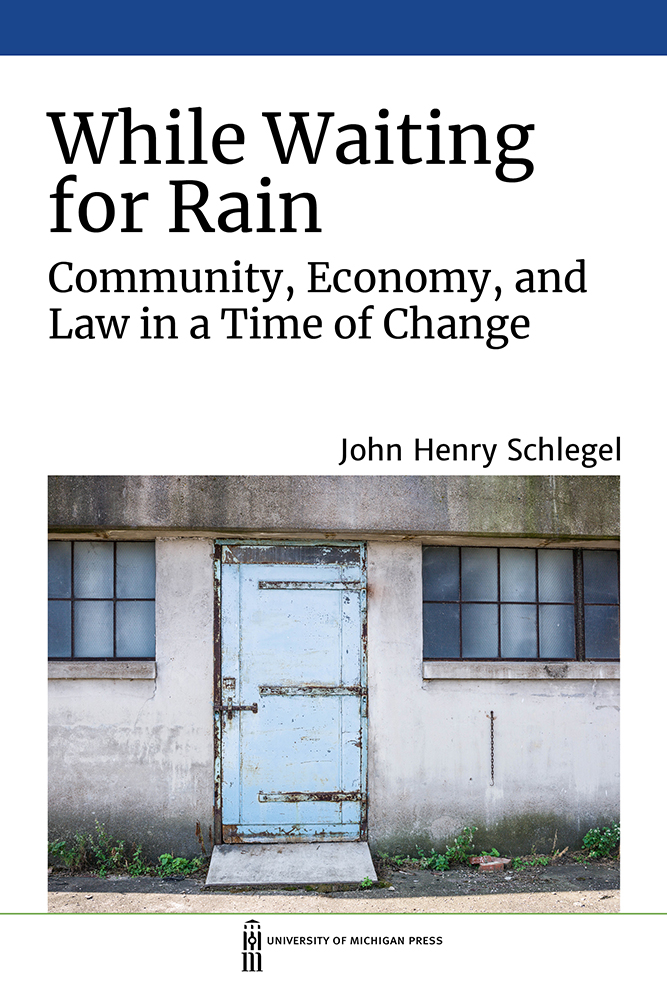
Schlegel's "While Waiting for Rain"

John Henry Schlegel, UB Distinguished Professor of Law and Floyd M. and Hilda L. Hurst Faculty Scholar at the University of Buffalo School of Law, has published While Waiting for Rain: Community, Economy, and Law in a Time of Change (University of Michigan Press):

What might a sensible community choose to do if its economy has fallen apart and becoming a ghost town is not an acceptable option? Unfortunately, answers to this question have long been measured against an implicit standard: the postwar economy of the 1950s. After showing why that economy provides an implausible standard—made possible by the lack of economic competition from the European and Asian countries, winners or losers, touched by the war—John Henry Schlegel attempts to answer the question of what to do.

While Waiting for Rain first examines the economic history of the United States as well as that of Buffalo, New York: an appropriate stand-in for any city that may have seen its economy start to fall apart in the 1960s, 70s, and 80s. It makes clear that neither Buffalo nor the United States as a whole has had an economy in the sense of “a persistent market structure that is the fusion of an understanding of economic life with the patterns of behavior within the economic, political, and social institutions that enact that understanding” since both economies collapsed. Next, this book builds a plausible theory of how economic growth might take place by examining the work of the famous urbanist, Jane Jacobs, especially her book Cities and the Wealth of Nations. Her work, like that of many others, emphasizes the importance of innovation for economic growth, but is singular in its insistence that such innovation has to come from local resources. It can neither be bought nor given, even by well-intentioned political actors. As a result Americans generally, as well as locally, are like farmers in the midst of a drought, left to review their resources and wait. Finally, it returns to both the local Buffalo and the national economies to consider what these political units might plausibly do while waiting for an economy to emerge.
Hardcover and paper publication is forthcoming, but the book is already available “open access and free to read on the web Funding is provided by the Andrew W. Mellon Foundation, as part of the Sustainable History Monograph Pilot.”  You may now or soon read it on JSTOR, Project Muse, OAPEN, ScienceOpen, and Internet Archive.

--Dan Ernst

Saturday, August 6, 2022

Weekend Roundup

  • Do you know about Founders Online, maintained by the National Archives?  H/t: Matt Steilen.
  • Here's a useful thread on dissertation prizes, including the Cromwell Prize in legal history.
  • At the Washington University St. Louis, Rebecca Wanzo, professor and chair of the Department of Women, Gender, and Sexuality Studies in Arts & Sciences, will be teaching Politics of Reproduction, an interdisciplinary course that will "explore topics including reproductive health, law, disability, economics, film, politics, reproductive justice and religion through a series of in-person events and public webinars."
  • We recently noted the Notice & Comment symposium on Bill Novak's New Democracy. Since that posting, additional commentaries have gone up, by Ganesh Sitaraman (Vanderbilt University Law School), Christoper J. Walker (University of Michigan School of Law), Orly Lobel (University of San Diego), and Jane Manners (Temple University Beasley School of Law). Stay tuned for another mini-symposium on the book soon, in the Law & History Review's online companion (The Docket).
  • “18 Civil War historians and professors of legal history disputed [Students for Fair Admissions’] “erroneous” claim that the 14th Amendment prohibits any consideration of race in admissions policies” in their amicus brief in Students for Fair Admissions vs. Harvard University (Harvard Gazette).

Weekend Roundup is a weekly feature compiled by all the Legal History bloggers.

Friday, August 5, 2022

American Bureaucracy and the Constitution: An ICH Seminar

[We have word that Fall 2022 seminar for advanced graduate students and junior faculty, sponsored by the Bonnie and Richard Reiss Graduate Institute for Constitutional History at the New-York Historical Society, which is not to be confused with the OG seminar still being conducted by the Institute for Constitutional Studies at the George Washington University Law School. DRE.]

American Bureaucracy and the Constitution, from the Founding Era to the Post New Deal

Gillian Metzger and Nicholas R. Parrillo

How has the role of government in everyday life changed throughout our nation's history? Today, a deep and historically inflected debate is raging over the legitimacy of American bureaucracy. As context for that controversy, this seminar will trace the constitutional history of the U.S. administrative state, starting with the Founding and the early Republic and moving through the Civil War and Reconstruction; the Progressive Era; and the rise and fall of the New Deal order.  The seminar will trace evolution in the separation of powers, focusing on the development of federal regulatory power, legislative delegations of authority to the bureaucracy, and struggles over political control of administrators.

Gillian Metzger is the Harlan Fiske Stone Professor of Constitutional Law at Columbia Law School, where she is also faculty co-director of Columbia’s Center for Constitutional Governance. In 2021, she served as a senior counsel in the Office of Legal Counsel in the U.S. Department of Justice. Nicholas R. Parrillo is Townsend Professor of Law at Yale, with a secondary appointment as professor of history. His research and teaching focus on administrative law and government bureaucracy, both past and present.

The seminar will be presented in person at the New-York Historical Society, 170 Central Park West, New York, NY 10024, on the following dates:

    Friday, November 18, 2022 | 2–5 pm ET
    Friday, December 2, 2022 | 2–5 pm ET
    Friday, December 9, 2022 | 2–5 pm ET
    Friday, December 16, 2022 | 3–6 pm ET

(Although we encourage students to attend the class in person, livestream participation will be offered to admitted students who do not live in the New York Metropolitan Area or who are unable to attend a class in person. If you are interested in attending some or all of the class sessions virtually, please indicate this in your application statement.)

The seminar is designed for graduate students and junior faculty in history, political science, law, and related disciplines. All participants will be expected to complete the assigned readings and participate in seminar discussions. Although the Institute cannot offer academic credit directly for the seminar, students may be able to earn graduate credit through their home departments by completing an independent research project in conjunction with the seminar. Please consult with your advisor and/or director of graduate studies about these possibilities.

Space is limited. To apply, please submit the following material to ich@nyhistory.org by October 7, 2022:
(1) Your C.V.; (2) A short statement on how this seminar will be useful to you in your research, teaching, or professional development.

Successful applicants will be notified soon thereafter. For further information, please email Alexander Kassl at ich@nyhistory.org.

There is no tuition or other charge for this seminar, though participants will be expected to acquire the assigned books on their own.

Thursday, August 4, 2022

Sandburg's "Subversive Legal History"

Okay, we don't know how we missed this book, and the series in which it appears, until we just now saw William Eves's review in the AJLH, but Russell Sandburg, Cardiff Law, has published Subversive Legal History: A Manifesto for the Future of Legal Education (Routledge, 2021):

Provocative, audacious and challenging, this book rejuvenates not only the historical study of law but also the role of Law Schools by asking which stories we tell and which stories we forget.

It argues that a historical approach to law should be at the beating heart of the Law School curriculum. Far from being archaic, elitist and dull, historical perspectives on law are and should be subversive. Comparison with the past underscores: how the law and legal institutions are not fixed but are constructed; that every line drawn in the law and everything the law holds as sacred is actually arbitrary; and how the environment into which law students are socialised is a historical construct. A subversive approach is needed to highlight, question, de-construct and re-construct the authored nature of the law, revealing that legal change on a larger scale is possible. Far from being archaic, this recasts legal history as being anarchic.

Subversive Legal History is not a type of Legal History but is its defining characteristic if it is to be a central part of Law School life. It describes a legal method that should not be the preserve only of specialist legal historians but rather should be part of the toolkit of all law students, teachers and researchers.

This book will be essential reading for all who work and study in Law Schools, proposing a radical new approach not only to the historical study of law but also to the content, purpose and ambition of legal education. A subversive approach can revolutionise Law Schools providing a more ambitious legal education which is grounded in the socio-legal reality, helping to ensure that today’s law students are better equipped to be the professionals and citizens of tomorrow.
It is the first book published in the series Transforming Legal Histories:

This book series showcases work which takes a historical approach to question understandings about law. This approach places today’s substantive law in its context, enabling an understanding of social and legal change and the complex relationship between change and continuity. It is designed to place the historical study of law at the heart of the law curriculum. The reach of the series is not limited in time or space, producing books that cover a wide range of jurisdictions and periods. The editorial board welcome proposals which engage with a general audience in relevant legal and non-legal fields including where appropriate, a student readership. 
--Dan Ernst

Wednesday, August 3, 2022

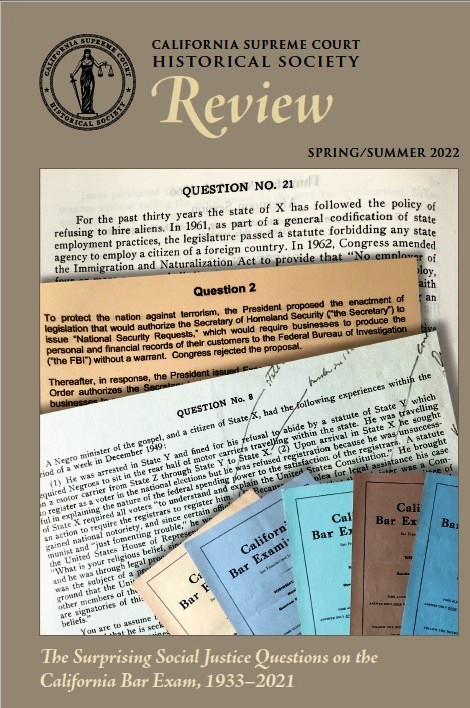
California Legal History: The CSCHS Review

 [Like us, you may not have been aware that some years back the newsletter of the California Supreme Court Historical Society was reestablished as the bi-annual CSCHS Review, to explore “California's legal history in the broadest sense. Our authors are academics, judges and attorneys. Here is an update from Molly Selvin.  DRE.]

Our articles represent important new research. For example, the exploration by attorney Bob Wolfe of the litigation surrounding the 1915 release of Birth of a Nation, D. W. Griffith’s incendiary portrayal of post-Civil War America. The film’s racist depiction of African Americans has been appropriately condemned. Less well known is the long struggle Wolfe recounts, by lawyers representing the newly formed NAACP around California as well as by some local government leaders, to halt showings of the film. Wolfe also meticulously documents the film’s role in stoking renewed interest in the Ku Klux Klan; membership in the group swelled during the 1920s, including thousands of California residents as well as many elected officials and law enforcement officers.

In our current issue, attorney Colleen Regan and I detail how California’s bar examination questions, to our surprise, tracked some of the twentieth century’s most pressing political and policy issues. In addition to asking prospective lawyers to untangle hypothetical negligence, contract and inheritance disputes, the California bar exam, from 1933-2021 often presented questions involving racial and gender equality, free speech, association, and religious expression — issues that generated fierce national debate and often violence. In addition to demonstrating the basic competencies necessary to practice law, we conclude that bar examiners in past decades included these social justice questions because they believed that lawyers had a responsibility to think broadly about equity and civil rights — issues newly resonant, particularly in the post–World War II years.

Tuesday, August 2, 2022

Nicoletti Wins Richards Prize

Congratulations to Cynthia Nicoletti, Virginia Law, for winning the George and Ann Richards Prize for the best article published in the Journal of the Civil War Era in 2021. The article, “William Henry Trescott: Pardon Broker,” 

details the efforts of William Henry Trescot, “executive agent” for South Carolina, who secured pardons in order to facilitate the restoration of land the federal government had seized from lowcountry planters during the war.  She demonstrates how Trescot’s maneuvering in the Johnson White House and with Freedmen’s Bureau officials throughout 1865 and 1866 was integral in explaining the failure of Reconstruction-era land redistribution in the United States.

In the words of the prize committee, “Nicoletti offers an important new perspective on a familiar subject: the pardoning of ex-Confederates by U.S. president Andrew Johnson. Taking a novel methodological approach to this topic, her well-written article shows the critical role that the South Carolinian William Henry Trescot played in not only encouraging Johnson’s issuance of pardons but also facilitating the restoration of land to former slaveowners in the U.S. South. In doing so, “William Henry Trescot, Pardon Broker” makes a substantial contribution to the scholarship on the Reconstruction era and strengthens our understanding of its legacies. The denial of freedpeople’s demands for land redistribution as an essential foundation of self-determination and restorative justice was far from inevitable, as Nicoletti concludes. “Instead, the nation that emerged from the struggles of the Civil War was one that was actively made by men like William Henry Trescott."

Professor Nicoletti presented the paper at an annual meeting of the American Society for Legal History (and other legal history venues).

--Dan Ernst

Monday, August 1, 2022

CFP: Historical Reflections on Modern Constitutionalism

Via Professor Raphael Peixoto (Ufersa Law School and IDP-DF) and Professor Cristiano Paixão (University of Brasília) we have the following Call for Papers:

Constitutionalism and written constitutions are fundamental elements of the modern legal-political experience. We can identify in the revolutions of the late 18th century the formation of the decisive historical context that made possible a new way of understanding law and politics, inaugurating a new concept and a new constitutional practice. 

This “constitutional revolution”, however, did not occur in the same way across the globe, but was marked by very different historical processes, producing plural constitutional traditions and experiences. Constitutionalism should also not be interpreted as a linear phenomenon, based on ideas of progress and evolution. If the modern constitutional lexicon made possible the permanent demand for inclusion, equality and limitation of political power, it also lived closely with colonialism and exclusion and was a useful instrument for authoritarian regimes. 

To historically understand this complex and multifaceted development, it is necessary to adopt an interdisciplinary perspective. Producing knowledge in the field of constitutional history requires, therefore, a theoretical-methodological contribution and the perspective of approaching the most varied types of knowledge: law, history, political science, sociology, etc.

The Legal Journal of the Universidade Federal Rural do Semi-Árido invites researchers to submit studies that can contribute to the historical reflection on modern constitutionalism. The dossier aims to encourage the production of research with various aspects: intellectual and conceptual history, specific constitutional experiences, institutional practices, constituent processes, theoretical-methodological aspects, etc. 

The authors of the texts must be doctors or doctors in co-authorship with, at most, one postgraduate student. Authors must have a PhD. 

Deadline: September 30, 2022

Guidelines for submission: https://periodicos.ufersa.edu.br/rejur/about/submissions

-- Karen Tani