News of upcoming public lectures by three legal historians have fallen into my virtual lap, as it were.
First, William Wiecek will inaugurate Transylvania University’s John Marshall Harlan Series. He will speak on Monday, September 26, at 7:30 p.m. in Carrick Theater in the Mitchell Fine Arts Center on the topic, John Marshall Harlan, Race, and the United States Supreme Court. The lecture is free and open to the public.
Second, “on Thursday, September 29"--or so the Rockbridge Weekly informs me--the “distinguished legal historian Alfred Brophy will deliver the 2011 Hendricks Lecture in Law and History. The topic of Professor Brophy's talk is ‘The Jurisprudence of Slavery, Freedom, and Union at Washington College, 1831-1861.’ The lecture will begin at 3:00 p.m. in Stackhouse Theater, Elrod Commons on the campus of Washington and Lee University. The event is free and open to the public”
Third, on Thursday, November 17, at 4:30 PM, Sarah Barringer Gordon, Arlin M. Adams Professor of Constitutional History and Professor of History, University of Pennsylvania, will speak in a lecture series sponsored by the John C. Danforth Center on Religion & Politics at Washington University in St. Louis.
Friday, September 23, 2011
Thursday, September 22, 2011
University of Iowa Legal History Workshops
The Program in Law and History at the University of Iowa has announced its workshop schedule for the year:
In addition, this year's Donald W. Sutherland Memorial Lecture in Legal History will be given by Professor Linda Colley CBE, who holds the Shelby M.C. Davis 1958 Professorship in the Department of History at Princeton University. Professor Colley will deliver the lecture on Friday, October 5, 2012. The Lecture honors the memory of Donald W. Sutherland, the late Carver Professor of History and Law at the University of Iowa.
Thomas P. Gallanis's inaugural Sutherland Lecture, The Evolution of the Common Law, can be viewed via podcast here.
Richard Helmholz, University of Chicago
Monday, September 19, 2011, Noon
Emily Kadens, University of Texas
Monday, October 10, 2011, Noon
Monday, October 10, 2011, Noon
Kristen Stilt, Northwestern University
Monday, April 2, 2012, Noon
Monday, April 2, 2012, Noon
William Novak, University of Michigan
Monday, April 26, 2012, Noon
Monday, April 26, 2012, Noon
Thomas P. Gallanis's inaugural Sutherland Lecture, The Evolution of the Common Law, can be viewed via podcast here.


Law, Society and Culture at Indiana Law
The line-up for the fall 2011 colloquium of Indiana Law's Center for Law, Society and Culture is out. The series includes several sessions of interest to legal historians, including two by this year's Jerome Hall Postdoctoral Fellows, Leila Kawar and Katherine Turk. Most sessions are held at 4:00 in the law school's faculty conference room.
Sep. 15
The Death Penalty: Judge versus Jury
Valerie Hans
Cornell Law School
Sep. 29
Democracy or Discipline? Economic Globalization and the Architecture of Government
Alasdair Roberts
Suffolk University Law School
Oct. 6
Room 213
Legal Liberalism and the Juridical Construction of Immigrant Rights in the United States and France, 1973-1983
Leila Kawar
Bowling Green State University
Nov. 10
'Our Militancy is in Our Openness': Gay Employment Rights Activism and the Question of Sexual Orientation Under Title VII, 1964-1990
Katherine Turk
University of Texas at Dallas
Nov. 17
The Few, the Proud, the Gays: Don't Ask, Don't Tell and the Trap of Tolerance
Suzanna Walters
Indiana University
Dec. 1, noon
Sally Merry
New York University
Sep. 15
The Death Penalty: Judge versus Jury
Valerie Hans
Cornell Law School
Sep. 29
Democracy or Discipline? Economic Globalization and the Architecture of Government
Alasdair Roberts
Suffolk University Law School
Oct. 6
Room 213
Legal Liberalism and the Juridical Construction of Immigrant Rights in the United States and France, 1973-1983
Leila Kawar
Bowling Green State University
Nov. 10
'Our Militancy is in Our Openness': Gay Employment Rights Activism and the Question of Sexual Orientation Under Title VII, 1964-1990
Katherine Turk
University of Texas at Dallas
Nov. 17
The Few, the Proud, the Gays: Don't Ask, Don't Tell and the Trap of Tolerance
Suzanna Walters
Indiana University
Dec. 1, noon
Sally Merry
New York University
New Evidence on New Zealand's First Contact Violence
Georgetown University’s Center for Australian and New Zealand Studies invites the public to “Lost in Transition: New Research into Iconic, First-Contact Violence between Europeans and Indigenous New Zealanders,” with Dr. Ian Barber, University of Otago, New Zealand. The session will be held on Tuesday, October 4, 2011 from 12:00pm to 1:00pm in the Intercultural Center, Room 450. Lunch will be available. RSVP to to canz@georgetown.edu
Here is the Center’s description of the event.
Here is the Center’s description of the event.
The first recorded encounters between Europeans and indigenous Maori and Moriori of the New Zealand islands were characterized by violent outcomes. In the first case, the 1642 contact events involving Dutch Europeans and local Maori in Golden Bay, northern South Island, have been reinterpreted and incorporated into the national collective memory. Recent historic and archaeological research is reported on, and compared between, the 1642 Dutch-Maori encounter and the first 1791 contact with Chathams Island Moriori. This research considers new explanations for these events in their original cultural landscape settings. It also challenges the cultural logic by which indigenous contact violence has become an iconic, foundation theme of the New Zealand nation.
Ian Barber is currently Senior Lecturer in the Department of Anthropology, University of Otago. He was formerly Senior Archaeologist with the NZ Historic Places Trust. He has directed archaeological survey and excavation projects in northern, central and southern New Zealand and undertaken research visits to Easter Island/Rapa Nui, Hawaii and the North American continent.
Wednesday, September 21, 2011
Q & A with Lawrence Friedman: on PhDs
Note to readers: This is a part of a series of questions and answers with Lawrence Friedman. If you have a question you've wanted to ask him, please post it in a comment, or email me.
Question from Lael Weinberger, attorney and history graduate student:
Question from Lael Weinberger, attorney and history graduate student:
Professor Friedman began writing legal history without professional training as a historian. How does he feel that this impacted his career as a legal historian?
Answer from Lawrence:
Answer from Lawrence:
You're right, I have no professional training in legal history; or in history itself for that matter. One course in college. So I'm definitely an amateur. Sometimes I think this is an advantage. I'm on the outside looking in. Also, I don't have to write "history;" and a lot of my work isn't properly historical at all. If I had a position in a history department, that would be considered (quite rightly) peculiar.
But mostly lack of training is a disadvantage. The new legal historians have studied history, they know the literature, they think hard about methodology, they know the lingo, and they have a sharp historical sense. The younger scholars with joint degrees are doing wonderful work. I hope I've made a contribution; but perhaps it would have been more of a contribution if I knew more about what I was doing and why. It's hard not to feel sometimes like an impostor.
Cushman on Headline Kidnappings and the Origins of the Lindbergh Law
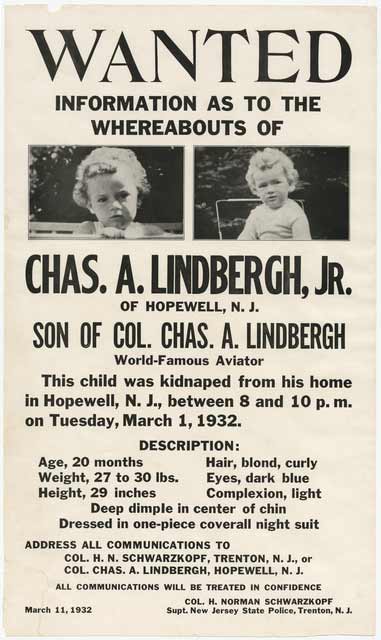
Headline Kidnappings and the Origins of the Lindbergh Law has just been posted by Barry Cushman, University of Virginia School of Law. It appeared in the St. Louis University Law Journal, Vol. 55, No. 4. Here's the abstract:
 |
| image credit |
The federal kidnapping statute of 1932 -- which prohibits the transportation of a kidnapped person across state lines -- is commonly known as the Lindbergh Law due to its enactment in the immediate wake of the abduction of Charles and Anne Lindbergh’s child in March of that year. Indeed, but for the commission of that crime the statute probably would not have been enacted. But the Lindbergh affair alone cannot explain the form that the congressional reaction took. For the Lindbergh baby was found murdered fewer than four miles from his home, and there was no evidence that he had been transported across a state line. Had the Lindbergh Law been in effect when young Charles Lindbergh was kidnapped, it would not have applied to the offense. In fact, the bill that ultimately became the Lindbergh law was not introduced in the wake of that sensational crime, nor was it introduced by members of the New Jersey delegation that represented the Lindbergh family and the state in which the crime had been committed. Instead it had been introduced three months before the Lindbergh abduction by Senator Roscoe Conkling Patterson of Missouri and Representative John Joseph Cochrane of St. Louis.
The congressional hearing on the bill, which took place a week before the Lindbergh kidnapping, was dominated by testimony of officials from St. Louis. Owing to its strategic location on the state border with Illinois, that city had become a center of profitable activity for the organized criminals running the midwestern "snatch racket." This essay, prepared as a comment on Professor Lawrence Friedman’s Childress Lecture on "headline trials" at St. Louis University School of Law, explores the high-profile abductions of the early 1930s that spurred St. Louis leaders to seek federal legislation to address the scourge. These included kidnappings of scions of the Anheuser-Busch and International Shoe fortunes; but the story that dominated headlines and riveted the attention of the community for much of the decade involved the 1931 interstate abduction of the city’s leading otolaryngologist by a group of mobsters and ex-convicts led by a prominent St. Louis socialite named Nellie Muench. Nellie, whose underworld nickname was "Goldie" due to her exceptional interest in lucre, was married to a local physician, was the daughter of a well-known Baptist minister, and was the sister of a judge on the Missouri Supreme Court. The saga of Nellie and her partners in crime involved a parade of colorful figures participating in multiple criminal trials; the drive-by machine-gunning of a key witness; a near-fatal attack on the chief prosecutor; a faked pregnancy and two illegal adoptions (one of which resulted in an infant’s death) in order to curry favor with her criminal jury; an unsuccessful attempt to retain custody of the surviving child in a hearing before Special Commissioner Rush Limbaugh, Sr.; and ultimately a mail fraud conviction for seeking to extort $250,000 from the bachelor with whom she had initiated an affair and had told that he was the father of her child.
Tuesday, September 20, 2011
Religion, Morality, and the Constitutional Order
 Just out in the pamphlet series New Essays on American Constitutional History, co-produced by the American Historical Association and the Institute for Constitutional History, is Religion, Morality, and the Constitutional Order, by Linda Przybyszewski, Notre Dame History. The AHA's website explains:
Historically, debates over the meaning of religious liberty in the United States have taken place largely at the local level. Linda Przybyszewski examines the origins of this sociopolitical custom and how it changed in the late nineteenth and twentieth centuries as the Supreme Court opened the door to federal challenges to local religious interpretations of the First Amendment.
NYU's Legal History Colloquium
The schedule is out for NYU’s Legal History Colloquium:
September 13
Daniel Hulsebosch, Charles Seligson Professor of Law, NYU School of Law
"Being Seen Like a State: The Constitution and Its International Audiences at the Founding"
September 27
Robert Reinstein, Clifford Scott Green Professor of Law, Temple Law School
"Executive Power and the Law of Nations in the Washington Administration"
October 11
Peter Onuf, Thomas Jefferson Memorial Foundation Professor, University of Virginia, Department of History
"Imperialism and Nationalism in the Early American Republic"
October 25
Eliga Gould, Associate Professor of History, University of New Hampshire, Department of History
"Among the Powers of the Earth: The American Revolution and the Making of a New World Empire"
November 8
John Parry, Professor of Law, Lewis & Clark Law School
"What is the Grotian Tradition in International Law"
November 22
David Armitage, Lloyd C. Blankfein Professor of History, Harvard University, Department of History
"`Ticklish Work': Francis Lieber and the Laws of Civil War"
December 6
Brian Richardson, Samuel I. Golieb Fellow, NYU School of Law
"Foreign Law at the Founding: the non-Vattelian Origins of America's Engagement with Public International Law"
September 13
Daniel Hulsebosch, Charles Seligson Professor of Law, NYU School of Law
"Being Seen Like a State: The Constitution and Its International Audiences at the Founding"
September 27
Robert Reinstein, Clifford Scott Green Professor of Law, Temple Law School
"Executive Power and the Law of Nations in the Washington Administration"
October 11
Peter Onuf, Thomas Jefferson Memorial Foundation Professor, University of Virginia, Department of History
"Imperialism and Nationalism in the Early American Republic"
October 25
Eliga Gould, Associate Professor of History, University of New Hampshire, Department of History
"Among the Powers of the Earth: The American Revolution and the Making of a New World Empire"
November 8
John Parry, Professor of Law, Lewis & Clark Law School
"What is the Grotian Tradition in International Law"
November 22
David Armitage, Lloyd C. Blankfein Professor of History, Harvard University, Department of History
"`Ticklish Work': Francis Lieber and the Laws of Civil War"
December 6
Brian Richardson, Samuel I. Golieb Fellow, NYU School of Law
"Foreign Law at the Founding: the non-Vattelian Origins of America's Engagement with Public International Law"
Monday, September 19, 2011
Announcement: Virginia Foundation for the Humanities Fellowship Competition
The Virginia Foundation for the Humanities in Charlottesville, Va., offers residential fellowships to scholars in the humanities. The foundation's announcement of its 2012-13 fellowship competition follows.
The Virginia Foundation for the Humanities seeks proposals for projects that are intellectually stimulating, imaginative, and accessible to the public. We welcome proposals on subjects of public interest in any area of the humanities and currently encourage proposals on literature, religious studies, and the history and culture of the South Atlantic region. We invite proposals on subjects that complement VFH programs on violence; folklife; and African American, Virginia Indian, and other cultures and communities.
Fellows have private offices with free parking at the Virginia Foundation for the Humanities, located on a scenic property several miles from the University of Virginia. They hold visiting faculty privileges at the University of Virginia and have access to all UVa research and recreational facilities. UVa library books are delivered directly to the VFH. Although housing is not provided, there are many reasonably priced options available in and around Charlottesville.
We offer stipends up to $15,000 per semester; summer Fellows receive travel or housing funds only. Residencies may be for a semester, an academic year, or a summer term. Applicants need not have advanced degrees, but we do not support work toward a degree, nor do we typically support dissertation revisions. Former VFH Fellows must wait three years before applying for another fellowship.
The application deadline for 2012-13 is Dec. 1, 2011. Applications are accepted online.
For more information, visit VirginiaHumanities.org or email Ann White Spencer, VFH Fellowship Program, at aspencer@virginia.edu.
Legal History as American Intellectual History
Sophia Z. Lee, Penn Law, has reviewed Daniel T. Rodgers's Age of Fracture in Jotwell. Lee writes that "Legal historians should take particular interest in the book. It places in historical context a number of trends in legal thought, from law and economics to originalism."
Congressman Price on History, Politics, and Constitutionalism
 |
| Credit: Daily Tar-Heel |
Journal of Supreme Court History
 The Journal of Supreme Court History, volume 36, issue 2 (July 2011) is out or, at least, available from Wiley on-line. Here are the articles:
An Assault on Justice: John McKinley and the Affair at Jackson by Steven P. Brown.
Because of “His Spotless Integrity of Character”: The Story of Salmon P. Chase: Cabinets, Courts, and Currencies, by Emily Kendall
Lochner and Constitutional Continuity, by David E. Bernstein
“Spreading the Wealth”: Justice Tom C. Clark's Wide-ranging Efforts to Open the Doors of the Law Clerk Ranks, by Craig Alan Smith
Associate Justice Tom C. Clark retired from the Supreme Court at the conclusion of its 1966 term to avoid even the appearance of impropriety when his son, Ramsey, became the U.S. Attorney General. “I believe it would be best for me to retire,” Clark wrote one well-wisher, “Litigants have enough problems without having a father-son psychology to face. And while there is no actual conflict the potential is there and the appearance of justice is as important and effective as the real thing.” Clark had served on the Court eighteen years, and he began his retirement with a three-month, state-sponsored goodwill trip around the world, which was cut short when he contracted hepatitis in Thailand.
Sunday, September 18, 2011
"How a Book Can Change the World": This Week in the Book Reviews
 | |
| Ralph Richard Banks |
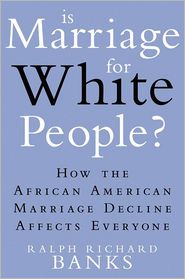
Banks doesn’t offer a jeremiad about the decline of black family values in the way of so many others who do little more than regurgitate Daniel Patrick Moynihan’s 1965 report . . . . Refreshingly, Banks offers a well-researched and probing discussion of why marriage rates are so low among black Americans.
Perry's "primary criticism" of the book is its "prescriptive measure," which in Perry's words amounts to the suggestion that "[b]lack women . . . be more open to marrying outside their race." Earlier coverage by Feminist Law Prof blogger Bridget Crawford is here; lots more at the book's website, here.In clean and efficient prose, Banks presents a lucid picture of romantic life in black America. Moreover, he disposes of the mythology that the failure to marry is primarily an underclass phenomenon, turning his attention especially to the lives of middle-class black women. He has set out to answer the question: Why are black women “half as likely as white women to be married, and more than three times as likely as white women never to marry”?

Also in the NYT, American Dreamers: How the Left Changed a Nation (Knopf), by historian and longtime editor of Dissent magazine Michael Kazin. According to Beverly Gage (here), the book is an earnest analysis of the left's failures and successes, and a "bid to reclaim the left’s utopian spirit for an age of diminished expectations."
 "As the obsolescence and even the demise of the book are widely foretold, it is all the more important—and comforting—to recognize how a book can change the world." So begins Drew Gilpin Faust's review of Mightier Than the Sword: Uncle Tom’s Cabin and the Battle for America (W. W. Norton), by David Reynolds. Read on here, at the New Republic.
 TNR also offers reviews of The Bear: History of a Fallen King (Harvard/Belknap), by French medievalist Michel Pastoureau (an "odd study," "permeate[d]" with "bitterness" on behalf of the dethroned beast), and Alcibiades (Casement Publishing), by P.J. Rhodes (praised for delivering a "just, and damning" verdict of the "Athenian playboy, general and traitor").
The Wall Street Journal covers four books on Columbus, all by authors without formal training in history ("Faulty Navigators"). Reviewer Felipe Fernández-Armesto is not impressed. "Columbus, like Napoleon and Hitler," he writes, "is an object of fascination among readers. Something of a crank himself, he notoriously attracts cranky authors, as crag calls forth to crag." After providing a glimpse of "the dispiriting litany of errors" he discovered in the texts under review, Fernández-Armesto contemplates "what drives these writers to parade their inadequacies in the marketplace." He urges academic historians to be less welcoming to non-specialists who don't "bother[] to do the basic work."
Also reviewed in the WSJ: Michael C. Toth's Founding Federalist: The Life of Oliver Ellsworth, the latest installment of the Intercollegiate Studies Institute's series of "forgotten founders" biographies (here); and David Stevenson's With Our Backs to the Wall: Victory and Defeat in 1918 (Harvard/Belknap), a "masterly study" of how World War I came to an end (here).

This week a reader introduced me to the UK monthly "History Today." The articles are "popular" in style; the book reviews cover the popular and the more academic. This month's issue includes an article on nineteenth-century efforts to "photograph madness," and short reviews of Sanctuary and Crime in the Middle Ages (Fordham University Press), by Karl Shoemaker (here); Millions Like Us: Women's Lives in War and Peace 1939-1949 (Viking), by Virginia Nicholson (here); and Crooked Talk: Five Hundred Years of the Language of Crime (Random House), by Jonathon Green (here).
A new issue of the London Review of Books is out. Not much jumped out at me, but you may want to peruse the TOC, here.
Saturday, September 17, 2011
Weekend Round-Up
- The fellows who participated in the 2011 Hurst Summer Institute in Legal History comment on their experiences here.
- A review of David Bernstein’s Rehabilitating Lochner, from the on-line edition of Reason, is here.
- Marshall Poe interviews Charles McKinney, Jr., about his book “Greater Freedom: The Evolution of the Civil Rights Struggle in Wilson, North Carolina” (2000) here.
- Around the colloquia (courtesy of Legal Scholarship Blog): Justice Eliezer Rivlin, Israeli Supreme Court, presented “Law and Economics in the Israeli Legal System: Why Learned Hand Never Made it to Jerusalem” at Berkeley Law on September 12. Sheldon Gelman, Cleveland-Marshall Law, presented “The Historiography of the New Deal: Yesterday, Today, and Tomorrow” at Cleveland-Marshall Law on September 14. Mary Ziegler, St. Louis Law, presented “Responding to Roe v. Wade: Should Social Issues Be Resolved in the Courts?“ at Illinois Law on September 16.
Jackson at Buffalo, 1946

The 2011 edition of the James McCormick Mitchell Lecture, the University at Buffalo Law School's highest-profile lecture series, revisits a significant historical moment for UB and the world - one that has been largely overlooked. The event on Tuesday, Oct. 4, is an occasion to examine a major address by United States Supreme Court Justice Robert H. Jackson, given at the University of Buffalo centennial exactly 65 years before. Jackson, who had taken a leave of absence from the high court to serve as the chief U.S. prosecutor at the Nuremberg war crimes trial in occupied Germany, spoke at UB immediately after he returned from that historic trial in 1946. His speech touched on timeless themes: how a "warlike spirit" can overcome a nation; the quest for nations to work cooperatively in the cause of peace; the interrelationship of war and dictatorship; and the supremacy of law over the lawless forces of war and persecution.
Three legal scholars will discuss aspects of Jackson's 1946 address, placing the speech in historical context and discussing its enduring implications. The Mitchell Lecturers will be:
John Q. Barrett, professor of law at St. John's University in New York City and a board member at the Robert H. Jackson Center in Jamestown, N.Y., who will discuss "Bringing Nuremberg Home: Justice Jackson's Path Back to Buffalo, Oct. 4, 1946." Barrett is writing a biography of Justice Jackson.
Eric L. Muller, professor at the University of North Carolina School of Law and a legal historian with special interest in the Japanese internment cases during the World War II era, who will discuss "Nazis, Americans and the Law as a `Peace Profession.'"
Mary L. Dudziak, the Judge Edward J. and Ruey L. Guirado Professor of Law, History and Political Science at the University of Southern California, and currently the John Hope Franklin Visiting Professor of American Legal History at Duke University Law School, speaking on "Rumors of War."
Hat tip: H-Law
Friday, September 16, 2011
Q & A with Lawrence Friedman: on writing
Note to readers: This is a part of a series of questions and answers with Lawrence Friedman. If you have a question you've wanted to ask him, please post it in a comment, or email me.
Question -- from Dan Ernst:
 Among other things, you are the most successful synthesizer in the field of American legal history. What did you like about writing, say, A History of American Law, American Law in the Twentieth Century and Crime and Punishment in American History that you didn’t get from writing monographs, such as Contract Law in America or The Roots of Justice? Any advice for others contemplating writing a synthetic work?
Answer from Lawrence:
I was very young-- or what I now think was very young-- when I started to work on A History of American Law; and maybe it was a case of fools rushing in where angels fear to tread. I wanted to do something new, something that hadn't been done before. This was, of course, a work of synthesis; but frankly there wasn't that much to synthesize, and I had to do a lot of digging and looking in primary sources. Today the literature is bursting at the seams, so a work of synthesis to a certain extent needs a different technique. Not necessarily easier. If nobody had written on a subject before, it was OK for me to make wild guesses. Now that is harder.
 We need works of synthesis of course; but for anybody who wants to work in legal history, a monograph, an intense work with sources, a study that excavates buried cities, is something you need to do-- first, to establish your credentials, and more important, to teach you what it is like to do this kind of research. But I suppose that those of us who go into this field must love to do research; must love the excitement of uncovering something new, of looking at a record nobody saw before, of opening doorways that have been sealed shut and overgrown and forgotten.
Advice for potential synthesizers? First, know what you're getting into. It's harder than it looks. Second, what you are really doing is trying to interpret the meaning of whole masses of studies and whole ziggurats of data. You have to look for the general that is lost in a maze of particulars. You need dogged determination, and above all a vivid imagination. But not too vivid, I hope. And you need modesty too. You can't read everything, you can't know everything, and there's no sense even trying.
Question -- from Dan Ernst:
Answer from Lawrence:
I was very young-- or what I now think was very young-- when I started to work on A History of American Law; and maybe it was a case of fools rushing in where angels fear to tread. I wanted to do something new, something that hadn't been done before. This was, of course, a work of synthesis; but frankly there wasn't that much to synthesize, and I had to do a lot of digging and looking in primary sources. Today the literature is bursting at the seams, so a work of synthesis to a certain extent needs a different technique. Not necessarily easier. If nobody had written on a subject before, it was OK for me to make wild guesses. Now that is harder.
 We need works of synthesis of course; but for anybody who wants to work in legal history, a monograph, an intense work with sources, a study that excavates buried cities, is something you need to do-- first, to establish your credentials, and more important, to teach you what it is like to do this kind of research. But I suppose that those of us who go into this field must love to do research; must love the excitement of uncovering something new, of looking at a record nobody saw before, of opening doorways that have been sealed shut and overgrown and forgotten.
 Advice for potential synthesizers? First, know what you're getting into. It's harder than it looks. Second, what you are really doing is trying to interpret the meaning of whole masses of studies and whole ziggurats of data. You have to look for the general that is lost in a maze of particulars. You need dogged determination, and above all a vivid imagination. But not too vivid, I hope. And you need modesty too. You can't read everything, you can't know everything, and there's no sense even trying.
Grad Student Article Prize, Journal of Women's History

The Editorial Board of the Journal of Women’s History is proud to announce the initiation of a biennial prize for the best article manuscript in the field of women’s history authored by a graduate student. Manuscripts in any chronological and geographical area are welcome. We seek work that has broad significance for the field of women’s history in general by addressing issues that transcend the particulars of the case or by breaking new ground methodologically.
Manuscripts should be submitted electronically, along with a cover letter specifying the author’s graduate advisor, program, and status (i.e., year in program, ABD, etc.), by March 1, 2012 to each member of the committee: Durba Ghosh (dg256ATcornellDOTedu); Pamela Scully (pamelaDOTscullyATemoryDOTedu); and Judith Zinsser (zinssejpATmuohioDOTedu).
The winning author will receive $3000, and the article will be published in the Journal of Women’s History.
Hat tip to Historiann
The University of Wisconsin Legal History Working Group
Our friends at the University of Wisconsin write to announce that they have just launched a webpage for their Legal History Working Group. The Working Group's members include scholars from UW's Law School, History, African-American Studies, Languages and Cultures of Asia, American Indian Studies, the History of Science and other parts of the campus.

The Working Group considers itself continuing “the spirit of UW's legal history tradition begun by Willard Hurst.” With the support of Wisconsin’s Institute for Legal Studies, it also sponsors faculty workshops on various themes within legal history. In 2010-11, it held workshops on legal history and religion (organized by Mitra Sharafi) and colonial/postcolonial law in Asia and the Pacific (organized by Nancy Buenger). Consult the webpage for a list of affiliated faculty, courses with significant legal history content, and online legal-history resources hosted by UW or created by its faculty members.

The Working Group considers itself continuing “the spirit of UW's legal history tradition begun by Willard Hurst.” With the support of Wisconsin’s Institute for Legal Studies, it also sponsors faculty workshops on various themes within legal history. In 2010-11, it held workshops on legal history and religion (organized by Mitra Sharafi) and colonial/postcolonial law in Asia and the Pacific (organized by Nancy Buenger). Consult the webpage for a list of affiliated faculty, courses with significant legal history content, and online legal-history resources hosted by UW or created by its faculty members.
Thursday, September 15, 2011
Q & A with Lawrence Friedman: on teaching
Note to readers: This is a part of a series of questions and answers with Lawrence Friedman. If you have a question you've wanted to ask him, please post it in a comment, or email me.
Question:
When you first began teaching American legal history, what was on your syllabus? And what was your class like? Thinking about your legal history classes now, how have they changed over time? In what ways is your syllabus different? Are your teaching objectives different? Do your students expect something different?
Answer (from Lawrence):
I don't think my legal history classes have changed much over time. I ask people (shamelessly) to buy A History of American Law; but I teach mainly from unpublished class materials. I've never tried to publish these, because I feel they're too idiosyncratic. There really isn't a canon for legal history. At least I don't think so. Maybe the dear old Charles River Bridge case!
My materials are all primary sources-- statutes, a few cases, reports, excerpts from various texts-- for example, I have a section on criminal justice, and it includes some material from Beaumont and DeTocqueville on the penitentiary system; an excerpt from Dimsdate, Vigilantes from Montana, that sort of thing.
I am a law and society person through and through. I pay little or no attention to jurisprudence and schools of jurisprudence. I have a lot of material on criminal justice, family law, and (of course) slavery and race relations. The emphasis is not on constitutional law or the Supreme Court. Or on the founding fathers and the Constitutional convention.
I think all along my teaching objective has been to show the relationship between American law and American society, in different periods. A kind of historical sociology of law, but without grand theory; and rooted in concrete experience. I think I should add that it's basically a lecture course. This isn't a matter of pedagogical theory; I have enormous admiration for teachers who can teach legal history as a discussion course, when the size of the class is fairly large. I just don't know how to do it.
Another objective is to counteract the numbing effect of much of the law school experience, which is highly formal, and highly normative. And which also ignores history and culture. I also have some history students in my class-- I think they benefit, because the legal system is such a critical aspect of our society and our history, and it's good for them to be exposed to it.
I have no idea, frankly, what the students expect. Law school is full of academic refugees: doctors, English majors, engineering students who changed their mind; and quite a few history majors who are discouraged by the job prospects for historians. Probably there are as many expectations as there are students.
On the whole, I think the students really like the class. Unlike a lot of the rest of law school, history is really really interesting. At least that's my opinion.
Question:
When you first began teaching American legal history, what was on your syllabus? And what was your class like? Thinking about your legal history classes now, how have they changed over time? In what ways is your syllabus different? Are your teaching objectives different? Do your students expect something different?
Answer (from Lawrence):
I don't think my legal history classes have changed much over time. I ask people (shamelessly) to buy A History of American Law; but I teach mainly from unpublished class materials. I've never tried to publish these, because I feel they're too idiosyncratic. There really isn't a canon for legal history. At least I don't think so. Maybe the dear old Charles River Bridge case!
My materials are all primary sources-- statutes, a few cases, reports, excerpts from various texts-- for example, I have a section on criminal justice, and it includes some material from Beaumont and DeTocqueville on the penitentiary system; an excerpt from Dimsdate, Vigilantes from Montana, that sort of thing.
I am a law and society person through and through. I pay little or no attention to jurisprudence and schools of jurisprudence. I have a lot of material on criminal justice, family law, and (of course) slavery and race relations. The emphasis is not on constitutional law or the Supreme Court. Or on the founding fathers and the Constitutional convention.
I think all along my teaching objective has been to show the relationship between American law and American society, in different periods. A kind of historical sociology of law, but without grand theory; and rooted in concrete experience. I think I should add that it's basically a lecture course. This isn't a matter of pedagogical theory; I have enormous admiration for teachers who can teach legal history as a discussion course, when the size of the class is fairly large. I just don't know how to do it.
Another objective is to counteract the numbing effect of much of the law school experience, which is highly formal, and highly normative. And which also ignores history and culture. I also have some history students in my class-- I think they benefit, because the legal system is such a critical aspect of our society and our history, and it's good for them to be exposed to it.
I have no idea, frankly, what the students expect. Law school is full of academic refugees: doctors, English majors, engineering students who changed their mind; and quite a few history majors who are discouraged by the job prospects for historians. Probably there are as many expectations as there are students.
On the whole, I think the students really like the class. Unlike a lot of the rest of law school, history is really really interesting. At least that's my opinion.
Wisconsin's Law and Society Postdoctoral Fellowship
[Here's an announcement from the Institute for Legal Studies at the University of Wisconsin-Madison School of Law.]
 The Institute for Legal Studies of the University of Wisconsin Law School will appoint a post-doctoral fellow for the 2012-13 academic year. We invite applications from scholars who are in the early (pre-tenure) stage of their career or whose careers have been interrupted or delayed. Eligibility is limited to humanities or social science scholars who work in the law and society tradition, for example, anthropologists, economists, historians, political scientists, and sociologists. Advanced ABD graduate students may apply, but the PhD must be completed before beginning the fellowship. The stipend will be $25,000, plus a research allowance of $5,000 and benefits that include health insurance. More.
Hat tip: H-Law
 The Institute for Legal Studies of the University of Wisconsin Law School will appoint a post-doctoral fellow for the 2012-13 academic year. We invite applications from scholars who are in the early (pre-tenure) stage of their career or whose careers have been interrupted or delayed. Eligibility is limited to humanities or social science scholars who work in the law and society tradition, for example, anthropologists, economists, historians, political scientists, and sociologists. Advanced ABD graduate students may apply, but the PhD must be completed before beginning the fellowship. The stipend will be $25,000, plus a research allowance of $5,000 and benefits that include health insurance. More.
Hat tip: H-Law
Wednesday, September 14, 2011
ASLH Program Change
Two panels are changing places on the ASLH program at the conference in November.
Moved to Friday morning at 8:30 a.m.:
Insurrections & Infections: Rethinking the Legal History of Atlanta, 1920-1940 – Inman
Chair - Robert Baker, Georgia State University
Polly Price, Emory University, “Federalization of the Mosquito: Malaria and Public Health In the Southern United States, 1900-1945”
Maryan Soliman, University of Pennsylvania, “Racial Equality on Trial in Atlanta during the 1930s”
Anders Walker, Saint Louis University, “Scarlett’s Rainbow: Margaret Mitchell, Anti-Catholicism, & the Ku Klux Klan in Atlanta, 1920-1940”
Commentator- James W. Ely, Vanderbilt University
Moved to Saturday morning at 8:30 a.m.:
Civil Rights Era & Its Legacy - Salon G
Chair/Commentator- Mary L. Dudziak, University of Southern California,
Susan Carle, American University, “Late Nineteenth Century Civil Rights Organizations and their role in the Founding of the NAACP and the National Urban League”
Jeffrey Gonda, Yale University, “The Business of Civil Rights: Black Realtors and Shelley v. Kraemer”
Keith Mayes, University of Minnesota, “Of Deacons, Panthers, and Liberation Armies: Civil Rights, Black Power and the Second Amendment,”
Camille Walsh, Indiana University, “‘Taxpayer Citizenship’ and the Right to Education: 1929-1959”
Moved to Friday morning at 8:30 a.m.:
Insurrections & Infections: Rethinking the Legal History of Atlanta, 1920-1940 – Inman
Chair - Robert Baker, Georgia State University
Polly Price, Emory University, “Federalization of the Mosquito: Malaria and Public Health In the Southern United States, 1900-1945”
Maryan Soliman, University of Pennsylvania, “Racial Equality on Trial in Atlanta during the 1930s”
Anders Walker, Saint Louis University, “Scarlett’s Rainbow: Margaret Mitchell, Anti-Catholicism, & the Ku Klux Klan in Atlanta, 1920-1940”
Commentator- James W. Ely, Vanderbilt University
Moved to Saturday morning at 8:30 a.m.:
Civil Rights Era & Its Legacy - Salon G
Chair/Commentator- Mary L. Dudziak, University of Southern California,
Susan Carle, American University, “Late Nineteenth Century Civil Rights Organizations and their role in the Founding of the NAACP and the National Urban League”
Jeffrey Gonda, Yale University, “The Business of Civil Rights: Black Realtors and Shelley v. Kraemer”
Keith Mayes, University of Minnesota, “Of Deacons, Panthers, and Liberation Armies: Civil Rights, Black Power and the Second Amendment,”
Camille Walsh, Indiana University, “‘Taxpayer Citizenship’ and the Right to Education: 1929-1959”
Civil Rights Matters
 | ||
| Pete Souza for White House/"The Problem We All Live With" in background |
President Obama approved the installation of Norman Rockwell's famous painting "The Problem We All Live With," in a West Wing hallway near the Oval Office. The painting depicts the 1960 desegregation of a New Orleans elementary school by Ruby Bridges, then 6 years old. When Obama met Bridges in July of this year, he noted, "I think it's fair to say that if it wasn't for you guys, I wouldn't be here today." You can view a short video about Bridges' meeting with the President and the installation of the Rockwell painting here. The New Orleans school desegregation case, Bush v. Orleans Parish School Board, has been the subject of several books, most notably, Liva Baker's The Second Battle of New Orleans: The Hundred- Year Struggle to Integrate the Schools.
Many commentators have praised the new Martin L. King Jr. National Memorial, but the civil rights icon's children came in for a blistering attack in an article by Charles Cobb, Jr., a veteran civil rights activist. The title of Cobb's commentary for Slate and The Root speaks for itself: The Shakedown at the King Monument. In the article, Cobb vehemently objects to fees paid by the memorial's designers to Intellectual Properties Management Inc., a foundation established by elder King son, Dexter King, to control use of his father's words and images. The fees amounted to "extortion," in Cobb's view. "I cannot know this for sure," Cobb continued, "but I doubt that the family of the murdered John F. Kennedy would charge a fee to a group organizing to place a memorial to him on the National Mall." David Garrow, the biographer of Dr. King and a frequent critic of King's children, added: "I don't think the Jefferson family, the Lincoln family [or] any other group of family ancestors has been paid a licensing fee for a memorial in Washington." Here's my take on the situation: the Kings are as entitled as any other Americans to assert their intellectual property rights. But the family should expect to be scrutinized and even held to a higher ethical standard than others (whether or not the higher standard is fair is a different question). The "what-would-the-Kennedys-do" standard is hardly the best one to use in assessing the King family's ethics. If anything, the ways in which the children choose to control their father's words and images should be measured against the words and image of the man himself. What would Martin Luther King Jr. do?
Lawyers, heirs, and property rights also are at the root of a controversy involving civil rights icon Rosa Parks. A recent editorial by Jeanne Theoharis (Brooklyn College--political science), the author of Fearless: Rosa Parks and the History of the Civil Rights Movement (Beacon Press), a forthcoming biography of Parks, and Julian Bond (UVA--history) explained that most of Parks' papers, held by Wayne State University, are closed to scholars. According to the editorial, "Why Don't Scholars Have Access to Rosa Park's Archives," in 2007 a probate court presiding in a legal battle waged between Parks' heirs and a friend issued a troubling order. The court awarded custody of Parks’ possessions to Guernsey’s Auctioneers, ordered the collection sold to a single buyer, and the proceeds of the sale divided among the litigants. The single-buyer stipulation places the archive, valued at 8 to10 million dollars, out of reach of most universities and scholars. Bond and Theoharis argue that Parks' deification has contributed to the present state of affairs.
It is unthinkable that a collection of Thomas Jefferson’s or Martin Luther King Jr.’s papers could be locked away for four years, let alone put up for auction without a single scholar being allowed a preliminary view to assess its value to American culture and history. [R]osa Parks has been reduced to a children’s book hero — lauded as the “mother of the civil rights movement,” not treated as a serious political thinker in her own right. Through the hype surrounding the posthumous sale of her possessions, which include her party gowns, glasses and sewing basket, she has been transformed into some sort of celebrity commodity. This treatment is at odds with how Parks lived. One of her greatest commitments was to the preservation and dissemination of African American history. She read voluminously and participated in countless programs, school initiatives and museum exhibitions on black history. ...Parks spent her life working against the idea that wealth should determine access.One lesson here: family matters.
Tuesday, September 13, 2011
Q & A with Lawrence Friedman: on writing
Note to readers: This is the second in a series of questions and answers with Lawrence Friedman. If you have a question you've wanted to ask him, please post it in a comment, or email me.
Question: How on earth do you write so much? Just this year, you published two new scholarly books. Do you write every day? Do you write a certain amount at a time (some people set a goal, like 1000 words per day)? Or do you write for a certain amount of time every day? Please share your secrets.
Question: How on earth do you write so much? Just this year, you published two new scholarly books. Do you write every day? Do you write a certain amount at a time (some people set a goal, like 1000 words per day)? Or do you write for a certain amount of time every day? Please share your secrets.
Answer (from Lawrence): How do I write so much? Well, one flippant answer I give to this (frequently asked) question is: I've lived a long time. I'm not retired. I'm still writing. So in a way, that's cheating.
I haven't got a non-flippant answer. My only secret is: letting go. I do the best I can, but I'm not the anal-retentive type of legal academic. I like to finish whatever I'm doing and get on to the next thing. I know that the work (whatever it is) isn't perfect, but I'm quick to recognize a point of diminishing returns. Some scholars (particularly in law schools) feel they have to read everything written about the subject, and then some. It doesn't pay. And I get bored very quickly, which leads me to say (about whatever my current project is): OK, enough is enough, let's declare victory and end the struggle with the material.
Anyway, I hope there's no trade-off between quantity and quality. I do write a lot. Is that important? Frederick Jackson Turner wrote very little. I seem to remember reading somewhere something to that effect. But the little he wrote was provocative and influential.
New ASLH Conference Hotel Arrangements
This just in:
The American Society has announced an overflow hotel for its annual meeting, to be held in Atlanta on November 10-13, 2011. The Hotel Midtown Atlanta is offering a discounted rate of $89.00 sgl/dbl occupancy + 15% tax per night. The Midtown’s webpage is here. It is a 3-minute walk to the Loews Atlanta Hotel, the site of the annual meeting. Meeting attendees can call the Midtown directly at 404-873-4800 or toll-free at 877-873-7829 and ask for the American Society for Legal History rate.
Thanks to Craig Joyce for passing this on. Keep an eye on the ASLH webpage for any further announcements.
ASLH Conference Hotel Filling Up
If you are planning to attend the American Society for Legal History annual meeting in Atlanta in November, and you have not yet made hotel reservations (yes, it's still early -- the cut-off date for the hotel is Oct. 10), it would be wise to work on that soon.
H-Law has discussed trouble attendees are having making reservations for the first evening of the conference (Thursday, Nov. 10). I know that a colleague was recently able to get a room at the hotel for Thursday, but not at the conference rate. UPDATE: The ASLH webpage now indicates that the hotel is sold out for Thursday.
If you have trouble getting the conference rate through the website, try phoning them. If you find yourself closed out, scroll down to the first email in this thread, where Craig Joyce offers alternative hotel info: Hotel Midtown (one block away), W Hotel (the link is to the midtown W -- please check maps to be sure that's the one closest to the conference), Four Seasons, and Renaissance.
My info may be dated, since I read H-Law via the weblogs. If you have updates or advice for others, please post in the comments.
H-Law has discussed trouble attendees are having making reservations for the first evening of the conference (Thursday, Nov. 10). I know that a colleague was recently able to get a room at the hotel for Thursday, but not at the conference rate. UPDATE: The ASLH webpage now indicates that the hotel is sold out for Thursday.
If you have trouble getting the conference rate through the website, try phoning them. If you find yourself closed out, scroll down to the first email in this thread, where Craig Joyce offers alternative hotel info: Hotel Midtown (one block away), W Hotel (the link is to the midtown W -- please check maps to be sure that's the one closest to the conference), Four Seasons, and Renaissance.
My info may be dated, since I read H-Law via the weblogs. If you have updates or advice for others, please post in the comments.
Monday, September 12, 2011
Q & A with Lawrence Friedman: the first book
Note to readers: This is the first in a series of questions and answers with Lawrence Friedman. If you have a question you've wanted to ask him, please post it in a comment, or email me.
 Question: For your first book, Contract law in America: a social and economic case study, what led you to that particular topic? And why did you start writing books, when so many legal scholars, especially at the time, mostly wrote articles?
Answer (from Lawrence Friedman):
It's an analysis and contrast between the case-law of the Wisconsin Supreme Court in three distinct historical periods. It's pure socio-legal history, in the tradition of Willard Hurst, who indeed may have been the one who suggested the topic (I honestly don't remember). But if he didn't suggest it, he inspired it.
And Hurst-- a wonderful man; it was a privilege to know him--always encouraged new faculty members to aim high; to choose a difficult, long-term project, and stick with it. We used to call this, jokingly, Willard's 5-year plans. But the "5-year plan" implies either a series of articles-- or a book. And I liked the idea of writing an actual book. I know that this wasn't the norm in legal academia. But I cared very little for the norm in legal academia. Then and now. And Wisconsin at that time was just the place to be for those who felt this way.
 Question: For your first book, Contract law in America: a social and economic case study, what led you to that particular topic? And why did you start writing books, when so many legal scholars, especially at the time, mostly wrote articles?
 Answer (from Lawrence Friedman):
It's an analysis and contrast between the case-law of the Wisconsin Supreme Court in three distinct historical periods. It's pure socio-legal history, in the tradition of Willard Hurst, who indeed may have been the one who suggested the topic (I honestly don't remember). But if he didn't suggest it, he inspired it.
 | |
| Willard Hurst |
And Hurst-- a wonderful man; it was a privilege to know him--always encouraged new faculty members to aim high; to choose a difficult, long-term project, and stick with it. We used to call this, jokingly, Willard's 5-year plans. But the "5-year plan" implies either a series of articles-- or a book. And I liked the idea of writing an actual book. I know that this wasn't the norm in legal academia. But I cared very little for the norm in legal academia. Then and now. And Wisconsin at that time was just the place to be for those who felt this way.
Subscribe to:
Comments (Atom)