Tuesday, August 18, 2009

Laura Edward, on writing The People and Their Peace

Laura Edwards, Duke University, author of The People and Their Peace: Legal Culture and the Transformation of Inequality in the Post-Revolutionary South, out this year from the University of North Carolina Press, shares her experience about writing the book in a series of guest posts, starting today. About the book, Giselle Roberts recently wrote in Civil War Book Review:

The People and Their Peace is a complex yet deeply rewarding work, meticulously researched and carefully executed. Edwards’s ability to flesh out the agency of ordinary people in the localized legal processes of the post-revolutionary South reminds us that the law and its institutions were not a “constant, unchanging background against which important, meaningful conflicts played out,” but rather a dynamic set of contradictory and often competing elements (30). The significance of Edwards’s findings both enrich and complicate our understanding of southern society not only in the post-revolutionary period but throughout the nineteenth century, making The People and Their Peace a valuable addition to the bookshelves of all students and scholars of American history.
Here's Laura Edwards:

The People and Their Peace: Legal Culture and the Transformation of Inequality in the Post-Revolutionary South is not the book that I intended to write when I began research on the project in 1995. I had imagined a book focused more exclusively on the changing legal status of domestic dependents—slaves, wives, children, and menial laborers—in the nineteenth century South, rather than a book that dealt with broader developments in legal culture in the post-Revolutionary period. Domestic dependents and other legally marginalized people without the full array of individual rights remain at the center of The People and Their Peace. But the research took me in different directions, down unmapped dirt roads to long forgotten places in the past. That so few of these places had maps made the journey both fascinating and challenging. What I want do here is to share some challenges of that experience.

Embracing Disorganization: The Challenge of Local Courts

Most historians I know appreciate order. It is central to what we do. A basic faith in order characterizes even those of us with hopelessly disorderly desks, book cases, and research files. As historians, we take disparate pieces of evidence and then put them together to tell a coherent story about the past. We reward scholarship that makes sense of the inexplicable by explaining connections among issues and then linking them to larger historical dynamics. In fact, the very nature of our discipline assumes the presence of order at a fundamental level. We enter into our research certain that it is possible to find patterns in the past if we just look hard enough—if we just do enough research and interpret the materials properly.

I am no different. So imagine my consternation when the records I initially intended as the core of my project stubbornly refused to form patterns. The records in questions were local court records in North Carolina and South Carolina. My research plan did not depend solely on these records. I had also been working through the appellate and statute law as well as the papers of prominent legal officials. But I conceived of those other materials more as necessary background that would allow me to construct the legal structure in which to place local cases. By contrast, I saw local cases as the dynamic part of the project, because they provided graphic information about people’s interaction with the law.

The local records do not resemble the printed, organized state-level legal documents that are more familiar to historians. Local records are written in a crabbed hand and sometimes streaked with water damage and age, on paper that is stained, torn, or just plain dirty. The researcher reads around mildew and the past depredations of large insects and small mammals, while piecing together information that innovative spelling and decades of bad record keeping conspire to keep locked in the past. In North Carolina, the criminal records are collected together in record groups that include magistrates’ trial records, coroners’ inquests, and criminal records from the circuit court. They are organized by date, with the documents for any given case scattered through the files. At some point, the archivists went through the material and separated out cases that involved slaves and free blacks, creating a separate record group that seems as if it is reflective of legal practices at the time (it is not) and comprehensive of all such cases (it is not). In South Carolina, the criminal records for the circuit court tend to be grouped by case, with all the documents collected together in a single file. But the coroners’ reports, magistrates’ court papers, and other materials are filed in separate record groups, with minimal, if any, organization.

The information saved for any given case varies widely. The records were created by local officials, of different degrees of literacy, who added another layer of interpretation as they wrote, when they wrote at all. Records tend to be most complete at the circuit court level, where recordkeeping was institutionalized in the form of an appointed clerk. Even then, cases at this level appear and then disappear without a trace, let alone an explanation. These records also tend to describe the process, not the reasoning behind it: they often include perfunctory summaries of the complaint, the charge, the outcome, and sometimes even the evidence and testimony, but not the lawyer’s arguments or the judge’s charge. When testimony from circuit court proceedings appears in the records, it was usually written after the fact by clerks who were preparing case summaries for appeals. The records of magistrates, coroners, and other officials, which are often attached to circuit court cases, are both more uneven and more revealing of the cases’ dynamics. They are also maddeningly tantalizing, because it is impossible to know the number and type of cases local officials at other levels of the system mediated, but failed to record, making quantitative analyses of the remaining material pointless. Sometimes magistrates and other local officials simply copied out legal forms in longhand, filling in the blanks with the barest of details: the complainant’s name, the accused, the offense, the location, and the date. More industrious officials took down complaints as well as other evidence and testimony in a form that approached verbatim transcription. Those records have the feel of a person speaking, with informal phrasing, graphic descriptions, obvious colloquialisms, and even noticeable accents, all written in a hurried hand. All of that gives the records a sense of tactile immediacy: the physical construction of the records gives you a sense of the world from which they came.

After working through such materials—for years—it seemed reasonable to expect results. I expected that the race, class, and gender of those involved would explain the cases’ outcomes. More specifically, I had expected that the cases would fall out into definitive patterns would illustrate the differential treatment of slaves, free blacks, white women, children, and poor people as well as their changing legal status over time. But I ran into problems. It was not that race, class, and gender were unimportant. It was that the exceptions and complications made it impossible to generalize or to see any clear trajectory of change. I should have been forewarned. It is a commonplace in the literature that local courts were provincial and unprofessional, a combination that resulted in inexplicable verdicts that followed no particular logic and that were often at odds with state law. I had dismissed conventional wisdom, certain that it said more about the limitations of the historiography than the promises of the evidence. At this moment in the research, however, I despaired at my hubris. Maybe local court cases could tell me only about the vagaries of local prejudices and nothing about the history of law? Maybe local court cases were not about the law—and therefore, legal change—at all?

I was both right and wrong. The problem was that I was looking in the wrong places. What I had imagined to be the problems were the clues pointing to a solution. The uneven documentation, the obsessive focus on gathering information and statements before the trial, the idiosyncratic outcomes, the apparent disregard for state law, and the routine petitioning for pardons, among other things, formed their own legal logic. But the logic of what I call localized law was so different from my own vision of law that I had dismissed it as not really “logical” or “legal” at all. Above all, localized law did not represent—or even aim to represent—a uniform, systematic body of the law, intended to protect individual rights and defined primarily in outcomes which then became precedents for all courts in the entire state. Localized law recognized multiple sources and sites of legal authority, including customary arrangements as practiced, on the ground, in local communities. Instead of protecting the rights of legally recognized individuals, localized law maintained the social order—the “peace,” a well‑established Anglo‑American concept that expressed the ideal order of the metaphorical public body.

Localized law depended on information conveyed orally by ordinary people—even subordinates without rights—who were all considered necessary to the legal process of maintaining the peace. Legal professionals and authoritative texts were important, but they did not represent the final word on the law. When oral proceedings in localized law were reduced to writing, the resulting records did not have the authority of written legal texts today: writing remained secondary, as a reminder of oral knowledge that had determined the process. Localized law focused on the process that preceded the verdict, and not as much on the verdict itself. The adjudication of cases followed the same ritualized procedures, which were widely known and considered central to maintaining the local order—or the peace. Verdicts were the culmination of that process, but they did not carry broader implications for other cases because they were so closely tied to the specific facts and dynamics that emerged from the process itself. The concept of universality that we now assume was not so much foreign as irrelevant in localized law. How could the verdict that applied to one white woman, for instance, possibly be applied to another white woman, when all the circumstances surrounding those two women obviously made them different? Jane was Jane. Alice was Alice. The fact that they were both white, married women was important; but it was not enough to erase everything else about their place in particular communities that made them Jane and Alice.

Cracking the logic of localized law made everything else look different. Its order lay in its apparent disorder. Ultimately, those insights made me go back and rethink what I thought I knew about other parts of the legal system, and I started to question the order that I had taken for granted, namely the legal order as expressed by statutes and appellate cases at the state level.

Monday, August 17, 2009

Andreen on Insights on Federalism from the History of Water Pollution Control

Delegated Federalism Versus Devolution: Some Insights from the History of Water Pollution Control is a new paper by William L. Andreen, University of Alabama School of Law. It appears in PREEMPTION CHOICE: THE THEORY, LAW, AND REALITY OF FEDERALISM’S CORE QUESTION, William W. Buzbee, ed., Cambridge University Press, 2009. Here's the abstract:
This paper examines the claim that state and local governments were beginning, prior to the enactment of the Clean Water Act in 1972, to make significant progress in the fight against water pollution. Based on this premise, some have argued that there is good reason to be skeptical about the necessity for continued federal involvement in water pollution control. At their broadest, such scholars use this revisionist history to question other federal environmental statutes’ structures as well. The implication of this argument is that the devolution of regulatory authority to the states would not produce lower levels of environmental protection. Thus our present approach to water pollution control — delegated program federalism, a form of cooperative federalism with federal regulatory floors preempting any more lax state regulation, and federal oversight of state delegated programs — is really not necessary from a practical point of view and can be discarded without producing substantial environmental harm. After setting forth the Clean Water Act’s approach to delegated federalism, the paper discusses the flawed nature of the data upon which this claim is made. The experience of the 1960s simply does not support the argument in favor of devolution. This does not mean that every state was retrograde in its protection of water quality. The paper, therefore, will also look at the progressive approach taken by some states, while also focusing upon the action of the federal government during the 1960s to improve water quality. Nevertheless, the best evidence we have indicates that water quality was not improving nationwide before the enactment of the Clean Water Act. In contrast to that level of performance, the Clean Water Act has produced considerable progress, progress, however, which would surely be jeopardized should the nation revert to the regulatory paradigm of the 1960s. The story reveals substantial benefits from federal regulation within a structure that preserves room for state participation, creativity, and even greater stringency. (This paper is a preliminary version of a chapter that was published in PREEMPTION CHOICE: THE THEORY, LAW, AND REALITY OF FEDERALISM’S CORE QUESTION (William W. Buzbee, ed., Cambridge University Press, 2009). Please refer to that final, published version for citation purposes.)

Sunday, August 16, 2009

Mark Weiner in Iceland, part two

Mark Weiner, Rutgers Newark, on a Fulbright in Iceland
August 11, 2009

If you can imagine how American national identity might have been shaped if the Declaration of Independence had been signed and the Constitutional Convention of 1787 had been held at the bottom of the Grand Canyon, then you have a sense of the depth of the relation between law, nature, and nationhood in Iceland. I send this second post from western Iceland, having recently spent a day exploring Thingvellir, the Assembly Plains, which lies at the symbolic center of what it means to be Icelandic. It has been an extraordinary few days, and in this second post of my term as a Fulbrighter I’d like to discuss three of the places I’ve visited of special interest to legal historians: Thingvellir, the site of the chieftain assembly, or “parliament,” beginning in about 930, known as the Althing; Skálholt, the seat of Icelandic Catholicism beginning in 1056; and Reykholt, a center of political power for Snorri Sturluson (1178/9-1241), the greatest literary figure of medieval Iceland—and, to his lasting credit, a man not only of great legal learning but a historian to boot.

Thingvellir: the heart of Icelandic legal history and national identity.

Before I talk about these sites, though, I’d like to share my overwhelming impression of driving through a country whose legal history has featured importantly in my teaching but which I’ve haven’t previously visited. Above all, as much I’ve read about it before in books, until now I hadn’t fully appreciated just how powerful the landscape of Iceland really is, nor had I appreciated the extent to which the seemingly empty places of no special geographic interest are deeply linked in Icelandic culture to historical events, often through place names. Here is a characteristic, wonderfully parsable entry from the Icelandic Road Atlas about a flat expanse of land off Highway 1 we passed on our travels today: “Leirá (“Clay River”), a farm and church, from earliest times the home of influential men. Chief Justice Magnús Stephensen put up a printing press at a nearby farm, Leirárgar∂ar, and later moved it to Beitista∂ir. Good salmon fishing in the river. Hot springs, swimming pool, boarding school, community center.” Now there’s a vernacular poem about law, language, geography, and national aspiration. How could a legal historian not be enamored by such a country?

Though Thingvellir wasn’t our initial stop after our trip to the Westman Islands, I’ll talk about it first, because it sets the stage for thinking about one of the animating challenges of the legal history of medieval Iceland, the lack of a strong, central executive authority. For me, it’s this challenge that links Thingvellir, Skáholt and Reykholt. And for anyone with a passing familiarity with the history of constitutional development in England, it makes Icelandic history quite exciting. One of the basic stories of the English constitutional tradition is the formation of a strong, territorialized Anglo-Saxon kingship out of the tight-knit, highly personalized bonds of Germanic warrior bands, a story that runs from men like Beowulf to kings like Alfred—and, ultimately, to autocratic Angevin centralizers like Henry II. The creation of strong Anglo-Saxon kingship enabled a host of other legal and cultural developments, including most notably the regulation and restriction of the blood feud (the reciprocal exchange of equivalent levels of violence between kinship groups as a means of settling grievances usually motivated in the first instance by offenses to honor). To put the matter in dramatic terms: if Anglo-Saxon kin-based rule had never developed into territorialized kingly authority, England today might resemble parts of Afghanistan or Somalia.

Medieval Iceland offers a window onto what English society may have looked like before this critical constitutional development. There is a wealth of written source material in the vernacular portraying the early social and legal life of Iceland, especially its extended feuds, and Icelanders are but one branch of the larger Germanic cultural family (the same Norse people who settled here also long ruled over the north of England in the region known as the Danelaw). One reason Iceland has such a rich tradition of writing about the feud is that, unlike England, medieval Iceland never developed a central executive authority that might regulate or constrain it. An executive arm of government was entirely absent. While Iceland did have a legislature and a system of courts, the enforcement of legal judgments was entirely privatized, and thus the possibility that the ascending cycles of feud would erupt was ever present (as described in the seminal work of William Ian Miller).

But this isn’t to say that Icelandic law was simply a medieval Nordic version of the African Nuer studied by E. E. Evans-Prithard. Far from it. For at the same time that Iceland was haunted by feud, it had one of the most elaborate legal institutions of early medieval Europe, the Althing. An assembly of 39 chieftains, or go∂i, the Althing was presided over by an elected lögsögumda∂ur, or law speaker, and it consisted especially of the lögrétta, or law council, and a sophisticated apparatus of courts. The Althing met for the first time in about 930, marking the beginning of the Commonwealth Period, which lasted until 1262-64, when a prolonged period of feud and civil war delivered Iceland into the hands of the kings of Norway.

The Althing met at Thingvellir, which is one of the most visually dramatic places my wife and I have ever encountered. Laying at a meeting point of two great, highly energetic tectonic plates, Thingvellir is a plain (vellir) from which craggy rock cliffs reach spectacularly upward, forming a wide chasm where the chieftains established camp while attending their annual gathering. This dramatic landscape is the central symbol of Icelandic national identity, and like the central symbol of American national identity, the Constitution, it is a symbol of law. It was here that many of the most important events in Icelandic legal history have taken place, including the formation of the Althing; the collective, peaceable conversion to Christianity by means of a legal arbitration in 999/1000; the capitulation of Icelandic chieftains to the king of Norway in 1262-64; and the creation of an independent Republic of Iceland in 1944. That such central events in the nation’s constitutional history occurred in such a truly extraordinary environment is one of the basic facts of what Iceland means to Icelanders.

A historical marker at Thingvellir.

It also seems to be one of the basic facts of public history in Iceland. The relation between law and the sense of place poses special challenges to public historians and museum curators seeking to present their nation’s legal past. . . . but I see I’ve already written quite a bit. I’ll have to share my reflections on that issue next time—finishing this discussion by returning, as promised, to the relation between Thingvellir, Skáholt and Reykholt. For now, though, the reach of this blog will have to exceed its grasp: it’s time to see if we can fall asleep while outside it’s still light enough to read a book.

Saturday, August 15, 2009

Gilmer on The Life and Times of a Free Family of Color in Antebellum Texas

Shades of Gray: The Life and Times of a Free Family of Color in Antebellum Texas is a new paper by Jason Gillmer, Texas Wesleyan University School of Law. Here's the abstract:
The history of race and slavery is often told from the perspective of either the oppressors or the oppressed. This Article takes a different tact, unpacking the rich and textured story of the Ashworths, an obscure yet prosperous free family of color who came to Texas beginning in the early 1830s. It is undoubtedly an unusual story; indeed in the history of the time there are surely more prominent names and more famous events. Yet their story reveals a tantalizing world in which--despite legal rules and conventional thinking - life was not so black and white. Drawing on local records rather than canonical cases, and listening to the voices from the community rather than the legislatures, this Article emphasizes the importance of looking to the margins of society to demonstrate how racial relations and ideological notions in the antebellum South were far more intricate than we had previously imagined. The Ashworths never took a stand against slavery; to the contrary, they amassed a fortune on its back. But their racial identity also created complications and fissures in the social order, and their story ultimately tells us as much about them as it does about the times in which they lived.

Friday, August 14, 2009

Kadens on Capital Punishment for Bankruptcy in 18th-Century England

The Last Bankrupt Hanged: Capital Punishment for Bankruptcy in 18th-Century England is a new paper by Emily Kadens, University of Texas at Austin School of Law. LHB readers will remember Emily from her great stint as a guest blogger last February. Here's her abstract:
This paper frames the history of the Anglo-American bankruptcy tradition as a search for solutions to the basic problem that has from the first underlain the bankruptcy process: how to obtain the assistance of the debtor in his financial dismantling. The pivotal moment in this story came in the years 1705-1706, when the English Parliament drafted a bill making the bankrupt’s refusal to cooperate with the commissioners running his bankruptcy a capital crime. Almost as an afterthought, they also introduced discharge of debt. Incentivizing cooperation with discharge, of course, would have a fruitful future. Coercing the debtor to be honest, however, proved a failure. Fraud flourished, and few perpetrators were executed, in part because creditors and jurors found putting bankrupts to death a bit excessive. And yet, despite the failure of the English experiment with harsh penalties, the desire to punish debtors has remained a part of the culture of bankruptcy to this day.

Thursday, August 13, 2009

Post-Doc at Wisconsin's Institute for Legal Studies

We have the following announcement from Howard Erlanger, Director of the Institute for Legal Studies at the University of Wisconsin-Madison, for a Law and Society postdoctoral fellowship for the 2010-11 academic year:
Eligibility: While non-U.S. citizens may apply, this fellowship is intended for early career scholars who plan to compete for a University teaching position in the U.S. market.

About the Fellowship: The Institute for Legal Studies of the University of Wisconsin Law School will appoint a post-doctoral fellow for the 2010-11 academic year. We invite applications from scholars who are in the early (pre-tenure) stage of their career or scholars whose careers have been interrupted or delayed. Eligibility is limited to humanities or social science scholars who work in the law and society tradition, for example, anthropologists, economists, historians, political scientists, and sociologists. Advanced ABD graduate students may apply, but the PhD must be completed before beginning the fellowship. The stipend will be $25,000, plus a research allowance of $5,000 and a benefits package that includes health insurance.

The fellowship is designed to support a scholar at an early stage in his or her career when, under prevailing circumstances, career pressures or teaching responsibilities might divert the individual away from research. At the Institute, the Fellow will be able to devote most of his or her time to research and writing and will find a sympathetic and critical audience to support that work. Fellows are expected to be in full-time residence in Madison, to organize and lead a colloquium for graduate students, and to actively participate in the intellectual life of the Institute, which includes lectures, workshops, conferences and colloquia.

Deadlines: The Institute for Legal Studies holds one post-doctoral fellowship competition per year. Completed applications, including letters of reference, must be received by January 8, 2010, in order to ensure full consideration. The award will be announced around March 1, 2010.

How to Apply: Application materials must be submitted by mail; materials sent by electronic mail or fax will not be considered. In evaluating applications, the Institute will focus on the potential contribution of the candidate to the intellectual life of the Institute; the originality and significance of the candidate’s proposed research project; the candidate’s scholarly promise, achievements, and ability to complete the project; and the likelihood that the finished product will advance basic understanding of the topic. A complete application consists of the following:

• Curriculum vitae (with address and complete contact information).

• Official transcripts (graduate level only).

• Three letters of recommendation (to be sent separately).
If the dissertation has not been completed, one of the letters must confirm the expected completion date.

• A research proposal (8-12 double-spaced pages).
It is essential that the proposal situate the research in the existing literature and that it address relevant methodological issues, including sources of data. The proposed work may be in any of the social science or humanistic traditions associated with law and society scholarship, and may use any form of data; the project will be evaluated on its merits, in reference to the tradition in which it is situated.

Address/Contact: Applications should be mailed to: Law & Society Fellowship Program; Institute for Legal Studies, UW Law School, 975 Bascom Mall, Madison WI 53706-1399. Questions may be addressed to Pam Hollenhorst, Associate Director of ILS, at pshollen@wisc.edu.

McClain and Grossman, Gender Equality: Dimensions of Women's Equal Citizenship

Gender Equality: Dimensions of Women's Equal Citizenship, edited by Linda C. McClain, Boston University School of Law and Joanna L. Grossman, Hofstra University School of Law, has just been published by Cambridge University Press. The authors have posted a book abstract and table of contents on SSRN. Here's the abstract:

Citizenship is the common language for expressing aspirations to democratic and egalitarian ideals of inclusion, participation, and civic membership. However, there continues to be a significant gap between formal commitments to gender equality and equal citizenship – in the laws and constitutions of many countries as well as in international human rights documents − and the reality of women’s lives. This volume presents a collection of original works that examine this persisting inequality through the lens of citizenship. Distinguished scholars in law, political science, and women’s studies investigate the many dimensions of women’s equal citizenship, including constitutional citizenship, democratic citizenship, social citizenship, sexual and reproductive citizenship, and global citizenship. Gender Equality takes stock of the progress toward – and remaining impediments to – securing equal citizenship for women, develops strategies for pursuing that goal, and identifies new questions that will shape further inquiries.
And here are the blurbs:

"This outstanding collection of essays both illuminates and complicates a range of gender justice problems in intimate and public arenas within and across national boundaries. The "citizenship" of the title stands for democratic inclusion, and is animated by an aspirational vision of "equal citizenship" for women and men. Yet the volume's editors recognize that the citizenship concept is itself fraught and double-edged, and must be deployed self-critically. `Gender Equality' is comprised of a set of original essays by a range of distinguished scholars working at the intersection of feminist legal and political theory. The volume offers a rigorous overview of many of the political and theoretical conundrums facing advocates of equal justice for women today." --Linda Bosniak, Rutgers University School of Law

"This rich cross-national and comparative collection explores and assesses the progress of women toward equal citizenship, identifying multiple dimensions of citizenship and theorizing citizenship in new arenas. Posing complex and provocative questions, Gender Equality will generate conversations between legal scholars and political scientists and will challenge empirical researchers and theorists to consider more fully what equal citizenship requires." --Carol Nackenoff, Department of
Political Science, Swarthmore College

"This volume is an exciting collection that will be essential reading for those concerned with gender equality and citizenship across myriad disciplines." --Leti Volpp, University of California Berkeley School of Law

Wednesday, August 12, 2009

Cushman on The Security Laws and the Mechanics of Legal Change

Barry Cushman, University of Virginia School of Law, has posted a new essay, The Securities Laws and the Mechanics of Legal Change. It is forthcoming in the Virginia Law Review. Here's the abstract:
This essay, prepared for the Virginia Law Review symposium marking the 75th anniversary of the Securities Exchange Commission, explores the mechanisms through which the Roosevelt Administration secured the Supreme Court's approval of various features of the New Deal's securities law program.

Woolhandler and Collins on The Story of Tarble's Case

The Story of Tarble's Case: State Habeas and Federal Detention is a new essay by Ann Woolhandler and Michael G. Collins, both of the University of Virginia School of Law. It is forthcoming in FEDERAL COURTS STORIES, Vicki C. Jackson & Judith Resnik eds., Thomson/West. Here's the abstract:
This essay addresses the background to and significance of Tarble’s Case (1872), in which the Supreme Court concluded that state courts lack the power to issue habeas corpus to challenge the lawfulness of detention by federal officials.

White, Revisiting the Ideas of the Founding

G. Edward White, University of Virginia School of Law, has posted a new essay, Revisiting the Ideas of the Founding. It appears in the University of Cincinnati Law Review, Vol. 77, June 2009. Here's the abstract:
When the ideas of the founding period of the American republic have been studied by legal scholars, they have tended to approach that inquiry from a particular perspective. They have begun by positing a set of ideas as central to the interpretation of the United States Constitution over the course of its history, and have then proceeded to examine the status of those ideas in the founding period against the backdrop of their subsequent development over more than two centuries.
This posture toward the ideas of the framing, I will be arguing, has produced two distorting effects on their recovery. The first effect has been to overstate the significance of some constitutional ideas with which later generations of Americans have been preoccupied; the second has been to understate the special importance attached to other ideas of the founders.

Picturing Justices: The National Photo Company Collection

I recently stumbled upon the National Photo Company Collection in the Prints and Photographs Division of the Library of Congress. According to the Division, the collection "documents virtually all aspects of Washington, D.C., life during the administrations of Presidents Wilson, Harding, Coolidge, and Hoover." A sampler is here.

I was impressed by the number of pictures of U.S. Supreme Court justices that a search on the word "justice" turned up. (The same search brought up shots of Chief Justice with the judges of the federal judicial conference.)

For you fans of the Four Horsemen, here's Pierce Butler:


and James McReynolds:

and George Sutherland:
and Willis Van Devanter:

A search on "court" turned up a rare view of an immigration court within the Department of Labor in 1926:


Well worth a browse, IMHO.

Tuesday, August 11, 2009

Ritchie to Be Historian of the U.S. Senate

Over the weekend, Alexander Tsesis brought to our attention the story in the New York Times on the retirement of Richard A. Baker as Historian of the Senate and the naming of his associate, Donald A. Ritchie, to be his successor. Even if they don't know his other work, including his recent Electing FDR, a thoughtful and engaging book on the presidential campaign election of 1932 and its aftermath, legal historians will recognize him as the author of an indispensable biography of the law professor and New Deal regulator James M. Landis (pictured at right).

Dispatches from a Fulbright: Mark Weiner in Iceland

Mark Weiner, Professor of Law and Sidney I. Reitman Scholar, Rutgers School of Law, Newark, will be a Fulbright Fellow at the University of Akureyri, Iceland this fall. Mark will send dispatches from Iceland during his Fulbright. The first is below.

Note to occasional readers: to find future dispatches from Mark's Fulbright, check the "Iceland" label on the blog sidebar.
From Mark Weiner

August 7, 2009

I am writing from the lower deck of a gently rolling Icleandic ferry as it makes its way to the Westmann Islands, a group of small isles and skerries just off the south coast of this magnificent and troubled country. The islands are named after slaves and Irishmen—men from the west. In about 870, the Celtic servants of Hjörleifur Hró∂marsson fled there after killing their master, though in good settlement-era fashion they were later tracked and killed by Hjörleifur’s brother-in-law, Ingólfur Arnarson, the first settler of Reykjavík. The Westmanns were formed by a series of undersea volcanic eruptions, and the possibility of further eruptions still remains very much alive. In 1963 an eruption created an entirely new Westmann landmass, the isle of Surtsey, and an eruption ten years later forced the rapid evacuation of Heimaey, the island which is my destination today. We should arrive in about three hours. The rain is driving hard.


From the cabin of an Icelandic ferry …

While waves splash with increasing force against my cabin window, I send my thanks to Mary, who kindly invited me to be a guest blogger during my visit to Iceland, where I will be spending the fall semester as a Fulbright Fellow at the University of Akureyri. The city of Akureyri lies in the far north of the country, just shy of the Arctic Circle, and it is the third largest city in Iceland, with a population of about 17,000 people. During my stay, I’ll be blogging about the Fulbright program—explaining how to apply for a fellowship and what opportunities exist for legal historians—and sharing some observations about the legal history and historiography of this land I’m privileged to call home until the end of December. Before we settle in Akureyri, my wife and I will be driving the full circumference of Iceland in an old Hyundai we purchased from an outgoing Fulbrighter. Our two-week voyage should give me a chance as well to share some thoughts about Icelandic historical tourism, a good deal of which concerns events of interest to legal historians. I’d especially like to use this space to discuss popular legal-historical consciousness in Iceland and, in particular, to explore the relation between how Icelanders understand their legal past and the challenges they face as a nation today.

We have just spent the past four days in Reykjavík dealing with administrative matters (the length of our stay requires us to establish Icelandic residency), and I’m delighted to say that the whole process could not have been easier. The morning after we arrived, we walked a few miles from our modest guesthouse downtown to the directorate of immigration, a division of the Ministry of Justice and Ecclesiastical Affairs, and there we had our first experience with the pleasures—I am not joking—of Icelandic bureaucracy. The directorate was lodged in a building about the size of the administration building of a Northeast liberal arts college, and the inside had an air of tranquil efficiency. A kindly staff member processed our papers in about fifteen minutes, and after directing us on a map to the National Registry Office, she waved enthusiastically and smiled as we left. All our bureaucratic experiences have been similarly easy—indeed, I would even call them cozy. Who knew that visiting the Icelandic equivalent of the Department of Motor Vehicles could be so easy and enjoyable? “Welcome to the DMV! Please sit in that sensible Ikea chair while I calmly yet efficiently take care of the business which brings you here. In the meantime, would you like a delicious cup of coffee? Espresso?” I’d like to go again next time we’re in town.

Welcome to the Directorate of Immigration.
Would you like some coffee?


At the same time, our day of trekking throughout the city also was sadly illuminating of the terrible ills besetting the country. As we snaked our way through various streets and thoroughfares foreigners don’t typically visit, what struck us most powerfully was the number of times we passed empty storefronts, desolate construction sites, and stores advertising 50%-off sales. The representative at the immigration directorate was indeed kind and efficient, but she also told us despondently that she no longer recognized her own country; a government worker railed against the cheaters and thieves and liars who have brought the nation to ruin and who should be thrown in jail; and the used cell phone we purchased still contained an ominous video file of protestors banging pots and pans in front of a raging bonfire in the center of town. This is a country living in the midst of a submarine volcanic eruption from which it cannot escape. And the crisis is one not only of economics and politics. It implicates basic issues of national identity: the crisis has caused a fundamental disorientation of the national self. The cheaters, thieves, and liars, after all, are themselves Icelanders, and many Icelanders participated in the consumer frenzy that preceded the current bust. Will the crisis also change the way Icelanders understand their national past? For more on that, in a future entry I’ll be discussing a highly stimulating conversation I had while in Reykjavík with Adolf Fri∂riksson, Chairman of the Institute of Archeology.

When we left Reykjavík, it was the first time my wife and I had driven on Icelandic roads—quite an experience. “Just pretend like you’re driving on the moon and you’ll be fine,” I told Stephanie as we gazed at vast volcanic mountains and skidded along a narrow gravel road. Fortunately, we got the hang of it pretty quickly, and we expect to feel like old hands soon enough—the blog depends on it! For the moment, though, we’re quite happy to be traveling by sea. Certainly we’re looking forward to waking up in Heimaey. It seems appropriate that Heimaey should be the first stop on our journey. For one—and I write now having spent a day on the island—it is the most lucrative fishing port in all Iceland, a country where, as I believe Halldór Laxness once wrote, everything ultimately comes down to cod.

Drying fish on Heimaey …


Moreover, in addition to its association with Irish servants, Heimaey has other important connections with the national past. Most notably, it was here that in the late tenth century Norwegian priests landed before setting off to the fateful meeting of the Althing at which Icelanders peaceably converted to Christianity in the course of a momentous legal arbitration—described powerfully in Njal’s Saga. In addition, as Stephanie and I learned on a wind-swept ten-mile hike today, Heimaey was the site of a raid in 1627 by Algerian pirates, who landed in this cove

and, ransacking the island, took about two-hundred Icelanders captive for the slave trade. The event is commemorated on the doorway to the main church in town:

The past and the present; slaves and masters. I’m glad to start this blog in a place rich in pertinent metaphors for thinking the relation between the Icelandic present and its past: the past being dependent on the present just as, pace Hegel, a master ultimately is the servant of his slave. But about that connection, and about the fascinating complexities of Icleandic legal historical consciousness, more later. As the Icelanders say, Vi∂ sjáumst!

Monday, August 10, 2009

Berg on Lemon v. Kurtzman

Thomas Berg, University of St. Thomas School of Law, has posted Lemon v. Kurtzman: The Parochial-School Crisis and the Establishment Clause, which is forthcoming in Law and Religion: Cases in Context, ed. Leslie Griffin. Here’s the abstract:
This chapter in the Law and Religion volume of Aspen's forthcoming "Cases in Context" series traces the background and implications of Lemon v. Kurtzman (1971), the case that is famous for its 3-part Establishment Clause test and that also inaugurated a series of decisions in the 1970s and early 1980s striking down state efforts to assist parochial schools and the children attending them. In addition to summarizing the arguments, holding, and general implications of Lemon, the chapter draws attention to background and nuances: the parochial-school financial crisis that triggered these laws, the vigorous but unsuccessful attempt of the NAACP and other plaintiffs to challenge the laws for allegedly promoting white flight from urban neighborhoods, and factors (including changes in religious and racial demographics) that contributed first to the rise of Lemon's no-aid approach and then to its decline in recent decisions such as the Cleveland voucher case.

Call for Proposals -- Anthology on Disability and Passing

Call for Proposals
Anthology on Disability and Passing
Jeffrey A. Brune and Kim E. Nielsen, editors
Although one of the common experiences of passing involves disability, scholars have devoted little attention to this important topic. Studies of passing have also paid insufficient attention to the interplay that occurs between disability, race, gender, sexuality, and class when people transgress and create identity boundaries. Blurring the Lines: Disability, Race, Gender and Passing in Modern America is an effort to correct these intellectual omissions and advance the study of this important topic. The editors of this forthcoming anthology seek proposals for scholarly articles on disability and passing. We especially seek proposals that analyze aspects of identity such as race, class, gender, and sexuality, in addition to disability.
The editors welcome submissions from all fields in the humanities and social sciences for this interdisciplinary collection. We expect the anthology to reflect the work being done in fields ranging from literary theory to history to sociology. The anthology will focus mainly on modern America, but we also welcome articles that offer a comparative perspective from a different time or place. The editors are not looking for personal narratives, but will consider personal accounts set within a strong analytic framework. We hope to limit the number of articles with a biographical or autobiographical approach.
To be considered for the anthology, please send a proposal of 250-500 words to both editors, Kim Nielsen nielsenk@uwgb.edu, and Jeff Brune jeff.brune@gallaudet.edu. We also request a c.v. of no more than five pages. All documents should be in MS Word format (.doc or .docx). Proposals should include the author’s name, institutional affiliation (if applicable), email address, postal address, and article title.
Proposals are due October 1, 2009 and we will notify authors of acceptance or rejection by November 10. Contributors will then have until June 1, 2010 to complete their articles of up to 10,000 words. We plan the book to be published in 2011.
Please feel free to email the editors with any questions. We look forward to receiving many submissions on this important and exciting topic.

Haney-Lopez on Crime Control and Racial Stratification in the Age of Obama

Post-Racial Racism: Crime Control and Racial Stratification in the Age of Obama is a new essay by Ian F. Haney-Lopez, UC Berkeley School of Law. It is forthcoming in the California Law Review. Here's the abstract:
What does the 2008 election of Barack Obama to the United States presidency portend for race in America? This Essay uses the tremendous racial disparities in the American crime control system to assess race and racism as key features of contemporary society. The Essay begins by considering a compelling thesis that racialized mass incarceration stems from backlash to the civil rights movement. If true, this raises the possibility that Obama’s election, potentially marking the end of backlash politics, also represents a likely turning point in the war on crime. The Essay then reconsiders mass imprisonment from the perspective of “racial stratification,” a structural theory that emphasizes the simultaneous formation of racial categories and the misallocation of resources between races. A stratification approach leaves one less sanguine about rapid change in American race relations, though without disparaging either the historic nature of Obama’s inauguration or the possibility of incremental improvements in racial justice. Reflecting the continued need to push for positive racial change, the Essay concludes by arguing morally and politically for a renewed focus on racism, in particular on “post-racial racism.”

Book review round-up

A round-up of recent reviews:
On H-Law:

Steven Hahn, Steven F. Miller, Susan E. O'Donovan, John C. Rodrigue, Leslie S. Rowland, eds., Freedom: A Documentary History of Emancipation, 1861-1867: Series 3, Volume 1: Land and Labor, 1865 (Chapel Hill: University of North Carolina Press, 2008), is reviewed by Michael Fitzgerald.

Orville Vernon Burton,
The Age of Lincoln (New York: Hill and Wang,2007) is reviewed by Christopher Olsen.

Mark Elliott, Color-Blind Justice: Albion Tourgee and the Quest for Racial Equality from the Civil War to Plessy v. Ferguson (Oxford: Oxford University Press, 2008) is reviewed by Martin Hardeman, Eastern Illinois University.

Elliott Visconsi,
Lines of Equity: Literature and the Origins of Lawin Later Stuart England (Ithaca: Cornell University Press, 2008) is reviewed by Melissa Bissonette, St. John Fisher College.


The U.S. Supreme Court and the Judicial Review of Congress: Two Hundred Years in the Exercise of the Court's Most Potent Power by Linda Camp Keith (New York: Peter Lang Publishing Group 2008) is reviewed by Joseph L. Smith, Department of Political Science, The University of Alabama.

The Detention of Unlawful Enemy Combatants During the War on Terror by Colleen E. Hardy (El Paso: LFB Scholarly Publishing, 2009) is reviewed by John E. Finn, Department of Government, Wesleyan.

Gay Rights and Moral Panic: The Origins of America's Debate on Homosexuality by Fred Fejes (New York: Palgrave, 2008) is reviewed by Susan Burgess, Department of Political Science, Ohio University.

Sunday, August 9, 2009

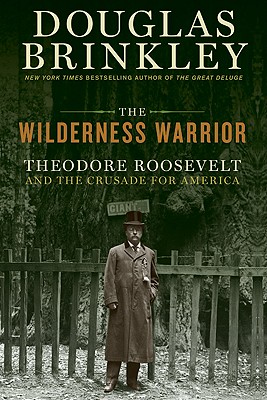
Reviewed: Brinkley, Wilderness Warrior, and more

"How a city-born child of privilege became one of the greatest forces in American conservation is the subject of Douglas Brinkley’s vast, inspiring and enormously entertaining book, 'The Wilderness Warrior: Theodore Roosevelt and the Crusade for America,'" writes Jonathan Rosen in the New York Times. "The subtitle is telling — the crusade for America, not 'wild America' — because for Roosevelt, living forests and petrified forests, bird preserves and buffalo ranges were essential for the country’s survival as a moral and military power."

Price: A Clerk's Eye View of Mapp v. Ohio

Polly J. Price, Emory University School of Law, has posted Mapp v. Ohio Revisited: A Law Clerk's Diary, which provides a clerk's view of the Supreme Court's deliberations in this landmark of the Warren Court via the diary of Richard S. Arnold, later a judge of the U.S. Court of Appeals for the Eighth Circuit, but, during the 1960-61 term, a law clerk to Justice William Brennan. Here is the abstract:
This paper reviews diary entries by a Supreme Court law clerk during the 1960 term of the Warren Court, with a specific focus on the decision process in Mapp v. Ohio (1961). Mapp held that the Fourth Amendment’s protection against 'unreasonable searches and seizures' required the exclusion of evidence found through an illegal search by state and local police officers, extending to the states a rule that previously applied only to federal law enforcement. As the diary reveals, Justice Felix Frankfurter was sufficiently upset with the Court's action that he termed Mapp 'the worst tragedy since Dred Scott.' Richard S. Arnold, a law clerk for Justice William Brennan, wrote this diary during the 1960 term. Arnold's diary has not previously been available to researchers. His recounting of the decision in Mapp is instructive for the level of disagreement and temper it reveals, and enhances our understanding of the division-creating federalism issues in the early stages of the Warren Court’s Due Process revolution.
Price is also the author of Judge Richard S. Arnold: A Legacy of Justice on the Federal Bench (Prometheus, 2009).

Saturday, August 8, 2009

Law and Governance in Britain

The Department of History and Faculty of Law at the University of Western Ontario announce the conference "Law and Governance in Britain," to be held on October 16 and 17, 2009, in London, Ontario. (The draft program is here; information on presenters is here; travel information, here.) According to the announcement,
The second law and governance conference will, like the first, take place in the Moot Court Room at the Faculty of Law, which is celebrating its fiftieth anniversary this year!

Undergraduates and graduate students are encouraged to attend and will not be charged a fee; you do, however, need to register. For a registration form click here. The registration fee for faculty members is $50. A limited number of seats are available for a dinner with the panellists on Friday, 16 October at Windermere Manor; those wishing to attend the dinner will be charged an additional $50 and seats will be awarded on a first come, first served basis. All charges include GST. Registration in advance of the conference opening would be greatly appreciated, and if you wish to attend the dinner please register by 5 October. We regret we cannot accommodate payment by credit card; cheques or money orders can be made out to The University of Western Ontario; you are also welcome to pay with cash when the conference opens. Completed registration forms can be mailed to the attention of Allyson N. May, Department of History, Social Science Centre, Room 4328, London, ON, Canada, N6A 5C2.
Hat tip: H-Law

Friday, August 7, 2009

Belich's Replenishing the Earth

Although its reach extends well beyond legal history, I want to note the publication by James Belich of Replenishing the Earth: The Settler Revolution and the Rise of the Angloworld, 1783-1939 (Oxford University Press). Belich is a professor of history at the Stout Research Centre, Victoria University of Wellington and has previously published, award-winning earlier books: a two-volume history of New Zealand, Making Peoples and Paradise Reforged, and The New Zealand Wars and the Victorian Interpretation of Racial Conflict. I had the good fortune to meet him when he was a Fulbrighter at Georgetown a few years back. Here's Oxford's description of the book:
Why are we speaking English? Replenishing the Earth gives a new answer to that question, uncovering a "settler revolution" that took place from the early nineteenth century that led to the explosive settlement of the American West and its forgotten twin, the British West, comprising the settler dominions of Canada, Australia, New Zealand, and South Africa.

Between 1780 and 1930 the number of English-speakers rocketed from 12 million in 1780 to 200 million, and their wealth and power grew to match. Their secret was not racial, or cultural, or institutional superiority but a resonant intersection of historical changes, including the sudden rise of mass transfer across oceans and mountains, a revolutionary upward shift in attitudes to emigration, the emergence of a settler "boom mentality," and a late flowering of non-industrial technologies--wind, water, wood, and work animals--especially on settler frontiers. This revolution combined with the Industrial Revolution to transform settlement into something explosive--capable of creating great cities like Chicago and Melbourne and large socio-economies in a single generation.

When the great settler booms busted, as they always did, a second pattern set in. Links between the Anglo-wests and their metropolises, London and New York, actually tightened as rising tides of staple products flowed one way and ideas the other. This "re-colonization" re-integrated Greater America and Greater Britain, bulking them out to become the superpowers of their day. The "Settler Revolution" was not exclusive to the Anglophone countries--Argentina, Siberia, and Manchuria also experienced it. But it was the Anglophone settlers who managed to integrate frontier and metropolis most successfully, and it was this that gave them the impetus and the material power to provide the world's leading super-powers for the last 200 years.

This book will reshape understandings of American, British, and British dominion histories in the long 19th century. It is a story that has such crucial implications for the histories of settler societies, the homelands that spawned them, and the indigenous peoples who resisted them, that their full histories cannot be written without it.
Blurbs Jared Diamond: "A great contribution to large-scale history: constantly sparkling in its style, humorous, and offering profound new insights. A magnificent book."

A review by Stephen Howe, Bristol University, is here; a TV interview, here.

Thursday, August 6, 2009

Children Bound to Labor

We missed the publication last April of this interesting collection of essays, originally prepared for a conference at the McNeil Center for Early American Studies at the University of Pennsylvania: Children Bound to Labor: The Pauper Apprentice System in Early America, ed. Ruth Wallis Herndon and John E. Murray (Cornell University Press, 2009). The press's describes the volume thus:
The history of early America cannot be told without considering unfree labor. At the center of this history are African and Native American adults forced into slavery; the children born to these unfree persons usually inherited their parents' status. Immigrant indentured servants, many of whom were young people, are widely recognized as part of early American society. Less familiar is the idea of free children being taken from the homes where they were born and put into bondage. As Children Bound to Labor makes clear, pauper apprenticeship was an important source of labor in early America. The economic, social, and political development of the colonies and then the states cannot be told properly without taking them into account.

Binding out pauper apprentices was a widespread practice throughout the colonies from Massachusetts to South Carolina-poor, illegitimate, orphaned, abandoned, or abused children were raised to adulthood in a legal condition of indentured servitude. Most of these children were without resources and often without advocates. Local officials undertook the responsibility for putting such children in family situations where the child was expected to work, while the master provided education and basic living needs. The authors of Children Bound to Labor show the various ways in which pauper apprentices were important to the economic, social, and political structure of early America, and how the practice shaped such key relations as master-servant, parent-child, and family-state in the young republic. In considering the practice in English, Dutch, and French communities in North America from the mid-seventeenth century to the mid-nineteenth century, Children Bound to Labor even suggests that this widespread practice was notable as a positive means of maintaining social stability and encouraging economic development.
Chapters include Jean B. Russo and J. Elliott Russo, “Responsive Justices: Court Treatment of Orphans and Illegitimate Children in Colonial Maryland," and Holly Brewer, “Apprenticeship Policy in Virginia: From Patriarchal to Republican Policies of Social Welfare."

Wednesday, August 5, 2009

Deal on Whaling Disputes

Robert Deal, Temple University, has posted Fast-Fish, Loose-Fish: How Whalemen, Lawyers, and Judges Created the British Property Law of Whaling. Here is the abstract:
Anglo-American whalemen in the eighteenth and nineteenth centuries used customs largely of their own creation to resolve disputes at sea over contested whales. These customs were remarkably effective as litigation was rare and violence even rarer. Legal scholars such as Robert Ellickson have correctly pointed to these customs as an example of how close knit communities settle disputes without recourse to formal legal institutions or even knowledge of the applicable law. Ellickson’s belief, however, that these whaling customs were universally followed at sea and were - in turn - adopted by courts, is not entirely accurate. While courts often deferred, in part, to whaling practices, judges and lawyers were also active participants in creating the property law of whaling. British courts at the turn of the nineteenth century did much to advance one whaling custom over a competing practice. In the 1820s, British lawyers and judges applied the emerging action of interference with trade to whaling disputes and thereby reintroduced aspects of the custom their predecessors had previously rejected.

Image credit

Monday, August 3, 2009

Summer

At the Legal History Blog, we have many exciting plans for the fall, including dispatches from a Fulbrighter in Iceland, and a series of guest posts about the future of research libraries.
In the meantime, please forgive us for sparse posting for a little while.Hope you enjoy the waning days of summer.

Sunday, August 2, 2009

Reviewed: Canaday, The Straight State

The Straight State: Sexuality and Citizenship in Twentieth-Century America by Margot Canaday is reviewed by Steven Epstein, Northwestern University, in The Nation. Epstein writes:
It is not really news that inhabitants of the United States are governed by what historian Margot Canaday calls, in the title of her excellent book, a "straight state." For some time now, scholars of sexuality (following in the footsteps of those who have studied and challenged the race and gender hierarchies embedded in state policies and actions) have professed the analytical goal of what historian Lisa Duggan, writing in 1994, called "queering
the state." These scholars have argued that the supposed naturalness of the heterosexual couple, and the unnaturalness of alternatives, is presumed and reinforced in the ordinary workings of government. Canaday's substantial contribution is to trace, in gripping and at times horrifying detail, exactly how the United States came to operate in this fashion over the course of much of the twentieth century. The Straight State provides a compelling history of the designation of "the homosexual as the anticitizen."

Through a sustained focus on three specific and consequential areas of bureaucratic rule--immigration, the military and welfare, each the topic of two chapters in the book--Canaday demonstrates how anticitizenship has been established and enforced as government officials, courts and politicians have struggled to make sense of sexual nonconformity. Although her scholarship emphasizes the first three-quarters of the twentieth century, it could not be more timely in its lessons. Only by accurately mapping the sedimentation of exclusion in policies and decrees laid down by bureaucrats over time, Canaday insists, can we continue, step by necessary step, to dismantle the formal barriers to full citizenship--a process that, she notes, really began succeeding only in 1990 with the lifting of a uniform federal ban on homosexual immigrants to the United States.

The Straight State is a captivating, engagingly written work of social, political, legal and sexual history, and the fruit of an extraordinary attention to archival documents....The trail cut by The Straight State traverses a swath of eras and institutions....For Canaday, "the state" is no abstraction. Taking a fine-grained approach, she insists that the state is "what officials do," whether it's worrying about what transient men get up to when the lights go out or deciding which men and women who served in World War II should be issued the "blue discharges" that made them ineligible for benefits. (There were about 9,000 cases of the latter.) In particular, it seems, what officials did was develop elaborate screening mechanisms to police the boundaries of belonging....

Canaday's argument is that in the United States, the processes of state-building, the exclusion of sexual minorities from the ranks of citizenship and the definition of a modern concept of homosexuality were mutually reinforcing.
Continue reading here.

Saturday, August 1, 2009

Brophy on Applied Legal History: Demystifying the Doctrine of Odious Debt

Al Brophy, University of North Carolina, has a great post up today at Faculty Lounge. With his permission, I am cross-posting. Here's Al:

Amidst all the talk of probate in the old South, I've been meaning to talk about another paper that Sarah Ludington and Mitu Gulati and I have up, "Applied Legal History: Demystifying the Doctrine of Odious Debts." The short version here is that Sarah and Mitu have previously written about the historical "origins" of the doctrine of odious debt. The doctrine allows successor regimes to repudiate the "odious" debts contracted by predecessor despotic regimes under certain, limited circumstances.

Those limited circumstances required that the debts were incurred by a despotic ruler, used in ways that did not benefit the people, and the creditors were aware of the illegitimate use. Alexander Sack, who spent his later career as a law professor at NYU (and before that had practiced law in France) is credited with establishing those circumstances. Sarah and Mitu explode a bunch of myths about Sack in this
paper
. They show that Sack more or less created the doctrine; it sprang more from his mind than from well-established state practices. (And though he's too modest to admit it, people will be writing papers about Mitu in another generation, talking about how he and a small group of other scholars and practitioners, including Robert Thompson of Vanderbilt and Lee Buchheit of Cleary, "re-discovered" and thus created the doctrine anew. The lawyers were building on the work of two economists, Seema Jayachandran of Stanford and Michael Kremer of Harvard, whose article, "Odious Debt," in the American Economic Review in March 2006, did the primary work in resuscitating the debate over Odious Debts. They'd been working on this for years before their paper came out -- an earlier version appeared in 2002 at the NBER (here's a 2005 version of their paper).

Jayachandran and Kremer brought this into the public discussion through a series of articles and Op-Eds in places like the Wall Street Journal. Among economists, a big question is whether to have ex ante or ex post solutions (the ex post decision making that courts engage in strikes them as inefficient). The lawyers, on the other hand, see the request for ex ante labeling of regimes as good or bad as impractical. So we have a typically turf conflict between the economists and the lawyers, which is worth some more comment by someone more knowledgeable than me at some point.

Ok--back to "Applied Legal History." What we wanted to do in our paper was to go behind Sack, to look at the pre-history of odious debts, particularly in the United States. We looked at instances in which the United States repudiated (or countenanced repudiation) before 1920, as a way of trying to figure out what the doctrine of odious debt was, even before it was given that formulation by Sack.

What interested me in particular, as a historian of the nineteenth century South, was the repudiation of Confederate debt. When I first heard Sarah and Mitu talk about their work some years ago (and about Sack writing in the early twentieth century), I wondered where the United States' experience with requiring repudiation of Confederate debt fit? (That was required, of course, by the fourteenth amendment; but I wondered how the United States' toleration, indeed demand, for repudiation might have conditioned lawyers and politicians to accept repudiation by other countries. And what was particularly interesting was that Sack didn't talk about the repudiation of Confederate debt at all -- even though it was a common theme in culture. Why just the other night as I was flipping channels I stopped to watch a few minutes of "Gone with the Wind." Wow--really offensive tropes at work there, but that's a post for another time. Anyway, in one scene Scarlet is talking with her father, who's holding a bunch of worthless Confederate bonds.)

So we set off to working on this -- Sarah and Mitu on the twentieth century repudiations that they know so well and me to the repudiations, both pre and post Civil War, in the south (and to a lesser extent in the pre-war North). What we found was not one "doctrine" but multiple doctrines that contemplated the repudiation of debts by sovereign states. At least in the nineteenth century, a lot of this involved questions of politics -- what could Mississippi and Pennsylvania, for instance, get away with in terms of scaling back of debt or repudiating it entirely? Could they
sell to voters (and legislators who might want to try to raise money again through bonds) repudiation? (The eleventh amendment made it very difficult to try to reclaim money from the states, investors figured out some ways of getting around the eleventh amendment, more or less, by the early twentieth century.)

And in the post-war South, repudiation took place in the wake of Reconstruction, when white southerners retook control of their states from the carpetbaggers, scalawags, and recently freed slaves who had control of the southern legislatures until around 1877. After 1877, some southern legislatures repudiated the debts incurred by the Reconstruction governments. Ah, you never know in what place a doctrine will be found or who will use it, do you? All of which makes me think there's a creative, short article to be written, entitled, "The Jim Crow Origins of the Odious Debt Doctrine."

I think the paper's an exciting look at debt repudiation, which helps give a richer picture than has been available in the legal literature up to now about the pre-1920 instances of repudiation in US history. (A lot of this is well-plowed by economic historians, though they are somewhat less interested in the legal mechanisms of repudiation -- so I think one of the key contributions of this paper is in getting a couple of discrete fields talking.)

What may warrant more comment is the title, "Applied Legal History." Our thought was this was a piece of going back and doing serious history (or in the case of my section, mining the secondary literature by economic historians), with the intent that it also serve some purpose in contemporary advocacy regarding odious debt. At some point I'd like to talk more about this, because it goes to a really central question for historians (and legal historians): to what extent are our questions and research
agendas driven (or should they be driven) by contemporary questions? Over at the legal history blog, Mary Dudziak and Dan Ernst engage these questions with some frequency. One important discussion there is that between Gordon Wood and Robin Einhorn over Wood's review of Einhorn's American Slavery, American Taxation in the NYROB. A lot of historians (Wood prime among them) question history with a specific advocacy purpose. Perhaps legal history is particularly well-suited to at least some instances of "applied" scholarship because questions of past experience are so closely related to current interpretation of law. That is, legal history may have a particular role to play in cases like the interpretation of odious debts. But on the larger issue of "applied history" I hope to have some other thoughts shortly.

Anyway, here's our abstract:

"Odious debts" have been the subject of debate in academic, activist, and policy circles in recent years. The term refers to the debts of a nation that a despotic leader incurs against the interests of the populace. When the despot is overthrown, the new government-understandably-does not wish to repay creditors who helped prop up the despot. One argument has focused on whether customary international law supports a "doctrine" of odious debts that justifies non-payment of sovereign debts when three conditions are met: (1) the debts were incurred by a despotic ruler (without the consent of the populace); (2) the funds were used in ways that did not benefit the populace; and (3) the creditors were aware of the likely illegality of the loans. Advocates of this doctrine, which was synthesized by Alexander Sack in 1927, typically cite two examples of U.S. state practice for support: the negotiations between the United States and Spain following the Spanish-American War, in which the United States repudiated Cuba's colonial debt, and the Tinoco Arbitration, which repudiated certain debts of the deposed Costa Rican dictator, Frederico Tinoco. Those historical precedents do not support the first condition of Sack's doctrine of odious debts, but do support the second two requirements. In addition to these two instances, United States history is rich with examples of debt repudiation by states. Those examples suggest a doctrine of odious debts that is broader and more flexible than the one written by Sack. Indeed, it may be appropriate to
speak of the doctrines (not just doctrine) of odious debts.
The first image is a South Carolina bond from 1869, which was issued by the Reconstruction South Carolina government. The second image is of a Confederate States bond, with a picture of Richmond. And dig the train crossing the James River! Gotta love the icons on Confederate money and on bonds--from all over the world--too.

Turner on Archival Research as Empirical (or why statisticians should "cozy up" to historians...)

Archival Research as Empirical has just been posted by William B. Turner, Visiting Fellow at the James Weldon Johnson Institute, Emory University. The abstract is very short, so here's an excerpt from the beginning of the paper:

Within the past few months, Harvard Law School has posted two jobs ads that use the term “empirical” in defining the position. A quick review of the job responsibilities makes clear that, at Harvard Law, “empirical” equals statistical data. This definition would seem to exclude categorically any form of archival research such as that which historians characteristically conduct.

But why is archival research not “empirical”?

In this paper, I want to examine more carefully what we mean by the term, "empirical” to demonstrate that archival historical research that makes no use whatsoever of statistical data is just as “empirical” as research that depends on statistical methods. Empiricism is, at base, a theory of knowledge, but a theory that has triumphed for its ability to enable manipulation of the physical world toward technological and engineering feats....

In its origins, empirical research assumed direct sensory experience of the phenomena under study. On careful examination, it becomes clear that there is nothing distinctively “empirical” about research that relies on statistical methods, certainly not that would distinguish it on those grounds from archival research. Both statistical and archival methods operate at a significant remove from the object of study, albeit in different ways.
Image credit.