Finally on Professor Blackman's blog you may find Harlan's con law exam from 1899.From 1889 to 1910, while serving on the United States Supreme Court, the first Justice John Marshall Harlan taught at the Columbian College of Law, which became the George Washington University School of Law. For two decades, he primarily taught working-class evening students, in classes as diverse as property, torts, conflicts of law, jurisprudence, domestic relations, commercial law, evidence — and most significantly — constitutional law.
Credit: LC
Harlan’s lectures on constitutional law would have been lost to history, but for the enterprising initiative — and remarkable note-taking — of one of Harlan’s students, George Johannes. During the 1897-98 academic year, George Johannes and a classmate transcribed verbatim the twenty-seven lectures Justice Harlan delivered on constitutional law. In 1955, Johannes sent the transcripts to the second Justice Harlan. The papers were ultimately deposited in the Library of Congress. Though much attention has been given to the life and jurisprudence of Justice Harlan, his lectures have been largely ignored.
Harlan’s lectures are a treasure trove of insights into his jurisprudence, as well as the state of constitutional law at the turn of the 20th century. They provide the unique opportunity to listen in as one of our greatest Justices lectures on the precipice of a constitutional revolution that he helped create. In this article, we use the lectures to paint a picture of who Justice Harlan was, what he believed, how he sought to impart that knowledge to the future lawyers of America, and how he predicted many of the changes in constitutional law that occurred during the 20th century.
Monday, July 22, 2013
John Marshall Harlan, Con Law Prof
Brian L. Frye, Kentucky Law, Josh Blackman, South Texas Law, and Michael McCloskey, the Harlan Institute for Constitutional Studies, have published two items relating to the first Justice John Marshall Harlan in the George Washington Law Review. The first is “the complete, annotated lecture notes” of Harlan's constitutional law lectures from 1897-98. Professor Blackman tells us that “Harlan taught the Constitution by clause, so it is very easy to find his views on a particular topic.” The trio have also published an analysis as Justice John Marshall Harlan Professor of Law:


Symposium on Weiner's "Rule of the Clan"

Prof. Mark Fenster, Levin Colleiner's ty of San Andrés School of Law, Argentina
Dr. Arnold Kling, Adjunct Scholar, Cato Institute.
Dr. Jan-Christoph Marschelke, Managing Director, Global Systems and Intercultural Competence Program (GSiK), University of Würzburg, Germany,
Prof. Tim Murphy, Universiti Utara Malaysia (University of North Malaysia).
Prof. Abdullah Saeed, Sultan of Oman Professor of Arab and Islamic Studies, University of Melbourne, Australia
Dr. Doyle R. Quiggle, Jr., author of "Ibn Tufayl's Hayy Ibn Yaqdan in New England: A Spanish-Islamic Tale in Cotton Mather's Christian Philosopher?"
Prof. Jeanne Schroeder, Cardozo School of Law
Prof. Kevin Stack, Associate Dean for Research, Vanderbilt School of Law
Hulsebosch on "The Origin and Nature of Colonial Grievances"
No version is available on the web, but be on the lookout for The American Revolution (II): The Origin and Nature of Colonial Grievances, an essay by Daniel J. Hulsebosch, NYU School of Law, forthcoming this year in The Oxford History of the British Empire: The American Colonies in the British Empire, 1607-1776, ed. Stephen Foster. Here is the abstract:
Colonial grievances were not new in July 1776 but rather were as old as the British Empire and a constant feature of imperial governance. The continuous stream of grievances was not, however, evidence that “the spirit of the colonies demanded freedom from the beginning.” Paradoxically, grievances helped make the Empire work. They facilitated imperial development for two reasons. First, people lodging grievances could rely on a communication network for processing them, a system that helped integrate the many different subjects and places in the empire. Second, from the colonial perspective, the imperial grievance system had a safety valve: war. When the empire was at war, metropolitan policy-makers and local governors were more willing to compromise with provincial interests and acceded to claims that had been or threatened to become the source of grievances. The two together – the imperial grievance system and the leverage enjoyed by colonists during war – generated the sense throughout North America that the imperial constitution was a flexible set of institutions responsive to provincial claims and yet also efficient enough to facilitate common projects, like carrying out transatlantic commerce and waging war. The imperial constitution, with the grievance system at its core, provided the possibility for change that is essential to any workable constitution.
By the middle of the 1770s, however, the grievance network no longer performed effectively. A system that for over a century helped bind the North American colonies to the empire suddenly, after an unusually long and stable period of peace, fragmented and became an instrument of rebellion. Only then, in the Declaration of Independence, were the many and sometimes inconsistent colonial grievances compiled into a “history of repeated injuries and usurpations, all having in direct object the establishment of an absolute Tyranny over these States.” These grievances were irremediable and flowed outside the imperial constitution. The genre to which they now belonged was the international declaration of war.
Sunday, July 21, 2013
Brophy on the Nat Turner Trials
Alfred L. Brophy, University of North Carolina at Chapel Hill School of Law, has posted The Nat Turner Trials, which appears in North Carolina Law Review 91 (2013). Here is the abstract:
 |
| credit |
“The Nat Turner Trials” locates the trials of slaves in the wake of the Nat Turner rebellion in the context of common, and statutory, law and extra-legal responses to slavery in Virginia and North Carolina during the early 1830s. The Article shows how trials were part of the whole system of slavery, held together by norms of white supremacy promulgated in the press, the pulpit, and on plantations. Decisions from local courts to appellate courts gave broad power to slave owners to control enslaved people. There was little done in defense of slaves, though in some ways the states’ criminal procedure statutes and the actions of some slave owners and defense lawyers may have helped to limit the number of convictions.
The article is framed by two cases in North Carolina — one in 1830 of a white man who attacked a slave in his custody and was freed from punishment and another in 1834 of a slave who killed his overseer and was found guilty of manslaughter rather than premeditated murder. Sandwiched between those two cases was the Nat Turner rebellion in neighboring Virginia during August of 1831. The trials of those accused of rebellion and conspiracy, along with the vigilante violence that accompanied the rebellion, further illustrate the ways the legal system functioned to support slavery and order.
The article highlights how trials of slaves in the wake of the Nat Turner rebellion worked to re-establish order and to mete out punishment. It also reveals how lawyers for the slaves labored — largely unsuccessfully — to free those most obviously not guilty. Those lawyers were committed to the re-establishment of order; all of the key lawyers had participated in the militia response to the rebellion. Yet the defense lawyers still tried to limit convictions, and they succeeded to some extent.
The trials worked in conjunction with — and sometimes in opposition to — the extra-legal violence that accompanied the repression of the rebellion. The trials reveal, as did the two Supreme Court of North Carolina cases that bookend this Article, the conflicts within the community, as some emphasized the power of slave owners to treat slaves as they wished, while others emphasized the subjection of everyone, including owners of slaves, to the rule of law. The court struggled in part with trying to keep the community from taking vigilante action. It also acted to punish the rebels and stopping further rebellion.
The trials tell compact, linear stories about why someone is being punished (or not). The trials are obscure, but collectively they tell a powerful story about the role of law in American history as a vehicle for establishing order.
Sunday Book Review Roundup
 This week readers can find two reviews of Maury Klein's Call to Arms (Bloomsbury Press), one in the Wall Street Journal and a second in the Washington Post. Here's an excerpt of Johnathan Yardley's take in the Post:
"The story of how America became the “great arsenal of democracy” is the subject of “A Call to Arms,” and I can’t imagine it being told more thoroughly, authoritatively or definitively. "This week's New York Times reviews Mason B. Williams's City of Ambition (W.W. Norton & Co.) For those looking for audio options, the NYT book review podcast discusses the book here. Edward Glaeser summarizes the book:
Fiona Rieds reviews Panikos Panayi's Prisoners of Britain (Manchester University Press), a social history of Britain's German prisoners during the First World War."But, as Mason B. Williams’s fascinating new book “City of Ambition: FDR, La Guardia, and the Making of Modern New York” reminds us, La Guardia’s success rested to a large degree on Franklin Roosevelt’s decision to “channel the resources of the federal government through the agencies of America’s cities and counties.”"

And the New Yorker has two slightly different contributions to this week's Sunday roundup: an article discussing Eudora Welty's 1963 New Yorker essay "Where is the Voice Coming From?" (about Medgar Evers' murderer); as well as a few bits of legally related book chat.
Saturday, July 20, 2013
Blumm and Wigington on the Oregon and California Forest Lands
Michael C. Blumm and Tim Wigington, Lewis & Clark Law School, have posted The Past as Prologue to the Present: Managing the Oregon and California Forest Lands, which is to appear in the Oregon State Bar Bulletin (July 2013). Here is the abstract:
 |
| credit |
This article is a brief review of the convoluted history of what are known as the Oregon and California forest lands, federal lands that were once the subject of a 19th century federal railroad grant, then became the focus of widespread land fraud and official corruption, which led to the Supreme Court halting land sales and Congress taking back the lands, situated in eighteen Oregon counties. Federal management of the lands in the 20th century emphasized timber harvesting, and this dominant use of the lands led to environmental lawsuits and the Endangered Species Act listing of the northern spotted owl in the early 1990s. Since 1994, the lands have been governed by the Northwest Forest Plan, which drastically limited federal timber harvests and associated local county revenues, which were based on those harvests. Several counties in southern Oregon now face public service crises, as their local tax base is insufficient to provide emergency services like fire and police.
In this short version of a larger study -- written for the local bar -- we propose a solution to the funding crisis in southern Oregon that does not involve scuttling the Northwest Forest Plan and returning the lands to dominant timber use. Increasing timber harvests to fund county governments is the subject of a bill co-sponsoring by several Oregon Congressmen, and we explain why this approach would be short-sighted and environmentally unsatisfactory.
Friday, July 19, 2013
Hoffman on the Canadian Anti-Combines Act, 1889
Charles Paul Hoffman, a Doctor of Civil Law candidate at McGill Law, has posted A Reappraisal of the Canadian Anti-Combines Act of 1889, which is forthcoming in the Queen's Law Journal. Here is the abstract:
In 1889, in response to growing concern about the role of cartels and other "combines" in the economy, the Canadian parliament passed the Anti-Combines Act, the world’s first modern competition statute. A tentative first step, the Act made it a misdemeanour to enter into agreements that were previously unenforceable under the contract law restraint of trade doctrine. The Act, however, was not a success, with only a single prosecution (which resulted in acquittal) brought under it prior to its amendment in 1900. Since that time, it has been broadly criticized in the academic literature, with critics alleging three reasons for its failure: that it extended only to conduct already "unlawful" under the restraint of trade doctrine; that it criminalized only conduct already indictable under the crime of conspiracy; and that it was an intentional failure, a "political sham". Each of these critiques, however, is built on a flawed understanding of the restraint of trade doctrine, reading back into the law in 1889 two House of Lords’ decisions from the 1890s, Mogul Steamship v McGregor, Gow (1892) and Nordenfelt v Maxim Nordenfelt Guns & Ammunition (1894), which made it substantially more difficult to prove agreements were unreasonable vis-a-vis the public interest. Though the Act would not have been the panacea intended by its chief sponsor, Nathaniel Clarke Wallace [above], it would have been a useful tool against the most pernicious of combine agreements, had the law remained as it was at the time of enactment. The Anti-Combines Act should thus be remembered not for its failure, but as a Canadian legislative innovation hampered by judicial decisions rendered in Westminster.
Nathaniel Clarke Wallace

Boston, 1767

McCoy, "The Making of the U.S. Surveillance State"
Looking for a historian's perspective on the recent NSA surveillance disclosures? Head to the History News Network for Alfred W. McCoy's take on "The Making of the U.S. Surveillance State, 1898-2020." Here's the first paragraph:
Read on here.The American surveillance state is now an omnipresent reality, but its deep history is little known and its future little grasped. Edward Snowden’s leaked documents reveal that, in a post-9/11 state of war, the National Security Agency (NSA) was able to create a surveillance system that could secretly monitor the private communications of almost every American in the name of fighting foreign terrorists. The technology used is state of the art; the impulse, it turns out, is nothing new. For well over a century, what might be called “surveillance blowback” from America’s wars has ensured the creation of an ever more massive and omnipresent internal security and surveillance apparatus. Its future (though not ours) looks bright indeed.
Alfred W. McCoy (UW-Madison)

Smith on the Regulation of Prostitution in New Orleans
Simon Stern has drawn our attention to the following (gated) article: Elizabeth Parish Smith, “In a Bar Room Called the ‘Fifteen Amendment’”: Reconstruction and the Women of New Orleans’s Demimonde, South Atlantic Quarterly 112 (2013): 473-479. Here is the abstract:
This essay examines the experiences of three women—one Creole, one black, one white—in New Orleans’s Reconstruction-era demimonde. Enacted just months after the end of the Civil War and surviving in various forms for fifty-two years, a regulatory system governed the sex trade in this, the largest and most cosmopolitan city of the former Confederacy. Postwar regulation made no racial distinctions among women in the trade, and prostitutes’ lives were thus often remarkably similar. Women worked and resided in the same parts of town, even on the same notorious block; faced similarly explosive, dangerous bursts of violence; and exploited the physical intimacy of their work to steal from clients.
In large measure due to their similar legal treatment under regulation, many prostitutes shared W. E. B. Du Bois’s common “economic condition and destiny” across racial lines. Nevertheless, Du Bois uses prostitution in Black Reconstruction as a rhetorical device representing capitalism’s moral corruption, not as a practice affecting real women’s lives. Reading the experiences of three New Orleans prostitutes against the larger racial and economic politics of the period allows us to see how some of the most radical and far-reaching changes of Reconstruction occurred among women living at the law’s edges.
Thursday, July 18, 2013
Littleton-Griswold Grant Recipients Announced
The American Historical Association has announced this year’s recipients of the Littleton-Griswold Grants, which are awarded “to support research in US legal history and in the general field of law and society”:
Heather Lee, Brown University, for “The Right to Enter: Chinese Restaurant Owners, U.S. Immigration Laws, and the Federal Courts, 1894-1945.”
Sara Damiano, Johns Hopkins University, for “Gender, Law, and the Culture of Credit in New England, 1730-1790.”
Moira Gillis, University of Oxford, for “The Evolution of the Colonial American Corporation under the Stuart and Hanoverian Crowns: 1606-1763.”
Ryan Johnson, University of Minnesota, for “Enemies of the State: Knowing, Producing, and Policing Anarchism in the Making of the Modern American National Security State, 1901-1921.”
Michael Schoeppner, California Institute of Technology, for “The Moral Contagion of Liberty: Black Atlantic Sailors, Citizenship, and Quarantine in the Antebellum United States.”
Heather Lee, Brown University, for “The Right to Enter: Chinese Restaurant Owners, U.S. Immigration Laws, and the Federal Courts, 1894-1945.”
Sara Damiano, Johns Hopkins University, for “Gender, Law, and the Culture of Credit in New England, 1730-1790.”
Moira Gillis, University of Oxford, for “The Evolution of the Colonial American Corporation under the Stuart and Hanoverian Crowns: 1606-1763.”
Ryan Johnson, University of Minnesota, for “Enemies of the State: Knowing, Producing, and Policing Anarchism in the Making of the Modern American National Security State, 1901-1921.”
Michael Schoeppner, California Institute of Technology, for “The Moral Contagion of Liberty: Black Atlantic Sailors, Citizenship, and Quarantine in the Antebellum United States.”
Siddique on the Continuing Influence of Colonialism on Law Reform in Pakistan
Out soon from in Cambridge Studies in Law and Society is Pakistan's Experience with Formal Law: An Alien Justice, by Osama Siddique, an associate professor at Lahore University of Management Sciences. Here is the press’s description:
As Professor Siddique further explains, "[T]he book endeavors to present a new typology and framework for analyzing the literature on India's experience of colonial law and traces post-colonial India and Pakistan's approaches to the formal legal system and law reform while adhering to colonial legal structures and norms."Law Reform in Pakistan attracts such disparate champions as the Chief Justice of Pakistan, the USAID and the Taliban. Common to their equally obsessive pursuit of 'speedy justice' is a remarkable obliviousness to the historical, institutional and sociological factors that alienate Pakistanis from their formal legal system. This pioneering book highlights vital and widely neglected linkages between the 'narratives of colonial displacement' resonant in the literature on South Asia's encounter with colonial law and the region's post-colonial official law reform discourses. Against this backdrop, it presents a typology of Pakistani approaches to law reform and critically evaluates the IFI funded single-minded pursuit of 'efficiency' during the last decade. Employing diverse methodologies it proceeds to provide empirical support for a widening chasm between popular, at times violently expressed, aspirations for justice and democratically deficient reform designed in distant IFI headquarters that is entrusted to the exclusive and unaccountable Pakistani 'reform club.'
Dhondt on Diplomatic History as "International Law in Action"
Frederik Dhondt, Research Foundation Flanders/Legal History Institute, Ghent University, has posted Looking Beyond the Tip of the Iceberg: Diplomatic Praxis and Legal Culture in the History of Public International Law, which is to appear in the trilingual Rechtskultur - Zeitschrift für Europäische Rechtsgeschichte/European Journal of Legal History/Journal Européen d'histoire du Droit 2 (2013). Here is the abstract:
Historians of Public International Law traditionally start their inquiries in doctrine or look at established source-edition series, focusing mainly on treaties. However, a close reading of diplomatic correspondence can uncover "law in minds" or "the life of the law", and instruct us on the practical use of international legal argument. The present contribution is based on the theoretical and methodological part of my Ph.D.-thesis, which dealt with two cases. On one hand, French and British diplomacy in the early eighteenth century (1713-1740), based on primary archival sources. On the other, French contestation of the bipolar Cold War-order, based on edited French and West German correspondence. In both cases, anti-hegemonic, state-consent based arguments derived from international law from the vector in which third-party adherence is sought. I argue that this model is fundamental to European international relations. Diplomatic legal culture helps us explain how international order can be maintained without institutions. Tackling this issue requires training both in diplomatic history and international law, and considerably enhances our understanding of law's operation in between watershed events or landmark international treaties.
Wednesday, July 17, 2013
ASLH: Annual Meeting and Website

On-line registration for the 2013 Annual Meeting of the American Society for Legal History is now available at the new ASLH website. The meeting will be held in South Florida, November 7-10.
After registering, explore the new website, which is still a work-in-progress, and feel free to direct any comments and suggestions to webmaster@aslh.net.
Historians Comment on the Trayvon Martin Killing and George Zimmerman Acquittal
On February 26, 2012, neighborhood watch volunteer George Zimmerman shot and killed teenager Trayvon Martin. What Zimmerman claimed was an act of self defense others characterized as a racially motivated, unprovoked attack. Late last Saturday a Florida jury found Zimmerman not guilty on charges of second degree murder. Here's a sampling of what historians have to say:
- From Robin D. G. Kelley (UCLA): "How the System Worked: The U.S. v. Trayvon Martin" (CounterPunch).
- From Stephanie Jones Rogers (University of Iowa): "If Only Trayvon Had Freedom Papers" (HNN).
- From Elaine F. Parsons (Duquesne University): "Trayvon Martin the Latest Victim of America's Fear of Black Men" (HNN).
- From Brenda E. Stevenson (UCLA): "Women Played Critical Role in George Zimmerman Decision" (HNN).
- From Claire Potter (the New School): "No Justice, No Peace: Time to #StandOurGround #AgainstRacism" (Tenured Radical).
- See also this roundup from the UNC Press Blog.
- Last but not least, consider revisiting LHB guest blogger Josh Stein's August 2012 posts on "George Zimmerman and the Right to Violence."
- You can hear commentary from Donald Tibbs (Drexel Law School) here, on Radio Times. (Hat tip: Faculty Lounge).
- Former guest blogger David Bernstein has posted comments here, at the Volokh Conspiracy.
Parker reviews Esmeir, "Juridical Humanity"
JOTWELL's Legal History Section has posted new material: Kunal Parker (University of Miami School of Law) reviews Samera Esmeir, Juridical Humanity: A Colonial History (Stanford University Press, 2012) (a book we mentioned not too long ago, here). Here's the first paragraph of the review:
Samera Esmeir’s ambitious book, Juridical Humanity: A Colonial History, explores the legal transformation of British-ruled Egypt between the 1880s and the 1930s. With news from Egypt the subject of daily headlines, the book is timely and important. However, it is Esmeir’s innovative treatment of her subject that truly makes this book deserving of the widest readership. In contradistinction to a powerful tradition of writing about colonialism, Esmeir sees in the legal colonization of Egypt not the occlusion of Egyptians’ intrinsic humanity, but instead the instantiation of “humanity” as the object of colonial law’s solicitude. This is the “juridical humanity” of the book’s title.Read on here.
Morey to Clemson

Tuesday, July 16, 2013
Thanks and Welcome
 Since December 2009, Clara Altman has handled two duties for Legal History Blog: coordinating the Facebook page and posting a book review roundup most Sundays. As we’ve previously noted, she has new challenges in the academic year ahead requiring her undivided attention. From all of us at LHB: Thank you, Clara!
And, from all of us here at LHB, welcome Emily A. Prifogle! Emily has finished her first year in the doctoral program in history at Princeton University after receiving a J.D. from the University of California. Berkeley. (Her B.A.in History and Art History is from Indiana University, and she also holds a M.Sc. in Comparative Social Policy from Oxford University.) Emily’s law review note is Law and Local Activism: Uncovering the Civil Rights History of Chambers v. Mississippi. It appeared in the California Law Review 101 (2013): 445.
Lempert, "Growing Up in Law & Society: The Pulls of Policy and Methods"
Richard Lempert (University of Michigan) has posted "Growing Up in Law & Society: The Pulls of Policy and Methods." Here's the abstract:
 |
| credit |
This article which will appear as the introductory essay in Volume 9 of the Annual Review of Law and Social Science begins, at the editor’s request, with a professional autobiography which traces the aspirations and training that led to Lempert’s commitment to the field of law and social science and allows him to comment on the emergence of Empirical Legal Studies and other development sin [sic] the field. Some of what is written may be of interest to those who seek to understand the history of the field’s revival, and those who were among the first generation of Law & Society Association members may see some of their own experience in Lempert’s account. But much of the article’s first portion may be of interest largely to the author’s friends and family. The second and larger portion of the article discusses uses of law and social science research in the policy arena and cautions against the possibility that a study’s policy appeal may exceed the weight that can fairly be put on it. Five studies are used as examples: James Q. Wilson and Kelling’s essay on "Broken Windows," Lawrence Sherman and Richard Berk’s work on arrest for spouse abuse, Isaac Ehrlich’s article on the deterrent effects of the death penalty, John Lott and David Mustard’s work on "right to carry" laws and Richard Sander’s mismatch critique of affirmative action. The portion discussing Sander’s work presents previously unpublished data that not only refutes published claims by Professor Sander that Michigan Law School’s minority graduates fare poorly on the bar, but also indicates in 3 recent years affirmative action eligibility appears to have had little if any relationship to bar passage success. The article also emphasizes the importance to policy of understanding mechanism, and the need for sophistication in the soft methods of study design along with a good understanding of formal statistics.The full essay is available here, at SSRN.
Griffiths, "Dematerialization, Pragmatism and the European Copyright Revolution"
Jonathan Griffiths (Queen Mary University of London, School of Law ) has posted "Dematerialization, Pragmatism and the European Copyright Revolution." It is forthcoming in the Oxford Journal of Legal Studies. Here's the abstract:
Over the last three centuries, a particular model of copyright law has evolved in the United Kingdom. Under this "dematerialised" model, the law’s attention is directed towards an immaterial, malleable essence (identified as, amongst other things, “originality”, “labour and skill” or creativity”). This immaterial essence has come to serve as a touchstone for the resolution of all fundamental questions concerning the scope and attribution of rights under copyright law - as the threshold for legal protection, as a marker of authorship and as the key concept in the assessment of infringement. Nevertheless, some aspects of copyright doctrine have, until very recently, appeared to remain incompatible with this dominant model. In some situations, rather than focusing purely on an abstract form of property that is capable of shifting from form to form, the law has continued to limit the scope of a copyright owner’s powers by reference to the boundaries of the material form with which the work is first recorded. It is argued here that the maintenance of these apparently incompatible aspects of copyright doctrine is not necessarily the product of theoretical incoherence. Rather, the law’s continued ability to regulate some forms of copyright dispute by reference to material form has served an important function in justifying judicial resistance to expansionist pressures.
Monday, July 15, 2013
Borgwardt on Human Rights at the UN 1945
Elizabeth Borgwardt, Washington University in St. Louis, will
present a public lecture, "'Present at the Creation?' Human Rights,
NGOs, and the Trusteeship Debate at the 1945 UN San Francisco Conference," on Tuesday,
July 16, 2013 at 4 p.m. in Room LJ119, Jefferson Building, Library of Congress. The event is sponsored by the National
History Center and the Eighth International Seminar on Decolonization:
This talk is the story of how "human rights" ideas and institutions found their way into the 1945 United Nations Charter, after having been left out of earlier drafts of that document. Accordingly, this research analyses the role of "modern" public opinion sampling, the carefully cultivated role of non-governmental organizations, as well as the role of unintended consequences for U.S. diplomacy around issues of race, decolonization, and trusteeship. This story also addresses constraints and contradictions within the Charter itself around protecting domestic jurisdiction and minimizing the role of "smaller" countries.Information on two related public lectures this month is here.
Call for Applications: Hugh Davis Graham Award
Another announcement from the Institute for Political History:
[T]he Institute for Political History, a nonprofit foundation, is pleased to announce that it is accepting applications for the Hugh Davis Graham Award. The purpose of this grant, named in honor of the late Professor Hugh Graham, is to assist graduate students and young scholars undertaking archival research in the fields to American Political/Policy History and American Political Development.
Applications must be submitted online at http://jph.asu.edu/2014_awards and must include the following:More information is available here.
1. Name(s)
2. Institutional Affiliation(s)
3. Status (i.e. ABD, Doctoral Student, Assistant/Associate/Full Professor)
4. Email address(es).
5. Mailing Address(es).
6. Project Title
7. One (1) page double-spaced description of research proposal that explains the historiographical significance of the project and lists the applicant's major publications.
Applications must adhere to the guidelines above or they will not be considered. Late applications will not be considered. Preference will be given to doctoral students. Applications must be received by January 15, 2014, and the award in the amount of up to $1250 will be announced at the Policy History Conference held in Columbus, Ohio, at the Sheraton Capitol Square Hotel, June 4-7, 2014. The award is taxable under IRS regulations.
CFP: Conference on Policy History
From the Institute for Political History, we have the following CFP:
The Institute for Political History and the Journal of Policy History are hosting the eighth biennial Conference on Policy History at the Sheraton Capitol Square Hotel in downtown Columbus, Ohio from Wednesday, June 4 to Saturday, June 7, 2014. We are currently accepting panel and paper proposals on all topics regarding American political and policy history, political development, and comparative historical analysis. Complete sessions, including two or three presenters with chair/commentator(s) are strongly encouraged. Individual paper proposals are welcome. Because the conference has grown in size, individual papers might have a more difficult time being placed on the program. In order to accommodate more participants, conference organizers have created a poster session which will allow younger scholars to display their research projects. Participants may only appear once as a presenter in the program.More information is available here.
The deadline for submission is December 2, 2013.
Sunday, July 14, 2013
Sunday Book Review Roundup

- At the New York Times, Noam Schieber reviews Robert G. Kaiser's Act of Congress (Alfred A Knopf).
- The Washington Post reviews a John Hay biography, All the Great Prizes (Simon and Schuster) and Pagan's The Enlightenment and Why It Still Matters (Random House) here.
- On NPR Mark Kurlansky's Ready for a Brand New Beat (Penguin), about the song "Dancing in the Street" and the Civil Rights Movement, is reviewed.
- The New York Review of Books asks "Should We Discard the Constitution?" and reviews Louis Michael Seidman's On Constitutional Disobedience (Oxford University Press).
Saturday, July 13, 2013
Weekend Roundup
- We recently noted the publication of Thurgood Marshall: Race, Rights, and the Struggle for a More Perfect Union, by Charles L. Zelden (Nova Southeastern University). Follow the link to hear him discuss the book with a local PBS station.
- Via History News Network: Revolutionary Moments has joined the blogosphere. Here's a snippet of its first post: "With the world once again filled with anticipation and dread of revolution, it is reasonable to examine what relevant past events our predecessors experienced. . . . [T]he moderators propose to introduce questions relevant to current events with the notion that scholars who study revolutions throughout the globe will comment."
- From the Chronicle of Higher Ed: "Ph.D. Attrition: How Much Is Too Much?"
Friday, July 12, 2013
Heins reviews Braukman on the Johns Committee in Florida, 1956-1965
Via our friends at H-Law, we have a review of Stacy Lorraine Braukman,
Communists and Perverts under the Palms: The Johns Committee in Florida, 1956-1965
(University Press of Florida, 2012). Here's an excerpt, from reviewer Marjorie Heins (New York University):
[Like what you see? H-Net recently issued a plea for donations so that it can continue providing content like this free of charge and without commercial advertising. Follow the link for more information.]
When the Florida legislature created a committee in 1956 to investigate organizations that advocated violations of state law, the clearly understood purpose was to brand the NAACP, the state’s leading proponent of ending segregation, as communist-run and un-American. Using anticommunism to discredit the civil rights movement was hardly a new tactic during the McCarthy era, but the Florida Legislative Investigation Committee (FLIC), or Johns Committee (named in honor of its sponsor, state senator Charley Johns) was conspicuously unsuccessful in its efforts to stigmatize or intimidate the NAACP.
So, seeking to maintain its political credibility and its funding, the committee soon turned its attention from the assumed evils of communism and race-mixing to those of homosexuality. It initiated a witch hunt that was unique in U.S. history for its combination of prurience, invasion of privacy, twisted moralism, and psychological ignorance. Stacy Braukman’s Communists and Perverts under the Palms, despite its questionable title, provides a useful, straightforward account of the campaign.The full review is available here.
[Like what you see? H-Net recently issued a plea for donations so that it can continue providing content like this free of charge and without commercial advertising. Follow the link for more information.]
Fromer on a 19th-Century Trade Secrecy Case
Jeanne C. Fromer, NYU Law, has posted A Legal Tangle of Secrets and Disclosures in Trade: Tabor v. Hoffman and Beyond, which is forthcoming in Intellectual Property at the Edge: The Contested Contours of IP, ed. Rochelle Cooper Dreyfuss and Jane C. Ginsburg (Cambridge University Press, 2013). Here is the abstract:
In this book chapter, I explore an early trade secrecy case from New York, Tabor v. Hoffman, decided in 1889. A study of this case indicates that many present-day concerns about overlapping edges between trade secrecy and patent laws — and their interaction and interference with one another's aims — were latent, if not overtly raised, when American courts were just beginning to articulate the common law right of trade secrecy. After telling Tabor’s tale, I investigate some of the longstanding interactions and tensions between trade secrecy and patent laws, through the lens of the regimes’ encouragements of disclosure in some ways and secrecy in others. Moreover, even though trade secrecy law is predominantly focused on secrecy, in some ways it enables disclosure. By contrast, although patent law is preoccupied with disclosure, in some ways, it permits and encourages secrecy. In all, patent law and trade secrecy together create a legal tangle of secrets and disclosures in trade. A full review of the Tabor case suggests that the innovator there was able to take advantage both of trade secrecy’s disclosures and patent law’s secrets. The court did not appreciate this possibility, instead focusing on the unfairness to the plaintiff of the defendant’s appropriation.
Thursday, July 11, 2013
Franklin Research Grants from the American Philosophical Society

Since 1933, the American Philosophical Society has awarded small grants to scholars in order to support the cost of research leading to publication in all areas of knowledge. In 2012-2013 the Franklin Research Grants program awarded $435,000 to 85 scholars, and the Society expects to make a similar number of awards in this year's competition. The Franklin program is particularly designed to help meet the costs of travel to libraries and archives for research purposes; the purchase of microfilm, photocopies, or equivalent research materials; the costs associated with fieldwork; or laboratory research expenses.
Fukuyama reviews Bobbitt, "The Garments of Court and Palace"

Hat tip: Arts & Letters Daily
Wednesday, July 10, 2013
Historians Discuss Duscuss Same-Sex Marriage and VRA Cases
Kenneth Mack, Ellen Fitzpatrick, George Chauncey and Michael Beschloss on the PBS Newshour last week.
Tuesday, July 9, 2013
Rest in Peace, Edmund S. Morgan, 1916-2013

To watch a 2009 conversation between Morgan and Annette Gordon-Reed, follow the link to the Gilder Lehrman Center website.
Shaviro reviews Steil, "The Battle of Bretton Woods"
Over at JOTWELL, Daniel Shaviro (New York University) has posted a review of Benn Steil, The Battle of Bretton Woods: John Maynard Keynes, Harry Dexter White, and the Making of a New World Order (Princeton University Press, 2013). Here are the first two paragraphs:
It’s always nice when you can combine outside reading for fun with something that is educational and at least indirectly professionally relevant. Benn Steil’s economic and diplomatic history of the 1944 Bretton Woods conference, which established the post-World War II global framework for currency relationships and international trade (while also creating the International Monetary Fund and the World Bank) filled this niche for me during a quiet weekend. While the subject is not literally or directly related to taxation, it touches so closely on finance, macroeconomic policy, and international trade as to occupy a common universe with overlapping concerns.

The book tells a lively story, in which U.S. Treasury economist Harry Dexter White – an ardent economic nationalist yet also a Soviet mole – thoroughly squelched the great English economist John Maynard Keynes (the U.K.’s chief negotiator) in establishing the postwar regime for trade, currency, and capital flows. With the U.S. economically dominant and the U.K. reduced to begging for loans, Keynes would have had no chance even had he been better at converting his analytical and epigrammatic skills into diplomatic ones.Read on here.
Dubber on Ultima Ratio in Criminal Law
Markus D. Dubber, University of Toronto Law, has posted Ultima Ratio as Caveat Dominus: Legal Principles, Police Maxims, and the Critical Analysis of Law. Here is the abstract:
A comparative and historical analysis of the so-called ultima ratio principle reveals that, despite its Latinate veneer, it is neither ancient nor universal, but a recent addition to the German criminal law canon. Upon further inquiry, ultima ratio also turns out to be ill-defined, undermotivated, and toothless, a fundamental legal principle and distinctive feature of criminal law honored in its ubiquitous breach. In the end, the iron legal principle of ultima ratio may appear more like the flexible police maxim of caveat dominus. Its frequent invocation suggests the need to reconceive legal science as a critical analysis of law in general, and of law's supposed principles in particular.
Research Fellowship for European Administrative History
[We have the following announcement.]
Doctoral and postdoctoral students of European Administrative History, looking to finance the final phase of their research projects, may now apply for a JEVFellowship. Named after its donor and publisher of the Yearbook of European Administrative History, Prof. Dr. Erk Volkmar Heyen, the JEV-Fellowship addresses excellent young researchers regardless their nationality and offers project funding for twelve months at maximum. Application deadline is 30 September 2013.
Prof. Dr. Erk Volkmar Heyen, former Professor of Public Law and European Administrative History at the Ernst-Moritz-Arndt University of Greifswald, Germany, was publisher of the Yearbook of European Administrative History from 1989 to 2008. Via the German University Foundation in Bonn, he recently donated a research fellowship in the field of European Administrative History. The so-called JEV-Fellowship aims to benefit the next generation of researchers and is now open to applicants for the first time. It particularly addresses doctoral and postdoctoral students of any nationality who are able to finalize their projects within a period of no longer than twelve months in case of funding. The JEV-Fellowship is open to all historical disciplines, provided the research project addresses an aspect of European administrative history within the period of the 16th to the 20th century.
The research topic should reach beyond national scope. Comparative approaches are welcome. Applications in German or English may be submitted until 30 September 2013 and should be sent in electronic form to: Priv.-Doz. Dr. Peter Collin at collin@rg.mpg.de. For further information please consult the original call for proposals.
The stipend amount is based on the usual rates for doctoral fellows of the German Research Foundation. In case of research being done outside Germany, the very local conditions will be taken into consideration. Unfortunately, marital status will not impact on the amount of funding. Travel or other costs may not be reimbursed.
Upon recommendation of a jury the Board of the German University Foundation in Bonn decides on and awards the JEV-Fellowship in January 2014.
Doctoral and postdoctoral students of European Administrative History, looking to finance the final phase of their research projects, may now apply for a JEVFellowship. Named after its donor and publisher of the Yearbook of European Administrative History, Prof. Dr. Erk Volkmar Heyen, the JEV-Fellowship addresses excellent young researchers regardless their nationality and offers project funding for twelve months at maximum. Application deadline is 30 September 2013.
Prof. Dr. Erk Volkmar Heyen, former Professor of Public Law and European Administrative History at the Ernst-Moritz-Arndt University of Greifswald, Germany, was publisher of the Yearbook of European Administrative History from 1989 to 2008. Via the German University Foundation in Bonn, he recently donated a research fellowship in the field of European Administrative History. The so-called JEV-Fellowship aims to benefit the next generation of researchers and is now open to applicants for the first time. It particularly addresses doctoral and postdoctoral students of any nationality who are able to finalize their projects within a period of no longer than twelve months in case of funding. The JEV-Fellowship is open to all historical disciplines, provided the research project addresses an aspect of European administrative history within the period of the 16th to the 20th century.
The research topic should reach beyond national scope. Comparative approaches are welcome. Applications in German or English may be submitted until 30 September 2013 and should be sent in electronic form to: Priv.-Doz. Dr. Peter Collin at collin@rg.mpg.de. For further information please consult the original call for proposals.
The stipend amount is based on the usual rates for doctoral fellows of the German Research Foundation. In case of research being done outside Germany, the very local conditions will be taken into consideration. Unfortunately, marital status will not impact on the amount of funding. Travel or other costs may not be reimbursed.
Upon recommendation of a jury the Board of the German University Foundation in Bonn decides on and awards the JEV-Fellowship in January 2014.
Monday, July 8, 2013
The Greatest Organization in the World ...
 |
| Hughes in 1925 (credit) |
The American Government is a vast cooperative endeavor. It is the greatest organization in the world for preventing things from being done. It can move swiftly when the essential forces work together; otherwise, it makes a noise but does not move.
Bush on Unauthorized Practice of Law in U.S. Economic History
Michael Bush, West Virginia University, has posted From the Great Depression to the Great Recession: (Non-)Lawyers Practicing Law, which is to appear in West Virginia Law Review 115 (2013). Here is the abstract
In most American jurisdictions, a practitioner of legal services must have a license to practice law. However, history illustrates that economic recessions increase demand to deregulate the legal profession and allow non-lawyers to provide legal services. This article is a defense of licensing requirements for legal services, because the rule of law is too important to a civilized democracy to let it be undermined by quick judgments in the shadows of bad economies. Ultimately, legal services will be governed- by courts, legislatures, a licensed bar, or the free market. However, due to the critical nature of the rule of law in our society, the licensed bar which is bound by ethical duties and minimum competencies, is in the best position to regulate.
Sunday, July 7, 2013
Book Review Roundup
- Joseph J. Ellis is out with a new book: Revolutionary Summer: The Birth of American Independence (Alfred A. Knopf). The New York Times reviews it here. (Subscribers to the Wall Street Journal may read another take on the book here.)
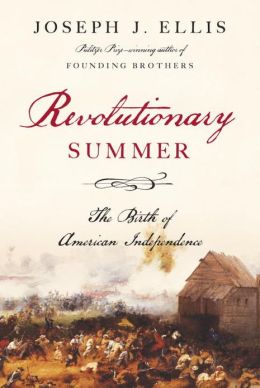
- Ellis's book, along with recent works by Richard Beeman and Nathaniel Philbrick, is also in the spotlight over at Slate. "Why do popular histories of the War of Independence ignore modern scholarship?" Eric Herschthal asks.
- From the Los Angeles Times: A review of Travis McDade, Thieves of Book Row: New York's Most Notorious Rare Book Ring and the Man Who Stopped It (Oxford University Press).
- From History News Network: Luther Spoehr reviews, here, Erik Christiansen, Channeling the Past: Politicizing History in Postwar America (University of Wisconsin Press, 2013).
Saturday, July 6, 2013
Weekend Roundup
- The most recent issue of Perspectives on History (the newsmagazine of the American Historical Association) includes roundtables on the Supreme Court's decisions in Windsor and Fisher. Participants include Laura Edwards (Duke University) and Nancy Cott (Harvard University).
- More news from the AHA: if you're in the D.C. area for research or otherwise, join fellow friends of the Association on July 9th for the third annual Summer Reception. More info is available here.
- From the Huffington Post: "What's in a Naim?" Melissa Murray (UC Berkeley) offers "[t]he history of Naim and Loving" as "a useful frame for understanding the Court's decision in Perry."
- In honor of the 150th anniversary of the Battle of Gettysburg, the editors of the History News Network have compiled the best resources on the topic. Check them out here.
- Just in time for someone's vacation is this post on the Lake George Trespass Case.
- "The Humanities, Declining? Not According to the Numbers," according to Michael Bérubé (Pennsylvania State University). Read on here, at the Chronicle of Higher Education.
Friday, July 5, 2013
Blackman, "Oklahoma's Indian New Deal"
These past few years I've developed more than a passing interest in Native American history. A section of a dissertation chapter turned into a book chapter (and soon, I hope, an article) about Native American efforts to claim state welfare benefits in the Southwest in the 1940s and 1950s. Because of this project, I deeply appreciate the great work being done at the intersection of Native American history and legal history, and I hunger for even more, especially on twentieth-century topics.
 One avenue that scholars continue to explore is the impact of the "Indian New Deal" on particular people and places. Jon S. Blackman's new book, Oklahoma's Indian New Deal (University of Oklahoma Press), is in this vein. Cribbing now from the book's Amazon site:
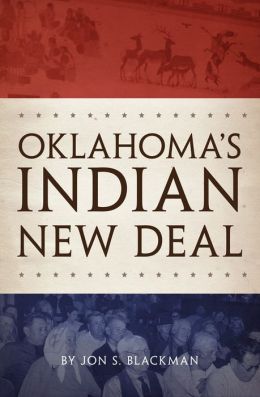
Among the New Deal programs that transformed American life in the 1930s was legislation known as the Indian New Deal, whose centerpiece was the Indian Reorganization Act (IRA) of 1934. Oddly, much of that law did not apply to Native residents of Oklahoma, even though a large percentage of the country’s Native American population resided there in the 1930s and no other state was home to so many different tribes. The Oklahoma Indian Welfare Act (OIWA), passed by Congress in 1936, brought Oklahoma Indians under all of the IRA’s provisions, but included other measures that applied only to Oklahoma’s tribal population. This first book-length history of the OIWA explains the law’s origins, enactment, implementation, and impact, and shows how the act played a unique role in the Indian New Deal.
In the early decades of the twentieth century, white farmers, entrepreneurs, and lawyers used allotment policies and other legal means to gain control of thousands of acres of Indian land in Oklahoma. To counter the accumulated effects of this history, the OIWA specified how tribes could strengthen government by adopting new constitutions, and it enabled both tribes and individual Indians to obtain financial credit and land. Virulent opposition to the bill came from oil, timber, mining, farming, and ranching interests. Jon S. Blackman’s narrative of the legislative battle reveals the roles of bureaucrats, politicians, and tribal members in drafting and enacting the law.
Although the OIWA encouraged tribes to organize for political and economic purposes, it yielded mixed results. It did not produce a significant increase in Indian land ownership in Oklahoma, and only a small percentage of Indian households applied for OIWA loans. Yet the act increased member participation in tribal affairs, enhanced Indian relations with non-Indian businesses and government, promoted greater Indian influence in government programs—and, as Blackman shows, became a springboard to the self-determination movements of the 1950s and 1960s.More information is available here.
Penningroth on African American Divorce, 1865-1930
Dylan C. Penningroth, Northwestern University, has posted an item from his backlist, African American Divorce in Virginia and Washington, D.C., 1865-1930, which appeared in the Journal of Family History 33 (January 2008): 21-35. Here is the abstract:
This article explores the dynamics of divorce among African Americans from 1865 through the early years of the Great Migration. It builds on recent socio-legal scholarship that sees law as local, experiential, and improvised; drawing on local court records from Virginia and Washington, D.C. By focusing on divorce, a legal proceeding in which the litigants were nearly always of the same race, the article recovers under-examined dimensions of African American life, and suggests ways of moving beyond familiar dyads of race relations. Far from avoiding southern lower courts, African Americans pressed hundreds of suits; and participated vigorously in the legal process as litigants, clients, and witnesses. The legal process also involved translating popular notions, including those of gender and race, into legal categories. Black women who ended their marriages had to navigate a treacherous “politics of respectability." Finally, African American divorce was linked in complex ways to the Great Migration.
Thursday, July 4, 2013
Born on the 4th of July: Kawashima, "The Tokyo Rose Case"
The University Press of Kansas has added a new volume to its Landmark Law Cases & American Society series: Yasuhide Kawashima, The Tokyo Rose Case: Treason on Trial (2013). Here's a description:
Iva Ikuku Toguri (1916–2006) was an American citizen, born on the 4th of July. Her parents, first-generation Japanese Americans, embraced their new nation and raised Iva to think, talk, and act like a patriotic American. But, despite her allegiance to the United States, she was forced to spend most of her adult life denying that she was a traitor or that she was World War II’s infamous Tokyo Rose.
Iva Toguri (credit: Harry S. Truman Library)
When the Japanese attacked Pearl Harbor, Iva was nursing an ailing aunt in Japan. Prevented from returning to home, she was viewed with suspicion by the Japanese authorities. They hounded her to renounce her American citizenship, which she adamantly refused to do. Pressured to find employment, she joined Radio Tokyo. Known as Orphan Ann, she did nothing more than emcee brief music segments on “The Zero Hour” during the war’s last two years. She was never called “Tokyo Rose” by anyone and was but one of only a dozen or so English-speaking females heard on Japanese airwaves.
In need of money to return home after the war, she made the mistake of allowing herself to be interviewed by two ambitious journalists who were certain that she was the Tokyo Rose, even though she denied it. The published story brought Iva to the attention of American authorities who tried and convicted Iva for treason, despite the lack of evidence and a reluctant jury. She was then stripped of her citizenship and sent to prison.
Yasuhide Kawashima’s account of Toguri’s trials are deeply rooted in Japanese language sources, American legal archives, and the cultures of both nations. He identifies heroes and villains in both the United States and Japan and also highlights broader concerns: the internment of thousands of loyal Japanese Americans, the meaning of citizenship, the nation’s commitment to the idea of fair trial, the impact of tabloid journalism, and the very concept of treason.
Iva was eventually pardoned in 1977 by President Gerald Ford—she was the first person in U.S. history to be pardoned for treason—and had her citizenship restored. Yet when she died in 2006, obituaries continued to identify her as Tokyo Rose. Kafkaesque in its telling, Kawashima’s tale provides a harsh reminder that the law does not always render justice.


Weiner's Worlds of Law
Over on Worlds of Law, Marc Weiner, a former guest blogger, has three interesting posts:
- Sharp's Numbers, about Blackstone's Commentaries and a book owned by Granville Sharp housed in the Yale rare books collection
- Maine Meets Maine, a video reflection on the historical significance of the cattle pound, joining the State of Maine and Henry Sumner Maine.
- A thread on E.B. White and international law, and more generally about certain characteristics of the midcentury legal imagination. The final post is "Why International Law is Like Webster's Third Dictionary (at least, for E.B. White)."
Wednesday, July 3, 2013
The American Presidency and the Crises of the Nineteenth Century
[We have the following announcement. More here.]
The Miller Center is pleased to announce the 2013–2014 "Historical Presidency" series, “The American Presidency and the Crises of the Nineteenth Century.” Organized by Gary W. Gallagher, renowned U.Va. history professor and Miller Center senior faculty associate, the inaugural season will examine executive leadership during a particularly calamitous period in our nation’s history.
Featuring the most distinguished scholars in their fields, the Miller Center’s “Historical Presidency” series will reach back into the American past in order to gain perspective on the way that presidential leadership has evolved over time, from the founding of the country to the present.
“Lincoln and Davis: War Presidents”
A Conversation with James McPherson and Gary Gallagher
September 18, 5:00 p.m., Nau Hall 101
GARY W. GALLAGHER is the John L. Nau III Professor in the History of the American Civil War at the University of Virginia. JAMES M. MCPHERSON is the George Henry Davis '86 Professor of History Emeritus at Princeton University.
“James Knox Polk and the War with Mexico”
October 16, 3:30 p.m.
DANIEL WALKER HOWE is Rhodes Professor of American History Emeritus at Oxford University and Professor of History Emeritus at UCLA.
“Andrew Jackson and the Troubled Birth of Democracy”
November 8, 3:30 p.m.
HENRY WILLIAM BRANDS is the Dickson Allen Anderson Centennial Professor of History at the University of Texas at Austin.
“Sink Hole: How Kansas Crises Undid the Presidencies of Franklin Pierce and James Buchanan”
February 26, 3:30 p.m.
MICHAEL F. HOLT is Langbourne M. Williams Professor of American History Emeritus at the University of Virginia.
“U.S. Grant and the Crisis of Reconstruction”
March 19, 3:30 p.m.
JOAN WAUGH is professor in the UCLA History Department.
“James Madison and the Brink of National Ruin”
April 16, 3:30 p.m.
ALAN TAYLOR is the Thomas Jefferson Memorial Foundation Professor at the University of Virginia.
The Miller Center is pleased to announce the 2013–2014 "Historical Presidency" series, “The American Presidency and the Crises of the Nineteenth Century.” Organized by Gary W. Gallagher, renowned U.Va. history professor and Miller Center senior faculty associate, the inaugural season will examine executive leadership during a particularly calamitous period in our nation’s history.
Featuring the most distinguished scholars in their fields, the Miller Center’s “Historical Presidency” series will reach back into the American past in order to gain perspective on the way that presidential leadership has evolved over time, from the founding of the country to the present.
“Lincoln and Davis: War Presidents”
A Conversation with James McPherson and Gary Gallagher
September 18, 5:00 p.m., Nau Hall 101
GARY W. GALLAGHER is the John L. Nau III Professor in the History of the American Civil War at the University of Virginia. JAMES M. MCPHERSON is the George Henry Davis '86 Professor of History Emeritus at Princeton University.
“James Knox Polk and the War with Mexico”
October 16, 3:30 p.m.
DANIEL WALKER HOWE is Rhodes Professor of American History Emeritus at Oxford University and Professor of History Emeritus at UCLA.
“Andrew Jackson and the Troubled Birth of Democracy”
November 8, 3:30 p.m.
HENRY WILLIAM BRANDS is the Dickson Allen Anderson Centennial Professor of History at the University of Texas at Austin.
“Sink Hole: How Kansas Crises Undid the Presidencies of Franklin Pierce and James Buchanan”
February 26, 3:30 p.m.
MICHAEL F. HOLT is Langbourne M. Williams Professor of American History Emeritus at the University of Virginia.
“U.S. Grant and the Crisis of Reconstruction”
March 19, 3:30 p.m.
JOAN WAUGH is professor in the UCLA History Department.
“James Madison and the Brink of National Ruin”
April 16, 3:30 p.m.
ALAN TAYLOR is the Thomas Jefferson Memorial Foundation Professor at the University of Virginia.
Brinkley on FDR at the Roosevelt Library
[We have the following announcement.]
The Franklin D. Roosevelt Presidential Library and Museum is pleased to present "Franklin D. Roosevelt: The Renewal of America," a lecture and book signing with Douglas Brinkley, Professor of History at Rice University, Historian for CBS News, and author of The Wilderness Warrior: Theodore Roosevelt and the Crusade for America. The program will be held at 7:00 p.m. on Tuesday, July 9, 2013 in the Henry A. Wallace Visitor and Education Center at the FDR Presidential Library and Home. Following the presentation, Dr. Brinkley will be available for a book signing and several of his books will be available for sale in the New Deal Store. Attendees can visit the Library's new permanent exhibition until 10:00 p.m. -- free of charge -- after the program. This event is free and open to the public.
During the presentation, Dr. Brinkley will discuss Franklin D. Roosevelt and New Deal conservation, with an emphasis on FDR's creation of the Civilian Conservation Corps (CCC). President Roosevelt personally devised the idea for the CCC, a program to put young men aged 17-24 -- many from urban areas -- to work on conservation projects in healthy rural environments. Within three months the Corps enlisted nearly 250,000 young men. They were assigned to CCC camps around the nation.
During its 9-year existence, the CCC employed nearly 3 million men. Eleanor Roosevelt championed the CCC and, with her strong backing, a much smaller program was also created for unemployed young women. The CCC planted more than two billion trees, fought forest fires, built trails, campgrounds, and reservoirs, and aided soil conservation programs. It became one of the New Deal's most popular and successful programs. Its legacy remains today in the facilities it constructed throughout America's national forests, parks, monuments, and wildlife refuges.
The Franklin D. Roosevelt Presidential Library and Museum is pleased to present "Franklin D. Roosevelt: The Renewal of America," a lecture and book signing with Douglas Brinkley, Professor of History at Rice University, Historian for CBS News, and author of The Wilderness Warrior: Theodore Roosevelt and the Crusade for America. The program will be held at 7:00 p.m. on Tuesday, July 9, 2013 in the Henry A. Wallace Visitor and Education Center at the FDR Presidential Library and Home. Following the presentation, Dr. Brinkley will be available for a book signing and several of his books will be available for sale in the New Deal Store. Attendees can visit the Library's new permanent exhibition until 10:00 p.m. -- free of charge -- after the program. This event is free and open to the public.
 |
| Credit. |
During the presentation, Dr. Brinkley will discuss Franklin D. Roosevelt and New Deal conservation, with an emphasis on FDR's creation of the Civilian Conservation Corps (CCC). President Roosevelt personally devised the idea for the CCC, a program to put young men aged 17-24 -- many from urban areas -- to work on conservation projects in healthy rural environments. Within three months the Corps enlisted nearly 250,000 young men. They were assigned to CCC camps around the nation.
During its 9-year existence, the CCC employed nearly 3 million men. Eleanor Roosevelt championed the CCC and, with her strong backing, a much smaller program was also created for unemployed young women. The CCC planted more than two billion trees, fought forest fires, built trails, campgrounds, and reservoirs, and aided soil conservation programs. It became one of the New Deal's most popular and successful programs. Its legacy remains today in the facilities it constructed throughout America's national forests, parks, monuments, and wildlife refuges.
Tuesday, July 2, 2013
Mintz on the Historians' Briefs in Windsor
Over at Inside Higher Ed, Steven Mintz asks, Does History Matter?
At a time when many question the relevance of history, it is noteworthy that the U.S. Supreme Court case that prohibited the federal government from undercutting a state’s decision to extend "the recognition, dignity and protection" of marriage to same-sex couples, hinged on arguments advanced by professional historians.
More
At a time when many question the relevance of history, it is noteworthy that the U.S. Supreme Court case that prohibited the federal government from undercutting a state’s decision to extend "the recognition, dignity and protection" of marriage to same-sex couples, hinged on arguments advanced by professional historians.
More
Knapp on Benjamin Austin
Aaron T. Knapp, Boston University History, has posted Law's Revolution: Benjamin Austin and the Spirit of '86, which appeared in Yale Journal of Law and the Humanities 25 (2013): 271-358. Here is the abstract:
In the spring of 1786, a series of newspaper essays appeared in Boston arguing that lawyers and the laws on which they relied posed a mortal threat to the republican way of life and therefore had to be eradicated forever. Authored by Benjamin Austin, Jr. under the pseudonym "Honestus," these writings sparked a substantial public dialogue extending far beyond Massachusetts’s borders and, within the Bay State, prompted the Shaysites to wage what one historian has called "the American Revolution’s final battle." The commonly held notion that the obstreperous spirit of 1786 reflected a "crisis" requiring redress, and that ratification of the Constitution thereafter resolved it, temps us to consign Critical Period radicals such as Benjamin Austin to the losing side of history. The Article pursues a contrary interpretation. It views Austin and his partisans in 1786 as seminal figures in the birth of an independent American legal culture. It traces overlooked strains of this post-Revolutionary legal culture from the Founding to the Civil War and, in the process, unsettles foundational assumptions long held dear by American legal historians.
The U.S. Legal History Survey Revisited: IV -- Methods of Evaluation -- Historiographical Essay
After a brief hiatus, I am returning to my series of posts on teaching the U.S. Legal History survey. (Earlier posts are here, here, and here). When I left off, I was pondering how to evaluate student learning. In retrospect, it might have been useful to find ways of evaluating the students throughout the course -- perhaps through shorter response papers or in-class exercises. (Do you all do this? What sort of assignments do you use?). This past semester, however, I based final grades entirely on a final assignment: either a ten-hour, essay-style take-home exam or a 20-25 page historiographical essay (student's choice).
The historiographical essay is an unusual assignment for a law school class, but I thought it worked well and I'll likely use it again. Here's how I introduced the assignment:
The historiographical essay is an unusual assignment for a law school class, but I thought it worked well and I'll likely use it again. Here's how I introduced the assignment:
A historiographical essay is a review of the historical writings on a particular topic or field of study (for example, the law of slavery in the antebellum South or the “Constitutional Revolution” of 1937). Historiographical essays are rooted in the idea that there is no one, “true” history, but rather a set of overlapping interpretations, which are influenced by the historian’s time, place, and identity. How an historian interprets the past will be based on his or her values, education, theoretical perspective (e.g. Marxist, feminist, etc.), and social context, as well as by the primary sources that are available at the time.
A historiographical essay seeks to identify and explain change over time in how historians have approached a single topic. This requires, first, taking apart a number of books (five or six will do for this assignment). The essay should identify each book’s argument and demonstrate an understanding of how (i.e. with what evidence) the author built his or her argument. A successful historiographical essay will, second, link the books together, showing the ways in which the selected historians have built upon each other's work or are in dialogue with each other. Third, the essay should suggest productive lines for future inquiry: perhaps there is an angle that has not been explored, a theoretical perspective that scholars have yet to bring to bear on the topic, or a weakness that runs throughout the books under consideration. A historiographical essay need not be celebratory; indeed, it may be critical. What matters most is that the essay provides a thoughtful, nuanced portrait of the chosen field of scholarship.
Every student in this class is capable of producing an excellent historiographical essay, so do not be discouraged if you do not have a strong background in history. That said, this option might be particularly useful to students who have a deep interest in a particular topic and students interested in academic careers.
Monday, July 1, 2013
Colman on Fashion, Sexism and the Federal Judiciary
Charles E. Colman, an Acting Assistant Professor, NYU School of Law, has posted Fashion, Sexism, and the United States Federal Judiciary, which will appear in Vestoj: The Journal of Sartorial Matters (July 2013). Here is the abstract:
The U.S. federal judiciary has frequently displayed a dismissive attitude toward "fashion," while simultaneously recognizing the great economic importance of clothing. As fashion was, from the formation of the United States until at least the late 1960s, associated primarily with the female sex, while judges during this time period were almost exclusively male, one naturally wonders whether the power dynamics of gender shaped the development of the law pertaining to fashion. There is good reason to believe that this has indeed been the case.
New Release: Onwuachi-Willig, "According to Our Hearts: Rhinelander v. Rhinelander and the Law of the Multiracial Family"

This landmark book looks at what it means to be a multiracial couple in the United States today. According to Our Hearts begins with a look back at a 1925 case in which a two-month marriage ends with a man suing his wife for misrepresentation of her race, and shows how our society has yet to come to terms with interracial marriage. Angela Onwuachi-Willig examines the issue by drawing from a variety of sources, including her own experiences. She argues that housing law, family law, and employment law fail, in important ways, to protect multiracial couples. In a society in which marriage is used to give, withhold, and take away status—in the workplace and elsewhere—she says interracial couples are at a disadvantage, which is only exacerbated by current law.One of of the blurbs on the book's webpage comes from our very own Tomiko Brown-Nagin:
"According to Our Hearts is a fascinating—and sobering—account of interracial relationships in America. Onwauchi-Willig persuasively argues that the “mono-racial” family remains the social and legal standard by which all others are measured. Anyone interested in race, gender and the law will find the book an absorbing and enlightening read."More information is available here. It looks like excerpts and the TOC will be available soon.
Subscribe to:
Comments (Atom)