Wednesday, June 13, 2007

Smith reviews White, History and the Constitution: Collected Essays

History and the Constitution: Collected Essays, by G. Edward White, (Carolina Academic Press, 2007) is reviewed in the Law and Politics Book Review by Christopher E. Smith, School of Criminal Justice, Michigan State University. Smith begins with a discussion of the pitfalls of assembling a collection of previously published essays. Then he turns to White, whose collection he finds to be largely successful.

In HISTORY AND THE CONSTITUTION: COLLECTED ESSAYS, G. Edward White confronts the foregoing challenges and, happily, is largely successful in avoiding the associated pitfalls. Because White, one of the nation’s preeminent legal historians for the past three decades, is an accomplished book author, it would be difficult for him to organize and present a collection of published articles as representing his most important work. Thus, he selected and organized law review articles, published from 1999 through 2006, by focusing on the theme of “the resurgence of history and historical analysis” (p.3) in the U.S. Supreme Court’s constitutional cases as well as in scholars’ evaluations of those decisions. He revised the articles “with a view toward eliminating some details designed for specialist readers” (p.xi), but he retained the law review format of numerous citations and explanatory comments presented as footnotes.

White divides the essays within the book into three “clusters.” Each cluster begins with a brief introductory chapter prepared for this book followed by three substantive chapters that, except for the book’s final chapter, previously appeared in law journals. The first cluster “traces the emergence of historically oriented constitutional jurisprudence in the late twentieth century. . . . to show the close connection between the emergence of historically oriented constitutional jurisprudence and changing theories of judicial review and the nature of judicial decisionmaking” (p.5). The second cluster “brings historical analysis to bear on one of the most contested issues recently entertained by the Supreme Court: to what extent should international law be part of the corpus of American legal decisions?”(p.5). The final cluster of chapters “examines the distinctive character of the Rehnquist Court in light of the contrasting theories of historical interpretation” outlined earlier in the book (p.6)....

The first collection of essays will be of great interest to those who teach constitutional law. The three substantive chapters, entitled respectively “The Arrival of History in Constitutional Scholarship,” “The Constitutional Journey of MARBURY v. MADISON,” and “Historicizing Judicial Scrutiny,” provide valuable insights about the development and application of theories of constitutional interpretation. The first chapter is especially strong in tracing the development of influences on constitutional theory, analyzing the advocacy of originalism that emerged in the 1980s, and explaining history’s emerging influence as the countermajoritarian difficulty no longer served as the defining feature of constitutional debates. The second chapter provides an especially cogent analysis of the development, definition, and use of judicial review from the time of MARBURY through the twentieth-century....

For political scientists who teach about the Supreme Court, the third cluster may be of greatest interest and value. The three substantive chapters are entitled respectively “Unpacking the Judicial Center,” “The Internal Powers of the Chief Justice: The Nineteenth Century Legacy,” and “The Jurisprudence of the Rehnquist Court.” The first chapter presents a historian’s view of the development of judicial behavioralism in political science with an interesting focus on the concept of a “center” and “centrist justices” on the Supreme Court. As White notes, “the spatial meaning of center does not simply suffer from the difficulties incumbent on locating justices on an ideological continuum[;] [i]t also fails to clarify what a centrist judicial stance MEANS for individual judges” (p.391, emphasis in original). White criticizes the varied and inconsistent uses of the “center” concept in analyzing the Supreme Court but he does not ultimately reject the concept’s utility for some purposes.

The second chapter in the cluster provides valuable historical perspective on the role of the chief justice, especially with respect to the development of formal protocols for opinion assignments and deliberative processes. The final chapter provides perspective on the Rehnquist Court’s jurisprudence, primarily by examining the historical development of constitutional theory as it relates to decision making tendencies in the Burger and Rehnquist Courts, rather than by analyzing the Rehnquist Court’s specific decisions. In this chapter, as he does elsewhere in the book, White demonstrates his command of the scholarly literature on constitutional theory by analyzing the works of important authors. Throughout, there are detailed discussions of major works and arguments by John Hart Ely, Martin Shapiro, C. Herman Pritchett, Cass Sunstein, Raoul Berger, and other important scholars. These discussions of significant literature give the book added value and make individual chapters within the volume potentially attractive for use in graduate courses on the Supreme Court and constitutional theory.

For the full review, click here. White's Table of Contents is here.

Oman on the Rise and Fall of Civil Disputes in the Mormon Church

Nathan B. Oman, College of William & Mary, has posted a second paper on Mormon Legal History: The Rise and Fall of Civil Disputes in Mormon Church Courts: A Preliminary Study. The first is here. Here's the new abstract:
A number of American religious denominations – Quakers, Baptists, Mormons, and others – have tried with varying degrees of success to opt out of the secular legal system, resolving civil litigation between church members in church courts. This paper looks at this phenomenon in the Mormon context, asking why Latter-day Saints moved civil disputes into church courts during the nineteenth century and why they abandoned the practice in the early twentieth century. It presents my preliminary research on a much larger project on civil litigation in nineteenth-century Mormon courts.

Tuesday, June 12, 2007

Smith on the History of Sexual Abuse of Women in U.S. Prisons, and in the Context of Slavery

Brenda V. Smith, American University, has posted an article, Sexual Abuse of Women in United States Prisons: A Modern Corollary of Slavery. It appeared in the Fordham Urban Law Journal. Here's the abstract:
This paper addresses the sexual abuse of women in custody as a more contemporary manifestation of slavery and discusses the congruencies and the differences that exist between the sexual abuse of women in custody and slavery. The paper charts the history of the parallel abolition and prison reform movements and examines their divergent paths arguing that the women's movement abandonment of prison advocacy has harmed the women in prison movement. The article concludes that the embrace of human rights norms has assisted in providing new avenues for redressing the sexual abuse of women in custody.

More from Davies on Fictional Originalism: this time -- Scalia and the Sixth Amendment

Thomas Y. Davies, Univ. of Tennessee, has posted an article, What Did the Framers Know, and When Did They Know it? Fictional Originalism in Crawford v. Washington. It appeared in the Brooklyn Law Review. This is the second piece recently posted by Davies arguing that the current Court's originalism is "fictional." The other is here.
Here's today's abstract:
Justice Scalia made two originalist claims about the application of the Sixth Amendment Confrontation Clause to hearsay evidence in his opinion for the Court in Crawford v. Washington, 541 U.S. 36 (2004). He interpreted the framing-era content of the confrontation right to include a cross-examination rule under which testimonial hearsay statements were admissible only if the declarant was unavailable and the defendant had had a prior opportunity to cross-examine. However, he interpreted the scope of the framing-era right narrowly by asserting that the Framers were concerned only with regulating testimonial hearsay but did not intend to prohibit the admissibility of casual, nontestimonial hearsay. This article argues that neither of these claims was historically sound.
The primary historical issue regarding the cross-examination rule involved the admissibility in a felony criminal trial of the written record of a post-arrest examination of a sworn witness taken by a justice of the peace under the Marian statutes. Justice Scalia recognized that such examinations were once admissible provided only that the witness had become genuinely unavailable (for example, had died prior to the trial), but asserted that a 1696 case had made cross-examination a condition for admissibility, and also asserted that three English cases decided in 1787, 1789, and 1791 had removed any doubt as to the cross-examination requirement.
This article argues that the 1696 case dealt only with a misdemeanor and thus was inapplicable to the felony prosecutions to which the Marian statutes applied, and that none of the three later cases were published in London early enough to have come to the Framers' attention when the Bill of Rights was framed in 1789. Instead, it documents that the treatises and justice of the peace manuals available in framing-era America simply stated that Marian witness examinations were admissible if the witness had become genuinely unavailable. Thus, Crawford's cross-examination rule claim was prochronistic; although such a rule was adopted in England and America after the framing, it was not a part of the Framers' understanding.
The salient feature of Justice Scalia's originalist claim that the scope of the confrontation right was limited to only testimonial but not nontestimonial hearsay is that he offered no actual historical evidence of any such distinction. Rather, as Chief Justice Rehnquist noted in his concurring opinion in Crawford, the historical rule was that hearsay is no evidence. Thus, the Framers had no occasion to consider the application of the confrontation right to unsworn hearsay, because they expected that such hearsay would not be admissible in any event.
The article concludes by arguing that the fictional history in Crawford's rationale provides further evidence that the distance between framing-era and contemporary doctrine and institutions is so great that originalism is not a feasible approach to constitutional interpretation.

Monday, June 11, 2007

Potter on how J. Edgar Hoover helped build the New Deal state

Since J. Edgar Hoover is getting renewed attention, with a new biography out on his early years, it’s a good time to revisit an earlier book on Hoover, which puts the 1930s "war on crime" in the context of one of American legal historians’ favorite topics: New Deal-era statebuilding. The book is Claire Bond Potter, War on Crime: Bandits, G-Men, and the Politics of Mass Culture (Rutgers University Press, 1998).

Here’s the book description:

War on Crime revises the history of the New Deal transformation and suggests a new model for political history: one which recognizes that cultural phenomena and the political realm produce, between them, an idea of "the state." The war on crime was fought with guns and pens, movies and legislation, radio and government hearings. All of these methods illuminate this period of state transformation and perceptions of that emergent state, in the years of the first New Deal. The study of the creation of G-men and gangsters as cultural heroes in this period not only explores the Depression-era obsession with crime and celebrity, but it also lends insight on how citizens understood a nation undergoing large political and social changes.

Anxieties about crime today have become a familiar route for the creation of new government agencies and the extension of state authority. It is important to remember the original "war on crime" in the 1930s – and the opportunities it afforded to New Dealers and established bureaucrats like J. Edgar Hoover – as scholars grapple with the ways states assert influence over populations, local authority and party politics, while they pursue goals such as reducing popular violence and protecting private property.

Review:

War on Crime introduces a whole new dimension into analysis of the evolution of the American state in the twentieth century. In Potter’s exceedingly capable hands, a New Deal in national policing proves equally as significant as the more frequently discussed federalizations of social welfare, industrial relations, and economic policy." Lizabeth Cohen, Harvard University

Macquarie University offers PhD scholarship in Comparative Legal History

This is a nice opportunity, but the focus of an applicant's scholarship must be quite specific: comparative legal history of 19th century property relations in Australia and Canada. If this fits your interests, act quickly: the deadline is June 30.

LAW MQRES Legal History PhD Scholarship
Closing Date: 30 June 2007
A Macquarie University Research Excellence Scholarship (MQRES) is available in the Centre for Comparative Law, History and Governance at Macquarie University, for a PhD project that will compare aspects of the legal history of property relations in Australia and Canada in the nineteenth century. The colonial Australian and nineteenth century Canadian jurisdictions were both similar yet different jurisdictions existing in broadly similar yet distinctively different settler societies. The resolution of property disputes in colonial settler societies was complicated by the competing jurisdictions of common law and equity. The project is a study of comparative legal history. The focus of the project will be a detailed comparison of law and property relations in Canada and Australia.

The Centre for Comparative Law, History and Governance is an official University Research Centre at Macquarie University. It contains specialists in law, history and politics, as well as a cluster of leading legal history scholars.
MQRES Scholarships are available to Australian and international students. Applicants should have completed an Australian four-year undergraduate degree in Law with first class honours, or demonstrate equivalent research qualifications (such as a Masters course with substantial research component) from an Australian or overseas University. A background in legal history is desirable.

MQRES scholarships pay a stipend, currently $A19,616 per annum, tax exempt (2007). The tenure of the scholarship is 3.5 years full time, subject to satisfactory progress. Tuition fees will be funded for the scholarship tenure. Eligible domestic students will receive Research Training Scheme (RTS) placement for their tuition. International award holders will have their full tuition fee and Overseas Health Care costs paid under the award.

To obtain further information regarding this project applicants are encouraged to contact Associate Professor Andrew Buck, co-director of the Centre for Comparative Law, History and Governance, email: Andrew.Buck@law.mq.edu.au

Application forms and conditions of award are available from the Higher Degree Research Office, email: hdrschol@vc.mq.edu.au, telephone: (02) 9850 7987.

Applications should be forwarded to:

The Scholarship Officer
Higher Degree Research Office
Cottage C4C
Macquarie University
NSW 2109
Australia

Wesson on How Unscrupulous Lawyers and Credulous Judges Created an Exception to the Hearsay Rule

Marianne Mimi Wesson, University of Colorado, has posted a new article, 'Remarkable Strategems and Conspiracies': How Unscrupulous Lawyers and Credulous Judges Created an Exception to the Hearsay Rule. It is forthcoming in the Fordham Law Review. Here's the abstract:
This paper, a companion piece to the author's earlier exploration of the case of Mutual Life Insurance Company v. Hillmon, describes the remarkable record of unethical conduct compiled by the eminent and respectable attorneys for the insurance companies in the course of that litigation. When married with the Supreme Court Justices' uncritical willingness to accept the false narrative thus contrived, these attorneys' misconduct led to the creation of an important rule of evidence - a rule of questionable merit. This article aims to remind us that lawyers who are willing to distort the process of litigation have the power not only unjustly to advantage their clients in particular cases, but to affect the creation and persistence of overarching policies that do not serve the ends of justice or truth.

Erskin on the History of WTO Dispute Resolution since 1947

Daniel H. Erskine, Esq., has posted a brief abstract for an article, Resolving Trade Disputes, the Mechanisms of GATT/WTO Dispute Resolution. It appeared in the Santa Clara Journal of International Law. The article itself is not posted, but the author can be reached through his SSRN page. Here's the abstract:
The World Trade Organization's Dispute Settlement Body grew out of decades of experience and the frustrations of sovereign nations regarding the method of settling international conflicts between states over tariff and trade issues. This article discusses the historical development of the World Trade Organization's dispute resolution system. The first section analyzes a number of agreements and proposals entered into and put forward during the period from 1947 through 1990. The second section addresses the instrument which inaugurates the World Trade Organization's current dispute settlement procedure and further describes a number of submissions by nations for improvements to the mechanism.

Sunday, June 10, 2007

O'Hagan on DeLillo, Falling Man, and thoughts on the culture of the post-9/11 era

"The writer and the terrorist have something in common," writes Andrew O'Hagan in a brilliant review of Don DeLillo, Falling Man (Scribner) in the New York Review of Books. "And so it feels like something of a consummation when a person called Mohamed Mohamed el-Amir el-Sayed Atta appears on page 80 of DeLillo's new novel Falling Man. The novelist seems to recognize Atta's impulses as if they were old friends."

If news reporters write the first cut of history, somewhere between the reporters and the historians stand the novelists and the poets. (This is, of course, a false ordering. And we might think of the news, literature and histories of the future to be something of a mash-up.) But it is because literature plays a role in the way we conceptualize and remember the past, that historians will be interested in literary accounts of what is seen as a defining moment in recent history: September 11.

Andrew O'Hagan places the novel Falling Man in the trajectory of Don DeLillo's writing, suggesting that it is the novelist's "interest in the conjunction of visual technology and terrorism that really sets DeLillo's mentality apart— a setting apart which also put him on the road to having September 11 as his subject long before the events of that day happened." DeLillo has written elsewhere: "Some stories never end."

Even in our time, in the sightlines of living history, in the retrieved instancy of film and videotape, there are stories waiting to be finished, open to the thrust of reasoned analysis and haunted speculation. These stories, some of them, also undergo a kind of condensation, seeping into the texture of everyday life, barely separable from the ten thousand little excitations that define a routine day of visual and aural static processed by the case-hardened consumer brain.

For O'Hagan, "a key flavor of DeLillo's earlier work, that we were all waiting for something terrible to happen, something that might blow us apart but which might also bring us together."

A chilling feature of this review is that O'Hagan tracks not only DeLillo's literary development, but also Mohammed Atta's development as a terrorist, so that by the time the novelist published The Body Artist in 2001,

As DeLillo pressed the keys (and returned the carriage) to create the following passage, Atta was on American soil and in daily contact with his fellow conspirators while training on flight simulators at a rented house in Florida:

"His future is not under construction. It is already there, susceptible to entry.

She had it on tape.

She did not want to believe this was the case. It was her future too. It is her future too.

She played the tape a dozen times.

It means your life and death are set in place, just waiting for you to keep the appointments."

O'Hagan continues,

All these passages, written over the course of a career, could be understood to evoke something very like a terrorist's trajectory toward an encounter with the twin towers, but they also describe the journey made by a singular American novelist toward the day of days for his preoccupations as an artist and his brio as a stylist. If the twin towers could be said to have stood in wait for the Mohamed Attas of the world, then the Mohamed Attas of the world were standing in wait for Don DeLillo. To have something exist as your subject before it happens is not unprecedented in the world of literature—consider Kafka and the Nazis, Scott Fitzgerald and the Jazz Age— but the meeting of September 11 and Don DeLillo is not so very much a conjunction as a point of arrival, and a connection so powerful in imaginative terms that it instantly blows DeLillo's lamps out.
As have many reviewers, O'Hagan finds Falling Man to be an imperfect novel, as have been other literary attempts to come to terms with September 11.

Reading Falling Man, one feels that September 11 is an event that is suddenly far ahead of him, far beyond what he knows, and so an air of tentative rehearsal sounds in an empty hall. What is a prophet once his fiery word becomes deed? What does he have to say? What is left of the paranoid style when all its suspicions come true?

Yet in the way he frames his critique, perhaps O'Hagan makes the case that both this review and the novel, in the context of the DeLillo's life's work, are essential reading if we hope to make sense of the post-9/11 world, and what it has wrought. Perhaps O'Hagan has asked, and answered, the question, "What is a prophet once his fiery word becomes deed?"

For O'Hagan's full review (recommended) click here.

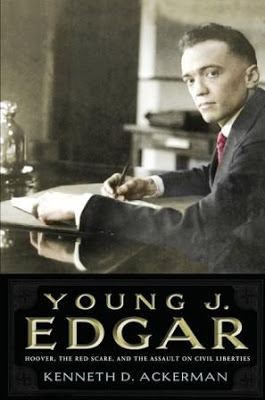
Kenneth Ackerman on how J. Edgar Hoover got his start: Tonight on Book TV

Sunday, June 10, 6:00 pm and at 9:00 pm, Eastern time, US

After Words: Kenneth Ackerman, author of "Young J. Edgar: Hoover, The Red Scare, And The Assault On Civil Liberties" interviewed by Joan Biskupic

Description: Historian Kenneth Ackerman examines the early career of J. Edgar Hoover in "Young J. Edgar: Hoover, The Red Scare, And The Assault On Civil Liberties." Hoover began his career as a twenty four year old assistant to Attorney General A. Mitchell Palmer where he played an influential role in the undertaking of the Palmer Raids. The raids resulted in the arrests of over ten thousand Americans suspected of radical political beliefs after bombs exploded in nine U.S. cities on June 2, 1919. The reputation of Attorney General Palmer would later be tarnished due to what was deemed as an overzealous assault on civil liberties. J. Edgar Hoover would escape from the aftermath of the Palmer Raids unscathed and in 1924 became the head of the Federal Bureau of Investigation, a position he held until 1972. Kenneth Ackerman discusses his book with Joan Biskupic, Supreme Court correspondent for USA Today.

Author Bio: Kenneth Ackerman is the author of several books on U.S. history including, "Dark Horse: The Surprise Election and Political Murder of President James A. Garfield." He has served in senior posts on Capitol Hill and the executive branch for over twenty five years and currently practices law. Joan Biskupic is the Supreme Court correspondent for USA Today. She is the author of "Sandra Day O'Connor: How the First Woman on the Supreme Court Became It's Most Influential Justice." Prior to joining USA Today, Ms. Biskupic reported on the Supreme Court for the Washington Post. She is currently working on a book about Justice Antonin Scalia.

Saturday, June 9, 2007

Reviewed: O'Malley, Shades of Difference: Mac Maharaj and the Struggle for South Africa

A new biography about the rise and fall of a South African leader, SHADES OF DIFFERENCE: Mac Maharaj and the Struggle for South Africa (Viking), by Padraig O’Malley is reviewed in this Sunday's New York Times by Jeremy Harding. Harding writes:
“Mac” — or Satyandranath Ragunanan Maharaj — had spent nearly 40 years as an anti-apartheid activist, much of it in exile and some of it underground or in detention in South Africa, as well as a further five in government. “Shades of Difference,” by Padraig O’Malley, the John Joseph Moakley professor for international peace and reconciliation at the University of Massachusetts, Boston, is a collaborative biography, bringing together the author’s analysis and Maharaj’s own reflections, transcribed from hours of interviews. The result is exactly what O’Malley set out to achieve: “a portrait of Mac and of South Africa.” It is a striking success.

Maharaj was born in 1935, to Hindu parents in Natal. An earlier generation had been shipped from colonial India during the 19th century as indentured labor for South Africa’s cane fields. Mac wanted to read for a law degree, but his skin color was against him. As a fervent young Marxist with a hatred of apartheid, he was skeptical about nonviolence at a time when many, including Mandela’s organization, the African National Congress, still favored it. “I took to Communism,” he tells O’Malley, “like a fish to water.”...
[After studying law in London and after a stint in East Germany,] he returned to South Africa, O’Malley explains, to lead a knife-edge existence as “the struggle’s publisher and bomb maker,” a member of the party’s central committee and also of the military wing of the A.N.C. He made pipe bombs, printed pamphlets and spirited militants out of the country for combat training. But the circle was tightening, and in 1964 he was arrested.

O’Malley, who provides a very good sense of the political context, tells us that from about 1960 until Mandela’s release in 1990, some 80,000 people were detained without trial....Mac was charged with four counts of sabotage. On Robben Island he quickly fell in with Mandela and the other political prisoners.
This interesting review continues, here.

Friday, June 8, 2007

Morriss on Gasoline, Markets and Regulators

Andrew P. Morriss, University of Illinois, has posted a new paper, Gasoline, Markets, and Regulators. Here's the abstract:
Rising gasoline prices have brought energy issues back to the forefront of public policy debates. Gasoline markets today are the result of almost a hundred years of conflicting regulatory policies, which have left them dangerously fragmented. In this article, I analyze that regulatory history, highlighting the unintended consequences of regulation that have pushed the United States into a series of loosely connected regional markets rather than a broad, deep national market. This fragmentation leaves the American economy is vulnerable to natural disasters, terrorist attacks, and foreign dictators in ways that it need not be. It also produces higher prices for consumers and reduced innovation by refiners.

How "Wilsonian" was Woodrow Wilson? Janis has an answer

Mark Weston Janis, University of Connecticut, has posted a new article, How “Wilsonian” was Woodrow Wilson? It has just been published in the Dartmouth Law Journal. Here's the abstract:
This essay reveals how President Woodrow Wilson's passion for international law slowly developed over several stages in his life from his professorship at Princeton to his presidency. By exploring Wilson's conversion from a skeptic of international law to one of its greatest proponents, the author shows how Wilson's world view shaped American foreign policy and the political landscape.

6 months, 1 blogger, 50,000 visits

On November 27, 2006, the Legal History Blog was launched. The next day, Eric Muller kindly informed this new and clueless blogger about site meters. Since then, readers have visited over 50,000 times.

You are from all continents except Antarctica and from over 100 countries (my country counter tops out at 99). Early and steady readers were from Bosnia and Herzegovina, various parts of the U.K., Japan, China, Taiwan, Brazil, the Netherlands and of course Canada. Soon, readers from Russia, Poland, France, Germany, Norway, Turkey, South Africa, Kenya, Zimbabwe, Indonesia, Argentina, Mexico, Israel, Iraq, Iran, India, and many other countries joined in. The greatest number of readers come from all over the United States.

I began this blog because I thought the field of legal history needed something like this. (Another reason, which only some of you will truly understand, is that it is a very good idea for every parent of a teenager to have a hobby.) I wondered whether anyone would be interested in reading it. 50,000 visits in half a year seems more than enough of a reason to keep going.

Thank you for visiting!

Thursday, June 7, 2007

Janse on Fighting Terrorism in the Netherlands: A Historical Perspective

Did "everything change" on September 11? This historical question has important consequences, since post-9/11 policies are often justified on the assumption that there has been a fundamental shift, and critics of post-9/11 policies are at times criticized for engaging in "September 10 thinking." Ronald Janse, University of Utrecht, has a new article that is part of a growing literature that questions whether the world has fundamentally changed, this time from the perspective of anti-terror policy in the Netherlands. Fighting Terrorism in the Netherlands: A Historical Perspective appeared in the Utrecht Law Review. Here's the abstract:
The Dutch government and legislature are in the process of introducing an unprecedented set of anti-terrorist measures. It is claimed that these measures are necessary and justified, as terrorism today threatens the security of Dutch society as never before. But does it? In the present state of excitement, it is all too easy to forget that Dutch society has had to face terrorism before. Indeed, if the number of people killed or targeted is a measure of the gravity of a terrorist threat, terrorism in the 1970s was more serious than current terrorism has been up until now. Yet in the 1970s, the Dutch government did not introduce a comprehensive set of anti-terrorist measures, unlike, for example, the British and German governments. In this paper, the Moluccan actions, the most serious terrorist actions Dutch society has experienced so far, and the reaction by the government to these actions, are discussed. This leads to the conclusion that current terrorism is less different from old-style terrorism than the government claims it to be, although there may be one important difference: the risk that current terrorists use deeply destructive weapons. This is not to say that the government's policies were better in the 1970s than they are now. However, a sense of what the record tells us may help us in disciplining current fears and in taking a more critical stance towards the view that the present anti-terrorist measures are necessary and justified because we never saw anything like current terrorism before.

Lyon and LaMagna on The History of Children's Hearsay

Thomas D. Lyon, USC Law School, and Raymond LaMagna, Irell & Manella, have posted an article, The History of Children's Hearsay: From Old Bailey to Post-Davis. It is forthcoming in the Indiana Law Journal. Here's the abstract:
The United States Supreme Court has recently held that in order to determine the application of the Confrontation Clause to hearsay, one should examine common practice in 18th century British courts. Analyzing 18th century treatises and trial reports, this paper demonstrates that children's hearsay statements alleging abuse were routinely admitted when children were too young to testify, and that R. vs. Brasier, an oft-cited 1779 case, did not change this practice. Rather, both the courts and commentators believed that a best evidence approach should be applied - children should testify whenever possible, but when they could not, their hearsay could be heard. The paper proposes an interpretation of the Confrontation Clause forfeiture by wrongdoing doctrine that captures both historical and contemporary intuitions about what is fair in criminal cases when child victims are too young to testify.

Backlash Revisionism: Post and Siegel Rethink Roe Rage

Robert Post and Reva Siegel, both of Yale Law School, have posted an article that is an important intervention in the scholarship about "backlash" to landmark Supreme Court rulings, Roe Rage: Democratic Constitutionalism and Backlash. It is forthcoming in the Harvard Civil Rights-Civil Liberties Law Review. Here's the abstract:
After decades of assault on the jurisprudence of the Warren Court, many progressive legal scholars have lost faith in judicial enforcement of constitutional rights. Some have responded by embracing popular constitutionalism and advocating mobilization against the Rehnquist and Roberts Courts; others, chastened, urge a minimalist jurisprudence that will avoid giving any group offense. There is fear of provoking the kind of backlash that many associate with Roe, which is often regarded as having caused the rise of the New Right. In this article, we offer a new account of the relationship between adjudication and popular constitutionalism, which we call "democratic constitutionalism." Democratic constitutionalism affirms both the need for judicially enforced rights and the fundamental significance of popular constitutional engagement.
We begin from the understanding that, in the American tradition, constitutional politics and constitutional law depend on one another, however insistently they assert their autonomy. This article offers an account of democratic constitutionalism which emphasizes the interdependence of judicial and popular enforcement of constitutional rights, despite perpetual friction between them. Judicially enforceable rights give concrete and institutional form to constitutional values; ongoing popular constitutional engagement ensures that these values retain democratic legitimacy.
Interpretive disagreement is a normal condition for the development of constitutional law. We identify understandings and practices that enable citizens to make claims on the Constitution and government officials to resist and respond to their claims; these interactions shape the Constitution's meaning over time in ways that sustain citizen engagement in our constitutional order and reconcile Americans' competing commitments to the rule of law and to self-governance.
We draw on these understandings to question leading accounts of backlash featured in the work of Michael Klarman, William Eskridge, and Cass Sunstein. Each of these theorists tends in his own way to overestimate the costs of backlash and to underestimate its benefits. They are each attuned to the harms that attend constitutional conflict, but they do not sufficiently consider how citizen engagement in constitutional contestation can contribute to social cohesion in a normatively heterogeneous polity.
Roe symbolizes the fears of those who counsel courts to avoid controversy. Legal scholars and political commentators commonly assert that judicial overreaching produced Roe rage, arguing that legislatures might have liberalized access to abortion if only the Court had stayed its hand. We examine scholarship on Roe's reception, as well as primary sources of the era, which together undermine this conventional account. Backlash to Roe was not just about judicial overreaching. Political mobilization against the decision expressed opposition to abortion's liberalization that began in state legislatures years before Roe was decided. As importantly, backlash to Roe was not just about abortion. Mobilization against Roe evolved during the 1970s into the form we now associate with Roe rage - a broad-based social movement hostile to legal efforts to secure the equality of women and the separation of church and state. Roe rage opposes ideals of individualism and secularism that lie at the foundation of our modern constitutional order. Accommodating resistance to Roe thus presents normative questions analogous to those posed by accommodating resistance to Brown.
The article concludes by illustrating how the themes of Roe rage have recently found expression in the Supreme Court's opinion in Carhart.

Wednesday, June 6, 2007

Call for Papers: Gender and the Long Postwar

Call for papers:
GENDER AND THE LONG POSTWAR:
Reconsiderations of the United States and the Two Germanys, 1945-1989


Conference to be held at the German Historical Institute, Washington, D.C., USA May 30-31, 2008

Co-sponsored by the German Historical Institute-Washington, the University of Maryland, College Park, and the University of North Carolina at Chapel Hill

Conveners:

Sonya Michel (University of Maryland, College Park)
Karen Hagemann (University of North Carolina, Chapel Hill)
Corinna Unger (German Historical Institute, Washington)

Historians have long understood that wars can serve as a catalyst for change. In his recent book Postwar: A History of Europe Since 1945, Tony Judt, for example, argues that "World War II created the conditions for a new Europe." The possibilities for change during this period were, we contend, especially apparent in terms of gender relations. In Europe, the immediate aftermath of the war brought with it the need to confront massive death and destruction, continuing privations, dislocations, and, for women, the risk of rape. But at the same time, peace offered the prospect of new opportunities. Both communism and liberal democracy held out the promise of equality for women and wellbeing for them and their families. Yet the demands of rebuilding nations and restoring social order took immediate precedence. The tensions between the political and economic needs of nations, the promises of new social orders, women’s ongoing struggle for recognition, autonomy, and equality, and men’s efforts to recast masculinity in the wake of unprecedented violence—these constitute the major themes of this conference.

Judt’s study implies that conditions for creating "the new" were greater in Europe than in the United States. Was this in fact the case? From the perspective of gender, we would argue, the war opened up possibilities for women and men on both sides of the Atlantic. But the extent to which those possibilities were realized varied considerably across societies. This conference will bring together a group of scholars to explore why this was so. Comparing gender developments in the United States and the two Germanys during "the long postwar" will allow us to examine these variations and, in particular, to see how gender developments intersected and were affected by the trajectories of market democratic and communist regimes as well as the impact of idiosyncratic cultural continuities. By extending the investigation to 1989, we will be able to trace both continuities and change over a long expanse of gender relations, sorting out the impact of the war itself from other factors that came into play during the period.

Panels will be organized around the following themes:

• War, Memory and the (Re)construction of Gender
• Migration, Immigration and Changing Gender and Sexual Identities
• Education, Employment, Consumerism: New Roles for Women
• Social Citizenship and the Gendering of Welfare States
• Politics, Protest and Civil Society
• New Sexualities
• Gender, Postwar, and German and U.S. Historiography

The conference will be held in English and will focus on the discussion of precirculated papers of about 7,000 to 8,000 words (due by April 15, 2008).

Please send a one-page proposal, short CV, and list of relevant publications by e-mail to Bärbel Thomas of the GHI at B.Thomas@ghi-dc.org by October 1, 2007.

The cost of travel and accommodations will be covered by the sponsors.
For further information, please contact:

Sonya Michel: smichel@umd.edu
Karen Hagemann: hagemann@unc.edu
Corinna Unger: unger@ghi-dc.org
Hat tip to H-Diplo.
Photo credit.

Banks on The Death of FISA

William Banks, Syracuse, has posted the abstract for a new article, The Death of Fisa. It is forthcoming in the Minnesota Law Review. The article itself is not posted, but the author can be reached through his SSRN page. Here's the abstract:
One of the most useful tools available to the government to learn about terrorist plans before they mature has been the Foreign Intelligence Surveillance Act (FISA). Enacted in 1978, FISA resulted from an inter-branch compromise. Until then, no president had ever conceded that the Congress could interpose any set of procedures to confine the constitutional discretion of the president to engage in electronic surveillance to protect the national security. However, beginning in the 1960s, the Supreme Court recognized an emerging constitutional right of privacy that is implicated when government conducts electronic surveillance, and courts began to limit warrantless electronic surveillance. Soon thereafter, the Watergate scandal and follow-on investigations of surveillance abuses by the Nixon administration and the administrations of earlier Presidents emboldened Congress and persuaded Presidents Ford and Carter to work toward a legislative scheme permitting secret electronic surveillance for foreign intelligence while providing for judicial involvement and congressional oversight to assure Americans that past abuses would not be repeated.
Five years after the September 11 attacks, FISA has unraveled. A series of events led to this state of affairs. September 11 created an aura of emergency in the government, and the emergency and its politics determined a range of policy and law developments. Congress essentially ceded its role in crafting legislation and in national leadership, while the executive branch seized the initiative to fight the global war on terrorism at home and abroad with the tools it could fashion. With a few notable exceptions, the courts have also been sensitized to the emergency.
In 2002, relying on changes to FISA approved after September 11 that loosen the requirement that “the purpose” of FISA surveillance is pursuit of foreign intelligence, the Department of Justice furthered the dismantling of one component of the 1978 compromise that resulted in FISA - the “wall” procedures that helped ensure that prosecutors would not build their cases upon or have their cases tainted by unlawfully obtained evidence. The Bush Administration also secretly circumvented the updated FISA procedures in undertaking a new domestic surveillance program through the National Security Agency (NSA) - the Terrorist Surveillance Program (TSP). Since the exposure of TSP in December 2005, the Administration has made legal arguments to justify not following FISA while it supports amendments to the act that would eviscerate it. If the TSP can work around FISA for one programmatic purpose, it would be difficult to stop other such evasions of the FISA scheme. One way or the other, it looks like FISA is dead.
The article is a requiem for FISA, and a plea for our Government to restore the constitutional values that FISA wisely straddled - promoting national security while safeguarding civil liberties. Whether from its cumulative complexity, the challenges of new technologies, or the efforts of the Bush Administration after September 11 to curtail and circumvent its provisions, the central premise of the FISA compromise - authorizing secret electronic surveillance for the purpose of collecting foreign intelligence, but subjecting applications to judicial scrutiny and the entire process to congressional oversight - has been lost.

Tuesday, June 5, 2007

Davies on the Fictional Character of Law-and-Order Originalism

Thomas Y. Davies, Univ. of Tennessee, has posted an article, The Fictional Character of Law-and-Order Originalism: A Case Study of the Distortions and Evasions of Framing-Era Arrest Doctrine in Atwater V. Lago Vista. It appeared in the Wake Forest Law Review. Here's the abstract:
In Atwater v. Lago Vista (2001) the Supreme Court ruled that the Fourth Amendment did not prohibit police from making warrantless arrests for minor offenses such as failure to wear a seat belt and further asserted that that ruling was consistent with the original understanding of the Fourth Amendment. This article documents the invalidity of that claim.
The first half of the article reviews the recent reemergence of originalist criminal procedure claims and then offers a point-by-point criticism of the specific claims Justice Souter's Atwater opinion made about framing-era warrantless arrest authority. In particular, it documents that warrantless arrest authority for a misdemeanor was limited to ongoing breaches of the peace; that is, to ongoing offenses that either involved public violence or that threatened to provoke public violence. The most salient feature of Justice Souter's historical analysis is that it did not identify any framing-era authority that actually authorized a warrantless arrest for a minor regulatory offense; rather, Atwater's purportedly historical analysis actually consisted largely of rhetorical misdirections and distortions.
The latter half of the article exposes larger discrepancies between the Fourth Amendment conceptual framework in Atwater and authentic historical search and seizure doctrine. In particular, the article documents that the probable cause standard was limited to customs enforcement in 1789, but did not become a justification for police warrantless arrests, even for felonies, until the nineteenth century. Rather, framing-era law generally did not grant officers any more warrantless arrest authority than private persons and permitted warrantless arrests only when the arresting person was prepared to prove that a crime had been committed in fact. Thus, the Framers did not intend to permit the discretionary arrest authority that is now bestowed on police officers under the rubric of Fourth Amendment reasonableness.
Additionally, the article documents that the law of arrest was originally constitutionalized in the due process of law clause of the Fifth Amendment rather than in the Fourth Amendment. The Fourth Amendment was aimed specifically at prohibiting Congress from authorizing general warrants. In keeping with Coke's interpretation of the law of the land chapter of Magna Carta, the Framers would have located the law of arrest in the state law of the land guarantees and in the the federal due process of law guarantee in the Fifth Amendment. Thus, the Supreme Court has effectively rewritten both the Fourth and Fifth Amendments in the centuries since the framing.
The article concludes by sketching out the salient differences between the accusatory criminal procedure that the Framers thought they had preserved in the Bill of Rights from the investigatory criminal procedure that emerged in the nineteenth and twentieth centuries and argues that the discontinuity of constitutional doctrine is so pronounced that originalism cannot provide a valid approach for deciding contemporary constitutional criminal procedure issues.

Avbelj and Černič on Borders and their consequences, in The Conundrum of the Piran Bay

Matej Avbelj, European University Institute, and Jernej Letnar Černič, University of Aberdeen, have posted a new article, The Conundrum of the Piran Bay: Slovenia V. Croatia - The Case of Maritime Delimitation, forthcoming in the Journal of International Law & Policy. Here's the abstract:
Drawing borders between countries has historically been a very demanding task, often underpinned by deeply-rooted emotions that suppress the argumentative dialogue and reasoning and in too many cases has led to long-term general deterioration of relationships which may devolve into war. As the title suggests, the focal point of this paper will be a legal assessment or a legal prediction of the outcome of the maritime border delimitation dispute between Slovenia and Croatia in the northernmost part of the Adriatic Sea, namely in the Piran Bay. The paper will be structured into four parts. In the first part the authors will present the factual context of the dispute, followed by a presentation of the legal arguments that both countries have laid on the table so far. In the third hermeneutical part, these legal arguments will be applied to the factual context assessed in light of valid international law and especially the existing jurisprudence on international juridical and non-juridical bodies, including the practice of other states in similar cases. In the last part the authors will predict the outcome of the case as if they were the arbitrators or the judges of a tribunal to whom the dispute between Slovenia and Croatia will most likely eventually be referred to.

Monday, June 4, 2007

Wu on the History of Internet Governance

Tim Wu, Columbia, has posted the abstract for a new paper, On the History of Internet Governance. The paper itself is not posted, but you can contact the author through his SSRN page. Here's the abstract:
The issues surrounding internet naming and internet governance have been controversial since about the mid-1990s. But public attention was drawn to Internet governance in the early 2000s, when Europe and other countries declared themselves unhappy with how internet governance was working, how the domain names were being assigned and other issues. This is a summary of what was happening in the early 2000s that created controversy in this area.

Goin' to New Orleans

Legal History blogging this week will be from New Orleans, where I will be at the Amistad Research Center. The Amistad Center holds many important African American history and civil rights history collections. I'll be looking especially at the papers of the American Committee on Africa, which may hold some secrets of a transnational 20th century American legal history story...

The Amistad Center is still recovering from Hurricane Katrina, and needs support from friends of history. The New Orleans Public Library was one of the LHB recommended legal history-related beneficiaries of your end-of-the-year charitable contributions for 2006, and NOPL also still needs your help. For information about how to support the Amistad Center, go here. For information about the New Orleans Public Library and for more ideas about how to support legal history, go here.

If any LHB readers will be at the Amistad Center this week, I can be found there TWTh, or via email off-hours.

Tirres reviews Dudziak and Volpp, Legal Borderlands: Law and the Construction of American Borders

Mary L. Dudziak and Leti Volpp, eds., Legal Borderlands: Law and the Construction of American Borders (The Johns Hopkins UniversityPress, 2006), is reviewed on H-Law by Allison Brownell Tirres, DePaul University College of Law. Tirres writes:

In this significant collection of essays, editors Mary L. Dudziak and Leti Volpp take a new approach to the popular and much-touted "transnational turn"in the study of American history and culture. While many scholars have promoted the idea of looking at the United States from the perspective of the peripheries, few have effectively addressed the role of law in creating, maintaining, or challenging bordered spaces. The traditional field of border studies has a limited conception of law, as mostly a matter of policing and border enforcement. For its part, the field of legal studies typically conceives of borders strictly as territorial demarcations, rarely portraying them in their full social and cultural context. This collection takes an important step in bridging the divide between these two fields. It does so by broadening our conceptions of both law and borders, raising intriguing questions about American society in the process.

The volume, which grew out of a symposium hosted by the Hart Institute for American History at Pomona College in 2004, is a special issue of American Quarterly, the official publication of the American Studies Association. It is inherently eclectic, exhibiting the diversity of disciplines that can fall under the rubric of American Studies. Contributors include professors of law, history, geography, criminology, American literature, and gender studies, among other fields. The fifteen essays cover a wide range of American history, including some contemporary discussions, and they employ markedly different methodologies. Austin Sarat, for example, explores the meanings of executive clemency in the eighteenth century using close readings of political philosophy and judicial opinions, while Maria Josefina Saldana-Portillo explicates the modern-day trade policies of NAFTA using the Mexican film Y tu mama tambien (2001).

As even the titles of the essays indicate, the editors have chosen to define what qualifies as a "legal borderland" in an expansive way. This has both advantages and disadvantages, since it opens up many interesting fields of inquiry yet also sometimes leaves a reader searching for connections, especially since few of the authors provide concrete definitions of the term. A close reading of the essays, however, reveals several competing meanings. For some contributors, a legal borderland is any liminal space that is regulated by the state in some manner: for Nayan Shah, it exists in the spaces of social contact between migrant males--the "streets, alleys, boardinghouses, labor camps, and ranches"--that came under increased suspicion and regulation during the Progressive Era (p. 112); for Amy Kaplan, a legal borderland is represented best by the U.S. Naval Station at Guantanamo Bay, an ambiguous zone that is regulated by its own strange mix of laws, stemming from its imperial past.

Other essays share a different vision. In these, a legal borderland serves to describe the ambiguous citizenship status of particular individuals. These authors argue that if you are stateless (Linda K. Kerber), a Cold War "escapee"(Susan L. Carruthers), or an undocumented migrant (Saldana-Portillo), you live your life in a legal borderland, no matter where you actually are in a geographical sense.

For yet other authors, a legal borderland is more specifically about territory and sovereignty. In his essay on American imperialism in the Philippines, Andrew Hebard argues, for example, that legal borderlands are "sites where the state is emerging and where the territorial and legal limits of the United States are being negotiated" (p. 216). Teemu Ruskola's study of extraterritorial jurisdiction in China and Lisa Yoneyama's exploration of the U.S. occupation of Japan are other good examples of this approach.

There are obvious gains to be made in defining the abstract concept of a "legal borderland" so broadly. For one thing, this approach takes both border studies and legal studies out of their more familiar territory. For example, both Devon W. Carbado and Siobhan B. Somerville write about naturalization policy, using the insights of critical race theory (Carbado) and queer studies (Somerville) to highlight the salience of internal borderlands. They make the important point that how a nation defines who can become a citizen is just as much an issue of boundary-making as deciding who can cross the border.

Given the many variations on the theme of legal borderlands in this volume, however, it is hard to draw a clear thread based on this concept to link these essays. Surprisingly, a close reading reveals a different connecting thread, shared by all the essays in one form or another: the persistence of paradox in American history and culture. The essays repeatedly demonstrate how contradictory impulses in law and politics can co-exist and even reinforce one another. Linda K. Kerber, for example, notes that stateless individuals, rather than challenging the need for nation states in a globally-connected world, actually reinforce the idea of the nation state "by embodying its absence....by signaling who will not be entitled to its protection..." (p.153). Christina Duffy Burnett argues that American imperial expansion in the nineteenth century was itself also reliant on contraction; as she writes, "American imperialism is ultimately about the management of national boundaries as much as it is about their expansion" (p. 189). For Lisa Yoneyama, a key paradox emerges in the "simultaneous violence and benevolence"of the American occupation of Japan after World War II (p. 297). Moon-Ho Jung strikes a similar stance in his study of Chinese "coolie" labor, drawing on what he calls the "contradictory imperial imperatives of enslavement and emancipation" (p. 87).

What are we to make of this recurring theme? It may simply be that any discussion of borders leads inevitably to paradox. In his book discussing the border between Ghana and Togo, Paul Nugent notes that borders are made up of an essential duality. "Opportunity and constraints are part of a single package,"he writes, "which is precisely what makes border zones such sites of ambivalence and ambiguity...." One could argue that law expresses a similar, and often times contradictory, duality. Like a border, law can be a tool for both maintaining and resisting hegemony. By placing these concepts of border and law together, this volume brings into greater focus the paradoxical nature of both. Whether intended or not, the result is to make the law look like an inherently unstable, contradictory world of meaning, far from the rational, logical, and predictable "rule of law" that the United States heralds at home and abroad. This destabilization may be one of the most interesting results of this collaborative volume. In short, while some scholars may wish for more precision in the definition of a legal borderland, all should agree that this is an ambitious beginning to what will hopefully be a continuing discussion about the role of law in the multiple peripheries of American history and culture.

For the full review, with notes, click here.

Sunday, June 3, 2007

Miro on Marbury in Mexico: Judicial Review's Precocious Southern Migration

M.C. Mirow, FIU College of Law, has posted a new article, Marbury in Mexico: Judicial Review's Precocious Southern Migration, forthcoming in the Hastings Constitutional Law Quarterly. Here's the abstract:
Scholars agree that the United States Supreme Court did not "discover" the general judicial review aspects of Marbury v. Madison (1803) until nearly a century later in 1895. This article reveals that the Mexican Supreme Court, relying heavily on U.S. constitutional sources and quoting Marbury, discovered this aspect of the case more than a dozen years earlier than the United States Supreme Court.
In attempting to construct United States-style judicial review for the Mexican Supreme Court in the 1880s, Ignacio Vallarta, president of the court, read Marbury in a way that preceded this use of the case in the United States. Using this surprising fact as a central example, this article makes several important contributions to the field of comparative constitutional law. The work demonstrates that through "constitutional migration," novel readings of constitutional sources can arise in foreign fora. In an era when the United States Supreme Court may be accused of parochialism in its constitutional analysis, the article addresses the current controversy surrounding the Court's recent use of foreign sources. In discussing Vallarta's constitutional thought, the work makes contributions to the terminology of constitutional migration, to the historiography of Mexican constitutionalism, and to questions of common law and civil law approaches to constitutional decision making. It concludes that Mexico's precocious use of Marbury profoundly affected Mexican legal development and may serve as an example of the usefulness of comparative constitutionalism.

Setty on The President's Question Time: Power, Information and the Executive Credibility Gap

Sudha Setty, Western New England College, has posted a new article, The President's Question Time: Power, Information and the Executive Credibility Gap. It is forthcoming in the Cornell Journal of Law and Public Policy. Here's the abstract:
The rule of law depends on a working separation of powers and transparency and accountability in government. If information is power, the ability of one branch of government to control information represents the ability to control federal legislation, policy and decision-making. The framers of the United States Constitution developed the Madisonian model of separated powers and functions, and a system of checks and balances to maintain those separations, with this in mind. History has shown us a progressive shift of the power to control information toward the executive branch and away from the legislature. Particularly when unified, one-party government precludes effective Congressional investigations and oversight, little recourse exists for accessing information. This article addresses an institutional design element that would increase transparency and accountability: periodic question-and-answer sessions between Congress and the President modeled on the UK's Prime Minister's Question Time. This article makes the case for such a measure in the U.S. by examining the comparative political history and legal norms of the UK and the United States, and the need for a Question Time to increase government transparency and efficiency.

Levine-Clark reviews Foyster's revisionist Marital Violence: An English Family History, 1660-1857

Elizabeth Foyster, Marital Violence: An English Family History, 1660-1857 (Cambridge University Press, 2005) is reviewed on H-Law by Marjorie Levine-Clark, University of Colorado at Denver. Levine-Clark writes:

In this well-structured, clearly written text, Elizabeth Foyster challenges some of the central arguments in histories of domestic violence. Much of her analysis is informed by a conversation with the existing literature, whose conclusions she explicitly disputes. Using the rich documentation of marital violence in church and secular court records, supplemented by newspapers,government documents, and more private recordings in diaries and correspondence, Foyster presents convincing evidence of the need to rethink our assumptions about the impact of such things as the ideology of domesticity and increasing privatization on marital violence. Foyster foregrounds historical continuities in ideas about marital violence, women's agency in resisting violence from their husbands, the impact of marital violence beyond the marital couple, and an expansive definition of marital violence which goes beyond physical wife-beating.

Arguing against historians such as Martin Wiener and James Hammerton, Foyster claims that the history of marital violence from the seventeenth to the nineteenth century reveals more continuities than changes. Wiener and Hammerton each identify a significant transformation in the Victorian period in attitudes towards domestic violence, emphasizing a new intolerance towards violent expressions of masculinity. The Victorians, in this interpretation,introduced a model of moderate masculinity which influenced both ideas and practices of domestic violence. Foyster, by contrast, contends that, over the course of her period, people consistently stressed masculine moderation with regard to marital violence and condemned men who went too far. Men's violence towards their wives "was not always seen as deviant behavior, and could be viewed instead as a feature of a 'normal', functioning relationship" (p. 4),but a man who crossed the line to "cruel violence," which seriously undermined the health and welfare of a wife, was denounced by both the law and the community in the seventeenth century, as in the nineteenth. Cruel violence was not limited to beatings; Foyster importantly points out that it could also include depriving a woman of economic necessities, medicine, her children, and her community support.

Foyster also questions the idea that marital violence became increasingly private over her period. The cruelly violent husband was regularly exposed to community criticism and had his reputation called into question. The private practice of cruel violence signified a man who had lost control of himself and his household, and this private chaos was thought to translate into public inadequacies as well. Private and public lives were, and remained, intertwined.Foyster details the involvement of kin, friends, and neighbors in mediating marital violence and, in doing so, reveals fascinating evidence about men's relationships with their in-laws. Children, too, were intimately involved in their parents' marital disputes, and Foyster does an excellent job of situating marital violence within family history and revealing the limits to privacy,even within a household. She demonstrates that even as the cults of sensibility and domesticity shaped demands for privacy, a couple's marriage was still something which seemed to be open to the intervention of outsiders.

Although arguing primarily for continuities, Foyster does establish some key points of change. The first is that class became increasingly important in conceptualizing cruel violence. Foyster makes explicit the legal and cultural premise that tolerance for violence was relative to a woman's social status: "what was tolerable in one social class was cruel in another" (p. 79)....

[T]he second major transformation Foyster identifies [is]: communities began to turn to professionals such as the police,magistrates, doctors, and the clergy to address marital violence. Interestingly, Foyster details the tensions in this development which was by no means complete at the end of her period. While some professionals criticized amateur responses to marital violence and argued that experts should handle the problem, others were less prepared to intervene in what had traditionally been an issue for families and communities. The significance of this transition, as Foyster eloquently argues, is that "when marital violence became somebody's problem, in terms of it lying within their professional expertise, it ceased to be everybody's problem. It is this change in attitudes that has cost so many women their lives" (p. 233). Thus the narrative of professionalization is more telling than that of privatization in Foyster's analysis, although the two seem to me to be interdependent.

To continue reading, click here.

Saturday, June 2, 2007

Summer reading for new (and not so new) faculty: Mirror to America: The Autobiography of John Hope Franklin

The New York Times has its summer reading recommendations in the book review section this Sunday. But my choice, a must read for any academic, and for anyone interested in understanding 20th century America, is Mirror to America: The Autobiography of John Hope Franklin (Farrar, Straus and Giroux, 2005). A powerful story, beautifully written and out in paperback, Franklin's personal narrative will absorb you through any transaltantic flight. "Summer reading" may be more for enjoyment than enlightenment, but from this book you will get both.

For academics, the book provides a rare window on the way race operates within the academy, and affects a life. Franklin was often in the role of being a "first," or a token, and confronted many slights. One of the most celebrated stories of a "first" is that of baseball player Jackie Robinson, who would take insults on the field silently. Not Franklin, as he recounts in this book. He would often get angry, and would call attention to an exclusion or insult, rather than let it pass by. And through it all, he succeeded. It is, in part, a story of perseverance against the odds, a helpful life lesson for many academics.

"JOHN HOPE FRANKLIN is among a handful of scholars who have changed the way Americans view their past," David Oshinsky wrote in a New York Times review in November 2005.

It wasn't so long ago that mainstream histories of the United States ignored the experience of minorities or employed the sort of stereotypes that most readers today would find offensive. An African-American, raised and educated in an era of stifling race prejudice and legal segregation, Franklin, now 90 years old, has spent his career exposing the bigotry that once dominated American intellectual life and continues to infect society at large. His scholarship is his weapon.

"Mirror to America" is a riveting and bitterly candid memoir. Born in an all-black Oklahoma town in 1915, Franklin can remember his mother, a teacher, riding a horse to work "with a pistol in her saddlebag to protect herself from wolves or some vagabond who might attempt to molest her." In 1921 his father, an attorney, moved to Tulsa to open a law practice and buy a home for the family. A few months later, the black section of that city was demolished in one of the bloodiest race riots in American history. His father lost everything, postponing the family move for four years. In Tulsa, Franklin encountered a seething racism that kept the black community in a state of perpetual unease. There "was never a moment in any contact I had with white people," he writes about this time, "that I was not reminded that society as a whole had sentenced me to abject humiliation for the sole reason that I was not white."
In an excerpt, available here, Franklin writes:

Living in a world restricted by laws defining race, as well as creating obstacles, disadvantages, and even superstitions regarding race, challenged my capacities for survival. For ninety years I have witnessed countless men and women likewise meet this challenge. Some bested it; some did not; many had to settle for any accommodation they could. I became a student and eventually a scholar. And it was armed with the tools of scholarship that I strove to dismantle those laws, level those obstacles and disadvantages, and replace superstitions with humane dignity. Along with much else, the habits of scholarship granted me something many of my similarly striving contemporaries did not have. I knew, or should say know, what we are up against....

Born in 1915, I grew up in a racial climate that was stifling to my senses and damaging to my emotional health and social well-being....

This climate touched me at every stage of my life. I was forcibly removed from a train at the age of six for having accidentally taken a seat in the “white people’s coach.” I was the unhappy victim, also at age six, of a race riot that kept the family divided for more than four years. I endured the very strict segregation laws and practices in Tulsa, Oklahoma. I was rejected as a guide through busy downtown Tulsa traffic by a blind white woman when she discovered that the twelve-year-old at her side was black. I underwent the harrowing experience as a sixteen-year-old college freshman of being denounced in the most insulting terms for having the temerity to suggest to a white ticket seller a convenient way to make change. More harrowing yet was the crowd of rural white men who confronted and then nominated me as a possible Mississippi lynching victim when I was nineteen. I was refused service while on a date as a Harvard University graduate student at age twenty-one. Racism in the navy turned my effort to volunteer during World War II into a demeaning embarrassment, such that at a time when the United States was ostensibly fighting for the Four Freedoms I struggled to evade the draft. I was called a “Harvard nigger” at age forty. At age forty-five, because of race, New York banks denied me a loan to purchase a home. At age sixty I was ordered to serve as a porter for a white person in a New York hotel, at age eighty to hang up a white guest’s coat at a Washington club where I was not an employee but a member.
And from the book description:

[Franklin] managed to receive a Ph.D. from Harvard, become the first black historian to assume a full-professorship at a white institution, Brooklyn College, be appointed chair of the University of Chicago's history department and, later, John B. Duke Professor at Duke University. He has reshaped the way African American history is understood and taught and become one of the world's most celebrated historians, garnering over 130 honorary degrees. But Franklin's participation was much more fundamental than that. From his effort in 1934 to hand President Franklin Roosevelt a petition calling for action in response to the Cordie Cheek lynching, to his 1997 appointment by President Clinton to head the President's Initiative on Race, and continuing to the present, Franklin has influenced with determination and dignity the nation's racial conscience. Whether aiding Thurgood Marshall's preparation for arguing Brown v. Board in 1954, marching to Montgomery, Alabama, in 1965, or testifying against Robert Bork's nomination to the Supreme Court in 1987, Franklin has pushed the national conversation on race towards humanity and equality, a life-long effort that earned him the Presidential Medal of Freedom, the nation's highest civilian honor, in 1995. Intimate, at times revelatory, Mirror to America chronicles Franklin's life and this nation's racial transformation in the 20th century, and is a powerful reminder of the extent to which the problem of America remains the problem of color.
You can listen to Franklin discuss the book on NPR here. A webcast at the Charles Hamilton Houston Institute of Race and Justice is here.

Walters on Hercules as Legal Humanist: Historicizing Dworkin's Jurisprudence

Mark Walters, Queen's University, has posted a paper, Hercules as Legal Humanist: Historicizing Dworkin's Jurisprudence. Here's the abstract:
Although H.L.A. Hart presented his legal theory ‘as part of the history of an idea', the theory of law developed by Hart's most famous critic, Ronald Dworkin, seems to be without a history. Dworkin does insist that his theory of law, ‘law-as-integrity', explains traditional common law method. But he has shown no real interest in the history of theorizing about that method, in part because he wishes to distance his own work from traditional schools of natural law. In this article, I revisit early theories of common law reasoning and show how, despite key differences, these theories share much in common with Dworkin's jurisprudence. Writers on the early-modern common law embraced insights drawn from Renaissance humanism to reach conclusions about the relationship between law and philosophy, the importance of coherence, interpretation and truth, and integrity, equality and the case-law method that foreshadow Dworkin's theory of law-as-integrity. If jurisprudence really is an aspect of normative political theory, as Dworkin suggests, then theories of law should be located within evolving traditions of political and intellectual thought. Law-as-integrity has a history to which it can lay claim, and that history is located in the humanist explanations of the early-modern common law.

Friday, June 1, 2007

Cool New Oral History Equipment

If you are still using old fashioned tapes to record oral history interviews...it's time to go shopping. I've just completed some interviews using digital recording equipment. I will never go back to old fashioned tapes.

I have a drawer full of tapes from earlier interviews. It seems it would always be at a crucial moment in an interview that the tape would stop, and I'd have to turn it over, meanwhile missing some great nugget, before turning the recorder on again. Then there is the problem of safely storing tapes over years. I've often used micro-recorders, since they are small and unobtrusive, but I'm not sure how to make copies of those tapes. And when using them, I have to listen through much of an interview to get to a part I'm trying to find. These difficulties have always seemed to be just part of using tape recorders for research.

My new digital recorder, an Olympus WS-300M, is smaller than my micro-recorders. It is barely larger than an I-Pod Shuffle. In high quality, non-stereo mode, it can record for 17 hours. No more turning the tape over! One of the best things about a digital recorder is that you can quickly and easily upload an interview to your computer. This means that all my research files can be in one place. No need to carry my only copy of a tape around while heading off to a writing spot. I can listen to an interview on my laptop. And it is easier to skip around to different parts of the interview.

What drew me to this technology was that I needed to conduct some oral history interviews on the telephone (recorded with permission, of course!). I found an amazing little microphone for this. It's called an Olympus TP7 (TP for telephone pick-up). From the way it looks on-line, I was sure it couldn't possibly work. One side of the device fits into your ear. On the outside is a tiny microphone. It plugs into the digital recorder. When conducting the interview, you put your phone to the ear that has this device in it. Sure enough, it records both side of the conversation.

I also purchased a small external microphone, an Olympus ME15, to use during in-person interviews. The recorder itself has a microphone, but I got the external one because Amazon customer reviews recommended it, and I'd just as soon spend a few extra dollars for better sound quality.

You can spend more, or less, but I was able to purchase all of these items at Amazon.com for about $120, not counting shipping. Highly recommended for anyone who does oral history interviews.

Darwin on Law and Interdisciplinarity (and more, in new collection of letters on-line)

"I said in a former letter that you were a Lawyer," Charles Darwin wrote to Asa Gray, on September 10, 1860, in a letter heaping praise on Gray for his recent articles. "But I made a gross mistake, I am sure that you are a poet. No by Jove I will tell you what you are, a hybrid, a complex cross of Lawyer, Poet, Naturalist, & Theologian!— Was there ever such a monster seen before?"

This letter and about 14,500 more Darwin letters are available and searchable on-line at a valuable new website, the Darwin Correspondence Project. The American Historical Association Blog gets the hat tip. AHA blogger Vernon Horn reports:

Over the course of his life Charles Darwin, like so many Victorians, was a prolific letter writer, corresponding with as many as 2,000 people. Darwin’s letters, which cover a wide range of topics, from scientific inquiry to the implications of his theory of evolution for religion, have now been released to the public.

This project first began in 1974 as a standard papers editing project by the historian of science Frederick Burkhardt and zoologist Sydney Smith. To date the project has verified the existence of about 14,500 letters and has been able to put about 9,000 online.
In addition to the search engine, the site also contains several topical guides. The archive’s creators hope that the section on “Darwin and Religion” will be the “definitive resource.” It currently offers essays from Darwin’s contemporaries, such as Asa Gray, but in the next few months may also feature specially commissioned essays from 21st-century scientists, theologians, philosophers, and historians.
Image credit.

Joseph reviews Hogan, Many Minds, One Heart: SNCC's Dream for a New America

MANY MINDS, ONE HEART: SNCC's Dream for a New America (Univ. of North Carolina Press) by Wesley C. Hogan was reviewed yesterday in the Washington Post by Peniel E. Joseph, currently of SUNY Stony Brook, moving to Brandies. Joseph writes:

The Student Nonviolent Coordinating Committee (SNCC, pronounced "snick") evokes no special meaning for most Americans today. That is unfortunate. As Wesley C. Hogan's impressive "Many Minds, One Heart" reminds us, SNCC engaged in the tedious work that gave meaning to the better-known clashes, marches and civil rights legislation of the 1960s. Mentored by veteran organizer Ella Baker and nonviolence guru James Lawson, SNCC workers such as Diane Nash, Charles Sherrod and Bob Moses became part of an early group of activists who imagined the impossible: equal rights for black Americans in some of the most racially repressive parts of the South.

At first, SNCC activists did this through a combination of daring and brio that included confronting Nashville's mayor about the immorality of segregation and rescuing the Congress of Racial Equality's stalled Freedom Rides, which featured groups of interracial volunteers traveling by bus across the South to protest racial segregation in interstate travel. SNCC projects in rural Mississippi and semirural Georgia forged the sketchy outlines for what became a new type of community organizing. Burrowing into the backwoods of plantation counties armed with voting registration literature, SNCC workers were inspired by the dignity and courage of sharecroppers, strengthened by networks of community activism and brutalized by systematic acts of white terror.

For Hogan, who teaches history at Virginia State University, the core of SNCC's approach, which sought to allow blacks and whites to participate in a shared civic life of voting, discussion and even disagreement, can be found in the nonviolence workshops directed by Lawson in 1959. Intense, philosophical and practical, the workshops buoyed participants such as Nash, Lewis and James Bevel, who composed a wing of SNCC that held on to nonviolence as a forceful repudiation of Jim Crow. Stokely Carmichael, a Howard University student, Freedom Rider and Black Power icon, represented another cadre, one that viewed nonviolence as an effective tactic in the service of democracy....

"Many Minds, One Heart" does a fine job of analyzing how SNCC combated racism in some of the worst parts of the nation and, for a brief moment at least, allowed sharecroppers, students and other ordinary folk -- both black and white -- to believe that a deeper, richer, more democratic culture was possible in America. While offering eye-opening analysis of SNCC's heroic years (1960-64), Hogan sticks close to the conventional script regarding the group's demise. SNCC's "loss of democratic patience" is traced back to unnamed ideologues and rabble-rousers who sound suspiciously like Black Power militants. This attribution is surprising in light of the spate of new scholarship on the Black Power era, as well as Hogan's sincere, painstaking and refreshing efforts to question received wisdom elsewhere.

Ultimately, in my view, SNCC and the larger civil rights movement were beset by political and personal crises that made them painfully aware of the limits of defiantly imagining a world free of racism.

To read the rest, click here.