Tuesday, December 17, 2013

A Fellowship in Regulatory Governance at Duke

[We have the following announcement for George C. Lamb, Jr. Visiting Fellows in Regulatory Governance at Duke University.]

Rethinking Regulation at the Kenan Institute for Ethics at Duke, in collaboration with Duke’s Trinity College of Arts & Sciences and the Fuqua School of Business, invites outstanding scholars of regulatory governance to apply for 1-2 residential George C. Lamb, Jr. Fellowships for the 2014-15 academic year.  The Rethinking Regulation program is built on a multi-disciplinary community comprised of faculty members and graduate/professional students from many academic departments and professional schools at Duke, UNC-Chapel Hill, and North Carolina State University.  The group’s members study and assess “regulation in action” —  the evolving politics, operations, and culture of regulatory institutions, their interactions with regulated businesses and other interest groups, normative frameworks for the evaluation of regulatory policy, and the outcomes of regulatory decision-making.  Participants share a strong commitment to collaborative research, innovative teaching, and dialogue with policy-makers and other participants in the policy process.

In addition to pursuing their own research, Lamb Fellows will be expected to participate in Rethinking Regulation seminars and workshops, and to help shape a significant collaborative research project along with other members of the Rethinking Regulation community.  As part of that collaboration, Fellows will undertake some teaching responsibilities in Duke University’s Trinity College of Arts & Sciences and/or Fuqua School of Business– most likely co-teaching an advanced research seminar focused on the subject matter of the collaborative research project, though other arrangements are possible.  Fellows can come from any relevant academic discipline, including political science, public policy/administration, history, economics, sociology, cognitive psychology, anthropology, business management, law, environmental studies, risk analysis, and engineering.

Thematic Preferences for 2014-15


We especially welcome proposals from scholars with expertise or a strong emerging interest in one of the following two areas:
  • Competition policy – including antitrust/merger regulation, intellectual property regimes, and attempts to restructure markets to improve competitive conditions
  • Adaptive regulation – strategies of regulatory governance that can appropriately cope with changing conditions and rapid processes of technological or organizational innovation, in contexts such as financial regulation, the oversight of advanced techniques of extracting fossil fuels (fracking, deep-sea drilling), nanotechnology,  etc.

Ms. Peppercorn Considers: The Ethical Implications of an Unusual Archival Find

--> We are pleased to bring you the next installment of our occasional advice column, "Ms. Peppercorn Considers":
Dear Ms. Peppercorn
I have an ethics issue on which I would appreciate your thoughts. In researching a rather scandalous divorce case from the 1860s (involving incest and adultery with the local rector), I ran into a private, hand-written copy of the entire court file in the case, including juicy affidavits, letters, and court petitions. The hand-written notebook is part of the family papers of an aristocratic family in the county of Piccallili that was made by the then Earl of Chutney (names changed to protect the innocent) in 1960 when the court records were unsealed. The then Earl of Tuppence subsequently donated his entire family library, including this note-book, to the Bodleian, but the library continues to be housed at the Chutney family estate, where I encountered it. But in making the donation to the Bodleian, the Earl of Chutney “sealed” the document for another 100 years, until the year 2060. This is indicated by a typed statement stuck to the notebook¹s cover stating “sealed until 2060.” This would be no challenge to the diligent historian (that’s me) since the notebook is merely a copy of a public file, now housed in Kew. But my efforts were foiled again when I discovered that when the divorce court records were transferred to the PRO at some point after the notebook was made, all of the affidavits and letters were destroyed in the name of saving space. Thus, this copy is the only complete record of the case I have been able to locate. What legal and ethical constraints am I under with regard to using this notebook that memorializes a public record? Is it, once a public record always a public record? Or is the fact that the Earl of Chutney sealed the copy for another 100 years an exercise of a valid property right? I requested from the now living Earl of Chutney (the grandson of the Earl who wrote the notebook) permission to use the notebook and, after consultation with his lawyers, my request was denied. I am stymied here in Florida. What advice do you and your esteemed readers have for the noble seeker of truth whose efforts are blocked by those seeking to cover up scandalous family secrets?

Sincerely, STYMIED

Ms. Peppercorn's sage response, after the jump.

Kolasky on George Rublee and the FTC

I recently discovered that an article by William J. Kolasky, a partner at the law firm of Hughes, Hubbard & Reed, on a founder of the Federal Trade Commission is available on line.  The article is George Rublee and the Origins of the Federal Trade Commission,” Antitrust 26 (Fall 2011): 106-12.
George Rublee (LC)
This article examines how Wilson was able to secure the enactment of two major pieces of legislation—the Clayton Act and the Federal Trade Commission Act—to implement this two part program of antitrust reform. In particular, it focuses on the role played by George Rublee, a little-known lawyer who can be credited with the inclusion in the FTC Act of Section 5, which gives the FTC authority to define and prohibit “unfair methods of competition.”

Monday, December 16, 2013

CFP: Legal Bodies: Corpus / Persona / Communitas

[We have the following call for papers for the conference "Legal Bodies: Corpus / Persona / Communitas," which is to take place May 15-17, 2014, in Leiden.]


LUCAS (the Leiden University Centre for the Arts in Society) will host a three-day conference on the various ways in which literary and artistic texts have represented, interrogated or challenged juridical notions of ‘personhood’.  The guiding assumption behind our conference is that ‘personhood’ is not a (biologically) given, stable property of human beings (which precedes their interaction with the law), but that ‘personhood’ is assigned to selected (and historically varying) ‘bodies’ by discursive regimes, such as those of law, medicine, politics, religion, and education. During the conference we will study how literature, art and culture form domains in which the implications and scope of legal, political or medical conceptualizations of personhood can be dramatized and thought through, and in which alternative understandings of personhood can be proposed and disseminated.

The symposium broaches the question of personhood on three different levels: those of the body, the individual and the community. Questions to be addressed include (but are not limited to), firstly: From which discourses did notions of bodily integrity historically emerge? Which social, political and medical developments are currently challenging these notions? How do artistic, cultural and socio-political phenomena (such as bio-art, body horror, the right-to-die movement, etc.) invite us to rethink our notion of the human body?
           
Second, what literary and rhetorical figures made it possible to think of legal personhood in antiquity, the middle ages and the modern era? What is the legal status of ‘not-quite persons,’ such as children, illegal immigrants, the mentally disabled, the unborn and the undead? What could ‘animal personhood’ entail?

Finally: how do collective bodies acquire personhood? How did art and literature represent legal entities such as the medieval city, the seventeenth century trade company or the nineteenth century corporation? Or what is the legally defined status of sects, networks, conspiracies, and resistance movements?

The conference is organized in cooperation with NICA (the Netherlands Institute for Cultural Analysis) and is made possible by LUCAS, the Leiden University Fund and NICA.

400-word proposals for 20-minute papers can be sent to Frans-Willem Korsten, Nanne Timmer and Yasco Horsman (LUCAS, Leiden) at legalbodies@hum.leidenuniv.nl.

Deadline: 14 February 2014

Kens's Historical Perspective on Citizens United

Paul Kens, Texas State University-San Marcos, has posted Citizens United from a Historical Perspective: Corporate Person, Corporate Rights, and the Principle of Confiscation, a very timely essay, in light of the U.S. Supreme Court’s consideration of Hobby Lobby.  Here is the abstract:
The Supreme Court’s 2010 decision in Citizens United v. Federal Election Commission is often criticized for having declared that corporations are persons with the same constitutional rights as human beings. Using standard theories of the nature of the corporation as a guide, this paper traces the concept of corporate personhood from its mythical birth in the 1886 Santa Clara case. This historical perspective reveals that the Court has never settled on one theory of the nature of the corporation. Even after Citizens United the concept of corporate person remains little more than a metaphor or legal fiction.

The real significance of Citizens United is that it ignored the traditional limitation on corporate constitutional rights. The idea of corporate constitutional rights springs from early Contract Clause doctrine holding that a state could not deprive a corporation of the essential object of its grant or confiscate corporate property. By ruling that the rights of corporations are not limited to issues that materially affect its business or property, the majority in Citizens United casually dismissed this principle of confiscation. It thus rejected both the most significant limitation on corporate constitutional rights and underlying rationale for giving corporations constitutional rights in the first place.

Berger on Indian Women and the Law

Bethany Berger, University of Connecticut School of Law, has posted an article from her backlist, After Pocahontas: Indian Women and the Law: 1830-1934, which appeared in the American Indian Law Review 21 (1997): 1-62.  Here is the abstract:
The story of Pocahontas, simultaneously celebrated and contained, presents the favored path for Native American women in the newer legal culture: absorption into the Euro-American race and ultimate disappearance of the non-European element. The alternative path was reserved for women whose assimilation did not reach this level of absorption and disappearance but retained their allegiance to both the Indian and white society. Federal and state legislatures and courts marginalized such women, denied them the treaty rights accorded their male companions, and denied them stable marriages, rights of descent, and the power within the family that they had had within Indian culture. As white people and white values encroached ever further into formerly untouched Indian communities, and as the standards for acceptable assimilation grew higher, this second category came to include virtually all Indian women.

With few exceptions, no one has studied the ways in which the role of Indian women - as property owners, as wives, as heads of families, as members of their communities - was defined by American law throughout (and even before) the history of the United States. This article attempts to begin to fill this gap. Starting from the federal and state case law of the century preceding the Indian New Deal of 1934, it examines the ways judges and legislators perceived and treated Indian women in the century preceding this watershed in federal Indian law. It concludes with the ways tribes themselves forced Indian women from tribal land or otherwise diminished their power, and the extent to which nontribal policies may have influenced those actions.

Gesell Speaks!

The Historical Society of the District of Columbia Circuit has posted the audiorecording of its oral history interview of Judge Gerhard Gesell, who served on the US District Court for the District of Columbia from 1967 to 1993.  My own interest in Gesell is principally his work at the SEC during the New Deal.  His examination of the New York Stock Exchange's Richard Whitney revealed sensation defalcations by that presumed pillar of probity.  Also of interest is his comments on the great Washington law firm Covington & Burling.

The recording covers the following topics.

Gerhard Gesell, 1938 (LC)
Preparing a Speech for President Roosevelt
Yale College and Yale Law School
Securities and Exchange Commission (SEC) and William O. Douglas
Yale Law School and SEC Reflections
Personalities
SEC Reflections
New Deal Washington
Covington and Burling
President's Committee for Equal Opportunities in the Armed Forces
Politics

Osgoode Society Legal History Workshop, 2nd Term - revised schedule

We've previously posted the line-up for this year's Osgoode Society Legal History Workshop. There have since been a few changes to the schedule. Via the Canadian Legal History Blog, here's the latest version:
Wednesday January 15 - Maynard Maidman, York University: "The Practice of Law in Ancient Mesopotamia: Two Cases from ca. 1400-1350 B.C."

Wednesday January 22 - Eric Adams, University of Alberta: “TBA”

Wednesday February 5 - Philip Girard, Osgoode Hall Law School: “A History of Canadian Law, Chapter 2: 1500-1701"

Wednesday February 12 - Bill Wicken, York University: “Residency on the Six Nations Reserve: Legal and Social issues, 1870-1920.”

Wednesday February 26 - Sally Hadden, Western Michigan University: “Friends, Colleagues, Competitors: Apprenticeship and Communities of Young Lawyers in Colonial America”

Wednesday March 12 - Tyler Wentzell, University of Toronto: “Not for King nor Country: Canada's Foreign Enlistment Act and the Spanish Civil War”

Wednesday March 26 - Don Fyson, Laval University: “TBA”

Wednesday April 9 - Bettina Bradbury, York University: “‘In the event of my said wife remaining in the colonies … all her interest in my will is to cease’: The widow Kearney contests her husband’s final wishes in colonial Victoria, Australia.”

Attending the Association for the Study of African American History and Life, Part Two of Two

The ASALH panel that most engaged me this year was a 50th year retrospective of August Meier’s classic book, Negro Thought in America. This panel was organized and chaired by Shawn Leigh Alexander. Mia Bay spoke insightfully about how important this book was to her in graduate school, because Meier was the only historian she could find who had catalogued and captured with nuance the many important African American thinkers of the late nineteenth century. I very much identified with her experience of finding and relishing Meier’s book. Fellow panelists Ernest Allen and Pero Dagbovie had more critical perspectives. The most startling comments came from commentator John Bracey, who had collaborated with Meier and knew him well personally. Bracey’s candid comments included the revelation that Meier was “a real misogynist” -- not just a sexist but a person who thought women should have no place in the academy. This comment caused me to almost fall off my chair, and led to a terrific audience discussion about problems of mentorship and inclusion/exclusion in the academy, to which all of us, in any discipline, still need to be paying close attention. Bracey also pointed out a fact apparently known to many but not me: Meier was gay and Elliott Rudwick was his long-time partner. Finally, Bracey defended Meier’s anti-Black-nationalist position in Negro Thought in America by explaining that Meier was a closet socialist, who used his work to explore these ideas without having to claim them directly and thus risk being discounted for politics too far left to be acceptable in the U.S. academy. I ruminated on the connections between being a closet socialist and a closet gay person in the 1950s and 1960s, like other important figures such as civil rights activist Bayard Ruskin. Bracey’s analysis of Meier made perfect sense to me and helped me understand my own attraction to Meier’s viewpoint, despite some infuriating aspects of his work, such as his insistence on utterly discounting the important role of African American women’s thought and activism. I now understand this as a byproduct of his sexist prejudices; like so many, Meier was brilliant and deeply flawed at the same time. I wonder how much of Meier's attitude subtly persists-- but that is another blog entry. . .

Sunday, December 15, 2013

Capital and Commodities at UT's Institute for Historical Studies

[Via H-Law, we have the following call for proposals.]

The Institute for Historical Studies at the University of Texas at Austin announces its 2014-15 theme, "Capital and Commodities."

For the Institute’s 2014–15 program, we invite proposals for research into the history of capital and commodities.  The co-development of financial and ecological crises, the global proliferation of mass consumerism, and ongoing social and military conflicts over access to natural resources suggest the critical importance of historicizing the study of capital and commodities.  Indeed, over the last several decades, historians have compiled an impressive body of work on the history of commodities and their production, circulation, uses, and cultural significance. Research into commodity chains has forced historians to consider questions of social identity formation and has invigorated analysis of systems of communication and representation.  Historical studies have also revealed the impact of commodity production and consumption on natural landscapes and sociopolitical formations.  Recent globalized economic crises have further helped focus scholarly attention on how commodity exchange and capital creation involve the conjunctural dimensions of history:  credit booms and debt crises, cycles of inflation and deflation, economic growth (and its intellectual constructions) and limits to growth.   In this vein, the Institute encourages analytical approaches that underscore the sociocultural, political, environmental and intellectual underpinnings of the history of capital and commodities.  We especially welcome proposals that encompass broad timespans (including the medieval and early modern periods) and that reach across geographic areas and disciplinary boundaries. Read more [here.]

The IHS invites applications for resident fellows at all ranks. Deadline: January 15, 2014 (12:00 midnight CST). For more information about the institute's fellowship and application process, please visit [here].

 For further information on IHS, including events programming and applications for residential fellowships for 2013-14, please visit the IHS website.

Best Books of 2013

It's that time of year when "Best of 2013" lists are being compiled. Here's a few from across the web.

The New Republic has posted its Best Books of 2013. The list includes Gary Bass's The Blood Telegram (Knopf), George Packer's The Unwinding (FGS), Bill Minutaglio and Steven Davis's Dallas 1963 (Twelve).

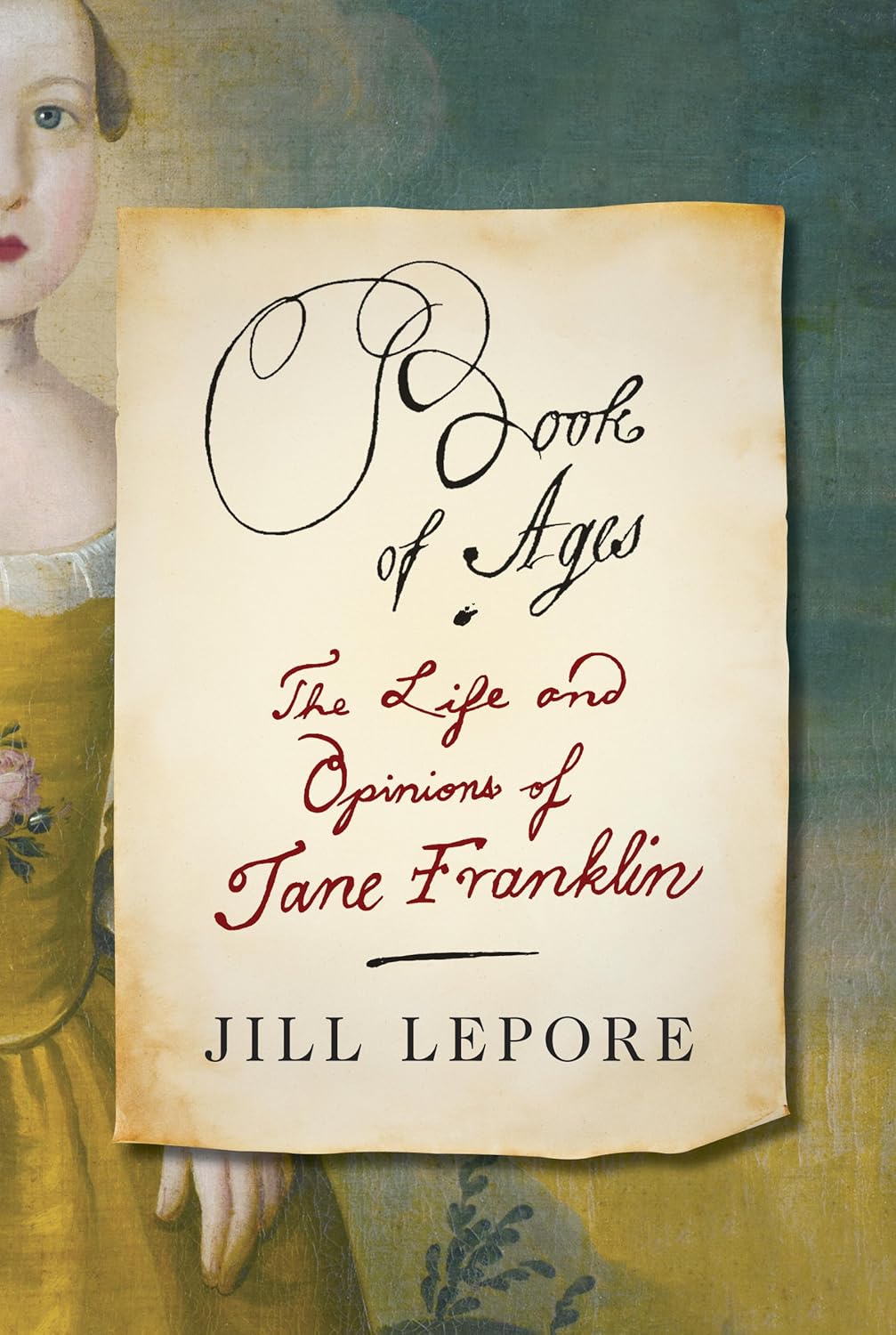
NPR has posted, "Book Concierge: Our Guide to 2013's Great Reads." In the Biography & Memoir category are books such as A. Scott Berg's Wilson (Putnam) and Jill Lepore's Book of Ages (Knopf). Under Staff Picks are Scott Anderson's Lawrence in Arabia: War, Deceit, Imperial Folly and the Making of the Modern Middle East (Doubleday) and Wendy Lower's Hitler's Furies: German Women in the Nazi Killing Fields (Houghton Mifflin Harcourt). And, the For History Lovers section includes lots of novels, as well as Carla Kaplan's Miss Anne in Harlem: The White Women of the Black Renaissance (Harper) and Neil Irwin's The Alchemists: Three Central Bankers and a World on Fire (Penguin).

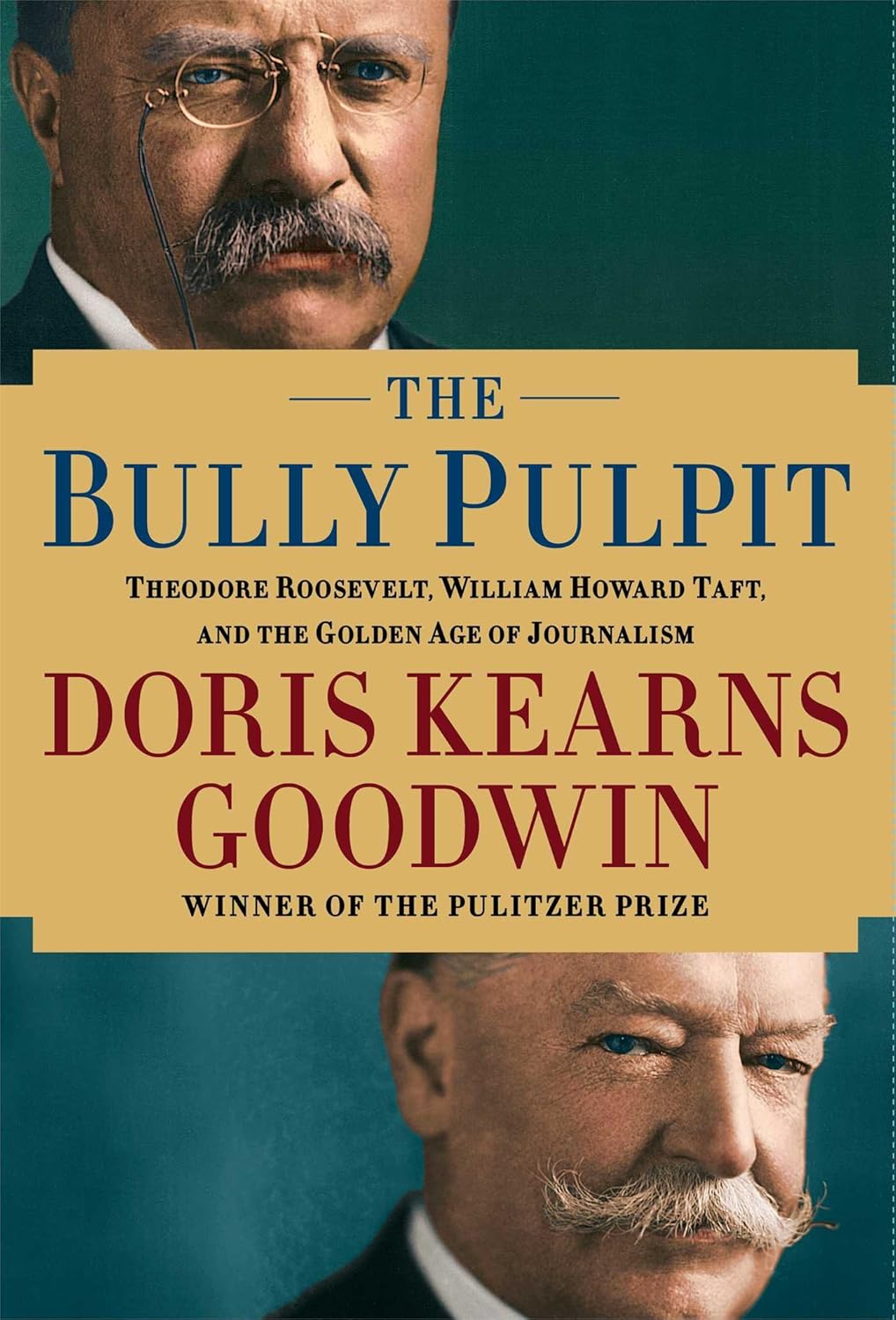
The Economist has put together a video on its six best of the year, including Charles Moore's Margaret Thatcher: the Authorized Biography (Knopf) and Peter Hart's The Great War (Oxford). The top 50 books compiled in article form are here and include Coolidge by Amity Shlaes (Harper); The Blood Telegram: Nixon, Kissinger and a Forgotten Genocide (Knopf) by Gary Bass; and The Bully Pulpit: Theodore Roosevelt, William Howard Taft and the Golden Age of Journalism (Simon & Schuster) by Doris Kearns Goodwin.

The NYT also has a video accompanying its top ten list. On its non-fiction list is Days of Fire: Bush and Cheney in the White House (Doubleday) by Peter Baker. On the NYT top-100 list are The American Way of Poverty (Nation) by Sasha Abramsky; Gary Bass's The Blood Telegram (Knopf); Jill Lepore's Book of Ages (Knopf); Goodwin's The Bully Pulpit (Simon & Schuster); and Packer's The Unwinding (FSG).


Jonathan Yardley, whose reviews are often included in the weekly Book Roundup, has issued his favorite books of 2013 in the Washington Post.

Three critics have also posted their favorites in the New York Times: Michiko Kakutani, Dwight Garner, and Janet Maslin.

And be sure to check out the fun list over at The Atlantic where staff writers share favorite books they have read this year, regardless of publication date. This list ranges from Harry Potter and the Sorcerer's Stone to Robert Caro's The Years of Lyndon Johnson: The Passage of Power.


UPDATE: Salon has also posted a top book list for the year, here, and a "What to Read" list, here.


There's lots of good legal history missing from these lists... What are your top reads of 2013?

Sunday Book Roundup

There's plenty of book reviews to read this weekend.

The Los Angeles Review of Books have added a handful of interesting reviews this week, including reviews of Adam Smith's Pluralism: Rationality, Education and the Moral Sentiments (Yale) by Jack Russell Weinstein (here) and Capital Culture: J. Carter Brown, the National Gallery of Art, and the Reinvention of the Museum Experience (Univ. Chicago Press) by Neil Harris (here). Additionally, both George Packer's The Unwinding: An Inner History of the New America (FSG) and Sasha Abramsky's The American Way of Poverty: How the Other Half Still Lives (Nation) are reviewed together in a pieced titled "Ill Fares the Invisible Hand."
"This is the other story, one that is complementary to Abramsky’s. And it is the one told, with lucidity and narrative acumen, by George Packer in The Unwinding: An Inner History of the New America. If Abramsky’s book is in the tradition of Michael Harrington and Jacob Riis, Packer’s is self-consciously indebted to that of John Dos Passos, and to a lesser extent, James Agee. Indeed, The Unwinding is a kind of nonfiction homage to Dos Passos’s U.S.A. trilogy: voluminous, generous, messy with life. For Packer, “the unwinding” describes the marked deterioration of the social, political, and economic structures that provided stability in American life for half a century."
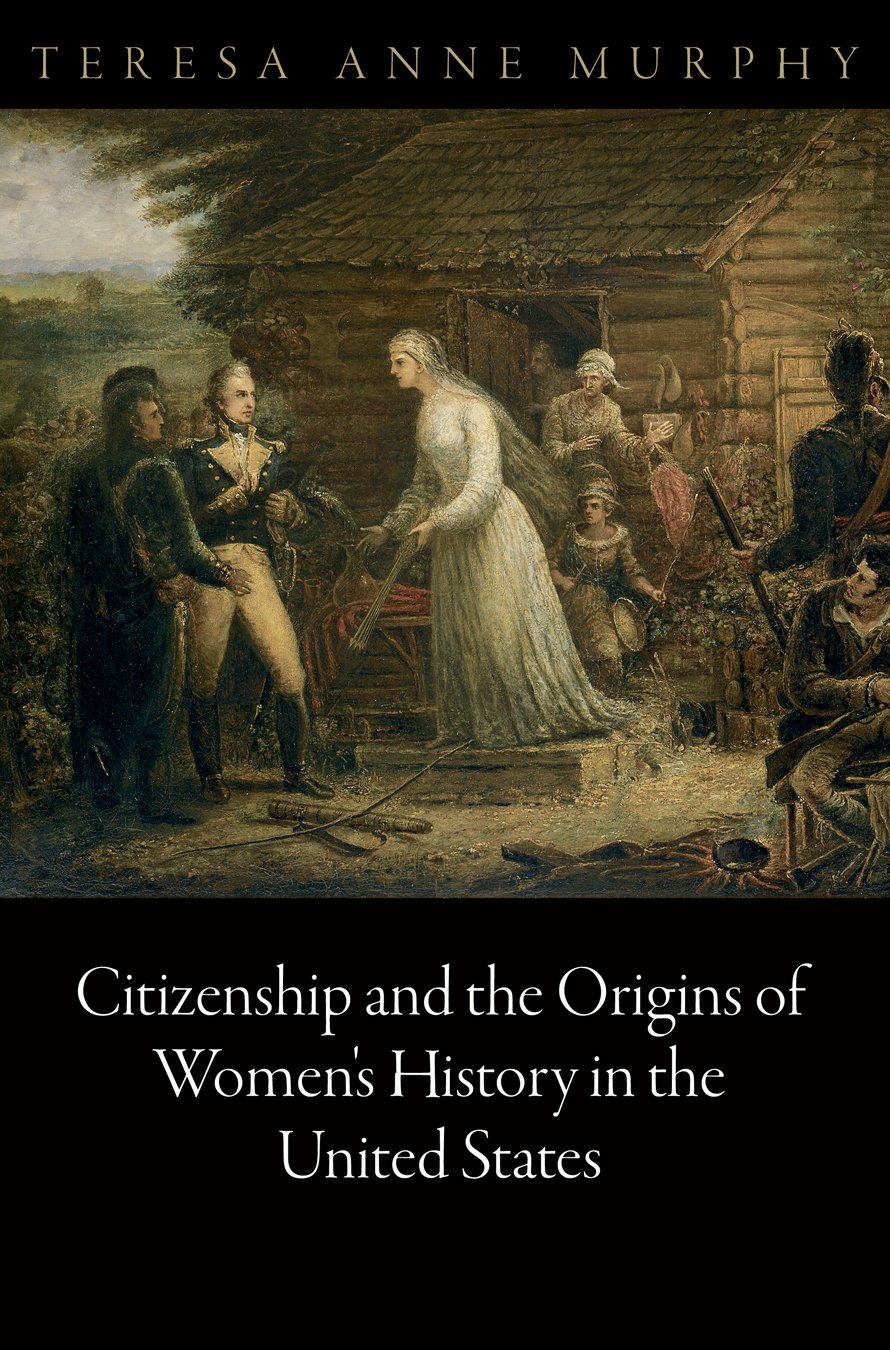
Two thoughtful reviews have been posted on H-Net. One is a review of Teresa Anne Murphy's Citizenship and the Origins of Women's History in the United States (University of Pennsylvania Press).
"The greatest strength of this book is that Murphy does not merely trace and juxtapose these competing arguments: she truly connects them, and establishes that these debates were literally and overtly an ongoing dialogue between the various thinkers. Child had read Alexander and reviewed Fuller. Child’s own work on women’s history was in circulation in libraries from England to the Deep South, and is echoed in the notebooks of female academy students and in the rhetoric of labor reformers in New England. Child and Fuller appeared in Hale’s history as cautionary tales--as women who had strayed from their domestic responsibilities. Murphy suggests in her conclusion that all of these women set the stage for Mary Beard, Betty Freidan, and Eleanor Flexner. “Without reading the past clearly, it is impossible to go to the root of present evils,” Caroline Dall had proclaimed in a February 1855 edition of The Una. Try as they might, the forces of tradition could not mute this clarion call."

Saturday, December 14, 2013

Weekend Roundup

  • Via History News Network: What Have We Learned from Pauline Maier? Have college textbooks "contextualized their treatments of Samuel Adams, the Declaration of Independence, or ratification of the Constitution to reflect Maier’s findings"?
  •  The National Archives has opened a new exhibit: Records of Rights. It is on permanent display in the new David M. Rubenstein Gallery at NARA I (D.C. location).
Weekend Roundup is a weekly feature compiled by all the Legal History bloggers.

Friday, December 13, 2013

Chetail on the American Reception of Vattel

Credit: Wikipedia
Vincent Chetail, Graduate Institute of International and Development Studies (Geneva), has Vattel and the American Dream: An Inquiry into the Reception of the Law of Nations in the United States, which appears in The Roots of International Law: Liber Amicorum Peter Haggenmacher, ed. V. Chetail and P.-M. Dupuy (Martinus Nijhoff, 2013), 251-300. Here is the abstract:    
posted
No other book on international law has been more widely read and cited than The Law of Nations by Vattel. The present article identifies and analyses the various reasons that explain Vattel’s authority in the United States. It first retraces his influence on the Founding Fathers, on the subsequent diplomatic and judicial practice, and on the legal doctrine in the United States. The article then examines his conception of national sovereignty as the most decisive reason explaining Vattel’s influence in the United States and the overall impact of his work.

Wang and Mizner, "The Rise of the Security State"

Yuhua Wang (University of Pennsylvania) and Carl F. Minzner (Fordham University - School of Law) have posted "The Rise of the Security State." Here's the abstract:
Over the past two decades, the Chinese domestic security apparatus has expanded dramatically. “Stability maintenance” operations have become a priority for local Chinese authorities. We argue that the birth of these trends dates to the early 1990s, when central Party authorities adopted new governance models that differed dramatically from those that of the 1980s. They increased the bureaucratic rank of public security chiefs within the Party apparatus, expanded the reach of the Party political-legal apparatus into a broader range of governance issues, and altered cadre evaluation standards to increase the sensitivity of local authorities to social protest. We show that the origin of these changes lies in a policy response to the developments of 1989-1991, namely the Tiananmen democracy movement and the collapse of Communist political systems in Eastern Europe. Over the past twenty years, these practices have flowered into an extensive stability maintenance apparatus, where local governance is increasingly oriented around the need to respond to social protest, whether through concession or repression. Chinese authorities now appear to be rethinking these developments, but the direction of reform remains unclear.
The full paper is available here, at SSRN.

Hat tip: Legal Theory Blog

Legal History Scholarship at the Association for the Study of African American Life and History Annual Meeting

Among the most interesting experiences I had in working on Defining the Struggle were invitations to attend meetings of the Association for the Study of African American Life and History (ASALH), an important forum for exchange of ideas about African American history, civil rights history, and the history of race and the law. ASALH held its 98th annual convention in October of this year in Jacksonville, Florida. I am always honored to be invited, as I was this year to present from my book. Also on my panel was Pippa Holloway, presenting from her newly released book from Oxford University Press on the history of felon disfranchisement. R. Volney Riser’s paper on a failed attempt at test case collaboration between W.E.B. Du Bois and Booker T. Washington’s lawyer, Wilford Smith, was ably read by graduate student Joshua Crutchfield. Dr. Gregory Mixon, a scholar of progressive era African American history, gave insightful commentary.

Another terrific panel I attended featured law professors Steven Hobbs, Wendy Greene, and Deleso Alford. At another fascinating panel, Bob Cottrol, author of The Long, Lingering Shadow: Slavery, Race, and Law in the American Hemisphere (2013) (recently highlighted at the ASLH conference) chaired, while Stephen Middleton presented a revisionist history of the one-drop rule, arguing that the law defining racial classifications was more entrenched at the trial court level, at a much earlier date, that scholars focused on appellate case law have previously supposed. Erica Cooper presented a paper rich in primary sources entitled “Defining Whiteness: The Rhetoric of Race in the Twentieth Century.” All of these papers seemed important for legal historians to note. Another important session undertook a retrospective of August Meier’s work, as I will discuss further tomorrow . . .

Thursday, December 12, 2013

Responses to Twitter Q&A with Nick Parrillo

We recently invited readers to participate in a Twitter interview with Yale Law School's Nicholas Parrillo (his recent LHB posts are available here). Twitter aficionado and former LHB guest blogger Joshua Stein (@LawHistory) collected the questions last week. Today he posted Professor Parrillo's tweet-length responses. As promised, here's the full interview:
PREFATORY THANK-YOU (in 1 tweet):

before giving my responses, a big thanks to @lawhistory for doing the interview and everyone for such interesting (& succinct!) questions
QUESTION 1

from @kylefgraham

to what extent did the designers of for-profit systems account for distortions that the profit motive might create?

ANSWER 1 (in 2 tweets):

@kylefgraham designing incentives rationally was major challenge, esp. for legislatures that oft lacked info to do it well, but...1/2

@kylefgraham...some attempts were sophisticated e.g. if navy too focused on taking merchantmen, offer competing bounty to sink warships 2/2

Kellogg on Legal Uncertainty in Pragmatism's Formative Years

Frederic R. Kellogg, George Washington University, has posted The Social Dimensions of Legal Uncertainty: Reconciling Law and Science in the Formative Years of Pragmatism, which is forthcoming in the European Journal of Pragmatism and American Philosophy.  Here is the abstract:
Nineteenth-century references to the syllogism by J.S. Mill and Oliver Wendell Holmes Jr. reveal a distinct approach to the logic of inference in the formative years of pragmatism. In the latter may be found an element of the emergence of generals from particulars. Fallibilism in law and science reflects their social dimension as part of the communal ordering of experience. This implies a distinct approach to uncertainty, as experience yet to be integrated within a developing system of classification.
The paper’s epigraph is a quotation from J. S. Mill’s System of Logic that, Mill to the contrary notwithstanding, was news to me:
Almost everyone knows Lord Mansfield’s advice to a man of practical good sense, who, being appointed governor of a colony, has to preside in its courts of justice, without previous judicial practice or legal education. The advice was to give his decision boldly, for it would probably be right, but never to venture on assigning reasons, for they would almost infallibly be wrong.

Two Articles from the Garrow Backlist

David J. Garrow, Research Professor of History and Law at the University of Pittsburgh, has posted two articles from his backlist on SSRN. 

Bad Behavior Makes Big Law: Southern Malfeasance and the Expansion of Federal Judicial Power, 1954-1968 St. John's Law Review 82 (2008):
The story of the Warren Court’s impact on the U.S. South is of course far larger and more wide-ranging than just the direct legacy of Brown v. Board of Education. Indeed, this is a question of not just “Beyond Brown,” or, better yet, “Beyond Brown and Baker,” but of appreciating how the obstructive behavior of the South, in the face of Warren Court rulings, affected the wider judicial decision-making of the Court just as much as the Court’s holdings altered so many aspects of southern life, both public and private.

Brown is a major part of that story, as is Baker and its decisive, Deep South progeny, Reynolds v. Sims. Yet there are at least four other important and often-overlooked chapters in this story as well: first, the Court’s own frightful and halting behavior in other, little-known and sometimes tragic race cases in the immediate wake of Brown; second, the ways in which the Court’s belief in racial equality significantly spurred its efforts to reform criminal justice procedures nationwide; third, the tremendously under-appreciated manner in which the activism of the southern Black freedom struggle stimulated the Court to vastly expand federal judicial jurisdiction in ways that helped protect the constitutional rights of any citizen prosecuted in a southern state court; and fourth, the degrees to which even ostensibly unrelated areas of substantive federal law, ranging from First Amendment rights of association, to the law of libel, to the procedural protections afforded public aid recipients, all were likewise transformed on account of the collision between the Warren Court and white public authorities in the South. All told, that larger story is one whose scope far exceeds the standard narrative about Brown and race, or even the more expansive one about Brown and Baker’s explicitly shared grounding in the fundamental guarantees of the Equal Protection Clause.
Foreshadowing the Future: 1957 and the United States Black Freedom Struggle, Arkansas Law Review 62 (2009):
On January 1, 1957, Martin Luther King, Jr. addressed a 7000-person NAACP Emancipation Day benefit rally at Atlanta’s Big Bethel AME Church. Titling his remarks “Facing the Challenge of a New Age,” King declared that he and his listeners were living in “an age in which a new world order is being born . . . The old order of colonialism is passing away, and the new order of freedom and equality is coming into being . . . ” A new world was dawning in the United States as well, King said, thanks to the Supreme Court’s 1954 ruling in Brown v. Board of Education. “[A]s a result of this decision,” King stated, we can “gradually see the old order of segregation and discrimination passing away and the new order of justice and freedom coming into being.”

The events of 1957 across the South, and in Washington, foreshadowed a future in which two successive Presidents overcame the racial ambivalence that had constrained Dwight D. Eisenhower’s Oval Office behavior. Once the determined southern black activism symbolized by King finally won the committed support of first John Kennedy, and then far more so Lyndon Johnson, the transformative promise so richly visible throughout 1957 burst forth in full flower in 1964 and 1965.

King had been right on that New Year’s Day to call that forthcoming transformation inevitable, even if he could not then fully foresee how long it would take, the price to be paid, or the ineluctable limits — as Bayard Rustin was beginning to teach him — of a social metamorphosis that would come to be defined wholly in racial rather than economic terms. That future may have been inexorably constrained in ways that King could only dimly discern, but the events of 1957 foreshadowed that future more than any previous year in American history.

A Centennial View of Robert H. Jackson's Admission to the Bar

Robert H. Jackson, 1937 (LC)
John Q. Barrett, St. John’s Law, has sent word to The Jackson List, that documents relating to Robert H. are now accessible on the website of the Robert H. Jackson Center in Jamestown, NY, “in this centennial anniversary of Jackson’s admission to law practice.”  The documents were recently released by New York’s Appellate Division, Fourth Department.  Barrett identifies the documents as:
Jackson’s admission to the bar,
  • the New York State Board of Law Examiners’ certification that Jackson had passed its bar examination (Oct. 15, 1913);
  • Jackson’s character statement (Nov. 13, 1913);
  • Ben Dean’s affidavit regarding Jackson’s character and fitness to practice (Nov. 13, 1913);
  • Frank Mott’s affidavit regarding Jackson’s character and fitness to practice (Nov. 14, 1913);
  • the Appellate Division’s order admitting Jackson to practice (Nov. 24, 1913); and
  • Jackson’s signature on the Court’s Roll of Attorneys (Nov. 24, 1913).
Barrett adds, "I encourage you to click into the documents and explore them—they are interesting as historical records, and of course as Jackson artifacts."

Wednesday, December 11, 2013

Pilarczyk on the Judicial Response to Child Abuse in 19th-Century Montreal

Ian C. Pilarczyk, Boston University School of Law, has posted "To Shudder at the Bare Recital of Those Acts": Child Abuse, Family, and Montreal Courts in the Early Nineteenth Century, which appears in Essays in the History of Canadian Law, vol. XI: Quebec and the Canadas, ed. G. Blaine Baker and Donald Fyson (Toronto: University of Toronto Press for the Osgoode Society for Canadian Legal History, 2013), 370-426.  Here is the abstract:
This paper uses archival and other primary sources to reanimate the judicial response to child abuse by family members in Montreal for the period 1825-1850. In a period before the operation of child protection agencies, the records reveal a tentative but growing engagement with issues related to child abuse and a limited judicial response to impose limitations on parental authority. Parents and guardians were prosecuted and imprisoned for a range of offences, including assault, aggravated assault, ill-usage, and attempted murder. While incest was not a cognizable offence during this period, the judicial archives also reveal some evidence of the existence of incest as a social phenomenon, as well as some prosecutions (generally brought under the charge of ravishment or, more unusually, abduction). This paper contributes to our understanding of Quebec socio-legal history for an understudied time period, and adds dimension to our understanding of the manner in which the legal system grappled with compelling social phenomena before widespread legislative or public action on these issues.

Books that Shaped Work in America

As part of its centennial, the US Department of Labor, in partnership with the Center for the Book in the Library of Congress, has launched Books that Shaped Work in America.
The web-based project . . .  launched today as part of the department's ongoing
commemoration of its 100th anniversary, aims to engage the public about the Labor Department's mission and America's history as a nation of workers as portrayed through published works.

"The Books that Shaped Work in America initiative explores the dignity of work and our progress in expanding America's fundamental promise of opportunity for all through the lens of literature," said U.S. Secretary of Labor Thomas E. Perez. "Think of this effort as an online book club where people from all walks of life can share books that informed them about occupations and careers, molded their views about work and helped elevate the discourse about work, workers and workplaces. At the same time, the site provides a unique way for people to learn about the mission and resources of the U.S. Department of Labor."

Work, like our nation, is constantly evolving, and so Books that Shaped Work in America is no different. To get it started, 24 individuals, including Perez, eight former secretaries of labor from both Democratic and Republican administrations, department staff (including an intern), civil rights leaders, critics, authors, media personalities and staff from the Library of Congress submitted suggestions. Among the contributors: former Secretaries of Labor George P. Shultz and Robert Reich, authors Daniel H. Pink and Joan Acocella, Solicitor of Labor M. Patricia Smith, Liz Claman of Fox Business News, President of the National Urban League Marc Morial and Scott McGee of Turner Classic Movies. Their recommendations are included on the initiative's website, along with brief summaries of each book and links to related U.S. Department of Labor resources.

Now the public is invited to expand the list. A simple, online form, which can be found [here] makes it easy for anyone to suggest a book.
Not many of the initial 100 titles touch on legal history, even generously defined, but see The Federalist, William Serrin's Homestead, the Webbs’ Industrial Democracy, George Martin's Madam Secretary (although not Frances Perkins's own The Roosevelt I Knew), Ben Hamper's Rivethead, Peggy Noonan’s When Character Was King, and Justice Sotomayer’s My Beloved World.  (I know: I rolled my eyes at some of these, too.)  Feel free to make your own suggestions, especially as I did not recognize any professional historians among the contributors.  (Apologies to anyone I overlooked.)  I believe I’ll nominate Frankfurter and Greene’s Labor Injunction and, to keep things "fair and balanced," Sylvester Petro’s Kohler Strike.