Monday, June 17, 2013

Two Reviews on Race, Family & Law in U.S. History

The new Interim issue of Common-place includes two reviews of interest.

In Legally Free, Unable to Live Freely, Rebecca Anne Goetz (New York University) reviews Eva Sheppard Wolf, Almost Free: A Story about Family and Race in Antebellum Virginia (University of Georgia Press, 2012). Here's a taste:
Wolf skillfully weaves together a narrative of [nineteenth-century Virginian Samuel] Johnson's life, tracing his triumphs and defeats as he sought both freedom and a meaningful place in his community of Warrenton, Virginia. The man who emerges from Wolf's patient search through the archives, had, she writes, a "keen attentiveness to the law and to doing things in a proper, socially accepted way." Johnson also "yearned for legitimacy—a socially and legally secure place for his family and himself in his homeland of Virginia" (53).
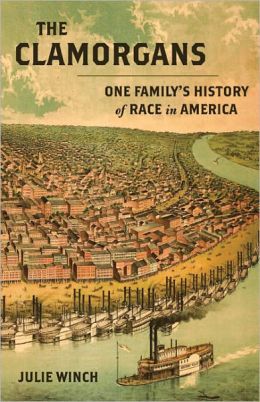
In The Law Could Make You Rich, Jared Hardesty (Ph.D. candidate, Boston College) reviews Julie Winch, The Clamorgans: One Family's History of Race in America (Hill & Wang, 2011). Hardesty begins the review as follows:
Governor Riggins, a leader of Boston's nineteenth-century black community, once publicly admonished a fellow person of color, William Patterson, and took the opportunity to offer a lesson to the community at large. Patterson had purchased unlicensed liquor for some fellow African Americans, and the authorities in Boston caught him red-handed. In the midst of dressing Patterson down, Riggins expressed the hope that the "law will make you smart." His proclamation to his fellow Afro-Bostonians—the law could be a source of empowerment for African Americans—may have been lost on Patterson, but it was a message that blacks across the United States heard loud and clear. Half a continent away in St. Louis, Missouri, the mixed-race grandsons of Jacques Clamorgan geared up to file suit and lay claim to their grandfather's extensive lands. For them, Riggins's message carried special resonance and an additional caveat. For the Clamorgan men, the law not only made them smart, but could also make them rich.
Did the Clamorgans have a legitimate chance to win their legal battles? In her wonderful The Clamorgans: One Family's History of Race in America, Julie Winch answers this question by offering readers a thorough examination of the family's past, especially their relationship with the law. . . .
The full issue is available here.

Women in the Life and Law of the D.C. Circuit Courts

[We are moving this post up, because the symposium takes place tomorrow.]

The Historical Society of the District of Columbia Circuit presents Women in the Life and Law of the D.C. Circuit Courts, a symposium to be held on Tuesday, June 18, 2013, from 4:30 – 6:00 p.m. in the Ceremonial Courtroom, 6th Floor, E. Barrett Prettyman U.S. Courthouse, 3rd Street & Constitution Avenue, N.W., Washington, D.C.

Women in the Life and Law of the D.C. Circuit Courts will bring together participants in the life of the D.C. Circuit – judges, administrators, law clerks and practicing attorneys – to speak from their experience about the past, present and future of women in the Courts of the Circuit. The program will open with stage-setting remarks by Emerita Professor Barbara Babcock of Stanford Law School who clerked for Circuit Judge Henry Edgerton and writes and teaches about women’s issues. This will be followed by a panel discussion moderated by Professor Babcock.

Participants in the panel will be Justice Ruth Bader Ginsburg (D.C. Circuit Judge 1980-93); Senior Judge Gladys Kessler   (Member of the District Court since 1994); Chief Judge Royce C. Lamberth (Member of the U.S. District Court since 1987); Nancy Mayer-Whittington (Clerk of the District Court 1991-2009); Michele A. Roberts (Partner, Skadden, Arps, Slate, Meagher & Flom and advocate before the District Court); Hon. Patricia M. Wald (D.C. Circuit Judge 1979-99, Chief Judge 1986-91); and Helgi C. Walker (Partner, Wiley Rein and advocate before the Court of Appeals for the D.C. Circuit).

Sunday, June 16, 2013

Book Review Roundup


    The Book Review Roundup is a weekly feature compiled by all the Legal History bloggers.

    Saturday, June 15, 2013

    Weekend Roundup

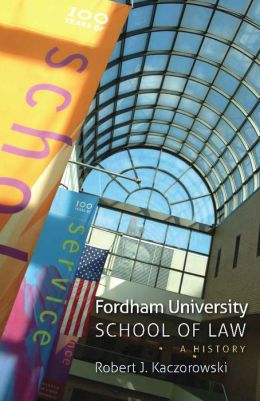
    • Over at Concurring Opinions, Danielle Citron plugs Robert Kaczorowski's Fordham University School of Law: A History.  “Ever since the inception of the recession, we have been embroiled in a conversation about legal education–its costs, value, and flaws," she writes.  “Amidst this debate, legal historian Robert Kaczorowski has written a brilliant and engrossing history of Fordham Law School, one that highlights, among many issues, the struggles that law schools have with their universities about the funds they generate.”  More.  
    • The Washington Post's story on the National Archives' Founders Online project, is here.  The project puts on the web “over 119,000 searchable documents, fully annotated,” by or relating to George Washington, Benjamin Franklin, John Adams (and family), Thomas Jefferson, Alexander Hamilton, and James Madison, “from the authoritative, federally funded Founding Fathers Papers projects.”
    • Emory Law's profile of LHB Founder Mary L. Dudziak is here
     Weekend Roundup is a weekly feature compiled by all the Legal History bloggers.

    Friday, June 14, 2013

    Hutchinson on Lochner, Progressive Constitutionalism, and African-American Progress Now

    Harry G. Hutchison, George Mason Law, has posted Achieving Our Future in the Age of Obama?: Lochner, Progressive Constitutionalism, and African-American Progress, which is forthcoming in the Journal of Gender, Race & Justice. Here is the abstract:
    It is clear that the New Deal era was the most important and wide-ranging period of constitutional change since the Civil War. Equally clear, the events that catalyzed the New Deal were echoed more recently by the economic and financial collapse of 2008, which sparked President Obama’s current efforts to save American capitalism. In this regard, three things are worth noting: first, President Obama’s recovery plans, taken together will leave the government permanently bigger, more costly, and more intrusive; second, his approach to the current crisis recalls the efforts of his predecessor and model, Franklin D. Roosevelt; and third, such efforts appear to be marred by contradiction. Despite President Obama’s efforts, and in spite of sporadic evidence that the United States is beginning to emerge from one of the most devastating economic slides in its history; American workers, black and white, must tackle anxiety that is elevated by allegations of falling or stagnant wages, increasing employment uncertainty, and growing disparities in nonwhite versus white unemployment rates. Amidst recent evidence that the latter trend has accelerated, the pertinent question that confronts us today is whether the fundamental change offered by the Obama administration will lead to consequences which mirror results that dogged the New Deal.

    It is, therefore, an opportune time to consider whether the constitutional law and policy implications that can be drawn from the New Deal offer a secure foundation for questioning various Obama administration initiatives that are tied to progressive teleology. And this issue is particularly important to the lives and future of African Americans, despite the Supreme Court’s acclaimed commitment to the protection of, “discrete and insular minorities." Emphasizing an ethical and consequentialist dimension, and based on a 2012 symposium presentation at the University of Pennsylvania Law School, this article shows that African Americans and other outsiders have much to fear from the replication of FDR’s policies by the Obama administration. Unless the Supreme Court can muster the courage to intervene on behalf of the truly disadvantaged among us, which is highly doubtful, it is probable that history will repeat itself.

    Armitage on Why "Every Great Revolution is a Civil War"

    Only earlier this year did I discover the Sussex Lectures in Intellectual History, available on iTunes and here.  The latest, delivered last month, was by David Armitage on the topic, "Every Great Revolution is a Civil War."  In these times, Stefan Collini's "The Very Idea of a University" is also very much worth a listen.

    Thursday, June 13, 2013

    Abrams on the History of the Derivative Domicile Rule

    Kerry Abrams, University of Virginia School of Law, has posted Citizen Spouse, which appears in California Law Review 101 (2013): 407.  Here is the abstract:
    Marriage and citizenship have a complicated relationship to one another. Marriage is often the primary way in which a person can exercise and demonstrate his or her identity under law, by claiming legal benefits and by performing legal obligations. This Essay examines the history of one particularly salient example of marriage-as-citizenship — the derivative domicile rule — and uses this history to consider how the relationship between marriage and citizenship has changed and developed over time. The derivative domicile rule linked a woman’s domicile, and her state citizenship along with all the rights and obligations it carried, with her husband’s domicile by operation of law. This happened regardless of where she actually lived or what state she subjectively owed allegiance to. Derivative domicile remains pertinent today because many states still use it to determine state citizenship for married people, either as a presumption rebuttable by a married woman or as a rule that applies to both spouses and links their domicile by presuming they will each regard one single place as their home. The history and current application of the derivative domicile rule demonstrate that these presumptions fail to accurately reflect the preferences of many married people whose domiciles do not match their spouses’. This Essay argues that derivative domicile illustrates the dangers of uncritically eliding marriage and citizenship.

    New Release: Calloway, "Pen and Ink Witchcraft"

    New from Oxford University Press: Pen and Ink Witchcraft: Treaties and Treaty Making in American Indian History, by Colin G. Calloway (Dartmouth College). Here's a description from the Press:
    Indian peoples made some four hundred treaties with the United States between the American Revolution and 1871, when Congress prohibited them. They signed nine treaties with the Confederacy, as well as countless others over the centuries with Spain, France, Britain, Mexico, the Republic of Texas, Canada, and even Russia, not to mention individual colonies and states. In retrospect, the treaties seem like well-ordered steps on the path of dispossession and empire. The reality was far more complicated.

    In Pen and Ink Witchcraft, eminent Native American historian Colin G. Calloway narrates the history of diplomacy between North American Indians and their imperial adversaries, particularly the United States. Treaties were cultural encounters and human dramas, each with its cast of characters and conflicting agendas. Many treaties, he notes, involved not land, but trade, friendship, and the resolution of disputes. Far from all being one-sided, they were negotiated on the Indians' cultural and geographical terrain. When the Mohawks welcomed Dutch traders in the early 1600s, they sealed a treaty of friendship with a wampum belt with parallel rows of purple beads, representing the parties traveling side-by-side, as equals, on the same river. But the American republic increasingly turned treaty-making into a tool of encroachment on Indian territory. Calloway traces this process by focusing on the treaties of Fort Stanwix (1768), New Echota (1835), and Medicine Lodge (1867), in addition to such events as the Peace of Montreal in 1701 and the treaties of Fort Laramie (1851 and 1868). His analysis demonstrates that native leaders were hardly dupes. The records of negotiations, he writes, show that "Indians frequently matched their colonizing counterparts in diplomatic savvy and tried, literally, to hold their ground."

    Each treaty has its own story, Calloway writes, but together they tell a rich and complicated tale of moments in American history when civilizations collided.
    A few blurbs:
    "Indian treaties were major historical events, and today they are still important sources of legal rights. Pen and Ink Witchcraft is a masterful overview of the complex processes by which these treaties were created." --Stuart Banner, author of How the Indians Lost Their Land: Law and Power on the Frontier
    "This extraordinary analysis of Indian treaties and treaty-making reveals the complexity and objectives of the United States government in negotiating nearly 400 ratified agreements. In a book wide in scope--addressing political ceremony, kinship alliances, council meetings, native law, oratorical power, gift-giving diplomacy, and sovereignty--Colin Calloway has produced a masterpiece for Indian treaties to be understood by everyone. This leading scholar of Indian history explains the historical development of Native American legal rights today." --Donald L. Fixico, editor of Treaties with American Indians: An Encyclopedia of Rights, Conflicts, and Sovereignty
    For more information, including the TOC, follow the link.

    DeLombard, "In the Shadow of the Gallows"

    We somehow missed this 2012 release from the University of Pennsylvania Press: In the Shadow of the Gallows: Race, Crime, and American Civic Identity, by Jeannine Marie DeLombard (University of Toronto). Here's the Press's description:
    From Puritan Execution Day rituals to gangsta rap, the black criminal has been an enduring presence in American culture. To understand why, Jeannine Marie DeLombard insists, we must set aside the lenses of pathology and persecution and instead view the African American felon from the far more revealing perspectives of publicity and personhood. When the Supreme Court declared in Dred Scott that African Americans have "no rights which the white man was bound to respect," it overlooked the right to due process, which ensured that black offenders—even slaves—appeared as persons in the eyes of the law. In the familiar account of African Americans' historical shift "from plantation to prison," we have forgotten how, for a century before the Civil War, state punishment affirmed black political membership in the breach, while a thriving popular crime literature provided early America's best-known models of individual black selfhood. Before there was the slave narrative, there was the criminal confession.
    Placing the black condemned at the forefront of the African American canon allows us to see how a later generation of enslaved activists—most notably, Frederick Douglass—could marshal the public presence and civic authority necessary to fashion themselves as eligible citizens. At the same time, in an era when abolitionists were charging Americans with the national crime of "manstealing," a racialized sense of culpability became equally central to white civic identity. What, for African Americans, is the legacy of a citizenship grounded in culpable personhood? For white Americans, must membership in a nation built on race slavery always betoken guilt? In the Shadow of the Gallows reads classics by J. Hector St. John de Crèvecoeur, Edgar Allan Poe, Frederick Douglass, Herman Melville, George Lippard, and Edward Everett Hale alongside execution sermons, criminal confessions, trial transcripts, philosophical treatises, and political polemics to address fundamental questions about race, responsibility, and American civic belonging.
    A few blurbs:
    "In her exquisitely written In the Shadow of the Gallows, Jeannine DeLombard reads early American criminal law in conjunction with the idea of social contract to illustrate the intricacies of political belonging from the early Republic through the antebellum period. Through the double helix of print and legal history, she chronicles the metamorphic role of authorship in African Americans' bids for enfranchisement against the backdrop of a nation entangled in contradictory definitions of personhood and property and of criminality and civility. Exemplary of humanities scholarship at its best, the book establishes the connections between American literature and the African American struggle for civic inclusion."—Priscilla Wald, Duke University
    "I have long thought that DeLombard is at the absolute top of the scholars working on law and literature in North America, and In the Shadow of the Gallows confirms her status."—Alfred Brophy, University of North Carolina, Chapel Hill
    For more information, including the TOC, follow the link.

    Wednesday, June 12, 2013

    Conference: New World(s) of Faith: Religion and Law in Historical Perspective, 1500-2000

    Today and tomorrow the University of Pennsylvania Law School hosts a mini-conference on "New World(s) of Faith: Religion and Law in Historical Perspective, 1500-2000." The event is co-sponsored by the University of Pennsylvania Department of History; the American Society for Legal History; the University of Michigan Law School; the University of Chicago Law School; the University of Minnesota Law School and Department of History; and the University of Illinois School of Law. Here's the line-up:

    June 12:
    Faith and Outsiders in Spanish America
    Kif Augustine-Adams, Brigham Young University
    Counting Chinese in a Catholic Country: The 1930 Mexican Census and Religious Difference

    Orlando Rivero-Valdés, University of Pittsburgh
    Afro-Cuban Religions and Brujería in Post-Colonial Cuba, 1898-1938

    Commentators: TBA
    Keynote Address and Reception
    Dylan Penningroth, Northwestern UniversityFaith and Property in African American History 
    June 13:
    Faith and Freedom in Nineteenth Century United States
    Abigail Cooper, University of Pennsylvania
    “A Mere Form”: Marriage Rites and Lived Religion in the Refugee Camps of the American Civil War
    Lucas Volkman, University of Missouri
    Turmoils and Temporalities: The Slavery Question and Church Property Disputes in Missouri

    Christopher Tomlins, University of California, Irvine
    Debt, Death, and Redemption: Toward a Soterial-Legal History of the Turner Rebellion

    Commentators: William Novak, University of Michigan
    Faith and Citizenship in a Secular Polity
    Winston Bowman, Brandeis University
    A Civil Death: Mormon Disenfranchisement in the Mountain West

    Kellen Funk, Princeton Univeristy
    “This Stone Which I Erect Shall Be a House of God”: Disestablishment and Religious Corporations in New York, 1784-1854

    Jeffrey Perry, Purdue University
    “For the Peace of Society”: Baptist Church Discipline and Legalities in Early Kentucky

    Commentators: Sarah Barringer Gordon, University of Pennsylvania
    Faith and Government in Modern America
    Kathleen Holscher, University of Minnesota
    School Prayer, Bible Reading, and the Catholic Vocabulary of Religious Freedom in Mid-Century America

    Ronit Stahl, University of Michigan
    Basic Training: The Unintentional Consequences of the Education Requirements for Military Chaplains

    Commentators: Barbara Young Welke, University of Minnesota

    "The Virtues and Vices of Business—A Historical Perspective"

    [Via Legal Scholarship Blog, we have the following announcement:]

    The 2014 Business History Conference annual meeting will be held on March 13-15 in Frankfurt, Germany.  The Gesellschaft für Unternehmensgeschichte (GUG, Society for Business History) is handling local arrangements for the 2014 meeting. All sessions will take place at Goethe University in Frankfurt, and lodging will be in a number of area hotels.

    The theme for the meeting will be "The Virtues and Vices of Business — A Historical Perspective." The organizers invite papers and session proposals that address both the micro and macro levels of the virtues and vices of business in historical perspective. In keeping with longstanding BHC policy, submissions need not be directly related to the conference theme. The 2014 Program Committee consists of: Ed Balleisen, Duke University (chair); Chris McKenna, University of Oxford; Andrea Schneider, Goethe University; Per Hansen, Copenhagen Business School (BHC President), and Jan-Otmar Hesse, University of Bielefeld. GUG members are encouraged to propose papers; the language of the conference will be English.

    [From the Call for Papers:]

    Is business good or bad, or both? Does business serve private or public interests, or both? A variety of theories from the social sciences furnish different answers to these questions and, by implication, different ideas about the role of the state in creating the good society. The 2014 BHC annual meeting aims to address these issues from a historical and empirical perspective by exploring the virtues and vices of business across societies from the early modern period to the present.

    More.

    June 2013 Issue of Reviews in American History

    The June 2013 issue of Reviews in American History is out. Although full text is limited to subscribers, we'll spotlight some items of interest:
    The Constitution Goes Public: Politics and the Ratification Debate -- Todd Estes (Oakland University) reviews Jürgen Heideking, The Constitution before the Judgment Seat: The Prehistory and Ratification of the American Constitution, 1787–1791 (John P. Kaminski and Richard Leffler, eds.) (University of Virginia Press, 2012).

    The Inventor’s Dilemma—The Confederate Version -- William G. Thomas (University of Nebraska, Lincoln) reviews H. Jackson Knight, Confederate Invention: The Story of the Confederate States Patent Office and Its Inventors (Louisiana State University Press).

    Social Reform through Social Exclusion --Thomas J. Humphrey (Cleveland State University) reviews Craig Calhoun, The Roots of Radicalism: Tradition, The Public Sphere, and Early Nineteenth-Century Social Movements (University of Chicago Press, 2012) and Michele Lise Tarter and Richard Bell, eds., Buried Lives: Incarcerated in Early America (University of Georgia Press, 2012).
    Officers sans Army -- Erik S. Gellman (Roosevelt University) reviews Shawn Leigh Alexander, An Army of Lions: The Civil Rights Struggle Before the NAACP (Pennsylvania University Press, 2012).
    The Many Faces of Judicial Independence -- Charles Zelden (Nova Southeastern University) reviews Jed Handelsman Shugerman, The People’s Courts: Pursuing Judicial Independence in America (Harvard University Press, 2012).

    Trestman to Lecture on Bessie Margolin

    Marlene Trestman, the author of the forthcoming book, Fair Labor: The Remarkable Life and Legal Career of Bessie Margolin, will deliver the Donald S. Shire Lecture at the U.S. Department of Labor, 200 Constitution Avenue, NW, Washington, DC, on Friday, June 28th, 2013.  The lecture, which is open to the public, will take place at 1:00 p.m. in the Department’s César Chávez Memorial Auditorium, which may be accessed via 3rd and C Streets, NW, entrance.  Please RSVP to Patricia Morgan at 202-693-5772 or Morgan.Patricia@dol.gov.

    Tuesday, June 11, 2013

    SEC Historical Society 2014 Writing Award

    The SEC Historical Society announces a writing award on corporate governance for works that, while not necessarily historical, "incorporate at least one material from the collection of the [Society's] virtual museum and archive."  The recipient will receive a $5,000 prize at the Society’s June 2014 Annual Meeting program in Washington, D.C.

    The winning essay "will be permanently added to Papers in the virtual museum and archive ... and linked within The Center for Audit Quality Gallery on Corporate Governance."  All applicants must complete and sign the writing award release. No submission will be considered without a completed and signed release. In the release, the applicant will attest that the essay is his/her own work, and is single-authored, confirm that the essay has never been published in any print or electronic format, and identify the material(s) in the virtual museum and archive used.  The essay must be in English, and must be a maximum of 3,000 words, inclusive of optional footnotes, bibliography or tables.

    The competition is open to all who visit the Society’s website: “regulators from federal, state, municipal and international agencies; self-regulators; practitioners from corporations and law, accounting and auditing, and financial services firms; and academics – both professors and students.”  The jury will include “practitioners and professors of accounting and auditing, economics and law.”  Submission, by December 31, 2013, "is in hard copy by postal mail":

    SEC Historical Society 2014 Writing Award
    1101 Pennsylvania Avenue NW, Suite 600
    Washington, D.C. 20004

    The full guidelines and a release are here.

    Schroeder Reviews Weiner's "Rule of the Clan"

    Jeanne L. Schroeder, Benjamin N. Cardozo School of Law, has posted Family Feud: Mark Weiner, The Rule of the Clan.  Here is the abstract:
    In The Rule of the Clan, legal historian Mark Weiner confronts the paradox that freedom requires law. He takes aim at one common assumption of libertarian political theory: a strong state is a threat to individual freedom. He warns that nostalgia for earlier, simpler societies is a deluded fantasy.

    Weiner examination of traditional societies throughout the world and across history show that they share a single broad organizational structure that belies their facial diversity: the clan. Within the clan, man, and even more strikingly, woman, is neither free nor an individual. She is subordinate to her function within the group – in the case of woman, reproduction. In the clan, there are no individual rights protected by law, only the honor of the extended family to be avenged by feud. Adopting the terminology of “founding father of legal history and legal anthropology, Henry Sumner Maine”, Weiner argues that individual rights only come into being with the development of the state when Status relations are superceded by Contract.

    Surprisingly, in his defense of the classical liberal ideal of individual rights and equality, Weiner implicitly rejects one of liberalism’s founding propositions: a vision of the free individual in the state of nature. Weiner’s thesis is more consistent with the speculative tradition of Continental theory than with American liberalism.

    Monday, June 10, 2013

    Aaronson on Welfare Rights Lawyering in Reagan's California

    Mark N. Aaronson, University of California Hastings College of the Law, has posted Representing the Poor: Legal Advocacy and Welfare Reform During Reagan's Gubernatorial Years, which appears in the Hastings Law Journal 64 (2013): 933-1119.  Here is the abstract:    
    The empirical focus of this book-length work is the contentious political and legal battle over California welfare reform in the early 1970s. It is an extended, multifaceted case study of a kind not much found in the literature on social cause lawyering. The narrative highlights the forceful presence of Ronald Reagan and the pivotal role in representing the welfare poor carried out by Ralph Santiago Abascal, a government-funded legal aid attorney. To counter Reagan’s welfare policy ambitions, Abascal with other legal services lawyers, and in joint cause with recipient-led welfare rights organizations, relied on court litigation not in isolation but as part of an overall strategy that also involved legislative and administrative actions. Within the context of American pluralism and constitutionalism and from an analytical perspective, this study examines the professional and institutional character of group legal representation for the poor as a strategy for political empowerment and social change. While grounded in political and legal history, the study’s conceptual approaches primarily draw on ideas from political science and political theory about representation and from writings in legal ethics and legal education on professional role responsibilities. The principal thematic points are: (1) Social cause lawyering is a systemic necessity for the democratic and equitable functioning of our governing institutions; (2) the client constraints on the role of lawyers for groups or causes have more to do conceptually with understandings about the nature of representation than the applicability of ethical or procedural rules; and (3) the political consequences of such legal advocacy are variable and potentially contradictory.

    June 2013 Journal of American History

    The June 2013 issue of the Journal of American History is out. Here's a preview of the content (full text is limited to subscribers):

    The House on Bayou Road: Atlantic Creole Networks in the Eighteenth and Nineteenth Centuries

    Faubourg Tremé in New Orleans has been described as the oldest black neighborhood in America. In his article, Pierre Force uses as his starting point a dispute in 1813 over the payments for a house between a white man and a free man of color that took place in Tremé. Attempting to find out more about both parties to the case (won by the free man of color), Force reconstructs each man's family history and follows the archival track on a journey to Cuba, Haiti, France, Spain, and Senegal. What might have seemed at first sight like a random encounter between representatives of two different racial groups emerges as a story of shared ancestries and cultural references, as well as shifting allegiances and identities.

    Status across Borders: Roger Taney, Black British Subjects, and a Diplomatic Antecedent to the Dred Scott Decision

    Michael A. Schoeppner offers a fresh interpretation of the origins of then–attorney general Roger B. Taney’s 1832 opinion on the Negro Seamen Acts. Historians and legal scholars, many of them looking backward from the Supreme Court’s 1857 Dred Scott decision, have cited that opinion as Taney's first official examination of the racial limits of American citizenship. As a rule, however, they have not examined the history of the opinion itself. Inspired by recent work in transnational history, Schoeppner lays out that history and suggests that Taney’s primary purpose in writing the opinion had very little to do with African Americans. Rather, he argues, Taney was more concerned with limiting the international legal force of British imperial racial policies, and his use of history as a way of limiting the meaning of citizenship and subjecthood was a tactical response to British racial progressivism.

    “Punishment of Mere Political Advocacy”: The FBI, Teamsters Local 544, and the Origins of the 1941 Smith Act Case

    Donna T. Haverty-Stacke explores how the Federal Bureau of Investigation’s fear of fifth column infiltration and sabotage of the nation’s wartime preparedness program, along with the efforts of a grassroots working-class anticommunist movement in Minneapolis, led to the 1941 prosecution of twenty-nine Trotskyist antiwar activists and union leaders for advocating the overthrow of the U.S. government. Her article probes the World War II–era compromise certain Americans were willing to make between First Amendment rights and national security, and considers the consequences for organized labor, political dissent, and free speech. In so doing, this study provides a historical perspective on similar bargains struck today as America finds itself in a state of perpetual war on terror.
    This issue also includes a "State of the Field" forum on American Environmental History:
    Since the Journal of American History last published a round table on the subject in 1990, American environmental history has seen explosive growth. Paul S. Sutter takes us on a selective tour of this expansive field, paying particular attention to questions of environmental causation and the ways environmental historians have replaced the once-firm categories of nature and culture with various approaches to environmental hybridity. That hybrid turn, Sutter suggests, has been analytically essential, yet it has also left the field at a moral crossroads. Following Sutter’s essay David Igler, Christof Mauch, Gregg Mitman, Linda Nash, Helen M. Rozwadowski, and Bron Taylor offer critical responses.
    For more of the TOC, including exhibition and book reviews, follow the link.

    Sunday, June 9, 2013

    Kens on Bernstein on Lochner


    In lieu of a Sunday book review post, I’ll just note my appreciation of The History and Implications of Lochner v. New York, Paul Kens’s review for H-Law of David E. Bernstein’s Rehabilitating Lochner: Defending Individual Rights against Progressive Reform.  I thought Professor Kens avoided the many pitfalls that await the reviewer of a book on a topic that the reviewer has already addressed at book length.  By giving Rehabilitating Lochner the respect it deserves, even as he pointed out his disagreements with it, he has made it easier for the rest of us to make up our own minds about the interpretations he and Professor Bernstein offer of a landmark of American constitutional history.

    Saturday, June 8, 2013

    Weekend Roundup

    Image credit
    • The Spring 2013 issue of the Green Bag is out. LHB readers may be particularly interested in G. Edward White's piece on "the ALI's recent history and current challenges." 
    • Back in April, Kurt Newman (Ph.D. candidate, University of California, Santa Barbara) wrote a series of posts for the U.S. Intellectual History Blog on “Pragmatism and the Class Politics of Oliver Wendell Holmes, Jr.’s Copyright Jurisprudence.” Check it out here.
    • From the Canadian Legal History Blog: an announcement of this year's article and book prize winners from the Osgoode Society for Canadian Legal History.
    The Weekend Roundup is a weekly feature compiled by all the Legal History bloggers.

    Friday, June 7, 2013

    Kluge Fellowships at the Library of Congress

    [We have the following announcement.  Recent fellows Kluge Fellows include the legal historians Emily Kadens and Risa Goluboff.]

    The John W. Kluge Center at the Library of Congress is now accepting applications for Kluge Fellowships. The application deadline is July 15, 2013.

    The Kluge Fellowships are residential research fellowships at the Library of Congress open to scholars worldwide with a Ph.D. or other terminal advanced degree conferred within seven years of the deadline. The Fellowship supports research in the humanities and social sciences, especially interdisciplinary, cross-cultural or multilingual projects. The Kluge Center especially encourages humanistic and social science research that makes use of the Library’s large and varied collections.

    Fellowships are tenable for periods from four to eleven months at a stipend of $4,200 per month. Up to ten Kluge Fellowships will be awarded. Fellows may be in residence at any time during the fourteen-month window between June 1 of the year in which the Fellowship is awarded and August 1 of the year following. The constraints of space and the desirability of accommodating the maximum number of fellows may lead to an offer of fewer months than originally requested.  Apply for the Kluge Fellowship here

    The John W. Kluge Center was established at the Library of Congress in 2000 to foster a mutually enriching relationship between the world of ideas and the world of action, between scholars and political leaders. The Center attracts outstanding scholarly figures to Washington, D.C., facilitates their access to the Library’s remarkable collections, and helps them engage in conversation with policymakers and the public. Learn more here.

    Ziegler's Legal History of "Originalism Talk"

    Mary Ziegler, Florida State University College of Law, has posted Originalism Talk: A Legal History.  Here is the abstract:
    Progressives have long recognized the tremendous political appeal of originalism: it achieves results consistent with conservative values but promises the public judicial neutrality. By drawing on new historical research on antiabortion constitutionalism, this Article argues for a radically different understanding of the originalist ascendancy. Contrary to what we often think, conservative social movements at times made significant sacrifices in joining an originalist coalition. These costs were built in to what this Article calls originalism talk — the use of arguments, terms, and objectives associated with conservative originalism.

    Scholars have documented the costs confronted by social movements reliant on rights-based rhetoric, particularly when activists seek social change in the courts. Originalism talk was similarly constraining. By becoming part of an originalist coalition, abortion opponents increased their influence over the selection of federal judicial nominees. At the same time, in stressing originalist rhetoric, abortion opponents had to set aside longstanding constitutional commitments involving the right to life, the personhood of the fetus, and the existence of rights based in natural law or human-rights principles.

    The story of antiabortion constitutionalism offers insight into progressive attempts to create a doctrinally satisfying and politically resonant alternative to conservative originalism. Often, the issue is how to create an interpretive method that accomplishes as much as originalism: advancing progressive constitutional beliefs while appealing to the public’s interest in the rule of law. As this Article shows, however, it is not clear that the benefits of belonging to the originalist coalition outweigh its costs.

    Metzger on "Administrative Constitutionalism"

    Although it sounds more in administrative law than constitutional history, because of Jerry L. Mashaw’s Creating the Administrative Constitution: The Lost One Hundred Years of Administrative Law (Yale University Press, 2012) and the articles (e.g., here and here) and forthcoming book (The Workplace Constitution from the New Deal to the New Right [Cambridge University Press, 2014]) of Sophia Z. Lee (Penn Law), Gillian Metzger’s recently posted Administrative Constitutionalism ought to be noticed here.  (Metzger's article is forthcoming in the Texas Law Review 91 [June 2013].)  Here is the abstract:
    Administrative constitutionalism is increasingly becoming a central subject of study. Administrative constitutionalism includes not just the application of established constitutional requirements by administrative agencies, but in addition the elaboration of new constitutional understandings by administrative actors and the construction of the administrative state. This attention to administrative constitutionalism is overdue, as it represents a main mechanism by which constitutional meaning is elaborated and implemented today. But recently offered examples of administrative constitutionalism are notably divergent, suggesting a need for some exegesis of administrative constitutionalism's different dimensions.

    Identifying administrative constitutionalism's various forms highlights the challenges confronting it as a form of constitutional interpretation. Central to these is a legitimacy dilemma: What justifies administrative efforts to move the nation beyond recognized constitutional requirements to develop new constitutional understandings, especially if doing so means pushing at the limits of agencies' delegated authority and acting in ways not initiated by political leaders? In this Essay, I argue that administrative constitutionalism in fact represents a particularly legitimate and beneficial form of constitutional development. But the accountability challenges it poses are real, particularly given the frequent difficulty involved in identifying instances of administrative constitutionalism in action. Agencies' constitutional engagement occurs in the context of implementing programs and enforcing statutes, and often agencies do not expressly engage with the constitutional dimensions of their actions - indeed, these dimensions may only become apparent over time. Similarly, courts are rarely open about the constitutional or law-creative aspects of their development of administrative law. Given administrative constitutionalism's attenuated democratic accountability, greater transparency about this method of constitutional development is essential for its legitimacy.

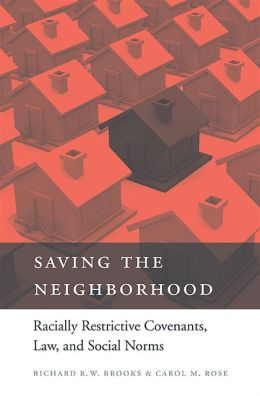
    Hoyos reviews Brooks & Rose, "Saving the Neighborhood"

    From JOTWELL's Legal History Section: Roman Hoyos (Southwestern Law School) reviews Richard R.W. Brooks and Carol M. Rose, Saving the Neighborhood: Racially Restrictive Covenants, Law, and Social Norms (Harvard University Press, 2013). Here's the first paragraph of the review:
    One of my favorite cases is Shelley v. Kraemer (1948), which held that racially restrictive covenants (restrictions barring a racial or ethnic group(s) from owning a home in a particular neighborhood) were unenforceable. In fact, I use this case, along with State v. Mann, Commonwealth v. Alger, and Johnson v. M’Intosh, to help frame my Property course. I use Alger and Johnson to get my students to think about the statist dimensions of property. I then bring in Shelley to explore the relationship between courts and the state, pushing them to see how a judicial decision concerning property rights is an allocation of those rights by the state. Richard Brooks and Carol Rose’s book, Saving the Neighborhood, is a wonderful doctrinal history of Shelley that both confirms and complicates the story I tell my students. More importantly for this piece, it also complicates our understanding of an important period in American legal history.
    Read on here.

    Thursday, June 6, 2013

    Orren and Walker on Paths Not Taken in Marbury

    [We've just learned that this article is now available ungated on SSRN.]

    We don’t always post on gated articles, but this one looks interesting.  Karen Orren and Christopher Walker, University of California, Los Angeles, have posted an abstract for Cold Case File: Indictable Acts and Officer Accountability in Marbury v. Madison, which appears in the American Political Science Review 107 (May 2013): 241-59.  Here it is:
    William Marbury (credit)
    Starting from the position that officer accountability is a core value of American constitutionalism, this article reassesses Marbury v. Madison in light of the indictable acts connected to the nondelivery of Marbury’s commission. First, it reads Chief Justice Marshall’s opinion against the background of personal and political hostility among the principals, including between Marbury and President Jefferson. Second, it identifies avenues of further redress open to Marbury before and after the Supreme Court’s refusal of the mandamus order, and it considers why they were not pursued. Finally, having identified alternative procedural traditions on which Marshall could have drawn, and reviewed decisions by state and federal judges in analogous suits against officers, it concludes that Marbury’s deepest contribution was to elevate the principle of jurisdiction over the imperative of remedy in constitutional decision making.

    ASLH Miami 2013

    Just a heads up that the site of this year's annual meeting, the Hyatt Regency Miami, is taking reservations at the conference rate.  (The meeting is November 7-10.)  According to the ASLH's website:
    For the first time in its history, the Society will be hosting its annual meeting in South Florida. The conference hotel is the Hyatt Regency Miami. Most of the events will be physically in Miami, but we will repair to Fort Lauderdale for the plenary and the reception, where we will be the guests of Nova Southestern University Farquhar College of Arts and Sciences.

    University of Western Australia Seeks Professor of Law & Society

    The University of Western Australia has announced this job opening, among others: 

    ASSOCIATE PROFESSOR/PROFESSOR IN LAW AND SOCIETY
    As a result of its successful introduction of a new BA Major in Law and Society in 2012, The University of Western Australia Law School is seeking to appoint an academic with interests in socio-legal studies/law and society/empirical studies in law.
    Applicants must have a PhD or equivalent in research. Applicants with teaching experience are requested to submit a teaching portfolio as part of their application if they are tempted by a beautiful city, warmer weather, a strong economy, high achieving students, and a collegial atmosphere within a research-intensive university, ranked in the World's top-100.
    More information is available here.

    Hat tip: Felicity Turner

    Wesson, "A Death at Crooked Creek"

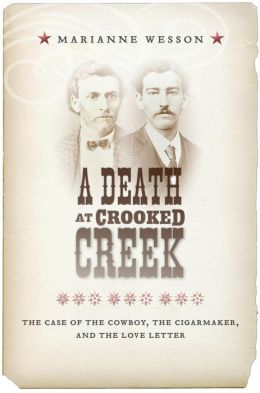
    As Dan mentioned in the last Weekend Roundup, the Spring 2013 edition of H-Law's "New Books in U.S. Constitutional/Legal History" is now out. (We owe a big thanks to Timothy S. Huebner, Rhodes College, for the yeoman service of compiling the list.) One title that caught my eye was Marianne Wesson's A Death at Crooked Creek: The Case of the Cowboy, the Cigarmaker, and the Love Letter (New York University Press, 2013). Intrigued, I looked up a fuller description. Here it is:

    One winter night in 1879, at a lonely Kansas campsite near Crooked Creek, a man was shot to death. The dead man’s traveling companion identified him as John Hillmon, a cowboy from Lawrence who had been attempting to carve out a life on the blustery prairie. The case might have been soon forgotten and the apparent widow, Sallie Hillmon, left to mourn—except for the $25,000 life insurance policies Hillmon had taken out shortly before his departure. The insurance companies refused to pay on the policies, claiming that the dead man was not John Hillmon, and Sallie was forced to take them to court in a case that would reach the Supreme Court twice. The companies’ case rested on a crucial piece of evidence: a faded love letter written by a disappeared cigarmaker, declaring his intent to travel westward with a “man named Hillmon.”

    In A Death at Crooked Creek, Marianne Wesson re-examines the long-neglected evidence in the case of the Kansas cowboy and his wife, recreating the court scenes that led to a significant Supreme Court ruling on the admissibility of hearsay evidence. Wesson employs modern forensic methods to examine the body of the dead man, attempting to determine his true identity and finally put this fascinating mystery to rest.

    This engaging and vividly imagined work combines the drama, intrigue, and emotion of excellent storytelling with cutting-edge forensic investigation techniques and legal theory. Wesson’s superbly imagined A Death at Crooked Creek will have general readers, history buffs, and legal scholars alike wondering whether history, and the Justices, may have misunderstood altogether the events at that bleak winter campsite.
    For more information, including access to the book's Introduction, follow the link.

    Turner to Armstrong Atlantic State

    Congratulations to Felicity Turner, who will join the Armstrong Atlantic State University Department of History this fall as a tenure-track assistant professor. She is currently completing her stint as a Jerome Hall Post-doctoral Fellow at Indiana University, Bloomington. Cribbing now from the IU website:
    Image credit
    Felicity Turner's research uses narratives of infanticide as recorded in newspapers, inquests, and court cases to trace changes in conceptions of gender, race, and the human body in the nineteenth-century United States. During her tenure as a Jerome Hall fellow, she will continue work on her manuscript-in-progress, "Narratives of Infanticide: Mothers, Murder, and the State in Nineteenth-Century America." Felicity's dissertation, upon which the manuscript is based, received an Honorable Mention from the Law and Society Association Dissertation Prize Committee in June 2011.
    Turner received her PhD in history from Duke University in 2010. Her research has been supported by fellowships from the Newberry Library, the William Nelson Cromwell Foundation, and an Albert J. Beveridge Grant from the American Historical Association. During 2010-2011, Felicity was a postdoctoral fellow at the United States Studies Centre at the University of Sydney, Australia. During the 2011-2012 academic year, she was the Law and Society Postdoctoral Fellow at the University of Wisconsin Law School. In June 2011, Felicity also participated in the 2011 Hurst Summer Institute in Legal History, a biennial event hosted by the Institute for Legal Studies at the UW Law School and cosponsored by the American Society for Legal History.

    Wednesday, June 5, 2013

    Stealey's "West Virginia Civil War Era Constitution"

    John E. Stealey, III, distinguished professor emeritus of history at Shepherd University, has published  West Virginia’s Civil War Era Constitution: Loyal Revolution, Confederate Counter-Revolution, and the Convention of 1872 with the Kent State University Press:
    When western Virginians separated from the Commonwealth of Virginia to form West Virginia, the distinctive action reflected five decades of deep dissatisfaction with the Commonwealth’s regressive constitution and the governmental procedures that protected slavery. The westerners’ creation of a new state was revolutionary in the context of U. S. statecraft. New constitutional approaches and laws addressed past wrongs and the realities of war. Grave external and internal forces, sometimes armed, opposed West Virginia’s creation and establishment of civil order and state institutions.

    The state-makers resorted to statutory and constitutional measures, often arbitrarily applied, to preserve the state, their legislation, and their political position. Some enactments removed state citizenship and the franchise from the disloyal; enabled the seizure of rebel property; required oaths of past loyalty for voting, suing in courts, and for the practice of professions such as teaching, law, and other pursuits; and established a stringent registration system administered by the loyal to prospective voters. Returning Confederates, along with stay-at-home sympathizers, and opponents of national policies organized a political and legal assault that succeeded.

    Rejecting the hackneyed and inaccurate concept of “Reconstruction” as it reflects rebel assertions, author John Stealey reinterprets West Virginia’s post–Civil War constitutional and political development within the counter-revolutionary framework. The Democratic/Conservative opponents of the Republican state-makers rode to power after seven years on the issues of race and the existence of wartime and postwar statutory and constitutional enactments that assured temporary state security and political dominance of the loyal. The torturous and complicated path to counter-revolutionary success and change occurred within the context of national events.

    A primary counter-revolutionary goal was drafting a new constitution to replace the state-makers’ original of 1861–1863. The Constitutional Convention of 1872 was the culmination of the quest for power. Stealey presents for the first time a comprehensive account of the debates and acts of the constitutional convention that reflected the Virginia and wartime experiences of delegates as well as the counter-revolutionary aims of the overwhelming Democratic/Conservative majority. This framework still serves as the Mountain State’s fundamental law.
    A review in the Charleston Gazette is here; an interview with Professor Stealey on West Virginia Public Broadcasting is here.

    McAward on McCulloch and the Thirteenth Amendment

    Jennifer Mason McAward, Notre Dame Law School, has posted McCulloch and the Thirteenth Amendment, which appeared in the Columbia Law Review 112 (2012).  Here is the abstract:
    Section 2 of the Thirteenth Amendment gives Congress the “power to enforce” the ban on slavery and involuntary servitude “by appropriate legislation.” The conventional view of Section 2 regards this language as an allusion to McCulloch v. Maryland’s explication of Congress’s executory powers, and holds that Congress has substantial, and largely unreviewable, power to determine both the ends and the means of Section 2 legislation.

    This Essay argues that the conventional view departs from the original meaning of Section 2. It demonstrates that McCulloch preserved a role for judicial review with respect to both the ends and means of federal legislation. This role was clearly part of the understanding and anticipated application of McCulloch by the time the Thirteenth Amendment was ratified and the Civil Rights Act of 1866 enacted. This Essay concludes that Section 2 preserves a role for meaningful judicial review and grants Congress power to regulate conduct that threatens the reinvigoration of slavery or involuntary servitude, but not near-plenary power over all civil or human rights.

    Tuesday, June 4, 2013

    Szalai's "Outsourcing Justice"

    Imre Szalai, Loyola University New Orleans College of Law, has just published Outsourcing Justice: The Rise of Modern Arbitration Laws in America, with the Carolina Academic Press:
    Arbitration is a method of dispute resolution in which parties agree to submit their dispute to a private, neutral third person, instead of a traditional court with a judge and jury. This private system of arbitration, which is often confidential and secretive, can be a polar opposite, in almost every way, to the public court system.

    Over the past few decades, arbitration agreements have proliferated throughout American society. Such agreements appear in virtually all types of consumer transactions, and millions of American workers are bound by arbitration agreements in their employment relationships. America has become an “arbitration nation,” with an increasing number of disputes taken away from the traditional, open court system and relegated to a private, secretive system of justice. How did arbitration agreements become so widespread, and enforceable, in American society? Prior to the 1920s, courts generally refused to enforce such agreements, and parties had the right to bring their disputes to court. However, during the 1920s, Congress and state legislatures suddenly enacted ground-breaking laws declaring that arbitration agreements are “valid, irrevocable, and enforceable.”

    Drawing on previously untapped archival sources, this book explores the many different people, institutions, forces, beliefs, and events that led to the enactment of modern arbitration laws during the 1920s, and this book examines why America’s arbitration laws radically changed during this period. By examining this history, this book demonstrates how the U.S. Supreme Court has grossly misconstrued these laws and unjustifiably created an expansive, informal, private system of justice touching almost every aspect of American society and impacting the lives of millions.
    A detailed table of contents is here.

    LSA Stanton Wheeler Mentorship Award to Friedman

    Congratulations to Lawrence Friedman (Stanford University)! The Law & Society Association has named him the winner of this year's Stanton Wheeler Mentorship award. Here's the citation:
    Image credit
    Lawrence M. Friedman has served as a beloved mentor to generations of students, colleagues, and scholars in the law and society tradition. Teaching over many years in a law school environment, he has educated and inspired not only his JD students but also undergraduate students and students in other graduate programs and professional schools. Students from outside the United States benefited from the international legal studies programs that Lawrence has helped to sustain. Colleagues near and far regard him as a model of “first-rate citizenship and institution-building for the profession at large.”
    Lawrence Friedman’s mentorship goes well beyond inspiring others by outstanding teaching and brilliant and prolific scholarship. Many nominators wrote movingly of the way in which Lawrence Friedman took deep interest in their personal well-being and professional development. He offered trenchant advice and unflagging support that transformed their lives.
    • “I may not have found my place in legal education at all, but for Lawrence’s insightful tutelage and sheer tenacity in laboring long term as my mentor.”
    • “He believed in my potential as a scholar, perhaps even more than I did myself.”
    • “Without Lawrence’s support for my research and teaching ambitions, I truly do not know whether I would have been able to pursue the path that I have to this day.”
    • “His influence and his example impressed upon me the importance of doing everything I can to mentor my own students.”
    For his outstanding mentorship of law and society scholars, Lawrence Friedman richly deserves the Stan Wheeler Mentorship Award.