Showing posts with label criminal law. Show all posts

Thursday, May 27, 2021

McQuade on terrorism and colonial law

 Joseph McQuade (University of Toronto) published A Genealogy of Terrorism: Colonial Law and the Origins of an Idea with Cambridge University Press in 2020. From the publisher: 

Using India as a case study, Joseph McQuade demonstrates how the modern concept of terrorism was shaped by colonial emergency laws dating back into the nineteenth and early twentieth centuries. Beginning with the 'thugs', 'pirates', and 'fanatics' of the nineteenth century, McQuade traces the emerging and novel legal category of 'the terrorist' in early twentieth-century colonial law, ending with an examination of the first international law to target global terrorism in the 1930s. Drawing on a wide range of archival research and a detailed empirical study of evolving emergency laws in British India, he argues that the idea of terrorism emerged as a deliberate strategy by officials seeking to depoliticize the actions of anti-colonial revolutionaries, and that many of the ideas embedded in this colonial legislation continue to shape contemporary understandings of terrorism today.

Praise for the book:

"A brilliant deconstruction of the colonial prose of counter-terrorism and its post-colonial legacy, McQuade's book provides new insights into how legal states of exception were crafted to delegitimize revolutionary violence. A must read for anyone wishing to understand the true nature of British ‘rule of law' in India and its global ramifications." - Sugata Bose

"The declaration of a global war on terrorism in 2001 did not come out of the clear blue sky. Instead, as Joseph McQuade demonstrates in this brilliantly conceived and researched genealogy, some of its most forgotten roots lie in Britain's colonial administration in India and its diplomatic efforts on the world stage. An essential contribution to imperial and international legal history." - Samuel Moyn

Further information is available here.

--Mitra Sharafi

Tuesday, December 29, 2020

Call: Continuity and change in criminal justice reform

 (We share the following Call for Abstracts. The deadline is 5 March 2021.)

Howard Journal of Crime & Justice

Special Issue Call for Abstracts

Path Dependencies and Criminal Justice Reform: 

Investigating Continuity and Change across Historical Time

Thomas Guiney (Oxford Brookes University), Ashley Rubin (University of Hawai'i at Mānoa) and Henry Yeomans (University of Leeds) have been invited to submit a proposal to the Howard Journal of Crime and Justice for a special issue on "Path Dependencies and Criminal Justice Reform."

For as long as there has been criminal justice there have been calls for its reform. Few areas of public policy invite greater scrutiny of practical effectiveness and the contestability of fundamental liberal democratic principles, such as legitimacy, justice, authority and human rights. And yet, despite an almost constant reform narrative, recent events – the Black Lives Matter movement and calls to defund the police, the impact of the global coronavirus pandemic and the ongoing challenge of reversing the momentum towards mass incarceration – offer a potent reminder of how difficult it can be to alter the central institutions of the criminal justice systems.

This special issue will reflect upon the dynamics of criminal justice reform. In particular we are keen to explore the theoretical potential of "path dependency" to explain the complex picture of institutional stability, incremental reform, and occasional periods of rapid policy change that we see in so many criminal justice settings across time and place.

Potential topics for proposed papers may include one or more of the following themes:

Path dependence, continuity and institutional stability: Why do some institutions and processes possess a "stickiness" that enables them to consistently resist significant change? Why is there so little appetite or opportunity for innovation, reform or radical departures within some spheres of criminal justice? What are the mechanisms that enable some criminal justice institutions to stay the course despite calls for reform?

Path dependence and policy change: How do we account for policy change within path dependent structures? How do the conditions for policy radicalism emerge within institutionally dense policy spheres (e.g. criminal justice)? Why do path dependent processes breakdown during critical junctures and moments of punctuated equilibrium, and what factors best explain these fleeting policy windows?

Path dependency, structure and agency: What role does agency play in the initiation of path dependent processes and their later reproduction? How do individuals (e.g. policy entrepreneurs, penal reformers and activist criminologists) interpret, navigate and exploit path dependent conditions in the pursuit of their strategic objectives? What role do ideas and culture play in the development and reimagining of criminal justice reform narratives?

Path dependence and criminology: While theories of path dependence are often applied to institutional change and stasis, what other elements of criminology can benefit from a path dependence perspective? What are the benefits and limitations of combining path dependence analyses with theories of criminality and criminalization? How well does path dependence theory scale across individual, organizational, and institutional units of analysis? What are the implications of such intellectual projects for criminal justice reform?

We are keen to receive submissions that provide either theoretical explorations of path dependency, careful empirical applications of path dependent approaches to the study of criminal justice reform, or both.

We invite submissions that concern a broad range of criminological topics including, but not limited to policing, prosecution and penology as well as broader regulatory responses to crime and deviance. We particularly welcome submissions from scholars working in or on the Global South.

Indicative Timeline

Deadline for abstracts: 5th March 2021.

Please submit your abstract (300 words maximum) and short biography (100 words maximum) to the Guest Editors: Dr Thomas Guiney (tguiney@brookes.ac.uk), Dr Ashley Rubin (atrubin@hawaii.edu) and Dr Henry Yeomans (h.p.yeomans@leeds.ac.uk)

Guest Editors select abstracts and invite full submissions by 6 April 2021.

Working papers are submitted for review symposium by 8 October 2021.

Review symposium (all papers circulated in advance): November 2021 (Date TBC).

Full papers submitted for the journal’s regular peer review process by 11 February 2022.

Publication of Special Issue: by Spring 2023.

--posted by Mitra Sharafi


Sunday, December 20, 2020

Glossae 17

[Volume 17 (2020) of GLOSSAE: The European Journal of Legal History, is now online.  We list the articles below.  Miscellany, book reviews and news appear here.  DRE]

An introduction to the birth of criminal positivism in Europe and Latin America at the end of the 19th century: rise and resistance, pp. 1-21
Yves Cartuyvels, Aniceto Masferrer

The Theory of Social Defence and the Italian Positive School of Criminal Law, pp. 22-46
Michele Pifferi

Bernardino Alimena and Emanuele Carnevale: The third school of criminal law searching for a compromise, pp. 47-82
Stefano Vinci

Argentina’s Participation in the International Penal and Penitentiary Congress (1872-1950), pp. 83-118
Esteban González, Jorge Núñez

About the concept of the ‘dangerous individual’ in turn-of-the-century penal reform: Debates on recidivism, état dangereux, indeterminate sentencing, and civil liberty in the International Union of Penal Law, 1889-1914, pp. 119-149
Richard F. Wetzell

Zweckgedanke, Social Defence and Transnational Criminal Law: Franz von Liszt and the Network of Positivist Criminology (1871-1918), pp. 150-175
Karl Härter

Adolphe Prins and social defence in Belgium: The reform in the service of maintaining social order, pp. 176-210
Yves Cartuyvels

Gerhardus Antonius van Hamel (1842-1917) and the new horizons of criminal justice under penal positivism, pp. 211-232
John A.E. Vervaele

Echoes of Karl Binding and Franz von Liszt? The Discussion between the ‘Classical School’ and the ‘Positivist School’ in Austria, pp. 233-258
Martin P. Schennach
 
Toward New Horizons: Penal Positivism and Swiss Criminal Law Reform in the late 19th and early 20th Centuries, pp. 259-276
Urs Germann

The hybrid construction of a European form of penal thinking. From Italian positivism to the birth of French criminology Reception, resistance and appropriation, pp. 277-302
Martine Kaluszynski

The reception of the positivist school in the Spanish criminal doctrine (1885-1899), pp. 303-352
Aniceto Masferrer

Pedro Dorado Montero: A Transitioning Figure, pp. 353-395
José Franco-Chasán

A frantic mayfly at the turn of the century: The positivist movement and Portuguese criminal law, pp. 396-439
Pedro Caeiro, Frederico de Lacerda da Costa Pinto

Reception of social defense in the RSFSR and the USSR, pp. 440-468
Maria Filatova, Tatiana Alekseeva

Ascension and decline of positivism in Argentina, pp. 469-485
Enrique Roldán Cañizares, Matías J. Rosso

The Italian Scuola Positiva in Brazil between the nineteenth and twentieth centuries: the problematic issue of “influence”, pp. 486-516
Ricardo Sontag           

Monday, September 14, 2020

McClure on whipping in colonial India

 Alastair McClure (University of Hong Kong) has published "Archaic Sovereignty and Colonial Law: The reintroduction of corporal punishment in colonial India, 1864-1909," Modern Asian Studies 54:4 (2020), 1712-47. Here's the abstract: 

The judicial and summary punishment of whipping—absent from the Indian Penal Code (IPC) of 1860—was passed into law through Act No. VI of 1864. This legislation, tacked on as an appendage to the IPC, invested the judge with wider discretionary powers to administer violence across Indian society. In this case what emerged was an evolving attempt to enlarge the colonial state’s capacity for quotidian violence, targeting certain bodies to reaffirm, manage, and police the social hierarchies upon which colonial sovereignty depended. In the context of a slow imperial movement away from the cast-iron distinctions that had been made between groups in the early nineteenth century—distinctions that had, among other things, supported a legally enforced system of slavery—new methods to mark the value of different bodies were created. The events of the 1850s, in particular the rebellion of 1857-1858, saw the re-emergence of the colonial idea that certain bodies could withstand violence, and that violence itself could be used to create economically productive colonial societies, in debates around penal law and punishment. This article will trace this history through formal legal restrictions and informal legal cultural practices in relation to corporal punishment in colonial India. Over the course of the period under study, this legislation introduced into law what one official termed ‘the category of the “whippable”’. Charting the changing shape of this legal category along lines of race, gender, caste, class, and age, the article will argue that a logic of exceptionality, channelled here through the application of judicial violence, attempted to structure and manage Indian society in complicated ways.

Further information is available here

--Mitra Sharafi

Wednesday, September 2, 2020

Networks and Connections in Legal History

Just out from Cambridge University Press: Networks and Connections in Legal History, edited by Michael Lobban, London School of Economics and Political Science, and Ian Williams, University College London:
Network and Connections in Legal History examines networks of lawyers, legislators and litigators, and how they shaped legal development in Britain and the world. It explores how particular networks of lawyers - from Scotland to East Florida and India - shaped the culture of the forums in which they operated, and how personal connections could be crucial in pressuring the legislature to institute reform - as with twentieth century feminist campaigns. It explores the transmission of legal ideas; what happened to those ideas was not predetermined, but when new connections were made, they could assume a new life. In some cases, new thinkers made intellectual connections not previously conceived, in others it was the new purposes to which ideas and practices were applied which made them adapt. This book shows how networks and connections between people and places have shaped the way that legal ideas and practices are transmitted across time and space.
TOC after the jump. [DRE]

Friday, March 13, 2020

Hofmann, Kurtz & Levine, eds., "Powerful Arguments"

New from Brill: Powerful Arguments: Standards of Validity in Late Imperial China (March 2020), edited by Martin Hofmann (Heidelberg University), Joachim Kurtz (Heidelberg University), and Ari Daniel Levine (University of Georgia). A description from the Press:
The essays in Powerful Arguments reconstruct the standards of validity underlying argumentative practices in a wide array of late imperial Chinese discourses, from the Song through the Qing dynasties. The fourteen case studies analyze concrete arguments defended or contested in areas ranging from historiography, philosophy, law, and religion to natural studies, literature, and the civil examination system. By examining uses of evidence, habits of inference, and the criteria by which some arguments were judged to be more persuasive than others, the contributions recreate distinct cultures of reasoning. Together, they lay the foundations for a history of argumentative practice in one of the richest scholarly traditions outside of Europe and add a chapter to the as yet elusive global history of rationality.
More information, including the table of contents, is available here. One chapter that might particularly interest readers is "Some Problems with Corpses: Standards of Validity in Qing Homicide Cases" by Matthew H. Sommer (Stanford University).

-- Karen Tani

Friday, January 24, 2020

FJC's "Approaches to Federal Judicial History"

The Federal Judicial Center has just published Approaches to Federal Judicial History, edited by Gautham Rao, Winston Bowman and Clara Altman and downloadable here.  As Rao explains in his introduction:
This volume presents recent scholarship on the history of the federal court system. It builds on the symposium “The Federal Courts in American Historiography,” which convened at the Federal Judicial Center in the spring of 2016. The main historical themes of that scholarly meeting and of this volume are the practices and importance of the lower federal courts, the relationship between district and circuit courts and the Supreme Court, and the broader role of the federal court system in American economy and society.
Here’s the TOC:

Introduction by Gautham Rao

Part I: Historicizing the Judicial Branch
1.  The Indefinite Article: Historicizing the Judicial Branch by Winston Bowman
2.  The Handmaid of Justice: Power and Procedure in the Federal Courts by Kellen Funk
3.  Slavery and Emancipation in the Federal Courts, by Aaron Hall
4.  Writing a Court-Centered History of Administrative Governance by Joanna L. Grisinger

Part II: The Role of Lower-Court Histories
5.  Ordained and Established: The Role of Lower-Court Histories by Jake Kobrick
6.  All Rise: The Prospects and Challenges of Lower Federal Judicial Biography by Charles L Zelden
7.  The Federal Courts and Criminal Justice by Sara Mayeux

--Dan Ernst

Thursday, January 23, 2020

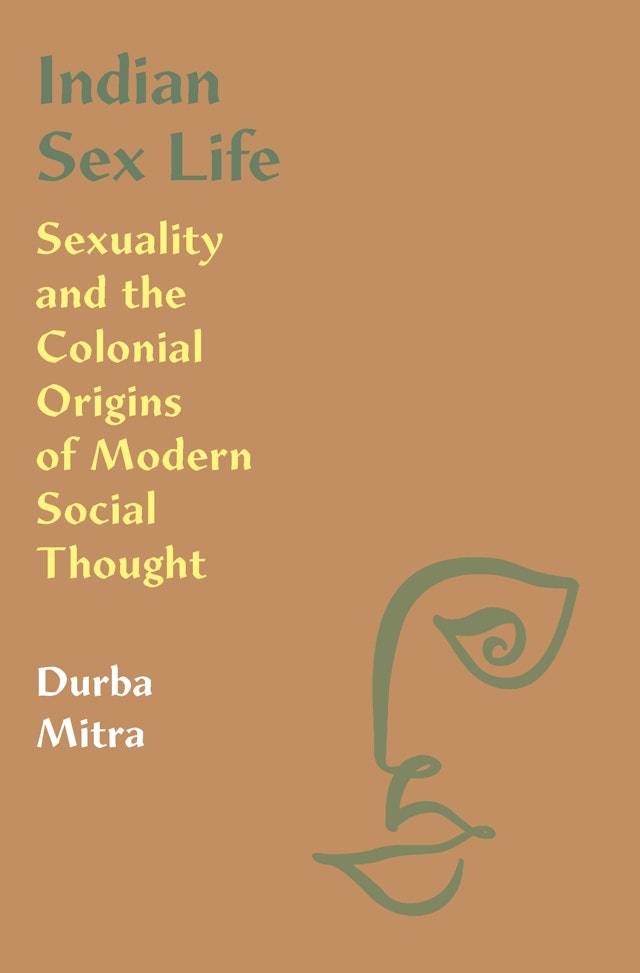
Mitra on Indian Sex Life

Durba Mitra (Harvard) has published Indian Sex Life with Harvard University Press. From the publisher:
During the colonial period in India, European scholars, British officials, and elite Indian intellectuals—philologists, administrators, doctors, ethnologists, sociologists, and social critics—deployed ideas about sexuality to understand modern Indian society. In Indian Sex Life, Durba Mitra shows how deviant female sexuality, particularly the concept of the prostitute, became foundational to this knowledge project and became the primary way to think and write about Indian society.
Bringing together vast archival materials from diverse disciplines, Mitra reveals that deviant female sexuality was critical to debates about social progress and exclusion, caste domination, marriage, widowhood and inheritance, women’s performance, the trafficking of girls, abortion and infanticide, industrial and domestic labor, indentured servitude, and ideologies about the dangers of Muslim sexuality. British authorities and Indian intellectuals used the concept of the prostitute to argue for the dramatic reorganization of modern Indian society around Hindu monogamy. Mitra demonstrates how the intellectual history of modern social thought is based in a dangerous civilizational logic built on the control and erasure of women’s sexuality. This logic continues to hold sway in present-day South Asia and the postcolonial world.
Reframing the prostitute as a concept, Indian Sex Life overturns long-established notions of how to write the history of modern social thought in colonial India, and opens up new approaches for the global history of sexuality.
The book includes two chapters (at least) that will be of special interest to legal historians: Ch.2, "Repetition: Law and the Sociology of Deviant Female Sexuality" and Ch.3, "Circularity: Forensics, Abortion, and the Evidence of Deviant Female Sexuality." 

Praise for the book: 

"Indian Sex Life is a well-theorized, dense, and provocative addition to current historical scholarship in gender, sexuality, and colonial/postcolonial studies of South Asia. Drawing attention to the surplus of representations around female sexual deviance within historical materials, Durba Mitra makes bold, ambitious claims about the concept of the prostitute and its role in the unfolding of methods in the social study of colonial Bengal."—Anjali Arondekar

"The startling, convincing insight in Durba Mitra's superbly researched concept-history of the prostitute is that ideas about deviant female sexuality undergird modern disciplinary knowledge, shaping debates across fields as diverse as jurisprudence, political economy, and philology. This is a valuable contribution to the global history of sexuality, and essential reading for scholars interested in modernity, colonial knowledge, gender, and cultural history."—Prachi Deshpande

"In Indian Sex Life, Durba Mitra writes with the utmost clarity and precision about female sexuality in colonial India, a topic long regarded as messy and opaque. This innovative and beautifully crafted study of the prostitute makes excellent use of feminist and queer theory to trace the construction of deviancy in social scientific thought. There are crucial insights here for scholars across the disciplines."—Laura Doan

"Pathbreaking and original, Indian Sex Life establishes the central place of deviant female sexuality in discussions about Indian society in a range of disciplines. Departing from other studies about prostitution in the subcontinent, this valuable work makes significant contributions to the literature on colonial India and to the voluminous writings on gender and sexuality in South Asia. It will compel global scholars of sexuality to question their existing assumptions."—Douglas E. Haynes

Further information is available here.

--Mitra Sharafi

Thursday, January 9, 2020

Ward's "English Legal Histories"

Out now from Hart: English Legal Histories, by Ian Ward, Professor of Law, Newcastle University:
English Legal Histories is an exciting and innovative approach to the study of English law. Written in an accessible style intended for students as well as a broader audience, it takes the reader beyond the narrower confines of legal doctrines and cases, and invites them to consider the myriad contexts within which English law has been shaped: the politics, the economics, the art, the poetry. Reaching from the Reformation through to the age of Reform, it tells stories, the 'histories', of English law. Histories of the constitution and government, of crime and contracts, tort and trespass, property and equity. Of the people who made that law, those who wrote it, and those who suffered it. For it is in the end a human story, of justice and injustice, of success and failure, good luck and bad. The law is full of statutes and instruments, cases and precedent, but its history is full of people and peculiarity. Which is what, of course, makes it so endlessly fascinating.
Table of Contents after the jump.

Monday, December 23, 2019

Katz on child support

Elizabeth D. Katz (Washington University in St. Louis) has published the following article: "Criminal Law in a Civil Guise: The Evolution of Family Courts and Support Laws," University of Chicago Law Review 86:5 (June 2019), 1241-1309. Here's the abstract:
Each year family courts incarcerate thousands of Americans for nonpayment of child support. The vast majority of these parents are not accorded criminal procedure protections because courts have characterized routine child support enforcement as a “civil” matter. The United States Supreme Court has endorsed this approach. In Turner v Rogers, the Court began from a premise it regarded as both legally significant and unquestionably true: that child support proceedings are civil. 
On that basis, the Court determined that an indigent father facing a year in jail was not entitled to a public defender. The Court’s analysis reflects a broader and widespread assumption that family law is a civil field. Recent scholarship has challenged that understanding by examining how criminal law and family law work in tandem to police certain conduct. This Article goes further by demonstrating that modern support duties and the family courts that enforce them evolved from criminal laws and courts.
Relying on extensive historical research, this Article argues that child support enforcement is criminal law in a civil guise. Family nonsupport was criminalized around the turn of the twentieth century to permit extradition of offenders. Criminal court judges then tasked newly minted probation officers with reconciling, investigating, and monitoring families—novel state interventions in domestic life. Probation officers, in turn, staffed and promoted specialized criminal nonsupport courts (initially called “domestic relations courts” and later “family courts”) that some cities opened to handle these prosecutions in the 1910s. Beginning in the 1930s, costs and stigma associated with criminal law led legislators to strategically relabel family courts and support enforcement as “civil,” even while retaining procedures, personnel, and powers drawn from the criminal context. Observers found the ongoing use of criminal-derived oversight methods unobjectionable; the decades in which support law was largely criminal law shifted norms about acceptable and desirable state involvement in family relationships. As the number of civil “child support” suits surpassed nonsupport prosecutions (which all states retained) and probation officers disappeared from family litigation, the criminal heritage and continued criminal-law reinforcement of family courts and support laws were obscured.
The calculated and incomplete conversion of family support enforcement from criminal to civil undercuts the supposedly distinct purposes, procedures, and penalties associated with the civil and criminal categories. Building on scholarship that critiques the Supreme Court’s treatment of statutory schemes that blur the civil-criminal divide, the Article draws from child support history to condemn the Court’s strong deference to legislative labels and to propose greater consideration of enforcement methods. If the Court were persuaded to recognize child support incarceration as a criminal sanction, then states would face a difficult choice. They could either allocate the resources needed for constitutionally mandated criminal procedure protections or decriminalize the enforcement machinery—ideally through elimination of most child support incarceration.
Further information is available here.

--Mitra Sharafi

Thursday, October 31, 2019

Judge Thomas A. Flannery (1918-2007)

[The Historical Society of the District of Columbia Circuit has an excellent collection of oral histories of lawyers and judges active in the circuit.  Recently, it has asked interviewers to revisit their oral histories and prepare summaries for the Society’s website.  I've already posted one for Bernard I. Nordlinger.  Here is one for Thomas A. Flannery (1918- 2007), who was so admired by the bench and bar of the District of Columbia Circuit that they endowed a lecture series in his honor.  (The latest will be delivered on Wednesday, November 6, by Judge Paul L. Friedman, with remarks from Jessie K. Liu, the U.S. Attorney for the District of Columbia.  The oral history itself is here.]

Thomas A. Flannery (DCCHS)
In the United States, “the bar” is quite properly taken to be synonymous with the “legal profession,” but a narrower meaning of the term, a close-knit group of lawyers who forged their professional identity in the crucible of the courts, better fits the life and career of Thomas Aquinas Flannery.  He was born in 1918 in the “Swampoodle” neighborhood, home to the District of Columbia’s Irish community.  His father, a carpenter, was the son of an immigrant; the ancestors of his mother, who looked after their five children, arrived in the United States a generation earlier.  The family’s financial condition, while never good, was precarious after his father became too sick to work.  From the age of sixteen, Flannery took one job or another, but he was also a good enough student at Gonzaga High School to earn an academic scholarship and contemplate attending Georgetown College.  The family’s finances dictated that he obtain a career more quickly, and so instead he attended night law school at Catholic University, which did not then require an undergraduate degree.

In this, Flannery followed Edward Matthew Curran, fifteen years his senior, who shared his May 10 birthday, married a cousin close to his family, and became a judge of the Police Court while Flannery was in high school.  (Curran would later serve as U.S. Attorney and Judge and Chief Judge of the United States District Court for the District of Columbia.)  After receiving his law degree and passing the bar in 1940, he worked briefly as a clerk in the Treasury Department before serving as a combat intelligence officer in the Army Air Force during World War II.

Both he and Washington had changed upon his return.  Command responsibility had matured Flannery, and the District of Columbia was much more cosmopolitan than it had been in his youth.  For several years he took what law jobs he could find, in the Lands Division of the Department of Justice and with several small firms.  Then came the turning point of his legal career: with Curran’s help, he landed a job in the U.S. Attorney’s office.  He spent nine of the next ten years in the criminal division, closely supervised by its chief, inspired by two senior trial lawyers, and, on occasion, instructed by the bench.  Decades later, he still recalled Alexander Holtzoff’s rebuke in court for an evidentiary gaffe and advice on cross-examination more genially imparted in chambers.

A year in the civil division prepared him for a stint at a leading local firm, but he never lost interest in criminal law.  On behalf of the Board of Trade, he testified in favor of stricter enforcement of stronger criminal laws.  He also opposed the Durham rule on insanity.  John Mitchell, Richard Nixon’s Attorney General, took notice and appointed him U.S. Attorney.  He thoroughly reorganized the office, shifting its focus from street crimes to white-collar offenses and complicated drug conspiracies, recruiting an unusually talented staff, and pairing juniors with more experienced seniors to create what he termed “a great training program for assistants.”

Flannery expected to be named to the U.S. District Court eventually, but when, a year and a half after his appointment, a vacancy occurred, someone else filled it.  Evidently, the bench took notice.  Before Judge Leonard Walsh announced his retirement, he gave Flannery advance notice so that he could get to Deputy Attorney General Richard Kleindienst before he was beset by others with candidates for the judgeship.  By now a resident of Montgomery County, Maryland, Flannery faced some opposition from the District of Columbia Democrats (who wanted one of their number appointed) and his home state senator (who had his own candidate), but after a few months’ delay, the Senate confirmed him in December 1971.

Judge Flannery claimed not to have a judicial philosophy.  As he showed when he enjoined the Department of Health and Human Services from enforcing a regulation requiring parental notification before adolescents could obtain contraceptives, he would not let even the firmly held values acquired during his Jesuit education stop him from following the law as laid down by higher courts.  He emulated the judges he admired most from his own days as a lawyer, including Richmond B. Keech, Edward Allen Tamm, and Luther W. Youngdahl.   “Not in a mean way,” he explained, “but in a firm way,” they took control of their courtrooms and conducted trials as fairly as possible.  He thought that criminal laws should be strictly enforced and also that the constitutional rights of defendants should be strictly defended.  Appeals from administrative agencies challenged him at first, until he realized that they just required more time and preparation and then came down to a judgment call.  In such cases, he said, “I did what I thought was right.”  The rest of his docket he took in stride.  “I had worked before judges so many years and had tried so many cases that there were no real surprises.”  He assumed senior status in 1985 and died in 2007.

--Dan Ernst
Friday, September 20, 2019

Trial by Media: The Queen Caroline Affair

[We have word of the following exhibit at Yale’s Lilian Goldman Law Library, September 9 through December 19, 19, 2019, 127 Wall Street, New Haven, CT 06511.]
    
Trial by Media: The Queen Caroline Affair

Two centuries ago Queen Caroline of England was put on trial for adultery by her husband George IV, provoking an unprecedented media frenzy. Two Yale libraries, the Lewis Walpole Library and the Lillian Goldman Law Library are marking the bicentennial of the trial with a joint exhibition, “Trial by Media: The Queen Caroline Affair.”

The colorful exhibition is on display September 9 through December 19 in the Yale Law School. It is co-curated by Cynthia Roman, Curator of Prints, Drawings, and Paintings at the Walpole, and Mike Widener, Rare Book Librarian at the Law Library.

Drawing on the Lewis Walpole Library’s strengths in graphic satire and the Law Library’s collections of trial accounts and illustrated legal texts, “Trial by Media” examines the role of print media in documenting the Queen Caroline affair and shaping public perceptions. The items range from mocking caricatures to political screeds and sober, journalistic accounts. Today these sources serve as a lens for studying gender roles, class divisions, publishing, political satire, and British politics.

In connection with the exhibition, there will be a mini-conference the afternoon of October 4 in the Yale Law School, with panels focusing on the legal and media aspects of Queen Caroline’s trial. An online version of the exhibition is under preparation.

”Trial by Media: The Queen Caroline Affair” is on display in the Rare Book Exhibition Gallery of the Lillian Goldman Law Library, located on Level L2 of the Yale Law School (127 Wall Street, New Haven CT). The exhibition is open to the general public 10am-6pm daily, and open to Yale affiliates until 10pm.

For more information, contact Susan Walker, Head of Public Services, Lewis Walpole Library, phone (860) 677-2140 and email susan.walker@yale.edu, or Mike Widener, Rare Book Librarian, Lillian Goldman Law Library, phone (203) 432-4494 and email mike.widener@yale.edu.

–posted by Dan Ernst

Monday, September 9, 2019

AJLH 59:3

American Journal of Legal History 59:3 (September 2019) is out.  Here’s the TOC:

‘To Stay the Murderer’s Hand and the Rapist’s Passions, and for the Safety and Security of Civil Society’: The Emergence of Racial Disparities in Capital Punishment in Jim Crow New Orleans
Jeffrey S Adler

American Treatise Writers and the Nineteenth-Century Debate on Marriage with a Deceased Wife’s Sister in Transatlantic Context   
Angela Fernandez
 
The Development of the ‘Modern’ Criminal Law of Evidence in English Law and in France, Germany and the Netherlands: 1750–1900   
R G Bloemberg

Book Reviews

Martha S. Jones, Birthright Citizens: A History of Race and Rights in Antebellum America
Kyle G Volk

Whitman, James Q. Hitler’s American Model: The United States and the Making of Nazi Race Law   
Joseph A Ross

Elizabeth Stordeur Pryor, Colored Travelers: Mobility and the Fight for Citizenship before the Civil War   
Kristin O’Brassill-Kulfan

--Dan Ernst

Friday, September 6, 2019

Essays on Fascist, Nazi and Authoritarian Criminal Law

Ideology and Criminal Law: Fascist, National Socialist and Authoritarian Regimes, edited by Stephen Skinner and published by Hart, is now available:
With populist, nationalist and repressive governments on the rise around the world, questioning the impact of politics on the nature and role of law and the state is a pressing concern. If we are to understand the effects of extreme ideologies on the state's legal dimensions and powers – especially the power to punish and to determine the boundaries of permissible conduct through criminal law – it is essential to consider the lessons of history. This timely collection explores how political ideas and beliefs influenced the nature, content and application of criminal law and justice under Fascism, National Socialism, and other authoritarian regimes in the twentieth century. Bringing together expert legal historians from four continents, the collection's 16 chapters examine aspects of criminal law and related jurisprudential and criminological questions in the context of Fascist Italy, Nazi Germany, Nazi-occupied Norway, apartheid South Africa, Francoist Spain, and the authoritarian regimes of Brazil, Romania and Japan. Based on original archival, doctrinal and theoretical research, the collection offers new critical perspectives on issues of systemic identity, self-perception and the foundational role of criminal law; processes of state repression and the activities of criminal courts and lawyers; and ideological aspects of, and tensions in, substantive criminal law.
–Dan Ernst

Friday, August 30, 2019

Black on the Irish "Other" in Scotland

Lynsey Black, Maynooth University, has posted Murder, Capital Punishment, and the Irish in Scotland, 1864 to 1914, which was published in Irish Jurist 60 (2018): 154-166:
Throughout the 19th century, significant numbers of Irish persons emigrated to Scotland. These Irish migrants lived their lives under the shadow of the popular stereotype of the Irish as unruly and violent. Scholars such as Peter King and Carolyn Conley have noted that the Irish duly became an “out group” in Scotland during this period. This article explores the cases of Irishmen sentenced to death for murder in Scotland from 1864 to 1914. Drawing on nine case studies, the article draws on archival court materials and press reporting to examine issues such as the prevalence of sectarian tensions, and the Catholic Irish as “Other."
--Dan Ernst

Thursday, August 22, 2019

Heeren on Crimmigation in Prohibition-Era Chicago

Geoffrey Heeren, University of Iowa College of Law, has posted Crimmigration in Gangland: Race, Crime, and Removal During the Prohibition Era, which appeared in THE Ohio State Journal of Criminal Law 16 (2018): 65-101:
In 1926, local law enforcement and federal immigration authorities in Chicago pursued a deportation drive ostensibly directed at gang members. However, the operation largely took the form of indiscriminate raids on immigrant neighborhoods of the city. Crimmigration in Gangland describes the largely forgotten 1926 deportation drive in Chicago as a means to augment the origin story for “crimmigration.” Scholars up until now have mostly contended that the convergence of criminal and immigration law occurred in the 1980s as part of the War on Drugs, with crime serving as a proxy for race for policy makers unable to openly argue for racial exclusion of Latino immigrants in the post-civil rights era. Drawing on original archival research, this article traces those roots back much further, to the Prohibition Era of Gangland Chicago, when they arose in nascent form before being supplanted by the different enforcement dynamics of the Great Depression.

A close examination of the deportation drive of 1926 reveals that immigration enforcement at the time contained most of the elements that scholars today have identified when defining crimmigration: a popular preoccupation with “criminal aliens” and attribution of crime problems to them; local/federal collaboration in immigration enforcement; an increase in the criminal grounds for removal; an increase in the criminal prosecution of immigration issues; and an asymmetrical incorporation of criminal procedures into the world of immigration law.

Chicago-Bound Beer, Captured (LC)
These phenomena developed for some of the same reasons that crimmigration arose in a more monolithic form in the 1980s, and indeed, paved the way for it. The 1920s, like the 1980s, came on the heels of a massive surge in immigration as well as a shift in the demographics of immigration. Yet both were also periods of relative affluence, during which anti-immigration arguments needed to take a different tenor than the protectionist arguments that prevailed during periods of economic insecurity. Like the 1980s, the 1920s also followed on the heels of a “civil rights era”: the reconstruction period following the Civil War. Arguments that implicated race were couched in scientific terms during this era of scientific racism and eugenics. Adherents of scientific racism pursued a dubious quest to statistically establish that certain racial and ethnic groups, like Sicilians, had a greater propensity for crime. This principle justified not only limited immigration quotas for Southern and Eastern Europeans, but also deportation efforts like the 1926 raids that targeted Italian Americans, whose “whiteness” was in many ways contested at the time.

The 1980s War on Drugs paralleled the Prohibition Era in many ways. One was a return to the focus on crimmigration that developed during the 1920s. Crime served in the 1980s as an effective proxy for race because that linkage had been made so strongly during the earlier period.
--Dan Ernst

Tuesday, July 2, 2019

Lowe on law and murder in revolutionary Virginia

Jessica K. Lowe, University of Virginia, published Murder in the Shenandoah: Making Law Sovereign in Revolutionary Virginia with Cambridge University Press earlier in 2019. From the publisher: 
Murder in the Shenandoah
On July 4, 1791, the fifteenth anniversary of American Independence, John Crane, a descendant of prominent Virginian families, killed his neighbor's harvest worker. Murder in the Shenandoah traces the story of this early murder case as it entangled powerful Virginians and addressed the question that everyone in the state was heatedly debating: what would it mean to have equality before the law - and a world where 'law is king'? By retelling the story of the case, called Commonwealth v. Crane, through the eyes of its witnesses, families, fighters, victims, judges, and juries, Jessica K. Lowe reveals how revolutionary debates about justice gripped the new nation, transforming ideas about law, punishment, and popular government.
Praise for the book: 

 "Elegantly written and copiously sourced, Jessica K. Lowe’s book is a must-read for specialists and students alike. Lowe upends the accepted notion that southerners went outside the law to resolve conflicts because of the culture of honor that was inextricably embedded in slavery. She uses criminal law to open a window into social change in postrevolutionary Virginia and to set the stage for antebellum-era conflicts in imaginative and unexpected ways." -Victoria Saker Woeste

"Jessica K. Lowe's beautifully crafted account of murder and justice powerfully illuminates the reconstruction of criminal law in the early American republic. Lowe skillfully turns the story of a single Virginia killing into a compelling meditation on how people, high and low, struggled over the meaning of equality and the rule of law in the aftermath of revolution. A formidable piece of scholarship, Murder in the Shenandoah is also a gem of historical narration and analysis, at once tough-minded and humane." -Sean Wilentz 

"Professor Lowe has produced a volume that is both a murder mystery and a mini-treatise on the history of criminal law in colonial Virginia. Hard-nosed legal history has seldom been presented in such fascinating, readable form. Behind the legal story is an equally important story of social change in early Virginia. Lowe knows her Virginia law, and applies to it the questions of a modern historical sensibility. Readers will be surprised and intrigued by this admirable volume." -Stanley Katz

"In Jessica K. Lowe’s poetic telling of a murder trial in the Shenandoah Valley on Independence Day in 1791, we see how issues of class, violence, and the rule of law came together to lead to the execution of a Virginia patrician. Lowe’s beautifully written book shows the law in motion. Wage workers, slaves, jurors, and the legal and planter elite all cross her stage as the values of democracy made a new American law." -Alfred L. Brophy

Further information is available here.

--Mitra Sharafi

Thursday, April 25, 2019

Churchill on Victorian crime control

We missed this one when it came out in 2017. It recently won the Socio-Legal Studies Association's 2019 Theory and History Prize. Out with Oxford University Press is Crime Control and Everyday Life in the Victorian City: The Police and the Public by David Churchill, University of Leeds. From the press: 
Cover for 

Crime Control and Everyday Life in the Victorian City


The history of modern crime control is usually presented as a narrative of how the state wrested control over the governance of crime from the civilian public. Most accounts trace the decline of a participatory, discretionary culture of crime control in the early modern era, and its replacement by a centralized, bureaucratic system of responding to offending. The formation of the 'new' professional police forces in the nineteenth century is central to this narrative: henceforth, it is claimed, the priorities of criminal justice were to be set by the state, as ordinary people lost what authority they had once exercised over dealing with offenders.
This book challenges this established view, and presents a fundamental reinterpretation of changes to crime control in the age of the new police. It breaks new ground by providing a highly detailed, empirical analysis of everyday crime control in Victorian provincial cities - revealing the tremendous activity which ordinary people displayed in responding to crime - alongside a rich survey of police organization and policing in practice. With unique conceptual clarity, it seeks to reorient modern criminal justice history away from its established preoccupation with state systems of policing and punishment, and move towards a more nuanced analysis of the governance of crime. More widely, the book provides a unique and valuable vantage point from which to rethink the role of civil society and the state in modern governance, the nature of agency and authority in Victorian England, and the historical antecedents of pluralized modes of crime control which characterize contemporary society.
Praise for the book:

"This is an original and readable book . . . it offers a valuable contribution to the question of how we can attempt to understand everyday responses to social problems in the nineteenth-century city." - Matt Neale

"a substantial and original achievement in criminal justice scholarship." - P. T. Smith

Further information is available here.

Saturday, March 23, 2019

Weekend Roundup

  • Welcome to the blogosphere, History and the Law, moderated by Catherine Evans, Franziska Exeler, Kalyani Ramnath, and Surabhi Ranganathan!  The blog is part of the Exchanges of Economic, Legal and Political Ideas Programme, which is supported at the University of Cambridge by the Andrew W. Mellon Foundation.
  • As part of its 150-year celebrations, the University of Wisconsin Law School hosted a retrospective event recently on the work and legacies of J. Willard Hurst and Frank Remington. "Law in Actions Innovations in Wisconsin Law School Courses, 1950-1970" featured Dirk Hartog and Malcolm Feeley, plus Wisconsin faculty Bill Clune, Bill Whitford, Cecelia Klingele, and our blogger Mitra Sharafi.
 Weekend Roundup is a weekly feature compiled by all the Legal History bloggers.

Friday, January 4, 2019

Bowie on a "Crimes" Standard for Impeachable Offenses

Nikolas Bowie, Harvard Law School, has posted High Crimes Without Law, which appears in the Harvard Law Review Forum 132 (2018): 59:
Professor Bowie has authored one of two Responses the Forum is running in December inspired by Professor Laurence Tribe and Joshua Matz’s recently published book on impeachment, To End a Presidency. These pieces are being published contemporaneously with Professor Michael Stokes Paulsen’s book review. Bowie offers a theory of the proper scope of the impeachment power that neither Paulsen nor Tribe and Matz embrace — namely, that Congress may only impeach for conduct that violated an extant criminal law. In other words, “high Crimes and Misdemeanors” can only refer to conduct that is in fact a crime or a misdemeanor, and impeachment is best understood as a criminal, rather than civil, process. This was the theory articulated by then-former Supreme Court Justice Benjamin Curtis as he defended President Andrew Johnson from impeachment, and Bowie asserts that Curtis’s theory has been right all along. Among his many arguments, Bowie closes with a practical one: Insisting that impeachment be grounded in positive criminal law is the most effective way to ensure that, both now and in the future, it does not become a mere political weapon.