Thursday, January 16, 2014

AJLH 54:1

Volume 54, Issue 1 (January 2014), of the American Journal of Legal History is now in the mail.  Here are its contents:

Laura Cahillane, “An Insight Into the Irish Free State Constitution”

Scott Gelber, “Child Support Litigation and the ‘Necessity’ of American Higher Education, 1920-70"

Andrew Norris, “A Maelstrom of International Law and Intrigue:  The Remarkable Voyage of the S.S. City of Flint”

Wednesday, January 15, 2014

The Constitution, Congress, and the Media

 [We have the following announcement of an event at the New-York Historical Society.]

The Bernard and Irene Schwartz Distinguished Speakers Series The U.S. Constitution, Congress, and the Media
Saturday, February 22, 9-11 AM

In the age of the 24-hour news cycle, strained relations between the partisan forces in Congress are being amplified across the nation like never before. Following the New-York Historical Society's Friday-night screening of Frank Capra's political drama "Mr. Smith Goes to Washington," experts in constitutional law and legal history (Kenji Yoshino, Robert Post, and Linda Greenhouse) examine the interplay between the U.S. Constitution, Congress, and the media.

Students and education faculty may reserve free tickets, by calling (212) 485-9268 and mentioning code HIST214.

Rappaport on Originalism and the Practice of Recess Appointments

Michael B. Rappaport, University of San Diego School of Law, has posted Why Nonoriginalism Does Not Justify Departing from the Original Meaning of the Recess Appointments Clause.  Professor Rappaport tells us that “despite its title, the bulk of the article reviews the practice of recess appointments from 1790 until the present, with significant portions devoted to the 1860s and 1920-1950.”   Here is the abstract:    
The Constitution requires officers to be appointed through a process of presidential nomination and senatorial consent, but the Recess Appointments Clause allows the President alone to make temporary appointments during Senate recesses. In this way, the President can fill offices even if the Senate is not available to confirm a nominee.

A key question is how broad the President’s recess appointment authority is. In a 2005 article, I argued that the original meaning of the Clause provides narrow authority to the President. The executive branch, however, interprets the Clause much more broadly.

If the executive’s interpretation is inconsistent with the original meaning, then how do its defenders seek to justify it? The main method has been to argue that various nonoriginalist considerations indicate that the executive’s broad interpretation should be followed. In this article, I examine the principal nonoriginalist arguments that might be made and show that none of them provides a persuasive case for departing from the original meaning.

A common argument made against following the original meaning of a provision is based on living constitutionalism. Under this approach, the original Constitution is seen as an old, potentially outdated document and judges are viewed as having the power to update its provisions to take into account modern values and circumstances. And it is clearly true that the circumstances governing appointments have changed since the late 18th century, when antiquated transportation methods generally led the Senate to take recesses of between 6 to 9 months.

But these changes in circumstances argue for narrower, not broader recess appointment authority. In a world with airplanes, Senate recesses are shorter and therefore there is less need to allow the President to make unilateral appointments. Moreover, modern appointment practices indicate that appointments take a long time, with on average nominations taking 4 months and appointments taking 5 to 6 months. This evidence suggests that short recesses of 10 or 30 days, which delay appointments by only a fraction of the ordinary appointment process, do not justify bypassing the senatorial confirmation requirement.

The most common and probably the strongest argument for departing from the original meaning is based on historical practice. Defenders of the executive branch’s view of the Clause argue that the political branches have followed a practice allowing broad recess appointment power and that this practice has either been agreed to or acquiesced in by the legislature.

This Article reviews the recess appointment practice and argues that this account of the practice is mistaken. It shows that Congress has passed statutes in 1863 and 1940 that have rejected the executive’s broad view. The executive, however, has mistakenly interpreted the latter statute to allow it broad authority. As the executive has asserted recess appointment power more aggressively in recent years, the legislative houses have resisted this authority by holding pro forma sessions.

But even if the executive’s interpretation of the Clause were supported by historical practice, I argue that would not justify departing from the original meaning. The Congress or Senate’s consent or acquiescence is insufficient to justify departing from the Constitution. If the Senate consented to an expansion of the President’s recess appointment power, that agreement might be a desirable arrangement from the perspective of the President and the Senate. But the purpose of the Constitution is to protect the people, not to further the interests of the political branches, and senatorial consent is an essential aspect of such protection.

Note: The first draft of this article was written in the summer of 2013, before the briefs were submitted to the Supreme Court in the Noel Canning case. In October, 2013 the Solicitor General filed its brief, which included a large number of intrasession recess appointments that had not previously been uncovered. This article was then revised to take account of these newly uncovered recess appointments.

Totalitarianism, Law and the Idea of Europe

[We have the following call for papers.]

Totalitarianism, Law and the Idea of Europe. 15-17 May, 2014, University of Helsinki, Finland

Deadline: February 15, 2014.

The purpose of the project Reinventing the Foundations of European Legal Culture 1934-1964 is to trace the genealogy of the idea of a common European legal past, its creation, influence and implications of the theory as an ideological project. 

As the project's first major event, we are organizing a workshop in Helsinki on the history of totalitarianism, nationalism and legal tradition(s). We therefore invite papers that explore the complex relationship between history and law from a variety of perspectives to advance our understanding of how legal traditions are created. Confirmed keynote speakers are Wolfgang Ernst (Zürich), Peter Fritzsche (Illinois), Nancy Partner (McGill), and Bo Stråth (Helsinki).  

Potential themes include but are not limited to:
- Totalitarian ideologies and individual identities
- History and narratives
- Nationalism and law
- The discovery of Europe as a theme
- Continuity and discontinuity of the European (legal) tradition

The conference is organized by the FoundLaw project, funded by the European Research Council.

Please submit your abstract (300 words) as a [word/pdf] file to Heta Björklund at foundlaw@gmail.com

Please include your name, academic affiliation and address in your email.

The deadline for submission of abstracts is February 15, 2014. We will inform of the selections by the end of February.

There is no registration fee. The organizers are unfortunately unable to aid in the travel arrangements or accommodation of participants.

Stern on the Trial of Dorian Gray

Simon Stern, University of Toronto Faculty of Law, has posted The Trial of Dorian Gray, which is forthcoming in Dorian Gray in the Twenty-First Century, ed. Richard Kaye (Oxford University Press).  Here is the abstract:    
Credit: Wikimedia Commons
Wilde’s three trials in 1895 served, in effect, as an obscenity prosecution of The Picture of Dorian Gray (1890/91). Though the novel was not formally charged with obscenity, Dorian Gray’s first reviewers suggested that it was obscene, and the book remained unavailable in England for nearly two decades after Wilde’s trials. The novel's relation to Wilde's trials thus raises a number of questions about the use of fiction as legal evidence and about the ways in which a criminal prosecution might be taken to reveal the meaning of the defendant's writings. This essay discusses the late Victorian campaign against obscene literature and the victims of that campaign; the reviews of the original version of Dorian Gray (in Lippincott's Magazine, 1890); the oblique manner in which the innuendo about its obscenity functioned during Wilde's three trials (1895); Wilde's own ironic engagement, at several key points in the novel, with the conception of influence at work in the legal test governing the evaluation of obscenity (R. v. Hicklin, 1868); the relation of the painting itself, and of the notorious French novel that Dorian borrows from Lord Henry, to that conception of influence; and Wilde's reenactment of his ironic perspective at the narrative level.

Tuesday, January 14, 2014

Feinman and Edwards on Henningsen v. Bloomfield Motors

Jay M. Feinman and Caitlin Edwards, Rutgers School of Law-Camden, have posted Henningsen v. Bloomfield Motors, Inc. (1960): Promoting Product Safety by Protecting Consumers of Defective Goods, which appears in Courting Justice: 10 New Jersey Cases That Shook the Nation, ed. Paul L. Tractenberg  (Rutgers University Press, 2013).  Here is the abstract:    
Safety recalls, child-safe toys, and other consumer safety protections are taken for granted today, but there was a time not so long ago when everyday products were dangerous and consumers who were injured by cars, toys, or other products faced a difficult road to recover compensation from manufacturers. About fifty years ago all of this changed, drastically and in a short period of time. The catalyst for this dramatic change was an unlikely source — a woman from Keansburg, New Jersey, who was injured when her new Plymouth sedan suddenly veered into a brick wall. When she initially sued the dealer who had sold her the car and Chrysler, the manufacturer, the state of the law posed roadblocks to her recovery. The New Jersey Supreme Court recognized that change was needed and issued an opinion — Henningsen v. Bloomfield Motors, Inc. — that quickly would change the world of products liability and consumer protection.

This article . . tells the story of the facts that gave rise to Henningsen, the arguments in the courts, and the case’s role in the development of products.
 After the jump: the TOC for Courting Justice

New Legal History Texbook: McManus and Helfman, "Liberty and Union," Concise Edition

Readers who teach U.S. legal history may be interested in this new release from Routledge: Liberty and Union: A Constitutional History of the United States, concise edition, by Edgar J. McManus (Queens College, City University of New York) and Tara Helfman (Syracuse University College of Law). From the Press: 
Written in a clear and engaging narrative style, it successfully unites thorough chronological coverage with a thematic approach, offering critical analysis of core constitutional history topics, set in the political, social, and economic context that made them constitutional issues in the first place. Combining a thoughtful and balanced narrative with an authoritative stance on key issues, the authors deliberately explain the past in the light of the past, without imposing upon it the standards of later generations.
Authored by two experienced professors in the field, this concise edition presents seminal topics while retaining the narrative flow of the two full original volumes. An accessible alternative to dense scholarly works, this textbook avoids unnecessary technical jargon, defines legal terms and historical personalities where appropriate, and makes explicit connections between constitutional themes and historical events. For students in a short undergraduate or postgraduate constitutional history course, or anyone with a general interest in constitutional developments, this book will be essential reading.
Useful features include:
  • Full glossary of legal terminology
  • Recommended reading
  • A table of cases
  • Extracts from primary documents
  • Companion website
Useful documents provided:
  • Declaration of Independence
  • Articles of Confederation
  • Constitution of the United States of America
  • Chronological list of Supreme Court justices
More information is available here.

Monday, January 13, 2014

ASLH Seeks Nominations of Honorary Fellows

[Via H-Law, we have the following call for nominations of Honorary Fellows of the American Society for Legal History.]

The Honors Committee of the American Society for Legal History invites members of the society to
submit nominations of scholars whom, in their opinion, it would be appropriate to recognize by election to the Society's roll of Honorary Fellows.  Brief statements in support (no more than 200 words please) may also be submitted.  Member nominations should be submitted confidentially to the Acting Chair of the Honors Committee, Chris Tomlins ctomlins@law.uci.edu

Nominations must be received no later than February 28th 2014.

Honorary Fellows of the Society are elected by the ASLH Board of Directors on the recommendation of the Society's Honors Committee.  In making its recommendations, The Honors Committee considers all those scholars who should be honored for their scholarship and contribution to the field of legal history.  A list of the Society's current Honorary Fellows may be found on the back cover of the Law and History Review, and is also available here.

The Honors Committee will consider all member nominees, along with nominees proffered by members of the Honors Committee itself.  Following the close of deliberations the Committee will proceed to prepare and submit up to three fully documented recommendations for approval by the Board of Directors during the summer months.  Elected fellows will be inducted at the Society's 2014 annual meeting in Denver.

Further information about the Society's Honorary Fellows can be found on the ASLH web page.

Two Fellowship Opportunities in History at the University of Missouri

Via H-Law we have announcements for a Post-Doctoral Fellowship and a Research Fellowship at the University of Missouri, co-sponsored by the History Department and the Forum on Constitutional Democracy.

About the Post-Doctoral Fellowship:
The Forum on Constitutional Democracy at the University of Missouri invites applications for the Claudia Kren Post-Doctoral Fellowship in History for the 2014-2015 academic year, with the possibility of renewal for the 2015-2016 academic year. The Forum is a collaborative project between the Political Science and History Departments and is supported by the Jack Miller Center for Teaching America’s Founding Principles and History. The mission of the Forum is to promote teaching and scholarship on the American constitutional and democratic traditions, broadly construed to include both the origins of those traditions and their applications and reinterpretations in later periods and around the world.

The fellowship is named in honor of the late Prof. Claudia Kren, the MU History Department’s first female faculty member, who also served as its first female chair, from 1974-77.

The Kren Fellow will teach three courses per year on subjects appropriate to the Forum’s mission, as well as conduct research. The fellow will be expected to be in residence at the University of Missouri during the academic year, contributing to the life of the department and participating in Forum on Constitutional Democracy events. We are particularly interested in applicants whose research would be augmented by drawing on the university’s intellectual resources and especially in scholars who would be interested in collaborating or consulting with one or more current MU faculty members. Candidates are encouraged to consult the department’s website, http://history.missouri.edu, for information on current faculty research interests and to contact potential faculty collaborators directly or through the Forum on Constitutional Democracy. The Kren Fellow will receive a salary of $50,000 plus full benefits, and be provided with office space and staff support in the Department of History. Additional funds for travel and research are also available from the Forum and the university. A Ph.D. in History or American Studies is required by the time the fellowship begins in August 2014.
For more information about how to apply, follow the link.

About the Research Fellowship:
The Forum on Constitutional Democracy and the Department of History at the University of Missouri invite applications for the newly created Noble Cunningham Research Fellowship for the 2014-2015 academic year, with the possibility of renewal for the 2015-2016. The Forum is a collaborative project between the Political Science and History Departments and is supported by the Jack Miller Center for Teaching America’s Founding Principles and History. The mission of the Forum is to promote teaching and scholarship on the American constitutional and democratic traditions, broadly construed to include both the origins of those traditions and their applications and reinterpretations in later periods and around the world.

The fellowship is named after Prof. Noble Cunningham, Jr., a distinguished historian of the Founding Era and biographer of Thomas Jefferson, who helped establish a great tradition of early American studies at Mizzou and exemplified the sort of serious, idea-driven political scholarship that the Forum on Constitutional Democracy seeks to support.

The Cunningham Fellow will be expected to be in residence at the University of Missouri during the academic year, devoting their full time to research and writing while contributing to the life of the department and participating in Forum on Constitutional Democracy events. We are particularly interested in applicants whose research would be augmented by drawing on the university’s intellectual resources and especially those whose research would benefit from collaboration or consultation with one or more current MU faculty members. Candidates are encouraged to consult the department’s website, http://history.missouri.edu, for information on current faculty research interests and to contact potential faculty collaborators directly or through the Forum on Constitutional Democracy. A Ph.D. in History or American Studies is required, but the fellowship is not limited to early Americanists; historians in all fields may apply. The fellowship comes with a stipend of $40,000 for the academic year, plus benefits. The fellow will also be provided with office space and staff support in the Department of History. Academic historians at all levels are invited to apply, but more senior scholars with tenured or tenure-track appointments are encouraged to supplement their fellowship with support from their home institution or another granting agency.
For more information about how to apply, follow the link.

Reid on the Medieval Canon Lawyers and Same-Sex Unions

Charles J. Reid, Jr., University of St. Thomas School of Law (Minnesota), has posted "May a Man Marry a Man?" Medieval Canon Lawyers Analyze Same-Sex Unions.  Here is the abstract:
This Article has two principal purposes. The first is to examine the logic and limits of a medieval debate over same-sex unions. The medieval lawyers who engaged in this debate were no friends of same-sex unions. The debate, rather, seemed to take the form of an academic exercise by which the lawyers involved defined more rigorously the boundaries of what counted as marriage and also imported into the jurisprudence of marriage a deeply-hostile homophobia. I do not assert that same-sex marriage was an actual social reality in the Middle Ages. The existence of this debate, however, is quite remarkable in its own right. The Article’s second major purpose, then, is to reconsider the origins of homophobia. By connecting the canon law of marriage with homophobic rhetoric, the medieval lawyers reinterpreted marriage as an institution that not only served certain ends in its own right but existed to defeat the perceived threat of same-sex relations. This linkage, first articulated in the thirteenth century, unfortunately remains a feature of the contemporary debate over same-sex unions.

Oral Histories of Three Washington Lawyers Released

[New on the website of the Historical Society of the District of Columbia Circuit are the oral histories of “Three Outstanding Lawyers” Here is a description from the Society’s newsletter.]
   
Daniel “Mack” Armstrong.  If you are looking for a fly-on-the-wall view of government appellate litigation, you will want to read the oral history interviews of Daniel “Mack” Armstrong taken by Matthew Sheldon.  Armstrong served for thirty-eight years in the general counsel’s office of the Federal Communications Commission, mostly as Chief of the Litigation Division, arguing some 65 appellate cases, most of them in the D.C. Circuit.  Although calling himself a “conservative Republican,” Armstrong says he was a civil servant first and gives a lawyerly, nonpartisan assessment of the FCC under both Republican and Democratic presidents.  His oral history is a case study of a federal agency and the judges who oversaw it in a changing regulatory environment.

William H. Jeffress, Jr
.  Displaying a trial lawyer’s wit and story-telling skills, William Jeffress recounts his judicial clerkships and 39 years of trial practice. In his oral history, Jeffress recalls that he missed studying for the bar exam because he was clerking for Judge Gerhard Gesell, who was wrestling with whether to issue a TRO in the Pentagon Papers case, and then missed oral argument of the appeal in the Supreme Court because he was taking the exam. He passed. He tells of hearing a summation so eloquent that even the court reporter cried. Of his representation of former President Richard M. Nixon, Jeffress, a Democrat, proves the consummate Washington lawyer, saying: “Everything, the powers of all kinds of institutions, were arrayed against him. And that’s just the kind of person I like to represent.” This fascinating oral history is the result of several interviews Professor Angela J. Campbell of the Georgetown University Law Center conducted between 2011 and 2013.

Richard E. Wiley
.  In Richard Wiley’s readable oral history, he traces his career from army lawyer at the Pentagon, to general counsel, commissioner, and chairman of the Federal Communications Commission, and finally to private practice where he eventually founded one of the most prominent telecommunications law firms in the country.  He capped his career by chairing the advisory committee that made High Definition Television a reality, a fitting accomplishment for a high definition lawyer.  The questions are asked by George Jones, a highly skilled litigator, who makes this oral history seem more like a conversation between friends.   If you want to read two of the best lawyers in the city turn in a peak performance, this oral history is for you.

Sunday, January 12, 2014

Sunday Book Roundup

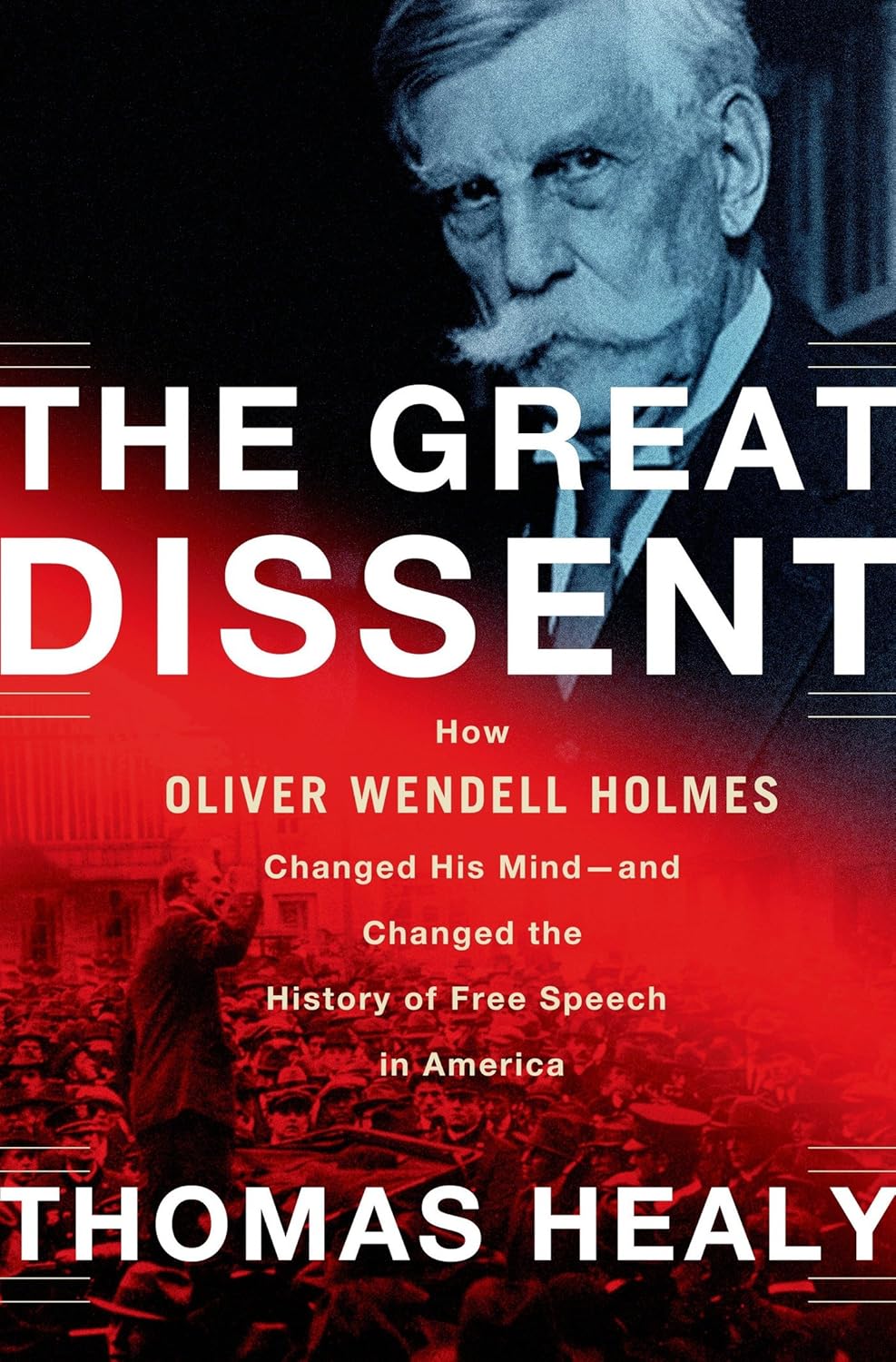
This week the Los Angeles Review of Books reviews Thomas Healy's The Great Dissent: How Oliver Wendell Holmes Changed His Mind—and Changed the History of Free Speech in America (Metropolitan).
"In March 1919, the most illustrious figure in American law, Supreme Court Justice Oliver Wendell Holmes Jr., speaking for a unanimous court, upheld the Espionage Act convictions of Eugene Debs and several other socialists, who opposed the United States going to war. But by November 1919, barely eight months later, Holmes had changed his mind. The majority of the Court affirmed the convictions of a group of Jewish anarchists under the Sedition Act by simply relying on Holmes’s earlier opinion. But Holmes instead wrote a powerful dissent, joined by Justice Louis Brandeis, upholding First Amendment protection for antiwar speech. 
In The Great Dissent: How Oliver Wendell Holmes Changed His Mind — and Changed the History of Free Speech in America, Thomas Healy uses this fascinating transformation in Holmes’s thinking about the First Amendment to explore the very invention of free speech in the Supreme Court."
H-Net adds several interesting new reviews, including two in women's history: a review of Lewis L. Gould's Edith Kermit Roosevelt:Creating the Modern First Lady (University Press of Kansas) (here), and another of Lucia McMahon's Mere Equals: The Paradox of Educated Women in the Early American Republic (Cornell University Press) (here).

Other new reviews on H-Net are of Nico Slate's Black Power beyond Borders: The Global Dimensions of the Black Power Movement (Routledge) (here), and of John Virtue's The Black Soldiers Who Built the Alaska Highway: A History of Four U.S. Army Regiments in the North, 1942-1943 (McFarland) (here). Of the latter book, the reviewer writes,
"The most interesting parts of the book are the ones when Virtue looks at the effects of discrimination and segregation, interracial contacts between black soldiers and Canadian and Alaskan locals, and stories of protest and revolt. The most promising in this respect are chapters 13 through 16. However, Virtue, unfortunately, often only scratches the surface and does not delve deeper into the analysis of the important stories that he tells."
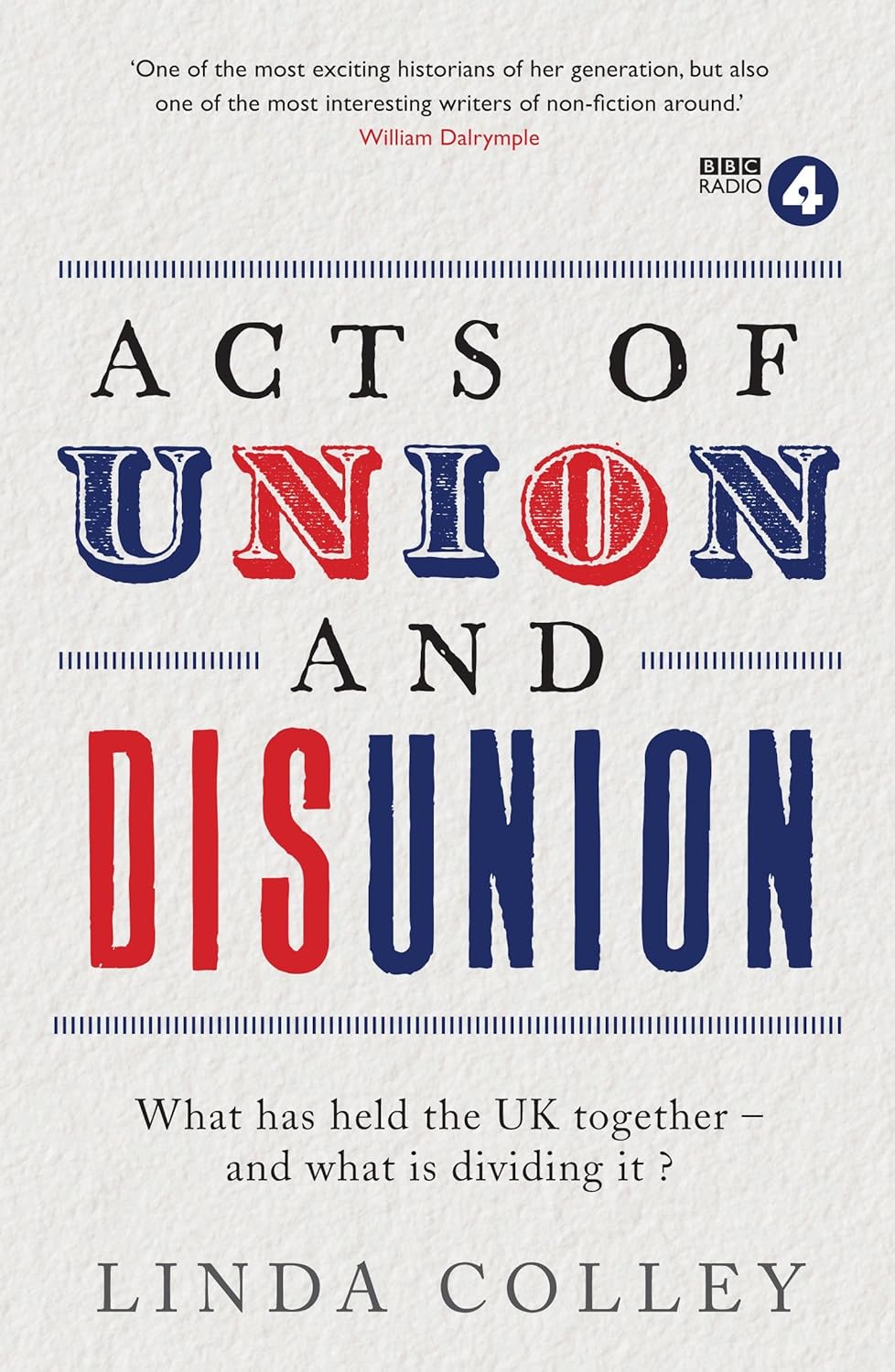
The Guardian has a review of two books--How We Invented Freedom and Why it Matters (Head of Zeus) by Daniel Hannan and Acts of Union and Disunion (Profile Books) by Linda Colley.
"Linda Colley is such a good writer I'd buy her shopping lists if anyone published them. Her essays on the myths of Britishness contain a warning against Hannan's double standards. "The cult of superior British liberty," she says, "has often been deployed to uphold and maintain the political status quo." The best you can say is that liberty moves fitfully in Britain, she continues. After the 1832 Reform Act, a higher proportion of the male population was enfranchised in Britain than in almost any other European country. By 1900, the franchise was one of the narrowest in Europe. The soldiers we will commemorate in 2014 marched to the Somme to defend democratic rights many of them did not enjoy."

Saturday, January 11, 2014

Weekend Roundup

  • JOTWELL has announced a new section: Lex will "feature a selection of legal topics that do not necessarily have the publishing volume to carry a section of their own." 
  • We’ve previously noted that on Monday Risa Goluboff is speaking at the Woodrow Wilson Center on "A People Out of Place: A Constitutional History of the Long 1960s.”  She will be addressing the same topic on Tuesday, 14 January at 1 pm at the Teamsters Labor History Center in Gelman Library at George Washington University.
  • The Hawaii Reporter notes that among the “top legal scholars” who taught in the "January Term" of the University of Hawai‘i at Manoa's William S. Richardson School of Law School was Harvard’s Kenneth Mack.  His course was “Race and the Law in the Civil Rights Movement.”
  • Here is a book notice on The Face of Justice on Newfoundland’s Northeast Coast in the online edition of the newspaper The Compass.  More on the work of the SS Daisy Legal History Committee is here.
Weekend Roundup is a weekly feature compiled by all the Legal History bloggers.

Friday, January 10, 2014

White on American Legal Education in Crisis

Over at OUPblog, G. Edward White, University of Virginia, has a post on The Current Crisis in American Legal Education.  He writes: "There may be, for the first time in American history, too many lawyers and law firms may need to adjust to that fact.  But history suggests that the American legal profession is more than capable of making that adjustment."

Professor White's latest book with Oxford is American Legal History: A Very Short Introduction.

Horrall on "Dorothy Cameron’s 1965 Trial for Exhibiting Obscene Pictures"

Via the Canadian Legal History Blog, we have word of the following article, which appears in the current volume of the Journal of Canadian Art History:
“Adult Viewing Only”: Dorothy Cameron’s 1965 Trial for Exhibiting Obscene Pictures, by Andrew Horrall

Abstract: Toronto’s Dorothy Cameron Gallery was bathed in pink light as about two hundred guests packed its long narrow room on the evening of 20 May 1965 for the opening of Eros 65, an eagerly anticipated exhibition of representational works about love. A romantic atmosphere was created by pink champagne, roses, red candles in white sconces, and heart-shaped stickers marking purchased works. As usual, Cameron’s party attracted Toronto’s beau monde including her sister Anna who was a popular CBC television personality, journalists Pierre Berton, Robert Fulford and June Callwood, and many artists, patrons, and collectors. They bantered happily, unaware that the police would raid the gallery in the morning, charge Cameron with exhibiting obscene pictures and set off a protracted and very public legal battle that has been touched on in memoirs and histories of the era without ever being critically analysed. As a result, its important role in defining the boundaries of acceptability in Canadian art, bringing state censorship powers under scrutiny, and exposing the fragility of women’s social position remains unexplored.

Vermeule, "Beard and Holmes on Constitutional Adjudication"

Adrian Vermeule (Harvard Law School) has posted "Beard and Holmes on Constitutional Adjudication," which is forthcoming in Constitutional Commentary. Here's the abstract:
What is the connection, if any, between the external perspective of the historian or political scientist and the internal perspective of lawyers and judges? That is the puzzle for constitutional law posed by Charles Beard’s classic, An Economic Interpretation of the Constitution of the United States (1913). Beard challenges us either to reconcile our external and internal perspectives on constitutionalism, or else conceivably to declare them irreconcilable.

I begin by showing that standard approaches to constitutional adjudication – originalism and Dworkinian moralism – are resolutely internal and thus have little use for the external standpoint of Beardian scholarship. I then describe a strategy of reconciliation offered by Justice Holmes, one that connects external and internal perspectives by means of a nonideal theory of constitutional judging under political constraints. The theory holds that the rational judge chooses the course of action that, at lowest possible cost, adjusts constitutional law and policy to match “the actual equilibrium of force in the community – that is, conformity to the wishes of the dominant power[].” In this framework, Beardian scholarship offers external analysis of the shape and force of the political constraints that the Holmesian judge should take into account when making constitutional law. External Beardian scholarship helps to delineate the feasible political options or possibilities for constitutional law, a critical datum from the internal but nonideal perspective of the Holmesian judge.
Read on here.

Hat tip: Legal Theory Blog

Thursday, January 9, 2014

Selden Society Studentship Announced

[We have the following announcement.]

The Selden Society, founded in 1887 by F.W. Maitland and others to encourage the study and advance the knowledge of the history of English law, offers a Studentship for a person commencing research in English legal history leading to the degree of PhD (or equivalent) at a university in the United Kingdom in September/October 2014.

The studentship will be tenable for a maximum of three years, subject to an annual review of progress.  The maximum annual value of the studentship will be £20,000.  (Account will be taken of funding available from other sources).

Application forms may be obtained from the Secretary, Selden Society, School of Law, Queen Mary University of London, Mile End Road, London, E1 4NS, UK
selden-society@qmul.ac.uk.  The deadline for receipt of applications is 1st March 2014.

New Release: Hoffer, "Clio among the Muses"

New from New York University Press: Clio among the Muses: Essays on History and the Humanities, by Peter Charles Hoffer (University of Georgia). A description from the Press:

History helps us understand change, provides clues to our own identity, and hones our moral sense. But history is not a stand-alone discipline. Indeed, its own history is incomplete without recognition of its debt to its companions in the humane and social sciences. In Clio among the Muses, noted historiographer Peter Charles Hoffer relates the story of this remarkable collaboration. Hoffer traces history’s complicated partnership with its coordinate disciplines of religion, philosophy, the social sciences, literature, biography, policy studies, and law. As in ancient days, when Clio was preeminent among the other eight muses, so today, the author argues that history can and should claim pride of place in the study of past human action and thought.

Intimate and irreverent at times, Clio among the Muses synthesizes a remarkable array of information. Clear and concise in its review of the companionship between history and its coordinate disciplines, fair-minded in its assessment of the contributions of history to other disciplines and these disciplines' contributions to history, Clio among the Muses will capture the attention of everyone who cares about the study of history. For as the author demonstrates, the study of history is something unique, ennobling, and necessary. One can live without religion, philosophy and the rest. One cannot exist without history. Rigorously documented throughout, the book offers a unique perspective on the craft of history.
A few blurbs of note:
"Peter Hoffer has done it again—written an appealing book about History that is aimed at the intelligent general reader. Hoffer writes concisely and elegantly about the relation of History to its sister disciplines with the aim of explaining what it is we historians do best. His examples are drawn from across time and geography, and they are concrete enough to be easily grasped. This is a wise, accessible book for the reader who wants to know why he likes History so much." -- Stanley N. Katz, Princeton University

"Peter Hoffer has written a learned, lively, and witty review of the history of historical writing from the ancient world right up to the present day. It is a deeply insightful analysis of the never-ending challenge that historians face in getting their story right, and, in the process, reminds us of the vital importance that history plays in shaping our present and future lives." -- Richard R. Beeman, John Welsh Centennial Professor of History Emeritus, University of Pennsylvania
More information, including the Introduction and TOC, is available here.

Wednesday, January 8, 2014

New Release: Rossum, "Understanding Clarence Thomas"

New from the University Press of Kansas: Understanding Clarence Thomas: The Jurisprudence of Constitutional Restoration, by Ralph A. Rossum (Claremont McKenna College). The Press describes the book as follows:
Though Clarence Thomas has been a Supreme Court Justice for nearly 25 years and has written close to five hundred opinions, legal scholars and pundits have given him short shrift, often, in fact, dismissing him as a narrow partisan, a silent presence on the bench, an enemy of his race, a tool of Antonin Scalia. And yet, as this book makes clear, few justices of the Supreme Court have developed as clear and consistent a constitutional jurisprudence as Thomas. Also little known but apparent in Ralph A. Rossum’s detailed assessment of the justice’s jurisprudence is how profound Thomas’s impact has been in certain areas of constitutional law—not only on the bench but also even among some of his erstwhile disparaging critics.
During his years on the Court, Thomas has pursued an original general meaning approach to constitutional interpretation; he has been unswayed by claims of precedent—by the gradual build-up of interpretations that, to his mind, come to distort the original meaning of the constitutional provision in question, leading to muddled decisions and contradictory conclusions. Rossum explores how the justice applies this original meaning approach to questions of constitutional structure as they relate to federalism; substantive rights found in the First Amendment’s religion and free speech and press clauses, the Second Amendment’s right to keep and bear arms, the Fifth Amendment’s restrictions on the taking of private property, and the Fourteenth Amendment regarding abortion rights; and various criminal procedural provisions found in the Ex Post Facto Clauses and the Bill of Rights.
Thomas grounds his original general meaning approach in the Declaration of Independence and its “self evident” truth that “all men are created equal”; that truth, he insists, “preced[es] and underl[ies] the Constitution.” Understanding Clarence Thomas traces the many consequences that, for Thomas, flow from the centrality of that “self evident” truth.
The most thorough explication ever given of the jurisprudence of this prolific but little-understood justice, this work offers a unique opportunity to grasp not just the meaning of Clarence Thomas’s opinions but their significance for the Supreme Court and constitutional interpretation in our day.
A few blurbs.
Understanding Clarence Thomas is a book that could not be more timely.  As Justice Thomas approaches his twenty-fifth year on the highest Court, he and his jurisprudence are increasingly central to any proper understanding of contemporary constitutional law—and he could not have a better expositor than Ralph Rossum. Possessed of a formidable breadth of historical learning about American political and constitutional thought, and armed with a meticulous attention to the doctrinal details of the law, Rossum brings Thomas and his constitutionalism vividly to life. He shows clearly how Justice Thomas is in full agreement with the great chief justice John Marshall’s admonition that the meaning of the Constitution is to be found in the original meaning of that fundamental text and not in what Marshall dismissed as the mere ‘sympathies’ of the judge. In the end, Rossum makes clear that Justice Thomas is nothing less than a judicial treasure and an unyielding friend of the Constitution.”—Gary L. McDowell, Tyler Hynes Interdisciplinary Chair of Leadership Studies, Political Science and Law at the University of Richmond  
“Rossum’s examination of the jurisprudence of Justice Thomas is thorough, well-documented, fair-minded, and admirably clear. Rossum sticks close to Justice Thomas’s judicial opinions and lectures, letting them speak largely for themselves. This is not to say that Rossum does not criticize inconsistencies and problems—he does—but his major objective is to explain Thomas’s ‘Original General Meaning’ approach to constitutional interpretation and to show how Thomas applies this approach in many areas of the law. Anyone who wants to understand Justice Thomas’s jurisprudence should read this book.”—R. Shep Melnick, O’Neill Professor, Boston College

Help Write the History of the DC Circuit

The Historical Society for the District of Columbia Circuit invites submissions of short essays on any aspect of the history of the Circuit's courts.  Its newsletter announces:
If you would like to write and publish history, this is your chance.  Lawyers, scholars, and others with interesting stories to tell – stories about the courts, the cases they try, and the people involved – may be able to see them published on the Society’s website.  We welcome your submissions. Send them to us at info@dcchs.org.  

Goluboff to Speak on Vagrancy and Constitutional Law in the 1960s

[From the National History Center of the American Historical Association and the Woodrow Wilson International Center for Scholars,  we have the following announcement.]

The Washington History Seminar, Historical Perspectives on International and National Affairs, on January 13, 4pm, will hear Risa Goluboff, the John Allan Love Professor of Law and Professor of History at the University of Virginia, speak on "People Out of Place: A Constitutional History of the Long 1960s."
Vagrancy laws made it a crime to be idle and poor, or dissolute, or to wander about without any purpose. They came to these shores with the American colonists, proliferated throughout the nation and were on the books in almost every state as of 1950. But beginning in that decade, African Americans and other civil rights activists, communists, labor union activists, poor people, Beats and hippies, gay men and lesbians, women, Vietnam War protestors and student activists, and young, urban minority men all contested their constitutionality. In 1971 and 1972, the Supreme Court struck them down. Risa Goluboff shows how this changing constitutional status of vagrancy laws was part and parcel of the larger social transformations of the long 1960s.
Woodrow Wilson Center, 6th Floor Moynihan Boardroom.  Ronald Reagan Building, Federal Triangle Metro Stop

Reservations requested because of limited seating:
mbarber@historians.org or 202-450-3209.  Photo ID required for admittance to the building.

Tuesday, January 7, 2014

Tushnet, Mandery, and More Reviewed in the LPBR

The Law and Politics Book Review has released a new batch of reviews. Items of interest include:
Terri Peretti (Department of Political Science, Santa Clara University) reviews IN THE BALANCE: LAW AND POLITICS IN THE ROBERTS COURT (W. W. Norton & Company, 2013), by Mark Tushnet.  
UPDATE: Professor Tushnet has posted a response to the LPBR review of his book here, at Balkinization. 
Zachary Callen (Department of Political Science, Allegheny College) reviews THE CONTESTED REMOVAL POWER, 1789-2010 (University of Kansas Press, 2013), by by J. David Alvis, Jeremy D. Bailey, and F. Flagg Taylor IV. 
Mary Welek Atwell (Department of Criminal Justice, Radford University) reviews A WILD JUSTICE: THE DEATH AND RESURRECTION OF CAPITAL PUNISHMENT IN AMERICA (W.W. Norton and Company, 2013), by Evan J. Mandery. 
Thomas G. Walker (Department of Political Science, Emory University) reviews THE EMBATTLED CONSTITUTION (New York University Press, 2013), edited by Norman Dorsen with Catharine DeJulio. 
J. Mark Ramseyer (Harvard Law School) reviews PUBLIC LAW, PRIVATE PRACTICE: POLITICS, PROFIT, AND THE LEGAL PROFESSION IN NINETEENTH-CENTURY JAPAN (Harvard University Asia Center, 2013), by Darryl E. Flaherty

AHA Roundup

We were sorry to miss this year's meeting of the American Historical Association, but excited to see so much coverage from online publications, "twitterstorians," and fellow bloggers. Here's a roundup of items of interest from around the web: 
  • Your go-to site for "official" AHA coverage should be the AHA's own blog, "AHA Today." There you can watch the 128th Presidential Address and read overviews of each day of the meeting.
  • From the Chronicle of Higher Education, coverage of a panel titled "Getting to the Malleable Ph.D."
  • Many "twitterstorians" covered the meeting using the hashtag #AHA2014. Via @AHAhistorians we learned that @Sharon_howard created an archive of the tweets. 
The meeting program is available here.

Grisinger on Turk, Gay Rights in the Workplace

JOTWELL's Legal History Section has posted some new material: Joanna Grisinger (Northwestern University) recommends Katherine Turk's "'Our Militancy is in Our Openness': Gay Employment Rights Activism in California and the Question of Sexual Orientation in Sex Equality Law," which appeared in Volume 31 of the Law & History Review (2013). Here's the first paragraph of Grisinger's review:
Katherine Turk’s recent article, ‘Our Militancy is in Our Openness’: Gay Employment Rights Activism in California and the Question of Sexual Orientation in Sex Equality Law, offers a deeply researched history of gay rights activism in California—“the epicenter of the gay employment rights movement” (P. 426)—that engages important questions about the benefits and limits of different legal strategies. In this detailed local history of the gay employment rights movement, Turk discusses the work of a number of advocacy organizations in the state—including the ACLU of Southern California, the Los Angeles Gay and Lesbian Center, the Metropolitan Community Church, the Society for International Rights, the Committee for Homosexual Freedom, the Committee on Rights within the Gay Community, and the National Gay Rights Association—through which activists pressed for equal rights in the workplace. Although this movement was dominated by gay men, Turk makes clear that it is not a story of a fractured movement. Instead, activists throughout the gay community understood the prosaic importance of employment rights, and the employment nondiscrimination litigation at the center of her narrative “embodied some of the most universal and consistent claims at the heart of the modern gay rights movement.” (P. 428.)
Read on here.

Monday, January 6, 2014

Jones on Maori Legal History

Carwyn Jones, Victoria University of Wellington Faculty of Law, has posted The Scope and Significance of Maori Legal History, which originally appeared in Te Pouhere Korero 3 (2009): 45-62.  Here is the abstract:    
Credit: Library of Congress
While legal history is a field that has developed considerably in Aotearoa in recent years, very little consideration has been given to the study of Maori legal history, either by historians or lawyers/legal academics. An exploration of what it is that comprises the scope of this field and the various sources of Maori legal history could assist in developing our understanding of the landscape of Maori history and the parameters of both Maori history and legal history in Aotearoa.

Many people would consider Ma-ori legal history to be the study of the historical development of laws that relate to Maori. But a study of the historical context only of legislation and case law that affects Ma-ori is in fact just a small part of this field. This approach has tended to derive from the twin assumptions that there is no distinct Ma-ori legal system that has either operated historically or operates now. Once we recognise that both these assumptions are false, we can proceed on the basis that the field is primarily concerned with the historical development of the Ma-ori legal system and therefore the sources students of Maori legal history must focus on are not only the historical context of cases and legislation, but the historical context of changes in the Maori legal system – what are the legal-historical significance of the Kotahitanga Parliaments or the establishment of the Kinigtanga? What changes in the way authority operates and behaviour is regulated in Maori society do movements like these represent? 
On the other hand, it should not be forgotten that the regulation of behaviour in Maori society has, since 1840, to greater or lesser degrees, been governed by both the Maori legal system and the colonial legal system. Consequently, I argue that the study of Maori legal history must include both Maori sources and colonial legal sources. This approach can therefore develop our understanding of what constitutes both Maori history and New Zealand legal history.

Symposium on Beard's Economic Interpretation: Fall 2013 Issue of American Political Thought

The Fall 2013 issue of American Political Thought featured a symposium on Charles Beard's  Economic Interpretation. Full content is available to subscribers only, but here's a glimpse of the TOC:
Max M. Edling, Introduction to the Centennial Symposium on Charles Beard’s Economic Interpretation (pp. 259-263)

Woody Holton, The Readers’ Reports Are In (pp. 264-273)

David Waldstreicher, The Beardian Legacy, the Madisonian Moment, and the Politics of Slavery (pp. 274-282)

Eric Slauter, Beard’s “Politics,” Ours, and Theirs(pp. 283-291)

Max M. Edling,  Charles Beard and the Internationalist Interpretation of the American Founding (pp. 292-301)

R. B. Bernstein,  Charles A. Beard: Foe of Originalism  pp. 302-307)

Tom Cutterham, Charles Beard and the Politics of Radical Public History (pp. 308-316)
Besides the symposium, the issue includes several other items of interest, most notably Gordon Wood's memorial to Pauline Maier (pp. v-vi).


Sunday, January 5, 2014

Sunday Book Roundup

This week H-Net provides a couple of interesting reviews including one of Kari A. Frederickson's Cold War Dixie: Militarization and Modernization in the American South (University of Georgia Press). There are also reviews of Michael Scott Van Wagenen's Remembering the Forgotten War: The Enduring Legacies of the U.S.-Mexican War (University of Massachusetts Press) (here) and Steven J. Ramold's Across the Divide: Union Soldiers View the Northern Home Front (New York University Press) (here).

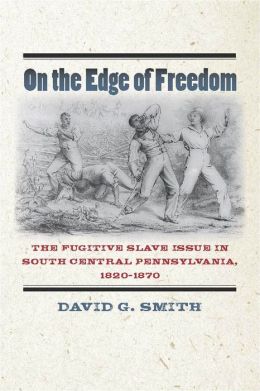
David G. Smith's On the Edge of Freedom: The Fugitive Slave Issue in South Central Pennsylvania, 1820-1870 (Fordham University Press) is also reviewed.
"In a provocative, well-researched study of race and freedom in south central Pennsylvania, David G. Smith reveals how African Americans in Adams, Cumberland, and Franklin counties truly lived “on the edge of freedom” during the half century from 1820 to 1870 (p. 1). Focusing on the fugitive slave issue, Smith unveils the contradictions that emerged along the Mason-Dixon Line as many white Pennsylvanians, especially businessmen and merchants in towns close to the border, sought to compromise with southern planters and supported the return of fugitive slaves, even as most African Americans and a large number of rural whites, notably, many Quakers, denounced slaveholding and rallied to help fleeing bondspersons. Drawing on a wealth of primary sources, including letters, speeches, petitions, legislation, court records, and a range of nineteenth-century newspapers, particularly the Gettysburg Star, the Gettysburg Compiler, and the Adams Sentinel, he vividly describes a fascinating--and often very disturbing--antebellum borderland where free blacks, fugitive slaves, and their antislavery white allies encountered enormous challenges stemming from deep-rooted racism, economic ties to southern planters, and ordinary white workers’ fears of heightened job competition from emancipated blacks."
HNN has added a review of The Brothers: John Foster Dulles, Allen Dulles, and Their Secret World War (Times Books) by Stephen Kinzer.

The Washington Post reviews Lincoln in the World: The Making of a Statesman and the Dawn of American Power (Crown) by Kevin Peraino.

The New York Times has a review of Ping-Pong Diplomacy: The Secret History Behind the Game That Changed the World (Scribner) by Nicholas Griffin.
"When the game of table tennis became the focus of diplomatic efforts to defuse Cold War tensions between the United States and China, no detail was too small to warrant careful scrutiny. As Nicholas Griffin demonstrates, in a book filled with well-chosen examples, the Chinese team visiting Colonial Williamsburg in 1972 was comfortable eating apple pie and singing “Home on the Range.” But “Row, Row, Row Your Boat” was dicier: the line “life is but a dream” was politically incompatible with the teachings of Chairman Mao. Thanks to some fancy footwork on the part of a translator, the line quickly turned into “life is full of steam.”"
This week, New Books in History interviewed Yuval Levin about his new book The Great Debate: Edmund Burke, Thomas Paine, and the Birth of Right and Left (Basic).

And, although not usual Book Roundup fare, I found Professor Anthony Grafton's comments on the future of the history book to be very interesting. Check out the video on HNN here.

Saturday, January 4, 2014

Weekend Roundup

Harvard Law School is offering the Reginald F. Lewis Fellowship for Law Teaching, with appointment expected to commence August 1, 2014. The fellowship is designed to support a recent law school graduate who has demonstrated a strong interest in legal scholarship and who is preparing for a career in law teaching. The application deadline is Feb. 14, 2014. - See more at: http://legalscholarshipblog.com/?p=14201&utm_source=rss&utm_medium=rss&utm_campaign=reginald-f-lewis-fellowship-for-law-teachingcambridge-ma&utm_reader=feedly#sthash.flIecquz.dpuf
  • We're sad to hear that legal historian Kyle Graham (Santa Clara Law) is "closing shop" over at noncuratlex. Follow the link to look back at some of the blog's greatest hits.
  • Samuel Moyn at the AHA on the history of human rights, via HNN
Weekend Roundup is a weekly feature compiled by all the Legal History bloggers.

Friday, January 3, 2014

New Release: Patrick Hagopian, "American Immunity: War Crimes and the Limits of International Law"

The Culture, Politics, and the Cold War series at the University of Massachusetts Press has a new addition: American Immunity: War Crimes and the Limits of International Law (2013), by Patrick Hagopian (Lancaster University). The Press offers the following description:
In 1955 the Supreme Court ruled that veterans of the U.S. armed forces could not be court-martialed for overseas crimes that were not detected until after they had left military service. Territorial limitations placed such acts beyond the jurisdiction of civilian courts, and there was no other American court in which they could be adjudicated. As a result, a jurisdictional gap emerged that for decades exempted former troops from prosecution for war crimes. This was not merely a theoretical possibility, Patrick Hagopian writes. Over a dozen former soldiers who participated in the My Lai massacre did in fact get away with murder. Further court rulings expanded the gap to cover civilian employees and contractors that accompanied the armed forces.

In American Immunity, Hagopian places what he calls the superpower exemption in the context of a long-standing tension between international law and U.S. sovereignty. He shows that despite the U.S. role in promulgating universal standards of international law and forming institutions where those standards can be enforced, the United States has repeatedly refused to submit its own citizens and troops to the jurisdiction of international tribunals and failed to uphold international standards of justice in its own courts.

In 2000 Congress attempted to close the jurisdictional gap with passage of the Military Extraterritorial Jurisdiction Act. The effectiveness of that legislation is still in question, however, since it remains unclear how willing civilian American juries will be to convict veterans for conduct in foreign war zones.
Kendrick Oliver, author of My Lai in American History and Memory, praises the book as:
An impressive, wide-ranging, multi-layered work. Patrick Hagopian uses the problem of the jurisdictional gap to open up much larger questions including public attitudes toward military justice and the death of civilians, the hostility toward international law and international legal institutions within sections of U.S. political culture, and the defensive response of political and military hierarchies to any effort to link individual war crimes to the principle of command responsibility.
"An impressive, wide-ranging, multilayered work. Patrick Hagopian uses the problem of the jurisdictional gap to open up much larger questions—including public attitudes toward military justice and the death of civilians, the hostility toward international law and international legal institutions within sections of U.S. political culture, and the defensive response of political and military hierarchies to any effort to link individual war crimes to the principle of command responsibility."—Kendrick Oliver, author of My Lai in American History and Memory - See more at: http://www.umass.edu/umpress/title/american-immunity#sthash.Upj0lCjh.dpuf
"An impressive, wide-ranging, multilayered work. Patrick Hagopian uses the problem of the jurisdictional gap to open up much larger questions—including public attitudes toward military justice and the death of civilians, the hostility toward international law and international legal institutions within sections of U.S. political culture, and the defensive response of political and military hierarchies to any effort to link individual war crimes to the principle of command responsibility."—Kendrick Oliver, author of My Lai in American History and Memory - See more at: http://www.umass.edu/umpress/title/american-immunity#sthash.Upj0lCjh.dp
"An impressive, wide-ranging, multilayered work. Patrick Hagopian uses the problem of the jurisdictional gap to open up much larger questions—including public attitudes toward military justice and the death of civilians, the hostility toward international law and international legal institutions within sections of U.S. political culture, and the defensive response of political and military hierarchies to any effort to link individual war crimes to the principle of command responsibility."—Kendrick Oliver, author of My Lai in American History and Memory - See more at: http://www.umass.edu/umpress/title/american-immunity#sthash.Upj0lCjh.dpu

Legal History at the AALS Meeting

The annual meeting of the Association of American Law Schools is now in full swing in New York City. We recently reminded readers about the Legal History Section's contribution to the program. Here are some other items of interest:
Friday, January 3, 2014
8:30 am - 10:15 am - Antitrust and Economic Regulation
Old Agency in a New Bottle? Contemplating the 100th Birthday of the Federal Trade Commission

8:30 am - 10:15 am - Civil Rights, Co-Sponsored by Sections on Employment Discrimination and Minority Groups

50th Anniversary of the Civil Rights Act of 1964: Examining its Future (Part I)

1:30 pm - 3:15 pm - Legislation and Law of the Political Process

The Right to Vote: From Reynolds v. Sims to Shelby County and Beyond

3:30 pm - 5:15 pm - Minority Groups, Co-Sponsored by Sections on Civil Rights and Employment Discrimination

50th Anniversary of the Civil Rights Act of 1964: Examining Its Past and Contemporary Effects (Part II)

Saturday, January 4, 2014

10:30 am - 12:15 pm - Clinical Legal Education and Poverty Law Joint Program

Fifty Years After the War on Poverty: Evaluating Past Enactments and Interdisciplinary Approaches for Addressing Poverty in the 21st Century

2:00 pm - 3:45 pm - Employment Discrimination, Co-Sponsored by Sections on Civil Rights and Minority Groups

Title VII at Fifty: Looking Forward and Looking Back

2:00 pm - 3:45 pm - Professional Responsibility

The Lost Lawyer and the Lawyer-Statesman Ideal: A Generation Later – the Shifting Sands of Professional Identity

Thursday, January 2, 2014

Deer and Knapp, "Muscogee Constitutional Jurisprudence: Vhakv Em Pvtakv (The Carpet Under The Law)"

Sarah Deer (William Mitchell College of Law) and Cecilia Knapp (William Mitchell College of Law) have posted "Muscogee Constitutional Jurisprudence: Vhakv Em Pvtakv (The Carpet Under The Law)," which appears in Volume 49 of the Tulsa Law Review (2013). Here's the abstract:
In 1974, a group of Mvskoke citizens from Oklahoma sued the federal government in federal court. Hanging in the balance was the future of Mvskoke self-determination. The plaintiffs insisted that their 1867 Constitution remained in full effect, and that they still governed themselves pursuant to it. The United States argued that the constitution had been nullified by federal law passed in the early 1900s.

To find in favor of the plaintiffs, the court would have to rule that the United States had been ignoring the most basic civil rights of Mvskoke citizens and flouting the law for over seventy years. It would also have to find that a tribal government had been operating legitimately in the shadows — that the Mvskoke people had continued to operate under their constitution for most of the twentieth century despite official federal antagonism. It was definitely a long shot, but they won.

This article explores factors that have helped the Mvskoke people create, nurture, and sustain a constitutional government under hostile circumstances for centuries. We focus on the history and structure of the constitutional government of the Muscogee (Creek) Nation of Oklahoma. We consider several aspects of Creek conceptions of government structure and balance, which are also evidenced in the constitutional jurisprudence of the Muscogee (Creek) Nation Supreme Court. At first glance, the contemporary Mvskoke government today bears little resemblance to the ancient etvlwv town-based system of governance, but a more penetrating analysis reveals common threads of political theory and cosmogony, or world view, that have continued unabated.
The full article is available here.

Hat tip: Legal Theory Blog.

Essays on American Statebuilding from Reconstruction to the New Deal

Out this month from the University of Pennsylvania Press is Statebuilding from the Margins: Between Reconstruction and the New Deal, edited by Carol Nackenoff and Julie Novkov.  It is a volume in the American Governance: Politics, Policy, and Public Law series.  Contributors are James Greer, Carol Nackenoff, Julie Novkov, Susan Pearson, Kimberly Smith, Marek D. Steedman, Patricia Strach, Kathleen Sullivan, Ann-Marie Szymanski.
The period between the Civil War and the New Deal was particularly rich and formative for political development. Beyond the sweeping changes and national reforms for which the era is known, Statebuilding from the Margins examines often-overlooked cases of political engagement that expanded the capacities and agendas of the developing American state. With particular attention to gendered, classed, and racialized dimensions of civic action, the chapters explore points in history where the boundaries between public and private spheres shifted, including the legal formulation of black citizenship and monogamy in the postbellum years; the racial politics of Georgia's adoption of prohibition; the rise of public waste management; the incorporation of domestic animal and wildlife management into the welfare state; the creation of public juvenile courts; and the involvement of women's groups in the creation of U.S. housing policy. In many of these cases, private citizens or organizations initiated political action by framing their concerns as problems in which the state should take direct interest to benefit and improve society.

Statebuilding from the Margins depicts a republic in progress, accruing policy agendas and the institutional ability to carry them out in a nonlinear fashion, often prompted and powered by the creative techniques of policy entrepreneurs and organizations that worked alongside and outside formal boundaries to get results. These Progressive Era initiatives established models for the way states could create, intervene in, and regulate new policy areas—innovations that remain relevant for growth and change in contemporary American governance.
Here are the blurbs:

"An engaging and original contribution to our understanding of a critical period in American political development. By surveying a range of different policy domains within a single historical era, these essays effectively catalogue the multiple ways in which private citizens and associations leveraged and augmented the scope of state intervention."—Elizabeth Clemens, University of Chicago

"The Progressive Era remains as controversial as it is vital for understanding the contemporary United States. Carol Nackenoff and Julie Novkov have orchestrated a set of rich, detailed and evocative studies on themes ranging from prohibition, urban government, environmentalism, housing and juvenile justice that together make for a highly original contribution to our understanding of twentieth-century America."—Daniel Carpenter, Harvard University

Wednesday, January 1, 2014

U.S. Extraterritorial Courts before Guantanamo

[We're moving this up as a reminder for readers who'll be attending the upcoming annual meeting of the Association of American Law Schools this weekend.]

The program for the meeting of the Legal History Section at the annual meeting of the Association of American Law Schools is U.S. Extraterritorial Courts before Gunatanamo:
Media headlines and scholarship over the past decade about the United States trials of non-citizens in the tribunals housed in Guantanamo, Cuba give a sense of irregularity about these proceedings.  Put into a broader historical context, these tribunals appear less aberrational.  Consular officials paid by the United States tried non-citizens in courts that operated entirely outside the United States, in East Asia, from the mid-nineteenth century to the mid-twentieth century.    Congress established and paid for the operation one of these courts, while Americans unconnected to the United States government cooperated in the operation of another such court, both in the Chinese city of Shanghai.  In addition, United States consular courts operated throughout East Asia during the same period where they tried US citizens in both criminal and civil lawsuits.  Three scholars, two from law faculties and one from a history faculty, who have dug through primary source material on these courts and published their findings will describe these courts and their circumstances.   Two widely published experts on the historical reach of American government, Professor Dudziak and VanderVelde, will flesh out the ramifications of these courts.  Harold Koh, recently returned to academia from his tenure as the Legal Advisor to the Secretary of State in the Obama administration, will chair and moderate.
Moderator: Harold Hongju Koh, Yale Law School
Speaker: Professor Pär Kristoffer Cassel, University of Michigan Department of History
Speaker: Tahirih V. Lee, Florida State University College of Law
Speaker: Teemu Ruskola, Emory University School of Law
Commentator: Mary L. Dudziak, Emory University School of Law
Commentator: Lea Vander Velde, University of Iowa College of Law

The Section meeting will take place in the Hilton between 8:30 and 10:15 AM on Saturday, January 4, 2014.

New Release: Holloway, "Living in Infamy: Felon Disfranchisement and the History of American Citizenship"

The Studies in Crime and Public Policy series at Oxford University Press has a new addition: Living in Infamy: Felon Disfranchisement and the History of American Citizenship (2013), by Pippa Holloway (Middle Tennessee State University). The Press offers the following description:
Living in Infamy: Felon Disfranchisement and the History of American Citizenship examines the history of disfranchisement for criminal conviction in the United States during the late 19th and early 20th centuries. In the post-war South, white southern Democrats expanded the usage of laws disfranchising for crimes of infamy in order to deny African Americans the suffrage rights due them as citizens, employing historical similarities between the legal statuses of slaves and convicts as justification. At the same time, our nation's criminal code changed. The inhumane treatment of prisoners, the expansion of the prison system, the public nature of punishment by forced labor, and the abandonment of the idea of reform and rehabilitation of prisoners all contributed to a national consensus that certain categories of criminals should be permanently disfranchised.

As racial barriers to suffrage were challenged and fell, rights remained restricted for persons targeted by such infamy laws. Criminal convictions-in place of race-continued the disparity in legal status between whites and African Americans. Decades later, after race-based disfranchisement has officially ended, legislation steeped in a legacy of racial discrimination continues to perpetuate a dichotomy of suffrage and citizenship that is still effecting our election outcomes today.
A few blurbs:
"Historians, legal scholars, and public policymakers will all profit from reading this fascinating account of the origins and development of felon disfranchisement in the United States in the nineteenth and early twentieth centuries. Based on prodigious research in previously unexplored sources, Living in Infamy meticulously shows how ideas about race, class, and social status, together with partisan political maneuvering, continue to shape attempts to engage in voter suppression in the twenty-first century. It deftly complicates our notions of who gets to practice citizenship." --Steven F. Lawson, author of Running for Freedom

"Living in Infamy is an outstanding introduction to the complicated racial politics that birthed felon disfranchisement laws and ultimately relegated millions to second-class status in the United States. This meticulous, impeccable history is packed with fresh insights about how we, as a nation, managed to fall so far short of our democratic ideals. A must-read for all those who hope to understand why so many Americans are still denied the most basic and fundamental of all rights: the right to vote."--Michelle Alexander, author of The New Jim Crow