Saturday, November 15, 2008
Scherer on the Historical Foundations of Communications Regulation
The Historical Foundations of Communications Regulation is a new paper by Frederic M. Scherer, John F. Kennedy School of Government, Harvard. Here's the abstract: This paper, written for a conference at the University of Lisbon, surveys patterns since the 16th century in the governance of communications service providers -- in order, the mails, telegraphy, the telephone, and radio. It analyzes the tendency for many communications service enterprises to be publicly-owned and identifies reasons for the exceptions. Tasks subject to either public control or regulation are identified -- e.g., route structure, pricing, patent stalemates, technological standards, physical interfaces and interoperability, electromagnetic spectrum allocation, and the privacy of communications.


Friday, November 14, 2008
Call for Papers: Claiming the World: Universalism as Doctrine and in Action
The Department of History COLUMBIA UNIVERSITY Announces
Claiming the World: Universalisms as Doctrine and in Action
A Graduate Student Conference
A Graduate Student Conference
March 27, 2009
Deadline for abstract submission: January, 1 2009
Deadline for abstract submission: January, 1 2009
From the Roman notion of civitas to the Islamic duty of da'wah to the French colonial mission civilisatrice, universal claims have been deployed in the service of causes, movements, and ideologies of all kinds. They attempt to create order, unity, and meaning, yet thereby give rise to contestation. This conference seeks to address the following questions: What kinds of universal claims have been advanced and how have they been transformed over time in different regions and historical periods? How do such claims take concrete form in the actions of polities and the practices of communities from the local to the global? How do they accommodate or resist particularities or rival universalisms? We wish to consider a range of entities that promulgate universal claims (such as states, nations, empires, religions, and social and political movements) in a multitude of realms (such as law, morality, norms, and identities). As this conference is presented in conjunction with the Center for International History's annual theme, "In the Name of Humanity," we are especially, but not only, interested in the ways in which universal claims have been embodied in the discourses and politics of human rights and humanitarian intervention.
We invite submissions from all time periods - ancient, medieval, early modern, and modern - and various geographic regions. Papers on topics that are broadly transnational or global in scope are preferred. Additionally, we encourage interdisciplinary research, and although proposals with a historical perspective are particularly welcome, we will also consider contributions from the fields of anthropology, sociology, literary studies, political science, and economics. Please send an abstract of no more than 300 words and a recent CV as email attachments Word preferred) by January 1, 2009 and any inquiries to Simon Stevens at the following address: sms2236@columbia.edu.
For more information regarding the conference, please refer to the Center for International History's website (beginning December 15th).We invite submissions from all time periods - ancient, medieval, early modern, and modern - and various geographic regions. Papers on topics that are broadly transnational or global in scope are preferred. Additionally, we encourage interdisciplinary research, and although proposals with a historical perspective are particularly welcome, we will also consider contributions from the fields of anthropology, sociology, literary studies, political science, and economics. Please send an abstract of no more than 300 words and a recent CV as email attachments Word preferred) by January 1, 2009 and any inquiries to Simon Stevens at the following address: sms2236@columbia.edu.
Limited funding for travel and assistance in arranging accommodation may be available.
Important dates:
Submission deadline: Thursday, January 1st, 2009
Conference: Friday, March 27th, 2009
Delahunty: Back to Butterfield
Robert J. Delahunty, University of St. Thomas School of Law, has posted "Herbert Butterfield, Christianity, and International Law," which is forthcoming in volume 86 of the University of Detroit Mercy Law Review. Here is the abstract:
A recent article by the economist Samuel Brittan in The Financial Times was entitled "Make the world safe from crusaders." In his article, Mr. Brittan discussed one of the two books that most influenced him as a student. That book was Christianity, Diplomacy and War, and its author, Sir Herbert Butterfield, was one of the most eminent British historians of the twentieth century. Brittan noted that it was deeply regrettable that Butterfield's book "seems to have passed into oblivion... For there is no better antidote to the fantasies of the American neo-conservatives or the European liberal imperialists." Brittan is exactly right. Butterfield's work on the subjects of diplomacy and war, and the relationships of both to Christianity, deserves to be recollected, pondered and evaluated.

Thursday, November 13, 2008
Stern on Copyright, Originality, and the Public Domain in 18th C England
Copyright, Originality, and the Public Domain in Eighteenth-Century England by Simon Stern, Faculty of Law, University of Toronto, is posted on SSRN. The essay appears in a collection, ORIGINALITY AND INTELLECTUAL PROPERTY IN THE FRENCH AND ENGLISH ENLIGHTENMENT, Reginald McGinnis, ed., (Routledge, 2008). Here's the abstract: Scholarship on the development of copyright in eighteenth-century England, after the Act of Anne (1710), has suggested that aesthetic debates about originality, in the sense of novelty or creativity, had an effect on contemporaneous legal thinkers' ideas about originality as a prerequisite for copyright protection. But when eighteenth-century commentators such as Blackstone and Hargrave spoke of originality for purposes of copyright, they were referring to a prohibition against reprinting books, not a demand for novelty. Recognizing that full-scale copies were prohibited, while partial copies were permitted, is crucial for an understanding of eighteenth-century literary culture, which had room for abridgements, unauthorized sequels, highly imitative parodies, and anthologies that reprinted some poems and excerpted others. The public domain was not understood as the residue of material that was not eligible for copyright protection; rather, all work was presumptively available for use by other writers unless it fell within the narrow bounds of copyright protection. The chapter begins by showing that arguments in favor of a public domain were implicit in the efforts by Locke and others to eliminate the Licensing Act in the 1690s. The second section discusses the eighteenth-century debate over copyright, emphasizing the limited scope of legal protection and the correspondingly wide reach of the public domain. This section focuses on the case law concerning the permissibility of abridgements, the legal writings of Blackstone and Hargrave, and the aesthetic writings of Richard Hurd and Samuel Johnson. As these sources reveal, literary critics were willing to defend imitative writing, and legal thinkers found little to criticize and much to praise in practices such as abridgement. The third section discusses the kinds of imitations that were allowed to flourish under this legal regime, and shows that imitative practice was crucial for the development of the modern novel in the 1740s. Finally, a short section at the end looks at why writers sometimes call for a strong originality requirement that demands more than Feist (in the U.S.) or C.C.H. (in Canada).
Oseid on Lincoln as Prose Stylist
 Julie A. Oseid, University of St. Thomas School of Law, has posted "The Power of Brevity: Adopt Abraham Lincoln's Habits," which is forthcoming in the Journal of the Association of Legal Writing Directors. Here is the abstract.
This short article focuses on the persuasive power of brevity in legal writing, using Abraham Lincoln as a role model. Lincoln's eloquence was grounded in his ability to express much with few words. He learned the power of brevity while practicing law.
The article reviews Lincoln's legal career, and examines Lincoln's use of brevity to persuade in three of his Presidential speeches. I explore Lincoln's writing and editing habits. I urge modern lawyers to adopt Lincoln's habits of writing early, visualizing audience, and editing with ruthlessness to increase eloquence and persuasiveness.
Wednesday, November 12, 2008
Reviewed: Gross, What Blood Won't Tell
Ariela Gross's new book, What Blood Won't Tell: A History of Race on Trial in America, is reviewed by Laura Miller in Salon. Miller places the book in the context of the election of the first bi-racial president of the United States. "The problem with race as Americans understand it," she writes,
 context of the election of the first bi-racial president of the United States. "The problem with race as Americans understand it," she writes,
 is that it doesn't really exist. It is a brutal fact of life for millions of citizens, and an inescapable problem for the rest, but it is also, as Ariela J. Gross writes in her densely researched [new book], a "moving target," whose definition and meaning is always in flux. Many of us can avoid encountering this strange truth in the imprecise realms of cultural and social life, but when it comes to the law, imprecision just doesn't cut it. Gross' book, a history of cases in which people have challenged their official racial designation, eloquently demonstrates just how difficult it can be to say what race -- mine, yours, anybody's -- actually consists of....
In early America, as Gross tells it, African slaves, free people of color, white indentured servants (whose situation in many ways resembled that of slaves) and other people of varying statuses made up a workforce and a population that mingled freely with European settlers and Native Americans. "During the colonial era," she writes, "and even in the early republic, race had rarely provided the explicit justification for slavery. The founders of the republic perceived slavery as a necessary evil that they professed hope would wither away." The cotton gin, and with it the entrenchment of a plantation economy in the South, made slavery seem essential to landowners there, and for the indefinite future. As a result, Southerners developed "a race-based ideology" that declared enslavement to be a condition to which "negroes" (a relatively new concept that lumped together a whole slew of tribes and peoples) were supposed to be "uniquely suited" and in which no white person could rightfully be held.
Although "What Blood Won't Tell" also details the changing landscape of race for Indians, Asian immigrants, native Hawaiians, Filipinos and Mexican-Americans, to one degree or another the division between black and white has shaped the way Americans understand race in all its permutations.
Continue reading here.
Blackmun at 100
 Harry Blackmun's centennial is remembered today at IntLawGrrls. Justice Blackmun's life is chronicled in Linda Greenhouse, Becoming Justice Blackmun: Harry Blackmun's Supreme Court Journey. The finding aid to Blackmun's papers at the Library of Congress is here.
Richard John on the Phone at the Miller Center
 The Governing America in a Global Era (GAGE) program at the University of Virginia's Miller Center of Public Affairs will host Richard John, History, University of Illinois at Chicago, on Friday, November 14, as part of the GAGE Colloquia Series on Politics and History. He will be speaking on "Second Nature: The Popularization of the Telephone in Late Nineteenth Century Chicago." The colloquium will be webcast live and archived here. You may submit a question for the Q&A during the webcast between 12:30 and 1:30 p.m. EST on November 14 to ColloquiumRSVP@gmail.com. The paper and more information are here.
Wilson on Grotius's De Indis
 Eric Wilson, Monash University Faculty of Law, has posted "On Heterogeneity and the Naming of DE INDIS of Hugo Grotius," which appeared in volume 1 (2006) of the Journal of the Philosophy of International Law. Here is the abstract:
This essay examines the politics of de-notation through an application of some of the basic principles of Deconstruction to an early Grotian text. Originally an unpublished manuscript, the Text under consideration is almost universally referred to by historians and legal scholars as On the Law of the Prize and Booty (De Iure Praedae), despite Grotius' repeated references to it as On the Affairs of the [East]Indies (De rebus Indicis). The ascendancy of the former Title over the latter originated from an editorial insertion performed in the mid-nineteenth century and re-iterated in the present. Apart from critically reconsidering the inherently problematic relationship between Author and Title as self-grounding signs of meaning, a topic ripe for deconstructive technique, this paper makes a broader claim: that the former Title is more compatible with the discourse of mainstream legal scholarship by implicitly depoliticising the Text, a sub rosa reaffirmation of orthodoxy's demarcation between Law and Politics. Substituting De Indis for De Iure Praedae, which signifies the discursive shift of the Text from the judicial to the extra-judicial, tremendously widens the scope for the practical application of Critical Theory and Post-Colonialism to the early history of International Law: the text may now be readily perceived as being suffused by the Presence of Colonialism. De Indis may be legitimately classified as a protocolonialist text in at least two senses: (i) the discursive, the Text implicitly resting upon the supplement of the expropriating logic of other more explicitly colonialist texts such as Vitoria's De Indis; (ii) the historical, the Text positioned within the contours of the equally heterogenous logic of the early Capitalist World-Economy. The strategic but hierarchically organized rhetorical linkages between ius naturale, mare liberum and bellum iustum establish the contours of the textual re-presentation of the preliminary stage of the Capitalist World-Economy. The re-formulation of maritime imperium and dominium through the mediating device of mare liberum permits the untrammelled operation of ius naturale as the foundational principle of bellum iustum, signified by the seizure of the Prize within juridically free - or empty - oceanic spaces, ultimately resolving the problem Concerning the Indians/Indies.
Tuesday, November 11, 2008
Legal History and the "Culturally Literate" Law Professor
 Suppose you were a legal historian who taught at an American law school, and suppose a colleague proposed the creation of a team-taught, year-long seminar for graduate students and fellows that would provide a kind of Cook’s tour of the leading jurisprudential and interdisciplinary approaches to law--a law-school equivalent of a “field seminar” in a graduate program in history or political science. The seminar would profess to make its attendees “culturally literate” in contemporary legal scholarship by working through a body of concepts that "every legal academic should know." Possible topics proposed for law and economics include incentives and human behavior, property and liability rules, and the Prisoner's Dilemma; those for law and philosophy, the veil of ignorance, the nightwatchman state, and deontological theories of justice. For legal history the colleague proposes, arguendo:
1. Horwitz's Transformation Thesis (and Critics)
2. Formalist and Realist Eras of Judicial Decisionmaking
3. Formative Decades of Administrative Law
4. Eras in Constitutional History (Ackerman's We the People typology)
When confronted with such a proposal, what’s a hypothetical legal historian to do?
My own reaction would be, first, relief that legal history was being offered a seat at this particular table, followed at once by doubts about the premise of the exercise, that legal history has a set of foundational concepts, agreed upon by its practitioners as such. Several alternative premises come to mind. One could teach the landmarks works and controversies of the field, but that's not what the occasion would call for, as the seminar would aim at producing generalist legal scholars, not legal historians.
I could also generate a list of topics that have been important to my own research and teaching--as it happens, it would overlap with the list above--but that wouldn't fill the bill, either: the concepts are supposed to be foundational for the field of legal history and not just the legal historian who happened to lead the seminar that day. But once one started to list candidates for the category of "foundational concepts," it's very hard to know when to stop and to declare oneself in possession of a serviceable canon for the generalist law professor. A more open-ended exercise might be feasible--a legal historical equivalent to Lawrence Solum's "Legal Theory Lexicon," say; or a legal history wiki--but a reading list for a single session of a seminar would feel quite arbitrary.
What I think I'd propose instead was a session on the history of the American legal academe. Although we don't have a one-volume history of the subject--a legal equivalent to John Higham's History or Peter Novick's That Noble Dream--there's no dearth of first-rate scholarship on the history of legal scholarship. A quick tour would start before the rise of the modern university with articles on Story and Kent (Kent Newmyer, "Harvard Law School, New England Legal Culture, and the Antebellum Origins of American Jurisprudence," 74 Journal of American History 814 (1987); John H. Langbein, "Chancellor Kent and the History of Legal Literature," 93 Columbia Law Review 547 (1993)) and Stephen Siegel on nineteenth-century treatise writers ("Francis Wharton’s Orthodoxy: God, Historical Jurisprudence, and Classical Legal Thought," 46
 American Journal of Legal History 422 (2004); "Joel Bishop's Orthodoxy," 13 Law & History Review 215 (1995)). On Langdell, one of Bruce Kimball's articles would do, until his biography of the Harvard law dean appears next year. Three books by Laura Kalman would cover most of the twentieth century (Legal Realism at Yale; The Strange Career of Legal Liberalism; Yale Law School and the Sixties) to which one would add John Henry Schlegel's American Legal Realism and Empirical Social Science. Throw in a survey of mainstream legal thought, such as William W. Fisher's "Legal Theory and Legal Education" in volume 3 of the Cambridge History of Law in America, and call it a day
At the end of that day, I'm not sure how much legal history the seminarians would have learned, but they would have encountered a foundational concept, not simply for legal history, but history generally: Bob Gordon's "menace of historicity," that is, the historically contingent nature of the present, including the present-day legal academe ("Historicism in Legal Scholarship," Yale Law Journal 90 (1981): 1017).
Monateri on The Prophetic Nature of Equity
The Prophetic Nature of Equity is a new essay by Pier Giuseppe Monateri, University of Torino, School of Law. It appears in THE CONCEPT OF EQUITY, Daniela Carpi, ed. (Heidelberg, 2007). Here's the abstract:
For more, see the website of the project on Equity and the Law: the Concept of Equity in English Literature and Law.
This paper parallels the role played by Equity in English legal history with the role displayed by Prophets in relation to the Law and the Kingship in the Jewish tradition exemplified by biblical writings. From this perspective Equity performs the function of bringing to surface hidden meanings by means different from standard interpretation.Monateri fills this in in his introduction:
In my discussion I start with a biblical episode where the prophet Nathan rebukes King David for his past behaviour. I use this episode to introduce the opposition between prophetism and kingship as a main feature of the development of biblical law, something which is still apparent in the practice of biblical readings. In my appraisal prophetism may be defined as a way of discovering deeper meanings in facts and rules, and so I suggest that the opposition between the prophets and the kings, between prophetism and the law, may parallel the opposition between equity and the law in English legal history, particularly with reference to the field of legal
interpretation.
In drawing this parallel I am not suggesting that prophets were performing an “equitable” activity, nor that there is something like a Law/equity distinction in the tradition of Judaism. I would rather suggest that “English” equity has some characteristics that can be better understood through reference to the biblical tradition than to the philosophical Greek tradition. In this way I try to show that if we investigate the nature of equity, we may eventually discover that some of its characteristics can be labelled as “prophetic” in the sense of the biblical tradition.
In the first section of this study I will examine a passage from a prophetic narrative to open my argument. Then in the second section I will discuss the historical co-evolution of law and equity in England to develop the idea of integrative antagonism in the third section with reference to the liturgical Jewish use of prophets and the law. So I will use this concept to cope with the problem of the equitable construction of a statute as a means to produce more than literal interpretations. Then at the very end I will contrast two models of handling the relation between law and equity.
For more, see the website of the project on Equity and the Law: the Concept of Equity in English Literature and Law.
Monday, November 10, 2008
Whittington at the Miller Center
 At 12:30 on Thursday, November 13, Keith Whittington, Politics Department, Princeton University, will be presenting on the "Political Foundations of Judicial Supremacy" at the GAGE Colloquia Series on Politics and History at the University of Virginia's Miller Center of Public Affairs. The colloquium will be webcast live and archived here. Questions may be submitted during the discussion via email. To attend, an RSVP is required to ColloquiumRSVP@gmail.com or 434.924.4694 by Tuesday, November 11. More information and the paper are available here and here.
Metzger on the 'new' Roman civil procedure
Lawsuits in Context is a new essay by Ernest Metzger, University of Glasgow School of Law. It appears in BEYOND DOGMATICS. LAW AND SOCIETY IN THE ROMAN WORLD, J. W. Cairns, P. du Plessis, eds., (Edinburgh, 2007). Here's the abstr act:
act:
 act:
act:The study of Roman procedure has benefited enormously from the discovery of wooden tablets near Pompeii. They are variously referred to as 'the Murecine tablets' (after the Agro Murecine, their place of discovery), 'the Pompeian tablets' (after the ancient site near their place of discovery), 'the Puteoli tablets' (after the ancient site from which they were removed in antiquity), or 'the archive of the Sulpicii' (after the presumed owner of the archive in antiquity).
Unfortunately, the tablets are sometimes misinterpreted, for the simple reason that the procedures they describe do not always match the procedures which more familiar sources have (wrongly) led us to believe existed. The tablets, in fact, give us the rare opportunity to revise our understanding of procedure, particularly when taken together with another remarkable find, the lex Irnitana.
This article gives a sketch of the 'new' Roman civil procedure now available to us as a result of these exciting finds.
Unfortunately, the tablets are sometimes misinterpreted, for the simple reason that the procedures they describe do not always match the procedures which more familiar sources have (wrongly) led us to believe existed. The tablets, in fact, give us the rare opportunity to revise our understanding of procedure, particularly when taken together with another remarkable find, the lex Irnitana.
This article gives a sketch of the 'new' Roman civil procedure now available to us as a result of these exciting finds.
Forbath on the Treatment Action Campaign in South Africa
 Realizing a Constitutional Social Right - Cultural Transformation, Deep Institutional Reform, and the Roles of Advocacy and Adjudication is a recently posted paper by William E. Forbath, University of Texas School of Law. Here is the abstract:
The South African case of Minister of Health v. Treatment Action Campaign (2002) may be the world's best known recent social rights decision. Usually studied in terms of doctrine and remedy, the decision has been praised or blamed for its cautious approach to defining and enforcing social rights. But neither the court's approach to doctrine and remedy nor the case's larger significance for social rights advocacy and constitutional theory can be understood apart from the movement-building, cultural transformations and institutional reform strategies that shaped both the litigation and the Constitutional Court's response. This draft book chapter, drawing on primary research and extensive conversations with Treatment Action Campaign's leaders and lawyers, offers an empirically rich, theoretically informed account of these more complex dimensions of the 2002 case, its setting and its aftermath, to the present.
This richer narrative analyzes the work of social rights advocates and social movement in creating political and institutional contexts that enabled seemingly gingerly judicial review and narrow judicial remedies to promote broad and deep reforms. In doing so, it draws together two realms that constitutional theory usually keeps apart: transformations in constitutional meaning, rights interpretations, and rights-bearing identities wrought by successful social movements; and institutional reforms and innovations produced by successful collaborations between courts and other social and political actors. Theorized separately in scholarship, as practices on behalf of the dispossessed, they depend on one another. I call this a polity-based approach to social rights advocacy and contrast it with other approaches.
At once a NGO and a social movement, Treatment Action Campaign (TAC) led the decade-long struggle to prod the South African government to provide life-saving anti-retroviral treatment to hundreds of thousands of HIV/AIDS sufferers in the nation's public healthcare system It prevailed despite the obdurate resistance of the nation's President and much of the African National Congress leadership. TAC made the polity and not the courts its chief sphere for rights claims. Melding the nation's new Bill of Rights with a grammar of protest and cultural contention inherited from the Anti-Apartheid movement and grass-roots "empowerment" and "treatment literacy" strategies culled from around the world, TAC built up hundreds of local branches and a poor people's social movement among HIV/AIDS sufferers. Treatment Literacy combined with "rights education" enabled poor South Africans with HIV/AIDS to participate in and make demands on their own treatment and care - and to remake themselves into rights-bearing members of local communities, activist organizations and larger publics. By holding Treatment Literacy workshops not only in hospitals and clinics but in countless schools, churches, union halls and workplaces, TAC also succeeded in providing South Africans with a new public vocabulary for understanding and reckoning with the pandemic in the face of official HIV/AIDS "denialism."
At the same time, TAC's attorneys, activists, and its academic, NGO and professional allies pushed forward policy initiatives, programmatic alternatives and institutional experiments at every level of healthcare governance. TAC used litigation in service of these many-sided strategies to open up policy-making processes, to fashion democratic and pro-poor programs and policies, to prod government to implement them and to monitor its progress. While it used litigation sparingly, TAC's court victories provided invaluable political leverage and moral authority - far more powerfully so than the scholarly literature of juris-skeptics or even juris-optimists would predict. The key was not the unique South African Constitution or judiciary, but the uneasy partnership of courts and social movement; the shift in normative outlook and factual understandings throughout the polity that the movement, buoyed by the courts, produced; and the sophisticated decade-long collaboration among rights advocates, healthcare professionals and NGOs, reform-minded state actors and the courts persistently exploring and highlighting what institutions needed to be reformed and how to reform them.
Georgetown: From Law School to Law Center
 On Wednesday, November 5, I delivered some remarks at a faculty lunch at Georgetown Law about Paul R. Dean (1918-2008), who was the school's dean from 1954 to 1969. Dean, a devout Catholic layman, wrested control of the law school away from the long-serving Jesuit regent, Francis E. Lucey. Lucey was among those neo-Scholastic critics of the legal realists memorably discussed in Edward Purcell's Crisis of Democratic Theory (1973); he gets his own treatment in Ajay Mehrotra's “Father Francis E. Lucey and President Franklin D. Roosevelt: A Neo-Scholastic Legal Scholar’s Ambivalent Reaction to the New Deal,” in FDR, the Vatican, and the Roman Catholic Church in America, 1933-1945 (2003).)
I’ve posted an illustrated version of the remarks on the Georgetown Law Faculty Blog–that is to say, here.
Sunday, November 9, 2008
Sugrue, Sweet Land of Liberty
One of the big new books to look for is Thomas Sugrue, Sweet Land of Liberty: The Forgotten Struggle for Civil Rights in the North, just out this week from Random House. My copy is still on its way in the mail, but the advance reviews, and Tom's prepub lication talks on this project promise a blockbuster that does more than take the movement north. It also aims to question widely-held assumptions about civil rights history.
 lication talks on this project promise a blockbuster that does more than take the movement north. It also aims to question widely-held assumptions about civil rights history.
Sweet Land of Liberty is taken up in a review by Alan Wolfe in today's New York Times. "Sugrue’s long and exhaustively researched book brings [the northern] movement back to life," he writes.
Inspired by Gunnar Myrdal’s “American Dilemma,” and led primarily by preachers, the Southern movement had been moral in tone: blacks should strive to lift themselves up, and whites should aim to live up to American ideals of freedom and equality.
Such an approach, Sugrue argues, was inappropriate for the North. For one thing, Northern whites were persuaded that so long as they avoided explicitly segregationist laws, their consciences were clean. For another, racial progress in the North was so slow that more dramatic steps were required than nonviolent protest or high-minded sermons. Sugrue says that only through actions threatening the privileges of whites — boycotts, demonstrations, community control of schools — could blacks narrow the disparities.
While he found the narrative moving, Wolfe prefers the moralism of the Southern movement, and he quarrels with Sugrue's focus on some activists that Wolfe characterizes as "crackpots." The reviewer also wishes less space had been devoted to the movement's engagement with global issues, though contemporary historians will especially value that perspective.
Saturday, November 8, 2008
Epps on The Antebellum Political Background of the 14th Amendment, and more
Garrett Epps, University of Baltimore School of Law, has posted an article, The Antebellum Political Background of the Fourteenth Amendment. It appeared in Law & Contemporary Problems (2004) . He has also posted on SSRN a lecture, Second Founding: The Story of the Fourteenth Amendment, and a speech on The Bill of Rights. Here's the article abstract: Understanding the Fourteenth Amendment is the key question of Constitutional law, both as it pertains to individual rights and, in many areas, as it relates to questions of Congressional power as opposed to the reserved powers of the states. The Amendment is often disaggregated and read clause by clause - but the intellectual and political background of its framers suggests that the Amendment in fact forms a coherent whole and that reading it as a whole might be a fertile source of new meanings. The Amendment was written by politicians who had spent their careers deeply involved in anti-slavery politics. The political concepts developed by this movement are unfamiliar to most lawyers today. One such concept, richly documented by historians, is that of the Slave Power. The Slave Power, as used by mainstream anti-slavery politicians like Charles Sumner, William P. Fessenden and Thaddeus Stevens, referred to the institutions that had grown up under the original Constitution of 1789 to protect and advance the South's slave system. A glance at the writings of anti-slavery politicians is enough to suggest that in writing the Amendment they were taking aim at what they regarded as the key elements of the Slave Power - the overrrepresentation of slave states in Congress and the Electoral College, and the ability of the Southern states to suppress free debate and democratic political institutions within their borders. The individual rights guarantees of Section One, seen through this lens, are not a limited set of minimal rights but in fact seem designed as a broad charter of freedom for residents of all the states, with Section Five placing Congress squarely in control of the political progress at the state level.
Friday, November 7, 2008
Deakin on Legal Origin, Jurdical Form and Industrialisation in Historical Perspective
Simon Deakin, University of Cambridge, has posted a new paper, Legal Origin, Juridical Form and Industrialisation in Historical Perspective: The Case of the Employment Contract and the Joint-Stock Company. Here's the abstract:
The timing and nature of industrialization in Britain and continental Europe had significant consequences for the growth and development of labour market institutions, effects which are still felt today and which are visible in the conceptual structure of labour law and company law in different countries. However, contrary to the claims of the legal origin hypothesis, a liberal model of contract was more influential in the civilian systems of the continent than in the English common law, where the consequences of early industrialization included the lingering influence of master-servant legislation and the weak institutionalization of the juridical form of the contract of employment. Claims for a strong-form legal origin effect, which is time invariant and resistant to pressures for legal convergence, are not borne out by a growing body of historical evidence and time-series data. The idea that legal cultures can influence the long-run path of economic development is worthy of closer empirical investigation but it is premature to use legal origin theory as a basis for policy initiatives.To fill this in, here are excerpts from Deakin's conclusion:
The legal origin hypothesis has had a considerable influence on policy. It has yet, however, to offer convincing theoretical or empirical bases for the claims it is making. The ‘channels’ through which legal origin is said to work are based on over-stylized descriptions of the common law/civil law divide, while the results it has generated rest on limited data, which capture, at best, differences across legal systems at a particular point in time in the late 1990s and early 2000s, and which even then have
been subject to some searching methodological critiques....
The experience of industrialization is reflected in the approaches taken by different legal systems to the regulation of the business enterprise. Legal cultures are a potential source of enduring cross-national variation, since they perpetuate institutional solutions to issues of market regulation, often after their initial purpose has been exhausted. However, this does not mean that legal solutions are predetermined by the legacy of legal origin, let alone that such solutions divide neatly, in terms of their effectiveness, along common law and civil law lines. Diversity is the consequence of legal systems being matched (if imperfectly) over long period of time with particular economic configurations. The processes by which legal forms emerge in a way which is complementary to certain economic institutions, but are then transplanted or diffused to alternative contexts, is imperfectly understood. Given what we little we truly know of the legal origin effect, it is premature to use it to construct a model of policy intervention.
Husa, Nuotio and Pihlajamaki on Nordic Law
Nordic Law - Between Tradition and Dynamism, edited by Jaakko Husa, University of Joensuu, Kimmo Nuotio, University of Helsinki, and Heikki Pihlajamaki, Academy of Finland, appeared recently from Intersentia (2007). The editors have posted an excerpt on SSRN. Here's the abstract: We find references to Nordic law in legal academic literature quite often. It seems to be the case that many authors quite intuitively connect Nordic law with particular ideals and conceptions of law, without thinking about the issue, as detailed studies to support these intuitions would be in any case difficult to carry out because of language problems. This is where we seek to intervene with our hypotheses, findings and insights, in order to invite a more detailed discussion. As comparatively minded scholars of Nordic law, we have some preconceptions about what Nordic law might be like. We want to explore the mentality underlying it, and explain its relationship with both long-term cultural tradition and the forces that account for its historical continuity, but at the same time we wish to explore how it has been turned into a vehicle of social change, progress and instrumentalism. We are, in some sense, also discussing legal-historical aspects of the emergence of the Nordic welfare state. Our fundamental claim is that the Nordic law has for centuries already been informed by an inclusive and status-oriented view of social justice and social ethics which has been relevant to the general outlining of the legal system, and which has survived many processes of social and cultural transformation. Nordic law could thus be characterised by its commitment to a specific set of values. In the following we will try identify these values in order to give a fuller account of the nature of Nordic law.
Thursday, November 6, 2008
Areen on Academic Freedom and Governance
 Judith C. Areen, Georgetown University Law Center, has posted Government as Educator: A New Understanding of First Amendment Protection of Academic Freedom and Governance, which is forthcoming in volume 97 (2009) of the Georgetown Law Journal. It includes original interpretations of the American Association of University Professors's Declaration of Principles on Academic Freedom and Academic Tenure. Here is the abstract:
In Garcetti v. Ceballos, 547 U.S. 410 (2006), the Supreme Court held that statements made pursuant to the official duties of public employees are not shielded by the First Amendment from employer discipline, despite a warning from three dissenting justices that the holding could "imperil First Amendment protection of academic freedom in public college and universities." This article responds to the invitation in Garcetti to identify constitutional interests that support academic freedom and that are not fully accounted for by public-employee speech jurisprudence. It also argues that, contrary to common understanding, academic freedom is about more than faculty research and speech in the classroom; academic freedom is also about the freedom of faculties to govern their institutions in a way that accords with academic values. Part I traces the emergence of the governance dimension of academic freedom from 1915, when the American Association of University Professors (AAUP) credited the German ideal of academic freedom as the inspiration for its Declaration of Principles on Academic Freedom and Academic Tenure. Part II examines the development beginning in the 1950s of constitutional protection for academic freedom. It documents how the constitutional understanding of academic freedom has been compromised by its failure to encompass governance as at the heart of the ideal. Part III uses the broad understanding of academic freedom to reconceptualize academic freedom within the First Amendment. Because academic freedom was never justified as a benefit for faculty, but for its value to the First Amendment and to the nation, there is no basis for carving out an exception to Garcetti for faculty. There are good reasons, however, to develop a jurisprudence for the role of government-as-educator, and to distinguish that role from the roles of either government-as-sovereign and government-as-employer. Because of the distinctive nature of the academic workplace, constitutional academic freedom should protect not only a professor's speech, but her power, as a member of a governing faculty, to be the architect of a place of study and learning that can facilitate the core university tasks of producing and disseminating new knowledge.
Update.
An earlier draft of Areen's article has just been cited by the U.S. Court of Appeals for the District of Columbia in a challenge to the recently tightened restrictions on educational programs offered in Cuba. The case is Emergency Coalition to Defend Educational Travel v. U.S. Department of the Treasury, 2008 WL 4776773 (D.C. Cir., November 4, 2008). Unfortunately the court did not have the benefit of her fuller argument in this SSRN paper with the position that academic freedom is an institutional rather than an individual right.
Jones on The Jury and the Historical Origins of Diversity Jurisdiction
Finishing a Friendly Argument: The Jury and the Historical Origins of Diversity Jurisdiction is a new article by Robert L. Jones, Northern Illinois University. It appears in the New York University Law Review (2007). Here's the abstract: This Article argues that diversity jurisdiction was intended to funnel politically significant litigation into the federal courts principally because federal officials would have the power to dictate the composition of federal juries. All existing accounts for the origins of diversity jurisdiction ultimately rely upon putative differences between the state and federal benches for their explanations of the jurisdiction's origin. This emphasis on the bench is anachronistic, however, because the jury possessed far more power than the bench to decide cases in eighteenth-century American courts. American juries during this period customarily had the right to decide issues of law as well as fact and were largely beyond the control of the bench. The Framers saw state court juries - independent bodies of citizens with almost unfettered power to resolve legal disputes -as one of the greatest dangers in allowing ordinary citizens too much control over the governance of the nation. By wresting adjudicative power out of the hands of state court juries and bestowing it upon federal juries whose compositions could be tightly controlled by federal officials, diversity jurisdiction accomplished the Constitution's overarching purpose of checking the operation of "unrestrained" democracy in the states. Once the federal courts were established, federal officials controlled the composition of federal juries in several ways. In most districts, federal marshals dictated the composition of federal juries by hand-selecting jurors of their choice. In addition, Congress ensured that the political, economic, and social characteristics of federal juries would differ dramatically from their state counterparts by providing that the federal courts would draw their juries overwhelmingly from the urban, commercial centers of the nation. The state courts, by contrast, drew their juries predominantly from the agrarian populations living outside those centers. It is highly unlikely that this pervasive control over the composition of federal juries was an unintended consequence of the Constitution. Instead, as this Article argues, the evidence strongly suggests that the federal officials' control over the composition of federal juries constituted the single most important impetus behind the creation of diversity jurisdiction and a significant rationale for the establishment of the lower federal courts.
Wednesday, November 5, 2008
Bassett and Perschbacher on the "Revolutionary" Federal Rules of Civil Procedure
Debra Lyn Bassett, University of Alabama School of Law, and Rex Perschbacher, University of California, Davis School of Law, have posted The Revolution of 1938 and its Discontents, which is forthcoming in volume 61 (2008) of the Oklahoma Law Review. The abstract follows:
This paper explores the divergence between the purposes and goals of the 1938 Federal Rules of Civil Procedure and the purposes and goals of litigation today. In doing so, we chronicle some of the intrusions and erosions into federal procedure that have gradually but permanently altered the 1938 Rules - Congressional tinkering (including the enactment of federal statutes that modify the application of the Federal Rules, such as by imposing higher pleading standards for certain claims); litigant pressures (including the increased use of alternative dispute resolution methods generally, and arbitration and private judging in particular, that result in end runs around the law); and the courts themselves (including local rules that modify broader interpretations of the Federal Rules). With greater barriers to litigation on the merits, and with the increasing privatization of law, the 1938 Federal Rules risk becoming not only less central to litigation, but actually becoming irrelevant-becoming truly mere federal procedural rules to be bent and adapted to the greater goals of managing and concluding litigation. This Article is the result of a Call for Papers by the AALS Section on Civil Procedure and was one of three papers selected for presentation at the 2008 AALS Annual Meeting. The other two selected papers, authored by Professor Richard Marcus and Professor Robert Bone, also appear in this issue of the Oklahoma Law Review.
Wooten on the History of ERISA, Continued
A Legislative and Political History of ERISA Preemption, Part 3, is a recently posted paper by James A. Wooten, University at Buffalo Law School that is also appearing in volume 15 (2008) of the Journal of Pension Benefits. Here is the abstract:
The preemption language in section 514(a) of the Employee Retirement Income Security Act of 1974 (ERISA) is exceedingly broad. The preemption language in the law ERISA replaced - the Welfare and Pension Plans Disclosure Act of 1958 (WPPDA) - was exceedingly narrow. There were four stages in Congress's journey from the narrowly circumscribed preemption of state law under the WPPDA to the sweeping suppression of state law under ERISA. This article covers the first three stages, tracing the evolution of ERISA's preemption language from the enactment of the WPPDA to the end of the Ninety-Second Congress. The next article in this series will describe the legislative history of the preemption provision in the Ninety-Third Congress, which enacted ERISA.
Obama and the Image of America
"Just wanted to share my joy across the Atlantic," wrote a friend from Paris this morning, as the world celebrated Barack Obama’s victory. 

"It would be hard to overstate how fervently vast stretches of the globe wanted the election to turn out as it did to repudiate the Bush administration and its policies," writes Ethan Bronner for the New York Times. But this is not the only reason that Obama’s election is particularly important to the world.
For decades, American race relations have been a central feature of the way peoples of other nations regarded the United States. Discrimination against peoples of color led other nations to argue that the United States must correct its own imperfections before criticizing human rights violations by others. How could the United States argue that its system of government was a model for the world when within its own borders American citizens were segregated and disenfranchised?
In 1944 Swedish sociologist Gunnar Myrdal argued that race discrimination was especially problematic in the United States because it was at odds with the principles of American democracy. During World War II, American racism "acquired tremendous international implication," he suggested. "America for its international prestige, power and future security needs to demonstrate to the world that American Negroes can be satisfactorily integrated into its democracy."
During the Cold War years, the international impact of American race relations escalated. Lynching, disenfranchisement and segregation harmed U.S. international prestige. This gave the Soviet Union an effective propaganda tool. As a columnist in Ceylon wrote in 1948: "the colour bar is the greatest propaganda gift any country could give the Kremlin in its persistent bid for the affections of the coloured races of the world."
"We cannot escape the fact that our civil rights record has been an issue in world politics," President Harry Truman’s Committee on Civil Rights wrote in 1947. American diplomats warned of the devastating impact of racism on U.S. prestige around the world, and American leaders came to understand that in order to lead the world the nation needed to live up to its principles. Spinning the story of race in America was not enough. Instead some level of social change was needed to turn around the impact of racism on the nation’s standing in the world. In this context, the U.S. Justice Department drew upon letter from Secretary of State Dean Acheson in its brief in Brown v. Board of Education (filed in 1952). Acheson noted that "the damage to our foreign relations attributable to [race discrimination] has become progressively greater....The view is pressed more and more vocally that the United States is hypocritical in claiming to be the champion of democracy while permitting practices of racial discrimination here in this country." (This argument is developed much more fully here, here, here and here.)
One lesson of the Cold War years is that living up to the nation’s principles, including protecting individual rights, strengthens the nation around the world. It also enables the United States to be a more forceful voice for human rights. But what Myrdal and others called at the time "the Negro problem" was the central problem for the American international image for many years. The status of African Americans was the Achilles heel as the nation became a world leader. For that reason, an African American President speaks directly to the generations of criticism that a nation that enslaved and then disenfranchised and brutalized its own citizens undermined its ability to be a moral leader of the world.
"I’m so proud of America!" wrote my friend from Paris. Discrimination endures, of course, in spite of the symbolism of Obama’s victory. But Obama now embodies the image of America. Because of this, a generations-long narrative has, for a moment at least, been put aside.
For decades, American race relations have been a central feature of the way peoples of other nations regarded the United States. Discrimination against peoples of color led other nations to argue that the United States must correct its own imperfections before criticizing human rights violations by others. How could the United States argue that its system of government was a model for the world when within its own borders American citizens were segregated and disenfranchised?
In 1944 Swedish sociologist Gunnar Myrdal argued that race discrimination was especially problematic in the United States because it was at odds with the principles of American democracy. During World War II, American racism "acquired tremendous international implication," he suggested. "America for its international prestige, power and future security needs to demonstrate to the world that American Negroes can be satisfactorily integrated into its democracy."
During the Cold War years, the international impact of American race relations escalated. Lynching, disenfranchisement and segregation harmed U.S. international prestige. This gave the Soviet Union an effective propaganda tool. As a columnist in Ceylon wrote in 1948: "the colour bar is the greatest propaganda gift any country could give the Kremlin in its persistent bid for the affections of the coloured races of the world."
"We cannot escape the fact that our civil rights record has been an issue in world politics," President Harry Truman’s Committee on Civil Rights wrote in 1947. American diplomats warned of the devastating impact of racism on U.S. prestige around the world, and American leaders came to understand that in order to lead the world the nation needed to live up to its principles. Spinning the story of race in America was not enough. Instead some level of social change was needed to turn around the impact of racism on the nation’s standing in the world. In this context, the U.S. Justice Department drew upon letter from Secretary of State Dean Acheson in its brief in Brown v. Board of Education (filed in 1952). Acheson noted that "the damage to our foreign relations attributable to [race discrimination] has become progressively greater....The view is pressed more and more vocally that the United States is hypocritical in claiming to be the champion of democracy while permitting practices of racial discrimination here in this country." (This argument is developed much more fully here, here, here and here.)
One lesson of the Cold War years is that living up to the nation’s principles, including protecting individual rights, strengthens the nation around the world. It also enables the United States to be a more forceful voice for human rights. But what Myrdal and others called at the time "the Negro problem" was the central problem for the American international image for many years. The status of African Americans was the Achilles heel as the nation became a world leader. For that reason, an African American President speaks directly to the generations of criticism that a nation that enslaved and then disenfranchised and brutalized its own citizens undermined its ability to be a moral leader of the world.
"I’m so proud of America!" wrote my friend from Paris. Discrimination endures, of course, in spite of the symbolism of Obama’s victory. But Obama now embodies the image of America. Because of this, a generations-long narrative has, for a moment at least, been put aside.
Cross-posted from Balkinization.
Tuesday, November 4, 2008
Tokaji on Voter Registration and Election Reform
Daniel P. Tokaji, Ohio State University, Moritz College of Law, looks to the past to inform the present in a new article, Voter Registration and Election Reform. It appears in the William & Mary Bill of Rights (2008). Here's the abstract: Voter registration matters. Political candidates, parties, and advocacy groups have always understood this, devoting a great deal of time and resources to ensuring that their supporters are registered. Less nobly, there have been frequent attempts by political operatives to impede participation through the adoption and uneven application of registration rules. Examples include the exclusion of urban immigrants, ethnic minorities, and laborers during the nineteenth century, the mass disfranchisement of southern blacks through most of the twentieth century, and the aggressive purging and caging practices of recent years. Voter registration has also attracted the attention of election reformers over the years. Key portions of the Voting Rights Act of 1965 ("VRA"), the National Voter Registration Act of 1993 ("NVRA"), and the Help America Vote Act of 2002 ("HAVA") are designed to reduce registration barriers. Litigators have increasingly focused on voter registration as well, with disputes over the laws and procedures governing voter registration forming an important part of the growing election law docket. Though voting technology and voter identification issues have typically attracted the lion's share of public attention in the area of election administration, the set of legal issues surrounding voter registration have become even more significant. In fact, voter registration became the big issue of the 2008 election season, just as were voting machines in 2000 and provisional ballots in 2004. And yet, for all this activity, legal scholars have paid relatively little attention to voter registration. There has been some research on federal registration laws, but relatively little scholarly analysis of the many registration issues that have found their way to the courts or of the possibilities for future legislative reform. Even within the generally underexamined election law sub-field of election administration, voter registration is an especially underexamined topic. The purpose of this article is to help fill that breach. It examines legislation and litigation surrounding the voter registration process, including the requirements with which voters must comply to register, the public and private entities that assist voters in registering, and the systems used to maintain registration rolls. Part I looks backward, providing historical background on the uses and abuses of registration, while Part II describes the patchwork of state and federal statutes governing registration today. Part III discusses recent litigation over voter registration, including the maintenance of registration lists, state agency registration, registration drives, and proof of eligibility. Part IV looks forward, considering the possibilities for future registration reform. It argues that the reforms should focus on expanding the electorate and discusses reform proposals that might lead to a more representative electorate.
Vote!

And after you vote, if you're looking for legal news about the election, the best place to go is always Rick Hanson's Election Law Blog. From Rick's blog, I learned, for example, that if I stop by Starbuck's for my free cup of coffee for voting, I'll be getting an illegal gift!
For the impatient, early voting data (numbers and demographics, not results, of course) is here and here. And there's great advice from Claire Potter about how not to get elected (as deparment chair). Photo credit.
Monday, November 3, 2008
Call for ASLH-related guest posts
If you are attending the American Society for Legal History meeting in Ottawa next week, and you would like to submit a guest post about a panel you attend, we would love to hear from you. Dan and I will both be at the meeting, but we will have little time to blog about panels.
Examples of posts about conference panels are here and here. Shorter posts are also fine. You can e-mail a guest post to me or Dan. It is best to send a post within about a day of a panel, but up to a week or two later is also ok.
This is a great way to get the word out about interesting new work, and it would be a real service to readers who are unable to attend the meeting. And of course we will give you credit for your post!
Examples of posts about conference panels are here and here. Shorter posts are also fine. You can e-mail a guest post to me or Dan. It is best to send a post within about a day of a panel, but up to a week or two later is also ok.
This is a great way to get the word out about interesting new work, and it would be a real service to readers who are unable to attend the meeting. And of course we will give you credit for your post!
Cliopatria Awards, 2008
Nominations are open for the 2008 Cliopatria Awards in history blogging. The categories are:
Best Individual Blog
Best New Blog
Best Post
Best Series of Posts
Best Writer
The best portal to the history blogosphere is Cliopatria's History Blogroll, recently updated and expanded.
Best Group Blog
Best Individual Blog
Best New Blog
Best Post
Best Series of Posts
Best Writer
The best portal to the history blogosphere is Cliopatria's History Blogroll, recently updated and expanded.
Sunday, November 2, 2008
The Law of Nations at the Newberry Library
The Newberry Library's Symposium on Comparative Early Modern Legal History has announced an upcoming conference, "The Law of Nations and the Early Modern Atlantic World," to be held Friday, April 3, 2009, at the Library. David Armitage, Lauren Benton, Eliga Gould, Daniel Hulsebosch, Ken MacMillan, Jennifer Martinez, Christopher Tomlins, and Craig Yirush are scheduled to present. The organizers' description follows:
Update. Here's a more complete list of presenters and commentators:
Paper Presenters: David Armitage (Harvard History), Lauren Benton (NYU History), David Golove (NYU Law School), Eliga Gould (New Hampshire History), Daniel Hulsebosch (NYU Law School), Ken MacMillan (Calgary History), Jennifer Martinez (Stanford Law), Joseph Miller (Virginia History), Christopher Tomlins (American Bar Foundation), John Voll (Georgetown History), Craig Yirush (UCLA History).
Commentators: Jovita Baber (Illinois at Urbana/Champaign History), Theodore Christov (Northwestern Political Science), Max Edelson (Illinois at Urbana/Champaign History), Daniel Hamilton (Illinois at Urbana/Champaign Law), Richard Helmholz (University of Chicago Law), Alison Lacroix (University of Chicago Law), Claire Priest (Northwestern Law), Eric Slauter (University of Chicago English).
Hat tip: Legal History on the Web.Of the various changes associated with Europe’s post-1492 expansion, few were more important than the pan-European development of what came to be known as the law of nations. Aware of this significance, Atlantic historians have increasingly asked about the role of the law of nations in the transatlantic suppression of piracy, in the enslavement of non-Europeans in Africa and America, and in the dispossession of Indian land. There is also growing interest among scholars of early modern Europe and the Atlantic world in exactly what Europeans understood the law of nations to be and in how such conceptions fluctuated according to time and place. The status of the law of nations became particularly complicated at the often-permeable boundary between international and municipal bodies of law, and in European encounters with other legalities, whether within Europe (as in the English suppression of Brehon law in Gaelic Ireland) or outside Europe (as in the Americas and on the fringes of the Islamic world in Africa and the Mediterranean).
The goal of this conference is to see where scholarship on the law of nations in the early modern Atlantic currently stands, and to highlight points of connection and dissonance within what is, by its nature, a dispersed and fragmented subject. As part of this objective, the conference will consider several broad themes. We will explore the internal European structure of the law of nations, examining its intellectual roots in Roman law, the law of Oleron, and — though rarely acknowledged by European and colonial American jurists — Islam. Because the law of nations was itself part of the legal pluralism that characterized all of Europe’s maritime empires, this part of the discussion will include the law’s often fraught relationship to municipal legalities such as England’s common law. We will also examine the paradox — inherent to all international legal regimes — of a body of law whose precepts depended on nothing more than a culturally specific disposition to obey them: what Blackstone called “universal consent among the civilized inhabitants of the world.” Another theme is the growing importance of the state and the corresponding loss of status by groups who could not claim the benefits of statehood, in Europe no less than in the outer world. And we will consider the law’s complex relationship to the settler revolutions that destroyed the Atlantic empires of Britain and Spain.
The law of nations guided European interaction with foreign laws and customs, many of which European jurists regarded as barbaric and uncivilized. Because the law of nations depended on a shared culture of civility, Europeans in the outer Atlantic viewed respect for the law’s precepts as part of the civilizing process that distinguished their own societies from those of the “lawless” peoples whom they sought to conquer or displace. Yet as the conference will discuss, Europeans and non-Europeans alike were also adept at manipulating the law of nations to accommodate non-European legal and cultural forms. In the case of slavery, both European and American jurists traced the legitimacy of chattel servitude in the western Atlantic to the customs of Africa’s slave factories; conversely, Europeans often had no choice but to observe indigenous customs in treaties with groups like Native Americans and West Indian maroons. One of the conference’s larger goals will be to assess the various ways in which the Atlantic world’s “many legalities” signaled the limits of European hegemony, as well as to think about ways in which the law of nations’ inherent legal pluralism was simultaneously a bulwark of imperial power.


Update. Here's a more complete list of presenters and commentators:
Paper Presenters: David Armitage (Harvard History), Lauren Benton (NYU History), David Golove (NYU Law School), Eliga Gould (New Hampshire History), Daniel Hulsebosch (NYU Law School), Ken MacMillan (Calgary History), Jennifer Martinez (Stanford Law), Joseph Miller (Virginia History), Christopher Tomlins (American Bar Foundation), John Voll (Georgetown History), Craig Yirush (UCLA History).
Commentators: Jovita Baber (Illinois at Urbana/Champaign History), Theodore Christov (Northwestern Political Science), Max Edelson (Illinois at Urbana/Champaign History), Daniel Hamilton (Illinois at Urbana/Champaign Law), Richard Helmholz (University of Chicago Law), Alison Lacroix (University of Chicago Law), Claire Priest (Northwestern Law), Eric Slauter (University of Chicago English).
Books on Presidencies: Bush II, Lincoln, Jackson & FDR
The political season is showing up on the book pages this weekend, in various ways. David Bronwich reviews a long list of Bush Administration-related books at the New York Review of Books. The list (sans links, sorry!) is:

- The Dark Side: The Inside Story on How the War on Terror Turned into a War on American Ideals by Jane Mayer
- Angler: The Cheney Vice Presidency by Barton Gellman
- The Way of the World: A Story of Truth and Hope in an Age of Extremism by Ron Suskind
- Takeover: The Return of the Imperial Presidency and the Subversion of American Democracy by Charlie Savage
- What Happened: Inside the Bush White House and Washington’s Culture of Deception by Scott McClellan
- The Bush Tragedy by Jacob Weisberg
- Cheney: The Untold Story of America’s Most Powerful and Controversial Vice President by Stephen F. Hayes
- The War Within: A Secret White House History, 2006–2008 by Bob Woodward
The relationship between President George W. Bush and Vice President Dick Cheney will be a focus of historical scrutiny in future years. As I have suggested before, I suspect that contemporary accounts that diminish the agency of President Bush himself are likely to be vulnerable to revision, regardless of the centrality of Cheney 's role.
 's role.
 In Bromwich's view, the administration has been a "co-presidency." He writes:
The shallowest charge against Cheney is that he somehow inserted himself into the vice-presidency by heading the team that examined other candidates for the job. He used the position deviously, so the story goes, to sell himself to the susceptible younger Bush. The truth is both simpler and more strange. Since 1999, Cheney had been one of a group of political tutors of Bush, including Condoleezza Rice and Paul Wolfowitz; in this company, Bush found Cheney especially congenial—not least his way of asserting his influence without ever stealing a scene....
As early as March 2000, Bush asked him whether he would consider taking the second slot. Cheney at first said no....Some way into that work, Bush asked Cheney again, and this time he said yes. The understanding was concluded before any of the lesser candidates were interviewed. It was perhaps the first public deception that they worked at together: a lie of omission—and a trespass against probity—to give an air of legitimacy to the search for a nominee. But their concurrence in the stratagem, and the way each saw the other hold to its terms, signaled an equality in manipulation as no formal contract could have done.
Continue reading here.
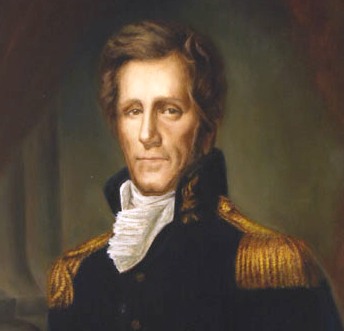
The presidency is the focus as well at the Washington Post. Douglas Brinkley reviews three books on Andrew Jackson:
- AMERICAN LION: Andrew Jackson in the White House by Jon Meacham
- WAKING GIANT: America in the Age of Jackson by David S. Reynolds
- ANDREW JACKSON by Robert V. Remini
Lincoln's transition to the presidency is taken up in LINCOLN PRESIDENT-ELECT: Abraham Lincoln and the Great Secession Winter 1860-1861, by Harold Holzer, reviewed by Chandra Manning. TRIED BY WAR: Abraham Lincoln as Commander In Chief by James M. McPherson, and LINCOLN AND HIS ADMIRALS: Abraham Lincoln, the U.S. Navy, and the Civil War by Craig L. Symonds are reviewed by Michael F. Bishop. Finally, TRAITOR TO HIS CLASS: The Privileged Life and Radical Presidency of Franklin Delano Roosevelt by H.W. Brands is reviewed for the Washington Post by Lynne Olson.

For Abraham Lincoln's 200th birthday, the Philadelphia Inquirer has a roundup of recent Lincoln books.
The New York Times turns instead to foreign affairs, with a review of FROM COLONY TO SUPERPOWER: U.S. Foreign Relations Since 1776 by George C. Herring by Josef Joffe. "The strength of this book is the author’s Herculean power of synthesis," he writes. "Herring recaptures a quarter-millennium of American foreign policy with fluidity and felicity."
Finally, various luminaries weigh in on what's at stake in the election in the New York Review of Books.
Mitchell on Who Needs the Stock Market?
 Lawrence E. Mitchell, George Washington University School of Law and the author of The Speculation Economy: How Finance Triumphed over Industry (2007), has posted Who Needs the Stock Market? Part I: the Empirical Evidence. Here is the abstract:
Data on historical and current corporate finance trends drawn from a variety of sources present a paradox. External equity has never played a significant role in financing industrial enterprises in the United States. The only American industry that has relied heavily upon external financing is the finance industry itself. Yet it is commonly accepted among legal scholars and economists that the stock market plays a valuable role in American economic life, and a recent, large body of macroeconomic work on economic development links the growth of financial institutions (including, in the U.S, the stock market) to growth in real economic output. How can this be the case if external equity as represented by the stock market plays an insignificant role in financing productivity? This paradox has been largely ignored in the legal and economic literature.
This paper surveys the history of American corporate finance, presents original and secondary data demonstrating the paradox, and raises questions regarding the structure of American capital markets, the appropriate rights of stockholders, the desirable regulatory structure (whether the stock market should be regulated by the Securities and Exchange Commission or the Commodities Futures Trading Commission, for example), and the overall relationship between finance and growth.
The answers to these questions are particularly pressing in light of a dramatic increase in stock market volatility since the turn of the century creating distorted incentives for long-term corporate management, especially trenchant in light of the recent global financial collapse.
A second paper in this series will examine the theoretical justifications for the importance of the stock market as perhaps the central financial institution in the United States.
Saturday, November 1, 2008
Constitutional History and the Campaign
Rather than focusing on actual policy differences in the waning days of this election year, the McCain campaign and its supporters are up in arms over a 2001 discussion of constitutional history on Chicago Public Radio. McCain campaign economic advisor Douglas Holtz-Eakin claimed that on the program "Barack Obama expressed his regret that the Supreme Court hadn't been more 'radical' and described as a 'tragedy' the Court's refusal to take up 'the issues of redistribution of wealth.' No wonder he wants to appoint judges that legislate from the bench." Short excerpts of the hour-long conversation about the courts and civil rights have ricocheted around the blogosphere accompanied by claims that they are evidence that Obama supports a radical Supreme Court aimed at wealth redistribution.
In response to a query from the CNN "Truth Squad," I took a look at the transcript. It is an interesting but not particularly earth shattering discussion of Supreme Court history with Obama, University of Chicago Professor Dennis Hutchinson, and DePaul University Professor Susan Bandes. Rather than suggesting that Obama wants the courts to engage in wealth redistribution, he suggests that courts are not a good forum for disputes involving inequalities in public financing. Instead courts "are just poorly equipped to do it."
The rest of the story, including a long excerpt from the radio program, is posted at Balkinization.
There is a silver lining to the brouhaha. What else would cause so many to rush to listen to a rather academic discussion of constitutional history?
In response to a query from the CNN "Truth Squad," I took a look at the transcript. It is an interesting but not particularly earth shattering discussion of Supreme Court history with Obama, University of Chicago Professor Dennis Hutchinson, and DePaul University Professor Susan Bandes. Rather than suggesting that Obama wants the courts to engage in wealth redistribution, he suggests that courts are not a good forum for disputes involving inequalities in public financing. Instead courts "are just poorly equipped to do it."
The rest of the story, including a long excerpt from the radio program, is posted at Balkinization.
There is a silver lining to the brouhaha. What else would cause so many to rush to listen to a rather academic discussion of constitutional history?
Tsai, Eloquence and Reason
Eloquence and Reason: Creating a First Amendment Culture by Robert L. Tsai, American University, Washington College of Law has just been published by Yale University Press. I can attest that readers will find much eloquence and reason in this beautifully crafted book. Tsai has posted the Table of Contents and Preface on SSRN. Here's the abstract:
 Yale University Press. I can attest that readers will find much eloquence and reason in this beautifully crafted book. Tsai has posted the Table of Contents and Preface on SSRN. Here's the abstract:
This book presents a general theory to explain how the words in the Constitution become culturally salient ideas, inscribed in the habits and outlooks of ordinary Americans. "Eloquence and Reason" employs the First Amendment as a case study to illustrate that liberty is not an end state but a state of mind achieved through the formation of a common language and a set of organizing beliefs. The book proceeds to explicate the structure of First Amendment language as a distinctive discourse and illustrates how activists, lawyers, and even presidents help to sustain our First Amendment belief system. When significant changes to constitutional law occur, they are better understood as the results of broader linguistic transformations. The book concludes by positing a model of judicial review in which jurists are responsible for the management of prevailing political discourses, quite apart from any obligations they may have to substantive conceptions of the good. The Table of Contents and and Preface are available for download.
Here's the press book description:
This provocative book presents a theory of the First Amendment’s development. During the twentieth century, Americans gained trust in its commitments, turned the First Amendment into an instrument for social progress, and exercised their rhetorical freedom to create a common language of rights.
Robert L. Tsai explains that the guarantees of the First Amendment have become part of a governing culture and nationwide priority. Examining the rhetorical tactics of activists, presidents, and lawyers, he illustrates how committed citizens seek to promote or destabilize a convergence in constitutional ideas. Eloquence and Reason reveals the social and institutional processes through which foundational ideas are generated and defends a cultural role for the courts.
And the blurbs:
“Just when I thought that there was nothing new to say about the First Amendment, Robert Tsai comes along and writes a book which encourages me to think again.”—Bruce Ackerman, Sterling Professor of Law and Political Science, Yale University
"A provocative meditation on the ways the metaphors used in constitutional doctrine empower, limit, create, and recreate the public over which the written Constitution is said to assert authority. Intriguing case studies arise from the civil rights movement of the 1960s, the Christian Right of the 1980s, and the attacks on Jehovah's Witnesses in the 1940s."—Mark V. Tushnet, William Nelson Cromwell Professor of Law, Harvard Law School, and author of The NAACP's Legal Strategy Against Segregated Education, 1925-1950
"Tsai's exciting work on the interplay between the Supreme Court and the executive branch in the nineteen forties sheds new light on the origins of modern constitutional law. And his new account of the relationship between language and power in political discourse is sure to be controversial and should be widely read."—H. Jefferson Powell, Duke Law School
"This beautifully written, carefully argued, and thought-provoking book illuminates the way the practice of free speech and broad societal engagement with constitutional ideas animate American democracy."—Mary L. Dudziak, University of Southern California, and author of Exporting American Dreams: Thurgood Marshall's African Journey
Subscribe to:
Comments (Atom)