In 1822, the Russian Czar Alexander decided an arbitration between the United Kingdom and the United States over the fate of 5,000 enslaved persons who fled to British lines at the end of the War of 1812. American observers have asserted for more than a century that the Czar’s decision, which has gone down in history as one of the canonical Anglo-American arbitrations of the Early Republic, favored the United States. But did the U.S. really win? Secretary of State John Quincy Adams complained at the time that the decision was not sufficiently clear. And new debate has broken out in the historical literature. This article resolves the question, relying in part on new evidence from diplomatic archives in the United States and the United Kingdom. We show that, as a formal matter, the Czar sided with the United States, though the arbitration proved useful to U.K. statesmen as well. The curious case of the Czar and the slaves also poses a second puzzle about the relationship between slavery and the emergence of modern international law. Even as the U.K. was beginning to use international law to oppose the slave trade, the United States aimed to turn some of international law’s institutions into powerful bastions of support for slavery.The full article is available here.
Wednesday, March 13, 2019
Witt and Osdiek, "The Czar and the Slaves: Two Puzzles in the History of International Arbitration
John Fabian Witt (Yale Law School) and Bennet Osdiek (J.D. candidate, Yale Law School) have posted "The Czar and the Slaves: Two Puzzles in the History of International Arbitration," which is forthcoming in the American Journal of International Law. Here's the abstract:


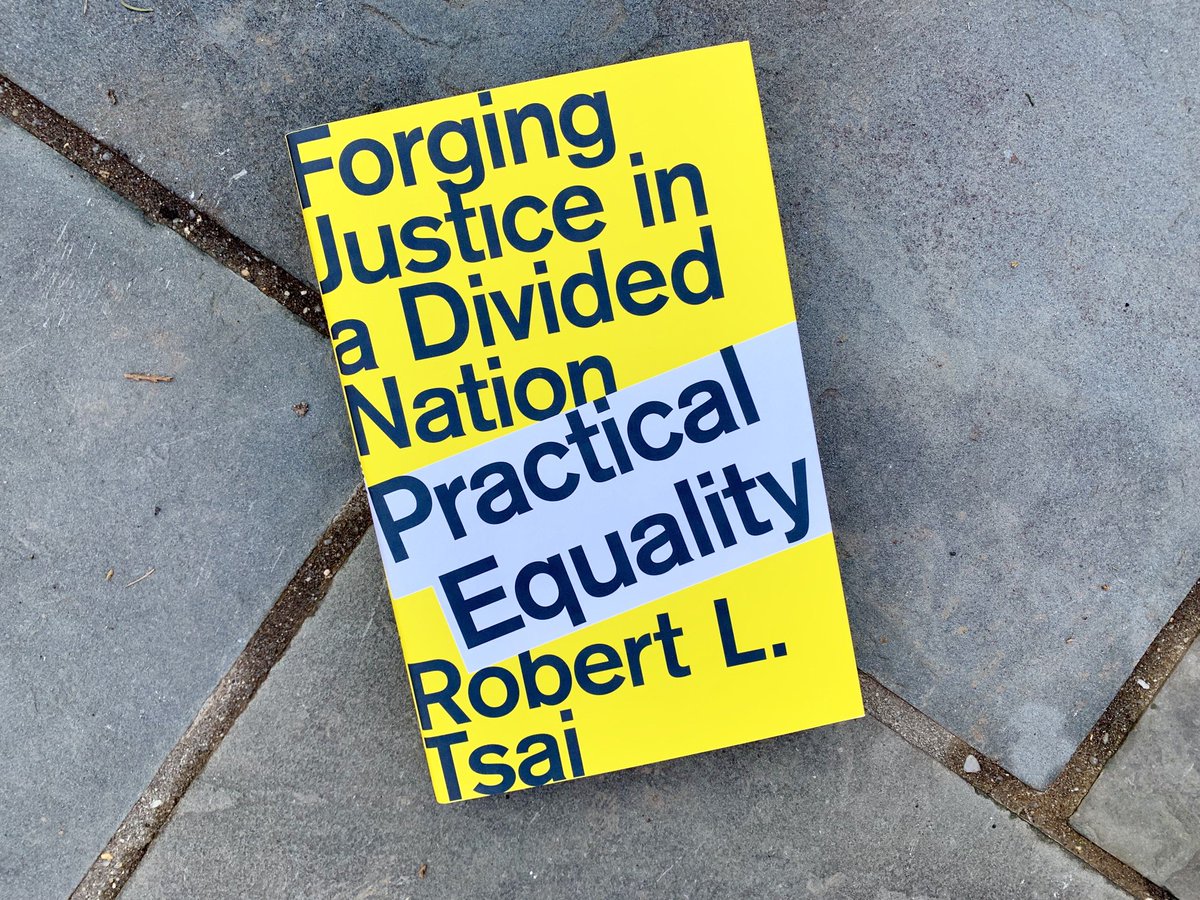
Tsai, Practical Equality: Forging Justice in a Divided Nation
W.W. Norton has recently released Practical Equality: Forging Justice in a Divided Nation, by Robert L. Tsai (American University). Here's a description from the Press:
Equality is easy to grasp in theory but often hard to achieve in reality. In this accessible and wide-ranging work, American University law professor Robert L. Tsai offers a stirring account of how legal ideas that aren’t necessarily about equality at all—ensuring fair play, behaving reasonably, avoiding cruelty, and protecting free speech—have often been used to overcome resistance to justice and remain vital today.
 |
| Credit: @PracticalEqual |
Practical Equality is an original and compelling book on the intersection of law and society. Tsai, a leading expert on constitutional law who has written widely in the popular press, traces challenges to equality throughout American history: from the oppression of emancipated slaves after the Civil War to the internment of Japanese Americans during World War II to President Trump’s ban on Muslim travelers. He applies lessons from these and other past struggles to such pressing contemporary issues as the rights of sexual minorities and the homeless, racism in the criminal justice system, police brutality, voting restrictions, oppressive measures against migrants, and more.
Deeply researched and well argued, Practical Equality offers a sense of optimism and a guide to pursuing equality for activists, lawyers, public officials, and concerned citizens.A few blurbs:
“Egalitarians take notice! Our interpretations of the Constitution’s guarantee of equality are losing ground on every front. Robert Tsai develops his argument via a great array of well-told historical and contemporary cases, and he is deeply alive to the perils as well as the promise of his proposal.” — William E. Forbath
“How do you fight for social change during periods of reaction or when structures of injustice are deeply entrenched? Robert Tsai’s Practical Equalitybeautifully wrestles with this dilemma and with the everyday political challenge of defending the principle of equality under less than ideal circumstances. The result is a work of striking political and legal imagination, an essential book with critical insights for activists, scholars, and lawyers.” — Aziz RanaMore information is available here.
2019 British Legal History Conference
 The program for the 2019 British Legal History Conference is now posted. You can have a look here. The conference will be take place July 10-13, 2019 at the University of St. Andrews, Scotland.
 Here are the plenary sessions:
Plenary I – 10 July 2019
Caroline Humfress (St Andrews), ‘Some Comparative Legal History: Lazarus and the Lawyers’
Chair: John Hudson (St Andrews)
Plenary II - 11 July 2019
Alice Taylor (KCL), ‘What does Scotland’s earliest legal tractate actually say (and what does it mean)?’
Chair: William Eves (St Andrews)
Plenary III – 12 July 2019
Rebecca Probert (Exeter), ‘What Makes a Marriage? Religion, the State, and the Individual in the Long Nineteenth Century’
Chair: Andrew Cecchinato (St Andrews)
Plenary Panel – 12 July 2019
Lorna Drummond (Sheriff of Tayside and Fife)
Geoff Lindsay (Justice, Supreme Court of New South Wales)
Hector MacQueen (Edinburgh – Formerly Scottish Law Commission)
Plenary IV – 13 July 2019
Ian Williams (UCL), ‘James VI and I, Rex et Iudex: One King as Judge in Two Kingdoms’
Chair: Sarah White (St Andrews)
Further information is available here.
Tuesday, March 12, 2019
Scholar Spotlight: Catharine MacMillan

Today's Scholar Spotlight features Catharine MacMillan, King's College London. We noted earlier in this series that only three of the fifty contributors to the recently published Oxford Handbook of European Legal History were women. Like Women Also Know History, this interview series aims to showcase female scholars and their work. Its special focus is scholars of European legal history.
Catharine
MacMillan is a Professor of Private Law at the Dickson Poon School of Law,
King’s College London. She lives in London, England.
Alma
maters: BA (History, University of Victoria), LLB (Queen’s University, Canada,
LLM (University of Cambridge)
Fields of
interest: intellectual and doctrinal legal history, legal biography, legal
history of the British Empire, English contract law
Describe
your career path. What led you to where
you are today?: A fortunate stroke of serendipity took me to legal
academia. From early childhood I had
wanted to be a lawyer. When I graduated from high school in Canada, I chose
history as my first degree subject at the University of Victoria. History as a subject was all-encompassing, in
my view, and thus ideal for a curious teenager.
This was followed by law at Queen’s University. I returned to my home province and clerked
for the Chief Justice of British Columbia, completed my articles at Davis and
Company in Vancouver and was duly called to the Bar of British Columbia. I then had an opportunity to undertake an LLM
at the University of Cambridge (Gonville and Caius College); having received my
degree I returned to my firm and a practice in commercial litigation. It did not last for long as family reasons
brought me back to England. In London I
took up what began as a short term position in the law school at Queen Mary
University of London. I discovered a
love of academic life and spent over two decades at Queen Mary before taking up
a position at the University of Reading as a Professor of Law and Legal
History. I came to the Dickson Poon
School of Law at King’s College London in 2016.
What do you
like the most about where you live and work?
I love living in London – every day is different. The Dickson Poon School of Law is at Somerset
House on the Strand, right in the very heart of London It is a wonderful place to examine the
richness, diversity and complexity of the human condition. And there are the added benefits of
libraries, museums, galleries, theatre, and music all within an easy walk. To paraphrase Samuel Johnson, one never
tires of its attractions.
What
projects are you currently working on? I
have two large projects that I have been working on. The first is a legal
biography of the life of Judah Benjamin, one-time Louisiana senator,
Confederate Secretary of State and ultimately, a leading QC in London. I am curious not only about Benjamin’s life
but the unique contributions he brought to legal development. The second is a consideration of the
functioning of the Judicial Committee of the Privy Council as an imperial
court. I also have a number of smaller,
discrete projects which are ongoing. At
present these include examinations of the contractual doctrines of frustration,
and of mistake and on modern non-disclosure agreements.
How have
your interests evolved since finishing your studies? Because my studies were directed at becoming
a practising lawyer in one sense my interests have changed enormously. In another sense they have not changed at
all. I took the view early in law school
that legal materials, institutions and actors were fragments from which an
historical explanation of the law could be created. An academic career allows me to gather
together these fragments and to try to construct explanations.
What’s the
most fascinating thing you’ve ever found at the archives? This is a really hard question
to answer. The document that I have found
that has probably had the most profound impact upon me was one I found
accidentally in the search for something else: a contract by which an enslaved person was sold by one party to
another. It brought home to me something
of the painful and brutal reality of slavery.
Is there an
article, book, film, website, etc. that you would recommend to LHB readers? I recommend Garrow’s Law, a legal period
drama based loosely around the eighteenth century barrister, William
Garrow. It draws neatly upon various
legal history sources to bring the subject matter alive for students (and other
viewers!).
What have you
found to be the most surprising thing about academic life? I have been amazed
by all of the wonderful and engaging people I’ve met from around the world.
Photo caption: Catharine MacMillan at Judah Benjamin's grave in Paris.
Monday, March 11, 2019
Hello again from Sydney! Collaboration: Why and How
Hello again everyone…. from the now rather relentlessly sunny Sydney.
I promised to blog about collaboration. Since Rage for Order came out, “how can you collaborate so much” is the question I’m most frequently asked. I have been writing and working with people more and more. I love doing this. I suspect sometimes that this is because I missed a career calling as an open plan office worker… but more on that some other time.
One of the reasons why my latest book has taken so long to write is because I am in deep mourning over the end of the Rage for Order project with Lauren Benton. She joked at one point that we should call it “Ordering the World” because we’d plotted the book at restaurants all over the world from New York to Helsinki to Paris and other places in between. That was such an easy, organic collaboration that it is hard to extract general tips from it. So, I’ve asked around a bit so that I don’t just say, “give up now, you’ll never have it so good!”
Seriously, though, collaboration is the way of the future. In Australia, collaborative projects are more likely to be funded by the Australian Research Council because they present better value for money. History is getting to the point that we all need to do broader and deeper research. To do this requires us to share resources, methodologies and writing projects. Even in our mid-career fellowship applications in Australia, a whole section must describe how we will use public funds to collaborate.
Anyway, some tips:
TIP 1: Collaborate at the right time! I think it will be a while before you should co-author your first book in the US market. Our profession still thinks of careers in terms of benchmarks. A smart PhD is the first benchmark. Converting it into a cracker first book with a good publisher is the second. Then, maybe, it is time to consider working with others.
Don’t just collaborate for the sake of it, though! Do something you and your collaborators could not do by yourselves. The best collaborations are bigger and better than the sum of their parts.
TIP 2: Share resources! Even if you are not writing with someone, consider sharing your archives with like-minded scholars. Collaboration saves the world! Why do we all need to go to the archives over and over, when we can photograph and share records (or, better still, work with archives to digitize them properly)? My latest project, Inquiring into Empire involves eight scholars to varying degrees. The project is based on a vast archive of commissions of inquiry data that we have copied and shared from the National Archives (UK). We are also slowly uploading our own private digital archives to a shared Dropbox account. Some of us will need to go to London to do more contextualising work, but we have a wealth of information to be getting on with in the meantime.
TIP 3: Standardize! Again, even if you are not writing with others, consider making your data shareable by using standard systems of classification. This appeals to me particularly as the daughter of a classification-mad librarian. In Inquiring into Empire, we are working to establish standard notetaking practices so that we can spot patterns across the archive. In fact, I’m off to Tasmania in July to discuss some Australia-wide protocols for note-taking. We will discuss whether we should be coding people’s professions using standard terminology and whether we should adopt UNICEF’s classifications of crimes. If we use bigger classification systems, others can data mine our work. Imagine if we all did this? Imagine the questions we could answer about history? So, when you are starting a project, even an individual one, think about how you can contribute to something bigger for the common good.
TIP 4: Trust and like your collaborator! Pull your weight! Work with someone who pulls their weight, respects deadlines, is a great colleague who nurtures other peoples' careers, and makes you laugh. Just as important, don’t work with other people if you are not the sort of person who is always fighting to do more than your share, looks out for people and can laugh at yourself.
Even with such indicators, make sure you start small, set up expectations clearly, and see how a collaboration goes before you plan a giant project.
TIP 5: Share the load! If you are working with people on a research project, make sure you share the load to maximize productivity. Talk about expectations and divvy up tasks. Laurie and I did this by dividing some chapters into two parts (we wrote one half each). Sometimes we allocated whole chapters. This is a great way to work because it means no one is ever waiting. You always have an independent task to be getting on with.
TIP 6: Hand it over! A great benefit of writing together is that you can send off an unpolished piece when you can’t bear to look at it anymore. That is awesome! My other great collaborator, David Roberts, and I do this from the get-go. He sends some notes about something interesting, I’ll play with them to see what they add up to and then send them back. From there we work progressively to fill in the gaps and write through in one- to two- week bursts. Our work always comes back better.
TIP 7: Write over! …Which brings me to the next tip. If you are going to write with someone, you have to decide at the outset that you are brave enough to write over their work and that you are confident enough for them to write over yours. This is the key. You should probably settle this in advance, though it happened automatically in all of my collaborations.
- Write with someone whose writing you admire. This tip requires faith in your collaborator.
- When you get something back, read with mark-up hidden. This helps you to let go of the little things. Though, it did end badly once with Laurie when we ended up in an endless ‘the’ exchange. I took them out, she put them back in, I took them out, she put them back in … and so on, until I had a Groundhog Day moment. Then I turned mark-up back on and left them in.
- Let things go! If you can’t let your prose go, you shouldn’t be collaborating. If some phrase is really important to you, raise it once. If your partner doesn’t like it, delete and move on. Who cares! If you have followed, sub-tip (a), all will be well. Laurie and I ended up having this conversation about Rage in reverse. I deleted an anecdote I’d written about emancipist William Redfern in New South Wales whose boorish dining habits became a metaphor for moral decay in the convict colony. Laurie told me that it should stay. So there it is.
a. Decide author order in advance. If you are doing loads of things together and will contribute roughly equally overall, maybe alphabetical works. If, as in a recent draft article I worked on, some poor colleague gave a disproportionate amount of his life over to doing incredibly tedious computer analysis, make them lead author and list everyone else by contribution. Or, at very least, write a paragraph or a footnote explaining what everyone did exactly. But sort it out in advance, so no one feels aggrieved. And be generous!
b. You should also sort out how the collaboration will work. Some lead investigators want to have final say on everything in return for shaping the grants, organizing publications and mobilizing everyone. As a lead investigator, I don’t work this way. I’m happy for everyone to have ideas, pitch in, write over, opt in or out as they choose, so long as we communicate and acknowledge each other’s contributions. The point is, everyone should know how it will work and what is expected of them in advance.
c. Communicate very clearly and consistently. Our first commissions output was late (by one week, if that counts) because I thought everyone knew what they needed to do and when, but they didn’t. If you are in charge and are sending people off to complete tasks, you need to follow up everything with a very clear e-mail pointing out exactly what each person needs to do and when before you go to the beach for the summer.
d. You won’t always agree with your collaborators and everyone has a bad week, misunderstands something or gets distracted. If something is going wrong, deal with it early. Don’t let anything fester. If in doubt, pick up the phone or organize a get-together.
TIP 9: Have fun together! Most of my collaborations work by e-mail, but it is important to get together periodically to sort the hard bits out, or even more importantly, to break bread together. Working together should be fun!
See you next week.... when I think I will write about method.
Saturday, March 9, 2019
Call for Nominations: Cromwell Foundation Book Prize in American Legal History
We have the following call for nominations:
The William Nelson Cromwell Foundation Book Prize in American Legal History
The Cromwell Book Prize Committee is seeking nominations for the 2019 award. The Book Prize is awarded annually to the best book in the field of American legal history by an early career scholar. The prize is designed to recognize and promote new work in the field by graduate students, law students, post-doctoral fellows and faculty not yet tenured. The work may be in any area of American legal history, including constitutional and comparative studies, but scholarship in the colonial and early national periods will receive some preference. The prize is limited to a first book, wholly or primarily written while the author was untenured. The author of the winning book receives a prize of $5,000. The Foundation awards the prize after a review of the recommendation of the Cromwell Prize Advisory Committee of the American Society for Legal History. The Committee shall consider a book in the year of its copyright date or of its actual publication. Nominations are due by May 31, 2019.
For more detailed information including instructions for how to nominate a book please go to https://aslh.net/award/cromwell-book-prize/
Weekend Roundup
- Women in Law: A Legal Timeline (from OUPblog). And New Zealanders celebrate the signatories of a landmark suffrage petition of 1893.
- Over at Places is Desiree Valadares's post Race, Space, and the Law, a reading list on “the law’s historical role in the constitution of space, place, the body, and various other modalities of belonging in the U.S.” It had its origins in a graduate seminar by LHB Blogger Karen Tani and Rebecca McLennan in Spring 2017.
- From the Washington Post's "Made by History" section: Bridgette W. Gunnels (Oxford College of Emory University) on "How to force the Trump administration to follow the law on refugees"; Spencer J. Weinreich (Ph.D. candidate, Princeton University) on "Why prisoner abuse and deprivation persists in America"; and Hallie Lieberman (independent scholar and journalist) on "Why laws to fight sex trafficking often backfire." Also, Kara Dixon Vuic (Texas Christian University) invokes a federal judge’s ruling last month on the exclusion of women from Selective Service registration to argue that women's mandatory registration is "long overdue."
Friday, March 8, 2019
Manners to Present in BC Legal History Roundtable
[We have the following announcement from our friends at Boston College.]
We invite you to join us on Thursday, March 15, at 4:30 in the Rare Book Room for our first event of the spring semester of the BC Legal History Roundtable 2018-2019.
Our guest will be Jane Manners, Bernard and Irene Schwartz Fellow, New-York Historical Society. She will be presenting a paper, Individualized Lawmaking and the Problem of Legislative Discretion. The paper is available on the Roundtable website. (Instructions for accessing the paper are in the final paragraph of the website introduction.)
Refreshments are available beginning at 4:15 pm. outside the Library Conference Room.
We invite you to join us on Thursday, March 15, at 4:30 in the Rare Book Room for our first event of the spring semester of the BC Legal History Roundtable 2018-2019.
Our guest will be Jane Manners, Bernard and Irene Schwartz Fellow, New-York Historical Society. She will be presenting a paper, Individualized Lawmaking and the Problem of Legislative Discretion. The paper is available on the Roundtable website. (Instructions for accessing the paper are in the final paragraph of the website introduction.)
Private bills. Special legislation. Monopoly grants. Equitable consideration. Claims. Petitions. Memorials. All terms relate to the nineteenth century American practice of individualized lawmaking, in which lawmakers regularly heard and responded to individual appeals for legislative intervention — for favors, exceptions, special treatment. Historians and other scholars who have investigated such individuated lawmaking have done so largely as a work of recovery, emphasizing the discordance of the practice to our modern ears to unsettle our contemporary constitutional understanding. If we accept the universal applicability of legislation as fundamental to the rule of law, these scholars ask, how can we make sense of this earlier institutional arrangement? These scholars have examined in illuminating detail both the conception of the legislative role underlying the practice as well as the process by which the United States, at both the federal and state levels, gradually abandoned it, shifting the consideration of individual cases out of the legislature and into the executive and judicial branches.Jane Manners studies US legal history, with a focus on American legal institutions, legislation, federalism, and local government law. During the 2018-19 academic year she is a Bernard and Irene Schwartz Fellow at the New-York Historical Society. She received her PhD in history from Princeton in 2018 and her JD and BA from Harvard. Her work has been supported by the American Council on Learned Societies, the American Society for Legal History, the American Historical Association, and the Hurst Institute at the University of Wisconsin Law School. Between college and law school, Jane worked as a teacher, a journalist, a philanthropic grant maker, and a presidential campaign staffer.
What these scholars have paid less attention to, however, is the reason the shift occurred. Generally, treatments of nineteenth-century individuated lawmaking explain the gradual abandonment of the practice as either the natural and inevitable result of concerns for efficiency and fairness or the product of partisan politics. Generally, too, histories of the practice, whether approving or disapproving, treat its various labels as interchangeable — all references to the same forgotten legislative modus operandi. This essay seeks to complicate both assumptions. It argues that more than efficiency, fairness, and partisan politics were at stake, and that by digging into the subtle differences in meaning among the practice's terms, we find a nation still in the process of working out its theories of legislation and of government, and still struggling to balance a concern for individual rights and for individuated lawmaking with a commitment to the public good.
Refreshments are available beginning at 4:15 pm. outside the Library Conference Room.
Norris on the New Deal "Workers' Constitution"
Luke Norris, University of Richmond School of Law, has posted The Workers' Constitution, which is forthcoming in volume 89 of the Fordham Law Review:
This Article argues that the National Labor Relations Act of 1935, Social Security Act of 1935, and Fair Labor Standards Act of 1938 should be understood as a “workers’ constitution.” The Article tells the history of how a connected wave of social movements responded to the insecurity that wage earners faced after the Industrial Revolution and Great Depression by working with government officials to bring about federal collective bargaining rights, wage and hour legislation, and social security legislation. It argues that the statutes are tied together as a set of “small c” constitutional commitments in both their histories and theory. Each statute sought to redefine economic freedom for workers around security and sought to position worker security as essential to the constitutional accommodation of corporate capitalism. The Article also explores the interpretive implications of conceiving of a “workers’ constitution” in the current context.H/t: Legal Theory Blog
Thursday, March 7, 2019
Find a Co-Panelist for ASLH 2019!
 [Although we've recently moved up another post on the approaching deadline for ASLH, to facilitate last-minute match-making" we're moving up this one as well.]
 The Call for Papers of the Program Committee for the next annual meeting of the American Society for Legal History, to be held in Boston on November 21-24, 2019, states in part:
Given the number and high quality of panel and other complete sessions submitted, individual papers are much less likely than full sessions to be accepted. Would-be individual paper submitters are encouraged to connect with other scholars (through H-Law, etc.) to coordinate the submission of complete session proposals.We here at Legal History Blog are happy to be such a matching service. Comments to this post are open any of you with individual papers seeking like-minded presenters for a panel. Feel free to post your paper topic and/or panel idea in a comment, with an email address or other contact information. And please feel free to spread the word about the annual meeting. (The conference hashtag is #ASLH2019.) The deadline for submissions is March 15, 2019.
Scholar Spotlight: Helle Vogt

Helle
Vogt is a professor at the University of Copenhagen (UCH).
Alma maters: 2001
MA in History (UCH), 2005 PhD in Legal science (UCH) 2009, BA in Law (UCH)
Fields of interest: Scandinavian legal history,
primarily medieval and early modern. Family, inheritance and penal law, as well
as the connection between law and religion. Currently, I am also core scholar at
the interdisciplinary Centre for Privacy Studies, a centre of excellence founded
by the National Research Council. The Centre focuses on early modern privacy. The
Centre’s focus is on how the notion of the private starts to be developed in
the early modern period. My work in the Centre is two-fold. I participate in
the case-team that works with Copenhagen, and I help my non-legal history
colleagues work with legal sources.
Describe your career path. What led you to
where you are today?
I started as an historian and wanted to work at a museum, but after I finished
my MA, I could only get a job as sale assistant. When I was offered a
PhD-scholarship in legal history, I thought it would increase my chances of a
museum job, but after 3 years at a law faculty, I was labelled a lawyer, and
after a while, I decided to get the official qualifications as well. At the
same time, I was given the responsibility for the mandatory course in legal history
and was made assistant professor in 2007, 2 years later associate, and last
year I got the chair.
What do you like the most about where you
live and work?
Copenhagen is a pleasant town to live in, and I agree with the basic principles
of the Danish welfare state – most people are middle class, and things like
health care and education (including university education) are free. I have
a lot of freedom in my job, good opportunities to do interdisciplinary work, and
not least, I have great colleagues at the faculty.
What projects are you currently working on? A textbook about Danish legal
history in a European context for the mandatory BA course in legal history, an
article about drunkenness and disorder in the Danish courts, and how the concept of privacy is used in the eighteenth-century Danish newspapers.
Have your interests evolved since finishing
your studies? Yes,
teaching 2000 years of legal history makes it very difficult not to want to get
interested in a lot of different aspects of legal history, even property law,
which I would never have thought possible ten years ago. However, the Danish laws from the middle ages have
a special place in my heart, and one of the main reasons for translating them
into English (Routledge, 2016) was to share these wonderful sources with my
non-Nordic speaking colleagues.
What is the most fascinating thing you have
ever found in your primary sources? In 2007 I was gathering material
for a little article about how the Danish-Norwegian Lutheran state dealt with
noble killers in the sixteenth century. A year after the Reformation (1536)
wergeld was replaced with ‘a life for a life’ for all non-nobles. The courts,
however, did not know how to deal with noble killers, and put them into the
hands of the king. I was very surprised to find out that the king gave most of
them the choice between losing their honour forever or going to Austria and joining the fight against the Turks. It was fascinating to see how the king managed to
balance honour and religious atonement.
Wednesday, March 6, 2019
Mary L. Dudziak Digital Legal History Prize
[We have the following announcement from the American Society for Legal History.]
 The Mary L. Dudziak Digital Legal History Prize is awarded annually for the best work of digital legal scholarship, broadly defined, appearing in the previous year. The award is designed to recognize outstanding scholarly contributions that may take the form of peer-reviewed publications or purely digital projects. Preference will be given to projects that either (1) have a published component in 2018,( 2) have gone live online in 2018, or (3) have implemented major updates or upgrades in 2018. The cover letter should highlight significant developments in the project during 2018.
Nominations or self-nominations for the Dudziak Prize should be submitted by September 1, 2019 [here]. They should include (1) a cover letter that explains the nature and significance of the work for the field of legal history; (2) the nominated work, including (if relevant) information about how to access the work online; and (3) a curriculum vitae of the author/creator (including e-mail address).

Nominations or self-nominations for the Dudziak Prize should be submitted by September 1, 2019 [here]. They should include (1) a cover letter that explains the nature and significance of the work for the field of legal history; (2) the nominated work, including (if relevant) information about how to access the work online; and (3) a curriculum vitae of the author/creator (including e-mail address).
CFP: ASLH Pre-Conference Workshop on Law and Empire in Sino-Asian History
We have the following call for proposals:
CFP: ASLH Pre-Conference Workshop on Law and Empire in Sino-Asian History
The American Society for Legal History (ASLH), the International Society for Chinese Law and History (ISCLH), and the Harvard Law School East Asian Legal Studies Program (EALS) jointly invite submissions for a pre-conference workshop in Cambridge, MA on November 21, 2019, directly preceding ASLH's 2019 annual meeting in Boston. The theme of the workshop is "Law and Empire in Sino-Asian History": it aims to explore the legal and institutional dimensions of empire in early modern and modern Asia, insofar as they are substantially related to China. Proposals should therefore seriously engage with some aspect of Chinese history, but need not so do exclusively--comparative or transnational papers are most welcome.
We hope, in particular, to present the work of a number of scholars who are new to the ASLH annual meeting--early career scholars and graduate students are therefore especially encouraged to apply. In this way, we hope to promote scholarship in this area of legal history and to encourage more Asianists and Sinologists to attend the ASLH meeting.
The event will be composed of three panels of three to four papers each. One panel, keeping with the traditions of ASLH pre-conference workshops, will exclusively feature early career scholars and graduate students, and we will match each paper on this panel with its own commentator. The other two panels are open to scholars of all ranks and seniority, and follow the usual ASLH panel format: three to four presenters, followed by one commentator, and then by open discussion with the audience.
Applications to the workshop should include a current curriculum vitae, a title, and a paper abstract of no more than 400 words. Applicants whose proposals are accepted will receive some support towards conference hotel and travel costs. Please note that submission to the workshop does NOT preclude a separate submission to the main ASLH meeting (see https://aslh.net/conference/2019-annual-meeting/).
Applications close on April 5, 2019, at 5 pm EST. Please send queries and applications to Michael Ng (ngmichaelhk@gmail.com) and Shuang Chen (shuang-chen@uiowa.edu), with the subject line "ASLH 2019 Pre-Conference Workshop." Decisions will be sent out by mid-June.
Douglas Speaks! (on Youngstown Steel)
 |
| William O. Douglas (LC) |
Tuesday, March 5, 2019
Nelson on the Emergency Declaration
Senator Lamar Alexander entered an op-ed by NYU Law’s William E. Nelson, entitled, Trump vs. Congress: The emergency declaration should not be resolved in court, into the Congressional Record yesterday. Senator Alexander called Professor Nelson as“one of America's foremost scholars of legal history” and reported that the op-ed “explained why it is so important that the President and the Congress should not, in Professor Nelson's words, ‘invert the entire constitutional order where Congress appropriates and the President spends.’” Cong. Rec., S1613-14 (March 4 2019). H/t: RAE
ASLH Submission Deadline Approaching

We hear from Daniel Sharfstein, one of the co-chairs of the 2019 annual meeting of the American Society for Legal History, which will take place November 21 - 24 in Boston, that the submission portal for panels of various sorts is now operational. The deadline for submission is March 15.
Scholar Spotlight: Elizabeth Papp Kamali
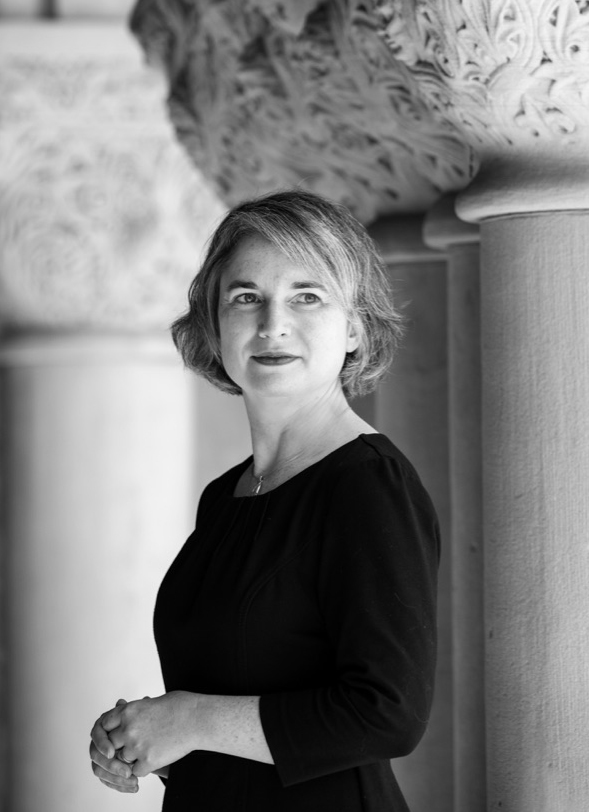 Featured today in our Scholar Spotlight series is Elizabeth Papp Kamali, Harvard University. In our earlier interviews, we noted that only three of the fifty contributors to the recently published Oxford Handbook of European Legal History were women. Like Women Also Know History, this Scholar Spotlight series aims to showcase female scholars and their work. Its special focus is scholars of European legal history.
 Elizabeth Papp Kamali is an Assistant Professor of Law at Harvard Law School. She lives in Newton, Massachusetts.
Websites:
https://hls.harvard.edu/faculty/directory/11491/Kamali
Twitter:
@LizPappKamali
Alma
maters: A.B. (History), Harvard College, 1997; J.D.,
Harvard Law School, 2007; Ph.D. (History), University of Michigan, 2015.
Fields
of interest: English legal history, medieval law, criminal
law.
Describe
your career path. What led you to where you are today?
A class taught by Charles Donahue sparked my
interest in medieval law during my freshman year of college, when I was
contemplating a variety of majors, including engineering. The class reading focused
on primary sources, and I discovered that I had a passion for dissecting and
making sense of unfamiliar, at times perplexing, legal texts. I knew nothing
about law going in (‘Torts? Is that a kind of cake?!’), but I knew by the time
the semester ended that I wanted to find a life in the law, preferably of the
medieval variety. With the encouragement
of Prof. Donahue and then-graduate students Carol Symes and Claire Valente, I
undertook senior thesis research using fourteenth-century manorial court rolls
held in the Harvard Law Library’s collection. What a charmed undergraduate
life!
Upon graduating from college, I decided to work
in Wall Street consulting for a year or two to pay off my undergraduate debt
before moving on to law and/or graduate school. Life intervened. I met my
future spouse in Manhattan and ended up following him to rural California,
where he was obligated to work in a doctor shortage area for several years.
When his work commitment ended, he (and our one-year-old son) followed me, in
turn, first to Cambridge, MA, for my law studies, and later (with our
one-year-old daughter and then nearly five-year-old son) to Ann Arbor, MI, for
my PhD studies in History. I am ever grateful to have a spouse who has made my
flourishing his priority. At the University of Michigan, I studied with Tom
Green, historian of the English jury, just as he was entering retirement. I am
most fortunate to enjoy his continued mentorship and friendship, and I hope I
can live up to his generous example in making time to read and comment upon
others’ scholarship. Academic life dulls when solitude—admittedly necessary at
times when, for example, the archives beckon or a publishing deadline looms—supplants
community.
The University of Michigan was an exceptional
place for me to pursue a PhD in medieval legal history. In addition to
outstanding medieval historians on the History faculty, the university had a
vibrant medieval studies community and incredible course offerings at the law
school, where I studied English legal history with Brian Simpson, Roman law
with Bruce Frier, and medieval Icelandic bloodfeuds with Bill Miller. My
dissertation committee included Diane Owen Hughes (see my recommended reading
below) and Kit French from the History department, Cathy Sanok from the English
department, and my long-standing mentor from college and law school, Charlie
Donahue, as co-chair with Tom Green.
Now, at Harvard Law School, I have the pleasure
and privilege of teaching Criminal Law to first-year students, some of whom
will hopefully help shape public policy and legal practice during this critical
moment in the history of the U.S. criminal justice system. I also teach English
Legal History and a seminar on Mind and Criminal Responsibility in the
Anglo-American Tradition.
What
projects are you currently working on?
My forthcoming book, Felony and the Guilty Mind in Medieval England (Studies in Legal
History Series, Cambridge University Press) explores the role of mens rea as a
factor in jury assessments of guilt and innocence during the first two
centuries of the English criminal trial jury. The book argues that issues of
mind were central to jurors’ determinations of whether a particular defendant
should be convicted, pardoned, or acquitted outright. Writing it required me to
sift through legal records (accessible here http://aalt.law.uh.edu/
on the amazing website created by Robert Palmer, professor emeritus at the
University of Houston Law Center) as well as literary and religious texts from
the period. What a charmed law professor’s life, teaching Criminal Law by day
and reading Aquinas, coroners’ rolls, and Gower by night!
I am also working on what I affectionately call
my “living dead” paper on the topic of proof of death in medieval English
criminal and civil law as well as an article on the treatment of intoxication
in the medieval common law. Late ordeal
practice fascinates me, and I hope to publish a lengthier treatment of it,
building upon an essay I wrote for a recent Festschrift honoring Bill Miller.
Is
there an article, book, film, website, etc. that you would recommend to LHB readers?
It is rare that a work of academic scholarship
can be described as moving, but thankfully such pearls exist. This is not primarily
a work of legal history, but an article I recommend nonetheless to LHB
readers: Diane Owen Hughes,
“Distinguishing Signs: Ear-rings, Jews, and Franciscan Rhetoric in the Italian
Renaissance City,” Past & Present
112 (1986), 3-59 (https://doi.org/10.1093/past/112.1.3).
The closing paragraphs continue to give me chills, and behind them is a
wonderful personal story about how Prof. Hughes stumbled upon the Bellini
portrait that clinches the article. I
leave that personal story to Prof. Hughes to tell, and only hope that I might
learn to craft a work of scholarship as beautifully as she did in these few
pages of Past & Present.
Monday, March 4, 2019
Jones and Lash to Speak on Citizenship and the 14th Amendment
A panel discussion, Citizenship and the 14th Amendment, will take place on Friday, March 29, from 5:00pm to 6:30pm in Masters Hall 110 Mara Auditorium at Gettysburg College in Gettysburg, PA. The two speakers are Martha S. Jones, Society of Black Alumni Presidential Professor and Professor of History, The Johns Hopkins University, and Kurt Lash, E. Claiborne Robins Distinguished Chair in Law, University of Richmond School of Law:
The 14th Amendment was forged in the chaos of the years which followed the Civil War,
and was ratified in 1868. It is also the most oddly-constructed of the Constitution's twenty-seven amendments, since it contains not one, but five unrelated provisions. It is also the place where the Constitution addressed a question it had ignored for seventy-one years – who is a citizen of the United States? In the process, the 14th Amendment introduced language into that definition about the “privileges or immunities” of those citizens and their “equal protection” which has been the fuel of judicial argument ever since. Join us for a sesquicentennial review of one of the Civil War era’s greatest legal triumphs, and one of its most puzzling mysteries.

Ernst on New Deal Lawyers at AAA
I’ve posted my paper Mr. Try-It Goes to Washington: Law and Policy at the Agricultural Adjustment Administration, which is forthcoming in the Fordham Law Review as part of the symposium “The Varied Roles, Regulation, and Professional Responsibilities of Government Lawyers,” hosted by the Fordham Law Review and the Stein Center for Law and Ethics on October 12, 2018, at Fordham University School of Law:
In this draft, be sure to check out note 190, which apparently discloses the existence of a previously unsuspected Hoover-era experiment in state-sponsored semiotics.In December 1933, Jerome Frank, the general counsel of the Agricultural Adjustment Administration but better for writing Law and the Modern Mind (1930), a sensational attack on legal formalism, told an audience at the Association of American Law Schools a parable about two lawyers in the New Deal, each forced to interpret same, ambiguous statutory language. The first lawyer, “Mr. Absolute,” reasoned from the text and canons of statutory interpretation without regard for the desirability of the outcome. “Mr. Try-It,” in contrast, began with the outcome he thought desirable. He then said to himself, “The administration is for it, and justifiably so. It is obviously in line with the general intention of Congress as shown by legislative history. The statute is ambiguous. Let us work out an argument, if possible, so to construe the statute as to validate this important program.” Although the memoranda the two produced were interchangeable, Mr. Try-It wrote his in a fifth the time.
Jerome Frank (LC)
Although the professors in attendance might have nodded approvingly, Frank’s speech, later printed in the Congressional Record, was startlingly impolitic in its muddying of a distinction between law and policy that he insisted upon when battling administrators over the terms of marketing agreements for agricultural commodities. How Frank actually drew the line owed less to his legal realist jurisprudence that the persuasiveness of his two associate general counsels, the radicals Lee Pressman and Alger Hiss.

Subscribe to:
Posts (Atom)