[H]istorians continue to show little interest in originalism. But in scoffing it off as quaint curiosity, outlandish absurdity, or both, they ignore how a largely one-sided and consequential debate has evolved. Fortunately, Gorsuch’s nomination offers a fresh opportunity to probe originalism’s relationship to history. It has evolved significantly since its emergence, around the time that Antonin Scalia—the theory’s most visible champion for the past three decades and the justice Gorsuch has been nominated to replace—first took his seat on the Supreme Court. But originalism’s development is not simply intriguing in its own right. By understanding how it has changed, we can appreciate the unique, little understood, and urgent threat it now poses to the practice of history.More.
Tuesday, March 21, 2017
Gienapp on Historians and Originialism
Over on Process, the blog of the Organization of American Historians, Jonathan Gienapp, an Assistant Professor in the Department of History at Stanford University, has posted Constitutional Originalism and History. A taste:


Nyquist on Re-Reading Legal Realism
Curtis Nyquist, New England Law, has posted Re-Reading Legal Realism and Tracing a Genealogy of Balancing:
The enclosed article offers a new understanding of the history of American legal thought. I developed this interpretation over twenty years as I read into the early twentieth century literature in jurisprudence. The conventional view holds that the Progressive Movement (1905-1923) and the Realist Movement (1923-1941) combined forces to attack and ultimately undermine Classical Legal Thought (1870-1920’s). Any differences between the progressives and the realists are seen as minor as compared with their joint effort to undermine Classical Thought. After reading the original literature I came to realize this standard approach is seriously flawed and a source of endless confusion in contemporary legal thought.
Legal Realism was primarily a critique of progressive thought. Although the realists continued to assail the formalism of Classical Thought, their work is interesting and important because of their attack on the progressives. This attack was linked to a cognitive relativism in legal realism that parallels the profound changes in science and the arts in the 1920’s and 30’s. For example, an article from 1927 in an American Bar Association journal makes the following point: “[T]he old cosmic absolutes – absolute space, absolute time, absolute matter, absolute natural law, absolute truth – are gone. The reign of relativity . . . is destined to work a corresponding revolution, deep, noiseless it may be, but inevitable, in all the views and institutions of man.”
This article also traces the genealogy of balancing. With the collapse of Classical Legal Thought, balancing became the predominant method of legal reasoning. The progressives and the realists held radically different views of balancing but, unfortunately, both used the same terms and it requires careful reading to untangle this history. The article distinguishes a teleological view of balancing, dominant in the progressive era and still the prevailing approach, and an attack on teleological balancing which the article calls “conflicting considerations.” One of the confusions in contemporary thought is the failure to recognize these two types of balancing. Many lawyers, judges, and scholars see only teleological balancing and fail to recognize the importance of the realists’ contribution to policy analysis.
Monday, March 20, 2017
Jones on New Zealand & Māori Law
Carwyn Jones, Victoria University of Wellington
has published New
Treaty, New Tradition: Reconciling New Zealand and Māori Law with UBC
Press. From the publisher:
While Indigenous peoples face the challenges of self-determination in a postcolonial world, New Treaty, New Tradition provides a timely look at how the resolution of land claims in New Zealand continues to shape Indigenous and non-Indigenous cultures alike. As Canada moves towards reconciliation with its own First Peoples, we can learn much from the Waitangi Treaty example.

Legal cultures change in response to social and economic environments. Inevitably, the settlement of historical land claims has affected issues of identity, rights, and resource management. Interweaving thoughtful analysis with Māori storytelling on legal themes, Carwyn Jones shows how the New Zealand treaty settlement process limits Indigenous authority. At the same time, the author reveals the enduring vitality of Māori legal traditions, making the case that genuine reconciliation can occur only when we recognize the importance of Indigenous traditions in the settlement process.
Drawing on examples from Canada and New Zealand, Jones illustrates how Western legal thought has shaped the claims process, deepening our understanding of treaty work in the former British colonies and providing context for similar work in Canada. As Indigenous self-determination plays out on the world stage, this nuanced reflection brings into focus prospects for the long-term success of reconciliation projects around the globe.
Praise for
the book:
"This
book breaks important new ground in Māori studies. Even more impressive is
Jones's masterful use of a variety of critical methodologies and scholarship
that can be applied to the contemporary human rights situation of Indigenous
peoples around the world. In an analysis thoroughly grounded in Māori language
and storytelling traditions, Jones reveals a powerful new way of using
Indigenous knowledge to critique, reform, and undermine the grounding
assumptions of the West's racist, colonial legal regimes and systems of non-Indigenous
governmentality and law imposed on Indigenous peoples." -Robert A. Williams Jr.
"New
Treaty, New Tradition is a tour de force. Intricately argued and beautifully
sculpted, this book is useful to both scholars and Indigenous peoples around
the world engaged in treaty and resource recovery negotiations." -Margaret
Mutu
"Carwyn
Jones has written a book that will enrich the popular discourse of Indigenous
politics, governance, decolonization, and resurgence." -Val Napoleon
Full
information is available here.
Sawyer on the New History of Originalism
[We're moving this up, because Professor Sawyer's paper is now downloadable.]
Logan Everett Sawyer III, University of Georgia Law School, has posted the abstract for Principle and Politics in the New History of Originalism, which is forthcoming in the American Journal of Legal History (2017):
Logan Everett Sawyer III, University of Georgia Law School, has posted the abstract for Principle and Politics in the New History of Originalism, which is forthcoming in the American Journal of Legal History (2017):
The emergence of a new form of originalism has sparked an interest in the theory’s past that is particularly welcome as developments on the Supreme Court and in the Republican Party unsettle the theory’s place in American law and politics. Our understanding of the theory’s development, however, has been limited by an unfortunate and unnecessary division between what are now two separate histories of originalism. One history examines the theory’s development in academia and emphasizes the influence of principled argument. A second investigates its role in politics and highlights the role of conservative interests. This review essay identifies this division and offers two ways to create a productive dialogue. It first suggests we consider how political interests have shaped the academic debates over originalism by influencing the institutions that produce those debates. Second, it urges a reconsideration of how and why academic debates have shaped the theory’s political uses. There is good reason to consider whether principled constitutional argument, and thus the debates of academics, have shaped the political uses of originalism even if the theory’s most important advocates were motivated mostly – or even entirely – by the pursuit of political advantage. Using these approaches to identify the reciprocal influence of politics and principle on originalism’s past can help produce the new history of originalism we need to understand, evaluate, and influence the theory’s role in American law and politics.
Legal History at the Business History Conference
Much on the program of the upcoming Business History Conference, Denver, Colorado, March 30, 2017 to April 1, 2017, will be of interest to legal historians. With a h/t to JLG, we note particularly:
Sunday, March 19, 2017
Anouncing the Socio-Legal Review Forum
[We have the following announcement.]
The Editorial Board of the Socio-Legal Review is proud to announce the launch of its online companion/blog, the Socio-Legal Review Forum.
Since its inception in 2005, SLR has strived to further the discourse
on the intersection of law and society. Over the past decade, it has
provided both students and scholars a platform to engage with
socio-legal matters relevant in the South Asian context. Since it became
a biannual publication in 2012, it has produced a themed issue every
year, providing different perspectives on current issues such as legal
education, human rights, and the environment.
However,
the constraints of a journal format have frequently rendered us unable
to respond to current events with the immediacy they require.
Additionally, the legal blogosphere in India has a noticeable vacuum
when it comes to discussion on socio-legal issues, while more popular
outlets for think-pieces often lack a much-need legal perspective. To
counter this, we seek to provide a platform for informed debate on
contemporary developments across the globe. As a more informal venue, we
also hope to reach out to a wider audience than a journal is able to.
We
welcome submissions in the form of comments on recent legal
developments or book reviews engaging with recent literature, as well as
responses to pieces previously published in the Review or the Forum. To contribute a piece for the Forum, please write to us at sociolegalreviewforum@gmail
For more information and for subscribing to the mailing list, please refer to the Submission Guidelines.
Hitting the Legal-History Books
On the eve of Judge Neil M. Gorsuch's confirmation hearings, here's Akhil Reed Amar's New York Times op-ed on originalisms, liberal and conservative. "Judge Gorsuch should stress that he knows how much he does not (yet) know and that he is willing to learn by hitting the legal-history books and amicus briefs in the years ahead."
Saturday, March 18, 2017
Weekend Roundup
- Judge Neil Gorsuch’s favorite book on the history of the administrative state? Hint: It’s not Jerry Mashaw’s Creating the Administrative Constitution. Eric Posner, with a h/t to Joanna Grisinger. Update: Professor Hamburger on Judge "Gorsuch’s Collision Course With the Administrative State."
- Courtesy of the Historical Society of the NY Courts: Michelle Henry, County Historian, Chautauqua County’s presentation on Kate Stoneman: First woman admitted to practice in New York.
- Jeffrey Abramson discusses the William Penn trial in his op-ed in the Dallas Morning News on the Supreme Court’s recent Pena-Rodriguez decision. (Hat tip: Josiah M. Daniel, III).
- AALS members may download the podcast of the Section on Legal History's session at the 2017 annual meeting, which was devoted to Dean Risa Goluboff's Vagrant Nation.
- ICYMI: Eric Muller, North Carolina Law, posts on his article on the "project attorneys" at the War Relocation Authority's Heart Mountain Relocation Center over at the Faculty Lounge.
- Update: The Commission on Legal Pluralism has decided to postpone its upcoming biennial conference, which was supposed to take place in Syracuse, New York in July 2017. "Citizenship, Legal Pluralism and Governance in the Age of Globalization" will now happen in summer 2018 somewhere outside of the US, so as not to exclude (or discourage) participation from a number of Muslim-majority countries. You can read the Commission's statements here.
Friday, March 17, 2017
Anglo-Saxonism at the New York Constitutional Convention, 1915
[In honor of St. Patrick's Day, we're reposting this. To see why it's in honor of St. Patrick's Day, though, you'll have to read to the end. Caveat: it's a long way to go for a punchline that probably was funnier a century ago than it is today.]
The first reading in a unit on ethnicity and the bar in my legal history course is an exchange between the great corporation lawyer Elihu Root and the great German Jewish civil libertarian lawyer Louis Marshall (q.v. Victoria Saker Woeste's article in the Journal of American History 91 (2004).) In a 1916 address, published in the proceedings of the New York State Bar Association, Root argued that the appearance of millions of recent immigrants from Southern and Eastern Europe was endangering the Rule of Law. Coming from communities in which "the courts are part of the administrative system of the government, not independent tribunals" and "the law is contained in codes framed and imposed upon the people by superior power," they had never encountered "the principle of individual liberty which has grown out of the life of the Anglo-Saxon race." This great mass, Root warned, "will change us unless we change them."
 Louis Marshall replied in a letter to the New York Times. He denied Root's implication that lawyers of foreign birth or parentage embraced traditions of State control over liberty. "An overwhelming proportion of our immigrants have come to America because of their aspirations for individual liberty and their revolt against state control over liberty," Marshall countered. Root would have immigrants sojourn "forty years in a political purgatory" before admitting them to "the 'promised land' of true Americanism." In fact, America's immigrants required "no external influence to expel from their blood the servile conditions prevailing in the lands of their fathers."
After the Root-Marshall exchange, the following document probably is surplusage, but I usually assign it anyway. It's an excerpt from a report by Charles B. Sears on the New York State Constitutional Convention of 1915 for the Thursday Club of Buffalo, a literary and social circle. (Sears would later become a highly regarded appellate judge; the University at Buffalo's law library is named after him.)
A few episodes, not very important in the final work of the Convention, stand out in the minds of the delegates. Mr. C. H. Young, Delegate-at-large from Westchester County, proposed and had reported by the Committee on Suffrage the following new section to the Constitution:
“Mr. Bell said here the other day that the Anglo-Saxon race settled the country. I concede that they did. They settled it, fixed the stage and arranged everything for the Irish to come and take possession. And they have had it ever since.”
Image Credit: Bell
The first reading in a unit on ethnicity and the bar in my legal history course is an exchange
 between the great corporation lawyer Elihu Root and the great German Jewish civil libertarian lawyer Louis Marshall (q.v. Victoria Saker Woeste's article in the Journal of American History 91 (2004).) In a 1916 address, published in the proceedings of the New York State Bar Association, Root argued that the appearance of millions of recent immigrants from Southern and Eastern Europe was endangering the Rule of Law. Coming from communities in which "the courts are part of the administrative system of the government, not independent tribunals" and "the law is contained in codes framed and imposed upon the people by superior power," they had never encountered "the principle of individual liberty which has grown out of the life of the Anglo-Saxon race." This great mass, Root warned, "will change us unless we change them."
 Louis Marshall replied in a letter to the New York Times. He denied Root's implication that lawyers of foreign birth or parentage embraced traditions of State control over liberty. "An overwhelming proportion of our immigrants have come to America because of their aspirations for individual liberty and their revolt against state control over liberty," Marshall countered. Root would have immigrants sojourn "forty years in a political purgatory" before admitting them to "the 'promised land' of true Americanism." In fact, America's immigrants required "no external influence to expel from their blood the servile conditions prevailing in the lands of their fathers."
After the Root-Marshall exchange, the following document probably is surplusage, but I usually assign it anyway. It's an excerpt from a report by Charles B. Sears on the New York State Constitutional Convention of 1915 for the Thursday Club of Buffalo, a literary and social circle. (Sears would later become a highly regarded appellate judge; the University at Buffalo's law library is named after him.)
A few episodes, not very important in the final work of the Convention, stand out in the minds of the delegates. Mr. C. H. Young, Delegate-at-large from Westchester County, proposed and had reported by the Committee on Suffrage the following new section to the Constitution:
After January 1, 1918, no person shall become entitled to vote on attaining majority by naturalization or otherwise unless such person is also able, except for physical disability, to read and write English.Upon the debate which ensued a marked racial clanishness was exhibited. Mr. Gordon Knox Bell from New York [pictured, below left] made a speech on behalf of the English, Judge Clearwater of Kingston on behalf of the Dutch, Louis Marshall on behalf of the Jews, and Convention seemed about to resolve itself into hostile camps on the subject of pedigree. Bell, in his excitement, walking down into the well, thundered forth his praise of England at a speed which baffled the stenographer, and little of his remarkable speech appears in the record. I quote, however, from the meagre record a few of his sentences and some words of an interruption:
This speech was too much for Mr. Louis Marshall, and he bellowed forth his defense of the Jews in a voice which rang to every corner of the hall. Hear Mr. Marshall, who offered an amendment to change the word “English” in the proposed new section to “any language”:“Gentlemen, we must stop to think what we are. This is not a question of Nations, it is a question of races, and when all is said and done, there is not a man in this room who can deny that we are an English race, born and bred and brought up with the traditions of the men of England, of Anglo-Saxon stock. It is idle to bring to my view that that race is in the minority in our country–a little leaven leavens the whole lump, and if there is only one Anglo-Saxon left we cannot forswear our heritage. History shows, or your own hearts will show, if you stop to reason, it is true, we are Anglo-Saxon.* * *
Take the country where most of our ancestors came from, those bleak islands now so sadly at war. In that country they spoke all sorts of languages, resembling the medley spoke all sorts of languages, resembling the medley as in our country today. The came the French conquest, and then Geoffrey Chaucer at the end of the fourteenth century saw that by popularizing all of the English languages, taking what he could at the time as far as he was able in the Canterbury Tales, he made a vehicle of thought of which the people began to talk. And then came along the great reign of which my friend Mr. Beach spoke, of Prince Hal, when he came to the throne, and that was the first time that the Englishmen, as such, were solidified as a nation.
Mr. Unger – Mr. Chairman, will the gentleman yield to a question?
Mr. Chairman – Will the gentleman permit a question?
Mr. Bell – Certainly.
Mr. Unger – Will the gentleman advise whether or not it was Sir William Gilbert, of Gilbert and Sullivan, who wrote the immortal lines:
For he himself hath said it,
(And it’s greatly to his credit)
That–he–is–an–Englishman;
He might have been a Prooshan,
A Frenchman, Turk, or Rooshan,
Or an Eye-tal-i-an;
But in spite of all temptations
To belong to other nations,
He remained an Englishman,
He remained an Englishman!
Mr. Bell – I thank you for the quotation. That is exactly what I would like to hear, but I am bold to say that there is a greater word that “Englishman.”

There is not one drop of Anglo-Saxon blood that courses through my veins, and yet I think that I have as much appreciation of the spirit and genius of our institutions as has any member of this body.***Mr. Marshall’s amendment was defeated[.] Mr. Young’s proposition was carried in the Committee of the Whole, but defeated in the Convention after numerous delegates had explained their votes; for example, Mr. Donovan said:
Let me tell you, for example, that there is in this State a body of people numbering over a million who read the Yiddish language. Many of them cannot read any other language. Most of them read newspapers published only in that language. I have before me a list of five newspapers published in the city of New York, whose average daily circulation, in Yiddish, is upwards of 500,000 in the aggregate–whose daily circulation combined is upwards 500,000 in the aggregate. There is one of those which has a daily circulation of 175,000 and that is on a very fair estimate of its circulation. It is the sworn statement of the editor of that newspaper. These newspapers are wide-awake. They reach an intelligent reading public, a reading public which obtains its opinions with regard to public affairs largely through their columns. They are publishing daily reports concerning what is going on in this Convention, with regard to the work which is here done. I have had occasion to read a number of those papers in the last few weeks and I find that they treat this Convention much more fairly than has a certain portion of the English press of the city of New York–much more fairly and much more intelligently and much more with a desire to instruct the people as to what is being done here and what the aspirations are to those who are seeking to draft a Constitution for the people of this State.***
They [the Jewish people] will tell you that at a time when the barons at Runnymede had to sign their marks to that document, the Magna Charta, their ancestors, who had no English or Anglo-Saxon blood flowing through their veins, were able to read and write. And although they did not participate in the Magna Charta and although they were made the objects of hateful discrimination in that document, those of their speech had previously educated the world in the Decalogue. They had developed a literature rich in every department of thought and one branch of them had given to the world the Sermon on the Mount. Yet we are told here that these people, because they may not be able to read the English language, because they come to our shores as refugees from oppression, ready to devote themselves and their thoughts and their hearts and their minds to the development of this country, who are able to read and write a language through which they can gain knowledge and information in regard to the affairs of this country, are unfit to exercise the right of franchise.
“Mr. Bell said here the other day that the Anglo-Saxon race settled the country. I concede that they did. They settled it, fixed the stage and arranged everything for the Irish to come and take possession. And they have had it ever since.”
Image Credit: Bell
Armstrong on Gerard of Siena
Last
spring, Lawrin Armstrong, University of
Toronto published The
Idea of a Moral Economy: Gerard of Siena on Usury, Restitution, and
Prescription with the University of Toronto Press.
From the publisher:
The Idea of a Moral Economy is the first modern edition and English translation of three questions disputed at the University of Paris in 1330 by the theologian Gerard of Siena. The questions represent the most influential late medieval formulation of the natural law argument against usury and the illicit acquisition of property. Together they offer a particularly clear example of scholastic ideas about the nature and purpose of economic activity and the medieval concept of a moral economy.

In his introduction, editor Lawrin Armstrong discusses Gerard’s arguments and considers their significance both within the context of scholastic philosophy and law and as a critique of contemporary mainstream economics. His analysis demonstrates how Gerard’s work is not only a valuable source for understanding economic thought in pre-modern Europe, but also a fertile resource for scholars of law, economics, and philosophy in medieval Europe and beyond.
Some
reviews:
"In
its direct, succinct, and very insightful way, The Idea of a Moral Economy
makes a major contribution to the understanding of scholastic economic thought
and the transmission of ideas in the Middle Ages more generally." -William
Caferro
"Lawrin Armstrong's lucid translation
offers access to Gerard's thought and to the radical differences between his
'medieval' notions and those of modern capitalism." -Christopher Schabel
“Lawrin
Armstrong is to be praised for providing us with a valuable scholarly edition
of Gerard’s influential work.” -Stephen H. Rigby
Full
information is available here.
Cardozo: Judge, Justice, Scholar
 [We have the following announcement.]
Explore the life and career of the influential jurist, the second Jewish Justice (after Louis Brandeis) on the U.S. Supreme Court with scholars, lawyers and judges.
Thursday, March 23
9:00 -- Breakfast and Welcome
Harry Ballan, Dean and Professor of Law, Touro Law Center
Samuel J. Levine, Professor of Law and Director of the Jewish Law Institute, Touro Law Center; Conference Organizer
9:30 - 10:50 -- Cardozo and Contracts
Deseriee Kennedy, Associate Dean of Diversity & Inclusion and Professor of Law, Touro Law Center --Moderator
Curtis Bridgeman, Dean and Professor of Law, Willamette University College of Law
--Was Countrywide's “Hustle” Scheme Promissory Fraud: What Would Cardozo Do?
George M. Cohen, Brokaw Professor of Corporate Law, University of Virginia College of Law
--The Uncertainty of Sun Printing
Meredith R. Miller, Professor of Law and Director of Solo & Small Practice Initiatives, Touro Law Center
--The Legacy of Mr. Justice Cardozo and the Law of Contracts at the New York Court Appeals
11:00 - 11:40 -- Cardozo’s Judicial Style
Myra Berman, Associate Dean for Experiential Learning and Associate Professor of Law, Touro Law Center--Moderator
Joel Newman, Professor of Law, Wake Forest University School of Law
--Cardozo and Tax: The Welch Case
Richard H. Weisberg, Walter Floersheimer Professor of Constitutional Law, Cardozo School of Law
--How Cardozo's 1925 “Law and Literature” Essay Illuminates His Own Judicial Style
12:00 - 12:40 -- Cardozo and the Legal Profession
Ajay K. Mehrotra, Executive Director & Research Professor, American Bar Foundation; Professor of Law, Northwestern University Pritzker School of Law --Moderator
Milan Markovic, Associate Professor of Law, Texas A&M University School of Law
--Salmon v. Meinhard and the Current State of the Legal Market
Rebecca Roiphe, Professor of Law, New York Law School
--Cardozo, Tammany Hall, and the Legal Profession
1:00 - 2:00 -- Lunch
Keynote Address
Andrew L. Kaufman, Charles Stebbins Fairchild Professor of Law, Harvard Law School
--Cardozo: A Biographer's View
2:15 - 3:00 -- Cardozo, Law, and Society
Harry Ballan, Dean and Professor of Law, Touro Law Center --Moderator
Frederick M. Lawrence, Secretary and CEO, Phi Beta Kappa Society
--Benjamin Cardozo and the University: Higher Education Law in Cardozo’s Jurisprudence
Deborah W. Post, Professor Emeritus, Touro Law Center
--Cardozo and the Canon: Respect and Resistance in the Classroom
3:15 - 4:30 -- Cardozo and Judicial Decisionmaking
Rodger Citron, Associate Dean for Academic Affairs and Professor of Law--Moderator
Joel K. Goldstein, Vincent C. Immel Professor of Law, Saint Louis University School of Law
---The Nature of the Judicial Process
Randy Lee, Professor of Law at the Commonwealth Law School of Widener University
--Justice Cardozo's Thoughts on Judges and the Law
Judge Kermit V. Lipez, United States Court of Appeals for the First Circuit
--- The Nature of the Judicial Process: A Case Study
5:00 - Reception -- Judaica Room
6:00 Dinner
Video Message
Chief Judge Janet DiFiore, New York State Court of Appeals
Friday—March 24
9:00 - Breakfast
9:30 - 10:30 -- Cardozo's Jurisprudence
Joan Foley, Associate Professor of Legal Process, Touro Law Center--Moderator
John C.P. Goldberg, Eli Goldston Professor of Law, Harvard Law School
--Benjamin Cardozo and The Death of the Common Law
Mark A. Graber, Jacob A. France Professor of Constitutionalism, University of Maryland Carey School of Law
--Benjamin Cardozo and the Beginning of Modern Liberalism
Benjamin C. Zipursky, James H. Quinn ’49 Chair in Legal Ethics; Professor of Law, Fordham Law School
--Cardozo and the Arc of Pragmatism
10:40 - 11:40 -- Cardozo and Torts
Lawrence Raful, Professor of Law, Touro Law Center--Moderator
John Dzienkowski, John F. Sutton Chair in Lawyering and the Legal Process, University of Texas School of Law
--Cardozo on Privity
Michael D. Green, Bess and Walter Williams Distinguished Chair, Wake Forest University School of Law
-- Cardozo's Relationship with Juries
William E. Nelson, Weinfeld Professor of Law, New York University School of Law
--Palsgraf
12:00 - 1:00 -- Lunch
1:15 - 2:30 -- Justice Cardozo
Honorable Louis H. Kornreich, United States Bankruptcy Judge (Ret); Of Counsel, Bernstein, Shur, Sawyer and Nelson, P.A.--Moderator
Richard D. Friedman, Alene and Allan F. Smith Professor of Law, University of Michigan Law School
--Cardozo on the Supreme Court
Robert Pushaw, James Wilson Endowed Professor, Pepperdine University School of Law
--Justice Cardozo on the Burgeoning Administrative State
Steven L. Winter, Walter S. Gibbs Professor of Constitutional Law, Wayne State University School of Law
--Cardozo's Freudian Slips
The cost to attend this conference is $50. To register or for questions, please contact Patti Desrochers at (631) 761-7062 or email events@tourolaw.edu.
Thursday, March 16, 2017
Judith S. Kaye Fellowship in Humanities and the Law
[We have the following announcement.]
The Bard High School Early Colleges (BHSEC) seek to improve public education by offering a diverse group of public school students access to an enriched, challenging liberal arts and sciences college academic environment, thereby closing the gap between high school and college and giving underserved students the opportunity for an excellent college. Students graduate from BHSEC prepared to take upper level college courses, earn a baccalaureate degree, launch successful careers, and contribute to society. BHSEC provides younger scholars with a tuition-free, credit bearing college course of study in the liberal arts and sciences following the 9th and 10th grades. Students are taught by college faculty in seminar classes; they receive up to 60 college credits and an associate in arts (A.A.) degree from Bard College, concurrently with a high school diploma. Bard Early Colleges begin preparing students for college work as early as the 9th grade and offer ongoing guidance and academic supports. BHSEC operates as a partnership between Bard College and the New York City Department of Education and is accredited as a branch campus of Bard College.
Thanks to a generous grant from the Historical Society of the New York Courts (HSNYC), Bard High School Early College Manhattan seeks applications for the fall 2017 Judith S. Kaye Fellowship in Humanities and the Law. This fellowship was established to fund the hiring of a visiting scholar or a faculty member each year to develop and teach a semester long college elective on the subjects of Justice and the Courts, Legal History in NYS, New York State Constitutional Law or topics more broadly related to the role of the courts in establishing and maintaining democracy in the United States and in New York State, more particularly. Course proposals that focus on a more narrow aspect of the law, such as Search & Seizure, the Right to Privacy, or the concept of Equality, are also encouraged and considered.
The Judith S. Kaye Fellowship is intended to create a wealth of curricula developed for young people that could be made widely available to teachers around the state and country through HSNYC's web-site and other resources, to open a new discipline of study and inquiry for BHSECs' diverse students, leading not only to more educated citizens but to possible careers in law or criminal justice, and to sponsor scholarship in the field and contribute to the knowledge of the role of the New York Courts in shaping U.S. history and current events. Between 20 and 25 students would be able to register for the Kaye Fellow's course each semester it is offered.
The Kaye Fellowship will bring a distinguished scholar to the BHSEC Campus at 525 East Houston Street to teach one three-credit college course in a one-semester appointment. The class will meet three times a week for 50 minutes over a semester running from early September to mid-January. This position is open to scholars in legal history, American constitutional law or legal studies. The Fellowship offers a modest stipend of $6500, and gives scholars the opportunity to develop innovative early college curriculum around the themes of Justice and the Role of the Courts, as well as to advise students and to present to the BHSEC community and the Historic Society of the Courts of New York.
To apply, send a brief letter of interest describing the proposed course, and a curriculum vitae, to Associate Dean of Studies William H. Hinrichs, whinrichs@bhsec.bard.edu. Include your name and "HSNYC Fellow" in the subject line. All materials must be submitted electronically.
Applications must be submitted no later than March 30, 2017. Review of applications to begin immediately. Bard High School Early College is an equal opportunity employer and welcomes applications from individuals who contribute to its diversity. AA/EOE
The Bard High School Early Colleges (BHSEC) seek to improve public education by offering a diverse group of public school students access to an enriched, challenging liberal arts and sciences college academic environment, thereby closing the gap between high school and college and giving underserved students the opportunity for an excellent college. Students graduate from BHSEC prepared to take upper level college courses, earn a baccalaureate degree, launch successful careers, and contribute to society. BHSEC provides younger scholars with a tuition-free, credit bearing college course of study in the liberal arts and sciences following the 9th and 10th grades. Students are taught by college faculty in seminar classes; they receive up to 60 college credits and an associate in arts (A.A.) degree from Bard College, concurrently with a high school diploma. Bard Early Colleges begin preparing students for college work as early as the 9th grade and offer ongoing guidance and academic supports. BHSEC operates as a partnership between Bard College and the New York City Department of Education and is accredited as a branch campus of Bard College.
Thanks to a generous grant from the Historical Society of the New York Courts (HSNYC), Bard High School Early College Manhattan seeks applications for the fall 2017 Judith S. Kaye Fellowship in Humanities and the Law. This fellowship was established to fund the hiring of a visiting scholar or a faculty member each year to develop and teach a semester long college elective on the subjects of Justice and the Courts, Legal History in NYS, New York State Constitutional Law or topics more broadly related to the role of the courts in establishing and maintaining democracy in the United States and in New York State, more particularly. Course proposals that focus on a more narrow aspect of the law, such as Search & Seizure, the Right to Privacy, or the concept of Equality, are also encouraged and considered.
The Judith S. Kaye Fellowship is intended to create a wealth of curricula developed for young people that could be made widely available to teachers around the state and country through HSNYC's web-site and other resources, to open a new discipline of study and inquiry for BHSECs' diverse students, leading not only to more educated citizens but to possible careers in law or criminal justice, and to sponsor scholarship in the field and contribute to the knowledge of the role of the New York Courts in shaping U.S. history and current events. Between 20 and 25 students would be able to register for the Kaye Fellow's course each semester it is offered.
The Kaye Fellowship will bring a distinguished scholar to the BHSEC Campus at 525 East Houston Street to teach one three-credit college course in a one-semester appointment. The class will meet three times a week for 50 minutes over a semester running from early September to mid-January. This position is open to scholars in legal history, American constitutional law or legal studies. The Fellowship offers a modest stipend of $6500, and gives scholars the opportunity to develop innovative early college curriculum around the themes of Justice and the Role of the Courts, as well as to advise students and to present to the BHSEC community and the Historic Society of the Courts of New York.
To apply, send a brief letter of interest describing the proposed course, and a curriculum vitae, to Associate Dean of Studies William H. Hinrichs, whinrichs@bhsec.bard.edu. Include your name and "HSNYC Fellow" in the subject line. All materials must be submitted electronically.
Applications must be submitted no later than March 30, 2017. Review of applications to begin immediately. Bard High School Early College is an equal opportunity employer and welcomes applications from individuals who contribute to its diversity. AA/EOE
Stover, Peskin and Koenig on War Criminals
Back in
spring 2016, the University of California Press published Hiding in
Plain Sight: The Pursuit of War Criminals from Nuremberg to the War on Terror
by Eric Stover, Victor Peskin, and Alexa Koenig, all at the University of California, Berkeley. From the press:

Hiding
in Plain Sight is a companion book to the public television documentary Dead
Reckoning: Postwar Justice from World War II to The War on Terror. For more
information about the documentary, visit www.saybrookproductions.com. For
information about the Human Rights Center, visit hrc.berkeley.edu
Praise for
the book:
"In Hiding
in Plain Sight: The Pursuit of War Criminals from Nuremberg to the War on
Terror, Eric Stover, Victor Peskin and Alexa Koenig combine meticulous
historical and legal research to trace the global search for war criminals from
Adolf Eichmann to Ratko Mladic, Saddam Hussein to Osama bin Laden. Beginning by
detailing the legal and humanitarian precedents set by the Nuremberg Trials and
the Geneva Convention, and ending with a critique of the United States’ moral
negation during the so-called ‘War on Terror’, this book is essential for
readers looking to understand why crimes against humanity so frequently go
unpunished." -Esther Adaire
"Hiding
in Plain Sight is a fast-paced, well-written account of the pursuit of war
criminals. Many have not only committed crimes on a large scale, but have been
protected by powerful forces, including governments. This book is essential
reading for those who wish to see that those who are responsible for atrocities
are brought to justice." -Aryeh Neier
"One
of the world's most daunting challenges is securing the arrest of war crimes
suspects, especially when they are high-level civilian or military leaders.
Hiding in Plain Sight deals a much-needed blow to impunity by revealing how
governments and international institutions have sometimes succeeded—but more
often failed—to live up to their legal obligations to bring war criminals to
justice. Built on scores of interviews with jurists, investigators, and
activists from the front lines of international criminal law, this thoroughly
researched book is both extremely timely and long overdue." -Navi Pillay
“A riveting
modern history, on the trail of international justice in the face of politics
and self-interest, Hiding in Plain Sight is a must-read for anyone who wants to
know from whence we have come and the obstacles that will fill the road that
lies ahead." -Philippe Sands
Full
information is available here.
Two by Ziegler on the Recent Constitutional History of Abortion
Mary Ziegler, Florida State University College of Law, has posted two papers. The first is The New Negative Rights: Abortion Funding and Constitutional Law after Whole Woman's Health:
The Hyde Amendment, a ban on the Medicaid funding of abortion, is once again at the center of the abortion wars. For the most part, critics of the Hyde Amendment argue that it authorizes discrimination against poor women. Using original archival research, this Article show that the amendment has had a far greater impact.The second paper is Liberty and the Politics of Balance: The Undue Burden Test after Casey/Hellerstedt:
In popular debate, proponents of the Hyde Amendment helped to forge an idea of complicity-based conscience that has recently transformed fights about everything from same-sex marriage to contraceptive access. Constitutionally, the fight for the Hyde Amendment also revolutionized the rights-privilege distinction in constitutional law. In abortion-funding cases, the Court held that there was no constitutional problem with laws that created practical obstacles to abortion access so long as the obstacles themselves were not controlled or created by the state. This approach has resonated outside the context of abortion law.
The Court’s recent decision in Whole Woman’s Health v. Hellerstedt makes a challenge to the Hyde Amendment realistic and compelling. The cases upholding the Hyde Amendment regard as constitutional any burden on a woman’s right to choose that is neither created nor controlled by the government. Whole Woman’s Health explicitly rejected this approach, looking instead at how the formal terms of law interact with forces beyond the government’s control. For this reason, the Article shows that Whole Woman’s Health undermines the core premises of the Hyde Amendment and creates an opening for those seeking to revisit the distinction between negative and positive rights.
The Supreme Court’s recent decision in Whole Women’s Health v. Hellerstedt represents the Supreme Court’s most important intervention in the constitutional politics of abortion. However, as this Article shows, Hellerstedt does not represent the clean break some commentators identify. Instead, the decision comes at the end of a decades-long movement-countermovement conflict about the meaning of an unconstitutional undue burden on a woman’s right to choose abortion.
Positioning Hellerstedt in historical context matters because doing so underscores the Court’s ongoing responsiveness to popular views of what the Constitution says about abortion. The history studied in the Article also reveals what should happen in the next front of the abortion wars, when the Court considers fetal-protective, rather than woman-protective, antiabortion laws. To maintain the delicate balance created by Casey, the Court should require evidence that both fetal-protective and woman-protective abortion regulations are substantially related to their stated goal.
Wednesday, March 15, 2017
Bancroft Prize Winners Announced
 HNN has this year’s Bancroft Prize winners:
Andrés Reséndez, University of California, Davis, for The Other Slavery: The Uncovered Story of Indian Enslavement in America (Houghton Mifflin Harcourt)
Heather Ann Thompson, University of Michigan, for Blood in the Water: The Attica Prison Uprising of 1971 and Its Legacy (Pantheon).
Nancy Tomes, Stony Brook University, for Remaking the American Patient: How Madison Avenue and Modern Medicine Turned Patients Into Consumers (University of North Carolina Press)
Giocoli on Lochner and Economic Thought
Nicola Giocoli, Department of Law, University of Pisa, has posted Elevating Competition: Classical Political Economy in Justice Peckham's Jurisprudence:
The paper deals with the famous Lochner v. New York (1905) decision from the perspective of the history of economic thought. In Lochner the Supreme Court affirmed freedom of contract as a substantive constitutional right. It is argued that, in writing for the majority, Justice Rufus W. Peckham was heavily influenced by classical political economy. Not, however, in the trivial sense of endorsing pure laissez faire, but in the much deeper sense of applying Adam Smith’s Wealth of Nations recipe for the building of a “system of natural liberty”, viz., a social order founded on justice, private property, and free competition. My interpretation is validated by looking at the economic content of Peckham’s jurisprudence as a judge in the New York Court of Appeals.
Tuesday, March 14, 2017
Antunes and Torres on the Origins of Portuguese Company Law
Continuing today’s theme, the history of corporation law, we note that José Engrácia Antunes and Nuno Pinheiro Torres have posted On the Historical Origins of Portuguese Company Law, which appeared in VOC 1602-2002, 400 Years of Company Law, ed. E. Gepken-Jager, G. Van Solinge, and L. Timmerman (Kluwer Legal Publishers, 2005):
The Portuguese East India Company, incorporated in 1628, is one the historical predecessors of the modern public corporations. In spite of its short life, its conception, organization and subsequent launch represented a milestone in the historical origins of Portuguese company law
Kuntz on 20th-Century German Corporate Law
Thilo Kuntz, University of Bremen Faculty of Law, has posted German Corporate Law in the 20th Century, which is forthcoming in Research Handbook on the History of Corporate and Company Law, ed. Harwell Wells (Edward Elgar, 2017):
German corporate law in the 20th century was marked by a steady flow of reforms molding and shaping the corporation. Having started at the outset of the century with a corporate governance model revolving around shareholder power (at least according to the law in the books), the reform of 1937 established a shift to a board-centered structure, which prevails until today. Adhering to the structure set nearly 30 years earlier, another reform in 1965 mainly readjusted several details and sharpened the model’s features, with two exceptions: It contained a section on Konzernrecht, the law of corporate groups, and massively restricted the freedom of contract in corporate law by disallowing deviations from the Aktiengesetz in the corporate charter. Codetermination laws in 1951, 1952 and 1976 established board-level employee participation. Beyond these and other, smaller, reforms, German corporate law was part of broader political developments in Germany – the agony of the Weimar Republic, the rise and fall of the Third Reich, democratization, and Europeanization. This chapter aims at providing a longitudinal view of German corporate law. For the years 1945 to 1990, it is a history of corporate law in West Germany. Readers will, for the most part, not find an explanation of the specific rules governing board members’ duties, capital maintenance, or other details. Instead, they will find out about how the two-tier board structure evolved and why it is still in place today, why German corporate law abolished the shareholder-centric model of old, and which ideas lie behind the concept of board-level codetermination so foreign to many non-Germans.
Westbrook(s) on Concentration in Equity Markets
Amy Westbrook, Washburn University School of Law, and David A. Westbrook, SUNY Buffalo Law School, have posted Unicorns, Guardians, and the Concentration of the U.S. Equity Markets:
Developments in the private and public equity markets are changing the role equity investment plays in the United States, and therefore what "stock market" means as a matter of political economy. During the 20th century, securities and other laws did much to tame the "animal spirits" of industrial capitalism, epitomized by the "Robber Barons." In order to raise large sums, businesses offered stock to the public, thereby subjecting themselves to the securities laws. Compliance required not only disclosure, transparency, but more subtly, that the firms themselves undergo a process of Weberian rationalization. A relatively broad middle class was comfortable investing in such corporations, and the governance of firms and thus much of the economy was understood to be answerable to this class. Citizens understood such arrangements as theirs, part of "the American way."
In recent years, in conjunction with rising inequality in the United States, there has been a decisive shift from broad-based ownership of firms to much more concentrated forms of ownership in both private and public markets. Private equity markets are concentrated by legal definition: relatively few people are qualified to participate directly. Yet private equity has become the preferred method of capital formation, epitomized by "unicorns," firms valued at over $1 billion without being publicly traded. Public equity markets are dominated by funds with trillions of dollars under management, and small staffs, who are in effect "guardians" for the portfolios that ensure long-term stability for individuals and institutions, notably through retirement and endowments. The governance of the U.S. economy has to a surprising degree become a matter of grace: the nation now relies on a small elite to make good decisions on its behalf about the allocation of capital, the governance of firms, and the preservation of portfolio value. This consolidation of ownership rivals that of the late 19th century, and may challenge the law to address the equity markets in new ways.
Monday, March 13, 2017
CFP: ASLH 2017 (Deadline Extended)
[We are moving up our original post of this CFP for ASLH 2017 because the deadline has just been extended to April 3. More information on the meeting is on the ASLH's website.]
 The 2017 Annual Meeting of the American Society for Legal History will take place in Las Vegas, Nevada, from October 26 – October 29, 2017. The Program Committee
invites proposals on any facet or period of legal history, anywhere in
the world. We also strongly encourage thematic proposals that traverse
traditional chronological or geographical fields.
The 2017 Annual Meeting of the American Society for Legal History will take place in Las Vegas, Nevada, from October 26 – October 29, 2017. The Program Committee
invites proposals on any facet or period of legal history, anywhere in
the world. We also strongly encourage thematic proposals that traverse
traditional chronological or geographical fields.
Limited financial assistance (covering airfare and ground transportation only) is available for presenters in need, with priority given to graduate students, post-doctoral fellows, and scholars from abroad.
The Program Committee welcomes proposals for full sessions and individual papers. Given the number and high quality of submissions, however, individual papers are much less likely than full sessions to be accepted. Individual paper submitters are encouraged to connect with other scholars (through H-Law, etc.) to coordinate the submission of complete session proposals.
The Committee encourages the submission of a variety of different types of program proposals, including:
All program presenters must be current members of the Society by the date of the Annual Meeting.
Prospective participants may submit proposals for multiple sessions, with the understanding that, absent exceptional circumstances, no individual may appear more than once on the final program in any capacity. The Program Committee strives to include as many participants as possible in the Annual Meeting, and will work with session organizers to identify suitable replacements for any sessions from which a participant has had to withdraw.
All proposals must be submitted via our online system. Please visit [here] for updates and additional information. The deadline for all proposals is [now] April 3, 2017.
The 2017 Annual Meeting of the American Society for Legal History will take place in Las Vegas, Nevada, from October 26 – October 29, 2017. The Program Committee
invites proposals on any facet or period of legal history, anywhere in
the world. We also strongly encourage thematic proposals that traverse
traditional chronological or geographical fields.Limited financial assistance (covering airfare and ground transportation only) is available for presenters in need, with priority given to graduate students, post-doctoral fellows, and scholars from abroad.
The Program Committee welcomes proposals for full sessions and individual papers. Given the number and high quality of submissions, however, individual papers are much less likely than full sessions to be accepted. Individual paper submitters are encouraged to connect with other scholars (through H-Law, etc.) to coordinate the submission of complete session proposals.
The Committee encourages the submission of a variety of different types of program proposals, including:
- Traditional paper panels (3-4 papers, with a separate chair-commentator);
- Incomplete panels lacking either one paper or a chair-commentator (whether 2-paper panels with a chair-commentator, or 3-paper panels without a chair-commentator), which the Program Committee will try to complete;
- Skills/Pedagogical workshops (chair, 3-4 presenters);
- Author-meets-reader panels (up to two (2) book authors, with 2-3 commentators);
- Roundtable discussions (1-2 chairs, with 3-4 commentators);
- “Lightning Round” sessions (1-2 chairs, with 8-12 presenters, speaking for three-minutes each, on projects at any stage of development, in a related geographical/temporal/thematic/methodological field);
- Pre-conference symposium programs (more information below).
- Session title
- Submitter’s name and contact information
- Titles of each proposed paper / presentation
- A 300-word description of the proposed session
- A c.v. for each presenter / chair / commentator (including complete contact information)
- Any special scheduling requests (note that we may not be able to accommodate all scheduling requests.)
- For paper-based panels only: a 300-word abstract of each paper
- A 300-word abstract of the paper
- A c.v. for each presenter (including complete contact information)
- Program title (and whether half-day or full-day)
- Presenter bios and contact information
- Program description (including summary, format, learning objectives, planned sessions, and how stated learning objectives will be met)
- Equipment/technology needs
All program presenters must be current members of the Society by the date of the Annual Meeting.
Prospective participants may submit proposals for multiple sessions, with the understanding that, absent exceptional circumstances, no individual may appear more than once on the final program in any capacity. The Program Committee strives to include as many participants as possible in the Annual Meeting, and will work with session organizers to identify suitable replacements for any sessions from which a participant has had to withdraw.
All proposals must be submitted via our online system. Please visit [here] for updates and additional information. The deadline for all proposals is [now] April 3, 2017.
Gross and de la Fuente in LAPA Workshop
Today in Princeton’s Law and Public Affairs Workshop: Comparing Law, Race, Slavery and Freedom in the Americas: Freedom Suits in Cuba, Louisiana, and Virginia, 1763-1803, by Ariela Gross and Alejandro de la Fuente:
Enslaved people across the Americas made claims on legal institutions in order to gain their freedom or improve their lives. Many shared legal knowledge across broad networks that crossed boundaries of nation and empire. Yet those borders made a difference; the varying trajectories of legal regimes helped set the terms within which free and enslaved people of color operated. Our book is a transnational and comparative study of the ways in which people of color challenged the boundaries of slavery and freedom, black and white, using Cuba, Louisiana and Virginia as case studies over several centuries. Unlike older comparative studies, our work uses the techniques of cultural-legal history, studying the interactions of ordinary people with law in their everyday lives. The chapter we will present focuses on freedom suits by enslaved people during the Age of Revolution, 1763 to 1803.
Johnson on Cultural Representations of an Inuit Child Abandoment Case
Rebecca Johnson, University of Victoria Faculty of Law, has posted Justice and the Colonial Collision: Reflections on Stories of Intercultural Encounter in Law, Literature, Culture and Film, which appeared in No Foundations: an Interdisciplinary Journal of Law and Justice 9 (2012): 68-96:
In this paper, I explore the Canadian national imagination of Justice and Indigenous-Settler relations through an exploration of the case R v. Kikkik, a high profile trial from the 50s involving an Inuit woman accused of both murder and child abandonment. In particular, I ask what might be learned about both colonization and justice through exploring how this tale was told through 4 genres: the trial transcripts; a narrative account in a best-selling book; three Inuit sculptures; and a documentary film. Set alongside each other, these different texts make visible the many challenges for the legal imagination as it seeks to do justice at the encounter of settler and indigenous legal orders. Each genre of story, with its enabling and limiting conditions, provides us with a different field of vision. Taking inspiration from James Clifford’s work on juxtaposition (Clifford 1988, 10), the recasting and repositioning of those stories alongside each other can better help us understand how, in the space of intercultural encounter, we are both caught in and implicated in the stories of the other.
Sharfstein's "Thunder in the Mountains"
Daniel J. Sharfstein, Vanderbilt Law School, has published Thunder in the Mountains: Chief Joseph, Oliver Otis Howard, and the Nez Perce War with W. W. Norton:
“One of the epic tales of American history, rendered by a master storyteller. Daniel Sharfstein breathes new life into the fascinating figures at the heart of the Nez Perce War.” — Karl Jacoby, author of The Strange Career of William Ellis: The Texas Slave Who Became a Mexican Millionaire
"Beautifully wrought and impossible to put down, Daniel Sharfstein’s Thunder in the Mountains chronicles with compassion and grace that resonant past we should never forget.” — Brenda Wineapple, author of Ecstatic Nation: Confidence, Crisis, and Compromise, 1848-1877
“Daniel Sharfstein offers a searing account of an American tragedy: how Oliver Otis Howard, a champion for the rights of freed slaves, became an architect of the dispossession and subjugation of Native people. This beautifully written book will change the way readers think about the era of Civil War and Reconstruction.” — Ari Kelman, author of A Misplaced Massacre: Struggling Over the Memory of Sand Creek
Some endorsements:The epic clash of two American legends—their brutal war and a battle of ideas that defined America after Reconstruction.
Oliver Otis Howard thought he was a man of destiny. Chosen to lead the Freedmen’s Bureau after the Civil War, the Union Army general was entrusted with the era’s most crucial task: helping millions of former slaves claim the rights of citizens. He was energized by the belief that abolition and Reconstruction, the country’s great struggles for liberty and equality, were God’s plan for himself and the nation. To honor his righteous commitment to a new American freedom, Howard University was named for him.
But as the nation’s politics curdled in the 1870s, General Howard exiled himself from Washington, D.C., rejoined the army, and was sent across the continent to command forces in the Pacific Northwest. Shattered by Reconstruction’s collapse, he assumed a new mission: forcing Native Americans to become Christian farmers on government reservations.
Howard’s plans for redemption in the West ran headlong into the resistance of Chief Joseph, a young Nez Perce leader in northeastern Oregon who refused to leave his ancestral land. Claiming equal rights for Native Americans, Joseph was determined to find his way to the center of American power and convince the government to acknowledge his people’s humanity and capacity for citizenship. Although his words echoed the very ideas about liberty and equality that Howard had championed during Reconstruction, in the summer of 1877 the general and his troops ruthlessly pursued hundreds of Nez Perce families through the stark and unforgiving Northern Rockies. An odyssey and a tragedy, their devastating war transfixed the nation and immortalized Chief Joseph as a hero to generations of Americans.
Recreating the Nez Perce War through the voices of its survivors, Daniel J. Sharfstein’s visionary history of the West casts Howard’s turn away from civil rights alongside the nation’s rejection of racial equality and embrace of empire. The conflict becomes a pivotal struggle over who gets to claim the American dream: a battle of ideas about the meaning of freedom and equality, the mechanics of American power, and the limits of what the government can and should do for its people. The war that Howard and Joseph fought is one that Americans continue to fight today.

“One of the epic tales of American history, rendered by a master storyteller. Daniel Sharfstein breathes new life into the fascinating figures at the heart of the Nez Perce War.” — Karl Jacoby, author of The Strange Career of William Ellis: The Texas Slave Who Became a Mexican Millionaire
"Beautifully wrought and impossible to put down, Daniel Sharfstein’s Thunder in the Mountains chronicles with compassion and grace that resonant past we should never forget.” — Brenda Wineapple, author of Ecstatic Nation: Confidence, Crisis, and Compromise, 1848-1877
“Daniel Sharfstein offers a searing account of an American tragedy: how Oliver Otis Howard, a champion for the rights of freed slaves, became an architect of the dispossession and subjugation of Native people. This beautifully written book will change the way readers think about the era of Civil War and Reconstruction.” — Ari Kelman, author of A Misplaced Massacre: Struggling Over the Memory of Sand Creek
Sunday, March 12, 2017
Walker on Why Carolyn Bryant Lied about Emmett Till
Anders Walker, Saint Louis University, draws upon his forthcoming book, The Burning House: Jim Crow and the Paradox of Diversity (Yale University Press) for the post, Why Did She Lie about Emmett Till? on HNN.
Sunday Book Review Roundup
Legal historians, indulge your interests in war, crime, and Nazi Germany with this week's book reviews:
In the NY Times, one can read about Nazi policemen (Frank McDonough’s The Gestapo: The Myth and Reality of Hitler’s Secret Police) and in the NYRB, about Nazi drug-users (Norman Ohle’s Blitzed: Drugs in the Third Reich, which covers Hitler’s use of traditional stimulants as well as “by-products of uterine blood, the sexual hormone Testoviron, and even Orchikrin, a derivative of bulls’ testicles”).
In The Guardian, Julia Lovell reviews The Cultural Revolution on Trial, Alexander Cook’s history of the the 1980 trial of the Gang of Four, which, Cook argues, “exposed intriguing faultlines in a political system struggling to break with revolutionary politics,” and Colin Kidd reviews David Horspool’s Oliver Cromwell: The Protector and Cromwell’s “dithering” between political forms.
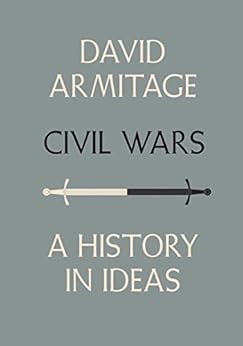
In the New Rambler, John Witt reviews David Armitage’s Civil Wars: A History in Ideas, which is a “brilliant … adventure” through civil wars throughout the ages, and shows how the contested meaning of the “civil war” is a “core feature of its significance.” Karen R. Long reviews Armitage’s book for Newsday.
In the LARB, Brian Goodman reviews Timothy Garton Ash’s Free Speech: Ten Principles for a Connected World and Josh Jacobs reviews John Pfaff’s Locked In: The True Causes of Mass Incarceration and How to Achieve Real Reform, which seeks to correct the “myth” that punishment of drug offenses and other nonviolent crimes, alone, caused mass incarceration. Rachel Lu reviewed Pfaff’s book for the National Review.

The March issue of the Federal Lawyer includes reviews of Game Over: The Inside Story of the Greek Crisis, by George Papaconstantinou; Waging War: The Clash Between Presidents and Congress, 1776 to ISIS, by David J. Barron, and Once in a Great City: A Detroit Story, by David Maraniss.
The New Books Network offers interview-reviews with Christopher Lowen Agee (on his recent book, The Streets of San Francisco: Policing and the Creation of a Cosmopolitan Liberal Politics, 1950-1972), Tyina Steptoe (on Houston Bound: Culture and Color in a Jim Crow City), Phoebe Chow (on Britain’s Imperial Retreat from China, 1900-1931), Paul Harvey (on Bounds of Their Habitation: Race and Religion in American History), and Benjamin Schonthal (on Buddhism, Politics and the Limits of Law: The Pyrrhic Constitutionalism of Sri Lanka, which examines the relationship between constitutional law and religious conflict in Sri Lanka during the twentieth and twenty-first centuries). And if your desire reviews of Blitzed parallels a young Nazi's hunger for Orchikrin, check out this interview with Norman Ohler.
In The Guardian, Julia Lovell reviews The Cultural Revolution on Trial, Alexander Cook’s history of the the 1980 trial of the Gang of Four, which, Cook argues, “exposed intriguing faultlines in a political system struggling to break with revolutionary politics,” and Colin Kidd reviews David Horspool’s Oliver Cromwell: The Protector and Cromwell’s “dithering” between political forms.
In the New Rambler, John Witt reviews David Armitage’s Civil Wars: A History in Ideas, which is a “brilliant … adventure” through civil wars throughout the ages, and shows how the contested meaning of the “civil war” is a “core feature of its significance.” Karen R. Long reviews Armitage’s book for Newsday.
In the LARB, Brian Goodman reviews Timothy Garton Ash’s Free Speech: Ten Principles for a Connected World and Josh Jacobs reviews John Pfaff’s Locked In: The True Causes of Mass Incarceration and How to Achieve Real Reform, which seeks to correct the “myth” that punishment of drug offenses and other nonviolent crimes, alone, caused mass incarceration. Rachel Lu reviewed Pfaff’s book for the National Review.
The March issue of the Federal Lawyer includes reviews of Game Over: The Inside Story of the Greek Crisis, by George Papaconstantinou; Waging War: The Clash Between Presidents and Congress, 1776 to ISIS, by David J. Barron, and Once in a Great City: A Detroit Story, by David Maraniss.
The New Books Network offers interview-reviews with Christopher Lowen Agee (on his recent book, The Streets of San Francisco: Policing and the Creation of a Cosmopolitan Liberal Politics, 1950-1972), Tyina Steptoe (on Houston Bound: Culture and Color in a Jim Crow City), Phoebe Chow (on Britain’s Imperial Retreat from China, 1900-1931), Paul Harvey (on Bounds of Their Habitation: Race and Religion in American History), and Benjamin Schonthal (on Buddhism, Politics and the Limits of Law: The Pyrrhic Constitutionalism of Sri Lanka, which examines the relationship between constitutional law and religious conflict in Sri Lanka during the twentieth and twenty-first centuries). And if your desire reviews of Blitzed parallels a young Nazi's hunger for Orchikrin, check out this interview with Norman Ohler.
Subscribe to:
Posts (Atom)