Showing posts with label Legal thought. Show all posts

Monday, August 3, 2026

Balkin on How Social Power Shapes Legal Reason

Jack M. Balkin, Yale Law School, has posted From Off the Wall to On the Wall: How Social Power Shapes Legal Reason:

Throughout the history of the Constitution legal arguments have moved from being "off the wall"-- crazy incompetent, and beyond the boundaries of professional reason, to "on the wall"-- plausible claims on which reasonable minds can differ. Some of these claims have eventually become part of the law, and a few have become orthodox, so that denying them would be off the wall.

This article explains how and why this happens. Arguments move along a spectrum of plausibility depending on who occupies important nodes of power and influence in society. These include political leaders, political parties, social movements, the media, elite lawyers, and legal intellectuals. When powerful actors invest in a fringe claim, they compel the legal profession to debate it. Arguments move on the wall not by general acceptance but by compelled engagement.

Several examples show how this dynamic works in practice. Arguments for same sex marriage only slowly gained traction because gays and lesbians had little social status and had to build support over decades. The constitutional challenge to Obamacare's individual mandate moved on the wall in only a few years because the Republican Party and conservative media were unified behind it. The equal protection argument in Bush v. Gore took only a month because control of the government was at stake. The Trump administration's recent challenge to birthright citizenship had the support of a sitting president, the MAGA social movement, the Republican Party, and the party's affiliated media and institutions. Conservative legal intellectuals quickly devised arguments designed to appeal to a Supreme Court six of whose members were conservatives appointed by Republican presidents.

Underlying this phenomenon is the dual nature of legal consciousness, which combines acceptance of shared professional norms with constitutional protestantism, the belief that individuals can interpret the Constitution for themselves. The phenomenon also exemplifies law's dual character as fixed in the short run and mutable in the long run. Legal education cultivates this duality, training lawyers both to treat existing law as authoritative and to creatively deconstruct it.

The theory recasts jurisprudential debates over legal indeterminacy from the nature of language to sociology and culture. Legal materials are flexible but not infinitely malleable; they are tilted towards entrenched interests until sustained social power changes them. Following these changes, constitutional culture frequently rewrites its own history. Formerly off-the-wall claims that win out are later heralded as always having been correct, while formerly accepted decisions, such as Plessy v. Ferguson, are denounced as “wrong the day they were decided.” This triumphalist narrative obscures the intense social and political labor required to shift the boundaries of professional reason. 

--Dan Ernst 

Friday, July 24, 2026

Smith on Catholic Constitutional Republicanism

Thomas A. Smith, emeritus at University of San Diego School of Law, has posted Catholic Constitutional Republicanism: Suárez, the School of Salamanca, and the American Law of Public Power:   

American constitutional theory traces its lineage to Hobbes, Locke, Montesquieu, and the common law; the political thought of the Spanish neo-scholastics rarely appears in the standard account. This Article recovers that tradition, with particular attention to Francisco Suárez, and argues that it supplies a constitutional theory of public power resisting both Hobbesian absolutism and a thin, individualist Lockeanism. Rulers hold jurisdiction rather than dominion, so a king does not own the realm he governs. Law is an ordinance of reason for the common good rather than the sovereign’s bare command. Office confers authority for another’s good; a ruler who converts public power into private advantage does not merely govern badly but corrupts the office itself. The recovery is offered with its costs stated rather than concealed. The same doctrine that limited the civil ruler served, in its original setting, a claim for the Church’s indirect power over him; the Article marks this cost wherever it bears on the argument. On most of the concepts recovered here, from the distinction between office and ownership to the corporate personality of the people, the tradition systematized a Roman and canonical inheritance more than it originated one. Two claims are stronger: Suárez’s theory of law as reasoned ordinance, and Vitoria’s contribution to the law of nations. The Article also distinguishes this recovery from Adrian Vermeule’s common good constitutionalism, which trusts the magistrate to specify the common good through determinatio; the tradition recovered here begins instead from the corruptibility of that discretion, and treats constitutional form as part of the common good rather than a constraint upon it. The tradition does not decide cases. It names the wrong that the American law of office exists to prevent: the conversion of a public trust into a private possession. 

--Dan Ernst 

Monday, July 20, 2026

Corcos on Tocqueville in Canadian Judicial Opinions

Christine A. Corcos, Louisiana State University Paul M. Hebert Law Center, has posted The Uses of Alexis de Tocqueville's Writings in Canadian Judicial Opinions, which appears in Moréteau on Law, Language and Heritage, edited by Agustín Parise, Mariano Vitetta and Michel Séjean (Praxis Jurídica Ediciones, 2026) 1:365-386 

At least one scholar, Nancy McCormack, has examined the reasons for which Canadian judges cite to philosophers in their writings. She notes that John Stuart Mill leads the list, but Confucius, Plato, Aristotle, Machiavelli, Thomas More, Hobbes, Locke, Descartes, and Kant are some of the other choices. Interestingly, she does not discuss Tocqueville. However, a number of Canadian judges have mentioned or discussed Tocqueville and his writings in their opinions, or cited passages from secondary sources that cite him. The most popular Tocquevillian writing for such jurists, whether in the majority or the dissent is Democracy in America, to support various views as they interpret the Charter and various statutes. Because he analyzed government in the areas of separation of powers, elections, judicial review, and human rights, these are the areas that judges find of great interest, and that they mine for quotations or support in cases in these issues come to the fore.

--Dan Ernst 

Friday, June 19, 2026

History at the Brigham-Kanner Property Rights Conference


The 23rd Annual Brigham-Kanner Property Rights Conference, to be held October 14–16, 2026, in
London, England, has at least two session of interest to legal historians.

Roman, English, and Other Legacies: The Role of History in Property Law
More than other areas of basic private law, property draws upon and reflects historical sources and practices in a wide range of contexts and applications.  This panel will explore how and why historical considerations shape contemporary property law.  Discussion will address the uses and limits of historical analysis in property theory and doctrine, including questions about continuity, adaptation, and divergence. The panel will also consider how appeals to history inform present-day debates about ownership, authority, and the evolution of property institutions.
Of Locke, Bentham, and Blackstone: English Contributions to Property’s Philosophical Foundations
This panel will discuss normative justifications for property law, with a special emphasis on the contributions of major English theorists.  It will explore how themes of labor, productivity, security, and legal order have shaped enduring understandings of ownership and its moral underpinnings.  The discussion will consider the continuing influence of writers like Locke, Bentham, and Blackstone on contemporary property theory, as well as the tensions among their approaches.

--Dan Ernst 

Saturday, May 30, 2026

Weekend Roundup

  • A review symposium on Serena Mayeri’s Marital Privilege: Marriage, Inequality, and the Transformation of American Law, with contributions from Albertina Antognini, Cary Franklin, Jessica Dixon Weaver, Deborah Dinner, Linda C. McClain, and Katie Eyer, with a response by Professor Mayeri (BU Law Review Online).  
  • Marlene Trestman will be in conversation about her book, Fair Labor Lawyer: The Remarkable Life of New Deal Attorney and Supreme Court Advocate Bessie Margolin, in person and online, with Senior Judge Beryl A. Howell of the US District Court for the District of Columbia at the Capital Jewish Museum in DC on June 4, from 6:30-7:30.  Register here.
  • Bill Littlefield reviews Gautham Rao's White Power: Policing American Slavery (arts fuse).
  • Jonathan Parry reviews H.S. Jones’s Liberal Worlds: James Bryce and the Democratic Intellect (London Review of Books).
  • Robert Tsai and others will discuss John Brown's provisional constitution on June 29. 
  • Rodger Citron on that podcast with Samantha Barbas on her book on New York Times v. Sullivan (Verdict).   

Weekend Roundup is a weekly feature compiled by all the Legal History bloggers. 

Wednesday, May 27, 2026

Mortenson on Text and Purpose in Anglo-American Law

 Julian Davis Mortenson, University of Michigan Law School, has posted “Westminster Quibbles”: The Antinomy of Text and Purpose in Eighteenth-Century Anglo-American Legal Culture, which is forthcoming in the Journal of the Early Republic:

In the wake of the battle of Bunker Hill, the British government's efforts to fortify its colonial positions triggered a constitutional crisis and political scandal that were followed closely by an anxious North American public. The public debate about the legality of the ministry's troop movements illustrates two points about the structure and habits of transatlantic legal culture. 

First, lawyerly arguments about “merely” technical wrongdoing could have immense political force in the practice of power politics at the highest level. Law mattered to how elite decisionmakers talked as politicians; it shaped what they did as legislators; and it affected how the press and the public reacted on both sides of the Atlantic. Second, even as the political class took it for granted that political decisionmaking would be infused by legalized disputation, they pervasively contested which kinds of legal arguments counted as formally valid and analytically persuasive. They debated, in other words, what it meant to “do law.”

The first point emphasizes the cultural power of law as a motivating and channeling force in the real world for people negotiating complex social problems. The second point surfaces an antinomy that was central to early American legal argument: the twin commands to respect both the demands of a law’s spirit and the specifications of its letter. The latter imperative was simultaneously internal to law and also a direct link to the sort of messy social considerations that formalism seeks to exclude from the domain of law proper.
--Dan Ersnt

Thursday, May 7, 2026

Gindis and Medema on the Origins of the Law and Economics Movement

David Gindis, University of Warwick Law School, and Steven G. Medema, Duke University, have posted Henry Manne, Pareto in the Pines, and the Origins of the Law and Economics Movement:

Law and economics—or the application of economic reasoning and methods to the study of law—was a niche topic of study at Chicago and Yale in 1950s and 1960s, before coming out of the wilderness in the early 1970s and becoming an institutionalized feature of American legal education by the late 1980s. Relying on archival material, the paper shows how this remarkable transformation was driven by an academic entrepreneur, Henry Manne, who in 1971 started a summer school in economics for law professors. This program prepared the ground for, and gave shape to, the intellectual and geographical spread of law and economics. But Manne's enterprise would not have succeeded had there not been a widespread demand for the inclusion of social science research in the law school curriculum, combined with the failure of the alternative law and society movement—which sought to apply sociological concepts and methodologies to the study of legal phenomena—to establish a real toehold in the law school world.

--Dan Ernst 

Thursday, April 23, 2026

Basile on the 19th-Century Turn to Textualism

Marco Basile, Boston College Law School, has posted Old Textualism, New Juristocracy, which is forthcoming in the New York University Law Review:

This Article traces the emergence of text-centric theories of legal interpretation in the early nineteenth century amid an increasingly writing-based legal culture. While many scholars and judges associate textualism with the Founding period’s enactment of written constitutions and innovation in the separation of powers, this Article argues that the first “textualist” turn in legal interpretation crystallized after the Founding and reflected transnational developments. Not until the 1830s through 1850s did certain jurists on both sides of the Atlantic elaborate interpretive theories predicated on understanding a written law as an ordinary linguistic communication, as opposed to being in part declaratory of unwritten principles. This new emphasis on the enacted text reflected the increasingly writing-based legal culture of the early nineteenth century enabled by the industrial revolution in print and communication technologies. Amid this technological change, old textualists believed they were bringing the equivalent of modern steam power to legal interpretation.

Indeed, it was their work from the 1830s through 1850s, not the Founding, that Justice Scalia cited as muses for his project to revive a text-centric “science” of legal interpretation. Scalia’s new textualism, however, differed from old textualism. New textualism emphasizes the public legibility of the enacted text and how that public legibility operates to constrain judicial discretion. Old textualism, by contrast, understood law as a largely technical language and instead promoted a vision of legal interpretation that advanced public ends through non-public means. Old textualists ultimately sought to claim interpretation as the expertise of judges and to reassure skeptics that judges could exercise this expertise objectively—laying groundwork for the rise of judicial supremacy that would follow. 

--Dan Ernst 

Friday, April 17, 2026

Amorosa and Suuronen on Schmitt and Vitoria

Paolo Amorosa, University of Helsinki Faculty of Law, and Ville Suuronen, University of Turku, have posted 'Ancora tu?' Questioning Carl Schmitt's Place in the Canon of International Law

In recent decades, the controversial intellectual legacy of Carl Schmitt, leading Nazi lawyer, has returned to prominence in political and legal theory as well as in international law. Schmitt’s work continues to inspire not only conservative and far-right thinkers but, somewhat surprisingly, also serves as a source of inspiration to leftist or even postcolonial positions. This revival is often justified through a decoupling of Schmitt’s odious political commitments from what is often seen as his uniquely valuable insight into the nature and history of the international legal order. The goal of this chapter is to problematize and question this decoupling and the resulting canonical position Schmitt has acquired as a theorist and historian of international law. As our starting point to this complex debate, we offer a critical analysis of Schmitt’s profoundly political narration of the history of international law, and in particular, his supposedly neutral appropriation of Francisco de Vitoria, usually examined apart from the historical context and motives that inspire Schmitt to take up this figure in the 1940s. By comparing Schmitt’s work on Vitoria with his earlier publications on international law, we offer a historical contextualization of the development of Schmitt’s arguments, showing how these were motivated by unscholarly and overtly political intentions. Indeed, Schmitt used Vitoria to develop a complex historical narrative of international law which not only reiterated far-right revanchist positions on the Treaty of Versailles but also aimed to offer an apologetic narrative concerning his own role within the Nazi party. 

--Dan Ernst 

Monday, March 9, 2026

Davies on Pollock's Humor

Ross E. Davies, George Mason University Antonin Scalia Law School, has posted A Wig Without a Home: The Comedic Wisdom of Sir Frederick Pollock, which appeared in the Green Bag 2d:

Frederick Pollock (1845-1937) was the Green Bag’s kind of scholar. The first half of this paper consists of a sketch of his career and character, followed by a closer look at his sense of humor and the roles it played in his work. The second half of the paper is in two sections. First, there is a full republication of the text of a tiny book — a short story by Pollock titled “Queen Titania’s Chancellor”— that for nearly a century sat unnoticed on a bookshelf in the library of the Queen’s Dolls’ at Windsor Castle, until Elizabeth Clark Ashby (Curator of Books and Manuscripts in the Royal Library at Windsor Castle) gave Pollock’s miniature masterpiece some long-overdue and well-deserved attention in her 2024 book (full-sized), “The Miniature Library of Queen Mary’s Dolls’ House.” Second, there is a close (but incomplete) reading and analysis of that tiny text. If there are any lessons to be drawn from this paper, perhaps they are that greatness need not always be cloaked in dignity, and that Jack Point was not the only wit who could “teach you with a quip, if I’ve a mind” or “trick you into learning with a laugh.”

--Dan Ernst 

Friday, March 6, 2026

Cannan on the King of the Treatise Writers

John Cannan, Villanova University Charles Widger School of Law, on Joel Bishop's Reign as King of the Treatise Writers and What it Means for Persuasive Authority:

Joel Prentiss Bishop (wiki)
What does this say about law practice and legal education, which has long embraced and professed a perception of persuasive authority, mostly ruled by a rigid source hierarchy, that does not work and likely never did? Recently, there have been challenges to this status quo. The most comprehensive was made by Professor Amy Griffin in her article, Dethroning the Hierarchy of Authority, in which she demonstrated the necessity for a new understanding of persuasive authority and how to go about making one. This paper buttresses and strengthens her arguments by examining a persuasive authority case study-an authoritative biography, or rather a biography of the authority of Joel Prentiss Bishop, one of the greatest treatise writers of the 19th century. This biography is a concrete example to bolster Griffin's critique that persuasive authority is a vast and shifting field, with multiple influences and impacts that must be described in a new and more flexible way. The course of this article is as follows. First, it describes the nature and current understanding of persuasive authority and Griffin's challenge to the existing order. Griffin's call for a more pluralistic framework is combined with the observations of librarian and philosopher Patrick Wilson to suggest a means to better understand persuasive authority. Parts II-IV tell the history of Bishop's rise as a treatise writer and authority; the slow decline of his authoritative status after his death; and his recent resurrection as an authority, primarily by the United States Supreme Court. Part V demonstrates how Bishop's history as an authority supports Griffin's imperative for a new understanding of persuasive authority, especially as legal research and practice are increasingly influenced by new artificial intelligence (AI) tools. 

--Dan Ernst

Monday, February 23, 2026

Karl Llewellyn Archive at the Perelman Centre in Brussels

 [We have the following announcement.  DRE.  H/t: DS]

The Twining-Llewellyn Fund is a unique collection of several hundred documents and works collected by William Twining (1934-2025) over the course of his career. The collection is housed at the Perelman Centre in Brussels. A significant portion of these documents illuminate the life and work of Karl N. Llewellyn. The documents in the archive, sometimes original, often commented on by Twining, date from the 1910s to the 1960s. The collection contains the bulk of Llewellyn’s publications, the transcription of several dozen unpublished works and some of his lecture notes. Researchers will also be able to read many of his personal and professional letters, as well as dozens of documents related to his research and the development of the UCC. The archive is open to the public and can be consulted by researchers.  The full catalogue of the Llewellyn archive can be accessed here.

[The main body of Llewellyn's papers are at the University of Chicago, but this is an impressive collection, particularly for as a comprehensive bibliography of Llewellyn's writings, published and unpublished.]

Friday, January 9, 2026

Kennedy on Derrida and the Crits

Duncan Kennedy, Harvard Law School, has posted The reception of Jacques Derrida in American Critical Legal Studies

This article describes in some detail the way in which critical legal scholars in the 1980s read, appropriated and then used versions of some of Jacques Derrida’s ideas, particularly the idea of deconstruction. They first of all understood deconstruction as a procedure close in many ways to the sociological jurists’ and legal realists’ critiques of the conceptual apparatus of classical legal thought. They debated and disagreed about the implications of the resulting Franco-American amalgam and applied different versions of it to contemporary debates about legal reasoning and doctrinal indeterminacy, and then extended them to debates about gender, “identity” and law and economics. The article ends with my own existentialist decisionist reading, from within these debates, of some canonical Derridean aphoristic slogans.  

--Dan Ernst 

Tuesday, January 6, 2026

Italian Review of Legal History 11

[Italian Review of Legal History 11 (2025) has been published open access online.  Unsurprisingly, most of the contributions are in Italian.  We note those available in English below.  H/t: ESCLH Blog.  DRE.]

Sul Diritto dei popoli, il pensiero di John Rawls (English
Antonio Padoa Schioppa

La diserzione nel contesto della mobilitazione generale: Esperienza storica e sfide attuali (English
Serhii Khalymon, Liudmyla Litvin, Viktor Tyshchuk
 
Giurisdizione militare e stato democratico. Dalla giustizia dei capi alla legge 180/1981
Floriana Colao

Cura dei poveri e sicurezza sociale nell’Inghilterra di Età Tudor: Il ruolo dei Justices of the Peace
Dolores Freda

La colonizzazione democratica. Lotte per la terra, riforma agraria e attuazione costituzionale nel dopoguerra
Paolo Passaniti

Lo sviluppo della teoria dell’atto amministrativo come espressione dei valori del diritto amministrativo (English)
Andrzej Adamczyk

El espejo tiznado: el Tratado de París (1898) en la historia jurídica de Puerto Rico (English
José R. Gómez Biamón 

Il concetto di “popolo” nella prospettiva intergenerazionale
Raffaele Marzo

Un esame filosofico del patto sociale nella ricostruzione della società sudafricana (English
Konanani Happy Raligilia, Rorisang Gomolemo Thage, Lufuno Tokyo Nevondwe, Kolawole Olusola Odeku, Lesiba Benedict Moshoeu

Altri temi

Para uma história de gavetas: o projeto de código penal brasileiro de Galdino Siqueira (1913)
Ricardo Sontag

Schede bibliografiche


Recensione a Antonio Grilli, Resistenza e repressione. Il Tribunale speciale per la difesa dello Stato nella RSI (1943-1945), Roma, Carocci, 2024
Floriana Colao

Recensione a Paolo Passaniti, La riforma agraria in Italia. La Maremma dell’Ente Maremma, Pisa, Pacini, 2024
Federico Roggero

Il fascino dell’anomalia: leggendo Davide Rossi, Il lungo Novecento della frontiera adriatica. Transizioni istituzionali e modifiche giuridiche, Soveria Mannelli, Rubbettino, 2025
Alberto Sciumè

Recensione a Mario Ascheri e Fabrizio Ricciardelli, The City-states in Late Medieval Italy, Roma, Viella Editrice, 2024
Claudia Storti

Dibattiti: Una storia non solo per storici. Presentazione della monografia di Marzia Lucchesi, Diritto, pedagogia e femminismo. Valeria Benetti (1908-1914), Napoli, Satura Editrice, 2023 (San Salvatore Monferrato, 27 giugno 2025)
Introduzione al dibattito sul libro di Marzia Lucchesi Diritto, pedagogia e femminismo. Valeria Benetti 1908-1914
Enrico Beccaria

Valeria Benetti e il lungo itinerario della questione femminile
Ettore Dezza

Considerazioni sul volume di Marzia Lucchesi Diritto, pedagogia e femminismo. Valeria Benetti (1908-1914)
Giulia Giustetto

Alcune considerazioni tra passato e presente sul libro di Marzia Lucchesi Diritto, pedagogia e femminismo. Valeria Benetti 1908-1914
Claudia Storti

L’attualità del pensiero e dell’opera di Valeria Benetti
Marzia Lucchesi

Tuesday, December 30, 2025

Eldridge on Vinogradoff

Lorren Eldridge, University of Cambridge, has posted Gone and Forgotten: Vinogradoff's Historical Jurisprudence:

Sir Paul Vinogradoff was once well-known for his historically contextualised approach to legal theory which held that legal ideas were the contingent products of social factors. Law was necessarily engaged with other subjects, and ‘historical jurisprudence’ could produce real insight into the nature of law - in part by placing theories such as analytical jurisprudence in context, evaluating and modifying theoretical models by reference to the contingent social facts of an era. This was part of the nineteenth century turn to ‘science’ in history and a focus on methodology. Sir Henry Maine argued that legal history proved the insufficiency of analytic theories, but his method met with many criticisms, some of which Vinogradoff sought to address. However, Vinogradoff’s insights have rarely been pursued or developed, with legal history favouring Maitland’s more doctrinal approach, and legal theory rejecting historical jurisprudence – at least explicitly. Despite its imperfections, historical jurisprudence offers a rich and valuable way to understand law, including to evaluate analytical models such of those of H L A Hart, and as a methodology for dialogue between comparative and historical legal scholarship. It has, in fact, continued to do so without explicit recognition in the 100 years since Vinogradoff’s death. 

--Dan Ernst 

Tuesday, December 2, 2025

William Twining (1935-2025)

 [We are grateful to David Sugarman for this notice.  DRE]

Professor William Twining, a leading figure in the world of legal education and scholarship, died peacefully at home on October 9 aged 91.  Twining’s work on Karl Llewellyn, with whom he had studied in the late 1950’s, notably, The Karl Llewellyn Papers (University of Chicago Law School, 1968) and Karl Llewellyn and the Realist Movement (Cambridge University Press 1973, 2nd edn 2012), challenged many misconceptions concerning Llewellyn’s ideas and the legal realist movement and set in train a significant re-evaluation of their nature and significance. Twining donated his private collection of documents, published and unpublished, related to legal realism and pragmatism, to the Perelman Centre, Brussels, for scholars to use in the future: Le Centre Perelman - Centre Perelman.

For a more detailed treatment of Twining’s life and work, see https://www.slsa.ac.uk/sln-online-content#twining

Friday, November 28, 2025

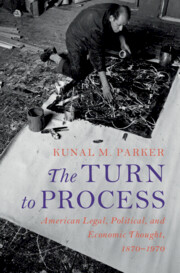
ASLH John Phillip Reid Book Award to Parker for "The Turn to Process"

Continuing with our notices of the awards, prizes, and fellowships announced at the recent meeting of the American Society for Legal History, we turn now to the John Phillip Reid Book Award

About the award: This prize is "awarded annually for the best monograph by a mid-career or senior scholar, published in English in any of the fields defined broadly as Anglo-American legal history. The prize is named for John Phillip Reid, the prolific legal historian and founding member of the Society, and made possible by the generous contributions of his friends and colleagues. When awarding this prize, preference is given to work that falls within Reid’s own interests in seventeenth- through nineteenth-century Anglo-America and Native American law. 

This year's award went to Kunal M. Parker (University of Miami School of Law) for The Turn to Process: American Legal, Political, and Economic Thought, 1870–1970 (Cambridge University Press, 2024. The citation:

Kunal Parker’s The Turn to Process is a brilliant intellectual history of how social science thinkers in law, political science, and economics between 1870 and 1970 stopped emphasizing ostensibly knowable truths and focused instead on methods, techniques, and processes. Parker shows how this transformation was entwined with the rise of the administrative state. After documenting this major epistemological shift, he argues that during the Cold War, once-supple claims about the importance of process and method were narrowed and decontextualized, playing oppositional roles to democratization, civil rights, and managed capitalism. This highly effective, very creative book places law, as practice and as a field of inquiry, in a larger context and illuminates essential questions about the history of knowledge and intellectual authority.

Congratulations to Professor Parker! 

-- Karen Tani

Tuesday, September 30, 2025

du Plessis's "Henry Maine’s Ancient Law as an Expression of Victorian Humanism"

Paul J. du Plessis, University of Edinburgh, has published Henry Maine’s Ancient Law as an Expression of Victorian Humanism (University of Edinburgh Press):

This monograph offers a comprehensive contextual analysis of Maine’s Ancient Law, emphasising the author’s use of various sources to construct the book's key themes. Ancient Law was written as a sophisticated piece of rhetorical prose grounded in Maine’s education in the classics. Central to this analysis is the significant role of Roman law in shaping the narrative, particularly its influence on Maine’s arguments and conclusions.

The monograph also positions Maine’s work within the broader intellectual debates of the nineteenth century, especially concerning the teaching of English law and Britain’s colonial presence in India. By situating Maine’s Ancient Law within this larger context, the study enhances our understanding of the text, revealing the historical legal framework that resonates in modern legal discourse and thought. This connection enriches our knowledge of Maine’s contributions and highlights the enduring relevance of his ideas.
–Dan Ernst

Friday, September 19, 2025

Priel on the Political Theories of the Legal Realists

 Dan Priel, Osgoode Hall Law School, has posted The Political Theories of the Legal Realists:

Jerome Frank, with William Douglas (LC)
A popular view about the legal realists is that, either knowingly or inadvertently, they advanced ideas inconsistent with traditional values, democracy, and the rule of law. Another view about them suggested that the realists had no political theory: they only offered a descriptive (empirical) theory of adjudication, albeit one that has normatively "quietist" implications. In this essay, I challenge both views. I argue that there were two legal realist camps whose jurisprudential ideas presupposed two quite different political theories. One group of legal realists consisted of public utilitarians who were consciously inspired by Bentham, wanted to turn legal and political theory into a science, and who thought law should be evaluated by its ability to increase social welfare. The other group had a very different political theory underlying its approach to law. For these legal realists, law was a traditionary institution, which should reflect, and be continuous with, community customs and values. After showing these different views, I show their relevance to contemporary debates in different areas of law. 

--Dan Ernst 

Friday, August 1, 2025