Showing posts with label History of Technology. Show all posts

Saturday, April 11, 2026

Weekend Roundup

  • The California Law Review's podcast has posted an episode on Michael Banerjee's "What Harvard’s Lawsuit Should Have Said" (published in the journal's online companion in August 2025).
  • Congratulations to Kunal Parker, Miami Law, on his selection as Beatrice Webb Visiting Professor at the London School of Economics! 
  • And congratulations to Edward J. Balleisen, the new Provost of George Washington University! (GW Today)
  • Nathan Dorn on Lodovico Carerio: Heresy, Lawbooks, and the Inquisition in the Kingdom of Naples (In Custodia Legis).   
  • "The 1874 Arkansas Constitution and records from the convention that produced it are now available online through a collaboration between the University of Arkansas Libraries and the Quill Project at the University of Oxford" (Arkansas News
  • Lawbook Exchange's April catalogue of Scholarly Law and Legal History.     
  • The National Constitution Center has announced the opening on May 15 of "Governing the Nation, a new permanent gallery exploring the Constitution’s system of separated powers."  Its development was guided by "a distinguished scholarly advisory board representing leading universities and research institutions, ensuring a rigorous and balanced exploration of the separation of powers and federalism," including H. W. Brands, Cristina Rodríguez, Yuval Levin, Michael Klarman, Gail Heriot, and Ilan Wurman.
  • Deborah Rosen reviews Andrew Fede's A Degraded Caste of Society in the Journal of Southern History.
  • That E.O. on the PRA:  The American Historical Association and American Oversight file suit (CBS News).  The Trump Administration Is Trying to Erase Its Own History (Atlantic Daily).  Joyce Vance with the court filing (Civil Discourse).  The AHA's notice of the lawsuit.
  • More on Birthright CitizenshipSteve Vladeck, Georgetown Law, on the "pitched battle within the legal academy over the fairly transparent efforts of a small cohort of right-wing law professors to provide a fig leaf of historical support for the Trump administration’s legally and morally odious position in the birthright citizenship case" (One First). Philip Hamburger, Columbia Law, on Allegiance, Birthright, and Citizenship (Law & Liberty).  For a brief time only, you may read, open access, the introduction to Anna O. Law's Migration and the Origins of American Citizenship, here.

Weekend Roundup is a weekly feature compiled by all the Legal History bloggers. 

Monday, November 18, 2024

Zoom Symposium: British Crosswalks and American Airlines

[We have the following announcement.  DRE]

Law, Culture, and the Humanities is sponsoring a symposium via Zoom, Wheels and Wings: Law, Regulation, and Mass Mobility in the 20th Century, on November 20 @ 12:00 pm – 1:30 pm.  Eva Vaillancourt (History, UC Berkeley) and Joanna Grisinger (Law, Northwestern University) bring their recent research projects into conversation.  Register here.

Eva Vaillancourt, Dept. of History, UC Berkeley.  "The Birth of the British Crosswalk: Mystical Lines, Mechanical Obedience, and the Puzzle of Law-as-Infrastructure”


When the first pedestrian crosswalks appeared in Britain in 1934, most people found them baffling, if not a little absurd: how do painted lines on the pavement protect you from oncoming cars? They don’t, one comedian remarked: “But if a car kills you while you are standing in it, the police won’t blame you.” This paper follows the crosswalk’s early career in British tort law, where the meaning of this new technology was hashed out over a series of cases in the late 1930s and 40s. Debate turned on questions of the body in time and space (e.g. How close to the crosswalk does a car have to be before the pedestrian’s decision to assert her right-of-way becomes “unreasonable?”), but also on wider questions about law itself. Is following the state’s rules enough to satisfy your duty of care to your fellow man? Can state regulation replace moral and situational judgment, effectively “automating” the unstable human relationships on which social reproduction depends? Finally, can we rely on legal rules to deliver a person safely from one side of the street to the other, in the same way we’d trust a bridge to deliver us safely across a river? In short, are legal rules a form of infrastructure?  

Joanna Grisinger, Center for Legal Studies, Northwestern University.  “The Highs and Lows of Airline Travel: Consumer Rights, Airlines, and the Civil Aeronautics Board”

In the 1960s and 1970s, as soon as Americans began traveling by air in record numbers, they began complaining about it. Passengers took offense at race discrimination, sex discrimination, discrimination against physically disabled passengers, discrimination against non-VIPs, delayed and cancelled flights, lost luggage, the lack of seatbelts in airplane bathrooms, and the absence of hot dogs from airline menus. Aggrieved passengers turned to the federal Civil Aeronautics Board, demanding that the federal government put passengers at the center of its regulatory efforts. This clash between competing definitions of the public interest forced the board to reorient its traditional reactive approach to enforcing the law, and to adopt more proactive measures that established rules for passengers and airlines alike.

Monday, July 31, 2023

Friedman's "Law, Science, and Technology" and "Personal Identity in the Modern World"

Rowman & Littlefield has published Law, Science, and Technology: Historical and Social Context (May 2023), by Lawrence M. Friedman (Stanford Law School). A description from the Press:

Through a series of historical analyses, Friedman explores the relationship between the legal system and the development of modern science and technology. The scientific revolution produced major changes in culture; and these in turn led to changes in government and law. The book covers, among other topics, the transportation revolution; the camera and the entertainment industry; the “germ theory” and its influence on modern society; and the role of culture and technology in the sexual revolution.

A selection of advance praise:

Why does the law change? In a discussion that is somehow both erudite and fun to read, drawing on case studies ranging from cars to cameras to vaccines, Lawrence Friedman persuasively suggests that technological developments lead to cultural transformations, which in turn produce changes in the law. Anyone interested in the relationship between law and technology will want to read this book. -- Stuart Banner

Friedman has written a wonderful book that investigates the intertwined nature of law, science and technology, and the role played by law in a modern complex society. As is true for all Friedman’s books, he presents a social history that is accessible to lay persons as well as legal history devotees. As a reader, you are drawn in by the stories that shed light on dramatic cultural and legal change. -- Joyce Sterling

Also of note: Friedman's Personal Identity in the Modern World: A Society of Strangers, published by Rowman & Littlefield in August 2022:

In a society of strangers, there develops what can be called crimes of mobility -- forms of criminality rare in traditional societies: bigamy, the confidence game, and blackmail, for example. What they have in common is a kind of fraudulent role-playing, which the new society makes possible. This book explores the social and legal consequences of social and geographical mobility in the United States and Great Britain from the beginning of the 19th century on. Personal identity became more fluid. Lines between classes blurred. Impostors abound.
A selection from the blurbs:

On a sweeping canvas that covers two centuries of legal and literary history, eminent historian Lawrence Friedman shares his observations about the power of mobility—both geographic and social—to transform personal identity. During the 19th century, the United States morphed from a collection of face-to-face local communities into an anonymous, urbanized nation in which men and, to a lesser extent, women could alter their socioeconomic status, their religion, and even their perceived race, along with their place of residence. But the potential to craft new identities also raised the disconcerting prospect that people were not who they seemed and that, beneath the veneer presented to the outside world, deviance and criminality might lurk. America and Great Britain gradually shed repressive Victorian norms in favor of “expressive individualism,” but prisons and other institutions developed for law-breakers and the poor continued to exert control. Friedman concludes with the insight that 21st-century globalization and technology have created a new type of village that sacrifices privacy for connectedness. His latest book makes an entertaining and thought-provoking read. -- Carolyn B. Ramsey

-- Karen Tani 

Wednesday, May 24, 2023

The Technology and Construction Court at 150

The History of the Technology and Construction Court on Its 150th Anniversary: Rewriting the Rules, edited by Peter Coulson and David Sawtell is now out from Bloomsbury/Hart:

This collection marks the 150th anniversary of the Technology and Construction Court by presenting insights into its history and impact.

The contributors are current and retired senior judges, renowned academics and leading construction and technology lawyers. The book draws on their different perspectives and approaches to showcase different aspects of the Official Referees and the TCC from its origins in the Judicature Act 1873 through to its modern-day role as an international leader in dispute resolution through litigation, arbitration and adjudication.

Different essays consider the role of the TCC in procedural reform and the digital transformation of dispute resolution, building safety, and how it has impacted on doctrinal English law.

The book also explores the lives and impact of notable Official Referees and TCC judges from the senior judiciary's perspective, with contributions by Lord Dyson on the transition from the Official Referees to the TCC, Sir Rupert Jackson on the Housing Grants, Construction and Regeneration Act 1996, Dame Finola O'Farrell on the TCC today, Sir Peter Coulson on Sir Brett Cloutman QC (a Senior Referee who was awarded a Victoria Cross) and Her Honour Frances Kirkham on the court's role in the regions.

The creation of a specialist dispute resolution forum for complicated engineering, construction and technological disputes is a foundational milestone in the legal history of construction law in England and Wales. This collection offers a unique insight from the judiciary, practising lawyers and academics into the significance and development of the court.
–Dan Ernst

Thursday, April 20, 2023

Argument in US v. Microsoft to be Reenacted

[We have the following announcement.  DRE.]

The Historical Society of the District of Columbia Circuit presents the second program in its series of Judge Patricia M. Wald Programs on Life and Law in the Courts of the D.C. Circuit, United States v. Microsoft Corp., 253 F.3d 34 (D.C. Cir. 2001).


This program will reenact a portion of the argument in the Microsoft case, specifically whether the integration of Internet Explorer into the Windows operating system constituted anticompetitive conduct and whether a Section 2 violation can be established solely by proving anticompetitive conduct. Judges Ginsburg and Tatel, members of the en banc panel in 2001, will hear the reenacted arguments. A panel of experts will then discuss the Microsoft decision and its continuing impact on antitrust enforcement in today’s important and controversial technology markets.

Setting the Stage:
Douglas Melamed, Scholar in Residence at Stanford

Reenactment:
Douglas H. Ginsburg, Judge, U.S. Court of Appeals for the D.C. Circuit
David S. Tatel, Judge, U.S. Court of Appeals for the D.C. Circuit

Kristen C. Limarzi, Gibson Dunn & Crutcher LLP
David I. Gelfand, Cleary Gottlieb Steen & Hamilton LLP

Panel Discussion:
Moderator: William Baer, Visiting Fellow, Brookings Institution
Panelists: Professor Melamed, Maureen K. Ohlhausen, Partner, Baker Botts LLP, David C. Frederick, Partner, Kellogg, Hansen, Todd, Figel & Frederick, PLLC will join Judges Ginsburg and Tatel.

Wednesday, June 7, 2023, 4:30 p.m. – 6:00 p.m., Ceremonial Courtroom, 6th Floor, E. Barrett Prettyman U.S. Courthouse, 3rd Street & Constitution Avenue, N.W., Washington, D.C.  Admission is free. Reservations are suggested, here.  A reception in the Courthouse Atrium with light refreshments will follow the program.

Friday, July 15, 2022

Novak on Hurst, Techonological Change, and Public Law

William Novak, University of Michigan Law School, has published Willard Hurst, Technological Change, and the Transformation of American Public Law in the Wisconsin Law Review Online, which he prepared for the Law, Legal Institutions, and Technological Change Conference held at the University of Wisconsin Law School last April.  It is something of a companion piece to his and BJ Ard’s foreword to Hurst’s previously unpublished book chapter “Technology and the Law: The Automobile,’ which appeared this year in the Wisconsin Law Review.  Writes Professor Novak:

Hurst viewed the law lectures that increasingly came to dominate the second half of his career not as the heart of his scholarly agenda, but as supplemental – hortatory and educational – what he later called distinctly “missionary” work, designed to acquaint a “wider academic public” with the “exciting subject matter” within the field of legal history. And while nineteenth-century “individualism” and “creative energy” and “enlarging markets” did figure influentially in some of those more general public lectures, there is a deeper and different—more hidden—Hurst lurking in the larger body of earlier work that speaks more directly to the dynamic themes of technological change, legal change, and the transformation of modern American institutions.
–Dan Ernst

Wednesday, May 25, 2022

Hurst on Law and the Automobile, with a Foreword by Novak and Ard

In the latest issue of the Wisconsin Law Review (2022:3), William Novak and BJ Ard have edited and published a chapter from a never-completed book manuscript by James Willard Hurst, entitled Chapter Eight—Technology and the Law: The Automobile.  It commences:

James Willard Hurst (UW Law School)
In this chapter we are going to talk about some of the effects that the automobile has had upon the law and some of the effects that the law had upon the automobile. We could undoubtedly open up some worthwhile lines of thought if we talked about the automobile in relation to certain broader problems of which it is a part: for example, the effects of the internal combustion engine or the growth of all types of communication. But we shall have enough on our hands if we stick to the automobile, and even so in the limits of this chapter we can discuss at any length only the relation of the law and the passenger car. This is not merely an arbitrary limitation, however. Of the 32 million registered motor vehicles in the United States in 1940, substantially over 27 million were passenger cars, and a little under four and one-half million were motor trucks. Until the middle 1920s the proportion of trucks to passenger cars was much lower than this. Not only was the passenger car the center of the auto problem as a matter of gross figures; it was likewise the main aspect of the problem that men saw and reacted to. We may properly focus on it when we try to retrace the unplanned paths of the law’s responses to the motor vehicle.
Novak and Ard introduce the chapter in Foreword: Willard Hurst’s Unpublished Manuscript on Law, Technology, and Regulation:

In a document that we believe is among Hurst’s earliest substantive histories (and now over seventy years old), we can see the very beginnings of the distinctive approach to legal studies that would shape legal history and law and society for generations to come. With slight stylistic and typographical changes, we present the manuscript as we found it—as a complete and carefully hand-edited final document with endnotes in the bibliographic style that Hurst utilized early in his career.
--Dan Ernst

Friday, May 1, 2020

Vinsel, "Moving Violations"

We missed this book when it came out last summer (thanks to New Books in Law for alerting us to it now): Lee Vinsel, Moving Violations: Automobiles, Experts, and Regulations in the United States (Johns Hopkins University Press, 2019). Here's description from the Press:
Regulation has shaped the evolution of the automobile from the beginning. In Moving Violations, Lee Vinsel shows that, contrary to popular opinion, these restrictions have not hindered technological change. Rather, by drawing together communities of scientific and technical experts, auto regulations have actually fostered innovation.
Vinsel tracks the history of American auto regulation from the era of horseless carriages and the first, faltering efforts to establish speed limits in cities to recent experiments with self-driving cars. He examines how the government has tried to address car-related problems, from accidents to air pollution, and demonstrates that automotive safety, emissions, and fuel economy have all improved massively over time. Touching on fuel economy standards, the rise of traffic laws, the birth of drivers' education classes, and the science of distraction, he also describes how the government's changing activities have reshaped the automobile and its drivers, as well as the country's entire system of roadways and supporting technologies, including traffic lights and gas pumps.
Moving Violations examines how policymakers, elected officials, consumer advocates, environmentalists, and other interested parties wrestled to control the negative aspects of American car culture while attempting to preserve what they saw as its positive contributions to society. Written in a clear, approachable, and jargon-free voice, Moving Violations will appeal to makers and analysts of policy, historians of science, technology, business, and the environment, and any readers interested in the history of cars and government.
A few blurbs:
"A truly excellent book: well written, deeply researched, exceptionally wide-ranging, and compelling in both its large interpretations and its detailed assessments. Moving Violations will stand as a pioneering and authoritative treatment of government regulation across the long twentieth century." — Steven W. Usselman

"From traffic lights to emission controls, airbags, and autonomous vehicles, Vinsel studies how varying types of automobile regulation, broadly construed, affected technological innovation. Ultimately, he shows that well-crafted regulations can serve the public good and encourage technological creativity. This engaging book is highly recommended for historians, scholars of innovation, and policymakers." — JoAnne Yates
More information is available here. An interview with Professor Vinsel (Virginia Tech) about the book is available here.

-- Karen Tani

Wednesday, November 7, 2018

Scardamaglia on Lithography

Amanda Scardamaglia, Swinburne University of Technology, has posted A Legal History of Lithography, which appeared in (2017) Griffith Law Review 1-27:
Charles Troedel (1835–1906) was a master printer and lithographer and founder of the firm Troedel & Co. He was also the forgotten face behind the production of much of Australia’s earliest existing and surviving advertising material including posters, labels and other visual ephemera. These works, many of which were registered for colonial copyright and trade mark protection, provide a graphic history of nineteenth-century Australia, speaking to the prevailing state of commerce, culture, social trends and colonial norms. Inexplicably, Troedel’s role in the production of this capsule history has been overlooked. The legal dimension to this history and the relationship between lithography and intellectual property law has also been overlooked – in terms of the stylistic evolution of commercial signifiers and the legal mechanisms which served to protect these graphical expressions. This article uses Troedel’s archive of lithographs as the proxy through which to examine how lithography facilitated and shaped the production of early copyright and trade marks in Australia and more specifically, how lithography, as the technological arrangement mediating early colonial Australian society, was responsible for transforming advertising in nineteenth-century Australia, and the legal categories under which such advertising was defined.

Thursday, August 30, 2018

Engstrom on Cars and Torts

Nora Freeman Engstrom, Stanford Law School, has posted When Cars Crash: The Automobile's Tort Law Legacy, which appears in the Wake Forest Law Review 53 (2018): 293-336:
Everyone understands that the invention of the automobile has had a profound effect on daily life in America. It has transformed our workplaces, altered our neighborhoods, and radically changed our environment. But cars have never been perfectly safe, and, as the years have passed, injuries and fatalities have mounted. This Article contends that, just as motor vehicles have remade our culture, these injuries and deaths — some 3.5 million fatalities and counting — have catalyzed fundamental changes in the contours, purposes, and limits of our law.

Thursday, August 25, 2016

Legal history meets the History of Science+

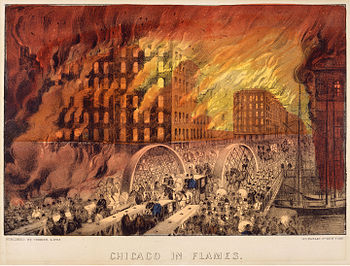
The Great Chicago Fire of 1871 (credit)
Are you working on the legal history of disasters, poisoning, animals, inventions, travel, hospitals, or forensic science? If so, your research probably sits at the intersection of legal history and the history of science, medicine, or technology.

This summer, we got in touch with scholars working in science-related historical fields that overlap with legal history. Our question was: what are your favorite websites in your own sub-field that could be of use to legal historians? Here's what people said--after the jump  
(* indicates special favorites).

Saturday, January 30, 2016

Weekend Roundup

  • Ronald Collins interviews David O. Stewart, who clerked for Justice Lewis F. Powell, Jr., in OT 1979, about the writing of Justice Powell's opinion in the commercial speech landmark Central Hudson.
  • Idaho's attorney general is in search of missing volumes of his predecessors' reports. 
  • Mississippi State University to receive rare book collection: “The donations were assembled from the private library of John Robinson Block, publisher of the Pittsburgh Post-Gazette and Toledo Blade.... [It] spans books printed from 1801 to 1898 and includes the scarce first publication of the laws of the Mississippi Territory from 1801, session laws from the territory, the first digest of laws in the territory, Civil War-era imprints along with reconstruction and post reconstruction laws through 1898.  [H/t: Starkville Daily News]
  • As part of a report for the National Cooperative Highway Research Program on the legal issues associated with driverless vehicles, Santa Clara Law’s Dorothy Glancy. Robert Peterson, and Kyle Graham include an interesting section “on early legal response to technologies such as steamboats, railroads, telegraphy, automobiles, airplanes, and computers, with an emphasis on how the law has been invoked to address the perceived risks associated with these devices and systems.”
Weekend Roundup is a weekly feature compiled by all the Legal History bloggers

Sunday, September 14, 2014

Sunday Book Roundup

It is a shorter list of book reviews this weekend. Justin Driver reviews Scalia: A Court of One by Bruce Allen Murphy (Simon & Schuster) for the New Republic.
"Instead of his influence being confined to a discrete set of writings or narrow doctrinal categories, Scalia has shaped modern American law in ways more overarching and even elemental. Elena Kagan, when she was dean of Harvard Law School, expressed this point vividly while presiding over Scalia’s return to his alma mater in 2007. “His views on textualism and originalism, his views on the role of judges in our society, on the 
practice of judging, have really transformed the terms of legal debate in this country,” Kagan said. “[Scalia] is the justice who has had the most important impact over the years on how we think and talk about the law.” This statement can be understood to identify Scalia’s influence as occurring within at least three distinct arenas, each requiring some elaboration."
Last weekend we noted a few reviews of Edward Baptist's The Half Has Never Been Told: Slavery and the Making of American Capitalism  (Basic Books). This week Baptist was interviewed on New Books in History. Baptist has also shared an excerpt of the book in Salon.

Over on New Books in Law, Jeremy Lipschultz is interviewed about his book, Social Media Communication: Concepts, Practices, Data, Law, and Ethics (Routledge).

H-Net adds a review of Phillip Deery's Red Apple: Communism and McCarthyism in Cold War New York (Fordham University Press).
"Deery concludes with a discussion of the career of New York lawyer O. John Rogge in chapter 5. Considered by historians to be “one of the country’s most prominent radical lawyers,” Rogge is perhaps best known for his role in the Julius and Ethel Rosenberg conspiracy to commit espionage case, as legal counsel to David Greenglass (p. 135). Rogge also provided counsel for the defense in the Smith Act case of 1949, and defended the JAFRC. He left the Democratic Party in 1947, shifting to the progressive American Labor Party (ALP) and running on the ALP judicial slate in 1948, but he never joined the CPUSA. Considered a left-wing, radical, fellow traveler, he publicly repudiated communism in 1951 and took on the case of Greenglass."
If you haven't had your fill of reviews for Henry Kissinger's World Order (Penguin Press), you can read two in The New York Times this weekend: one by Michiko Kakutani titled "Long View of History Includes Today", and a second by John Micklethwait titled "As the World Turns."

Also in The New York Times this weekend is a review of Thirteen Days in September: Carter, Begin, and Sadat at Camp David (Knopf) by Lawrence Wright.
"Wright reminds us that Carter’s Camp David was an act of surpassing political courage. At a time of double-digit inflation, sluggish economic growth, soaring gas prices and a real-time revolution in Iran, he dropped everything for two weeks and took a long shot at creating peace. He won his treaty, but lost his presidency because most Americans blamed him for not doing more to address the things they really cared about."
The Nation reviews two books in the piece, "Language and Blood: In 1941, genocide broke out in Croatia, and we still cannot explain way," including 1941: The Year That Keeps Returning by Slavko Goldstein (NYRB) and The Racial Idea in the Independent State of Croatia: Origins and Theory by Nevenko Bartulin (Brill).

Thursday, May 22, 2014

New Release: Swanson, "Banking on the Body"

New from Harvard University Press: Banking on the Body: The Market in Blood, Milk, and Sperm in Modern America, by Kara W. Swanson (Northeastern University School of Law). The Press explains:
Cover: Banking on the Body in HARDCOVERScientific advances and economic forces have converged to create something unthinkable for much of human history: a robust market in human body products. Every year, countless Americans supply blood, sperm, and breast milk to “banks” that store these products for later use by strangers in routine medical procedures. These exchanges entail complicated questions. Which body products are donated and which sold? Who gives and who receives? And, in the end, who profits? In this eye-opening study, Kara Swanson traces the history of body banks from the nineteenth-century experiments that discovered therapeutic uses for body products to twenty-first-century websites that facilitate a thriving global exchange.
More than a metaphor, the “bank” has shaped ongoing controversies over body products as either marketable commodities or gifts donated to help others. A physician, Dr. Bernard Fantus, proposed a “bank” in 1937 to make blood available to all patients. Yet the bank metaphor labeled blood as something to be commercially bought and sold, not communally shared. As blood banks became a fixture of medicine after World War II, American doctors made them a frontline in their war against socialized medicine. The profit-making connotations of the “bank” reinforced a market-based understanding of supply and distribution, with unexpected consequences for all body products, from human eggs to kidneys.
Ultimately, the bank metaphor straitjacketed legal codes and reinforced inequalities in medical care. By exploring its past, Banking on the Body charts the path to a more efficient and less exploitative distribution of the human body’s life-giving potential.
A few blurbs:


Blood, milk, and sperm are often seen as embodying the essence of personhood. But in our time they have become the parts of the body most easily stored and exchanged. Banking on the Body uncovers the remarkable story of how body products have been envisioned as civic resources controlled by medical professionals as well as personal property which might be bought and sold by individuals. Original and deeply researched, this book has real significance for how we balance ever-increasing demands for body parts while still preserving our own human values.—Steven Wilf

Swanson presents a compelling examination of the process by which sperm, blood, and human milk came to be both ‘gifts’ and commercial products. Deeply researched and clearly argued, this medical history should be read by anyone concerned with the legal and social consequences of body banking.—Janet Golden
More information, including the TOC, is available here. An interview with Swanson about the book is available here.

Sunday, March 23, 2014

Sunday Book Roundup

"Reading Isn't Always Good for You" -- or so declares the New Statesman in its review of four books: John Carey, The Unexpected Professor: An Oxford Life in Books (Faber & Faber); Philip Davis, Reading and the Reader (Oxford University Press); Wendy Lesser, Why I Read: the Serious Pleasure of Books (Farrar, Straus & Giroux); and Rebecca Mead, The Road to Middlemarch: My Life With George Eliot (Granta Books). (Hat tip: Arts & Letters Daily)

In the Los Angeles Review of Books, you'll find a review of Friend of the Court: On the Front Lines with the First Amendment (Yale University Press), by attorney and law professor Floyd Abrams. "A recurring theme," writes Jim Lafferty, "is Abrams’s contention that attacks on First Amendment freedoms come from the left as well as the right."

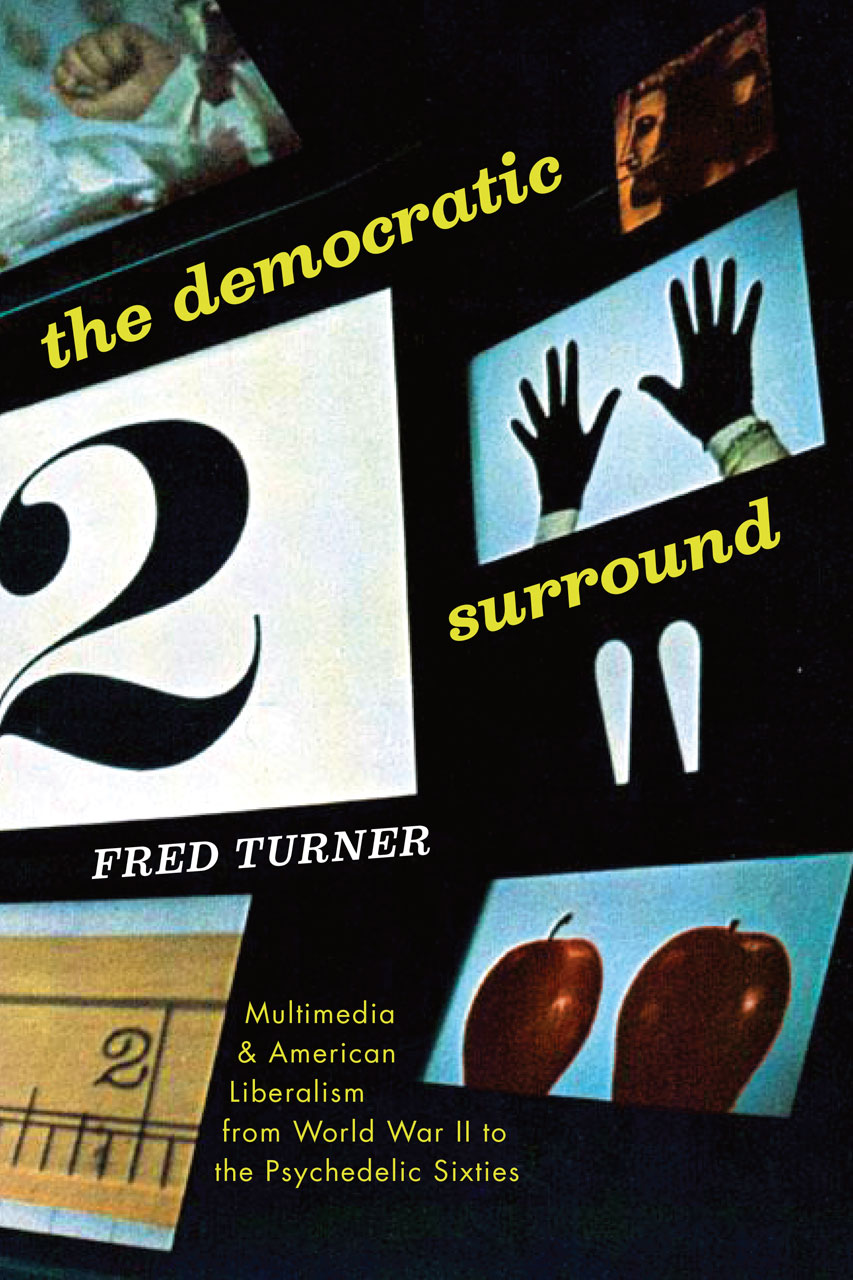
Also in the LARB: Jathan Sadowski reviews The Democratic Surround : Multimedia and American Liberalism from World War II to the Psychedelic Sixties (University of Chicago Press), by Fred Turner. "The book details how the construction of 'multi-image, multi-sound-source media environments,' which [Turner] calls 'surrounds,' were developed in order to push back at the perceived dangers of World War II–era totalitarian media use."
  
We've been seeing lots of reviews lately of Walter Benjamin: A Critical Life (Harvard University Press, 2014), by Howard Eiland and Michael W. Jennings. The most recent review comes from Benjamin Balint at Books&Ideas.net.

The Los Angeles Times has a review of The Age of Radiance: The Epic Rise and Dramatic Fall of the Atomic Era (Scribner), by Craig Nelson. Reviewer Scott Martelle calls the book "a readable and fresh romp through a familiar history while artfully defending nuclear benefits, especially in medicine."


Friday, April 26, 2013

Janson & Yoo, "The Wires Go to War: The U.S. Experiment with Government Ownership of the Telephone System During World War I"

Hot off the presses of the Texas Law Review: "The Wires Go to War: The U.S. Experiment with Government Ownership of the Telephone System During World War I," by Michael A. Janson (Federal Communications Commission) and Christopher S. Yoo (University of Pennsylvania). Here's the abstract:
One of the most distinctive characteristics of the U.S. telephone system is that it has always been privately owned, in stark contrast to the pattern of government ownership followed by virtually every other nation. What is not widely known is how close the United States came to falling in line with the rest of the world. For the one-year period following July 31, 1918, the exigencies of World War I led the federal government to take over the U.S. telephone system. A close examination of this episode sheds new light into a number of current policy issues. The history confirms that natural monopoly was not solely responsible for AT&T’s return to dominance and reveals that the Kingsbury Commitment was more effective in deterring monopoly than generally believed. Instead, a significant force driving the re-monopolization of the telephone system was the U.S. Postmaster General, Albert Burleson—not Theodore Vail, president of AT&T.  It also demonstrates that universal service was the result of government-imposed emulation of the postal system, not, as some have claimed, a post hoc rationalization for maintaining monopoly.  The most remarkable question is, having once obtained control over the telephone system, why did the federal government ever let it go?  The dynamics surrounding this decision reveal the inherent limits of relying on war to justify extraordinary actions.  More importantly, it shows the difficulties that governments face in overseeing industries that are undergoing dynamic technological change and that require significant capital investments.
The full article is available here.

Thursday, September 27, 2012

Beauchamp on the Parke-Davis Case

Christopher Beauchamp, Brooklyn Law School, has posted Patenting Nature: A Problem of History, which will also appear in the Stanford Technology Law Review 16 (2013).  Here is the abstract:    
Learned Hand (Library of Congress)
The practice of patenting genetic material is currently under sharp attack. Recent litigation has forced the courts to grapple with the doctrinal basis for patenting DNA sequences identical to those found in nature. Faced with conflicting authorities and difficult policy questions, courts have leaned heavily on history to guide — or at least to justify — their decisions.

This article explores the history in question. It traces the patent law’s changing treatment of “products of nature” in an attempt to untangle the origins of present-day patentability arguments. The evidence suggests that the historical foundations of the bar on patenting products of nature are surprisingly shaky.

The article also reveals how isolated biological materials first came to be patented. This task, I argue, requires looking not only to court decisions, but also to the history of patent practice. My principal vehicle for doing so is the case of Parke-Davis & Co. v. H. K. Mulford Co., a century-old decision by Judge Learned Hand, which now stands as a central (and much disputed) precedent for the patenting of DNA sequences. Parke-Davis arose at a key moment in the sociology of intellectual property, when the American pharmaceutical industry first learned to embrace the power of patents. The article shows how Parke-Davis came to prominence in half-understood form during the biotechnology era, and how the decision’s original rationale suddenly seems poised to control the Federal Circuit’s latest thinking on gene patentability.

Sunday, February 6, 2011

The Internet's Dark Side, The Price of Everything, the Pledge, and War in the book reviews

With the uprising in Egypt, fueled by social networking, dominating the news, it may be jarring to read Lee Siegel's review of a "brilliant and courageous book," THE NET DELUSION: The Dark Side of Internet Freedom by Evgeny Morozov in today's New York Times.
Morozov is interested in the Internet’s political ramifications. “What if the liberating potential of the Internet also contains the seeds of depoliticization and thus dedemocratization?” he asks. The Net delusion of his title is just that. Contrary to the “cyberutopians,” as he calls them, who consider the Internet a powerful tool of political emancipation, Morozov convincingly argues that, in freedom’s name, the Internet more often than not constricts or even abolishes freedom.
The twittered Iranian revolution was crushed:  "The elements of a successful revolution — the complicity of the military, of a powerful political class, of an almost universally discontented population — simply weren’t there."  The internet itself aided repression, as "the Iranian regime used the Web to identify photographs of protesters...and to text the population into counterrevolutionary paranoia."  Continue reading here.

No mention is made of Egypt in this nevertheless very timely and sobering review, but Siegel writes that the book "is immediately tested by events" in Egypt in a recent Arts Beat post.  "Just as with every other type of technology of communication, the internet is not a solution to human conflict but an amplifier for all aspects of a conflict. As you read about pro-government agitators charging into crowds of protesters on horseback and camel, you realize that nothing has changed in our new internet age."
 
THE PRICE OF EVERYTHING:  Solving the Mystery of Why We Pay What We Do by Eduardo Porteris, also reviewed in the New York Times, is "devoted to teasing out the rationale underlying the 'cold accounting' that determines the value of things people think are priceless, like human life and national security."

The Pledge: A History of the Pledge of Allegiance by Jeffrey Owen Jones and Peter Meyer is taken up in The Book (The New Republic).

Many books related to war have been reviewed this week.  Two books on the military-industrial complex are discussed in the Washington Post:  Prophets of War: Lockheed Martin and the Making of the Military-Industrial Complex by and Unwarranted Influence: Dwight D. Eisenhower and the Military-Industrial Complex by 'The Longest War' by Peter L. Bergen and Michael Scheuer's 'Osama Bin Laden' are taken up in the Los Angeles Times, and three books are briefly noted in the Washington Post:  Stephen L. Carter's The Violence of Peace; Dominic Tierney, How We Fight: Crusades, Quagmires, and the American Way of War; and Between War and Peace: How America Ends Its Wars, edited by Col. Matthew Moten. This interesting group of reviews of books that are all by men (Moten's collection has multiple all-male contributors), and all reviewed by men calls out for Ann Bartow's persistent question:  where are the women?  And what are we missing when we leave brilliant women writing about war out of the conversation?

Sunday, November 7, 2010

“It is the sun and not the laws of man than determines daylight and darkness”

Benjamin Franklin
At about 6:00 a.m. one morning in Paris, Benjamin Franklin was awakened by a sudden noise, and was surprised to find “my room filled with light; and I imagined at first that a number of those lamps had been brought into it; but, rubbing my eyes, I perceived the light came in at the windows.  I got up and looked out to see what might be the occasion of it, when I saw the sun just rising above the horizon., from whence he poured his rays plentifully into my chamber, my domestic having negligently omitted, the preceding evening, to close the shutters.”  Franklin wrote to the Journal of Paris that “your readers, who with me have never seen any signs of sunshine before noon...will be as much astonished as I was, when they hear of his rising so early.”  Franklin goes on to consider all the candles that might be saved if Parisians went to bed and arose earlier.  Some consider Franklin the first proponent of what we now call Daylight Savings Time.

At this point, dear reader, you might pause to change your clocks, since the occasion for this post is that early this morning the United States switched from Daylight Savings to Standard Time.

There is a legal history of daylight savings, complete with a Holmes opinion upholding a Massachusetts daylight saving law.  My interest in the subject, however, stems from the fact that another name for daylight saving in World War II was “war time.” Daylight saving was first instituted in the United States as an energy saving measure during World War I.  While some liked an extra hour of daylight at the end of the day, farmers and others who worked early in the morning complained.  "God knows more about time than President Wilson,” one person protested. 
photo source

While some states and localities adopted daylight savings in later years, in World War II the federal government moved the clock forward an hour, imposing daylight saving all year long.  Secretary of War Henry Simson supported it to save energy and keep war production up.  But many Americans objected, sometimes rather colorfully.  At hearings on a repeal bill in 1944, Congressman Joseph P. O’Hara of Minnesota read this excerpt from a constituent letter into the record:
To delude one’s self that it is 6 o’clock when the sun, moon and stars and God in heaven have ordained that it is but 5 o’clock, I believe justifies the...statement that the so-called daylight saving time probably stands at the head of the list as an example of complete asininity.
Although standard time itself was a human construct, many persisted in the idea that standard time was natural or God-given, like the Oklahoma State Senate, which passed an anti-daylight saving resolution insisting that “It is the sun and not the laws of man than determines daylight and darkness.”

Many of the tensions over war time stemmed from the ways clock time had come to be experienced as an essential element of culture.  While the timing of much farm work was dictated  by the sun, “people want to live by the clock,” a Farm Bureau representative explained.

A “war time” repeal bill passed Congress not long after V-J Day, and daylight saving ended September 30, 1945.  Following a period of “clock chaos,” when some states and localities adopted daylight savings but others did not, Congress adopted national, standardized daylight savings time in 1966.

The basic story of daylight savings time appears in David Prerau, Sieze the Daylight: The Curious and Contentious Story of Daylight Saving Time.

Wednesday, May 26, 2010

Environmental Legal History

Conversations about the legal implications of the BP oil spill, combined with Dan's post on environmental law aficionado Richard Lazarus, prompted me to wonder about the subfield of environmental legal history. I was aware of James Willard Hurst's famous study of the Wisconsin lumber industry (including its environmental consequences), and I had read some historical work on riparian rights and environmental nuisances, but I was sure there must be more out there. Some quick searching turned up lots of new scholarship:

From Karl Boyd Brooks (University of Kansas) comes Before Earth Day: The Origins of American Environmental Law, 1945-1970 (2009). It is a revisionist history of environmental law and a challenge to accounts that have privileged the developments of the past forty years over what came before. Here's a summary from the publisher's website:

Surveying the landscape from the end of World War II to Earth Day 1970, Brooks traces a dramatic shift in Americans’ relationship to the environment and the emergence of new environmental statutes. He takes readers into legislative hearing rooms, lawyers’ conferences, and administrators’ offices to describe how Americans forged a new body of law that reflected their hopes for rescuing the land from air pollution, deforestation, and other potential threats. For while previous law had treated nature as a commodity, more and more Americans had come to see it as a national treasure worth preserving.

Brooks explores the way key features of the New Deal’s legal legacy influenced environmental law. This path-breaking environmental history examines how cultural, intellectual, and economic changes in postwar America brought about new solutions to environmental problems that threatened public health and degraded natural aesthetics. Visiting riverbanks and freeways, duck blinds and airsheds, Before Earth Day reveals the new strategies and efforts by which the unceasing process of legal change created environmental law. And through real-world examples—how Los Angelenos pressed cases about water and air quality, how an Idaho lawyer helped clients pursue new environmental regulations, how citizens challenged government and corporate plans to dam rivers—Brooks demonstrates that key changes in property, procedure, contract, and other legal rules in those early years stimulated the national environmental laws to come.

Keith Hirokawa offers a thoughtful review in the March 2010 issue of Reviews in American History.
Another scholar urging a reconsideration of conventional wisdom is Ben Pontin (Bristol Law School). In 2007, he published an article titled
"Integrated Pollution Control in Victorian Britain: Rethinking Progress within the History of Environmental Law." Here's the first paragraph:
This article explores overlooked historical material relating to Victorian-era experimentation with the quintessentially modern regulatory concept of integrated pollution control (IPC), and the wider challenges that this poses for current understanding of the historical development of environmental law in Britain and countries influenced by it. The focus is on the Alkali Acts 1863-1906, which regulated large-scale industrial pollution within the World's first industrial nation for over two centuries of dramatic change, prior to the enactment of the IPC regime contained in Part I of Environmental Protection Act 1990 and subsequent EU-inspired reforms. No one could seriously dispute that existing industrial pollution control provisions represent, on paper at least, a considerable advance on the ageing Alkali Act regime, contributing in particular to integration at a variety of noteworthy levels. What is less clear is how groundbreaking recent regulatory developments in this field are when viewed from a broader historical perspective. In tracing IPC back to Victorian-era legislation enacted between 1863 and 1881 addressed to the problem of chemical industry pollution, the analysis below challenges the modernity of this leading regulatory concept, highlighting levels of sophistication in environmental law and policy during the early stages of industrialisation which many scholars today around the world would consider inconceivable. What were the characteristics of ‘Victorian IPC’? Who were the main protagonists responsible for its introduction? And, crucially, why was early innovation not sustained (to the point that it became lost to the architects of IPC today)?
[footnotes omitted]


In the October 2009 issue of
Environmental History, you can find an article by Darren Speece on the legal fight over the California redwoods, 1970-1996. Here's the abstract:
The California redwoods have long been the subject of conflict, but after 1970 the fights were transformed when citizens leveraged the courts to challenge California's corporatist timber regime, with its focus on timber production. The history of the legal campaign highlights the need to focus on local aspects of modern environmental history. Unlike the typical narrative about the nationalization and professionalization of modern environmental politics, the redwood battles reveal persistent insurgence, intense local activism, and the breakdown of a corporatist, production-focused governance tradition. The history of the legal fights over the redwoods also points to the national consequences, most of them unintended, of the local activism. The current literature prioritizes litigation efforts that enforced and clarified particular aspects of the modern environmental protection regime, not litigation that transformed governance. This essay focuses on the eight most important cases in the movement to reform California forestry governance. Because the local citizens' movement set its sights on the transformation of institutions, increased regulation of private property, and giant redwoods, it led to, and was part of, one of the most important environmental battles of the late twentieth century.
Another activism-oriented contribution is Eileen McGurty's Transforming Environmentalism: Warren County, PCBs, and the Origins of the Environmental Justice Movement (2007). This description comes from the publisher:
Contemporary public policy circles are quick to acknowledge that environmental factors contribute to ill health and pose a particular threat to poor and minority communities. But public officials rarely examined the distribution of environmental hazards such as polluted air and contaminated water. In the 1980s, as toxic waste facilities proliferated, the environmental justice movement demanded that impoverished communities no longer be burdened by excessive environmental risks.

In Transforming Environmentalism, Eileen McGurty explores a moment central to the emergence of the environmental justice movement. In 1978, residents of predominantly African American Warren County, North Carolina, were horrified to learn that the state planned to build a landfill in their county to hold forty thousand cubic yards of soil that was contaminated with PCBs from illegal dumping. They responded to the state's plans with a four-year resistance, ending in a month of protests with over 500 arrests from civil disobedience and disruptive actions.

McGurty traces the evolving approaches that residents took to contest "environmental racism" in their community and shows how activism in Warren County spurred greater political debate and became a model for communities across the nation. Transforming Environmentalism explores how the specific circumstances of the Warren County events shaped the formation of the environmental justice movement and influenced contemporary environmentalism.
You can find a review here.
For a blend of environmental history and judicial biography, see
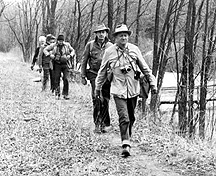
The Environmental Justice: William O. Douglas and American Conservation (2009), by Adam Sowards (University of Idaho). Here's a summary from a recent review:
Douglas's ideology about nature evolved from his time as a boy in the Cascade Mountains to his retirement from the Supreme Court in 1975. Over the course of several decades, Douglas moved from an aesthetic appreciation of nature, to combating development and pollution and connecting social justice issues with environmental ones. Certainly, many of Douglas's views were hardly novel to the conservation movement. Sowards makes the important point that Douglas's position, however, yielded an authority many environmentalists lacked. In addition, he vocally advocated for a higher level of democracy with the decision-making process with natural areas, something later incorporated into law.

Sowards also investigates the impact of Douglas's environmental views on his written opinions as a justice of the Supreme Court. Overall, Sowards states that Douglas certainly raised awareness with his writings and activism, but his legacy as a justice is mixed. His opinions reflected his overall views of nature and the importance of public participation, but dissents rarely set legal precedent. Interestingly, and more vividly than through his activism or writings, Douglas's legal opinions show his ability to connect social and environmental ills, foreshadowing the environmental justice movement.
Other work in this area blends legal history and labor history. For an example, see "Disasters, Railway Workers, and the Law in Avalanche Country, 1880-1910," by Diana DiStefano (Bucknell University). According to the abstract this essay
examines how skilled Mountain West railway workers in Canada and the United States incorporated environmental problems into their work culture. Through experience they developed methods of predicting snow slides and embraced customs that compelled them to work even under the most dangerous conditions. These informal practices, rather than written work rules, guided the decisions they made to offset risk for both their co-workers and train passengers. I argue that living and working in Avalanche Country meant railway workers gained an intimate knowledge of their natural surroundings that clashed with accepted corporate and legal interpretations that saw slides as unforeseeable acts of God. Comparing three avalanche disasters in two countries provides persuasive evidence that occupation and experience influence notions of risk. Importantly, the significance of my argument lies in its refusal to see industrial workers as detached from nature and for what it suggests about workers in other places and occupations who also likely developed job-specific practices in response to environmental dangers.
My most surprising find was The Culture of Flushing: A Social and Legal History of Sewage (2007), by Jamie Benidickson (University of Ottawa) . This summary comes from a recent review:
Rarely have legal histories peered into the latrines of the 19th and 20th century. Fortunately, the view from within Jamie Benidickson’s book, THE CULTURE OF FLUSHING: A SOCIAL AND LEGAL HISTORY OF SEWAGE, is informative and quite comprehensive. A reader looking for a full examination of the social and legal history of sewage in Canada, the United States and the United Kingdom will find it in this volume. Benidickson moves through 200 years of sewage history by focusing on key developments in our attitude and treatment of sewage in major urban centers, including Toronto, New York, Chicago, and London. He chronicles the early history of neglect and the prevailing attitude of streams as “nature’s sewers” and how water came to become an acceptable medium for disposing urban and industrial waste. With clarity and insight, Benidickson traces the major court battles, and legislation culminating in the Clean Water Act of 1972. Each step in the murky legal and cultural history of waste disposal, including the legislative attempts, the arguments made in court, the judicial opinions issued at various stages of ongoing litigation is clearly summarized. The author also puts this legal history in the larger context of environmental degradation, national legislation, and changing cultural attitudes and norms of collective responsibility.
Last, I noticed that Douglas Harris (University of British Columbia) teaches an entire course on Environmental Legal History. The diverse set of readings includes excerpts from James Scott, Seeing Like a State; Carol Rose, Property and Persuasion; William Cronin, Changes in the Land; and - one of my favorite children's authors - Roald Dahl, Danny the Champion of the World. I'm sure that Harris and others know much more about the state of this subfield, so I encourage comments.

Image credits: Earth Day, PCBs, Justice Douglas hiking, Culture of Flushing,