Showing posts with label abortion. Show all posts

Friday, July 5, 2024

Siegel and Ziegler on "Abortion's New Criminalization—A History-And-Tradition Right to Healthcare Access After Dobbs and the 2023 Term"

Reva Siegel (Yale Law School) and Mary Ziegler (UC Davis) have posted "Abortion's New Criminalization—A History-And-Tradition Right to Healthcare Access After Dobbs and the 2023 Term." The abstract:

Since Dobbs v. Jackson Women's Health Organization reversed Roe v. Wade as contrary to the nation's history and traditions, efforts to ban abortion appear as calls for a return to tradition. But criminalization after Dobbs is not a return to the past; it is a new regime, in certain respects less restrictive, and in others far more so. Today, states criminalize access to urgently needed health care for pregnant patients in ways they never have before. Cases in the Court's 2023 Term, Moyle v. United States and Food and Drug Administration v. Alliance for Hippocratic Medicine, demonstrate these trends. Under Dobbs, do abortion bans that break with history and tradition in obstructing access to urgently needed health care violate liberty guarantees of state or federal constitutions?

We present evidence that the nation has long had a tradition of exempting health care from criminalization that extended to abortion law and was expressed in the many state laws cited in Dobbs’s appendices, as well as in the text and case law of the Comstock Act. This tradition demarcated quite self-conscious limits on state action that were reiterated across jurisdictions and over time. We demonstrate that under Dobbs and Washington v. Glucksberg, such a tradition can guide interpretation of the Constitution’s liberty guarantees, even if access was not historically understood as a right. We show that courts in states with abortion bans view history-and-tradition analysis of this kind as faithful to Dobbs and have begun to employ it under their own state constitutions.

Finally, we defend this account of our law against an originalist reading of Dobbs advanced by Professor Stephen Sachs asserting that the Fourteenth Amendment only protects rights historically recognized as such at the time of the Fourteenth Amendment’s ratification. We argue that Sachs’s reading conflicts with important aspects of Glucksberg and Dobbs, misconstrues Dobbs’s reasons for turning to history and tradition, and, in the process, imposes constitutionally offensive status inequalities on the Constitution’s liberty guarantees.

Addressing these questions, we suggest, contributes to the broader debate about how history and tradition can guide constitutional inquiry. Posing concrete questions of Dobbs illustrates how much of Dobbs has yet to be written, showing the many senses in which, as Justice Barrett writes in Vidal v. Elster, “a rule rendering tradition dispositive is itself a judge-made test.”

The full paper is available here.

-- Karen Tani

Tuesday, March 19, 2024

Siegel & Ziegler on "Comstockery in the Court and on the Campaign"

Over at Balkinization, Reva Siegel (Yale Law School) and Mary Ziegler (UC Davis School of Law) report that they "have just posted Comstockery on SSRN, the first legal history of the Comstock Act since the antiabortion movement began arguing for reviving enforcement of the law in the wake of Dobbs v. Jackson Women’s Health Organization."

The posting is timely. They explain:

On March 26, Food and Drug Administration v. Alliance for Hippocratic Medicine will return to the Supreme Court. Representing the Alliance, the Alliance Defending Freedom (ADF), a leader of the Christian legal movement that has played key roles in 15 Supreme Court cases, including Dobbs and 303 Creative v. Elenis, has challenged the FDA’s authority to approve mifepristone, a drug used in more than half of all abortions, under the relevant laws and regulations. ADF has further sought to overturn several subsequent FDA decisions, including one in 2021 permitting the use of telehealth for medication abortion. In the case now before the Court, ADF argues that the removal of an in-person-visitation requirement was arbitrary and capricious under the APA. ADF also makes a Comstock claim against the 2021 modification, asserting that the plain meaning of the statute bars the mailing of any abortion-related article. This argument has received attention from conservative judges, including Judge James Ho of the Fifth Circuit; in the district court, Judge Matthew Kacsmaryk granted a motion for preliminary injunction in the spring of 2023 that would have withdrawn the approval of mifepristone, reasoning that the statute plainly declares “nonmailable” anything “advertised or described in a manner calculated to lead another to use it or apply it for producing abortion.

The authors' Balkinization post continues here. The full article is available here, at SSRN.

-- Karen Tani

Saturday, March 25, 2023

Weekend Roundup

  • From Environment, Law, and History: the final installment of David Schorr's series on "Nature versus the Common Law."
  • Now online: The Center for the Study of Slavery and Its Legacies at Georgetown University. “The Center supports rigorous new scholarship and innovation in disseminating knowledge about the history of enslavement and its past and current legacies.  The history of Georgetown, the Jesuits, and enslavement is one area of focus, as well as the history of slavery and its legacies in the Washington, D.C. area, and in Catholic America.”
  • ICYMI: Illinois law, 200 years ago: Inside the quest to digitize state's legal history (Pantagraph.
Weekend Roundup is a weekly feature compiled by all the Legal History bloggers.


Thursday, May 26, 2022

Siegel, Mayeri, & Murray on "Equal Protection in Dobbs and Beyond"

This forthcoming essay by legal historians and constitutional scholars Reva Siegel (Yale Law School), Serena Mayeri (the University of Pennsylvania Carey Law School), and Melissa Murray (New York University School of Law) may be of interest to readers, as it draws on "equality challenges to abortion bans [that] preceded Roe."

Equal Protection in Dobbs and Beyond: How States Protect Life Inside and Outside of the Abortion Context 

In the leaked draft of Dobbs v. Jackson Women’s Health Organization, Justice Samuel Alito dismissed the Equal Protection Clause as an alternative ground of the abortion right, citing an amicus brief in which we advanced that argument. In dicta, Justice Alito claimed that precedents foreclosed the brief’s arguments (pp. 10-11).

Justice Alito did not address a single equal protection case or argument on which the brief relied. Instead, he cited Geduldig v. Aiello, a 1974 case decided before the Court extended heightened scrutiny to sex-based state action—a case our brief shows has been superseded by United States v. Virginia and Nevada Department of Human Resources v. Hibbs. Justice Alito’s claim to address equal protection precedents without discussing any of these decisions suggests an unwillingness to recognize the last half century of sex equality law—a spirit that finds many forms of expression in the opinion’s due process analysis.

This Essay, written before Justice Alito’s draft leaked, explains the brief’s equal protection arguments for abortion rights, and shows how these equality-based arguments open up crucial conversations that extend far beyond abortion.

* * *

Equality challenges to abortion bans preceded Roe, and will continue long after Dobbs v. Jackson Women’s Health Organization, however the Court rules in that case. In this Essay we discuss our amicus brief in Dobbs, demonstrating that Mississippi’s ban on abortions after 15 weeks violates the Fourteenth Amendment’s Equal Protection Clause.

Our brief shows how the canonical equal protection cases United States v. Virginia and Department of Human Resources v. Hibbs extend to the regulation of pregnancy, providing an independent constitutional basis for abortion rights. Abortion bans classify by sex. Equal protection requires the government to explain why group-based rather than facially-neutral regulations best serve its ends, especially when the challenged laws perpetuate historic forms of group-based harm. As we show, Mississippi decided to ban abortion, choosing sex-based and coercive means to protect health and life; at the same time the state consistently refused to enact safety-net policies that offered inclusive, noncoercive means to achieve the same health- and life-protective ends.

Our brief asks: Could the state have pursued these same life- and health-protective ends with more inclusive, less coercive strategies? This inquiry has ramifications in courts, in legislatures, and in the court of public opinion. Equal protection focuses the inquiry on how gender, race, and class may distort decisions about protecting life and health, within and outside the abortion context. The equal protection argument can play a role in congressional and executive enforcement of constitutional rights, in the enforcement of equality provisions of state constitutions, and in ongoing debate about proper shape of family life in our constitutional democracy. Equal protection may also have the power to forge new coalitions as it asks hard questions about the kinds of laws that protect the health and life of future generations and that help families flourish. 

The essay is forthcoming in Volume 43 of the Columbia Journal of Gender and Law (2023) and is available for download here, at SSRN.

-- Karen Tani

Monday, February 21, 2022

Matthiesen, "Reproduction Reconceived: Family Making and the Limits of Choice After Roe v. Wade"

 The University of California Press has published Reproduction Reconceived: Family Making and the Limits of Choice After Roe v. Wade (2021), by Sara Matthiesen (George Washington University). A description from the Press: 

The landmark case Roe v. Wade redefined family: it is now commonplace for Americans to treat having children as a choice. But the historic decision also coincided with widening inequality, an ongoing trend that continues to make choice more myth than reality. In this new and timely history, Matthiesen shows how the effects of incarceration, for-profit healthcare, disease, and poverty have been worsened by state neglect, forcing most to work harder to maintain a family.

Praise from reviewers:

"Amid debates over whether childcare qualifies as 'infrastructure,' Reproduction Reconceived intervenes with a call to radically reframe reproduction, family, motherhood, and caregiving as public goods, rather than as private obligations. Compellingly argued and compulsively readable, it makes clear why public support for families and caregiving has never been more urgent or necessary. It is required reading for anyone trying to make sense of our current moment."—Melissa Murray

"As contemporary events continue to focus our attention on what the United States would be like without access to legal abortion, Matthiesen asks us to consider that by making pregnancy and childbirth into a 'choice,' Roe v. Wade opened the door to brutal and devastating state neglect of the survival and well-being of children, pregnant people, and all their kin and caregivers."—Laura Briggs

More information is available here. (H/t: New Books Network)

-- Karen Tani

Saturday, December 25, 2021

Weekend Roundup

Weekend Roundup is a weekly feature compiled by all the Legal History bloggers.

Saturday, May 8, 2021

Weekend Roundup

  • Over at JOTWELL Christopher Schmidt (Chicago-Kent College of Law/Illinois Tech) has posted an admiring review of Mary Ziegler's Abortion and the Law in America (2020): "In her important and insightful new book, . . . Mary Ziegler explains how the debate over Roe has evolved and why it endures."
  • India's former Attorney General Soli Sorabjee has died of covid-19 at the age of 91. Tributes here, here, here, and here.
  • Over at In Custodia Legis, a post about a new acquisition by the Library of Congress: "the memorable legal study aid, Memoriale Insitutionum Juris (Ratzeburg, 1672), written by the seventeenth-century German minister and secondary school instructor Johannes Bun."
  • Tribute to the memory of Vice President Walter Mondale from Ryan Greenwood at the Riesenfeld Rare Books Blog, U. of Minnesota Law School.
  • John Fabian Witt discusses American Contagions: Epidemics and the Law from Smallpox to COVID-19 in the ABA Journal.
  • From the Senate Historical Office: "In the early 20th century, a group of progressive senators from midwestern and western states arrived in Washington committed to expanding the role of the federal government to address the economic and social challenges of industrialization. To accomplish these goals, they had to tackle another challenge—the power of the federal judiciary." (Senate Progressives v. Federal Courts).
  • Hosted by UVA and the Royal Society for Asian Affairs: a recent symposium on "Citizenship, Belonging, and the Partition of India." Video now up here.
  • ICYMI: Two Yale law students have organized the Immigrant History Initiative, “a nonprofit that produces curricula on Asian American histories for schools and communities” (Yale Daily News). The Advocates Library: "a vital resource with an illustrious history" (The Scotsman).  Laura Edwards, Oak Ridge High School alumna (Oak Ridger).  Ariela Gross, Harvard Radcliffe Institute 2021–2022 Fellow (HRI). 

Weekend Roundup is a weekly feature compiled by all the Legal History bloggers.

Tuesday, January 28, 2020

Freidenfelds on miscarriage in America

Lara Friedenfelds (independent scholar) has published The Myth of the Perfect Pregnancy: A History of Miscarriage in America with Oxford University Press. The book includes a chapter on abortion (ch.6) that will be of special interest to legal historians. From the publisher:
Cover for 

The Myth of the Perfect Pregnancy
When a couple plans for a child today, every moment seems precious and unique. Home pregnancy tests promise good news just days after conception, and prospective parents can track the progress of their pregnancy day by day with apps that deliver a stream of embryonic portraits. On-line due date calculators trigger a direct-marketing barrage of baby-name lists and diaper coupons. Ultrasounds as early as eight weeks offer a first photo for the baby book.
Yet, all too often, even the best-strategized childbearing plans go awry. About twenty percent of confirmed pregnancies miscarry, mostly in the first months of gestation. Statistically, early pregnancy losses are a normal part of childbearing for healthy women. Drawing on sources ranging from advice books and corporate marketing plans to diary entries and blog posts, Lara Freidenfelds offers a deep perspective on how this common and natural phenomenon has been experienced. As she shows, historically, miscarriages were generally taken in stride so long as a woman eventually had the children she desired.
This has changed in recent decades, and an early pregnancy loss is often heartbreaking and can be as devastating to couples as losing a child. Freidenfelds traces how innovations in scientific medicine, consumer culture, cultural attitudes toward women and families, and fundamental convictions about human agency have reshaped the childbearing landscape. While the benefits of an increased emphasis on parental affection, careful pregnancy planning, attentive medical care, and specialized baby gear are real, they have also created unrealistic and potentially damaging expectations about a couple's ability to control reproduction and achieve perfect experiences.
The Myth of the Perfect Pregnancy provides a reassuring perspective on early pregnancy loss and suggests ways for miscarriage to more effectively be acknowledged by women, their families, their healthcare providers, and the maternity care industry.
Praise for the book: 

"This lively and informative book is simultaneously an exploration of contemporary 'mommy blogs' and a deeply researched history of childbirth in America. By focusing on the history of miscarriage, it casts new light on almost every aspect of our modern reproductive system, from technological innovations like sonograms to the semantics of abortion debates. It is an innovative and powerful contribution to history and to present-day discourse on childbearing." -- Laurel Thatcher Ulrich

"Bravo! Freidenfelds has delivered a formidable and gripping account of pregnancy loss in America. She weaves the voices of women today and generations past with keen historical and scientific insights. The Myth of the Perfect Pregnancy shines a much-needed light on miscarriage, a subject that has, until now, been hidden from both casual conversations and scholarly scrutiny." -- Randi Hutter Epstein

"Freidenfelds captures the dramatic transformation of the ideal of pregnancy over the past two hundred years, from a normal, accepted part of a colonial woman's life to the highly monitored, commercialized, and emotional-laden experiences of 21st century women. With sensitivity and care she explores the experience of pregnancy loss, which remains a common yet rarely publicly discussed occurrence." -- Rima D. Apple

"The Myth of the Perfect Pregnancy offers far more than a meticulously researched historical perspective on reproductive health and parenting attitudes. It also provides critical insight to the present, with a lesson that much of childbearing and childrearing is out of our control, to expect and accept the ups and downs of life and the inevitable mistakes we will make as parents. Freidenfelds has used facts to illustrate how our perfectionist parenting standards came about, so that we may forgive ourselves our imperfections. This is a message many parents, myself included, need to hear and be reminded of. Freidenfelds' work can help shift the current culture of parenting, and we will all benefit." -- Monique Tello

Further information is available here

--Mitra Sharafi

Thursday, January 23, 2020

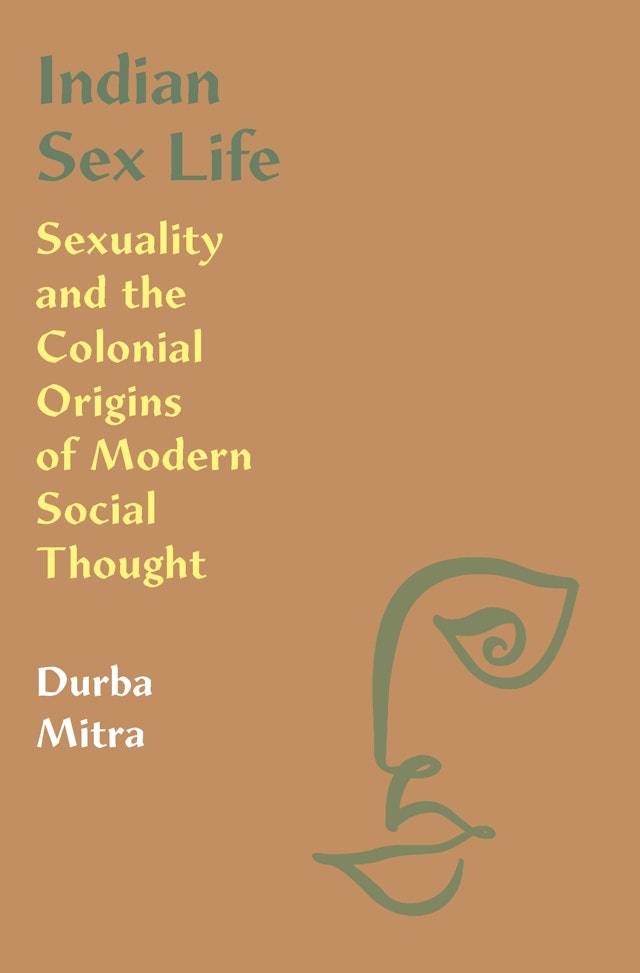
Mitra on Indian Sex Life

Durba Mitra (Harvard) has published Indian Sex Life with Harvard University Press. From the publisher:
During the colonial period in India, European scholars, British officials, and elite Indian intellectuals—philologists, administrators, doctors, ethnologists, sociologists, and social critics—deployed ideas about sexuality to understand modern Indian society. In Indian Sex Life, Durba Mitra shows how deviant female sexuality, particularly the concept of the prostitute, became foundational to this knowledge project and became the primary way to think and write about Indian society.
Bringing together vast archival materials from diverse disciplines, Mitra reveals that deviant female sexuality was critical to debates about social progress and exclusion, caste domination, marriage, widowhood and inheritance, women’s performance, the trafficking of girls, abortion and infanticide, industrial and domestic labor, indentured servitude, and ideologies about the dangers of Muslim sexuality. British authorities and Indian intellectuals used the concept of the prostitute to argue for the dramatic reorganization of modern Indian society around Hindu monogamy. Mitra demonstrates how the intellectual history of modern social thought is based in a dangerous civilizational logic built on the control and erasure of women’s sexuality. This logic continues to hold sway in present-day South Asia and the postcolonial world.
Reframing the prostitute as a concept, Indian Sex Life overturns long-established notions of how to write the history of modern social thought in colonial India, and opens up new approaches for the global history of sexuality.
The book includes two chapters (at least) that will be of special interest to legal historians: Ch.2, "Repetition: Law and the Sociology of Deviant Female Sexuality" and Ch.3, "Circularity: Forensics, Abortion, and the Evidence of Deviant Female Sexuality." 

Praise for the book: 

"Indian Sex Life is a well-theorized, dense, and provocative addition to current historical scholarship in gender, sexuality, and colonial/postcolonial studies of South Asia. Drawing attention to the surplus of representations around female sexual deviance within historical materials, Durba Mitra makes bold, ambitious claims about the concept of the prostitute and its role in the unfolding of methods in the social study of colonial Bengal."—Anjali Arondekar

"The startling, convincing insight in Durba Mitra's superbly researched concept-history of the prostitute is that ideas about deviant female sexuality undergird modern disciplinary knowledge, shaping debates across fields as diverse as jurisprudence, political economy, and philology. This is a valuable contribution to the global history of sexuality, and essential reading for scholars interested in modernity, colonial knowledge, gender, and cultural history."—Prachi Deshpande

"In Indian Sex Life, Durba Mitra writes with the utmost clarity and precision about female sexuality in colonial India, a topic long regarded as messy and opaque. This innovative and beautifully crafted study of the prostitute makes excellent use of feminist and queer theory to trace the construction of deviancy in social scientific thought. There are crucial insights here for scholars across the disciplines."—Laura Doan

"Pathbreaking and original, Indian Sex Life establishes the central place of deviant female sexuality in discussions about Indian society in a range of disciplines. Departing from other studies about prostitution in the subcontinent, this valuable work makes significant contributions to the literature on colonial India and to the voluminous writings on gender and sexuality in South Asia. It will compel global scholars of sexuality to question their existing assumptions."—Douglas E. Haynes

Further information is available here.

--Mitra Sharafi

Saturday, September 28, 2019

Weekend Roundup

  • David Sugarman, professor emeritus at the law school at Lancaster University, has posted a truly lovely appreciation of the law W. Wesley Pue (1954-2019) that appeared in the Newsletter of the Research Committee of the Sociology of Law.
  • Joanna Grisinger (Northwestern), Kimberly Welch (Vanderbilt), Logan Sawyer (Georgia), and Kathryn Schumaker (Oklahoma), the co-organizers of the Law and History Collaborative Research Network of the Law and Society Association, have posted a call for legal history panels for LSA’s annual meeting in Denver, Colorado, May 28-31, 2020.  They also seek volunteers to join their ranks as co-organizers.
  • In other news: A descendant of a Virginia slaveholders sues a professor et al. for saying as much, apparently on the theory that in noting this and his opposition to the removal of Charlottesville’s statue of Robert E. Lee, the defendants claimed he was “a racist and an opponent of people of color” (Roanoke Times). Meanwhile, at Chapel Hill, UNC professors bring the history of Jim Crow to the present.
  • CNN's "Black in America" series recently featured Martha Jones (Johns Hopkins), author of Birthright Citizens. Video here.
Weekend Roundup is a weekly feature compiled by all the Legal History bloggers.