Ex parte Young, an iconic decision that recently celebrated its centennial, was not very well-received at birth but most scholars, now and in the recent past, agree that the case was correctly decided. Yet the range of justifications for the result, and the analyses of its implications, are strikingly diverse. (The disagreements about its significance are exemplified by the three opinions in the Supreme Court’s recent decision in Va. Office for Prot. & Advocacy v. Stewart.)
How can such a range of views exist about so famous and esteemed a decision – a debate that extends to such matters as its rationale, its novelty, and even the proper characterization of its holding, the lessons it teaches about state-federal relations, and the proper role of the federal courts? And what, if anything, does this tell us about the nature of legal scholarship? These are the questions addressed in this article. Briefly stated, the conclusions reached are that over-reading of the case by scholars and courts has led to a backlash in which the case has been undervalued, and that arguments about what the case “really” stands for tend to mask more important questions about both the substance and the process of constitutional interpretation.
Tuesday, June 21, 2011
Shapiro on Ex Parte Young
David L. Shapiro, Harvard Law School, has posted Ex Parte Young and the Uses of History, which will appear in NYU Annual Survey of American Law 67 (2011): 69. Here is the abstract:


Monday, June 20, 2011
Legal History at the Foreign Relations History Conference
 |
| Society for Historians of American Foreign Relations |
It used to be that people thought of diplomatic historians as stodgy and old-fashioned. But they said the same things about legal historians! And the more comparative and transnational legal history becomes, the more important it is to pay attention to global politics. So we need foreign affairs history now more than ever.
There is a lot of law on the panels this year, consistent with a turn to law among historians in many fields, perhaps as a consequence of renewed interest in the state. Highlights of interest to legal historians include these panels:
Roundtable: Bringing the Law Back In: New Approaches to the History of the U.S. in the World
Chair: Daniel Margolies, Virginia Wesleyan College
Benjamin Coates, Columbia University
Allison Brownell Tirres, DePaul University College of Law
Robert McGreevey, The College of New Jersey
Stopped at the Gate: Crime, Diplomacy, and Immigration
Chair: Beatrice McKenzie, Beloit College
Diplomacy behind Deportations: Rights of Residency and Responsibly under the Criminal Provisions of U.S. Deportation Policy
Torrie Hester, Roanoke College
Italians on the Move: American Immigration Restriction and Illegal Immigration from Italy
Maddalena Marinari, American University
Extraditing Immigrants, Deporting Criminals: International Crime Control in an Era of Anarchy and Revolution
Katherine Unterman, Texas A&M University
Comment: Mark Choate, Brigham Young University
Rethinking the Impact of Refugees on Domestic and Foreign Policy
Chair: Carl Bon Tempo, State University of New York at Albany
Synchronizing Domestic and Foreign Policy Concerns: The Case of the 1980 Refugee Act
David W. Haines, George Mason University
The Distinction of Dragon-Boats: The Khmer Krom and the United States
Trude Jacobsen, Northern Illinois University
Encouraging Defection while Discouraging Admissions: Refugees from Hong Kong and U.S. Foreign Relations, 1950-1965
 Philip E. Wolgin, University of California, Berkeley
Comment: Carl Bon Tempo
Conflicting Desires: American Commitment to AID and Human Rights during the Cold War, 1945-1985
Chair:
Nexus: National Interest, Human Rights, Foreign Aid and U.S. Response to the “Genocide” in East Pakistan, 1971
Richard Pilkington, University of Toronto
The Kirkpatrick Doctrine and Human Rights: Neoconservative Foreign Policy in the Reagan Administration
Bianca Rowlett, University of Arkansas
Comment: William Michael Schmidli, Bucknell University
Crossing Borders and Intersecting Empires
Chair: Daniel Margolies, Virginia Wesleyan College
The Struggle for the Northern Border: British Occupation and Insurgency in the Old Northwest 1783-1796
John C. Kotruch, University of New Hampshire
The Fenian Invasions: Territorial Sovereignty and Imperial Actors
Skye H. Lynch, College of William and Mary
The Friendly Address Movement and the Oregon Territory Boundary Dispute: Transatlantic Citizen‐Diplomacy, Gender, Ethnicity, and Race in the 1840s
Wendy E. Chmielewski, Swarthmore College Peace Collection
Comment: Daniel Margolies
And the following papers:
I Took Panama, Now You Justify it: Two Faces of Public Opinion in Early Twentieth Century International Law
Benjamin Coates, Columbia University
"Is the Emperor Fully Clothed?": The Iranian Student Movement and Transnational Human Rights OrganizingAnd of possible interests, the first plenary, with yours truly, where I'll talk about law post-9/11:
Matthew Shannon, Temple University
Army Operations against Non-state Actors: Peacekeeping, Law Enforcement, and the Extension of U.S. Sovereignty along the Southern Maritime Frontier, 1810-1830
Samuel Watson, United States Military Academy
Ronald Reagan, George W. Bush, & Afghanistan: A Historical Analysis of “Freedom” in U.S. Foreign Policy
Andrew Hammond, University of Warwick
Condemning “Gender Apartheid”: The Taliban, Feminist Activism, and the Clinton Administration
Kelly Shannon, LaSalle University
Between Pacifism and Imperialism: The Frustration of the International Birth Control Movement
Aiko Takeuchi-Demirci, Brown University
PLENARY SESSION: 7:00 PM – 9:00 PM, Thursday, June 23
9/11, the War on Terror, and U.S. International History
Andrew Bacevich, Boston University
Mary Dudziak, University of Southern California
Bassan Haddad, George Mason University
Melani McAlister, George Washington University
Marilyn Young, New York University
For more, the full program is here.
Mossoff on Classic Patent Doctrine's Lessons for Modern Patent Theory
Adam Mossoff, George Mason University School of Law, has posted Commercializing Property Rights in Inventions: Lessons for Modern Patent Theory from Classic Patent Doctrine, which will appear in Competition Policy and Patent Law under Uncertainty: Regulating Innovation, ed. Geoffrey A. Manne and Joshua D. Wright (Cambridge University Press, 2011). Here is the abstract:
This analysis is descriptive (or positive, in economic parlance), but patent theorists today can draw at least two important lessons from it. First, it reveals how traditional property theory is determinative in patent law. Early American courts secured to patentees the same conveyance rights as owners of real estate because patents were "property." Thus, by definition, patentees enjoyed the same rights as those of landowners – the exclusive rights of use, enjoyment and disposal. Courts applied to patentees the same legal rules for conveying estates, and thereby permitted patent-owners to sue downstream infringers if there was a properly created reversionary interest. Second, patents are now defined as securing only a right to exclude, and this has unhinged patent conveyance doctrines from their firm conceptual grounding in property law. When novel issues are presented to courts concerning complex conveyances of patent rights, the result is indeterminacy and confusion in both the Federal Circuit's and the Supreme Court's decisions. Perhaps it is time to rethink how the hoary concept of property was essential to the successful commercialization of property rights in inventions in the nineteenth century.
At the start of the Industrial Revolution, patentees created many novel and complex transactions to commercialize their property: they maximized their profits through sophisticated agreements that imposed restrictions on manufacturing, sales, and other uses of their inventions. When these restrictions were challenged as invalid restraints on property, courts consistently upheld them. They did so by employing the same concepts and doctrines used by common law courts to validate the creation of lesser estates or restrictive covenants for real property. In sum, early American courts incorporated into patent law the same legal doctrines governing conveyances of real estate, even going so far as adopting the common law property concepts of "assignments" and "licenses." Given widespread confusion today concerning patent conveyance doctrines, this chapter explains the structure and content of this now-forgotten doctrinal framework.
This analysis is descriptive (or positive, in economic parlance), but patent theorists today can draw at least two important lessons from it. First, it reveals how traditional property theory is determinative in patent law. Early American courts secured to patentees the same conveyance rights as owners of real estate because patents were "property." Thus, by definition, patentees enjoyed the same rights as those of landowners – the exclusive rights of use, enjoyment and disposal. Courts applied to patentees the same legal rules for conveying estates, and thereby permitted patent-owners to sue downstream infringers if there was a properly created reversionary interest. Second, patents are now defined as securing only a right to exclude, and this has unhinged patent conveyance doctrines from their firm conceptual grounding in property law. When novel issues are presented to courts concerning complex conveyances of patent rights, the result is indeterminacy and confusion in both the Federal Circuit's and the Supreme Court's decisions. Perhaps it is time to rethink how the hoary concept of property was essential to the successful commercialization of property rights in inventions in the nineteenth century.
Constitutional Originalism: A Debate, by Bennett and Solum
Constitutional Originalism: A Debate by Robert W. Bennett & Lawrence B. Solum, has just been published by Cornell University Press. Hat tip Legal Theory Blog. Here's the book description:

- Problems of constitutional interpretation have many faces, but much of the contemporary discussion has focused on what has come to be called "originalism." The core of originalism is the belief that fidelity to the original understanding of the Constitution should constrain contemporary judges. As originalist thinking has evolved, it has become clear that there is a family of originalist theories, some emphasizing the intent of the framers, while others focus on the original public meaning of the constitutional text. This idea has enjoyed a modern resurgence, in good part in reaction to the assumption of more sweeping power by the judiciary, operating in the name of constitutional interpretation. Those arguing for a "living Constitution" that keeps up with a changing world and changing values have resisted originalism. This difference in legal philosophy and jurisprudence has, since the 1970s, spilled over into party politics and the partisan wrangling over court appointments from appellate courts to the Supreme Court.In Constitutional Originalism, Robert W. Bennett and Lawrence B. Solum elucidate the two sides of this debate and mediate between them in order to separate differences that are real from those that are only apparent.
- In a thorough exploration of the range of contemporary views on originalism, the authors articulate and defend sharply contrasting positions. Solum brings learning from the philosophy of language to his argument in favor of originalism, and Bennett highlights interpretational problems in the dispute-resolution context, describing instances in which a living Constitution is a more feasible and productive position. The book explores those contrasting positions, to be sure, but also uncovers important points of agreement for the interpretational enterprise.
And the blurbs:
- "In a highly readable discussion, these two eminent legal scholars bring sophistication and nuanced insights to a perennially controversial topic." —Paul Brest, Dean Emeritus, Stanford Law School “Constitutional Originalism is unique among books about its subject in adopting the debate format. It is refreshing to see a discussion of the connections between originalism and living constitutionalism developed by two authors who approach these issues from different perspectives but also find some common ground.”—Keith E. Whittington, William Nelson Cromwell Professor of Politics, Princeton University, author of Constitutional Interpretation: Textual Meaning, Original Intent, and Judicial Review "Constitutional Originalism is a must-read for anyone interested in arguments over how to understand the Constitution. In a highly sophisticated yet immensely readable point-counterpoint, Robert W. Bennett and Lawrence B. Solum offer powerful arguments for and against interpreting the Constitution on the basis of its original meaning. Wherever one stands on the question, this book provides challenging new insights from the opposing view. The debate over the merits of originalism is gaining new prominence in American law and politics, and no one on either side of it can afford to ignore this contribution."—Michael D. Ramsey, University of San Diego School of Law "Anyone interested in how the Constitution should be interpreted must read this fascinating debate between Lawrence B. Solum, a leading theorist of originalism, and Robert W. Bennett, one of originalism's most fervent critics. As in a courtroom, after each clearly and respectfully presents his case, the reader gets to be the jury."—Randy E. Barnett, Carmack Waterhouse Professor of Legal Theory, Georgetown University Law Center, author of Restoring the Lost Constitution: The Presumption of Liberty
Sunday, June 19, 2011
Stig & Hauck's Comparative Study of "State-Regulated Livelihoods" in Law & Society Review
Readers may find "Toward a Theory of Compliance in State-Regulated Livelihoods: A Comparative Study of Compliance Motivations in Developed and Developing World Fisheries," published by Stig S. Gezelius (Norwegian Agricultural Economics Institute, Oslo) and Maria Hauck (University of Cape Town, South Africa--Environmental Evaluation Unit) in the new issue of Law & Society Review (June 2011) of interest. The abstract follows.
This article addresses the question of how states can best promote citizens' compliance with laws that regulate livelihoods. Based on ethnographic data from fishing communities in three countries—Norway, Canada, and South Africa—the article compares compliance motivations that exist under different socioeconomic and political conditions. The comparisons give rise to a typology of three compliance motivations: deterrence, moral support for the law's content, and the legislator's authority. This article then identifies three governable preconditions—enforcement, empowerment of citizens, and civic identity—that respectively explain these motivations. The article argues that the compliance discourse in a given type of state must be framed such that it includes at least the governable preconditions for compliance that have not been met in that state. Consequently, a functional compliance strategy would vary between different state types. The article thus questions the transferability of the developed world's compliance discourses to the developing world.
The Emergence of 'Separate Spheres,' Children in Post-WW II Europe, and more in the book reviews
SEPARATED BY THEIR SEX: Women in Public and Private in the Colonial Atlantic World by Mary Beth Norton is reviewed by historian Joyce E. Chaplin in the New York Times. Norton's new book, Chaplin explains, argues that
Norton examines published and unpublished writing, showing that a "tightening verbal associations — 'public' equals men and 'private' equals women" becomes prevalent. Chopin finds her sources to be "rich," but thinks that the author "goes after them with the equivalent of a power tool that has lost its edge." After "at least a generation of women’s historians" have explored the concept of separate spheres, many "have concluded that any notion of a complete separation is misleading, because exceptions and crossovers were so frequent," Norton's examples "may match her analysis, but are they the only ones that existed?"
Read the rest here.
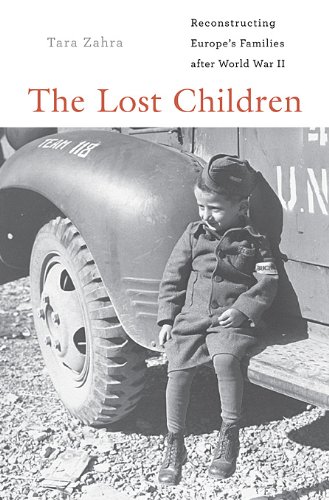 "Tara Zahra, a historian who made her name writing about the ambiguities of nationality in Czechoslovakia, has now added an important contribution to the growing literature on Europe’s reconstruction after World War II," writes historian Mark Mazower in a review of Zahra's new book The Lost Children: Reconstructing Europe's Families After World War II in The Book (New Republic).
During these years there were "two contradictory trends: on the one hand, the revival of a discourse of familialism that made the nuclear unit the core of social stability and ultimately turned the 1950s into the most conservative decade of the century; and on the other, the emergence of a new state activism that supervised parents and children alike, and intervened in unprecedented ways in their personal affairs." The most extreme form of intervention was kidnapping.
Mazower's terrific review makes clear that Zahar's contributions go well beyond the history of children ad the family, and that The Lost Children illuminates not only postwar reconstruction but also the contours of postwar European nationalism. Read the rest here.
Other reviews this week: in the Washington Post, a review of a book on Grover Cleveland's secret cancer surgery, The President Is a Sick Man: Wherein the Supposedly Virtuous Grover Cleveland Survives a Secret Surgery at Sea and Vilifies the Courageous Newspaperman Who Dared Expose the Truth by Matthew Algeo; THE STORM OF WAR: A New History of the Second World War by Andrew Roberts in the New York Times; Desert Hell: The British Invasion of Mesopotamia by Charles Townshend in The Book (New Republic); MEDICAL MUSES: Hysteria in Nineteenth-Century Paris by Asti Hustvedt in the New York Times.
Initially, status mattered more than gender, so that female aristocrats could sometimes vote and participate in political affairs. "But by the end of the book, even female aristocrats had been shooed home and their views of public affairs reduced to tea-table gossip. Politics was now a masculine preserve."in or about the years between 1640 to 1760 men were increasingly viewed as public beings and women as private ones. Her book presents case studies (in five chapters and four interludes) from both sides of the English-speaking Atlantic world to argue for a fundamental shift in definitions of political capacity.

Norton examines published and unpublished writing, showing that a "tightening verbal associations — 'public' equals men and 'private' equals women" becomes prevalent. Chopin finds her sources to be "rich," but thinks that the author "goes after them with the equivalent of a power tool that has lost its edge." After "at least a generation of women’s historians" have explored the concept of separate spheres, many "have concluded that any notion of a complete separation is misleading, because exceptions and crossovers were so frequent," Norton's examples "may match her analysis, but are they the only ones that existed?"
Read the rest here.
Children—what was happening to them as a result of the war, and what to do with them after it—turn out to have been at the epicenter of what she terms a “psychological Marshall Plan.” Through the arguments about children we come to learn much about postwar Europe’s state of mind. In fact, the intense debate about how to care for children and bring them whole out of the war’s devastation was already underway before the end of hostilities.The post-WW II years saw intense debates about whether to raise children "as self-reliant individuals, or...as part of a collective," and whether the collective should be the family or the nation. "With the credibility and the prestige of Europe’s nation-state model challenged by the experience of Nazi rule, most political activists keen to guarantee the rebirth of their nation at liberation regarded children as a precious resource."
During these years there were "two contradictory trends: on the one hand, the revival of a discourse of familialism that made the nuclear unit the core of social stability and ultimately turned the 1950s into the most conservative decade of the century; and on the other, the emergence of a new state activism that supervised parents and children alike, and intervened in unprecedented ways in their personal affairs." The most extreme form of intervention was kidnapping.
Mazower's terrific review makes clear that Zahar's contributions go well beyond the history of children ad the family, and that The Lost Children illuminates not only postwar reconstruction but also the contours of postwar European nationalism. Read the rest here.
Other reviews this week: in the Washington Post, a review of a book on Grover Cleveland's secret cancer surgery, The President Is a Sick Man: Wherein the Supposedly Virtuous Grover Cleveland Survives a Secret Surgery at Sea and Vilifies the Courageous Newspaperman Who Dared Expose the Truth by Matthew Algeo; THE STORM OF WAR: A New History of the Second World War by Andrew Roberts in the New York Times; Desert Hell: The British Invasion of Mesopotamia by Charles Townshend in The Book (New Republic); MEDICAL MUSES: Hysteria in Nineteenth-Century Paris by Asti Hustvedt in the New York Times.
Saturday, June 18, 2011
Weekend Roundup
- Over at Slate, legal historian Josh Chafetz (Cornell Law School) brings Anglo-American legislative history to bear on the latest congressional ethics scandal.
- The Library of Congress has announced the acquisition of two volumes of "an extraordinarily rare 1478 edition of the Casus breves of Johannes de Turnhout (c. 1446–1492)," an important civil law reference.
- Via H-Law, we have word of a workshop on "Justice in Ottoman Society: Institutions, Actors and Practices," to be held at the Institut Français d’études Anatoliennes - Istanbul, January 7-8, 2012. More information is here. [Update: the link is in French. A translation to English, via google translate, is here]
- Jonathan Lurie's H-Law review of Stephen Neff's "systematic and thoughtful" Justice in Blue and Gray: A Legal History of the Civil War (Harvard University Press, 2010) is here.
- An H-Law review by Linda Spagnola (NCCU School of Law) of Brian Balogh's Government Out of Sight is here.
- Congratulations to Daniel Rueck, Jonathon Penney, and Douglas Harris, winners of prizes to be awarded on June 21 at the annual meeting of the Osgoode Society for Canadian Legal History. The press release is here.
- The McNeil Center for Early American Studies is holding a conference on Bloody Days: Massacres in Comparative Perspective, co-sponsored by the Georgetown Institute for
Global History, in Philadelphia on June 23-24. Registration is now open. More information is here.
Friday, June 17, 2011
A Legal Historian's First Book, Part V: (Law Review) Articles vs. Books

Legal historians who teach in law schools often, though not
always, publish both law review articles and books—especially early in our
careers. Many of us struggle with questions about the relationship between
these two very different genres.
Law reviews tend to be heavy on footnotes and
light on peer review—although I’ve been fortunate enough to benefit from
student-editors (future professors, truth be told) who provided excellent,
substantive editing as well as cite-checking. Books are often the favored
medium of historians, many of whom don’t regularly read law journals. A happy
medium (in both senses) may reside in interdisciplinary journals such as the Law and History Review, American Journal of Legal History, and
the Yale Journal of Law and Humanities.
Another option is to publish in peer-reviewed history journals.
One typical, though certainly not
universal, path is to publish one or more law review articles related to one’s
book project, while writing a book that includes some of the same material—and
much new material—in more accessible, and less heavily footnoted, prose. This
allows us to reach different audiences and juggle the expectations of two
disciplines. It also presents challenges—learning two sets of disciplinary
conventions, preserving fresh material for a later book, striking a balance
between description and argument, writing in different voices, explaining to second-year law students why they should care about history, explaining to
law school colleagues why writing a history book takes so long.
As always, I’d be curious if others
have thoughts on this.
Kapiszewski on Judicial Decisionmaking & the Brazilian High Court in Law & Society Review
Readers may find "Tactical Balancing: High Court Decision Making on Politically Crucial Cases," by Diana Kapiszewski (Cal, Irvine--Political Science), published in the new issue of Law & Society Review (June 2011) of interest. The abstract follows.
This article advances a new account of judicial behavior: the thesis of tactical balancing. Building on existing models of judicial decision making, the thesis posits that high court justices balance a discrete set of considerations—justices' ideologies, their institutional interests, the potential consequences of their rulings, public opinion, elected leaders' preferences, and law—as they decide important cases. Variation in a high court's balancing of those considerations as it decides different cases leads it to alternate between challenging and endorsing the exercise of government power. The way in which high courts carry out this “tactical balancing” reflects their broader strategy for prioritizing the different roles they can play in a polity, and thus has significant implications for the rule of law and regime stability in developing democracies. The thesis is illustrated through a detailed analysis of the Brazilian high court's rulings on cases concerning crucial economic policies (1985–2004).
Turk on NOW and Liberal Feminism in JAH
Readers may have missed an interesting article, "Out of the Revolution, Into the Mainstream: Employment Activism in the NOW Sears Campaign and the Growing Pains of Liberal Feminism," published by Katherine Turk (Chicago--History, Ph.D. candidate), in the Journal of American History,Vol. 97, No. 2 (Sept. 2010). The abstract follows.
examines transformations in the structure, tactics, and objectives of the most prominent second-wave feminist organization, the National Organization for Women (now). Her analysis of the NOW employment rights campaign against Sears, Roebuck, and Company, which was conceived and driven by the nascent Chicago chapter in the early 1970s and abandoned by a changing national organization several years later, reveals that as liberal feminism grew into a nationally consistent movement, early commitments to local improvisation and socioeconomic justice were lost. Even in the heyday of progressive postwar politics, Turk argues, ideological struggles among activists, rather than an impending conservative backlash, rendered feminism unable to counter either the New Right or the mass deskilling that women continue to face in the burgeoning low-wage service sector.The full article is available online here to OAH members.
Origin Stories: 2 New Reviews on the Founding
H-Law has posted two reviews pertaining to the founding of the United States.
 A review of Alan Ray Gibson, Interpreting the Founding: Guide to the Enduring Debates over the Origins and Foundations of the American Republic (University Press of Kansas, 2009) is available here. Reviewer John P. Kaminski (University of Wisconsin) recommends the book for anyone seeking a concise overview of the historiography of the founding era.
Available here is a review of John Ragosta, Wellspring of Liberty: How Virginia's Religious Dissenters Helped Win the American Revolution and Secured Religious Liberty (Oxford University Press, 2010). Reviewer Joan R. Gundersen (University of Pittsburgh) believes that legal and constitutional historians may be interested in Ragosta's discussion of "modern debates over whether the United States began as a 'Christian nation,'" but she finds faults with the history on which the author bases his conclusions.
Available here is a review of John Ragosta, Wellspring of Liberty: How Virginia's Religious Dissenters Helped Win the American Revolution and Secured Religious Liberty (Oxford University Press, 2010). Reviewer Joan R. Gundersen (University of Pittsburgh) believes that legal and constitutional historians may be interested in Ragosta's discussion of "modern debates over whether the United States began as a 'Christian nation,'" but she finds faults with the history on which the author bases his conclusions.
Thursday, June 16, 2011
New Issue of Reviews in American History
A new issue of Reviews in American History is out. Reviews that may be of interest include:
Jenny Hale Pulsipher on Alan Gallay, ed., Indian Slavery in Colonial America (University of Nebraska Press, 2010). [abstract]
Kenneth Morgan on David Waldstreicher, Slavery's Constitution: From Revolution to Ratification (Hill and Wang, 2009). [abstract]
Johann N. Neem on Jason Frank, Constituent Moments: Enacting the People in Postrevolutionary America (Duke University Press, 2010). [abstract]
Christopher Waldrep on Lisa Ford, Settler Sovereignty: Jurisdiction and Indigenous People in America and Australia, 1788–1836 (Harvard University Press, 2010). [abstract]
R. Owen Williams on Earl M. Maltz, Slavery and the Supreme Court, 1825–1861 (University Press of Kansas, 2009). [abstract]
The journal is available to subscribers via Project Muse, here.Robert E. McGlone on Brian McGinty, John Brown's Trial (Harvard University Press, 2009). [abstract]
Charles L. Ponce de Leon on Alan Brinkley, The Publisher: Henry Luce and His American Century (Alfred A. Knopf, 2010). [abstract]
John Abromeit on Thomas Wheatland, The Frankfurt School in Exile (University of Minnesota Press, 2009). [abstract]
David C. Hammack on Andrew J. F. Morris, The Limits of Voluntarism: Charity and Welfare from the New Deal through the Great Society (Cambridge University Press, 2009). [abstract]
David S. Brown on Carl Mirra, The Admirable Radical: Staughton Lynd and Cold War Dissent, 1945–1970 (Kent State University Press, 2010). [abstract]
Wednesday, June 15, 2011
Sokol on LBJ and the Civil Rights Act of 1964

Sokol also provides a few short clips from the recordings. One is a brief but heartbreaking call to Anne Schwerner, mother of civil rights worker Michael Schwerner, relaying the short-lived hope that Schwerner and his colleagues James Chaney and Andrew Goodman might be found alive. In another chilling exchange, Senator James O. Eastland implies that the young men's disappearance was nothing more than a hoax designed to make a peaceful Mississippi appear violent.
Bernstein on "The Constitution as Exploding Cigar..."
New from R.B. Bernstein (New York Law School) is "The Constitution as Exploding Cigar and Other 'Historian's Heresies' About a Constitutional Orthodoxy," published in the New York Law School Law Review 55, no. 4 (2010/11). It is a revised, expanded, and annotated version of a lecture that he has given in various forms (including the one we mentioned here).
According to the intro, Bernstein (1) "addresses the contextual frameworks, both intellectual and technological, that shape our interpretations of the Constitution"; (2) "discuss[es] the 'Absent Founders,' individuals who are relevant to the Constitution's origins but are often overlooked in the search for original intent" (e.g., Aaron Burr); (3) "explore[s] the consequence for originalism of rapid constitutional change during the Revolutionary Era"; and (4) "explain[s] how" various "problems in how the Constitution operated[] caused the Founders' expectations, understandings, and intentions to blow up in their faces." A final section "offer[s] some tentative conclusions about the consequences of these historian's heresies for the enterprise of constitutional interpretation."
The full text is available here.
According to the intro, Bernstein (1) "addresses the contextual frameworks, both intellectual and technological, that shape our interpretations of the Constitution"; (2) "discuss[es] the 'Absent Founders,' individuals who are relevant to the Constitution's origins but are often overlooked in the search for original intent" (e.g., Aaron Burr); (3) "explore[s] the consequence for originalism of rapid constitutional change during the Revolutionary Era"; and (4) "explain[s] how" various "problems in how the Constitution operated[] caused the Founders' expectations, understandings, and intentions to blow up in their faces." A final section "offer[s] some tentative conclusions about the consequences of these historian's heresies for the enterprise of constitutional interpretation."
The full text is available here.
Tuesday, June 14, 2011
Kumar on Lauterpacht on Lauterpacht.
 |
| credit |
Neuborne on Race and the Warren Court
Burt Neuborne (New York University School of Law) has posted "The Gravitational Pull of Race on the Warren Court," published in The Supreme Court Review, Vol. 2010, No. 1, pp. 59-102.
Here's the abstract:
My thesis in this article is that concern over racial injustice and state institutional failure was so intense during the twenty-one, “Warren years,” from 1952-1973 that it played a significant role in shaping many of the most important constitutional decisions of the Supreme Court in areas as diverse as federalism, separation of powers, criminal law and procedure, freedom of speech, association, and religion, procedural due process of law, and democracy. I believe, as well, that at least some of the changes in constitutional doctrine that have taken place in the post-Warren era, such as the erosion of the exclusionary rule, the rebalancing of federal-state power, and the easing of restrictions on aid to parochial schools, reflect both a decrease in the intensity of the Court’s concern over racial injustice, and an increase in the legal system’s confidence in state and local institutions to act fairly in racially-charged settings. I begin with a summary of selected aspects of Warren Court constitutional doctrine having nothing directly to do with race, arguing that the Justices’ concerns over racial injustice and regional failure to deal fairly with race exercised a gravitational pull on the evolution of constitutional doctrine. I then turn briefly to whether such a gravitational pull should be cause for celebration, condemnation, or a shrug of the shoulders. Finally, I ask why, once the gravitational pull of race had ebbed, certain Warren Court constitutional precedents that appear to owe their genesis, at least in part, to concern over racial injustice and regional failure have flourished, while others have melted away.Hat tip: Balkinization
Merrill on the Origins of the Appellate Review Model of Administrative Law
Thomas W. Merrill, Columbia Law School, has published Article III, Agency Adjudication, and the Origins of the Appellate Review Model of Administrative Law, in the Columbia Law Review 111 (2011): 939. Here is the abstract :
American administrative law is grounded in a conception of the relationship between reviewing courts and agencies modeled on the relationship between appeals courts and trial courts in civil litigation. This appellate review model was not an inevitable foundation of administrative law, but it has had far-reaching consequences, and its origins are poorly understood. This Article details how the appellate review model emerged after 1906 as an improvised response by the U.S. Supreme Court to a political crisis brought on by aggressive judicial review of decisions of the Interstate Commerce Commission. Once the jerry-built model was in place, Congress signaled its approval, and an academic—John Dickinson—wrote a persuasive book extolling its virtues. As a result, the appellate review model became entrenched by the 1920s and eventually spread to all of administrative law. The early adoption of the appellate review model helps explain why the Supreme Court never seriously grappled with Article III problems created by the widespread use of administrative agencies to adjudicate cases once the New Deal and the expansion of the administrative state arrived. It also helps explain why the judiciary has played such a large role in the development of administrative policy in the United States relative to other legal systems.
Monday, June 13, 2011
A Legal Historian's First Book, Part IV: The Book Contract
One would think that a law professor would be in a better position than most to negotiate a book contract. Not so in my case. Again I turned to wiser and more experienced colleagues for advice. Among their tips: Make sure the press is obliged to release a paperback edition within a reasonable time-frame (this was before the explosion of E-books). If possible, they counseled, exercise some control over the timing of outside reviews, so that the feedback you receive will be most helpful--both for purposes of your manuscript being accepted for publication, and for the opportunity to implement constructive suggestions for improvement/revision. And many people advised that authors are not usually bound to the submission/delivery date in the contract.
Much later, as I faced the prospect of cutting 40,000 words from my "final manuscript," I wished I had paid more attention to the contractual word limit, which (unlike the delivery date) was enforced. On the other hand, the cutting process undoubtedly made the book more readable and less expensive.
What do you wish you had known when you were negotiating your first book contract? How, in your experience, has the publishing landscape changed in recent years?
There is a lot of published and unpublished advice out there about the ins and outs of publishing. Readers of this blog have recommended William Germano's Getting It Published, which is excerpted here. For earlier posts in this series, see Part I: "Revising" the Dissertation, Part II: Archival Research, and Part III: The Book Proposal.
Considering Comparative Legal History Through the Lens of Transatlantic Anti-Slavery Movements
Comparative constitutional law has swept the academy in recent years, as we all know. Scholars of U.S. constitutional and legal history increasingly take global perspectives, as well. Over time, after reading engaging comparative and/or cross-disciplinary work by scholars including Vicki Jackson, Mark Tushnet, George Billias, Andrew Lewis, Mary Dudziak, Willy Forbath and Ariela Gross, I've grown more interested in comparative constitutional law and legal history. I'm particularly interested in works that integrate local, national and global histories to understand social and political change in public law.
The comparative approach is captivating, but the field is vast and the methodologies subsumed within the genre are numerous. I have found myself flipping through collections of materials and wondering: precisely what constitutes a meaningful comparative methodology, and what makes for successful comparative scholarship? Elizabeth Dale's posts a few weeks ago about teaching comparative constitutional history in the U.S. (see here and here) suggest some of the challenges involved in writing good comparative scholarship. As an initial matter, one must acquire the requisite depth and breadth of knowledge to compare constitutional systems across place and time. Even if one is quite knowledgeable about several different legal systems, one has to confront the question of what analytical difference "difference" should make in comparative analysis. That is, precisely how does one usefully compare constitutional or legal systems in countries where political, cultural, and social contexts differ to a substantial degree? On the other hand, there are limitations to comparing places (such as the United States and Britain) whose traditions are similar in many important respects. When describing societies at the high level of generality demanded of comparative scholarship, can one avoid essentialism? Another conundrum: the U.S. constitutional and legal frameworks, influential worldwide, can obfuscate genuine comparative analysis. For these reasons and more, comparative analysis of law and societies strikes me as challenging in concept and practice.
The comparative approach is captivating, but the field is vast and the methodologies subsumed within the genre are numerous. I have found myself flipping through collections of materials and wondering: precisely what constitutes a meaningful comparative methodology, and what makes for successful comparative scholarship? Elizabeth Dale's posts a few weeks ago about teaching comparative constitutional history in the U.S. (see here and here) suggest some of the challenges involved in writing good comparative scholarship. As an initial matter, one must acquire the requisite depth and breadth of knowledge to compare constitutional systems across place and time. Even if one is quite knowledgeable about several different legal systems, one has to confront the question of what analytical difference "difference" should make in comparative analysis. That is, precisely how does one usefully compare constitutional or legal systems in countries where political, cultural, and social contexts differ to a substantial degree? On the other hand, there are limitations to comparing places (such as the United States and Britain) whose traditions are similar in many important respects. When describing societies at the high level of generality demanded of comparative scholarship, can one avoid essentialism? Another conundrum: the U.S. constitutional and legal frameworks, influential worldwide, can obfuscate genuine comparative analysis. For these reasons and more, comparative analysis of law and societies strikes me as challenging in concept and practice.
Failinger on Islam in the Mind of American Courts
Marie A. Failinger, Hamline University School of Law, has posted Islam in the Mind of American Courts: 1800-1960, which is forthcoming in the Boston College Third World Law Journal. Here is the abstract:
This article surveys references to Islam and Muslims in American court opinions from 1800 to 1960.. It argues that American judges as a group portray an ambivalent attitude toward Muslims, some treating Islam disparagingly or as an exotic and fanciful religion, and others emphasizing the religious equality that Muslims deserve.
Sunday, June 12, 2011
Book Review Round-up
Ralph Luker at Cliopatria has had great coverage of book news lately. Meanwhile, apologies for my radio silence, but I am juggling a perfect storm of deadlines and other obligations. Here are reviews of interest from Ralph's posts during the past week:
You can follow Ralph's posts at Cliopatria. And for breaking book news, try my usual source: Arts & Letters Daily.Cullen Murphy, "The Idea of Germany, From Tacitus to Hitler," NYT, 10 June, reviews Christopher B. Krebs's A Most Dangerous Book: Tacitus's "Germania" From the Roman Empire to the Third Reich.
A. S. Byatt reviews Jacqueline Yallops's Magpies, Squirrels and Thieves: How the Victorians Collected the World for the Guardian, 11 June.
Timothy Snyder, "Love and Death," TNR, 9 June, reviews Georg Adler, Peter Hudis, and Annelies Laschitza, eds., The Letters of Rosa Luxemburg, trans. by George Shriver.
Jacob Heilbrunn, "Did J.F.K. Lose Berlin?" NYT, 10 June, and Alex von Tunzelmann for the Washington Post, 10 June, review Frederick Kempe's Berlin, 1961: Kennedy, Khrushchev, and the Most Dangerous Place on Earth.
Stanley Kanfer, "Films in Fraught Times," WSJ, 30 April, reviews J. Hoberman's An Army of Phantoms: American Movies and the Making of the Cold War and Nick Smedley's A Divided World: Hollywood Cinema and Émigré Directors In the Era of Roosevelt and Hitler, 1933-1948. Andrew Hultkranz, "The Paranoid Style," bookforum, Summer, reviews Hoberman's An Army of Phantoms.
Tariq Ali, "Andropov was right," LRB, 16 June, reviews Rodric Braithwaite's Afgantsy: The Russians in Afghanistan, 1979-89 and Artemy Kalinovsky's A Long Goodbye: The Soviet Withdrawal from Afghanistan.
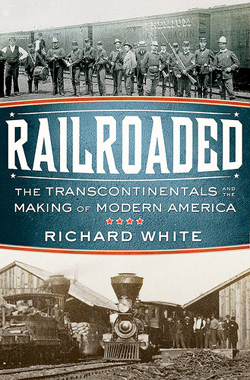
Donald Worster, "The Transcontinental Travesty," Slate, 6 June, reviews Richard White's Railroaded: The Transcontinentals and the Making of Modern America. Jonathan Yardley for the Washington Post, 3 June, and Patrick Cooke, "Interstate Highways as a Long-Haul Project, WSJ, 4 June, review Earl Swift's The Big Roads: The Untold Story of the Engineers, Visionaries, and Trailblazers Who Created the American Superhighways.
Chris Lehmann, "Little Churches Everywhere: California's Evangelical Conservatism," Nation, 27 June, reviews Darren Dochuk's From Bible Belt to Sun Belt: Plain-Folk Religion, Grassroots Politics, and the Rise of Evangelical Conservatism and Matthew Avery Sutton's Aimee Semple McPherson and the Resurrection of Christian America.
Timothy Snyder, "A New Approach to the Holocaust," NYRB, 23 June, reviews Peter Longerich's Holocaust: The Nazi Persecution and Murder of the Jews, Longerich's Heinrich Himmler: Biographie, Catherine Epstein's Model Nazi: Arthur Greiser and the Occupation of Western Poland, and Andrej Angrick's and Peter Klein's The "Final Solution" in Riga: Exploitation and Annihilation, 1941–1944, translated by Ray Brandon.
Isaac Chotiner, "Bigness," The Book, 6 June, Dwight Garner, "A Biography of Millions," NYT, 8 June, and Richard Rayner for the LA Times, 12 June, review Patrick French's India: A Portrait. French, "5 Things We Get Wrong About India," Daily Beast, 7 June, draws on his research for the book.
John Noble Wilford, "After 90 Years, a Dictionary of an Ancient World," NYT, 6 June, assesses the importance of the 21 volume Assyrian Dictionary of the Oriental Institute of the University of Chicago.
In Franco Moretti, "Network Theory, Plot Analysis," New Left Review, March/April, the Stanford scholar applies his quantitative analysis of literature to Shakespeare's "Hamlet." It's available here to nonsubscribers. Richard Beck, "Hamlet and the region of death," Boston Globe, 29 May, interviews Moretti.
Alexander Bevilacqua, "Beyond Orientalism," n+1, 6 June, reviews Nabil I. Matar's Islam in Britain, 1558-1685, Alastair Hamilton's and Francis Richard's André du Ryer and Oriental Studies in Seventeenth-Century France, Paula Sutter Fichtner's Terror and Toleration: The Habsburg Empire Confronts Islam, 1526-1850, Ziad Elmarsafy's The Enlightenment Qur'an: The Politics of Translation and the Construction of Islam, and Jürgen Osterhammel's Die Entzauberung Asiens: Europa und die asiatischen Reiche im 18. Jahrhundert.

Saturday, June 11, 2011
Du Mont and Janis on the Origins of American Design Protection
Jason J. Du Mont, Max Planck Institute for Intellectual Property & Competition Law and Chicago-Kent College of Law, and Mark D. Janis, Indiana University Maurer School of Law, have posted The Origins of American Design Protection. Here is the abstract:
Design patent protection is the oldest American form of intellectual property protection for ornamental designs, but still the most enigmatic. Congress passed the first design patent legislation in 1842, operating on the assumption that existing rules for utility patents could be incorporated en masse to protect designs. This Article questions that assumption. Drawing on new archival research and historical analysis, this Article demonstrates for the first time how the design patent system originated. We analyze the international trade aspects of the first design patent legislation, linking the legislation with a brief burst of protectionist measures associated with the Whig party. We also examine technological innovations that ushered in the first major era of American industrial design in key antebellum industries, and we analyze lobbying efforts on behalf of those industries that led to proposals for early design protection, proposals that did not assume the incorporation of patent rules. We also prove for the first time how the American design patent system originated as a knock-off of British copyright and registered design legislation, and why the American system was likely forced into a patent rubric. Finally, we conclude by offering concrete suggestions for the courts and Congress to ease the design patent system back to its original roots.
Weekend Round-Up
- Stanford's press release announcing that Robert W. Gordon will rejoin its law faculty this fall is here.
- The Blog of the Legal Times reports on the suit brought by Stanley Kutler, the American Society for Legal History and the American Historical Association to open the grand jury testimony Richard Nixon gave in 1975. Legal historians who know of other historically significant grand jury testimony that might be a good candidate should feel free to suggest it in a comment or via email to Dan Ernst.
- The battle over constitutional history moves to the classroom.
- The ACS Issue Brief on public-sector unionism, written by Toledo Law's Joseph Slater, includes a historical section that draws upon Slater's book, Public Workers.
Friday, June 10, 2011
Legal History at the 2011 AALS Workshop on Women Rethinking Equality
The 2011 American Association of Law Schools (AALS) Workshop on Women Rethinking Equality will be held June 20-22 at the Renaissance Mayflower Hotel in Washington, DC. According to the brochure, the workshop "will appeal to a full range of teachers and scholars in all subject areas. It will challenge us to think about the meaning, contours and status of equality for women: in legal, social, and institutional settings – and in the specific context of legal education." The full program is here. Many panels include, and/or will be of interest to, legal historians; a sampling appears after the jump.
LHR Book Reviews: Part III
We've been highlighting the contents of the most recent issue of the Law & History Review. Here's our final post on the book reviews:


Allison Brownell Tirres (DePaul University College of Law) reviews Migra! A History of the U.S. Border Patrol (University of California Press, 2010), by Kelly Lytle Hernández. Tirres admires "the unique transnational perspective that [the book] brings to the history of immigration law," and the "rich and provocative way" in which it explores "the complex dynamics of race, migration, and law in the twentieth century."

Joanna Grisinger (Clemson University) offers an equally laudatory review of Industrial Violence and the Legal Origins of Child Labor (Cambridge University Press, 2010), by James D. Schmidt. According to Grisinger, Schmidt uses court records from six southern states to show how "[l]egal language and courtroom experience validated child labor as a public problem for working-class families who had previously believed quite the opposite."
On the following pages, Christopher W. Schmidt (Chicago–Kent College of Law) takes up Christopher Waldrep's "impressively researched" exploration of the battle against Mississippi's all-white jury system: Jury Discrimination: The Supreme Court, Public Opinion, and a Grassroots Fight for Racial Equality in Mississippi (University of Georgia Press, 2010). Schmidt praises the book for "effectively highlight[ing] the variability of Jim Crow . . . and the sometimes unexpected power of the law."
Next up: H. Robert Baker (Georgia State University) reviews Leslie A. Schwalm, Emancipation's Diaspora: Race and Reconstruction in the Upper Midwest (University of North Carolina Press, 2009). Baker describes the book as "beautifully researched," and "careful and methodical" in its analysis. He highlights Schwalm's "consistent and persuasive engagement of gender."
In the final book review, Karl Jacoby (Brown University) covers Defying the Odds: The Tule River Tribe's Struggle for Sovereignty in Three Centuries (Yale University Press, 2010), by Gelya Frank and Carole Goldberg. Jacoby sympathizes with the book's "ambitious collaborative approach" (Frank is an anthropologist, Goldberg, a legal scholar), but notes several "provocative questions" and exciting leads that the authors failed to follow.The full reviews are available here, to subscribers.
Wilf on Copyright and Social Movements in the 19th-Century US
Steven Wilf has published Copyright and Social Movements in Late Nineteenth-Century America in Theoretical Inquiries in Law 12 (2011). Here is the abstract:
The cultural turn in copyright law identified authorship as a rhetorical construct employed by economic interests to strengthen claims to property rights. Grassroots intellectual property political movements have been seen as both a means of countering these interests’ everexpanding proprietary control of knowledge and establishing a more public regarding copyright system. This Article examines one of the most notable intellectual property political movements, the emergence of late nineteenth-century agitation to provide copyright protection for foreign authors as a social movement. It places this political and legal activism within the larger framework of Progressive Era reform. During this period, activists promoted the idea of the public — and not simply the author — as primary to the workings of American copyright. The framing of the purposes of copyright, the appeal to a broader public, and the complex negotiations surrounding the passage of an international copyright act after a long period of gestation was formative to the creation of modern United States copyright law. Ironically, the movement for international copyright also sharpened the identification of interest groups. The first modern American comprehensive copyright legislation, the 1909 Copyright Act, was drafted by gathering together these groups for negotiations remarkably similar in style to those which led to the protection of the rights of foreign authors — but which would strongly embrace a proprietary model.
Thursday, June 9, 2011
Sneh reviews Crowe, ed. "Crimes of State Past and Present"
H-Law has posted a review of David M. Crowe, ed. Crimes of State Past and Present: Government-Sponsored Atrocities and International Legal Responses (Routledge, 2011).
Reviewer Itai Sneh (John Jay College, CUNY) spends the first few paragraphs acquainting the reader with editor David Crowe (Elon University) and his "public intellectual, high-profile research" on "the trials of victimized, persecuted ethnic, national, and religious minorities throughout Europe."
As for the book, Sneh calls it "timely" and praises in particular Crowe's introductory essay and the final essay, by William C. Peters:
Reviewer Itai Sneh (John Jay College, CUNY) spends the first few paragraphs acquainting the reader with editor David Crowe (Elon University) and his "public intellectual, high-profile research" on "the trials of victimized, persecuted ethnic, national, and religious minorities throughout Europe."
As for the book, Sneh calls it "timely" and praises in particular Crowe's introductory essay and the final essay, by William C. Peters:
Peters offers an erudite procedural and substantive exploration of a troubling topic: how did U.S. military codes, personnel, and courts handle (or not, sometimes resulting in “deferred” justice) command responsibility of superior officers in adjudicating war crimes perpetrated by American soldiers since the 1960s, namely from Vietnam’s My Lai to Iraq’s Abu Gharib, Haditha, and Samarra, and in Afghanistan?The full review is here.
Stolzenberg on Righting the Relationship between Race and Religion and the Law
 Righting the Relationship between Race and Religion in Law has just been posted by my colleague Nomi Stolzenberg USC Gould School of Law. It is a review essay on Eve Darian-Smith, Religion, Race, Rights: Landmarks in the History of Modern Anglo-American Law (Oxford, Hart Publishing 2010). The essay is forthcoming in the Oxford Journal of Legal Studies, 2011. Here's the abstract:
 This review discusses the interrelationship of race and religion in law, the subject of Eve Darian-Smith's new book, which seeks to rectify the neglect of religion in the study of race and law and the parallel neglect of race in studies of law and religion. Concurring with the book’s basic propositions, that the segregation of race and religion into separate fields of legal studies needs to be overcome and the religious origins of fundamental liberal legal ideas need to be recognized, I tease out different ways in which race and religion can be “linked” and religion can “play a role” in the development of modern law that are not fully parsed out in Darian-Smith's analysis. Applauding her attempt to integrate recent challenges to the long regnant "secularization thesis" into the study of race and law, I point out some unresolved ambiguities in those challenges and their implications for law.
A Legal Historian's First Book, Part III: The Book Proposal

Authors write book proposals at various stages of a project. I wrote mine several months after submitting my dissertation, on the advice of astute colleagues who suggested taking a break and revisiting the project with fresh eyes. (For me, the “break” involved preparing for my first year of teaching in a law school, which was all-consuming anyway.)
Having never laid eyes on a book proposal, my first step was to impose on the generosity of friends who had recently and successfully submitted one. I recall their examples being the most helpful input in crafting my own. Several university press websites, including Harvard University Press and the University of California Press offer useful guidelines.
With some trepidation, I recently re-read my proposal, curious to see how well it conformed to the guidelines, and also how well it anticipated the content of the book that was completed four years later. I recognized the first sentence of the proposal as a line from my job talk—which may reflect that both genres are a form of marketing. “Since the 1970s, ‘women and minorities’ has been an established category in the American political lexicon.” The current HUP guidelines advise that a proposal “should give an answer to what might be called the Passover question: ‘How is this book different from all other books?’” My proposal’s third sentence might be read as doing that—“Although it is commonplace to recognize American feminists’ reliance on a civil rights paradigm to define their ideas, legal arguments, and mobilization strategies, we know remarkably little about how, why, and to what effect analogies between race and sex inequality came to dominate American anti-discrimination discourse.” Throughout, I used phrases such as “heretofore unexplored connections” and “previously untapped archival sources.”
Most guidelines for book-proposal writing emphasize that authors should discuss the audiences for whom they are writing. Is the book for specialists in one’s own field? For general readers? Will it be useful to students? Assigned in courses? In what fields and at what level? My proposal addressed none of this directly, although I do remember conversations with acquisitions editors along those lines. An anonymous commenter on a previous post in this series points out, “Legal historians face the usual challenge of being on the boundary of different disciplines with different audiences. Does one pitch the research to be of relevance only to other legal historians, or to a wider community of historians, or to non-historian lawyers?” The flip side of this dilemma is the ability to claim a multi-disciplinary audience. I could plausibly propose to reach readers interested in law, history, political science, women's studies, African American Studies, and sociology.
In retrospect, my proposal sounds surprisingly similar, at least in general terms, to what I ended up writing, but the devil was in the details. From reading the proposal, one would not have known—and indeed, I did not realize myself—how much additional research and writing from scratch would be required. (See Part I of this series). The proposal did include a very brief section titled, “Proposed Revisions,” as well as a description of each chapter. It was relatively short, less than six single-spaced pages. Then again, the next step was to send my whole dissertation to editors who expressed interest in the proposal—so demonstrating an ability to be concise may have been prudent.
Authors and editors, do you have advice for legal historians on writing book proposals?
New in the Journal of American History
 The June 2011 issue of the Journal of American History is being mailed this week and is available on-line now. It includes a Roundtable on Beverley Gage's "state of the field" essay, "Terrorism and the American Experience," and the following article:
"The Trouble with Gay Rights: Race and the Politics of Sexual Orientation in Philadelphia, 1969-1982," by Kevin J. Mumford
In 1974 and 1982 Philadelphia's gays and lesbians mobilized for a bill to prohibit discrimination on the basis of sexual orientation and unexpectedly encountered the politics of race. Kevin J. Mumford traces the competing arguments and strategies of a range of groups, from early gay liberationists to conservative African American clergy to black gay men, for and against sexual equality. Mumford illustrates that gay and lesbian activists have had to struggle with the legacy of the civil rights movement and that gay identities may have proliferated and become more coherent as a result.
Subscribe to:
Posts (Atom)