Showing posts with label guest blogger. Show all posts

Friday, July 31, 2026

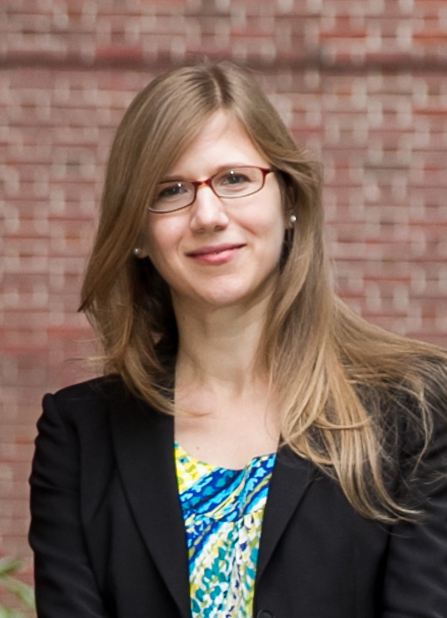
Welcome (Back), Mitra Sharafi!

We are thrilled to announce that former LHB blogger Mitra Sharafi will be re-joining us for the month of August as a guest blogger! 

Professor Sharafi is the Evjue-Bascom Professor of Law at the University of Wisconsin-Madison and a renowned legal historian of South Asia. She is also a dedicated servant of the field -- including in her current role as President of the American Society for Legal History

Cribbing now from her Wisconsin bio

Mitra Sharafi (UW History)
She holds law degrees from Cambridge and Oxford (the UK equivalent of a JD and LLM) and history degrees from McGill (BA) and Princeton (PhD). Her first book, Law and Identity in Colonial South Asia: Parsi Legal Culture, 1772-1947 (Cambridge University Press, 2014) won the Law and Society Association’s Hurst Prize in 2015. Her second monograph, Fear of the False: Forensic Science and the Law of Crime in Colonial South Asia, came out with Cornell University Press (Open Access) in 2026Her next major project will explore the world of non-European law students from across the British empire (and globe) who came to London's Inns of Court to become barristers, 1860s-1960s. 

A fuller description of Fear of the False, via the Press:

Fear of the False uncovers colonial South Asia's critical role in the development of forensic science. Around 1900, the government of British India created a web of institutions for the scientific detection of crime. Driven by anxieties about "native mendacity," newly minted forensic analysts focused on uncovering faked evidence planted by South Asians. These experts, joining toxicologists known as "chemical examiners," were supposed to extract objective, scientific truth in the service of British justice. But in trying to counteract the presumed tendency of colonized peoples to lie, the system enabled widespread misconduct by state experts, increasing the risk of wrongful convictions of South Asian defendants.

Through scrupulously documented legal cases, Mitra Sharafi reveals that colonial dynamics put special pressure on the relationship between truth and justice. Examining falsity on both sides of the law through the use of testing to (mis)identify poisons, blood, and spermatozoa, as well as debates over adversarialism and inquisitorialism in the colonial courtroom, Fear of the False explores advances in forensic science and shortcuts in criminal procedure against the backdrop of colonial mistrust.

Thanks to generous funding from the University of Wisconsin Law School, the ebook editions of this book are available as open access volumes through the Cornell Open initiative.

Welcome back, Professor Sharafi! 

-- Karen Tani  

Saturday, March 1, 2025

Welcome, Jill Hasday!

We at LHB are thrilled to welcome back Professor Jill Hasday as a guest blogger for the month of March. Some highlights from Professor Hasday's University of Minnesota faculty webpage:

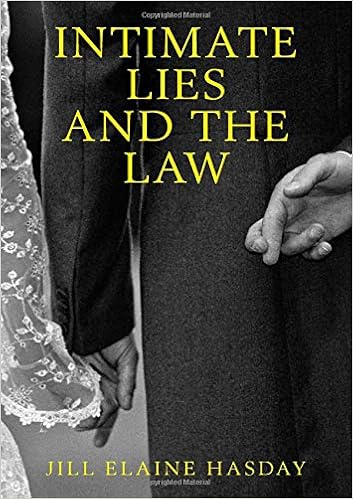
Professor Jill Hasday teaches and writes about anti-discrimination law, constitutional law, family law, and legal history. She is the author of three books: Family Law Reimagined (Harvard University Press 2014), Intimate Lies and the Law (Oxford University Press 2019), and We the Men: How Forgetting Women’s Struggles for Equality Perpetuates Inequality (Oxford University Press forthcoming 2025).  Intimate Lies and the Law won the Scribes Book Award for “the best work of legal scholarship published during the previous year” and the Foreword INDIES Book of the Year Award for Family and Relationships.

Professor Hasday’s articles have appeared in many leading law reviews, including the Harvard Law Review, Stanford Law Review, New York University Law Review, Michigan Law Review, California Law Review, Georgetown Law Journal, UCLA Law Review, Vanderbilt Law Review, and Minnesota Law Review.

Professor Hasday received her B.A. from Yale University in 1994, graduating summa cum laude with distinction in history and winning election to Phi Beta Kappa. In 1997, Professor Hasday graduated from Yale Law School, where she was an articles editor of the Yale Law Journal and received honors in all graded courses. After law school, Professor Hasday clerked for Judge Patricia M. Wald of the United States Court of Appeals for the D.C. Circuit.  Professor Hasday joined the University of Minnesota Law School as a tenured faculty member in 2005. She has been the Centennial Professor in Law since 2013.

She will be blogging mainly about her new book We the Men, which we profiled earlier this month (here).

Welcome, Professor Hasday!

-- Karen Tani

Tuesday, October 1, 2024

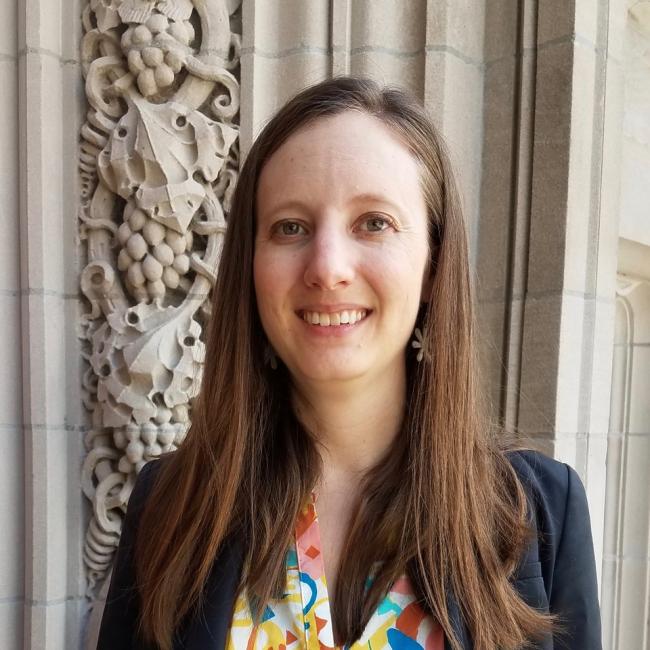
Welcome to Guest Blogger Marie-Amélie George!

We are delighted to welcome Professor Marie-Amélie George to the blog for the month of October. Cribbing here from her Wake Forest Law faculty bio -- 

Marie-Amélie George (WF Law)
Marie-Amélie George specializes in LGBTQ rights and teaches courses on civil procedure and family law. As a historian, she analyzes both how and why laws have changed, as well as the ways in which history can provide insight into current legal debates and contemporary normative questions. Professor George's work has been published or is forthcoming in the Northwestern Law Review, Florida Law Review, Wisconsin Law Review, Alabama Law Review, Yale Law & Policy Review, Harvard Civil-Rights Civil-Liberties Law Review, and Law & History Review, among others. She is a three-time recipient of the Dukeminier Award, which recognizes the country's most influential sexual orientation and gender identity scholarship. In 2021, she received the law school's Jurist Excellence in Teaching Award.
Prior to joining the Wake faculty, Professor George was the Berger-Howe Fellow in Legal History at Harvard Law School. She also served as an Associate in Law at Columbia Law School, where she taught the Sexuality and Gender Law Clinic and a course on legal research and writing. Before entering academia, Professor George worked as a prosecutor at the Miami State Attorney's Office and as a litigation associate at Paul, Weiss, Rifkind, Wharton & Garrison in New York.

Professor George received her Ph.D. in history with distinction from Yale University, and her J.D. from Columbia Law School, where she was Editor-in-Chief of the Columbia Journal of Gender and Law and a Kent Scholar. She also holds a M.St. in Women's Studies from the University of Oxford, where she was awarded a distinction on her thesis.

George is also the author of the just-published Family Matters: Queer Households and the Half-Century Struggle for Legal Recognition (Cambridge University Press). About the book:

In 1960, consensual sodomy was a crime in every state in America. Fifty-five years later, the Supreme Court ruled that same-sex couples had the fundamental right to marry. In the span of two generations, American law underwent a dramatic transformation. Though the fight for marriage equality has received a considerable amount of attention from scholars and the media, it was only a small part of the more than half-century struggle for queer family rights. Family Matters uncovers these decades of advocacy, which reshaped the place of same-sex sexuality in American law and society – and ultimately made marriage equality possible. This book, however, is more than a history of queer rights. Marie-Amélie George reveals that national legal change resulted from shifts at the state and local levels, where the central figures were everyday people without legal training. Consequently, she offers a new way of understanding how minority groups were able to secure meaningful legal change.

Advance praise for Family Matters:

"The legalization of same-sex marriage can only be understood as something that happened ‘fast’ by ignoring the critical history this book traces. Family Matters probes the ‘unknown decades’ of legal (and extra-legal) advocacy for LGBT families in the years before same-sex marriage. Among its many fascinating insights is the role that straight as well as gay families played. This is an expansive and important work of scholarship, and one that should be widely read." -- Margot Canaday

"Fluidly narrated and marvelously detailed, this is a history of ordinary people transforming law and culture bit by bit as they struggled to gain queer family rights. The book’s focus on the local and state level illuminates the surprising centrality of parent-child relationships in the gradual attainment of gay rights, long before marriage equality became possible." -- Nancy F. Cott - author of Public Vows: A History of Marriage and the Nation

"Beginning with battles over the criminalization of queer life and ending with the recognition of same-sex marriage, this important and ambitious book tracks an extraordinary transformation in American law. Family Matters offers an incisive analysis of one of the most consequential shifts in the legal landscape of the last half-century." -- Regina Kunzel

Look out for a series of posts from Professor George over the next several weeks.

-- Karen Tani

Monday, November 1, 2021

Thank you, Philip Thai!

We are thrilled to have had Professor Philip Thai (Northeastern University) as our October guest blogger this year. Here are his posts, all in one place, for your convenience: 

The first two posts share insights into Professor Thai's legal history research broadly and then on his book, China's War on Smuggling. The last three posts are just the thing if you are looking for a crash course in Chinese legal history since the archives opened up in the 1980s.

Thank you, Professor Thai! You can follow him on Twitter @philip_thai

--Mitra Sharafi

Thursday, July 1, 2021

Welcome, Tom Johnson!

This month, we are very happy to welcome Dr. Tom Johnson, Lecturer in Late Medieval History at the University of York in the UK. 

Tom Johnson did his doctorate at Birkbeck, University of London, and held a research fellowship at Emmanuel College, Cambridge. In 2018-19, he was a Fellow at the Davis Center for Historical Studies at Princeton. His research explores the lives of ordinary people in England during the fourteenth and fifteenth centuries, focusing on their interactions with legal and political institutions, as well as theoretical approaches to the study of medieval law and society. He is the author of Law in Common: Legal Cultures in Late-Medieval England (Oxford University Press, 2020), and of various articles published in The Law & History Review, Past & Present, and The American Historical Review.

Welcome, Tom Johnson!

--Mitra Sharafi

Tuesday, June 8, 2021

Welcome, Anna Lvovsky!

Professor Anna Lvovsky
Professor Anna Lvovsky (credit)

We are delighted to welcome Professor Anna Lvovsky to the blog this month. An assistant professor at Harvard Law School, she teaches American legal history, the history of policing, criminal law, and evidence. Her research focuses on "the legal and cultural dimensions of policing, judicial uses of professional knowledge, and the regulation of gender, sexuality, and morality."

One of her major research projects these past years has been her recently published book, Vice Patrol: Cops, Courts, and the Struggle over Urban Gay Life before Stonewall (University of Chicago Press), which grew out of her award-winning dissertation. Vice Patrol is a history of state repression of queer communities in the mid-twentieth-century U.S. 

Cribbing here from the Press's description, the book 

trac[es] the tactics used to criminalize, profile, and suppress gay life from the 1930s through the 1960s, and the surprising controversies those tactics often inspired in court. Lvovsky shows that the vice squads’ campaigns stood at the center of live debates about not only the law’s treatment of queer people, but also the limits of ethical policing, the authority of experts, and the nature of sexual difference itself—debates that had often unexpected effects on the gay community’s rights and freedoms. Examining those battles, Vice Patrol enriches understandings of the regulation of queer life in the twentieth century and disputes about police power that continue today. 

For more about the book, as well as links to her other publications, check out her personal website.

Prior to joining the faculty at HLS, Professor Lvovsky clerked for two federal appellate court judges, the Honorable Michael Boudin on the First Circuit and the Honorable Gerard E. Lynch on the Second Circuit Court, and then was an Academic Fellow at Columbia Law School. She received her J.D. and Ph.D. (History of American Civilization) from Harvard and her B.A. from Yale.

Welcome, Anna Lvovksy! 

Saturday, May 22, 2021

Weekend Roundup

  • Guestblogger update: due to unforeseen circumstances, we'll be taking a rain check on Laurie Wood's posts this month. We look forward to welcoming Laurie back at a later date.
  • Nicholas Bagley, Philip Hamburger, Jennifer Mascott, Nicholas Parrillo, and Judge Neomi Rao discuss originalism and the nondelegation doctrine on the Federalist Society's YouTube channel.
  • "The Tamil Nadu National Law University will be hosting the second All India Legal History Congress on May 21 and 22" (The Hindu).
  • The Law and Humanities Workshop of the Interdisciplinary Center, Herzliya, will host a symposium on Eric Nelson's The Theology of Liberalism: Political Philosophy and the Justice of God on Wednesday, June 16th 2021, 16:30 Jerusalem / 09:30 EST, with Michael Walzer, Institute for Advanced Study; Paul Horwitz, University of Alabama; Ayelet Hoffmann Libson, Interdisciplinary Center, Herzliya; and Micah J. Schwartzman, University of Virginia.  Register here.
Weekend Roundup is a weekly feature compiled by all the Legal History bloggers.

Saturday, May 1, 2021

Welcome, Laurie Wood!

We are excited to welcome Laurie Wood (Florida State University) as our guest blogger in May 2021. 

Professor Wood is a historian of the early modern world. She focuses on Francophone history in comparative perspective with attention to legality, risk, and place. 

Her first book, Archipelago of Justice: Law in France's Early Modern Empire (Yale University Press, 2020) reveals how courts became liaisons between France and its new colonial possessions in the Atlantic and Indian Oceans between 1680 and 1780. Her second book project is Precarious Fortunes: Women, Catastrophe & Complicity in the French Tropics. It examines often-ignored civil litigation from French Caribbean colonies from the perspective of women--enslaved and free, married and single--whose status and power could change in an instant. 

Professor Wood is also at work on other projects on the entangled domains of legal and scientific knowledge, legal consciousness in Indian Ocean taverns, public and private space in Caribbean slave societies, and exile in the circum-Caribbean. 

Professor Wood has taught courses on a wide array of topics, from pirates in the Atlantic world to monsoon empires of the Indian Ocean, 800-1800. She was a Hurst Institute fellow in 2013.

You can read more about her research at her website, Clionaute

Welcome, Professor Wood!

--Mitra Sharafi

Wednesday, March 31, 2021

Welcome, Samuel Fury Childs Daly!

 We are delighted to welcome our guest blogger for the month of April: Samuel Fury Childs Daly (Duke University). 

Professor Daly is a historian of twentieth-century Africa. His research combines the methods of legal, military, and social history to examine the post-independence period in both West and East Africa. He is the author of A History of the Republic of Biafra: Law, Crime, and the Nigerian Civil War (Cambridge University Press, 2020), a study of the Biafra War (1967-70). Using an original body of legal records from the secessionist Republic of Biafra, the book looks at how technologies, survival practices, and moral ideologies emerging from the fighting shaped how crime was practiced and perceived after Biafra's defeat. Connecting the violence of the battlefield to violent crime, it sheds new light on law and politics in Africa after colonialism. 

Prof. Daly's current project is a transnational history of military desertion over the longue durée. From desertion in 17th-century Kongo armies to the African experience in the world wars, this project reveals how leaving the battlefield could be a productive act. At many points in African history, deserters founded communities, created new social orders, and generated fresh ideas about honor and obligation. 

Prof. Daly's other research interests include the global history of drug trading, customary law in the British empire, and the history of policing and prisons.

Welcome, Professor Daly!

--Mitra Sharafi

Saturday, October 31, 2020

Thursday, October 1, 2020

Welcome, Stefan Kirmse!

We are happy to introduce our guest blogger for October 2020: Stefan Kirmse (Leibniz-
Zentrum Moderner Orient, Berlin). Dr. habil. Kirmse is a senior research fellow and research coordinator at Leibniz-Zentrum Moderner Orient, Berlin, and a senior lecturer at Humboldt-Universität zu Berlin. He is a historian of law in imperial Russia, focusing on Russia, Ukraine, the Caucasus region, and Central Asia. He holds a BA from the University of Dublin, an M.Phil. from the University of Oxford, a PhD from the School of Oriental and African Studies (SOAS), and a Habilitation from Humboldt-Universität zu Berlin, Germany.

His most recent book, The Lawful Empire: Legal Change and Cultural Diversity in Late Tsarist Russia, came out with Cambridge University Press in 2019. His first monograph was Youth and Globalization in Central Asia: Everyday Life between Religion, Media, and International Donors (Campus, 2013). In addition to publishing many peer-reviewed articles and book chapters, Stefan Kirmse is also the editor of the volume, One Law for All? Western Models and Local Practices in (post-) Imperial Contexts (Campus, 2012).

You can read more about his publications and background here.

Welcome, Stefan Kirmse!

--Mitra Sharafi

Tuesday, September 1, 2020

Welcome, Nurfadzilah Yahaya!

We are very happy to welcome our guest blogger for the month of September: 

Nurfadzilah (Fadzilah) Yahaya, National University of Singapore.

Professor Yahaya is a legal historian of the Indian Ocean. She is Assistant Professor of History at NUS. Prof. Yahaya received her PhD in History from Princeton University in 2012. She was a Postdoctoral Fellow in Islamic Studies at Washington University in St. Louis until June 2015, and a Research Fellow at the Asia Research Institute at NUS until June 2016.

Prof. Yahaya's book, Fluid Jurisdictions: Colonial Law and Arabs in Southeast Asia (Cornell University Press, 2020), explores how members of the Arab diaspora utilized Islamic law in British and Dutch colonial courts of Southeast Asia. Her next project explores colonial regulation of Islamic religious slaughter during the twentieth century. 

Prof. Yahaya has published journal articles in Law and History Review, Indonesia and the Malay World, and The Muslim World. You can explore her research website here and follow her on Twitter at @nfyahaya 

Welcome, Professor Yahaya!

--Mitra Sharafi

Friday, January 31, 2020

Welcome, Jill Hasday!

We are delighted to announce a new guest blogger for the month of February: Professor Jill Hasday

Hasday is the Distinguished McKnight University Professor and the Centennial Professor of Law at the University of Minnesota Law School, where she teaches courses on anti-discrimination law, constitutional law, family law, and legal history. 

Her numerous articles have appeared in venues such as the Harvard Law Review, the Stanford law Review, and the New York University Law Review. She has also authored two books: Family Law Reimagined (Harvard University Press, 2014) and the hot-off-the-presses Intimate Lies and the Law (Oxford University Press, 2019). 

Amidst all this writing, she has made time for significant service to the field of constitutional history, editing the journal Constitutional Commentary.

Prior to entering academia, Professor Hasday clerked for Judge Patricia M. Wald of the United States Court of Appeals for the D.C. Circuit. She holds a J.D. from Yale Law School and a B.A. in History from Yale University.

For more information, including links to her writings, follow the link to her website.

Welcome, Jill Hasday!

-- Karen Tani

Friday, January 10, 2020

Law and the Lettered City

What is the historical relationship between law and writing, legality and literacy? As a guest blogger whose work centers primarily on colonial Latin America, I might be in a good position to offer some reflections on these questions. After all, historians of colonial Latin America have long emphasized the litigiousness of its inhabitants. Many wax poetic about the mountains of yellowing civil suits and vertiginously tall leather-clad notary ledgers held in national archives. Still, the population generally didn’t read and write much. (Even a hundred years ago, the literacy rates in most countries in the region was under 30 percent.) This means there is a lot of law in Latin America’s past but not a lot of traditional literacy. (cont'd)

Wednesday, January 1, 2020

Welcome, Bianca Premo!

Bianca PremoWe are very pleased to have Professor Bianca Premo (Florida International Universityjoin us as our first guest blogger of the new decade. She is a historian of Latin America and the author of two scholarly monographs. The Enlightenment on Trial: Ordinary Litigants and Colonialism in the Spanish Empire (Oxford University Press, 2017) is a comparative study of how ordinary, often illiterate litigants made law modern in the courtrooms of vast regions of the eighteenth-century Spanish empire. Children of the Father King: Youth, Authority and Legal Minority in Colonial Lima (UNC Press, 2005) reveals how Lima's children were socialized into colonial hierarchies and how adults viewed and practiced their roles as authority figures over children in a legal culture that favored elite fathers and distant kings. Prof. Premo has also co-edited Raising an Empire: Children in Early Modern Iberia and Colonial Latin America (University of New Mexico Press, 2007), a collection on children and childhood in early modern Spain, Portugal, and colonial Latin America. She is the author of over a dozen articles and book chapters on colonial Peru and Mexico and early modern Spain, spanning the fields of legal studies, ethnohistory, gender, family history, and Atlantic history. Her next research projects will take her deeper into the history of childhood and gender--and into the twentieth century. You can read more about Prof. Premo's work and interests here.

Welcome, Bianca Premo!

--Mitra Sharafi

Tuesday, December 31, 2019

Thank you, David Schwartz!

We are happy to have had Professor David S. Schwartz (University of Wisconsin) join us as our last guest blogger of the decade. Here are his posts from December 2019:
Thank you for sharing your insights on everything from indexing to originalism, Prof. Schwartz!

--Mitra Sharafi

Sunday, December 1, 2019

Welcome, David S. Schwartz!

Schwartz, David S.
credit
We're delighted to welcome a new guest blogger for the month of December 2019: David S. Schwartz. He is Foley & Lardner Bascom Professor of Law at the University of Wisconsin Law School, where he teaches courses on Constitutional Law, Evidence, and Civil Procedure. Professor Schwartz holds a JD from Yale Law School and a BA and MA also from Yale.

His book, The Spirit of the Constitution: John Marshall and the 200-Year Odyssey of McCulloch v. Maryland was published by Oxford University Press earlier this fall. Prof. Schwartz is the author of articles published in the Georgetown, Notre Dame, and University of Pennsylvania law reviews, and of two casebooks (on constitutional law and the law of evidence). He has drafted and filed amicus curiae briefs on employee and consumer rights issues in the US Supreme Court, the US Court of Appeals for the Ninth Circuit, and the Wisconsin and Illinois Supreme Courts. He has also published on the Federal Arbitration Act and employment law, which has been cited extensively in judicial opinions. Prior to becoming a legal academic, Prof. Schwartz practiced law for over a decade, specializing in employment discrimination and civil rights litigation. For three years, he was also Senior Staff Attorney at the American Civil Liberties Union of Southern California, in Los Angeles. Prior to practicing, he clerked for the Hon. Betty B. Fletcher of the US Court of Appeals for the Ninth Circuit.

A very big welcome to my Wisconsin colleague, David Schwartz!

--Mitra Sharafi

Friday, November 29, 2019

Thank you, Dirk Hartog!

We are delighted to have had Professor Dirk Hartog (Princeton) join us as guest blogger in November 2019. His blogposts are Legal History Through a Rear View Mirror 1, 2, 3, and 4, along with this post on the opening of the Betsy Clark Living Archive. Thank you for sharing your thoughts on everything from when to drop a project to the history (and coolness) of our field, Prof. Hartog! 

--Mitra Sharafi

Monday, November 25, 2019

Legal History through a Rear View Mirror 4

One aspect of having been in the legal history business for a longish while is having to confront all that I have not done, or not completed. As well as all the mistakes I have made. Sometimes these are long past.  Sometimes not.

Having my “biography” from the Princeton history department website reproduced as part of a “welcome” message for the Legal History Blog provides an occasion for regret. Also for correction, since one way or another, the “biography” made Marshall’s canonical opinion in Gibbons v. Ogden, which it said I was working on, into one about the Contract Clause of the Constitution, rather than about the Commerce Clause (although there is a part of me that wants to think about the possible relationships between Gibbons, the case, and the Contracts Clause opinions, like that in Dartmouth College v. Woodward, that Marshall was drafting at around the same time). But more important: it has now been 4-5 years since I made any progress on the Gibbons project. Since then I ended up writing a book about gradual emancipation in New Jersey that was, in some regards, a spinoff from the Gibbons project. But I wrote the emancipation book as well as a way to get away from the Gibbons project, about which, then and now, I could not figure out what my “takeaway” was.

I’m not sure if I will ever return to the book I once planned about Gibbons. I have an immense number of jpgs on my computer. Some of that “archive” may form the basis for several different stories (about the language of monopoly in legal discourse and about the significance of family feuds within early New Jersey and New York) that sit within the larger narrative. I have several outlines. And I can imagine articles that will make use of those jpgs.  But I also confront a kind of fear of my archive, an uncertainty with how to use or to manage it, combined with a deep anxiety about how to make analytic claims within the well-trodden constitutional ground of John Marshall’s opinion in the case of Gibbons v. Ogden. Even if nearly everyone I have read on Gibbons, even if much of the vast legal and historical and political science literature that deals with Marshall’s opinion, is “wrong” in some ways, I’m not at all sure that I can find a way to say something that is “right” or that will satisfy my historical and legal and literary ambitions.

Once upon a time, all that would have been an occasion for silent shame and embarrassment, and possibly for a renewed determination to figure it all out. But today, while not immune to shame and embarrassment, I can go public with my failure. I think of that as progress of a sort, even it will probably (possibly) not lead to the book that I once hoped for.

--Dirk Hartog

Wednesday, November 20, 2019

Legal History through a Rear View Mirror 3

I have written a bit about what has changed in the “field” of legal history over the past two generations. Let me now say something about what has stayed the same. At least as I have experienced it.

Legal history has been and remains an extraordinary, and perhaps singular, conversational community. From the mid 1970s, when I first encountered it, to the present day.

I emphasize the singular as well as the singularity of our field. Many conversations, one community. There are many fights worth having in the field: About how to do legal history, about what counts, about sources, about the relationship of the local to the national (and today to the global and the imperial/colonial/post-colonial), about reading practices, about the place of “theory” in history and about what kind of theory to use. These conflicts have always been there. There is no “peaceful” past for legal history, at least in the years that I “lived” it. (The first legal history public conversation I can remember going to involved Lawrence Friedman, who had just published his History of American Law, at Harvard Law School, talking about how everyone there had a distorted and mistaken understanding of what mattered “in” law because they spent their time looking at the pictures on the wall of eminent, mostly British, jurists.).  And those fights continue, at every annual meeting of the American Society for Legal History, and elsewhere. As they should. The conversations can be harsh.  Feelings can be hurt.  People can feel misunderstood. And yet, those conversations or arguments continue. Productively and mostly civilly.  And some of those fights remain in my memory as high points in my life as a legal historian.

Those conversations cross subdisciplinary and genre and national and period lines. “We” talk to one another regardless of whether one “is” or begins as a medievalist, a Latin Americanist, a Caribbeanist, a historian of slavery, or as a doctrinal lawyer or as a legal activist. And in the last years, the lines have extended farther, to incorporate historians and lawyers and others trained as South Asianists and Southeast Asianists and China specialists and classicists.  (The contrast here is with a field like that identified with the Law and Society Association, where each subdiscipline and genre or grouping has its own “collaborative research network,” with the effect of creating many siloed subfields, few of which talk to one another.)

Being a member of this growing community has been such a gift and such a blessing. When I was asked what it was like to go to a legal history meeting after my first time, I paraphrased the Groucho Marx line about not wanting to be a member of a club that would admit me. But that was a lie and a stupid affectation. It has been great. Full stop. I hope others experience that as well.

I can’t pretend to know many of the other precincts of academic law or of professional history, let alone the wider world. I know relatively few. But I know what I know, which is that “we” are a remarkably intense and collegial community. We are tough and critical. But there is a shared sense of a common pursuit, dare I say it, a “calling”? The resistance to silos could be said to produce a shallowness, an inability to plumb deeply into the weeds of our particular (subfield produced) subjects. That is a plausible critique. My sense, however, is that has not been the case. Or not often. There is a confidence that an audience of legal historians can follow any paper or talk into the legal technicalities and the obscurities of archives. And that “we” can have conversations about legal history as it is manifested in many places and many times, in several different languages.

I am not so naive as to pretend there is no hierarchy. There is no easy escape from the false seductions of watching particular people talk the talk, of privileging the clever ones, or the ones with the right credentials. Still, legal history meetings are one place where one does not often notice senior people looking over the heads of junior people (or to the side of their badges), to see if there is someone more important to talk with. Or at least I don’t notice that (which may be something different).

In conversation, Mitra Sharafi reminds me that we may be exclusionary in ways I am not adequately acknowledging. It is certainly true that fewer practicing attorneys come to our meetings than once upon a time. We have become more “professionalized,” in our weird way. We work to avoid making elite connections or degrees a prerequisite, but it may be that those without the “usual” credentials (which are themselves more arbitrary and perhaps disconnected from quality than I have acknowledged) feel excluded. Class privilege is intrinsic to many of our practices. And we have not (yet) done what the Organization of American Historians and a few other academic institutions do, which is to work proactively to include and incorporate into our conversations those who work in the trenches of public education, particularly high school teachers.

There is more to do. Our gemeinschaft may, like most, seem closed to those who are not in, even if we do not practice hierarchy within the group.

And yet our gemeinschaft is also a source for community, and I would think, for the work we do. Our group norms need constant and continuing criticism and attention. But, as compared to many other academic groups, they are not bad.

Why is that? What joins us together? What makes us who we are? I used to think it had to do with a shared sense of marginality. But our marginality, at least within the institutions where legal historians ply their trades, is much less the case than it once was, as I have written in an earlier blog entry. Could it be because we share a common socialization? Is it all about the increasing ubiquity of the dual degree, JD/Ph.D? I don’t believe so, since our biographies do differ. And even common alphabet after our names in our cvs may mask radically different experiences.

One answer to the “why question” has to be about particular individuals who have modeled how to be a good academic citizen, who practice a kind of meritocratic and democratic openness within the community, who create and practice the norms that bind us. From Stan Katz to Tom Green to Michael Grossberg to Rebecca Scott to Barbara Welke, to name just five of many possible leaders (who also served as models for me), we have been led by those committed to a relatively inclusionary and relatively non-hierarchical understanding of the field.

But it may be better just to leave the why as mystery.

My real point is less about the terms that constitute or produce our community life than to make a pitch for understanding our lives as academics through the lens of these conversations and relationships, and through our group norms. Our scholarship makes such conversations possible. But producing books and articles is not the only goal. Conversations and communities, friendships and arguments (and hurt feelings) and relationships, are another.  And legal history has done pretty well on that score.

--Dirk Hartog